
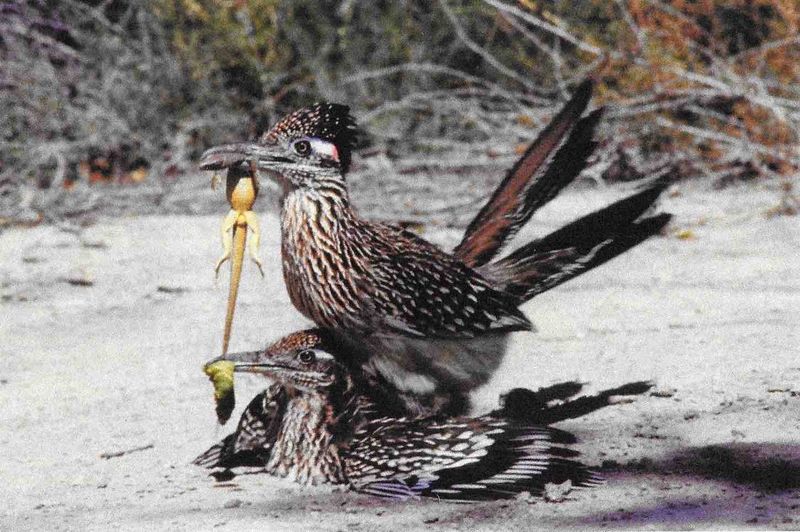
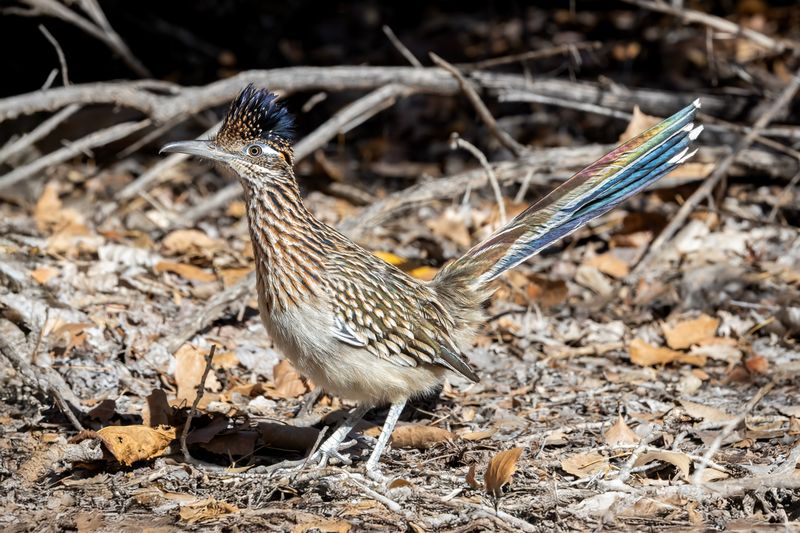
If you live in Texas and have ever shaken out a shoe before putting it on, you already know scorpions are more than a nuisance. Greater roadrunners are one of the state’s most recognizable native birds, and yes, they do eat scorpions.
But before you start redesigning your backyard around one, there are some honest things worth knowing about what these birds can and cannot do for you.
Roadrunners eat scorpions—but they are not backyard exterminators
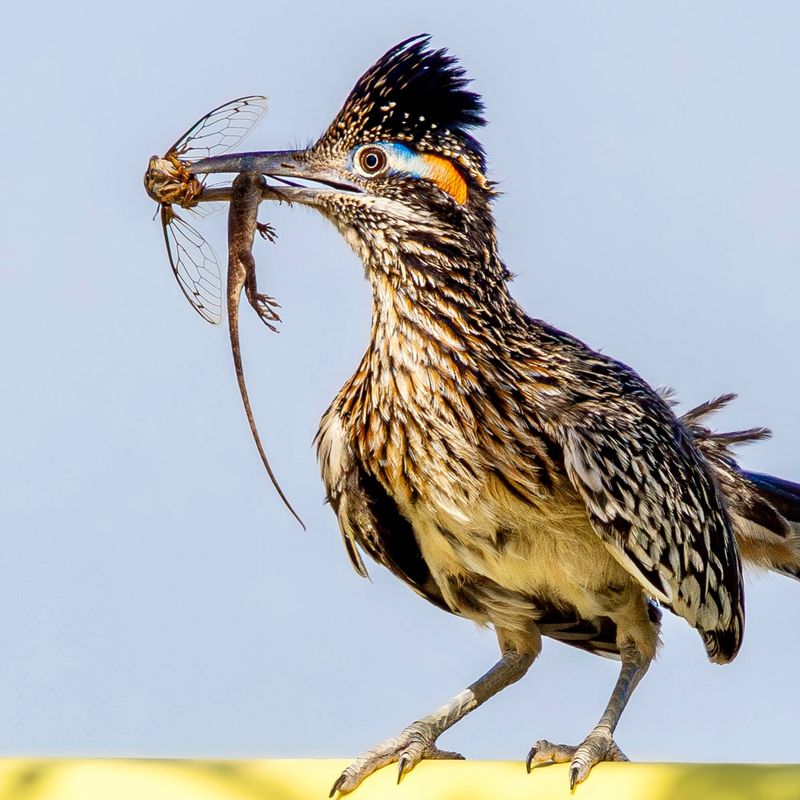
Greater roadrunners are real predators with real appetites, and scorpions are genuinely on the menu. Texas Parks and Wildlife specifically lists scorpions among the prey that adult roadrunners bring back to their young, so this is not folklore.
The bird is a legitimate, native part of Texas ecosystems, and it does hunt the kinds of creatures that make homeowners nervous.
That said, “eats scorpions” and “controls your scorpion population” are two very different claims. No reviewed Texas research has measured a reduction in residential scorpion numbers that can be traced back to a roadrunner hunting the property.
According to Cornell Lab’s Greater Roadrunner life history, these birds are wide-ranging generalist predators with diets that include lizards, snakes, rodents, bird eggs, nestlings, and insects alongside scorpions. A roadrunner does not patrol a yard like a hired exterminator; it moves through a large landscape hunting whatever it finds.
The practical promise of this article is narrower and more honest than the title’s headline implies. You can make your property more usable to a visiting roadrunner by adjusting its structure and vegetation.
You can also reduce the scorpion risk around your home through sound exclusion and habitat modification. What you cannot do is assign one wild bird the job of clearing your yard, or count on its presence as a substitute for the precautions that Texas A&M AgriLife recommends around any Texas home.
Both goals, supporting wildlife and managing scorpions responsibly, are worth pursuing, but they require separate strategies running side by side.
A yard is one stop inside a roadrunner’s large range
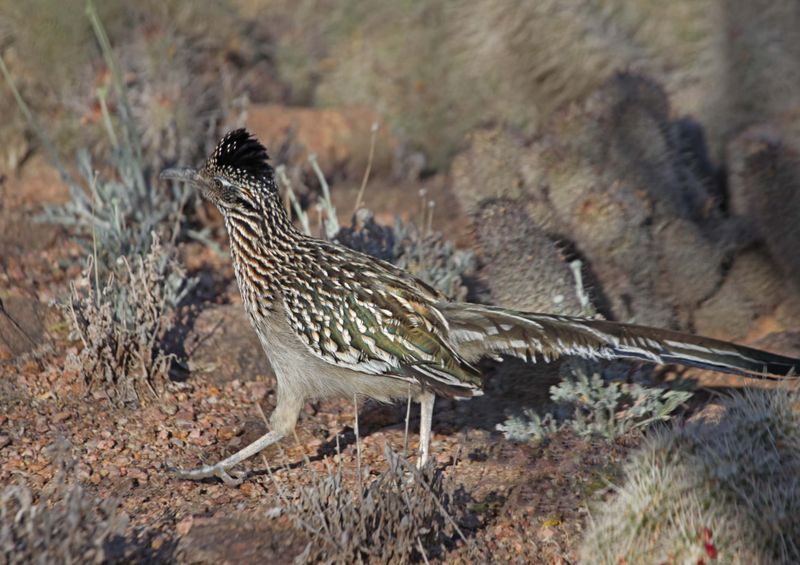
One of the most common misconceptions about attracting roadrunners is the idea that the right yard will convince one to move in and stay. Published research on how these birds actually move through Texas landscapes tells a different story.
A USGS study on Greater Roadrunner home range dynamics conducted in north-central Texas found median home ranges of roughly 80 to 90 hectares. To put that in perspective, one hectare is about 2.5 acres, so a single bird’s territory can easily cover the equivalent of dozens of residential lots.
West Texas research reinforces the same point from a different angle. A study published in the Western North American Naturalist found average home ranges of approximately 43 hectares in that region, still far larger than any single suburban yard.
Both studies also found that habitat selection varied between sites, with north-central Texas birds favoring mesquite woodland and savanna while west Texas birds showed different preferences at different spatial scales. This variation matters because it means there is no single yard formula that works everywhere across the state.
What this tells a homeowner is straightforward: a roadrunner may visit your property regularly because your yard falls within its existing range, not because it has chosen your yard as a home base. Habitat improvements may make your property a more useful stop along that route, increasing the chance and frequency of visits.
They cannot compress a bird’s natural range down to one lot or guarantee that any individual roadrunner will treat your yard as its exclusive territory. Expecting residency from a bird built to roam tens of hectares sets up a disappointment that good habitat design alone cannot fix.
Build semi-open habitat for walking, foraging, and cover
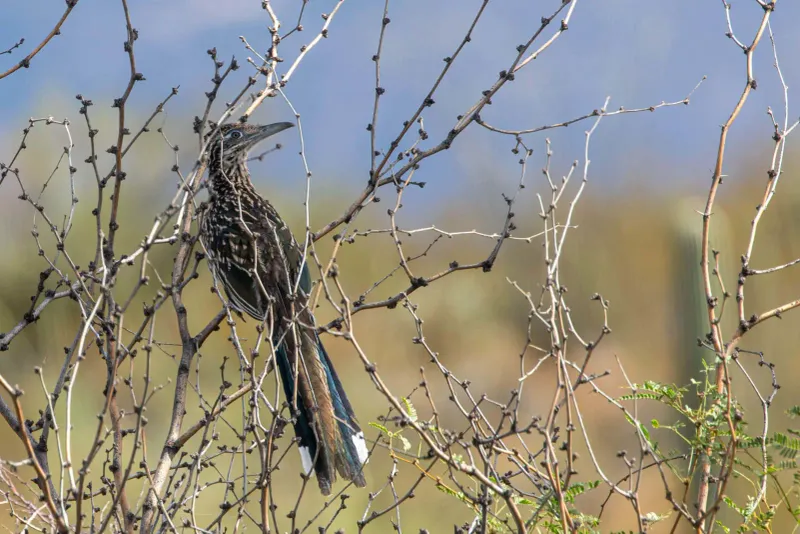
Roadrunners are ground birds that walk and sprint to hunt. They need room to move, which means a yard blanketed wall-to-wall in dense groundcover gives them almost nothing to work with.
At the same time, a completely bare, manicured lawn stripped of all shrubs and native plants is equally useless because the bird needs cover for perching, shelter, and nesting. The habitat that actually works sits between those two extremes.
According to the Texas Breeding Bird Atlas account for the Greater Roadrunner, the species uses a mix of open areas and sturdy native vegetation, with nests commonly placed in thorny shrubs, low trees, thickets, or cactus. Texas Parks and Wildlife describes their preferred habitat as bare ground with scattered trees and bushes, a description that fits the semi-open character of many older Texas neighborhoods, rural edges, and unfussy suburban yards better than it fits either a golf-course lawn or a densely planted formal garden.
The practical goal is structural diversity rather than a precise recipe. Retain or add native, regionally appropriate shrubs and small trees suited to your part of Texas.
Keep some open, walkable ground between those vegetation patches so a roadrunner can actually move through the space. Where it suits your region, scattered cactus or thorny brush adds the kind of sturdy cover the bird uses for perching and nesting.
Avoid the temptation to prescribe a universal percentage of lawn, bare soil, or brush. The USGS north-central Texas research and the west Texas habitat-selection study found meaningfully different preferences across regions and spatial scales, which is why this guidance emphasizes structure over a single statewide formula.
A yard in the Hill Country, a lot on the South Texas Plains, and a suburban property in the DFW Metroplex will each express “semi-open native habitat” a little differently, and that regional variation is fine.
Keep wildlife habitat away from the house
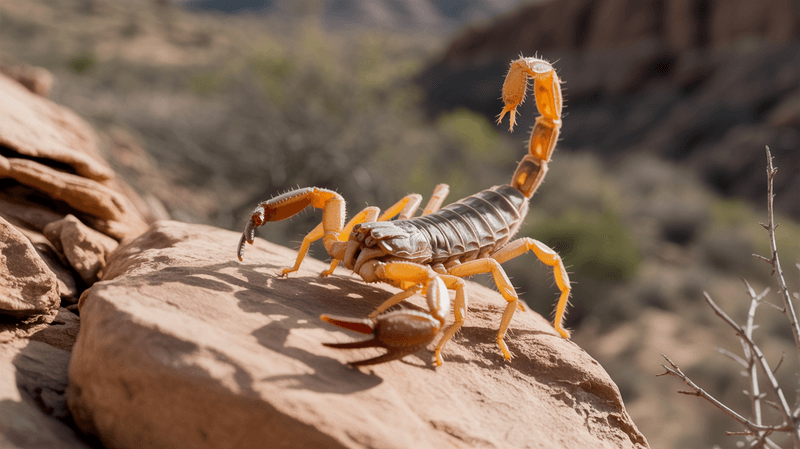
Here is where the goals of supporting wildlife and protecting your household from scorpions pull in opposite directions if you are not careful. Dense brush, rock piles, stacked wood, cactus, and thorny thickets are exactly the kinds of cover a roadrunner uses, and they are also prime scorpion harborage.
The solution is not to eliminate all native cover from your yard; it is to keep that cover at a meaningful distance from the structure where people live.
Texas A&M AgriLife’s scorpion identification and control guidance is direct on this point: remove boards, logs, stones, and debris from around the foundation, keep vegetation from contacting the house, and eliminate the sheltered, moist gaps that scorpions prefer. The same guidance recommends sealing cracks in the foundation and exterior walls, maintaining functional door sweeps and weather-stripping, and checking firewood before bringing it inside, because scorpions ride in on wood regularly.
The Texas Breeding Bird Atlas notes that roadrunners nest in thorny shrubs and thickets, which confirms that those plants have real value as wildlife habitat. Placing them in the middle or far end of the yard, away from doors, bedroom windows, and children’s play areas, lets you provide that habitat without creating a scorpion corridor directly into the house.
Think of it as a buffer: wildlife-friendly planting toward the outer yard, a clean, tight perimeter around the structure itself.
Practical steps include pulling any ground-hugging vegetation back from the foundation, removing old boards or scrap materials stored against the house, and trimming any tree limbs or shrub branches that touch the exterior walls. None of these moves harm a roadrunner’s ability to use the wider yard.
They simply prevent the wildlife-friendly features you are building from doubling as an easy path for scorpions into living spaces.
Water supports wildlife but cannot establish a territory
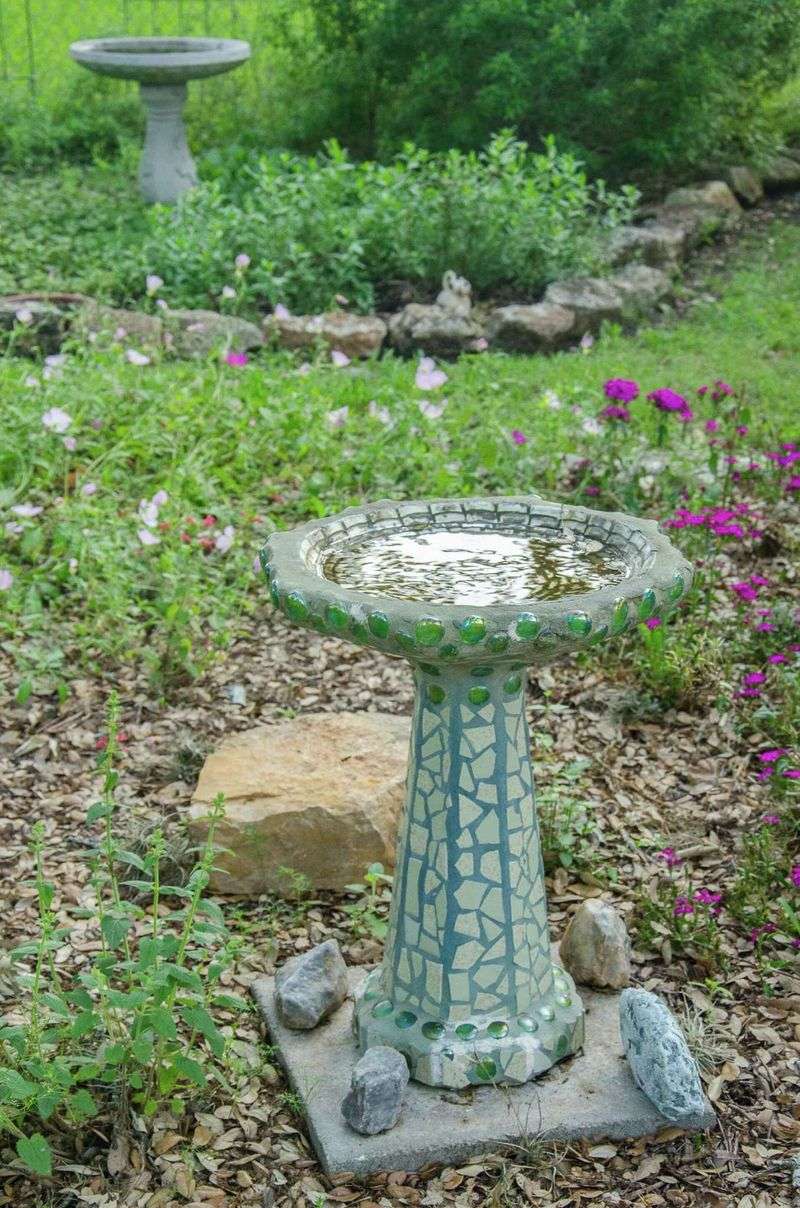
During triple-digit Texas summers, a clean, shallow water source genuinely benefits backyard wildlife. Birds need to drink and bathe, and water becomes harder to find during prolonged heat and drought.
Providing some on your property is a reasonable, low-cost way to support native species, including roadrunners passing through.
Texas Parks and Wildlife’s wildlife water guidance recommends keeping water no more than 3 inches deep so smaller birds and other wildlife can use it safely without drowning risk. The Texas Wildscapes tips page reinforces the importance of cleaning and refreshing the water regularly to prevent disease and mosquito breeding.
A dirty, stagnant birdbath does more harm than good, spreading illness among the birds it attracts and potentially creating a mosquito problem in the yard.
What a birdbath cannot do is make a roadrunner claim your property as its territory. No reviewed research connects a water source to roadrunner residency or territorial establishment.
Given the large home ranges these birds occupy, a birdbath is one small amenity in a landscape the bird already ranges across, not an anchor that changes where it lives. Expecting otherwise leads to frustration when the bird drinks from your bath one morning and then disappears for two weeks.
Keep the water feature simple and practical. Change it every couple of days, scrub the basin when algae appears, and follow Texas Parks and Wildlife’s feeder and bath cleaning recommendations to avoid spreading disease.
A shallow, clean water source is good for the yard’s broader wildlife community. Just treat it as one element of a habitat plan, not the centerpiece of a roadrunner retention strategy.
Skip bait and feeders; let the food web remain wild
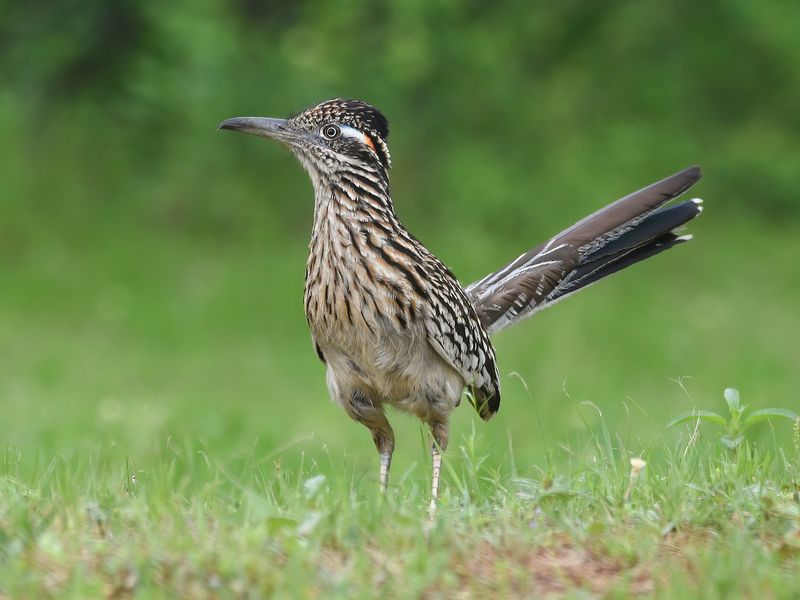
Some homeowners, once they learn that roadrunners eat scorpions, immediately wonder whether leaving a scorpion or a mouse out in the open might lure one closer. The answer is no, and the reasoning goes beyond simple squeamishness.
Audubon’s ethical wildlife guidance specifically warns against baiting predatory birds because it can alter their behavior in ways that expose them to roads, people, pets, disease, and contaminated food. A roadrunner conditioned to expect handouts near a house is a roadrunner at higher risk of a bad outcome.
Bird feeders are equally unsuitable as a roadrunner-attraction strategy. Roadrunners are not seed eaters, so a standard feeder holds no appeal.
They may, however, show up at a feeder to raid it for prey, targeting smaller birds attracted to the seed. Beyond that mismatch, Audubon’s guidance on feeding birds notes that feeders can increase disease transmission, window-strike mortality, and cat predation among the birds they draw in.
Concentrating birds in one spot creates risks that native planting and natural insect habitat do not.
The better approach is letting the yard’s food web develop on its own terms. Native plants support insects, insects support a broader range of prey, and that prey base attracts predators like roadrunners without any artificial intervention.
Texas Parks and Wildlife’s guidance on feeder hygiene underscores how quickly an unmanaged feeding station becomes a disease vector, which is one more reason to favor habitat over handouts.
One candid note worth keeping in mind: Cornell Lab’s roadrunner life history documents a diet that includes lizards, snakes, rodents, bird eggs, nestlings, and other birds alongside scorpions and insects. A roadrunner hunting your yard will not limit itself to the creatures you find inconvenient.
Supporting one means accepting a functioning, unsentimental food web, not a selective pest patrol that spares the lizards and songbirds you like.
Use integrated scorpion control whether or not a roadrunner visits
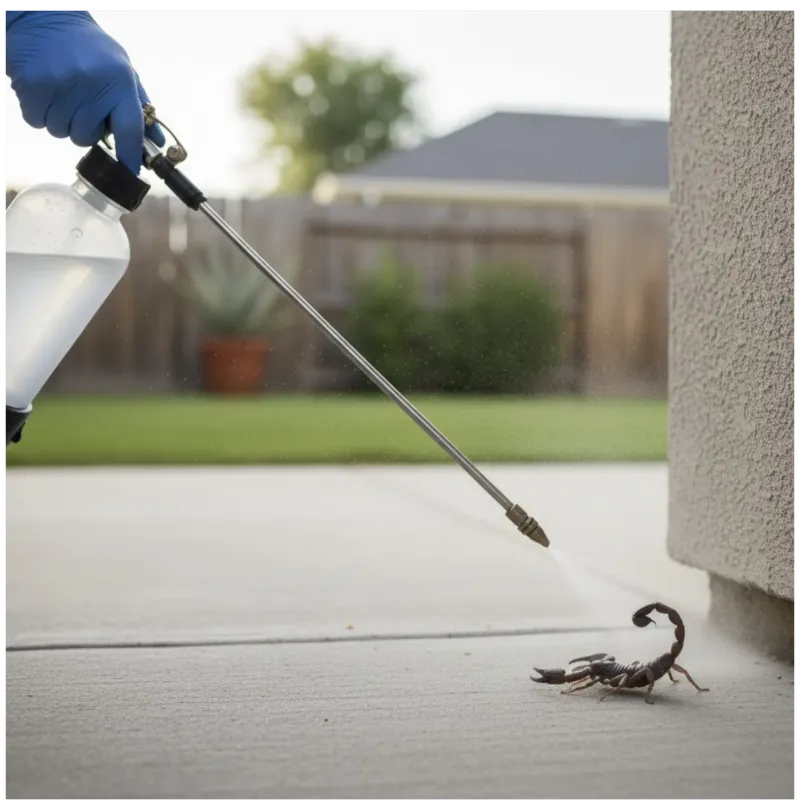
Scorpion activity in Texas does not follow a single statewide calendar. Hot weather can push scorpions into living areas as they seek cooler, moister conditions inside a home, but the timing, species involved, and severity vary with your region, local weather patterns, and how well the structure is sealed.
Treating scorpion management as a seasonal problem you solve once a year is less effective than keeping a standing set of habits in place year-round.
The sequence that Texas A&M AgriLife recommends for scorpion control follows an integrated pest management model: monitor first, then remove harborage, then exclude entry points, and use targeted pesticide treatment only when the situation warrants it and always according to the product label. Monitoring means checking with a UV blacklight after dark, when scorpions fluoresce and are easier to spot.
Harborage removal means clearing the foundation area of the debris, boards, and organic material covered in the previous section. Exclusion means sealing cracks, gaps around pipes, and any opening larger than about a quarter inch, plus maintaining tight-fitting door sweeps and functional window screens.
Pesticides have a role in this system, but it is a targeted one. The Texas Department of Agriculture’s integrated pest management framework emphasizes using chemical controls only when monitoring confirms a problem that physical and structural measures have not resolved, and always in the smallest effective amount according to the label directions.
A licensed pest control professional can assess whether chemical treatment is appropriate and apply it correctly if it is.
A roadrunner sighting on your property does not change any of these precautions. Shake shoes out before putting them on, check gloves left in the garage, inspect firewood before carrying it inside, and keep the perimeter of the house tight.
The bird is a welcome visitor, not a reason to relax the habits that actually keep scorpions out of your living space.
Invite a wild visitor, not a captive pest-control service
Pulling everything together, the realistic action plan looks like this: maintain open walking and foraging ground across the yard, add or retain native shrubs and small trees suited to your region, optionally provide a shallow and clean water source, and keep a clear safety buffer around the house itself with scorpion exclusion habits running continuously in the background. That combination gives a passing roadrunner a usable yard and gives your household a reasonable layer of protection, without asking a wild bird to carry the whole load.
Before going further, the legal picture matters. Roadrunners are protected under Texas Parks and Wildlife nongame species regulations, which prohibit killing, taking from nests, or possessing native nongame birds without authorization.
Federal protection applies as well: the Migratory Bird Treaty Act makes it unlawful to capture, possess, or harm covered migratory birds without a federal permit. That means no trapping, no handling, no relocating, and no attempting to keep a roadrunner.
Observe from a respectful distance and let the bird behave on its own terms.
The USGS home range research makes the final point plainly: a roadrunner’s world is measured in tens of hectares. Your yard is one patch inside that world, and good habitat makes it a patch worth stopping in.
Pair that with the Texas A&M scorpion management steps around the house, and you end up with something genuinely useful: a wilder, more ecologically interesting yard and a tighter, safer home. A roadrunner that shows up to hunt is a bonus, not a guarantee, and that is exactly what makes the sighting worth something.