
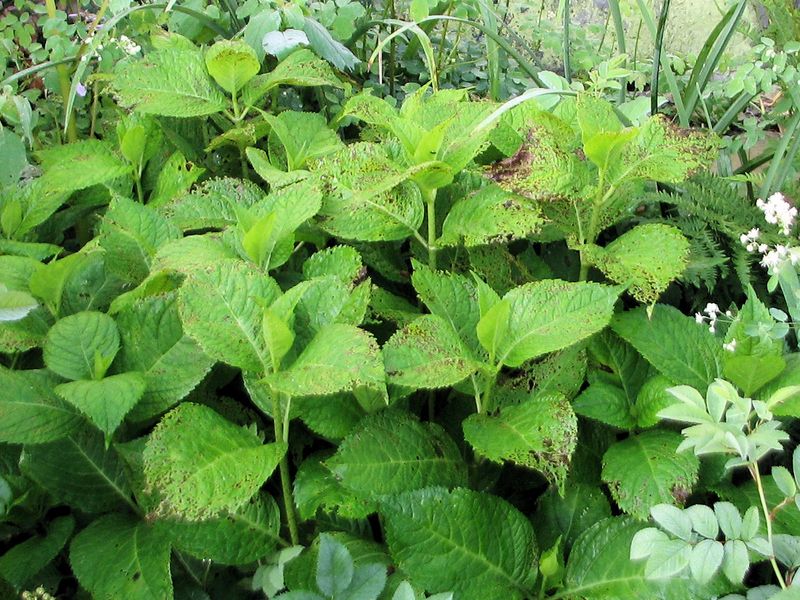
Watching your hydrangea push out thick, healthy leaves every spring only to sit flowerless all season is one of the most frustrating puzzles in the garden. The tricky part is that lush foliage can make the plant look perfectly fine, which hides what actually went wrong much earlier in the year.
For Southern gardeners in Florida, Texas, and across the Gulf Coast, the answer often comes down to which type of hydrangea you have and what happened to its buds before you ever noticed a problem. Understanding that connection is the first step toward getting those blooms back.
When Lush Leaves Hide Lost Flower Buds
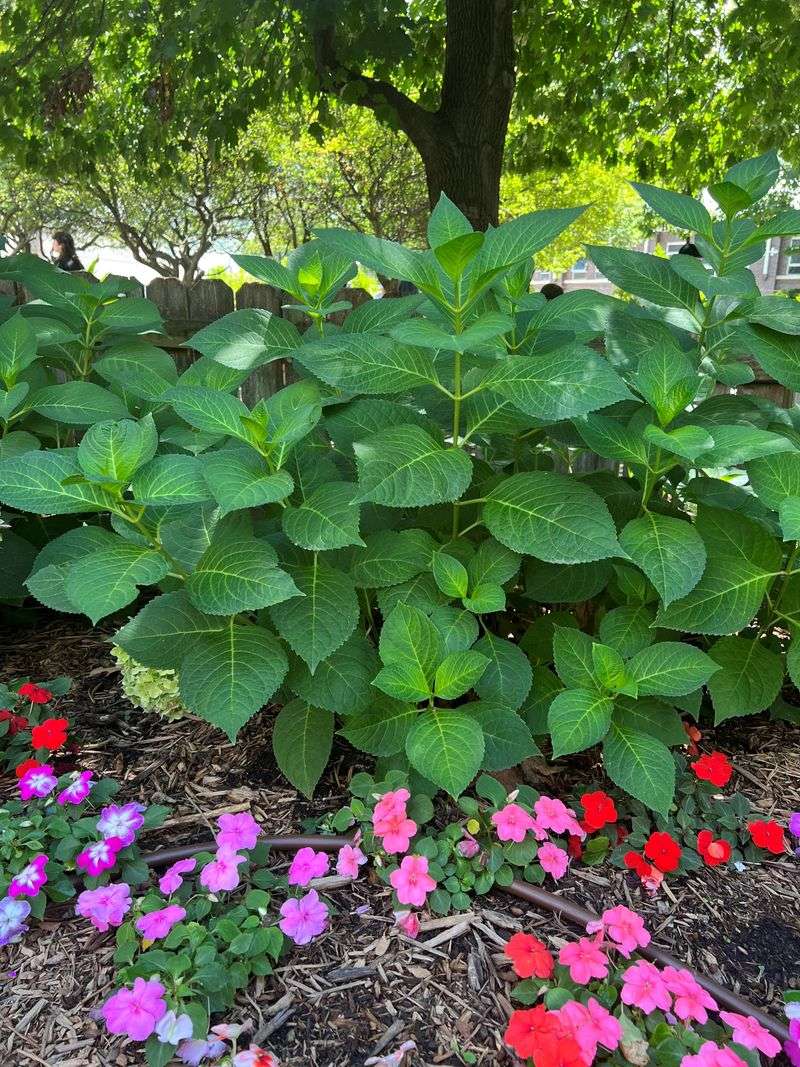
A hydrangea covered in glossy, deep-green leaves can look like the picture of health, but vigorous foliage and viable flower buds are two separate things. Leaves demonstrate that the plant is growing and moving energy through its stems.
They do not prove that the buds responsible for flowers survived the months between last summer and this spring.
For traditional bigleaf hydrangeas (Hydrangea macrophyllaH. quercifolia) and oakleaf hydrangeas (), failure to bloom is commonly linked to lost or damaged old-wood buds that formed on last year’s stems. Those buds can be removed by untimely pruning, destroyed by a late freeze, stripped away by deer or rabbits, or weakened by drought and severe site stress.
When any of those things happen, the plant still leafs out normally because it regrows stems from the roots, but the buds needed to produce flowers this season are simply gone.
Pinning down the real cause depends on knowing which species or cultivar you are growing. Smooth and panicle hydrangeas follow a different flowering pattern entirely, and even within bigleaf types, some cultivars can form buds on new wood as well as old.
The sections ahead walk through how to identify your plant, read the stems for clues, and work through a practical recovery plan without making the problem worse.
Old Wood Carries Next Season’s Flowers
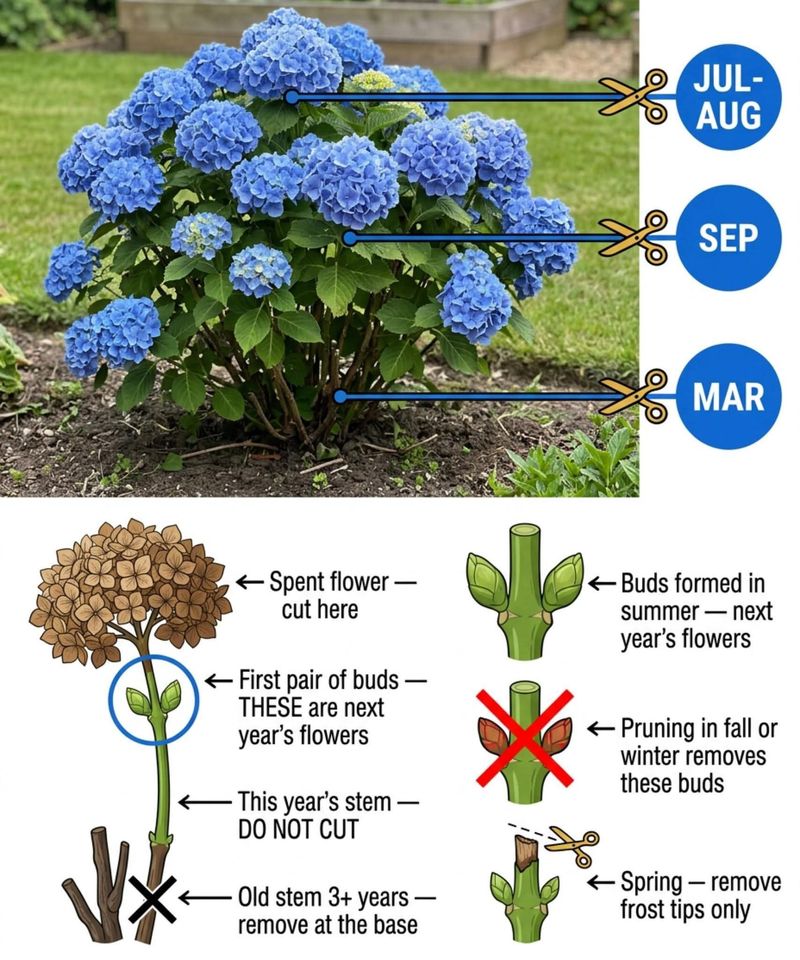
Most gardeners think of flower production as something that happens in real time, but for bigleaf and oakleaf hydrangeas, next summer’s flowers are already being set in late summer and fall of the current year. Those buds sit on last year’s stems, sometimes called old wood, through the winter and open the following season.
Cut those stems at the wrong time, and the coming season’s display disappears with them.
University of Maryland Extension explains that pruning bigleaf hydrangeas in fall, winter, or early spring removes the flower buds before they have a chance to open, which is why a plant that was “tidied up” in March may leaf out beautifully while producing zero flowers. Pruning is not the only risk.
A late freeze after buds have begun to swell can kill them without visibly killing the stems. Deer or rabbits browsing through the garden in winter or early spring can eat the bud-bearing tips right off.
Extended drought during the previous growing season can reduce the number of buds formed in the first place.
A shrub can regenerate stems and leaves from its base fairly quickly, so new growth after any of these events may look reassuring. The problem is that new stems produced after bud loss will not carry flowers during the current season for old-wood types.
That distinction matters because it means a leafy, apparently vigorous plant may genuinely have nothing to bloom with this year, and the recovery plan needs to focus on protecting future buds rather than forcing immediate flowers.
Identify the Species and Cultivar Before You Prune
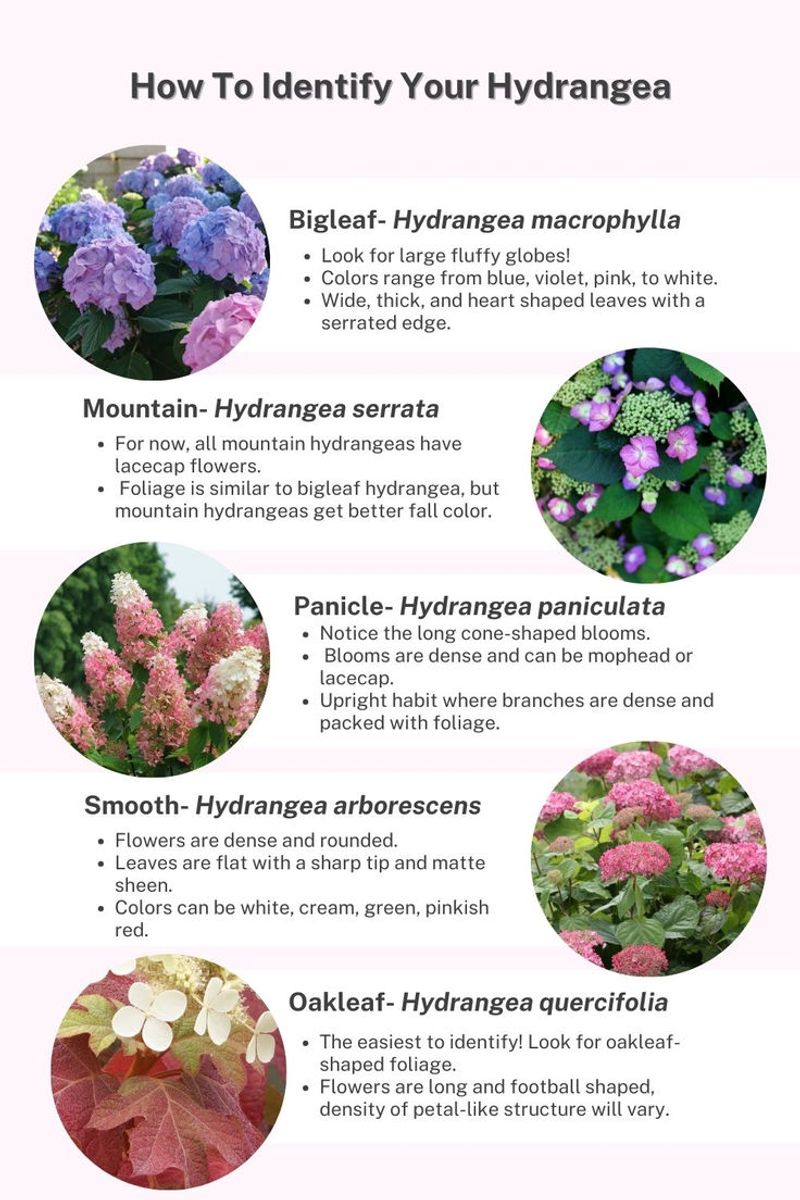
The single most useful step you can take before touching a pruning tool is to figure out exactly which hydrangea you have. The common name “hydrangea” covers several species with meaningfully different flowering habits, and treating them all the same is one of the most reliable ways to end up with a leafy, flowerless shrub.
Bigleaf hydrangeas, including the familiar mophead and lacecap forms, along with oakleaf hydrangeas, generally bloom on old wood. Clemson Cooperative Extension notes that these types should be pruned immediately after flowering if pruning is needed at all, because cutting them at any other time risks removing next season’s buds.
Smooth hydrangeas (H. arborescensH. paniculata), including the widely grown ‘Annabelle,’ bloom on new wood and can be cut back in late winter or early spring without sacrificing the current year’s flowers. Panicle hydrangeas (), such as ‘Limelight,’ also bloom on new wood and follow the same late-winter pruning window.
Reblooming or remontant bigleaf cultivars, including those sold under names like ‘Endless Summer,’ are bred to form buds on both old and new wood. That trait gives them a better chance of recovering from bud loss, but it does not make them immune to pruning damage, freeze injury, browsing, or severe stress.
A poorly timed hard cut can still reduce part of their display significantly.
Use the plant’s leaf shape, flower form, and any cultivar label you have rather than relying on the generic name. Round, serrated leaves with large globe-shaped or flat lacecap flowers point toward bigleaf types.
Oakleaf hydrangeas have distinctively lobed leaves that resemble oak foliage. Smooth and panicle types have simpler oval leaves, with panicle hydrangeas producing cone-shaped flower clusters that age to tan or pink.
Inspect the Stems Before Removing Anything
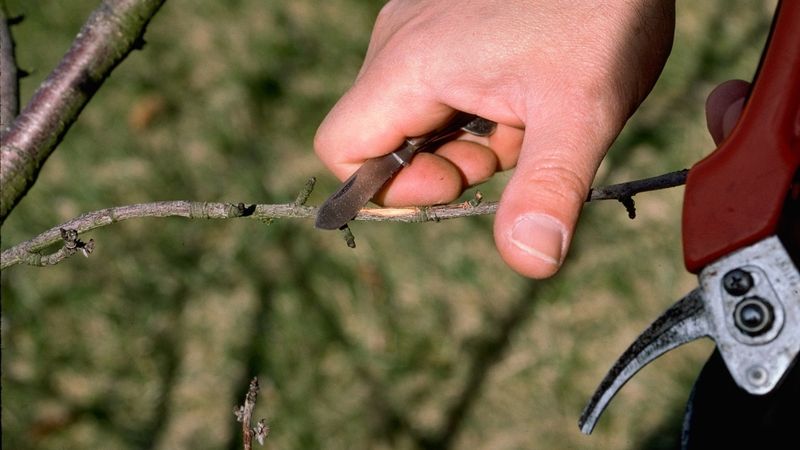
Before pruning a single stem, spend a few minutes reading what the plant is already telling you. A simple scratch test reveals whether a cane is alive or dead: use your thumbnail or a knife to lightly scrape a small section of bark near the tip, then check the tissue underneath.
Green tissue means the stem is alive. Brown, dry, or hollow tissue indicates that section is dead and can be removed.
University of New Hampshire Extension recommends working down from the tip of each stem and cutting just above the first pair of live buds rather than removing the whole cane. On a bigleaf or oakleaf hydrangea, those live buds along older canes may be exactly the flower buds you want to protect.
A shrub that pushed up a full flush of new stems from the base while older canes died back over winter is a strong signal that old-wood buds were lost, whether from freeze, browsing, or previous cutting.
That pattern is less diagnostic for smooth and panicle hydrangeas, which produce flowers on the current season’s growth regardless of what happened to last year’s wood. For those types, a full flush of new base growth is normal and healthy.
When you cannot confidently identify your hydrangea, Oklahoma State Extension puts it plainly: no pruning is better than the wrong type of pruning. Remove only stems that are clearly dead, damaged, or winter-killed, and hold off on anything more aggressive until you know what you have.
A season of patience is far less costly than a hard cut that eliminates another year of flowers.
Southern Weather and Site Stress Can Reduce Flowering
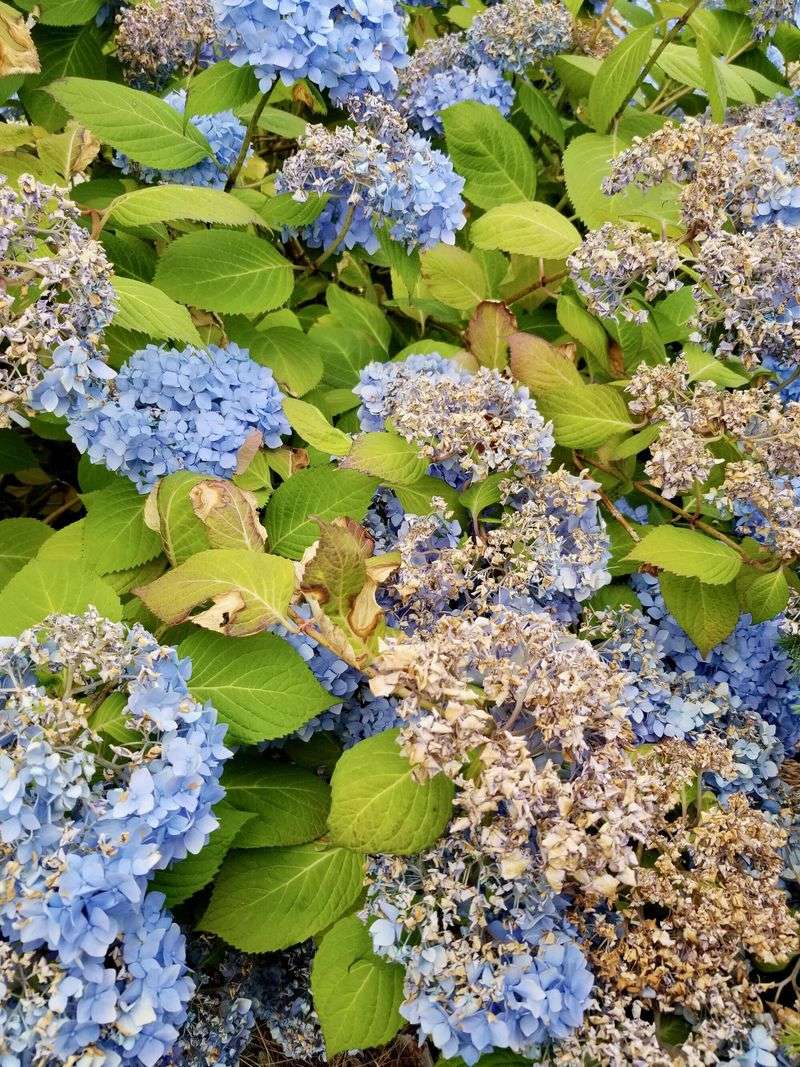
Southern gardeners sometimes assume that a warm climate means fewer frost worries, but bigleaf hydrangeas can be surprisingly vulnerable to late-season temperature swings. A stretch of warm weather in late winter can encourage buds to swell and break dormancy early.
If temperatures then drop sharply, those newly active buds can be killed even when the stems themselves survive, leaving a plant that looks fine but carries no viable flowers.
Deer and rabbits add another layer of risk that is easy to overlook. Both animals readily browse the bud-tipped ends of hydrangea stems during late fall and winter, when other forage is scarce.
By the time new leaves emerge in spring, the damage is already done and invisible unless you know to look for it.
Site conditions also shape how well bigleaf hydrangeas flower. University of Georgia Extension recommends morning sun with afternoon shade, consistent moisture, and well-drained soil for bigleaf hydrangeas, particularly in the South where afternoon heat can be intense.
Too much shade reduces flowering, while too much direct afternoon sun raises heat and moisture stress that can compound bud problems. Oakleaf hydrangeas handle more sun and heat than bigleaf types, making them a stronger option for exposed sites in Florida, Texas, and the broader Gulf South.
University of Florida IFAS guidance on hydrangeas in Florida landscapes highlights that heat management, moisture consistency, and appropriate species selection are all critical for reliable performance in that climate. Even in the mildest parts of the region, afternoon shade and well-drained soil remain important factors that separate flowering plants from ones that simply leaf out and stall.
Match the Recovery Plan to the Hydrangea Type
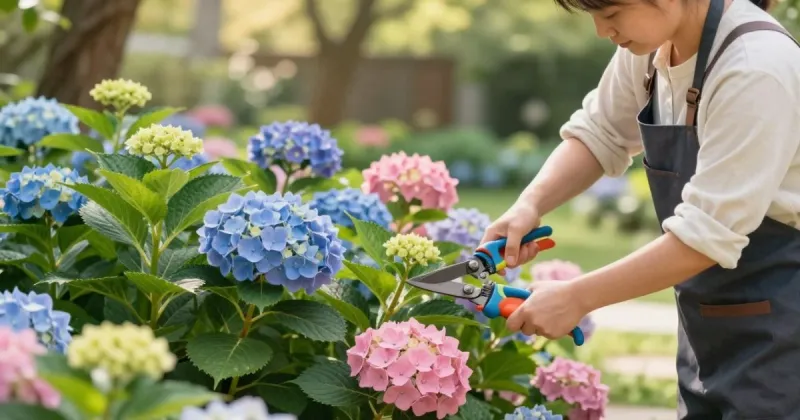
Recovery looks different depending on which hydrangea you have, and starting with the right approach for your specific type matters more than any single product or technique. For bigleaf and oakleaf hydrangeas, the core strategy is to stop removing old wood unnecessarily.
If pruning is genuinely needed, do it immediately after the plant finishes flowering so new buds have the rest of the season to form on the stems that remain. Preserve live older canes wherever possible, because those are the ones most likely to carry flowers next year.
For smooth and panicle hydrangeas, Clemson Extension confirms that late-winter or early-spring pruning aligns well with their new-wood flowering habit, so a hard cutback before growth begins will not cost you the season’s display. In fact, some gardeners cut smooth hydrangeas quite low in late winter to encourage strong new stems with large flower heads.
Water management deserves attention in any recovery plan. Deep, infrequent watering during dry spells is more useful than frequent shallow watering, and a 2- to 3-inch layer of mulch over the root zone helps buffer soil moisture between rain events.
Avoid keeping the soil constantly saturated, because waterlogged roots create their own stress. A plant wilting during a hot afternoon may not need more water if the soil is already moist; check the soil before watering again.
Fertilizer is another area where less is often better. Iowa State University Extension notes that excess nitrogen favors leafy growth at the expense of flowers, so reaching for a high-nitrogen fertilizer in response to a no-bloom problem can make things worse.
Fertilize based on actual plant need and soil-test results rather than as a routine fix. Finally, recently planted hydrangeas, especially oakleaf and climbing types, may need two or three years to establish before flowering reliably, so patience is a legitimate part of the plan for newer plantings.
Avoid Amendments and Repellents That Promise Too Much
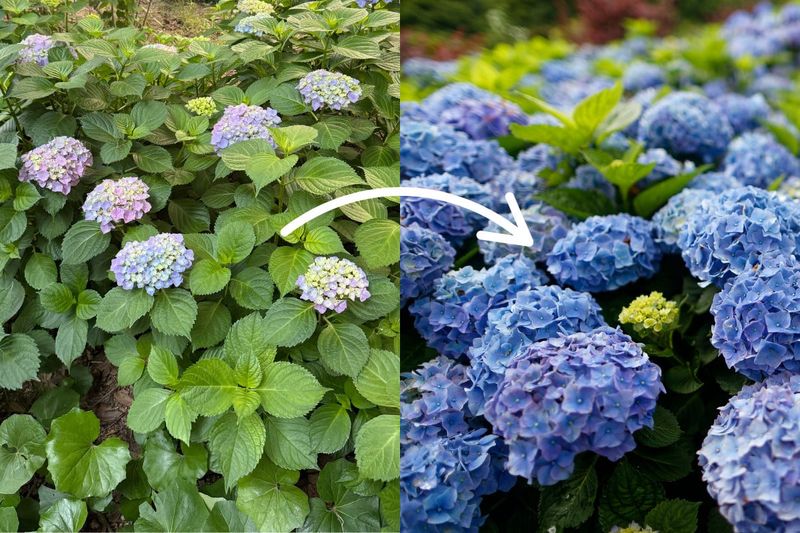
A number of popular remedies circulate online and in garden centers for no-bloom hydrangeas, and most of them will not solve the actual problem. Soil pH is one of the most commonly misunderstood factors.
Virginia Cooperative Extension explains that pH primarily affects flower color in susceptible bigleaf and mountain hydrangeas, shifting blooms between blue and pink depending on aluminum availability in the soil. It does not determine whether a shrub has viable buds, adequate light, or the right pruning history.
White-flowered cultivars and most other hydrangea species do not respond to pH changes in the same way.
University of Maryland Extension cautions against blanket use of aluminum sulfate, lime, coffee grounds, or Epsom salt as bloom remedies. These amendments may alter color in certain cultivars, but they cannot replace a missing bud, fix a light problem, or undo the effects of a mistimed pruning cut.
Excess aluminum sulfate can also damage roots when applied heavily, adding stress rather than solving it.
High-phosphorus fertilizers are sometimes promoted as bloom boosters, but routine applications without a soil test are not a reliable fix and can contribute to nutrient imbalances over time. If a soil test shows a genuine deficiency, that is a different situation, but applying phosphorus as a general response to no flowers is not supported by extension guidance.
Deer repellents deserve a similar reality check. They can offer some short-term deterrence, but University of Minnesota Extension notes that repellents require consistent reapplication and are less dependable than physical exclusion where browsing pressure is high.
A wire cage or fencing around vulnerable shrubs protects buds through the winter far more reliably than a spray that washes off in rain.
Protect the Next Buds Before They Open
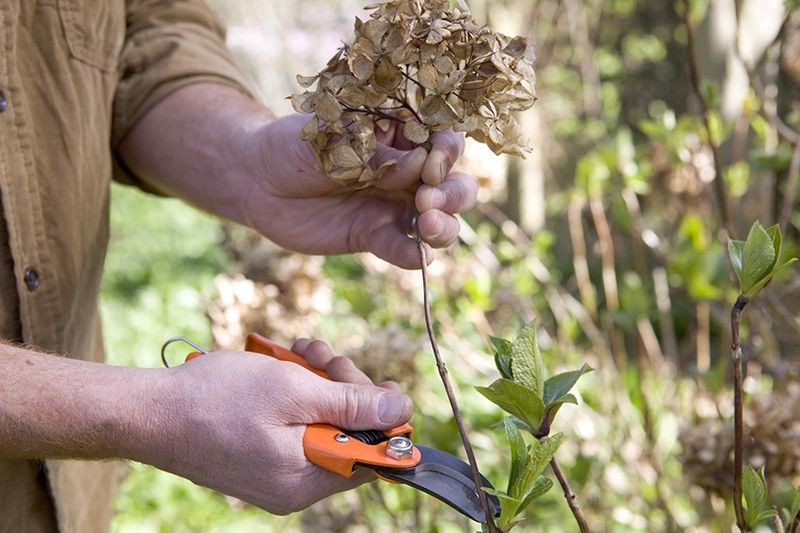
Getting flowers next season starts with a short checklist you can work through now. Identify the species or cultivar if you have not already, then match any pruning to that type: preserve live old wood on bigleaf and oakleaf types, and wait until after flowering if a cut is needed.
Remove only stems that are clearly dead or damaged, regardless of type, and hold off on anything more aggressive if identification is still uncertain.
Stabilize light and soil moisture by checking that the plant’s site suits its needs, adding mulch to buffer moisture swings, and watering deeply during dry stretches rather than frequently and shallowly. University of Minnesota Extension reinforces that protecting viable buds through winter is central to reliable flowering on old-wood types.
Where deer or rabbit browsing is a consistent problem, a physical barrier around the shrub from late fall through early spring is more dependable than repellents alone.
Foliage and flowers follow different timelines, so a leafy shrub in May is not a promise of blooms in June. What it may need most is protection, patience, and a pruning schedule that actually matches how it grows.