
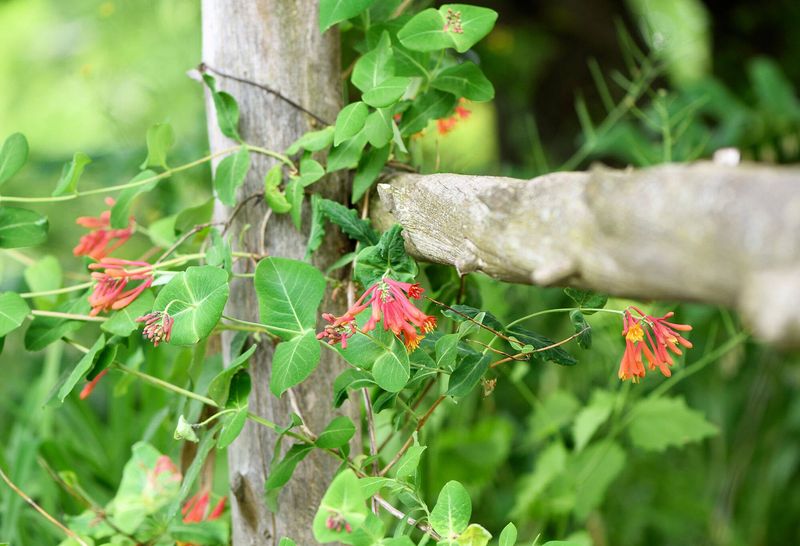
Somewhere between the back fence and the first hummingbird of spring, a lot of Texas gardeners start wondering if there is a native vine that could make that meeting happen more reliably. Coral honeysuckle, also called trumpet honeysuckle or Lonicera sempervirens, is the strongest answer to that question.
This perennial twining vine is native to parts of Texas, grows well on a sturdy fence or trellis, and produces tubular red-to-orange flowers that hummingbirds genuinely seek out. Plant it right, and your fence line has a real shot at becoming a potential nectar stop from spring into summer.
Meet coral honeysuckle, the native vine behind the idea
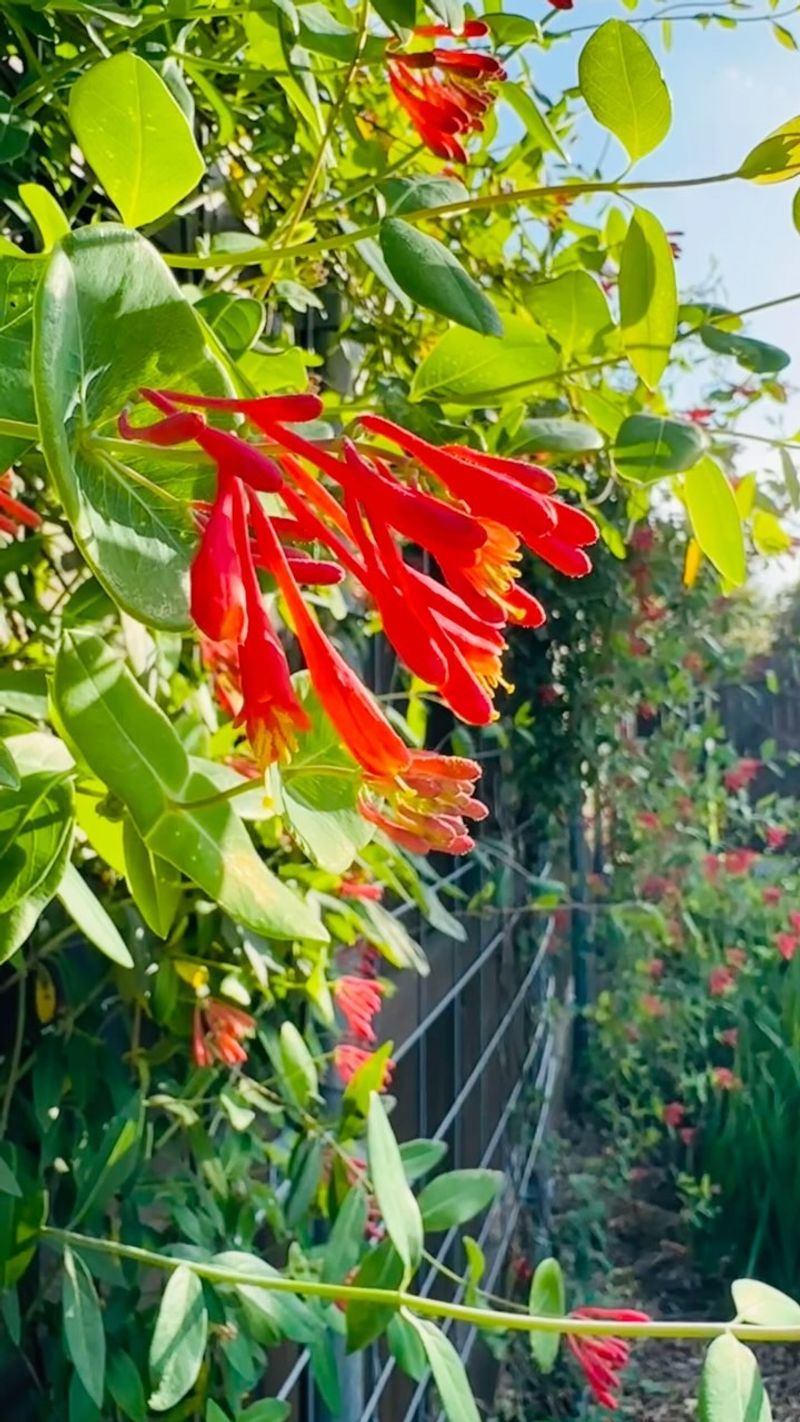
Coral honeysuckle goes by several names, but the one that matters most at the nursery is its scientific name: Lonicera sempervirens. You may also hear it called trumpet honeysuckle or woodbine.
Whatever name is on the tag, the plant underneath is a perennial, twining vine with slender stems that wrap around a support rather than clinging with adhesive pads or aerial roots. That twining habit is important to understand before you plant, because the vine needs something to grab.
According to the Native Plant Society of Texas, coral honeysuckle is documented in several Texas ecoregions, including the Gulf Coast Prairies and Marshes, Blackland Prairies, Edwards Plateau, and East Central Texas Plains. That list covers a wide swath of the state, but it does not cover all of Texas.
Gardeners in the Trans-Pecos, the Panhandle, or deep South Texas should check with a local native plant nursery or their county extension office to confirm whether the vine is well suited to their specific ecoregion, soils, and winter conditions before buying.
One of the most common mistakes Texas gardeners make is buying a plant labeled simply “honeysuckle” without checking the species. Japanese honeysuckle (Lonicera japonica) is a nonnative invasive species that spreads aggressively, outcompetes native plants, and Texas Invasives lists it as a documented problem across the state.
Several bush honeysuckles are similarly problematic. Coral honeysuckle is a completely different, native species, and the only way to be sure you have the right plant is to buy by the scientific name Lonicera sempervirens from a reputable native plant nursery or a seller who can confirm the species identity.
Expect spring flowers and possible summer repeats
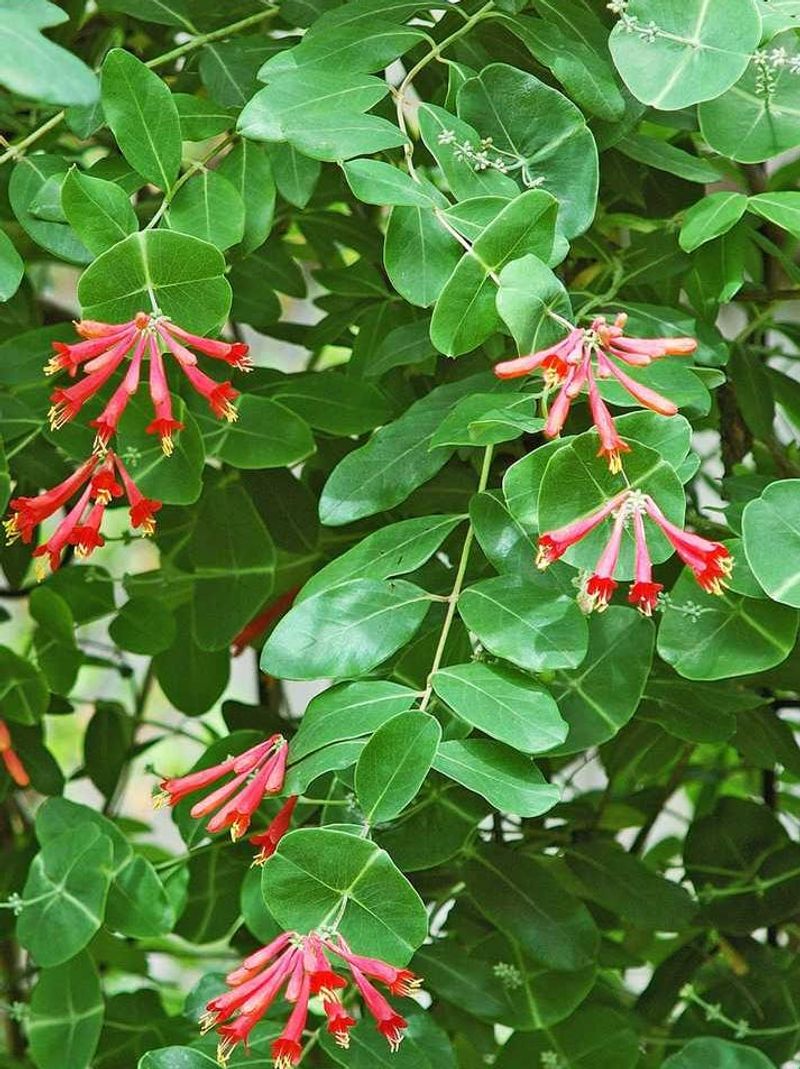
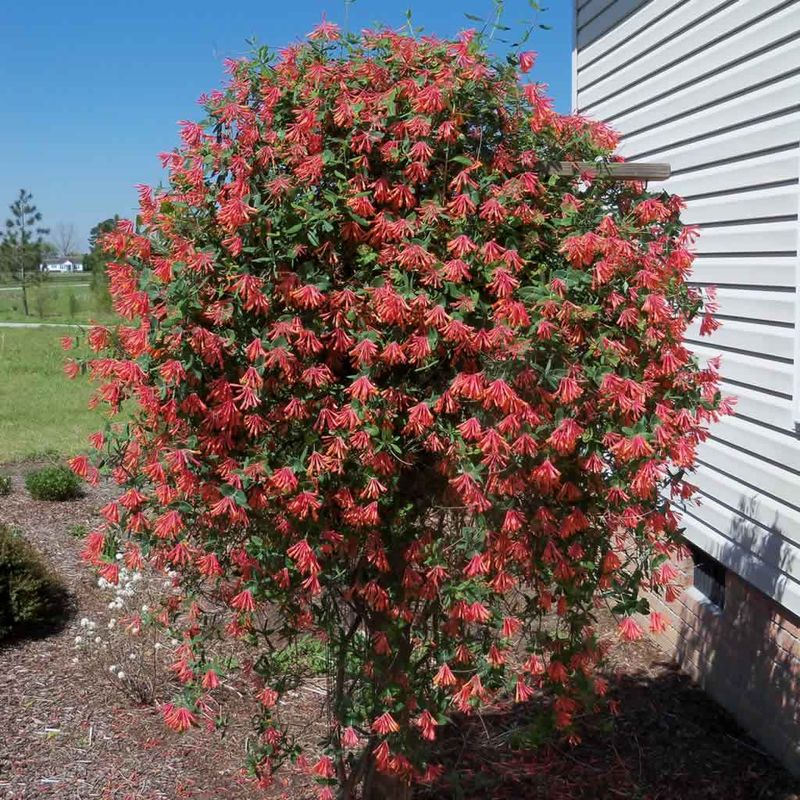
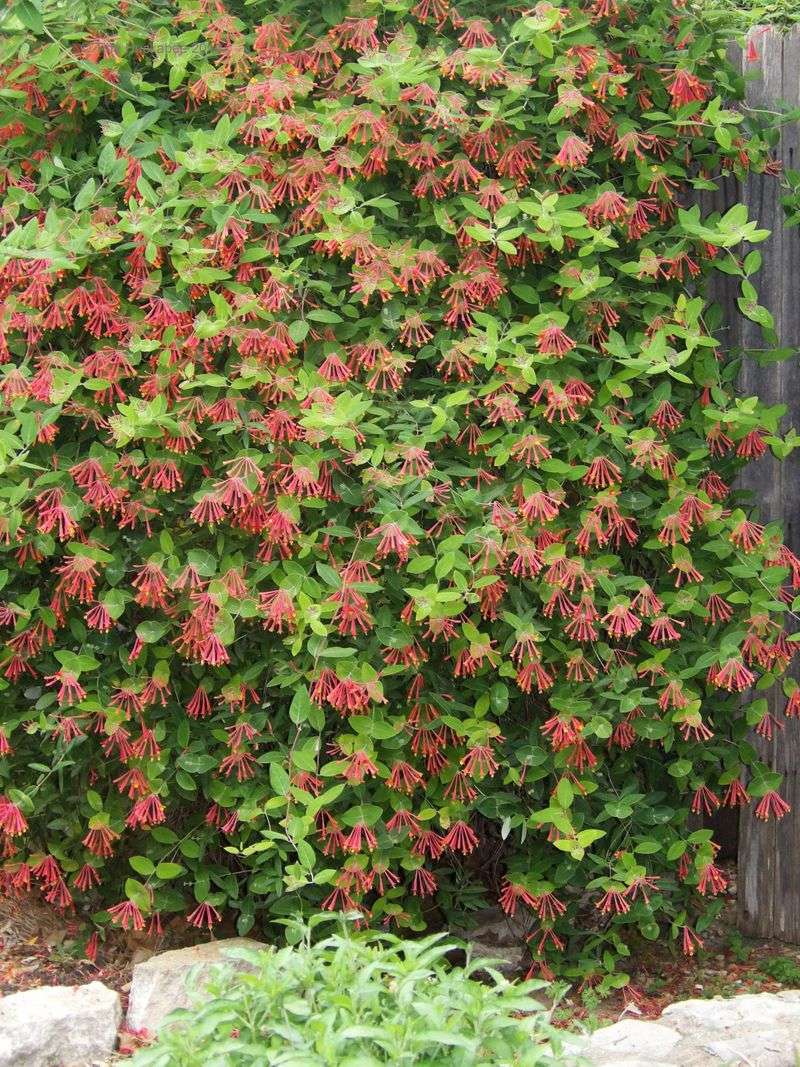
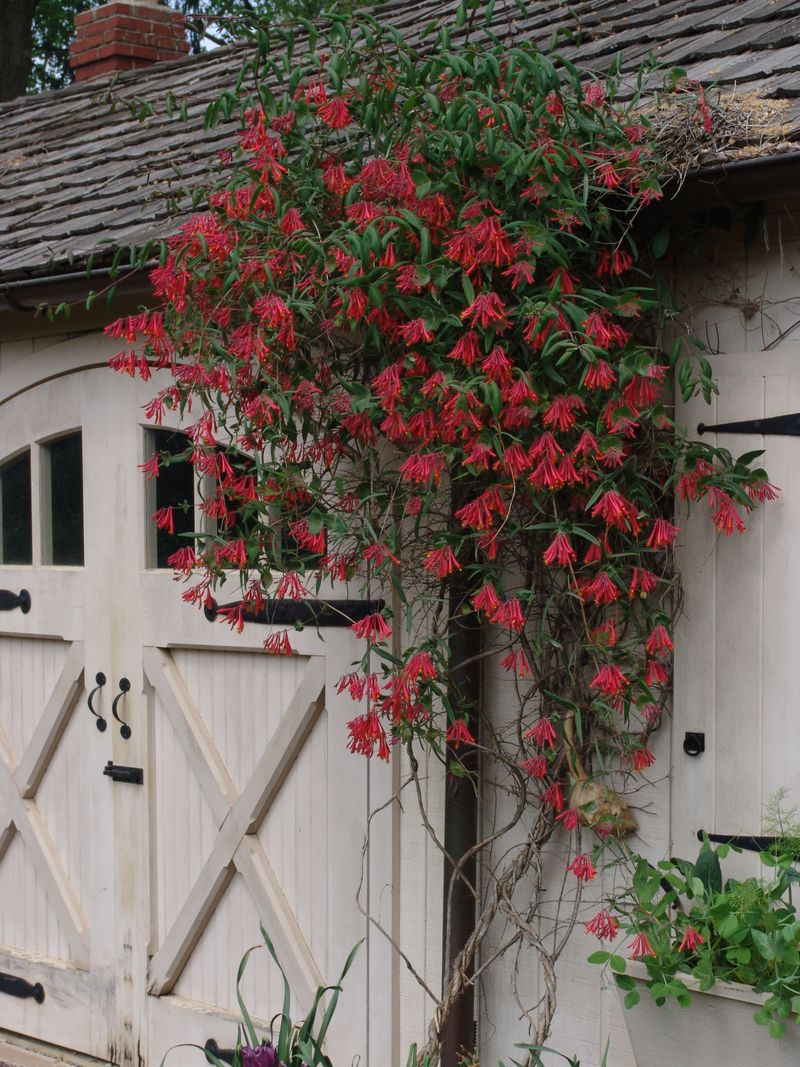
The flowers are what make this vine worth planting along a fence. Each bloom is a narrow, red-to-orange tube, roughly an inch or two long, with a slightly flared tip that opens into a small yellow throat.
That shape is almost a perfect fit for a hummingbird’s bill and tongue, which is exactly why hummingbirds seek them out. Audubon’s native plant database confirms that coral honeysuckle attracts hummingbirds and also provides nectar for bees and butterflies.
The vine additionally serves as a larval host plant for the spring azure butterfly and the snowberry clearwing moth, so the wildlife value runs deeper than hummingbird visits alone.
The bloom pattern follows a familiar rhythm for Texas gardeners: a strong main flush in spring, then smaller repeat flushes that may continue into summer and, under favorable conditions, into fall. “May” is the right word here. Some cultivars and some sites produce more consistent repeat blooms than others, and factors like sunlight, plant maturity, soil drainage, and the heat of a given summer all influence how much flowering you see after that spring peak.
North Carolina Extension lists the bloom period as spring through summer, which aligns with what Texas growers typically report, but neither source promises flowers every single week without interruption.
Later in the season, after the flowers drop, the vine produces small red berries. Those berries are food for songbirds, not people.
Extension sources consistently describe them as inedible for humans, so treat them as a bonus wildlife feature rather than a harvest. A mature vine in a good spot can offer both nectar for hummingbirds early in the season and fruit for other birds later, which makes it a productive addition to a wildlife-aware Texas yard.
Give the twining vine a sunny, sturdy support
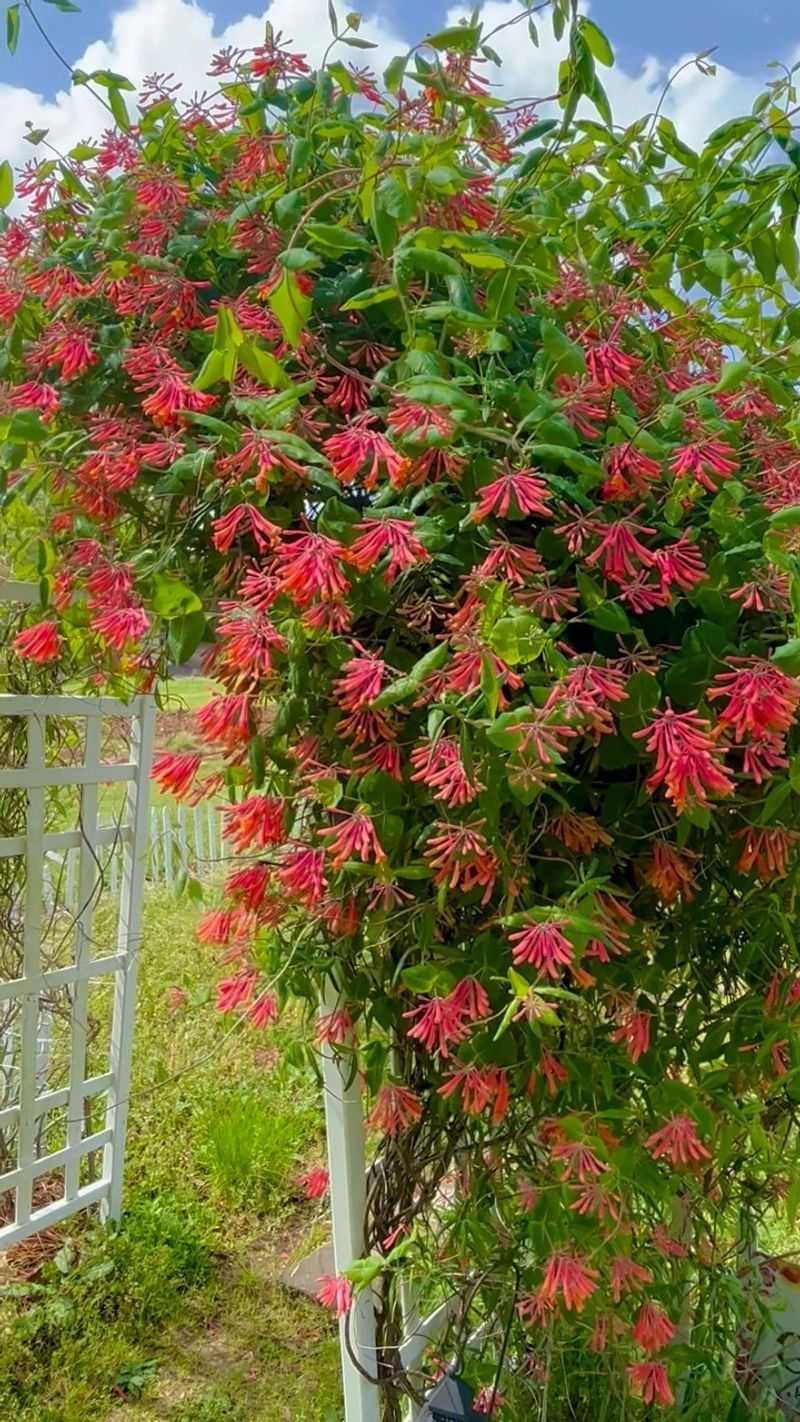
A fence line is a natural fit for coral honeysuckle, but the fence has to be up to the job. The vine twines rather than self-adhering, which means it wraps its stems around whatever is available.
A chain-link fence, a wooden rail fence with wire, a cedar trellis, or a sturdy arbor all work well. A smooth, wide-board privacy fence with nothing for the stems to wrap around will frustrate the plant and the gardener.
If your fence is smooth-surfaced, add horizontal wires, a lattice panel, or a separate trellis placed in front of it so the vine has something to grip.
Young plants need a little help getting started. For the first growing season, loosely tie new stems to the support with soft plant ties or strips of cloth every few inches.
Once the vine finds the structure and begins twining on its own, it will take over from there. Audubon notes that coral honeysuckle commonly reaches 10 to 20 feet at maturity, so plan the support with that eventual size in mind.
A fence section or trellis that feels oversized for a young plant will look appropriately filled in a few seasons.
Sunlight is the single biggest factor in how many flowers you get. North Carolina Extension recommends full sun, roughly six or more hours of direct light per day, for the heaviest bloom.
The plant will survive in partial shade, but reduced light means fewer flowers and a thinner canopy. Along a Texas fence line, a south- or east-facing exposure tends to deliver the sun exposure the vine needs without the punishing late-afternoon western heat that can stress young plants during their first summer.
Match the planting site to Texas heat and drainage
Texas soil and climate are not one thing. A gardener in the Blackland Prairie is working with heavy, expansive clay.
Someone on the Edwards Plateau is dealing with shallow, rocky alkaline soil over limestone. A Gulf Coast gardener faces sandy or silty ground that can stay saturated after rain.
Coral honeysuckle can perform in several of these situations, but it needs one condition everywhere: drainage. Roots sitting in waterlogged soil invite root rot and decline, so if your planting spot stays wet for more than a day or two after a heavy rain, amend the soil or choose a raised spot before planting.
The Native Plant Society of Texas describes coral honeysuckle as drought-tolerant once established, but that tolerance takes time to develop. During the first growing season, and often into the second, the vine needs regular supplemental watering to build a root system deep enough to handle summer heat and dry spells.
A good rule of thumb is to water deeply once or twice a week during establishment, then taper off as the plant matures and the roots spread. Mulching the root zone with two to three inches of wood chips or shredded bark helps keep the soil cooler and holds moisture between waterings, which is especially useful during a hot Texas summer.
Winter behavior is another regional variable worth planning around. In mild Gulf Coast winters, coral honeysuckle often stays semi-evergreen, holding most of its leaves through the cold months.
Farther north or at higher elevations, it may drop its leaves entirely and go dormant. That means it should not be counted on as year-round screening in colder parts of the state.
Check with a local native plant nursery to understand how the vine typically behaves through winter in your specific area before planting it where year-round coverage matters.
Establish the vine, then prune after flowering
Getting coral honeysuckle through its first year is the hardest part of growing it. Water consistently, keep the root zone mulched, and guide young stems onto the support as they grow.
The vine is not maintenance-free, and the first season especially requires attention. Once the root system is established, the care routine becomes lighter, but the plant still benefits from annual pruning and occasional monitoring for pests.
Timing the pruning correctly makes a real difference in how many flowers you see. Coral honeysuckle blooms on new growth, which means cutting the vine back hard in late winter or early spring removes the stems that would have produced your spring flowers.
North Carolina Extension advises pruning after flowering rather than before the spring bloom. A light trim right after the main spring flush removes spent growth, encourages new branching, and sets the vine up for better repeat blooms later in the season.
If the vine has grown beyond its allotted space, a more substantial cutback can follow the spring bloom without sacrificing that year’s flower display.
Pest and disease pressure is manageable but real. Aphids sometimes cluster on new growth, especially in spring when stems are soft.
The Native Plant Society of Texas notes that good air circulation and drainage help limit powdery mildew, which can appear during humid stretches. Leaf spots are also possible.
None of these issues typically threaten a healthy, established vine, but they are reasons to check the plant periodically rather than assume it needs nothing. Keeping stems spaced out on the support rather than bunched together improves airflow and reduces the conditions that favor fungal problems.
Build a hummingbird habitat beyond one vine
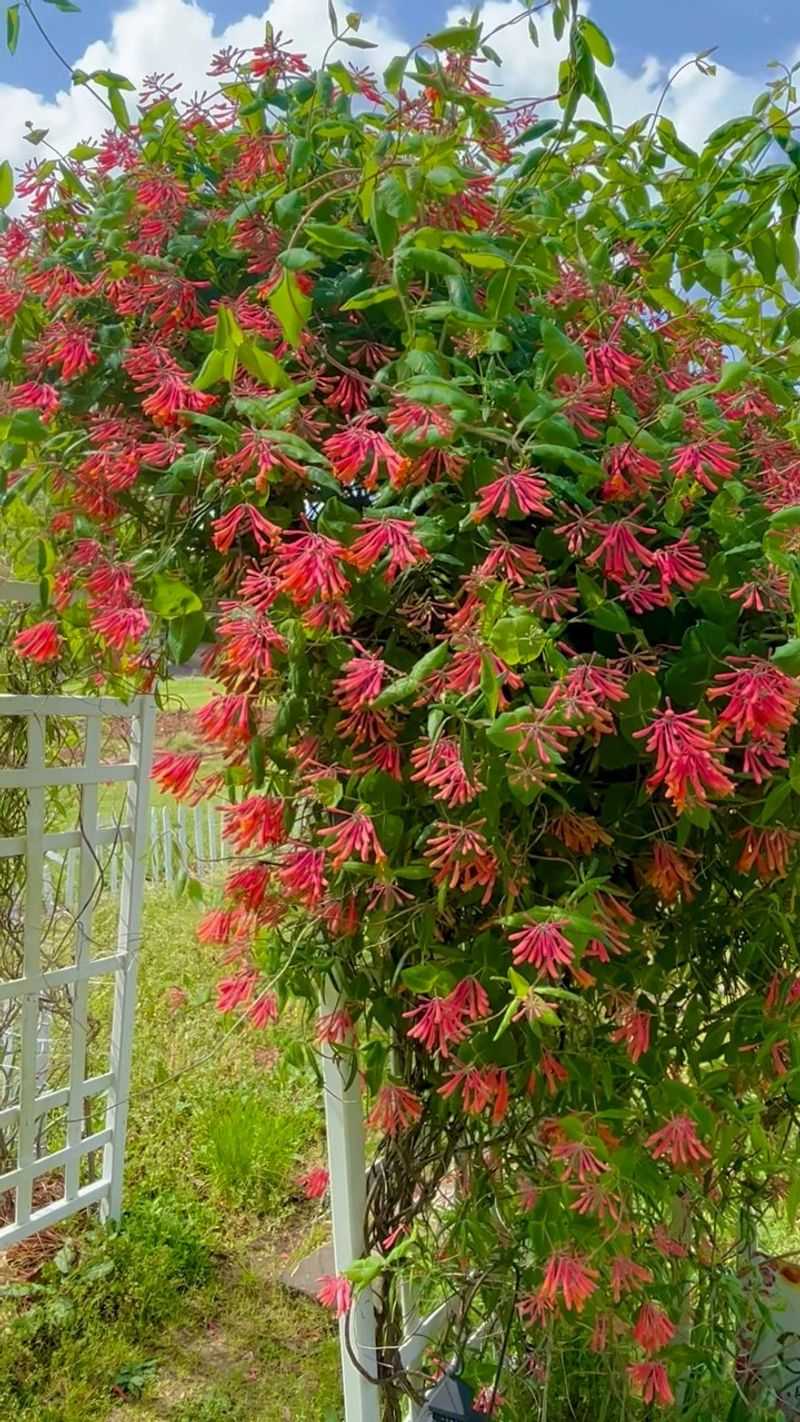
One vine can attract hummingbirds, but it cannot guarantee them. Hummingbirds are mobile, territorial, and opportunistic.
Whether they visit a given yard depends on local hummingbird populations, migration timing, the presence of competing nectar sources nearby, weather patterns, and how mature and productive the plant is in a given season. Mississippi State University Extension’s backyard habitat guidance recommends providing multiple flowering plants with overlapping and sequential bloom periods rather than relying on a single nectar source, and that advice applies directly to a Texas hummingbird planting.
Nectar is only part of what hummingbirds need. Cornell Lab of Ornithology research shows that hummingbirds consume insects and spiders as a critical protein source, especially during nesting season and migration.
A yard that offers nectar but has been heavily treated with insecticides may actually work against hummingbird visits by eliminating the small invertebrates the birds depend on. Avoid routine broad-spectrum insecticide applications around the vine and nearby flowering plants.
If pest pressure on the honeysuckle is severe, spot-treat with the most targeted option available and skip any spraying when hummingbirds are actively foraging.
Broadening the habitat pays off in other ways too. Audubon’s hummingbird yard guide recommends adding a shallow water feature for bathing and drinking, perching spots such as small bare branches or thin wire where hummingbirds can rest between feeding bouts, and shelter from nearby shrubs or trees.
Audubon Texas lists coral honeysuckle alongside flame acanthus, Turk’s cap, and Texas lantana as regional hummingbird plants, and pairing two or three of those together gives you overlapping bloom periods that extend the nectar window well beyond what any single vine can provide.
Check the species label and placement risks
Before buying, confirm the label says Lonicera sempervirensLonicera japonica. Generic “honeysuckle” tags at big-box garden centers often refer to Japanese honeysuckle (), a nonnative invasive that spreads by seed and runners, shades out native vegetation, and has been documented causing ecological damage across Texas.
The Texas Invasives database profiles Japanese honeysuckle as a species to avoid introducing or spreading. The two plants look similar on a nursery bench, especially before they bloom, so the scientific name is the only reliable way to tell them apart at purchase.
One other difference worth knowing: coral honeysuckle does not smell like the honeysuckle most people remember from childhood. Mississippi State Extension notes that the lack of the familiar sweet fragrance associated with Japanese honeysuckle is something gardeners sometimes find disappointing.
The flowers are visually striking and wildlife-valuable, but if fragrance is what you are after, coral honeysuckle will not deliver it. Sell it to yourself on the flowers, the fence coverage, and the birds, not the scent.
Placement near structures deserves careful thought in fire-prone areas. The North Carolina Extension Gardener Plant Toolbox rates coral honeysuckle as highly flammable.
That rating does not make the plant off-limits, but it does mean that gardeners in wildfire-prone parts of Texas should consult local fire-safety or defensible-space guidance before planting it directly against a home or outbuilding. Also keep in mind that the vine may be deciduous or semi-evergreen in colder Texas winters, so it should not be counted on for year-round visual screening in regions that regularly see hard freezes.
Match the plant to your actual site conditions rather than assuming it performs identically everywhere in the state.
Turn the fence into a potential summer nectar stop
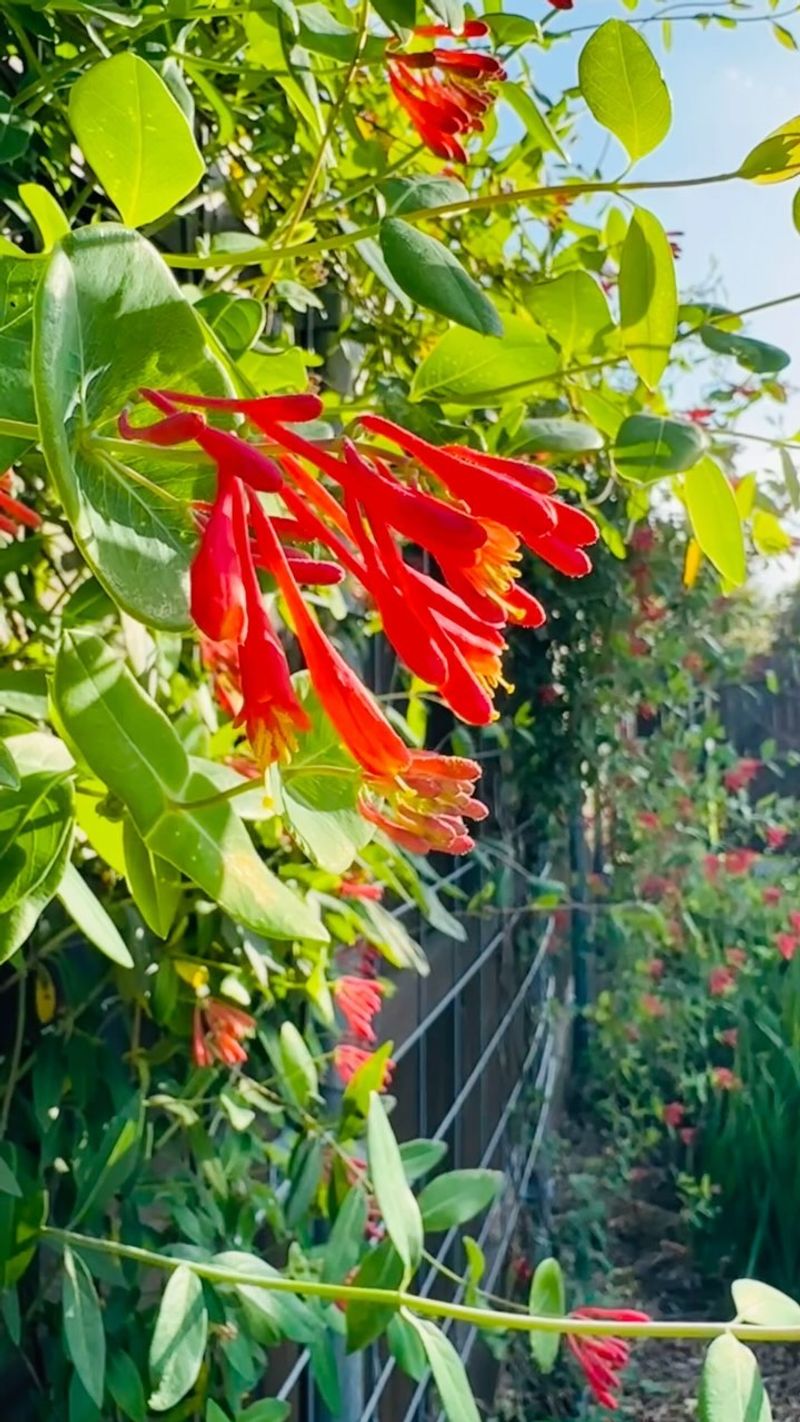
Putting all of this into practice starts with one correctly identified plant: Lonicera sempervirens, purchased by scientific name from a reputable native plant nursery. Give it a sturdy, well-lit support, well-drained soil, and consistent water through the first growing season.
Prune after the spring bloom rather than before it, and pair the vine with one or two other regional nectar plants to extend the feeding window.
Audubon’s plant profile and Native Plant Society of Texas documentation both support coral honeysuckle as a genuine hummingbird nectar plant for suitable Texas sites. What they do not support is a promise of nonstop summer bloom, daily hummingbird visits, or identical performance across every Texas ecoregion.
The honest version of this planting idea is a fence that may become a potential seasonal nectar stop from spring into summer, with the best results going to gardeners who match the plant to the right site and build a broader habitat around it.
A well-placed coral honeysuckle will not rewrite the hummingbird migration map, but it might be the reason one pauses at your fence on a June morning.