
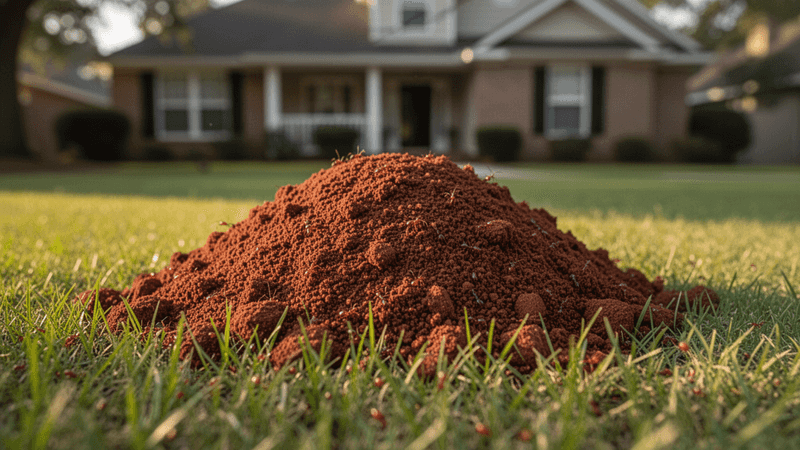
Spotting a cluster of fresh mounds in your garden bed can feel alarming, but the story behind them is usually more complicated than a simple takeover. Fire ant colonies in North Carolina respond to rain, warmth, soil disturbance, and seasonal shifts in ways that can make an existing nest suddenly visible overnight.
Understanding what those mounds are actually telling you changes how you respond, and getting that response right protects your family, your plants, and the other creatures living in your soil.
A sudden mound flush signals changed conditions—not necessarily a new invasion
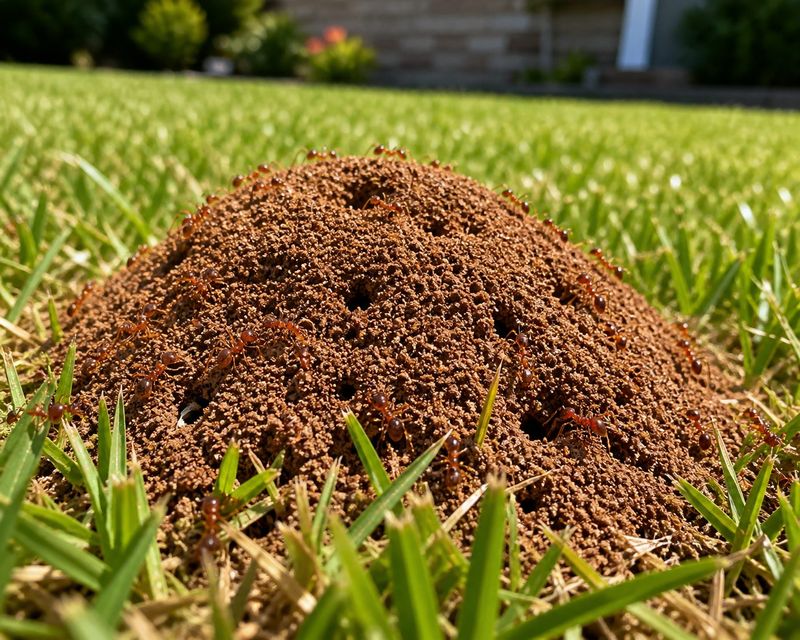
Walking out to find several new mounds in a garden bed that looked clear last week can feel like an overnight invasion. The reality is more nuanced.
NC State Extension guidance on fire ants in turf notes that small colonies can go completely unnoticed until heavy rain forces them to build mounds above accumulating groundwater, which means the ants were likely already there before the mounds appeared.
A sudden increase in visible mounds does not prove that fire ants have newly colonized every corner of a bed, that the colony count has risen, or that the soil is in poor condition. Existing colonies may repair mound surfaces after a storm, relocate a short distance, or establish satellite mounds when conditions around their original site change.
None of those behaviors require a new ant to arrive from somewhere else.
Warm, sunny exposure accelerates mound production too. NC State’s arthropod pest guide for North Carolina turf identifies open, heat-absorbing locations near sidewalks, slabs, and driveways as especially productive nesting spots, which is why raised beds near hardscape can seem to generate mounds faster than shadier areas.
And NC State’s fire-ant guidance for strawberry growers specifically flags recently worked, loose, well-drained raised-bed soil as an attractive nesting environment.
The most useful way to read a mound is as evidence that something around the colony recently changed, whether that’s moisture, temperature, or soil structure. A mound is not a precise soil test, and it cannot tell you whether the bed’s drainage, fertility, or overall health is good or bad.
That distinction matters because it shapes every decision that follows, from whether to inspect the soil, to whether to treat, and what kind of treatment actually makes sense for the site.
Rain, drought, warmth, and disturbance shape what you see
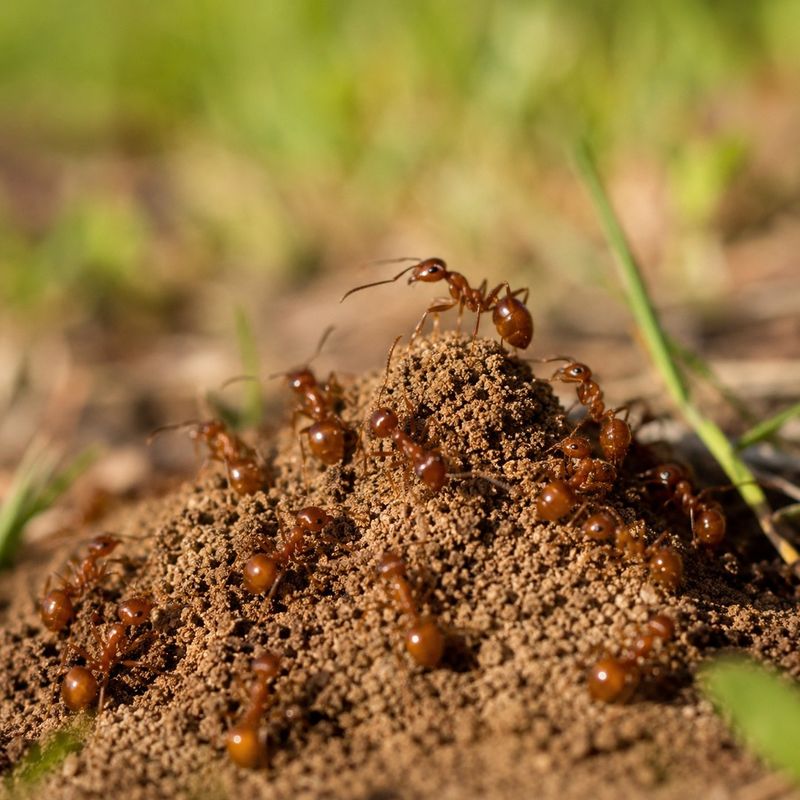
Heavy rain is one of the most common triggers for a sudden mound flush. When groundwater accumulates faster than it can drain, colonies move upward and build mounds above the wet zone to protect the queen and brood.
NC State’s biology and behavior resource for red imported fire ants explains that this response is a survival adaptation, not a sign that the colony is growing or spreading across the bed. The mound you see after a storm may simply be the same colony you couldn’t see before it rained.
Drought creates a different picture. When soil dries out, colonies may push deeper to find moisture rather than building upward.
During extended dry periods, foraging activity can shift as ants search for water, which sometimes brings them into contact with irrigated beds or drip lines. The USDA APHIS fire ant program manual acknowledges that colony behavior and surface activity vary with temperature and moisture in ways that affect what a homeowner actually observes on a given day.
Warmth and sun exposure matter independently of rain. Open, south-facing beds that absorb heat quickly tend to attract nesting in sunny seasons because fire ants prefer warm soil for brood development.
The NC State turf arthropod guide links increased mound production to sunny, warm locations, which explains why mounds can cluster near stone edging, concrete borders, or bare soil patches that heat up faster than the rest of the bed.
Soil disturbance adds another layer. Tilling, mulching, amending, installing irrigation, clearing vegetation, or importing new soil and compost can all prompt a colony to relocate or build satellite mounds nearby.
That said, disturbance is only one factor among several. Fire ants also nest in undisturbed lawns, pastures, stream margins, and pavement edges, so a freshly tilled bed is not the only explanation when mounds appear.
USDA Agricultural Research Service findings indicate that summer rain may stimulate surface mound repair, while other weather combinations can change mound height and volume without any change in colony numbers. Rain can reveal or reshape existing colonies without proving that new ones have arrived.
Inspect the bed before changing the soil
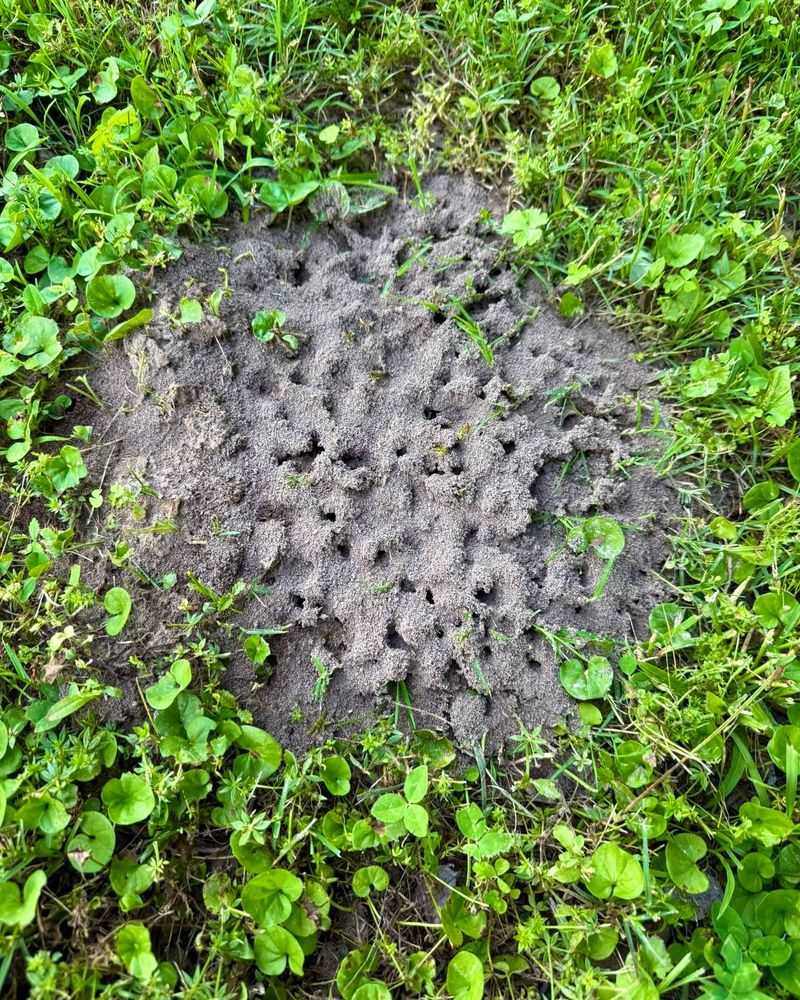
Before reaching for a shovel or a bag of soil amendments, spend a few minutes reviewing what the bed has been through recently. Ask whether the area stood in water after the last storm, whether irrigation has been running longer or more often than usual, and whether runoff from a driveway or path collects along the bed’s edge.
Those observations matter more than the mound itself when you’re trying to understand why ants are visible now.
Also consider whether the bed was recently tilled, raised, amended with compost, mulched, cleared of old plants, or built with imported topsoil. NC State’s fire-ant guidance for strawberry production documents fire ant activity in compost piles, mulched beds, and recently worked raised-bed soil, which means the very improvements that make a garden bed productive can also create an inviting nesting environment.
Disturbance and organic material together can attract colonies that were not previously visible in that spot.
One thing worth understanding is that the soil inside a mound behaves differently from the soil around it. Peer-reviewed research on fire ant mound soil structure found that mounds have distinctive pore networks and can hold substantially more moisture shortly after rainfall while also drying faster than adjacent soil.
That means the mound is a modified microhabitat, not a representative sample of what is happening in the rest of the bed.
Resist the urge to add drainage amendments, rebuild the bed structure, or make sweeping soil changes solely because mounds appeared. NC State’s fire-ant turf resource is clear that fire ants can thrive in loose, well-drained, recently disturbed soil just as readily as they can escape saturated ground.
Changing the soil to be drier or more compacted will not reliably discourage nesting, and it may harm the plants and soil organisms you want to keep. Work through the inspection questions first, then decide whether any bed adjustment is actually warranted.
Identify the ant without provoking the mound
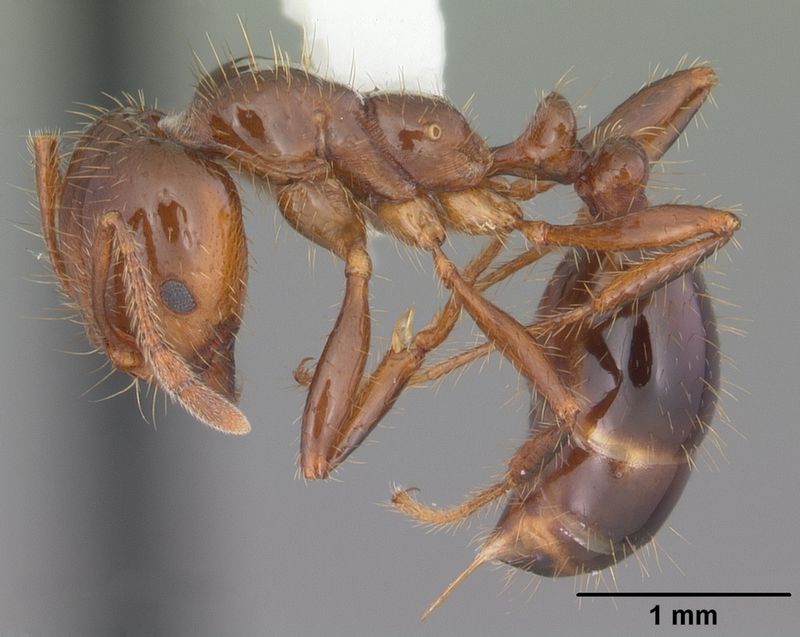
Accurate identification is a prerequisite for any treatment decision, and it is possible to gather useful information without disturbing the colony. Imported fire ants in North Carolina are typically reddish-brown to black, and they have two distinct nodes or humps between the thorax and abdomen.
NC State’s guide to managing fire ants in your yard describes these traits alongside the characteristic aggressive swarming that occurs when a mound is disturbed. These are useful clues, but none of them alone confirms the identification.
Color and node count can resemble other ant species found in North Carolina gardens, and aggressive behavior is not unique to imported fire ants. If there is any doubt about what you are looking at, contact your county Cooperative Extension office or another qualified identifier before choosing a treatment.
This step is especially relevant in areas where local fire-ant pressure varies, such as in counties near the edge of the current quarantine boundary or in mountain regions where fire ants are less established. USDA APHIS fire ant information and University of Georgia Extension’s fire ant management bulletin both emphasize confirmation before treatment.
Never poke, rake, or dig into a mound to test the ants’ reaction. Imported fire ants can swarm rapidly and sting repeatedly the moment a nest is disturbed, and multiple stings can happen before a person realizes what is occurring.
Children and pets should be kept well away from any suspected mound. People with a history of severe insect-sting allergy face the greatest risk, and anyone who experiences trouble breathing, swelling of the face or lips, or other signs of a serious reaction after a sting needs emergency medical attention immediately.
Poison Control guidance on ant stings confirms that systemic reactions require urgent care rather than a wait-and-see approach.
Match treatment to the site and the colony pattern
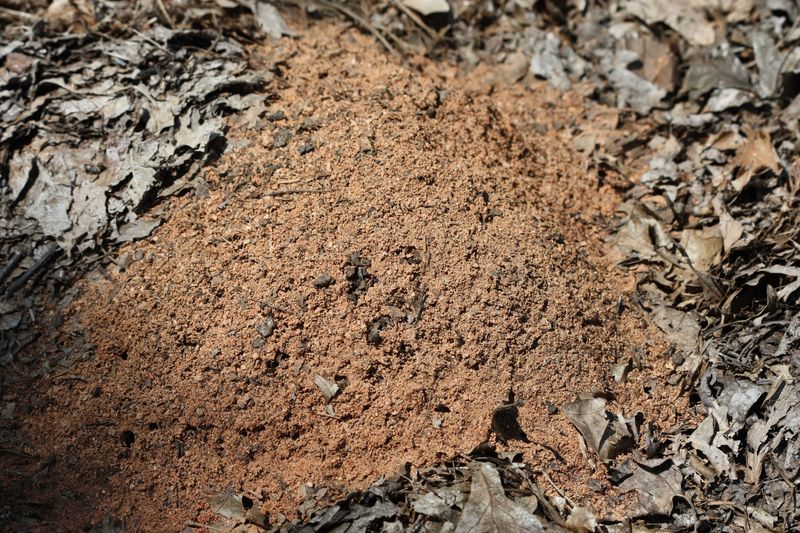
Treating a single visible mound and walking away is rarely enough. Fire ant colonies can have satellite mounds nearby, and surviving ants from a treated nest may regroup a short distance away.
NC State’s red imported fire ant resource for North Carolina advises checking for new mounds around treated sites because colony fragments can re-establish quickly. Monitor the surrounding bed for at least several weeks after any treatment before concluding that the problem is resolved.
Baits and mound drenches work through completely different mechanisms, and choosing between them depends on your situation. Baits rely on foraging workers to carry the material back into the colony, so they require active foraging conditions and may take days or weeks to affect the queen.
They work best when applied during moderate temperatures when ants are actively moving. Mound drenches can act faster, but they require enough liquid to penetrate the mound structure and reach the colony.
NC State’s fire-ant turf guidance references roughly 1 gallon of drench solution per 6 inches of mound diameter, with approximately 2 gallons for a 12-inch mound, though the current product label always controls the actual volume and method.
Do not disturb a mound immediately before applying a drench. Several product labels direct users to leave the mound undisturbed and to apply when ants are active, often during cooler morning or evening conditions.
One current EPA-registered fire ant drench label and another registered product label both include specific timing and disturbance instructions that must be followed.
Site selection is the most important step before purchasing anything. A product labeled for lawns or ornamental beds is not automatically legal for use in a vegetable garden.
EPA pesticide labeling guidance makes clear that food-crop uses, allowable crops, application rates, and preharvest intervals vary by product and must match the actual treatment site. The EPA’s label-first safety guidance and EPA pesticide use compliance documentation both reinforce that the label is the legal standard.
The NC State Extension Gardener Handbook section on insects provides additional context for selecting site-appropriate products in North Carolina gardens.
Choose a proportionate, garden-safe response
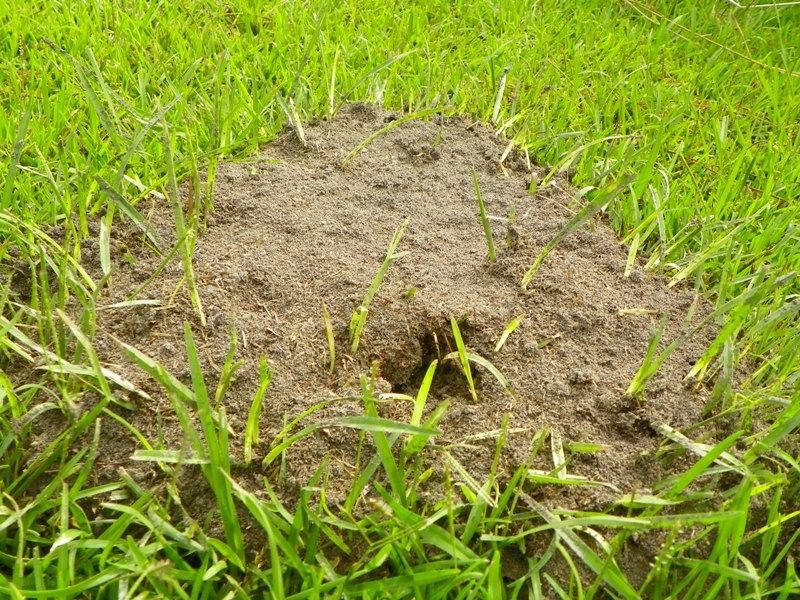
Not every visible mound requires immediate treatment, and blanket spraying a bed is rarely the right starting point. The first question to ask is where the mound sits relative to real hazards: paths people walk daily, play areas, pet runs, home entrances, and beds where edible crops are growing.
Prioritizing those locations makes sense. A mound at the back edge of an ornamental bed that nobody walks through carries a different risk profile than one next to a gate that children open every afternoon.
NC State’s fire-ant resource for strawberry growers notes that fire ants in edible beds often have little direct effect on the crop itself, though the sting hazard to workers and harvesters is significant. Root disturbance and girdling of young trees are possible, but neither outcome is automatic.
A mound does not guarantee crop damage, so proportionate response means addressing genuine hazards first rather than treating everything in sight.
Broad insecticide applications across an entire bed can reduce native ants and other beneficial organisms that compete with imported fire ants. NC State’s community food gardening troubleshooting guide and the University of Georgia fire ant management bulletin both caution against indiscriminate spraying for this reason.
Targeted mound treatment or correctly applied bait generally has a smaller footprint on the surrounding soil community.
Hot water is sometimes mentioned as a low-chemical option, but its limitations are real. UGA reports that approximately 3 gallons of very hot water eliminated roughly 60 percent of treated mounds under the conditions tested, which means a meaningful share of colonies survived.
Hot water can also cause serious burns to the person applying it and can damage desirable plants and grass roots nearby. NC State notes that mechanical disruption and hot-water treatments can be temporary because satellite mounds may appear after the colony reorganizes.
Gasoline, diesel, bleach, ammonia, battery acid, solvents, grits, molasses, aspartame, club soda, and similar household materials have no place in fire ant management. Extension sources from NC State and UGA consistently report that these methods are ineffective, potentially dangerous, and can contaminate soil and groundwater.
They are not alternatives; they are hazards.
Use North Carolina’s quarantine information correctly
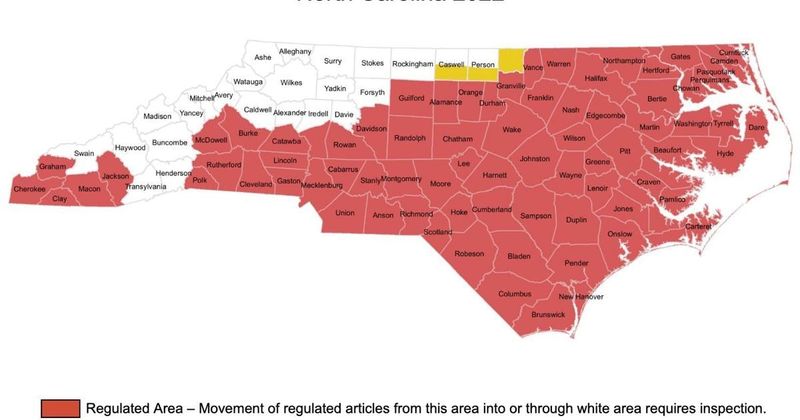
North Carolina maintains an active imported fire ant quarantine program, and the boundary has continued to expand in recent years. As of the January 2026 NCDA&CS announcement, portions or all of 81 counties are generally infested or regulated, with the most recent additions including all of Davie, Forsyth, and Iredell counties.
Some mountain and northern areas of the state remain outside the listed quarantine areas.
A quarantine boundary is a regulatory tool, not an infestation map. NCDA&CS imported fire ant program information makes clear that quarantine rules govern the movement of potentially infested articles, including nursery stock, sod, soil, hay, straw, mulch, plants, and soil-moving equipment.
Being inside a quarantined county does not mean every property has equal fire ant pressure, and being outside one does not guarantee freedom from the pest.
The practical implication for homeowners is straightforward. If you plan to move soil, compost, sod, plants, mulch, or equipment from your property to another location, check whether either property falls within a regulated area.
The 2026 NC IFA quarantine boundary descriptions and the NCDA&CS plant pest quarantine page provide current county-level detail. USDA APHIS fire ant information covers federal quarantine requirements for interstate movement.
County Extension offices can help interpret what the current boundary means for your specific situation and region.
Treat the mound as a clue, then verify the cause
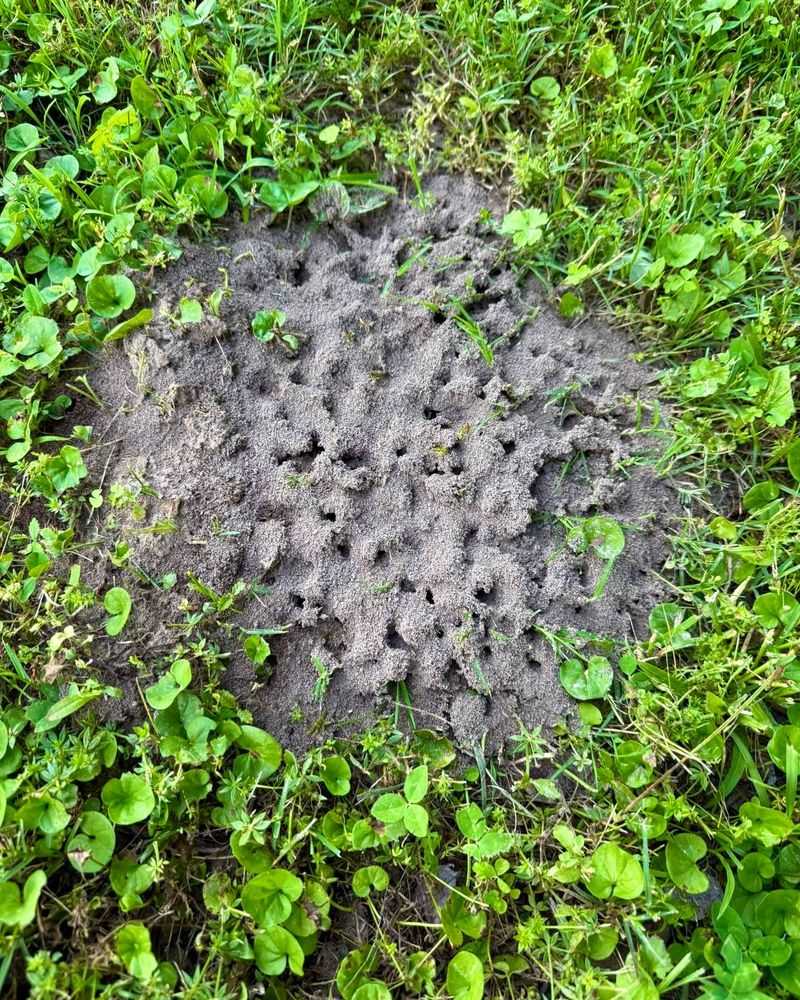
A sudden appearance of mounds in a garden bed is a signal worth investigating, not an automatic emergency. As NC State Extension fire ant resources document, the most common explanations involve changed moisture, warmth, sun exposure, or soil disturbance around an existing colony rather than proof that the whole bed is newly colonized or that the soil has failed.
The practical sequence is straightforward. Observe the mound from a safe distance and note its location relative to paths, entrances, play areas, pets, and edible plants.
Review the bed’s recent history for rain events, irrigation changes, tilling, or imported materials. Keep children, pets, and anyone with a sting allergy away from the area while you gather information.
If identification is uncertain, reach out to your county Extension office before choosing any product.
Once you have confirmed the ant and assessed the hazard level, select a treatment that matches the specific site label, whether that is bait for a low-urgency situation or a drench for a mound in a high-traffic spot. Monitor the surrounding bed for new mounds over the following weeks.
NC State’s yard management guide and its edible-bed fire ant guidance both support this measured approach over broad, reactive treatment. A mound tells you something changed nearby; what you do next should match what you actually find, not what the mound alone seems to imply.