
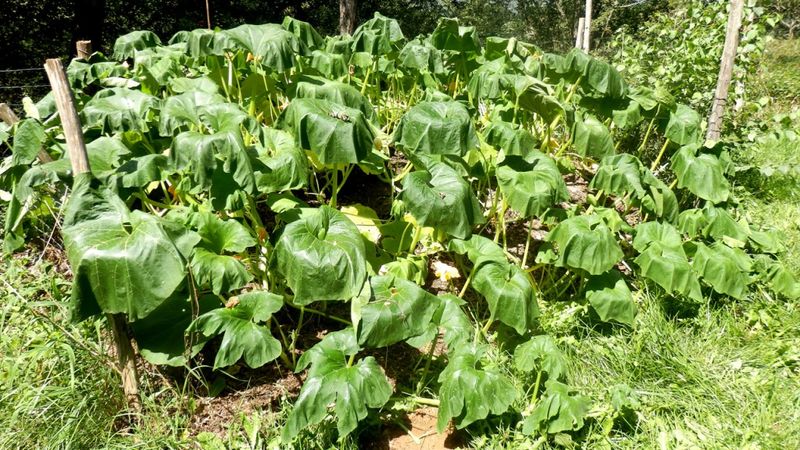
Watching your zucchini plants collapse in a heap every August afternoon is enough to send any gardener into a panic. Before you reach for the hose or start diagnosing a disease, there are a few things worth checking first.
The cause might be simpler than you think, but getting it right makes all the difference for your plants.
Afternoon wilt can signal temporary heat stress
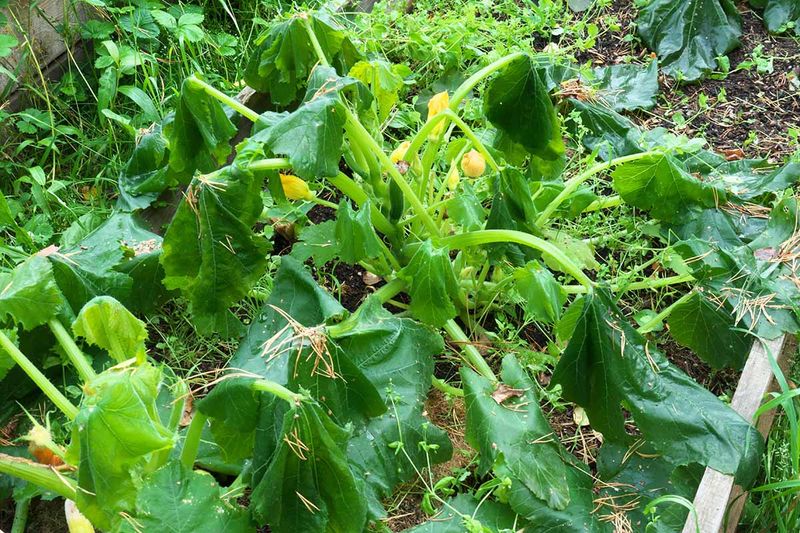
Zucchini plants are big, fast-growing, and thirsty, which makes them especially reactive to the brutal heat of a Southern August afternoon. When air temperatures peak, the plant loses water through its leaves faster than its roots can pull moisture up from the soil.
This mismatch between water loss and water uptake can cause the whole plant to flag and droop, even when the root zone still holds adequate moisture.
The key question to ask is: does your zucchini bounce back? UGA Cooperative Extension guidance on vegetable garden water conservation supports the idea that afternoon wilt followed by recovery by evening or the next morning is more consistent with temporary heat stress than with a serious underlying problem.
Colorado State University Extension’s cucurbit guide similarly notes that squash can wilt during the hottest part of the day and recover as temperatures drop.
Recovery is a good sign, but it does not guarantee the plant is free of disease or pest damage. What should raise concern is wilt that is already present when you check the garden in the morning, wilt that worsens from one day to the next, or a plant that stays collapsed even after temperatures drop overnight.
Those patterns call for a closer look beyond heat stress.
Check the root-zone soil before watering
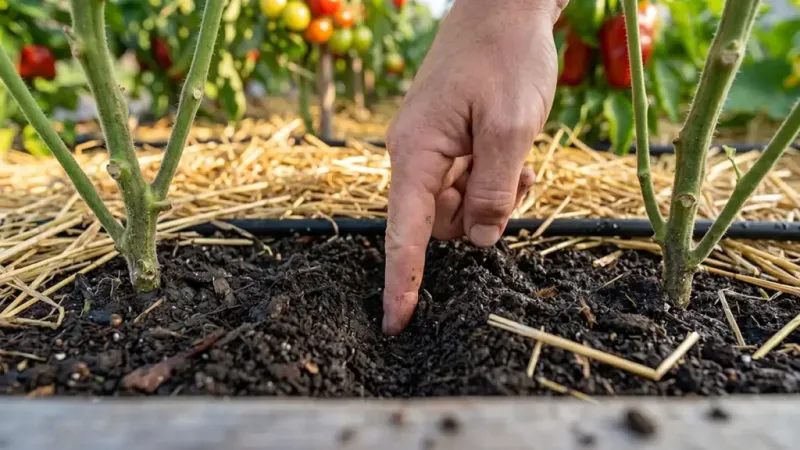
Before you turn on the hose or drip system, spend thirty seconds testing the soil. Push your finger or a small hand trowel into the ground near your zucchini, aiming for a depth of several inches rather than just the surface.
The surface can dry out quickly in August sun while the root zone below stays reasonably moist.
University of Minnesota Extension’s vegetable garden watering guidance recommends checking soil moisture before irrigating rather than watering on a fixed schedule. If the soil feels dry several inches down, your plant likely needs water.
If it still feels cool and damp at that depth, the afternoon collapse may be driven more by high heat and rapid transpiration than by a shortage of water in the root zone.
Oregon State University Extension’s watering basics resource reinforces the same approach: let actual soil moisture, not the calendar or a set number of days, guide your irrigation decision. This simple test takes less than a minute and gives you far better information than any fixed schedule can.
Soil type, recent rainfall, wind, and plant size all shift how quickly moisture depletes, so the soil itself is always your most accurate indicator.
Give dry soil a slow, deep soak
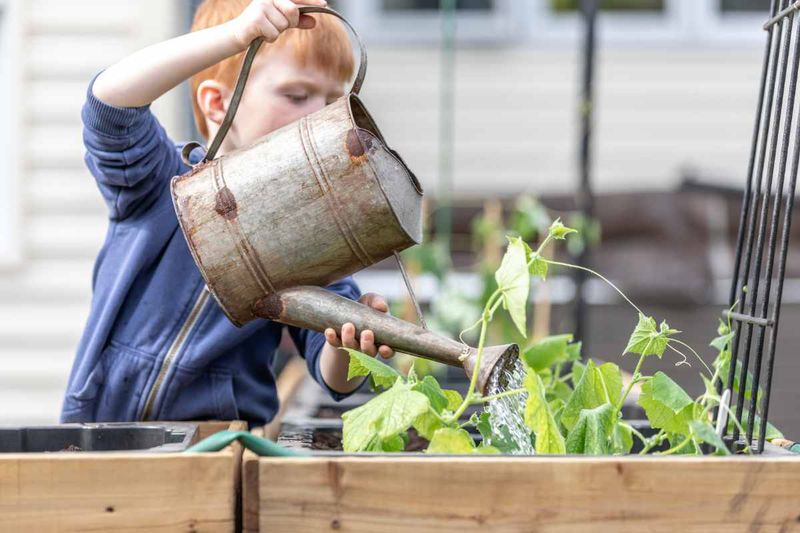
When the soil several inches down feels dry, the plant genuinely needs water and needs it delivered in a way that actually reaches the roots. A quick sprinkle across the surface may wet the top inch or two, but it does little for roots that extend much deeper.
Water applied too fast also tends to run off before it can soak in, especially in compacted or sandy soils.
The better approach is a slow, steady application directly at the plant’s base, giving water time to move down through the profile. UGA Extension recommends soaking the soil to approximately 6 to 8 inches rather than relying on light daily irrigation, because shallow watering encourages shallow roots that are even more vulnerable to heat and drought.
Overwatering to the point of saturated soil creates its own problems, including oxygen deprivation at the root zone, so the goal is thorough moisture without waterlogging.
University of Minnesota Extension’s summer squash guide uses approximately 1 inch of rain or irrigation per week as a starting reference during the growing season, while noting that sandy soils may need more frequent watering to maintain that level. Morning is the preferred time to water as a routine because moisture is available to the plant before peak heat arrives and less is lost to evaporation.
That said, if your zucchini is wilted and the soil is dry at midday, water it then rather than waiting until the next morning.
Direct irrigation to the soil, not the foliage
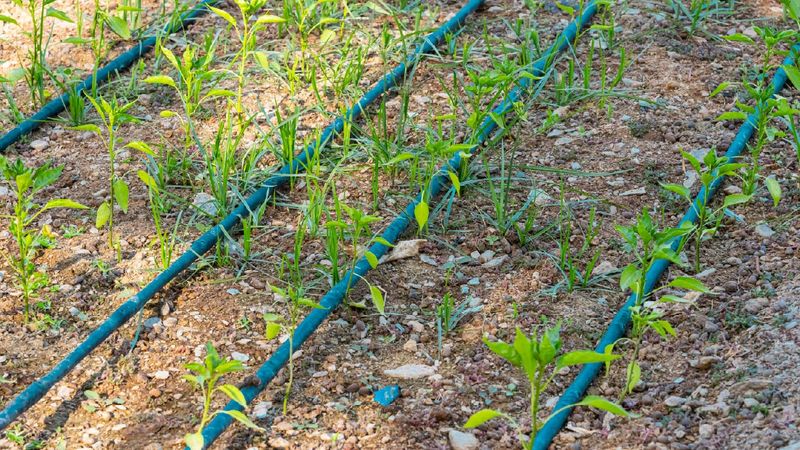
How you deliver water matters almost as much as how much you apply. Overhead sprinklers and quick hand-spraying scatter water broadly, wetting leaves and fruit along with the soil.
A portion of that water evaporates before it reaches the root zone, especially in the heat of a Southern summer.
Drip irrigation, a soaker hose laid along the row, or careful hand-watering aimed at the soil surface are all more efficient alternatives. Texas A&M AgriLife Extension identifies drip irrigation as the most efficient option for home vegetable gardens because it directs water precisely to the root zone and keeps foliage dry.
UF/IFAS guidance on efficient irrigation for edible landscapes similarly favors methods that minimize evaporation and keep water at the soil surface.
Keeping leaves dry as a routine practice can reduce unnecessary leaf wetness, which may lower conditions favorable to some foliar diseases. Wet foliage alone does not directly cause disease; rainfall, overnight dew, humidity, pathogen presence, and the plant’s own susceptibility all play roles.
Still, there is no benefit to routinely wetting the canopy when the goal is root-zone irrigation, and avoiding it is a simple habit to build. UMN Extension also recommends watering at the base to reduce evaporation and keep the plant’s root zone adequately supplied.
Reduce heat and evaporation around the plant
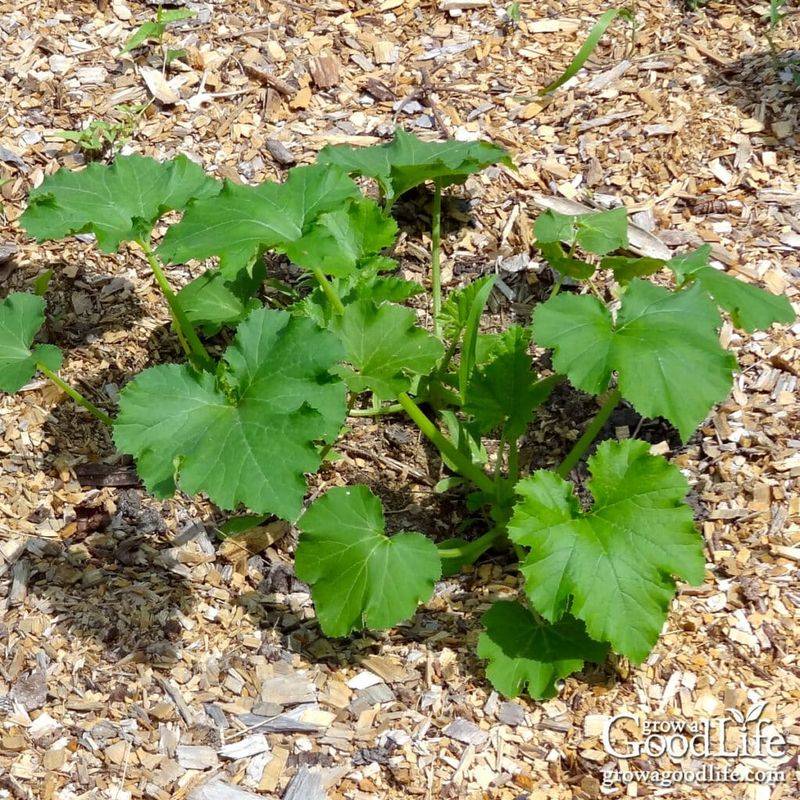
Mulch is one of the most practical tools for managing moisture and heat at the root zone without adding more water. A 2 to 3 inch layer of organic material, such as straw, shredded leaves, or wood chips, laid on the soil surface around your zucchini can noticeably slow evaporation and keep the root zone cooler during peak afternoon heat.
Oregon State University Extension recommends this mulch depth for protecting plants during and after heat events, with the caution that mulch should not be piled directly against the crown or stem, where it can hold excess moisture and invite rot.
Beyond mulch, think about the specific conditions in your garden. A zucchini growing in a container or a raised bed dries out faster than one in an in-ground bed with more soil mass.
Sandy soils drain quickly and may need more frequent checks. Plants in exposed, windy spots lose water faster than those with some protection.
Root damage from cultivation, soil compaction, or previous flooding can reduce the plant’s ability to take up water even when moisture is present.
OSU Extension’s heat-stress identification guide notes that unusually hot nights can prevent plants from recovering as efficiently as they would under more moderate conditions. All of these factors shift how often and how much you need to water, which is why a fixed schedule is less reliable than checking the root zone and responding to what you actually find.
Persistent wilt requires a pest or disease check
Heat stress has a clear pattern: the plant wilts in the afternoon and recovers by evening or the following morning. When that recovery stops happening, the heat-stress explanation has reached its limit.
Leaves that are still drooping when you walk out to the garden first thing in the morning, wilt that grows worse over several days, or a plant that fails to perk up even after you have watered the dry soil thoroughly, all deserve a closer look.
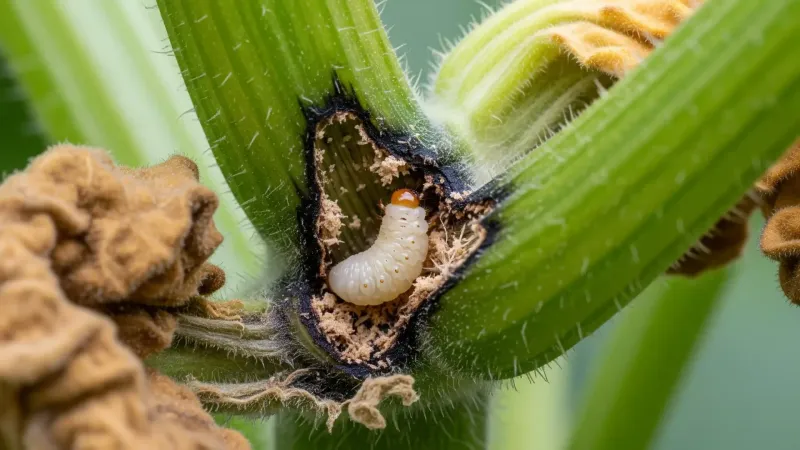
Squash vine borers are a major concern for zucchini growers in the South. University of Minnesota Extension describes squash vine borers as larvae that tunnel into stems and disrupt the plant’s ability to move water, causing wilt that can look like drought stress.
Check the base of the plant and the lower stem for entry holes and for wet, greenish, or orange sawdust-like material called frass. UGA’s commercial squash production guide also flags vine borers as a serious threat requiring prompt attention.
Fusarium wilt can begin with hot-day wilting that initially looks like heat stress before progressing to full plant collapse. On the foliage, look carefully at any white areas: some zucchini varieties naturally carry symmetrical white markings along the veins, and those are not a problem.
A powdery coating that develops and spreads across leaf surfaces and vines is a different matter and worth monitoring. UMN Extension notes this distinction between natural leaf patterns and actual powdery mildew.
Wilt alone is not enough to diagnose any of these problems, but persistent or worsening symptoms are your signal to investigate further.
Adapt watering to Florida, Texas, and your garden site
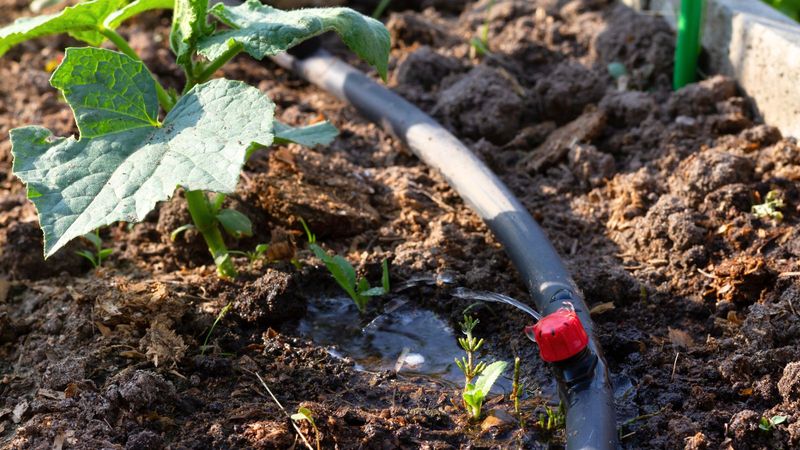
General watering advice gets you started, but regional conditions can shift the picture considerably. Florida gardens often sit on sandy soil that drains fast and holds less moisture between waterings.
That means the root zone can dry out more quickly than in a heavier soil, and checking moisture more often becomes more important than following any set interval. At the same time, UF/IFAS research on summer squash production notes that squash is relatively sensitive to flooding, so the goal in Florida is thorough root-zone moisture without leaving the plant sitting in saturated soil after heavy rain or over-irrigation.
In Texas, summer heat is intense and evaporation rates are high. Texas A&M AgriLife Extension recommends drip irrigation as the most efficient method for Texas home vegetable gardens, keeping water at the root zone and off the foliage while reducing losses to evaporation.
Wind exposure, which is common across much of Texas, further increases how quickly a plant loses water through its leaves, so plants in exposed spots may need more frequent soil checks than those in sheltered beds.
Whether you garden in Florida, Texas, or anywhere else in the South, the core approach stays the same: inspect the root zone before watering, account for your soil type, heat, and wind conditions, and adjust the amount and frequency of irrigation based on what you actually find. Soil-moisture checks rather than fixed schedules give you the most accurate read on what your specific plants actually need.
Use recovery and soil moisture to choose your next step
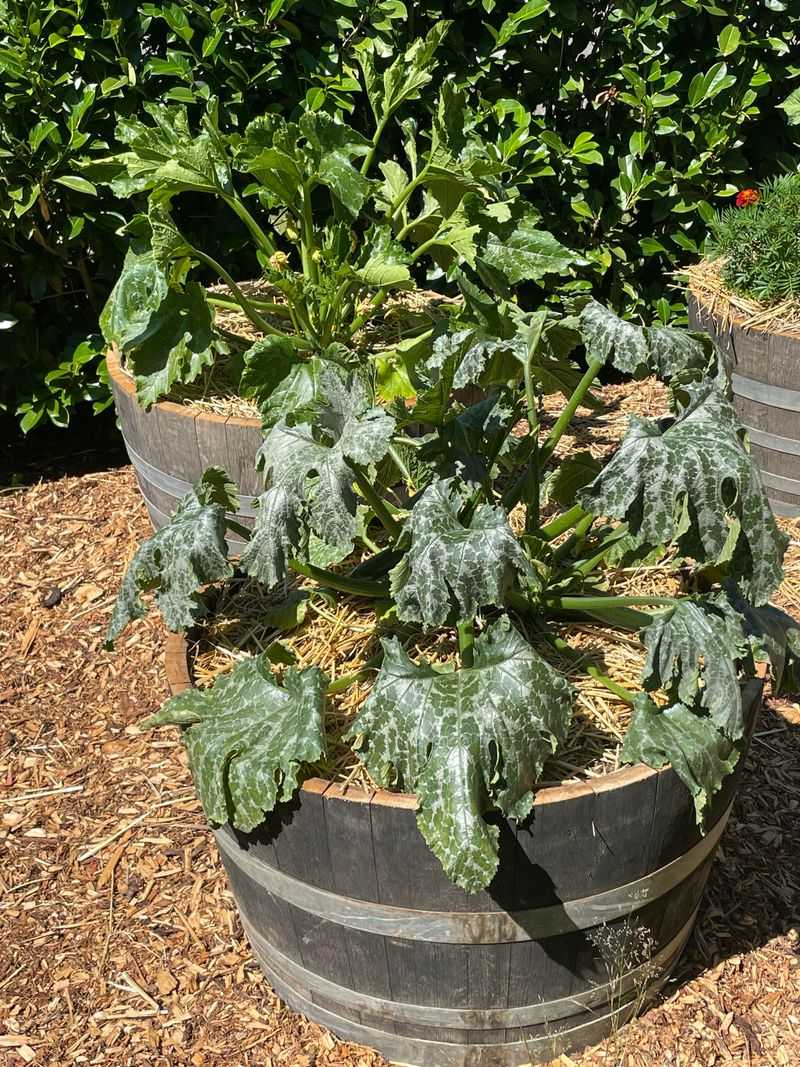
The clearest path forward starts with two observations: did the plant recover overnight, and what does the soil feel like several inches down? Recovery by morning points toward heat stress as the likely cause.
Dry soil at root depth means the plant needs a slow, deep soak at the base, with morning as the preferred time to establish that as a routine when practical.
UGA Extension’s watering guidance and UMN Extension’s vegetable garden watering advice both support soil-moisture checks as the starting point rather than a fixed schedule. If wilt is still present in the morning, worsens over several days, or does not improve after the soil has been properly wetted, move on to inspecting for pests, root damage, or disease.
Afternoon recovery is reassuring, but it is not a guarantee that everything is fine. The plant that bounces back each evening and then slowly declines over a week or two deserves the same careful attention as one that collapses and stays down.
Staying observant, rather than assuming one watering fix solves everything, is what keeps zucchini productive through the hardest weeks of summer.