
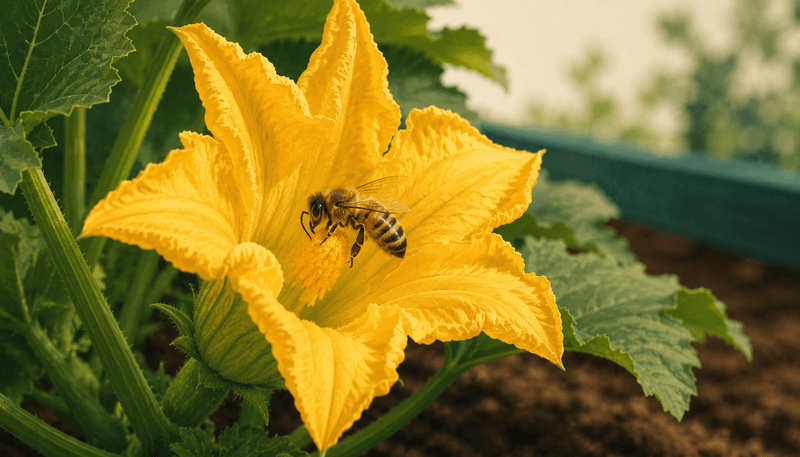
Watching your zucchini plant explode with yellow blooms while producing almost no actual squash is one of the more frustrating puzzles in the summer garden. The plant looks healthy, the flowers keep coming, yet the harvest stays empty.
Pollination trouble is a common reason this happens, and it is worth checking before assuming the heat has simply shut the plant down. A few targeted steps can help you figure out what is actually going on and get your crop moving again.
Check the flowers before blaming the heat
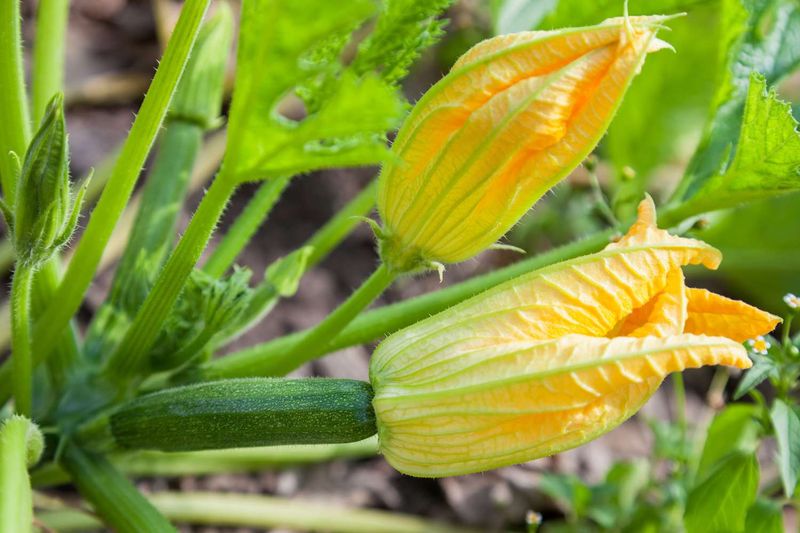
Plenty of yellow blooms on a zucchini plant can feel reassuring, but a flower count alone does not tell you whether fruit is on the way. University of Minnesota Extension guidance on summer squash points out that zucchini produces separate male and female flowers, and the first flush of blooms is often almost entirely male.
A plant drowning in gold petals may still have very few flowers that can actually become squash.
Before settling on any diagnosis, walk out to the bed and look for developing fruit rather than counting every open bloom. UF/IFAS research on cucurbit pollination in Florida recommends measuring fruit set as the share of developing fruit relative to female flowers, not as total bloom activity.
That shift in focus changes what you are looking for and what your next step should be.
Heat adds another layer of complexity. University of Minnesota Extension’s heat-stress vegetable resource explains that high temperatures can push cucurbits toward a greater proportion of male flowers, reduce bee activity, and impair fruit set even when pollinators are present.
Pollination trouble is worth checking first because it is a common, fixable possibility, but heat, water stress, and other plant-health problems can cause the same outcome and deserve consideration if the first check does not resolve things.
Identify the female flower that can become a squash
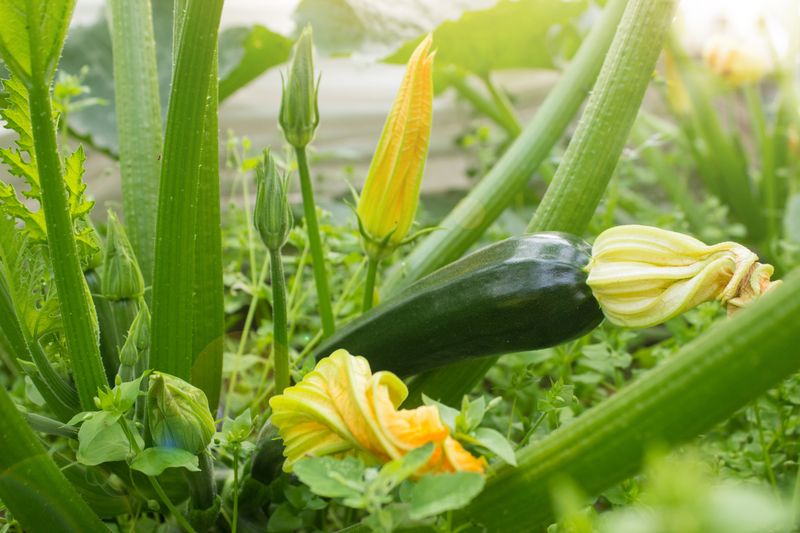
Male and female zucchini flowers look similar from a distance, but a close look at the stem just below each bloom makes the difference obvious. The male flower sits on a long, slender stem with no swelling at the base.
The female flower has a small, squash-shaped bulge between the stem and the petals, and that little bulge is the unfertilized ovary that will grow into a zucchini if pollination succeeds.
Inside the flowers, the structures differ too. University of Minnesota Extension’s pollination requirements resource describes how pollen must move from the male flower’s anthers to the sticky stigma at the center of the female flower before the ovary can develop.
Without that transfer, the female flower closes, and the tiny potential squash behind it shrivels and drops.
Once you know what to look for, assessing the plant becomes straightforward. Check whether female flowers are actually opening, and watch whether the small swelling behind each one starts to enlarge after the bloom closes.
UF/IFAS cucurbit pollination guidance notes that flower sex ratio is a key variable affecting fruit set, meaning a plant producing mostly male flowers faces a fundamentally different problem than one with female flowers that open but fail to grow. Knowing which situation you have shapes every decision that follows.
Use the young fruit to recognize poor pollination
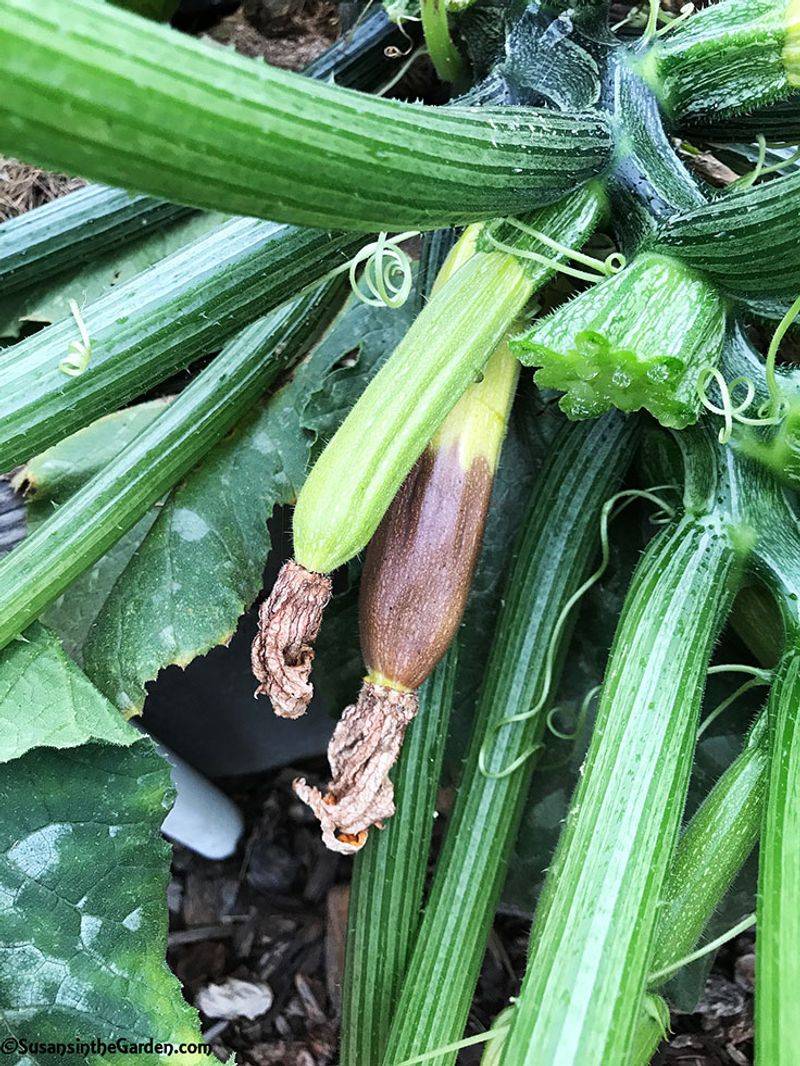
A few specific patterns in the garden suggest that pollen transfer is not keeping up with the female flowers that open. Female blooms that fall off the plant without leaving any swelling behind, tiny squash that begin forming but then turn soft and rot within a day or two, and fruit that grows in a crooked, pinched, or lumpy shape rather than a straight cylinder are all consistent with incomplete pollination.
UF/IFAS cucurbit pollination research lists these outcomes together as signs that pollen deposition on the stigma was insufficient or uneven.
Healthy-looking leaves and vigorous vine growth do not rule out a pollination problem. A plant can be producing plenty of energy through its foliage while still failing to deliver pollen to every female flower that opens, especially during periods when bee activity drops off in the heat.
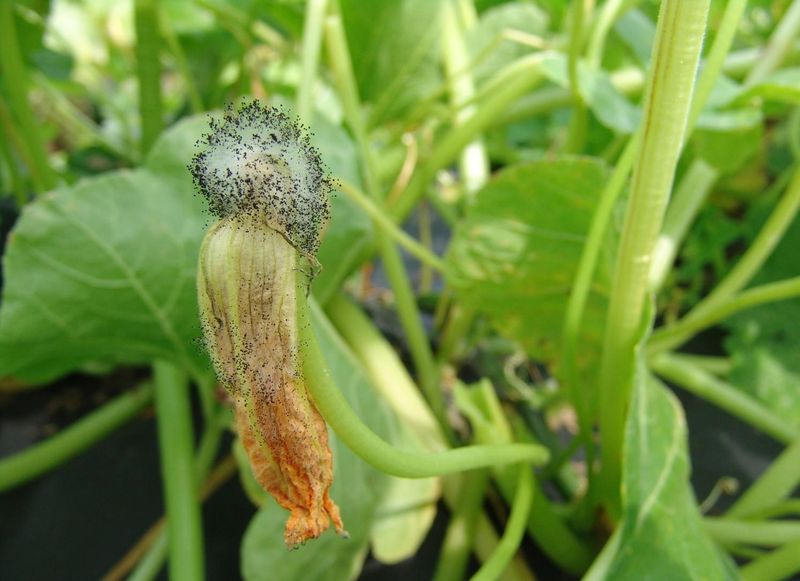
That said, not every small, soft, or discolored young squash points to pollination as the cause. Soft fruit covered in fuzzy white or dark growth after wet weather may indicate Choanephora rot or another fungal disease.
University of Minnesota Extension’s summer squash disease diagnostic tool specifically flags fuzzy blossom growth as a reason to consider fungal infection rather than a pollination gap. Oklahoma State University’s squash production fact sheet also distinguishes blossom-end rot, a physiological disorder tied to calcium and water relations, from pollination-related fruit abortion, so a firm, dark, sunken tip on otherwise normal-looking fruit warrants a separate look.
Hand-pollinate a fresh female bloom in the morning
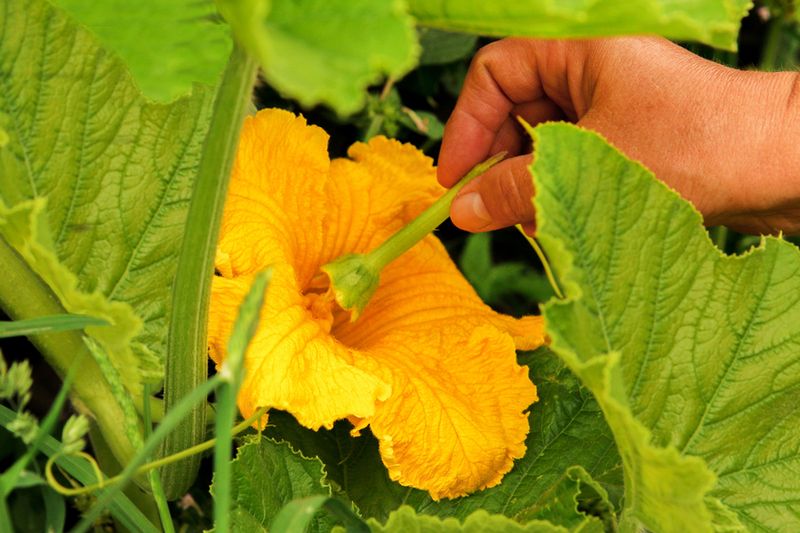
When you suspect that insect visits are not moving enough pollen, hand-pollination is a practical rescue worth trying. Head out to the garden early in the morning, before the day heats up and before the flowers close.
Look for a male flower that has just opened and carries visible yellow pollen on its anthers, and pair it with a freshly opened female flower on the same plant.
University of Georgia Cooperative Extension’s homegrown squash guide recommends using a cotton swab to collect pollen from the male flower and then gently dabbing it onto the sticky stigma at the center of the female bloom. A small, clean paintbrush works the same way.
Some gardeners simply remove the petals from the male flower and press the pollen-covered anthers directly against the stigma, which also transfers pollen effectively.
Timing improves your odds. Utah State University Extension’s small fruits and vegetables advisory recommends avoiding overhead irrigation during the morning bloom window, since water on the flowers can interfere with pollen transfer.
That is practical advice for gardens where sprinklers run in the morning, though it is not a rigid rule for every situation.
Hand-pollination helps when limited pollen delivery is the bottleneck. University of Minnesota Extension notes that it cannot create female flowers where none exist, and it will not overcome severe heat damage, drought, disease, or major pest injury.
Think of it as a useful tool when conditions are otherwise reasonable, not a guaranteed fix for every situation the plant faces.
Keep natural pollinators working the zucchini patch
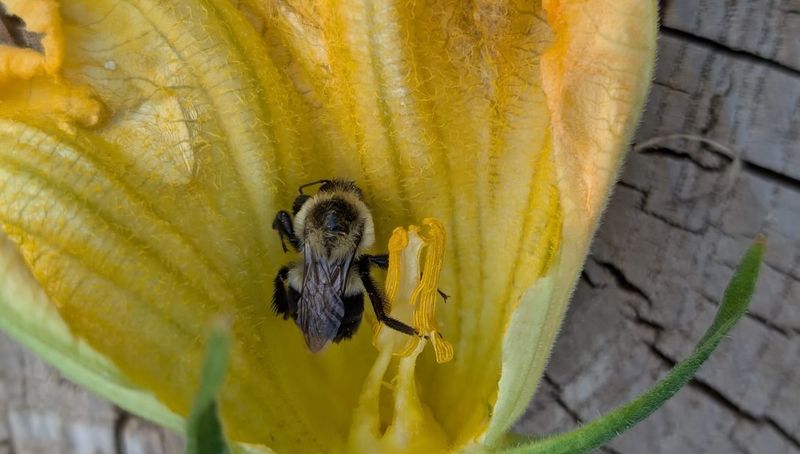
Honey bees get most of the credit for vegetable-garden pollination, but they are far from the only insects doing the work. Penn State Extension’s cucurbit pollination research summary found that wild bees contribute substantially to squash and pumpkin pollination, with squash bees, bumble bees, and other native species often active in the garden alongside managed honey bees.
Spending a few mornings watching which insects visit your zucchini blooms can tell you more about your actual pollination situation than any general assumption about bee availability.
Keeping those visitors coming requires a few practical choices. University of Minnesota Extension’s pollination requirements guidance recommends removing row covers once flowering begins, because fabric that protects plants from pests also blocks every flying pollinator.
If you prefer to keep covers in place for pest control, plan to hand-pollinate daily during the bloom period instead.
Planting nectar-rich flowers nearby can support pollinator populations over a full season, but it will not produce an immediate surge in zucchini fruit set. Pollinator activity also depends on weather, available nesting sites, competing flowers, and pesticide exposure in the surrounding area.
University of Minnesota Extension and UF/IFAS cucurbit pollination guidance both emphasize minimizing unnecessary insecticide use as one of the most direct ways to protect the insects already visiting your garden. If a pest problem requires treatment, follow the product label carefully, avoid applications to open blooms, minimize spray drift, and use label-approved timing to reduce pollinator exposure.
EPA pesticide applicator guidance notes that wild bees may forage very early in the morning, so timing a spray to avoid bloom periods is not as simple as spraying at dawn.
Account for heat, water, and nutrition after the flower check
Heat does two separate things to a struggling zucchini plant, and understanding both helps you respond more effectively. First, high temperatures reduce the activity of bees and other pollinators during the hottest parts of the day, shrinking the window when pollen actually moves.
Second, heat can impair flower physiology and push the plant toward producing a higher share of male blooms, reducing the number of female flowers available to set fruit. University of Minnesota Extension’s heat-stress resource for vegetables describes how temperatures above roughly 90 degrees Fahrenheit during the day and 70 degrees at night are associated with reduced cucurbit fruit set, though these are approximate reference points rather than precise cutoffs that apply equally to every cultivar or growing location.
In Florida, UF/IFAS cucurbit pollination guidance adds that extreme humidity, fog, and persistent wet weather can further reduce pollinator visitation and affect pollen viability. Seeing bees occasionally does not confirm that every female flower received adequate pollen.
Texas growers deal with dry heat rather than humidity, and Texas A&M AgriLife confirms that insects are required for squash pollination, though the state’s conditions differ enough from Florida’s that commercial Florida recommendations should not be applied wholesale to a Texas backyard.
Water stress and excess nitrogen are two more contributors worth addressing. Oklahoma State University Extension’s squash production fact sheet notes that both overwatering and underwatering can contribute to flower drop and an unfavorable flower ratio, while too much nitrogen pushes leafy growth at the expense of flowers and fruit.
Consistent, deep watering and a balanced fertilizer program support recovery, but they work alongside pollination, not in place of it.
Know when the problem is not pollination
Hand-pollination is worth trying when female flowers are present and conditions seem reasonable, but repeating it without result is a signal to look elsewhere. A plant that produces no female flowers at all cannot benefit from hand-pollination regardless of how carefully it is performed.
In that case, the most productive response is to reduce additional stress, wait for cooler overnight temperatures or a shift in flower balance, and check whether water and nutrition levels are appropriate.
Several other problems can mimic the look of poor pollination. University of Minnesota Extension’s heat-stress vegetable resource distinguishes heat-related fruit drop from pollination-specific failure, noting that severe or prolonged heat can prevent fruit set even when bees are present and pollen is being transferred.
Drought, virus infection, and significant pest injury can produce similar outcomes. If the plant looks generally unwell, shows mottled or distorted foliage, or is declining steadily, a plant-health diagnosis is more useful than another round of hand-pollination.
University of Minnesota Extension’s summer squash diagnostic resource flags fuzzy white or dark growth on baby fruit as a sign of Choanephora rot or similar fungal disease, which requires a different response than a pollination gap. Oklahoma State University Extension also distinguishes blossom-end rot, a firm, darkened, sunken area at the tip of the fruit caused by calcium and water-relation issues, from fruit abortion linked to poor pollen transfer.
UF/IFAS cucurbit guidance reinforces the point: when symptoms spread across the whole plant or include crown wilt and progressive decline, a disease or pest specialist is a better next call than another pass with a paintbrush.
Follow a simple morning diagnosis
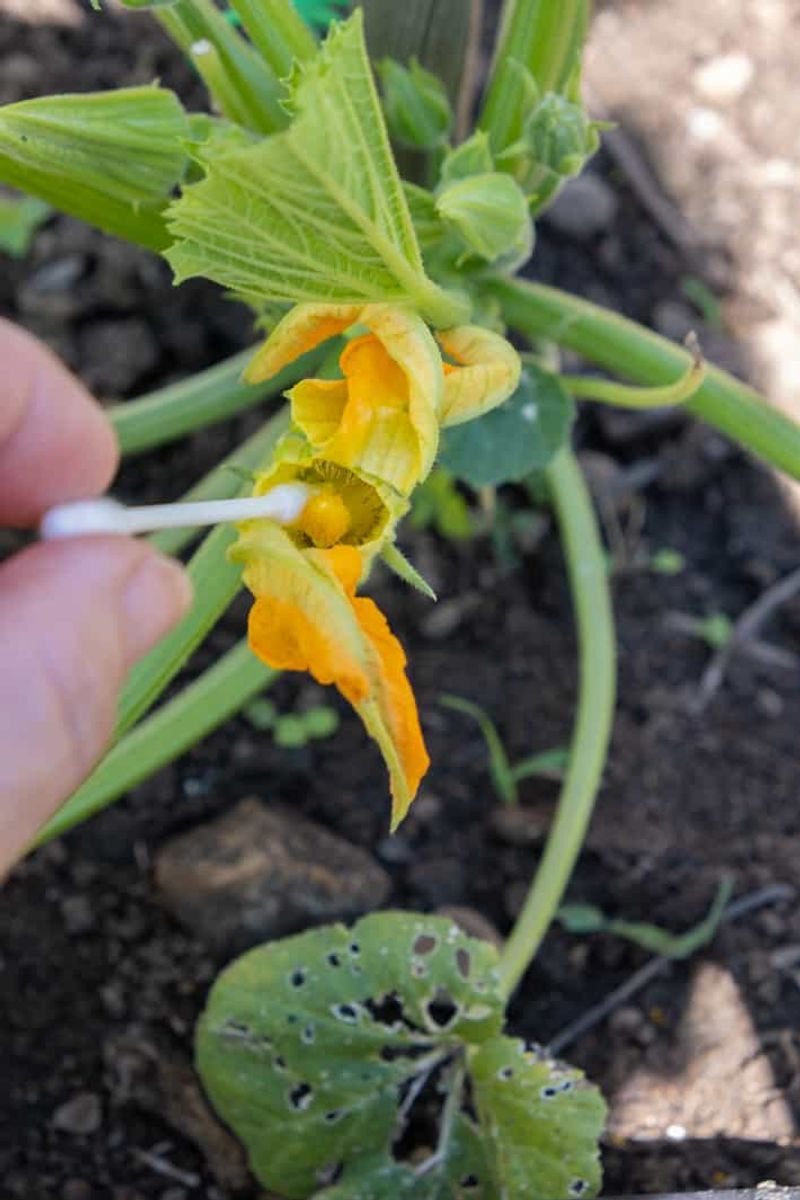
A reliable morning routine covers the most important bases quickly. Start by walking the bed and looking for female flowers with the characteristic swelling behind the bloom.
Check whether any of those swellings are beginning to enlarge, which tells you that at least some pollination is succeeding. If female flowers are present but consistently dropping or producing only tiny fruit that rots, that pattern points toward a pollen-transfer gap worth addressing through hand-pollination.
When you hand-pollinate, use a freshly opened male and female flower and work before the heat of the day closes the blooms. Keep row covers off during flowering unless you are committing to daily hand-pollination, and hold off on any pesticide applications that could affect the insects visiting your garden.
University of Minnesota Extension and UF/IFAS cucurbit guidance both note that once fruit begins forming consistently, harvesting frequently supports continued production by preventing the plant from directing all its energy into maturing a single oversized squash.
If hand-pollination does not produce results after several tries, shift your attention to heat, water, nutrition, and plant health before repeating the same steps. Most late-summer zucchini setbacks have a fixable cause, and finding the right one saves time.
A garden that teaches you what it needs is already halfway to a better harvest.