
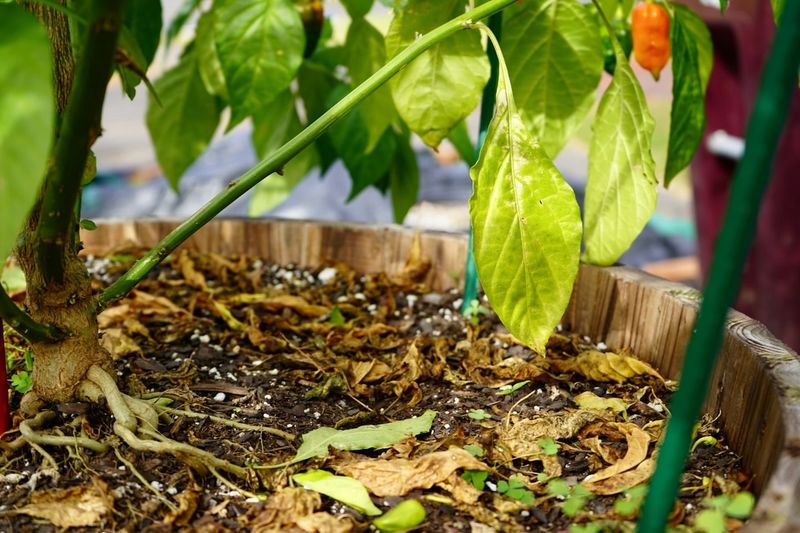
Watching your pepper plants shed leaves in August is unsettling, especially when the plants looked healthy just a week before. Several things can cause a pepper to drop foliage in late-summer heat, and blaming watering right away can send you in the wrong direction.
A careful look at the soil and the leaves themselves will tell you far more than the calendar or the weather forecast ever could.
Leaf drop alone cannot identify the cause
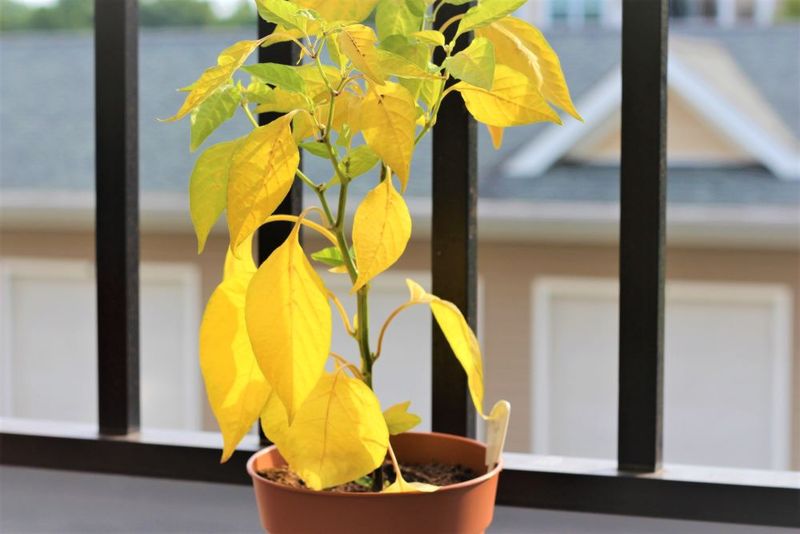
Whole-leaf drop on a pepper plant catches your attention fast, but the symptom alone does not point to a single cause. Peppers respond to late-summer heat in several ways, including leaf curl, temporary wilting during the hottest part of the afternoon, flower abortion, reduced fruit set, and stalled growth.
Those reactions are common and well documented, yet none of them is the same as a plant actively shedding leaves.
Older lower leaves that gradually turn yellow and fall are often a sign of normal aging or generalized stress, not a crisis. The plant is simply redirecting resources.
Rapid defoliation or the loss of young, newly produced leaves is a different story and warrants a closer look, as Virginia Cooperative Extension’s plant diagnostic guidance notes that abnormal loss of new growth is more suggestive of pathogens, insects, chemical injury, or nutritional problems than routine stress.
Watering absolutely deserves a check when leaves start falling. But it deserves a check, not an automatic diagnosis.
Possible contributors include drought stress, root damage from overwatering, bacterial leaf spot, viruses, insect feeding, chemical injury, and normal leaf aging, as Utah State University Extension’s pepper growing guide and other sources confirm. The rest of this article walks through a soil-and-symptom process that helps you figure out which of those possibilities fits what you are actually seeing.
A dry-to-wet swing may stress a pepper
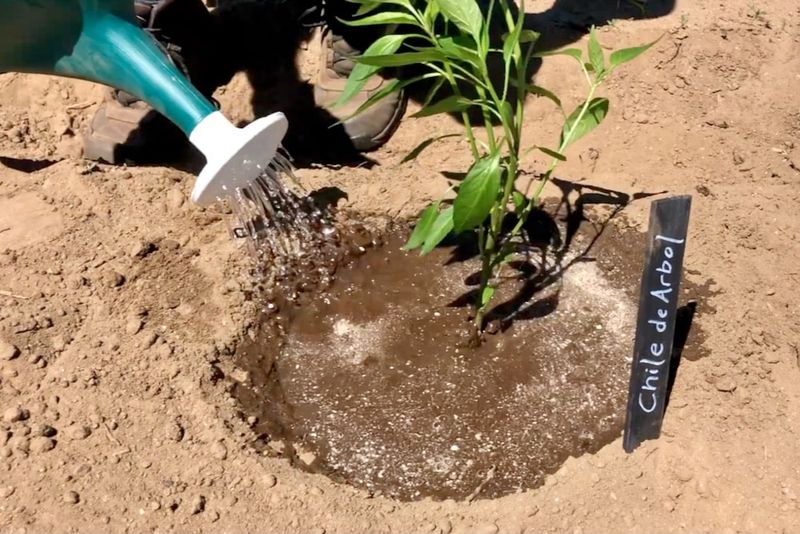
Peppers generally perform best when the root zone stays evenly moist and the soil drains well between waterings. When the soil is allowed to become very dry and then receives a shallow splash of water or, on the opposite end, a sudden heavy soak, the plant can experience a spike of stress during an already demanding period.
That fluctuation is a real concern, though the evidence does not support calling it the usual reason leaves fall.
What inconsistent moisture does more reliably is weaken flowers and small developing fruit. UC Cooperative Extension’s guidance on watering peppers and eggplants notes that irregular soil moisture can contribute to blossom-end rot and reduced fruit set, and that peppers need steady access to water to sustain normal growth during heat.
The plant is already working harder to manage temperature, so adding the burden of moisture extremes lowers its overall resilience.
How quickly conditions shift depends on factors beyond the garden hose. Sandy soils lose moisture faster than clay or loam.
Containers can dry out within a day during a heat wave. Mulch slows evaporation and moderates soil temperature.
Recent rainfall may have already provided what the plant needs, or it may have run off without soaking in. UF/IFAS guidance on watering the vegetable garden reinforces that soil texture, drainage, and weather all shape how often a plant actually needs water, which is exactly why a soil check matters more than any fixed schedule.
Check the root-zone moisture before watering
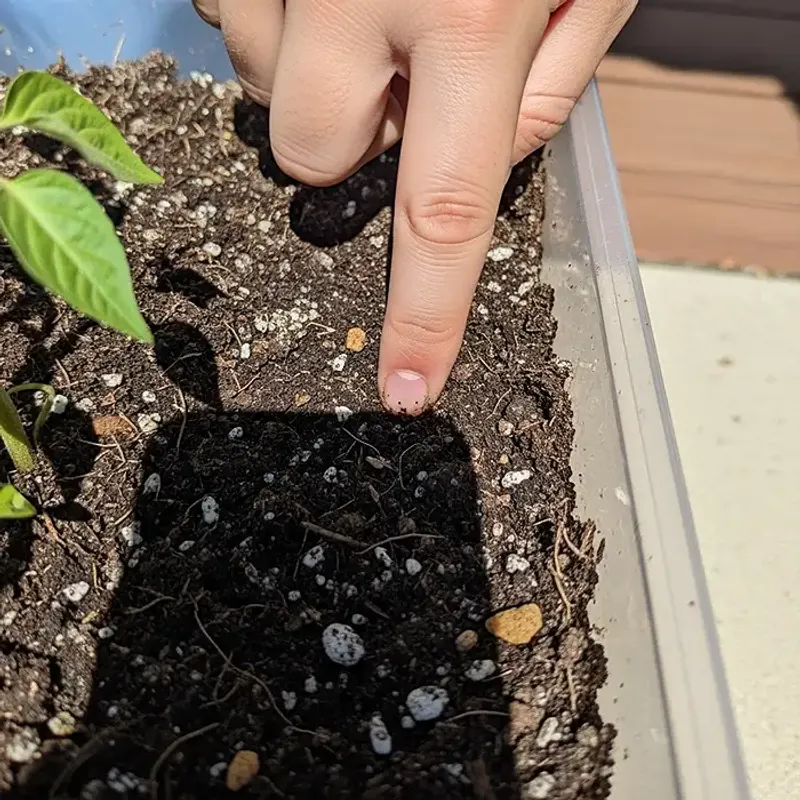
Before reaching for the hose, push a finger or a thin wooden dowel into the soil about 1 to 2 inches below the surface near the plant’s base. If the soil at that depth feels dry, watering is appropriate.
If it still feels moist, the plant likely has what it needs and adding more water could create a different problem. UF/IFAS recommends checking plants every day or two and watering when the top half-inch to inch is dry or the plant begins to wilt, rather than running on a fixed calendar.
A hot afternoon and drooping leaves can feel urgent, but that appearance alone cannot tell you whether the soil is too dry or already too wet. Both conditions can produce wilting.
Checking the soil takes ten seconds and removes the guesswork. Oregon State Extension’s watering basics resource makes the same point: the goal is to match irrigation to what the plant’s root zone actually contains, not to what the foliage looks like from a distance.
Keep the check adaptable to your setup. Containers and raised beds with sandy fill can go from moist to bone dry overnight in August heat, so they may need checking once or even twice a day.
Heavy clay soil holds moisture longer and may need less frequent monitoring. If significant rain fell recently, factor that in before assuming the plant is thirsty.
Iowa State University Extension’s vegetable garden watering guide confirms that actual rainfall and soil type should drive the decision, not a predetermined number of days between waterings.
Water steadily without keeping the soil soggy
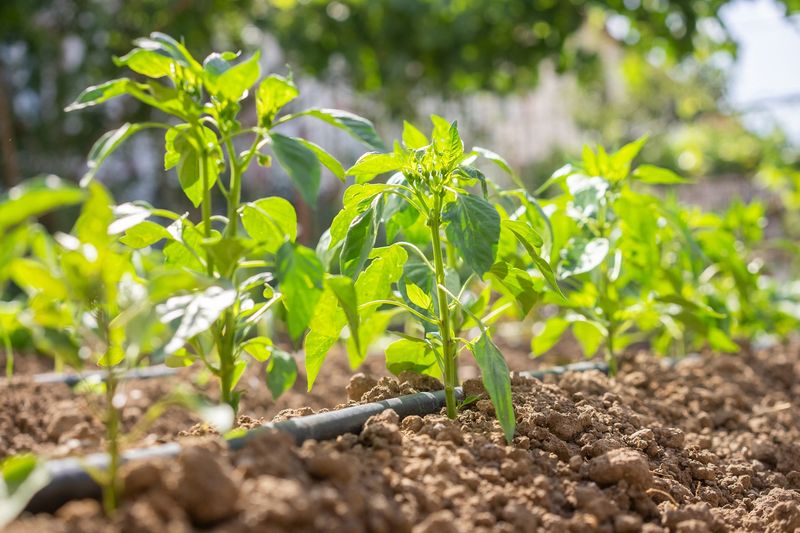
When the soil check confirms the root zone is genuinely dry, water slowly and aim at the soil rather than the foliage. The goal is to wet the main root area thoroughly, not to rinse the leaves.
Apply water at a pace the soil can absorb, and stop when the root zone is saturated through its active depth. University of Minnesota Extension’s pepper growing guide recommends drip irrigation or a soaker hose as preferable to overhead sprinkling because both methods deliver water directly to the root zone and keep foliage drier, which matters in humid Southern summers when prolonged leaf wetness can favor disease.
Early morning is the best time to water when you have a choice. The plant hydrates before peak afternoon heat, and any incidental moisture on leaves has time to dry before evening.
Avoid routine overhead watering late in the day. After a thorough watering, check the soil again in 24 to 48 hours and let that reading, not a calendar date, determine when the next watering happens.
Iowa State University Extension supports this approach: the aim is thorough coverage followed by moisture monitoring, not a rigid interval.
Sandy soils and containers will need more frequent attention than heavier garden beds because they drain and dry faster. Mulch helps across all soil types.
UF/IFAS recommends maintaining roughly 2 to 3 inches of mulch in vegetable beds to slow evaporation and moderate soil temperature, while keeping the mulch pulled back slightly from plant stems to allow airflow at the crown. Avoid piling mulch so deep that it intercepts irrigation before it reaches the roots.
Wet soil can cause the same warning signs
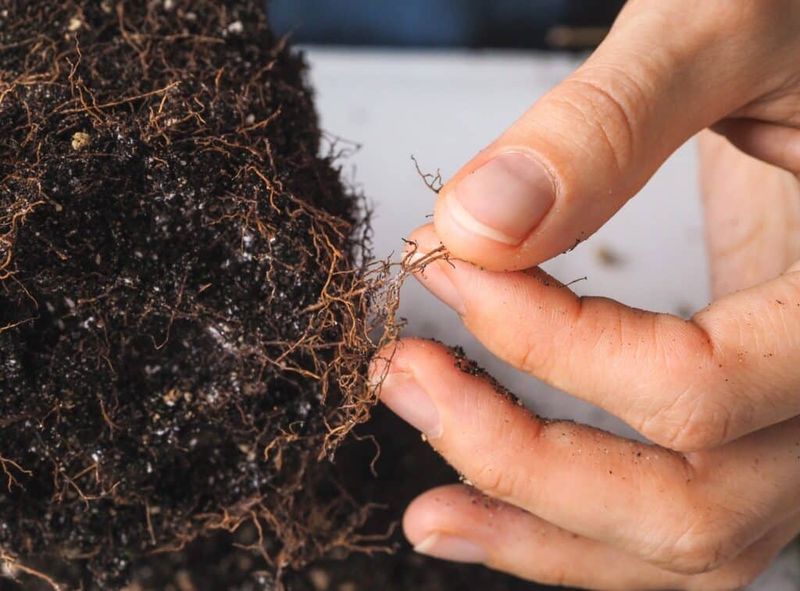
Soggy soil is a hazard that can look almost identical to drought from the outside. When roots sit in saturated conditions, they lose access to oxygen and begin to decline.
The plant above ground responds with wilting, yellowing, and sometimes rapid collapse, which are the same signals gardeners often associate with a plant that needs more water. Adding irrigation to a root zone that is already wet makes the situation worse, not better.
UF/IFAS cautions that continuously soggy soil can cause root decline in vegetable gardens, and that the correction is allowing the soil to dry appropriately between thorough waterings, not keeping it perpetually moist. Root rot pathogens such as Phytophthora thrive in poorly drained or persistently wet soil and can cause rapid wilt and plant death, as UC ANR’s pepper disease documentation and UF/IFAS pepper production guidance both describe.
The practical distinction is between appropriate drying between waterings and chronic waterlogging. A soil that feels moist but not saturated 24 hours after a thorough watering is behaving normally.
Soil that stays wet for several days, smells sour, or has standing water nearby is a drainage problem that no watering adjustment alone will fix. If a pepper in a container is declining rapidly and the potting mix feels heavy and wet, check whether the drainage holes are blocked.
In a garden bed, assess whether the area holds water after rain before changing anything about your irrigation routine.
Leaf and fruit spots point beyond watering
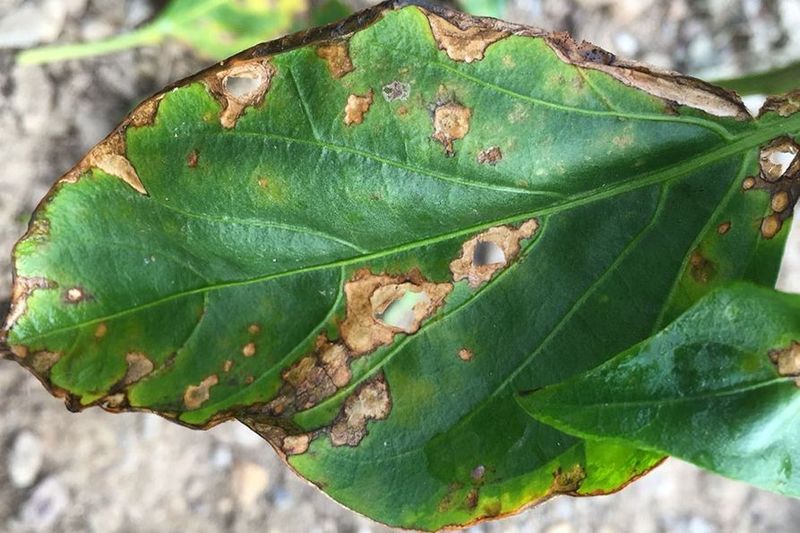
Before settling on any watering explanation, take a close look at the leaves that are dropping or about to drop. Bacterial leaf spot is one of the more common reasons pepper plants defoliate prematurely in humid Southern gardens, and it has recognizable signs that separate it from drought or heat stress.
Look for spots that start out water-soaked or greasy-looking, then turn tan, brown, or dark as they age. Lesions may have yellow halos, and they can spread across the leaf surface until the leaf falls.
Infected fruit may develop raised, rough, corky-looking spots on the skin.
UF/IFAS’s bacterial leaf spot publication identifies this disease as a significant cause of defoliation in Florida pepper plantings, and the Texas A&M Plant Disease Handbook’s pepper section confirms it as a serious field concern in humid conditions. Watering more will not cure bacterial leaf spot.
The pathogen spreads through water splash, which is one more reason to direct irrigation at the soil rather than overhead sprinkle.
Other signs that point away from a simple watering problem include rapid wilt that moves through the whole plant within a day or two, which can suggest a root or crown disease. Loss of young leaves at the growing tips, rather than just the older lower foliage, is also a signal worth investigating further.
University of Maryland Extension’s bacterial leaf spot resource and Virginia Cooperative Extension’s diagnostic training material both recommend looking at the pattern of decline and the appearance of the affected tissue before drawing any conclusion. Insects, chemical injury from pesticide or herbicide drift, and viral infections can also cause leaf loss and require different responses entirely.
Use heat protection after you check the plant
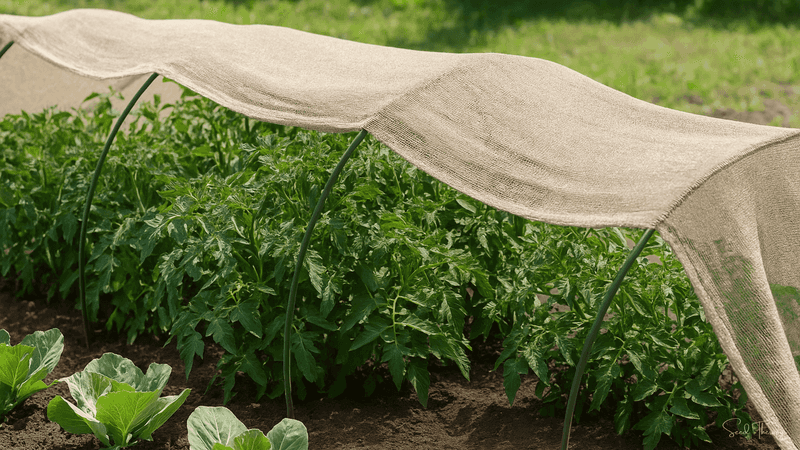
Once you have checked the soil and ruled out wet roots or visible disease, there are a few practical steps that can help a genuinely stressed plant hold on through the worst of August heat. Start with what you confirmed: if the root zone is dry, water it slowly and thoroughly at ground level.
Then refresh the mulch layer if it has thinned, keeping it at roughly 2 to 3 inches and away from the stem base.
Temporary afternoon shade can reduce the heat load on a struggling plant during extreme conditions. University of Delaware Cooperative Extension recommends approximately 30 percent shade cloth for vegetable crops during heat stress, supported above the plants on stakes or a simple frame to preserve airflow and avoid direct contact with foliage.
University of New Hampshire Extension’s row cover guidance similarly emphasizes keeping fabric elevated so air can circulate. Do not mist or spray leaves to cool the plant, especially in humid regions, because wet foliage in warm weather can create favorable conditions for the diseases described in the previous section, as University of Minnesota Extension’s resource on hot weather and plant disease explains.
Skip fertilizing, pruning, and transplanting until conditions ease. A stressed pepper cannot use fertilizer efficiently, and removing healthy foliage exposes any developing fruit to sunscald.
The decision rule is straightforward: inspect the soil, inspect the leaves and stems, then stabilize moisture to match what you find. Treating leaf drop as a watering problem when the soil is already wet or when the leaves show spots and lesions will not help the plant recover, and may cost you the rest of the season.