
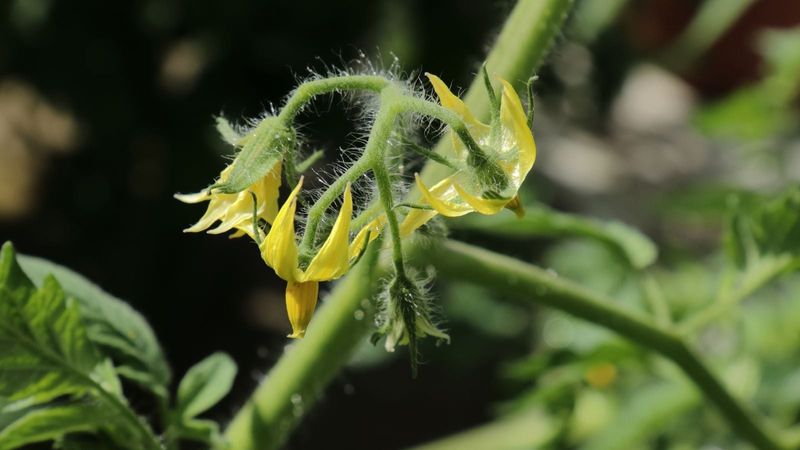
You walk out to a tomato plant that looks perfectly healthy, covered in yellow blossoms, and still find no fruit forming anywhere on it. That frustrating pattern shows up across Southern gardens every August, and the reason is often hiding after the sun goes down.
Hot nights can quietly shut down fruit set before a single flower gets the chance to develop, and knowing what to look for can mean the difference between saving your season and losing it.
Hot nights may explain the flowers that never became fruit
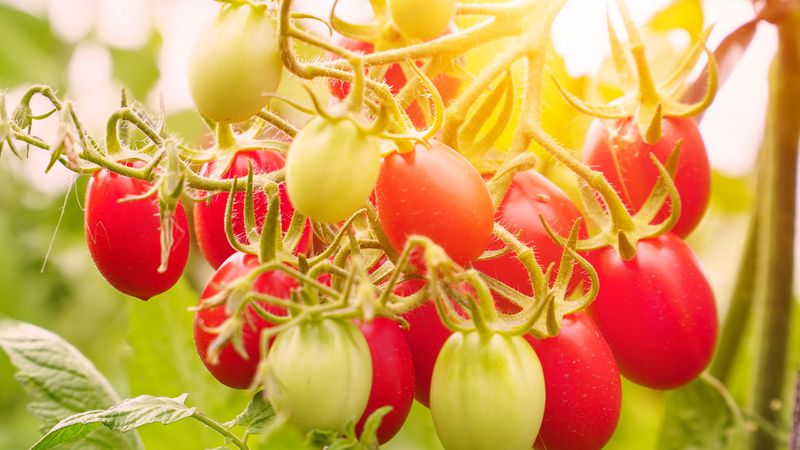
Picture a tomato plant with full, healthy-looking flowers that dry up and drop before even the tiniest fruit begins to swell. No obvious pests, no visible disease, just a trail of fallen blossoms and bare stems where fruit should be forming.
When that pattern repeats across several days of an August heat wave, Virginia Cooperative Extension guidance on tomatoes identifies persistently hot nights as a leading explanation, particularly when nighttime temperatures stay around 70-75 degrees F or above alongside daytime highs above roughly 85-92 degrees F.
The hidden problem here is the ambient air temperature after dark, not the hour when you water. Changing your irrigation schedule will not cool a hot summer night enough to rescue pollen or reverse flower abortion.
What matters is whether the overnight low is consistently staying in a range that disrupts the plant’s ability to pollinate and hold onto developing flowers.
A first diagnostic step is simple: compare recent overnight lows with that 70-75 degree F threshold. One warm night is not enough to confirm the diagnosis, because a single mild evening rarely causes widespread drop.
North Carolina Cooperative Extension’s blossom drop guidance notes that fruit set tends to improve after temperatures moderate, though flowers already aborted will not recover. A run of several consecutive hot nights, combined with an otherwise healthy plant and adequate soil moisture, points strongly toward heat as the culprit.
How heat interrupts tomato pollination
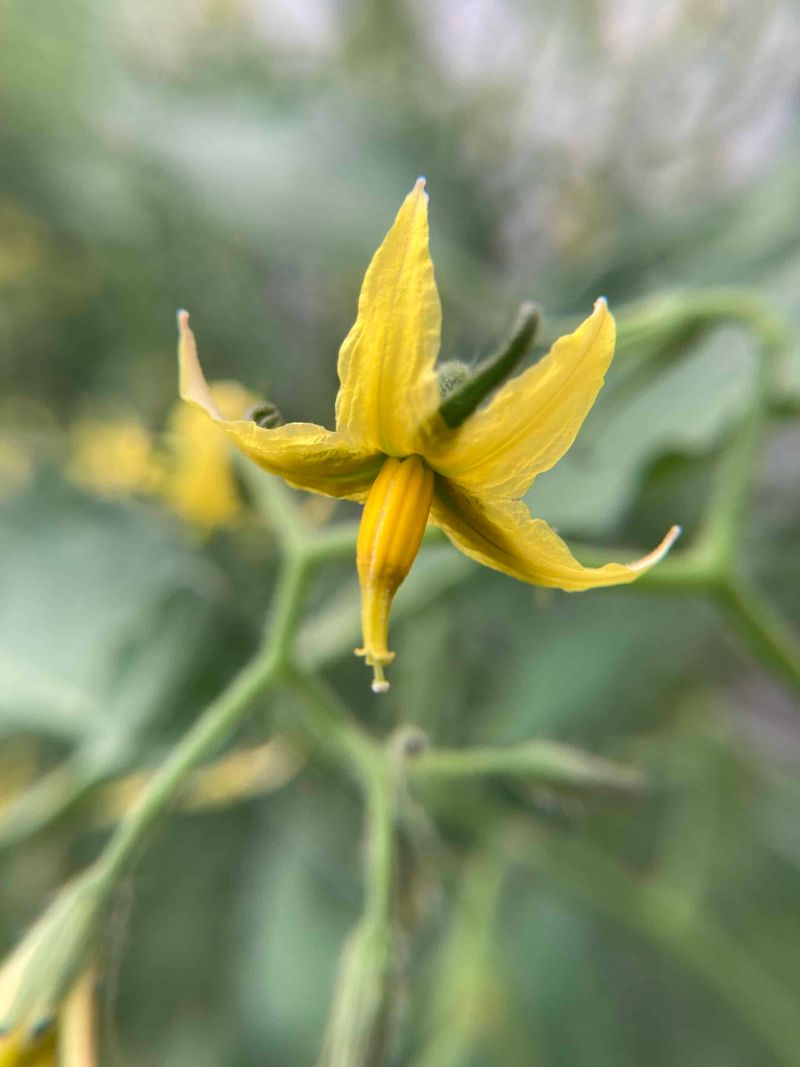
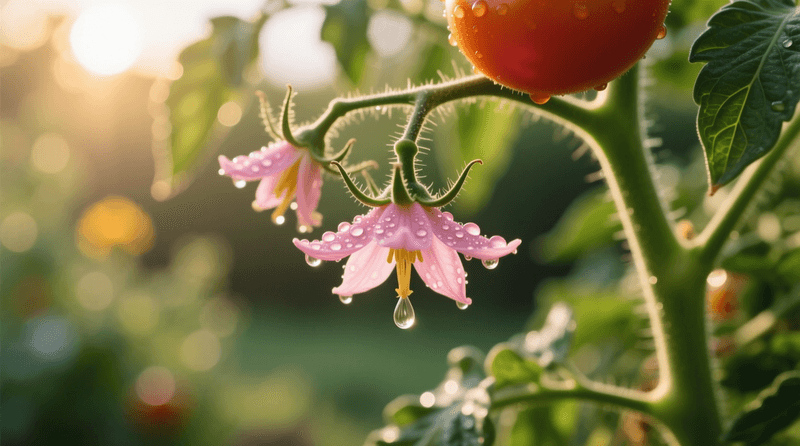
Tomatoes are self-pollinating, which means each flower carries both male and female parts and can set fruit through vibration from wind or simple contact, without needing bees to carry pollen between plants. The trouble during a heat wave is that high temperatures can attack the pollen itself before any transfer happens.
University of Alaska Fairbanks Extension’s pollination and fruit development resource explains that excessive heat can reduce pollen production or viability, make pollen sticky or difficult to shed from the anther, and impair the growth of the pollen tube that carries genetic material to the egg.
When pollen cannot be released or delivered properly, the flower receives no fertilization signal and the plant triggers flower abortion, dropping the blossom before any fruit begins to swell. A flower can look completely normal from the outside and still be carrying pollen that heat has already rendered nonfunctional.
High humidity compounds the problem by keeping pollen damp and clumped together, making it even harder to shed at the right moment.
Daytime heat stacks on top of the nighttime problem. Ohio State University’s vegetable production laboratory notes that fruit set results from the interaction of day temperature, night temperature, humidity, moisture status, cultivar, and pollination conditions.
When both days and nights are pushing past their respective thresholds, the cumulative stress on pollen viability and flower development can be significant enough to stop fruit set almost completely, even on a plant that appears vigorous and well-fed.
Check the plant before blaming the forecast
Before heat gets all the blame, a quick walk around the plant can rule out several other causes of blossom drop. Start by distinguishing true blossom drop from blossom-end rot.
Blossom drop means a flower dries up and falls before any fruit forms. Purdue Extension’s tomato guide clarifies that blossom-end rot is a different disorder entirely, appearing as a dark, sunken lesion on the bottom of an existing fruit and linked mainly to water-uptake and moisture fluctuations rather than a failure of pollination.
Look at the foliage and stems for signs of insects such as aphids, spider mites, or stink bugs, and check for disease symptoms like spots, lesions, or yellowing patterns that spread from older leaves inward. Iowa State University Extension’s guide to managing tomato diseases, disorders, and pests lists drought, uneven soil moisture, excessive nitrogen, wind, high humidity, excessive shade, and poorly adapted cultivars as additional documented causes of blossom drop.
Lush, deep-green foliage with few flowers can point toward too much nitrogen feeding rather than heat.
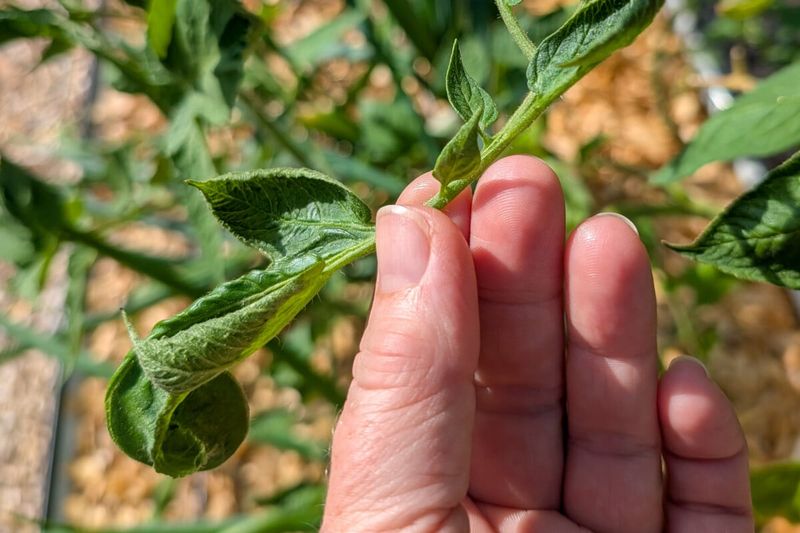
Leaf curl during August heat is worth noting but not panicking over. UC Agriculture and Natural Resources’ heat stress resource explains that physiological leaf roll can be a protective response, though gardeners should still inspect for root problems, pests, and disease.
When blossoms look normal, no visible damage or disease is present, soil moisture has been consistent, and several nights have stayed above 70-75 degrees F, the combination points back toward heat as the leading explanation.
Protect the plant while the heat persists
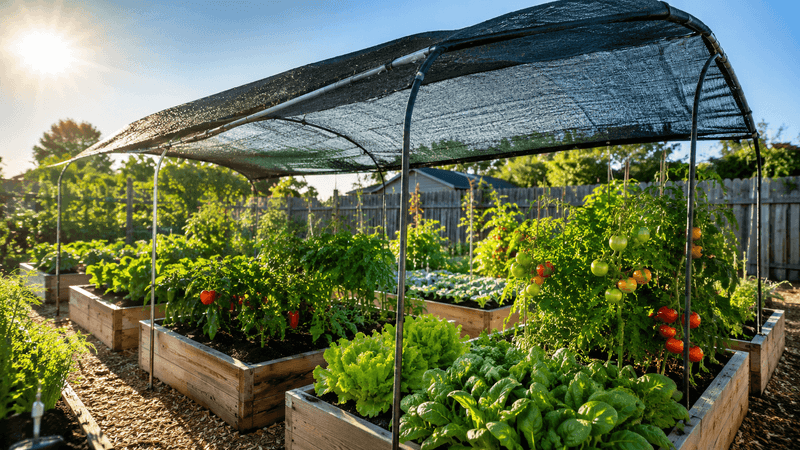
Keeping the plant as comfortable as possible during a heat wave starts at ground level. Consistent soil moisture is the most important thing you can manage right now.
Deep, thorough watering as needed keeps roots from cycling between drought stress and waterlogged conditions, both of which can trigger or worsen blossom drop independent of temperature. University of Minnesota Extension’s irrigation strategies for vegetables recommends watering deeply and allowing the soil to dry somewhat between sessions rather than watering lightly and frequently, which can encourage shallow roots and uneven moisture.
Mulch is your second line of defense. UC Agriculture and Natural Resources supports applying roughly 2-3 inches of mulch around tomatoes to conserve moisture and moderate soil temperature.
Keep mulch pulled back an inch or two from the main stem to avoid rot. Organic mulches like straw or wood chips work well and break down to improve soil over time.
Temporary daytime shade can reduce heat stress on the plant when afternoon temperatures are severe. University of Delaware Cooperative Extension specifically recommends 30% shade cloth as a practical option for protecting vegetables from intense daytime heat.
Be clear-eyed about what shade can and cannot do: it may lower the temperature around leaves and flowers during the hottest afternoon hours, but it cannot reduce nighttime air temperatures once the sun goes down. Excessive or permanent shade will reduce light, slow growth, and limit flowering, so treat it as a temporary tool rather than a season-long fix.
Skip the fixes that promise too much
Lightly tapping or gently vibrating open flower clusters can help move pollen from the anther to the stigma under the right conditions. University of Alaska Fairbanks Extension presents vibration as a useful optional aid, not a primary rescue strategy.
If heat has already degraded pollen viability or made pollen sticky and clumped, tapping the flowers will not restore what the heat has damaged. Think of it as a supplement when conditions are borderline, not a solution when nights are consistently well above 75 degrees F.
On the subject of bees: University of Minnesota Extension confirms that tomatoes are self-pollinating and do not generally require bees for fruit set, although bumblebees can assist through vibration. Lack of bee activity is rarely the reason for August blossom drop in an otherwise healthy garden.
Resist the urge to add fertilizer automatically. Excess nitrogen pushes leafy growth at the expense of fruit and can increase plant stress through salt buildup in the soil.
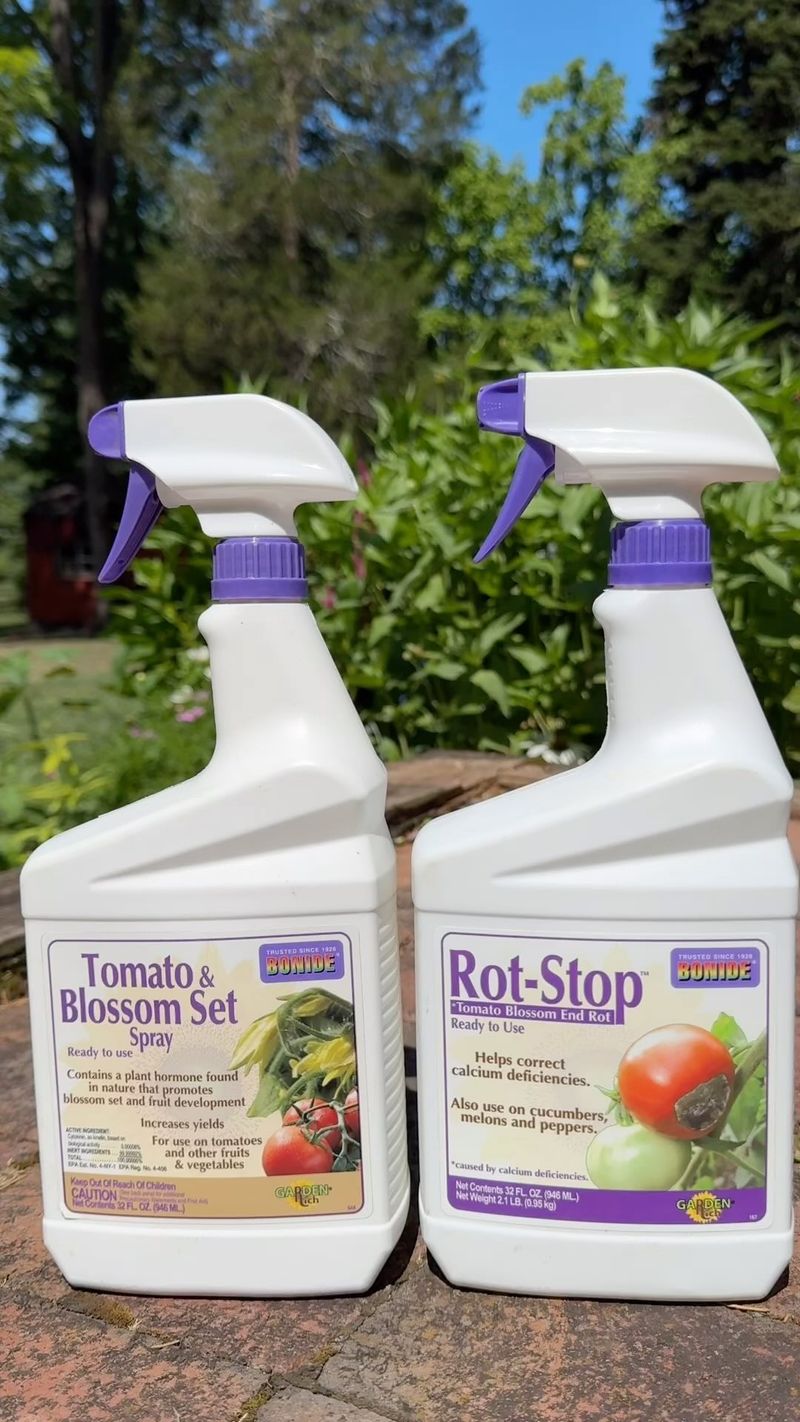
Alabama Cooperative Extension’s blossom drop resource cautions against adding fertilizer without a clear nutritional need. Similarly, do not add calcium as a treatment for blossom drop.
Calcium is associated with blossom-end rot on existing fruit, a different disorder, and Oregon State University Extension clarifies that adding calcium without a soil diagnosis does not address heat-related flower abortion.
Heavy pruning to reduce the plant’s load is another approach to skip. Virginia Cooperative Extension notes that removing protective foliage can expose fruit and stems to sunscald and increase stress.
Blossom-set hormone sprays are also unreliable here: Oklahoma State University Extension states clearly that these products may have some effect under low-temperature conditions but offer little or no benefit when high heat is the cause, and any fruit they produce may be misshapen.
Give new flowers a chance after the heat breaks
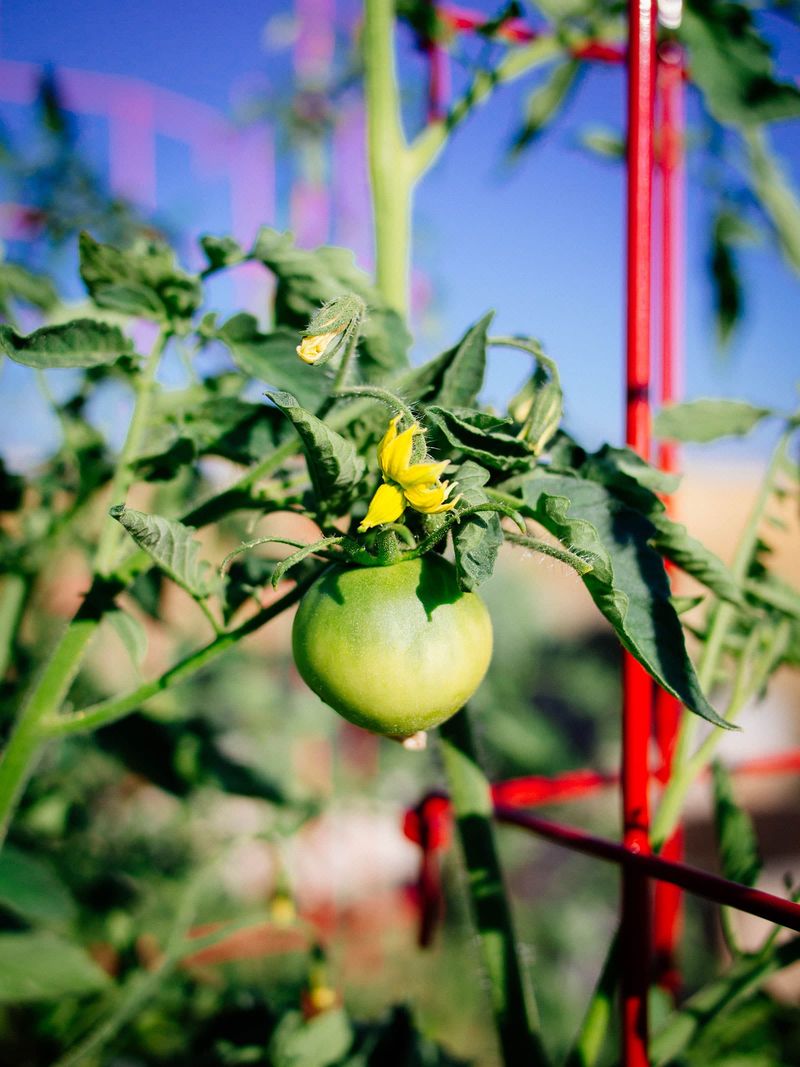
A run of brutal August nights does not necessarily close out the tomato season. Flowers that have already aborted will not recover, but the plant can produce entirely new blossoms once temperatures moderate.
Alabama Cooperative Extension confirms that new flowers may set fruit after cooler weather arrives, provided the plant remains healthy and adequately watered. Indeterminate varieties, which continue growing and flowering throughout the season, give gardeners the best odds of catching a second wave of fruit set as late summer gives way to slightly milder nights.
For future plantings, selecting cultivars described as hot-set, heat-set, or heat-tolerant can improve your odds in Southern conditions. Alabama Cooperative Extension’s variety selection guidance lists examples such as Solar Fire, Phoenix, Florida 91, Red Bounty, Bella Rosa, and Sun Leaper as options developed with elevated temperature performance in mind.
No heat-tolerant label means immune to extreme heat, drought, disease, or poor nutrition, and suitability varies by state, county, and season.
Cherry and grape tomatoes are worth considering as a practical hedge. Iowa State University Extension notes that smaller-fruited types often set across a wider temperature range than large-fruited varieties, which can matter significantly in Florida gardens where nighttime temperatures may hover near 80 degrees F through much of August.
University of Florida IFAS tomato production guidance also addresses regional timing considerations for late-summer and fall plantings in Florida, where cultivar selection and planting date interact closely with heat tolerance and disease resistance in ways that vary by part of the state.
Turn the overnight forecast into a diagnosis
A practical checklist can turn a frustrating August mystery into a manageable diagnosis. First, confirm you are seeing true blossom drop: flowers drying and falling before any fruit swells, not a problem on existing fruit.
Then pull up your local overnight lows for the past week and compare them with the roughly 70-75 degree F range that Virginia Cooperative Extension and North Carolina Cooperative Extension identify as a fruit-set concern zone.
Check soil moisture and plant health before drawing conclusions. Rule out pests, disease, drought, and nitrogen overload as competing explanations.
Protect the canopy and roots with mulch and temporary daytime shade if daytime heat is also severe, and skip emergency hormone sprays or calcium supplements that do not address the actual problem.
Watch for new flower development as temperatures begin to ease, and keep the plant well-watered so it stays in position to take advantage of cooler nights. Hot nights may be the hidden limiting factor in the pattern described here, but heat, humidity, moisture, cultivar choice, nutrition, pests, and disease can all interact to shift the diagnosis.
The most useful tool a tomato gardener has in August is a thermometer checked after midnight.