
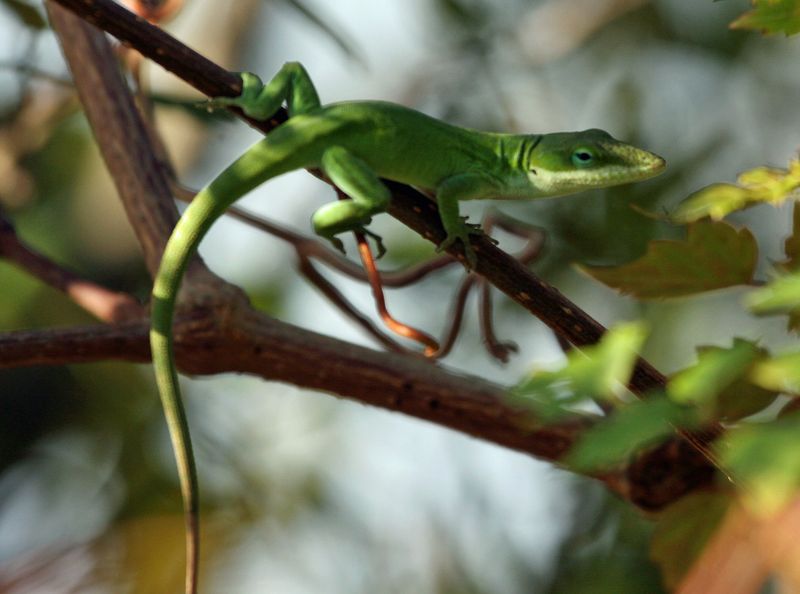
Step outside on a warm July morning in the Piedmont or coastal plain, and you might count a half-dozen small green lizards on the fence before you finish your coffee. That sudden feeling of being “taken over” is real, but it tells a more interesting story than a simple pest alarm.
Understanding what draws green anoles to your yard in summer can help you protect your family, support native wildlife, and make smarter decisions about the landscape around you.
A Yard Full of Anoles Usually Signals Favorable Summer Conditions
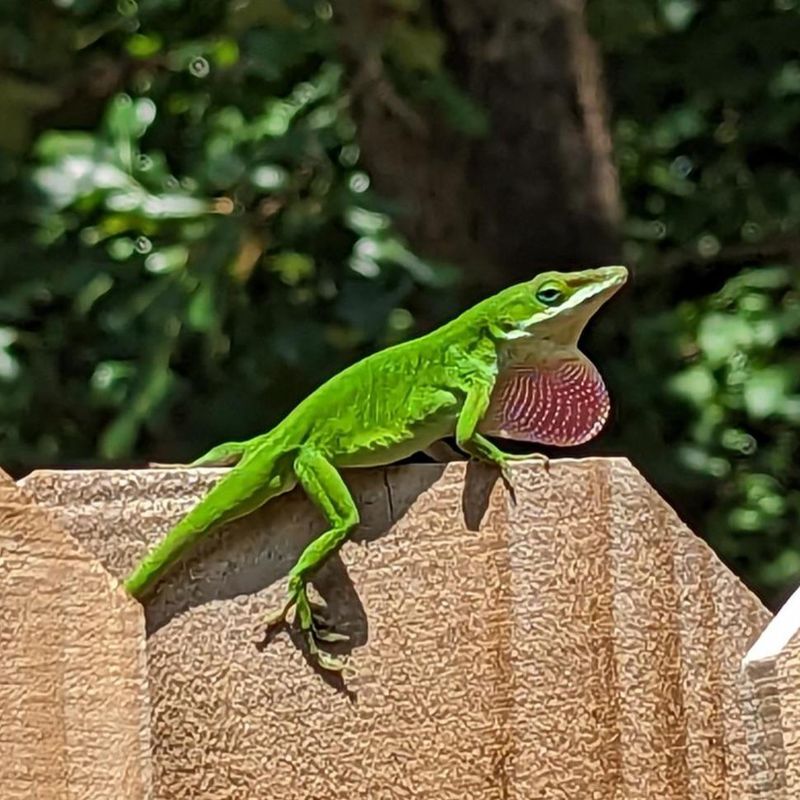
Most of the time, a yard full of green anoles is less a warning than a report card. The lizards are telling you that your property currently offers what they need: warmth, something to climb, places to hide, and enough small invertebrates to hunt.
No single dramatic event usually explains a surge. Instead, several ordinary summer conditions line up at once, and the anoles show up where those conditions overlap.
Green anoles are native North Carolina lizards, not exotic arrivals. NC Wildlife’s species profile places them as residents of the Coastal Plain and southern Piedmont, with records extending into parts of the mountains, though they are most reliably common in the warmer, lower-elevation parts of the state.
Suburban yards suit them well because fences, siding, deck rails, shrubs, and trees all function as the vertical structures they naturally seek out in forest-edge habitat.
Their preference for elevated perches is one reason you notice them so easily. A lizard sunning itself on a fence post at eye level is far more visible than one moving through leaf litter.
When multiple yard features align, such as a south-facing fence near dense shrubbery with a warm microclimate, several anoles may use the same small area and create the impression of a sudden population boom.
The honest interpretation is that the yard currently works for this species. North Carolina’s reptile database confirms the green anole’s broad but temperature-limited distribution, and cold-season constraints help explain why summer numbers feel so different from what you see in April or October.
Treat the sightings as useful habitat feedback rather than a pest alarm, and the rest of the picture becomes much easier to read.
Why They Can Seem to Appear Overnight
Green anoles do not actually materialize from nowhere, but several things happen in summer that make them far easier to spot all at once. Warm temperatures push them into longer daily activity windows.
Adults that were present but quiet in spring become conspicuous as the season heats up, basking in open spots and chasing rivals across fences and garden walls.
Breeding season amplifies the effect considerably. NC Wildlife notes that green anoles breed mainly from spring through late summer, with females capable of laying eggs repeatedly throughout that window.
Each clutch typically contains a single egg, but a female can produce multiple clutches in one season. By midsummer, juveniles from the earliest clutches are already moving through the yard, and their small size makes them easy to miss until there are suddenly quite a few of them in one spot.
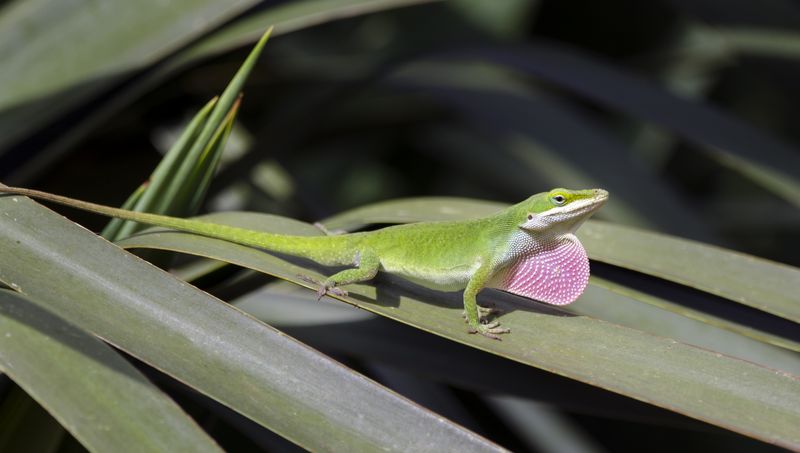
Male display behavior adds another layer of visibility. Males extend their pink or red dewlap, bob their heads, and do push-up displays to defend territory or attract mates.
These movements catch the eye in a way that a still lizard on a branch never would. A yard that had a modest, quiet resident population in May can feel overrun by July simply because the same animals are now performing in plain sight.
A casual count from the back porch cannot tell you whether the local population genuinely grew or whether the same number of lizards just became more active and more visible. Both explanations are plausible, and both can operate at the same time.
Resisting the urge to assign a single cause is the most accurate response to a summer anole surge.
The Habitat Clues Are Above Ground
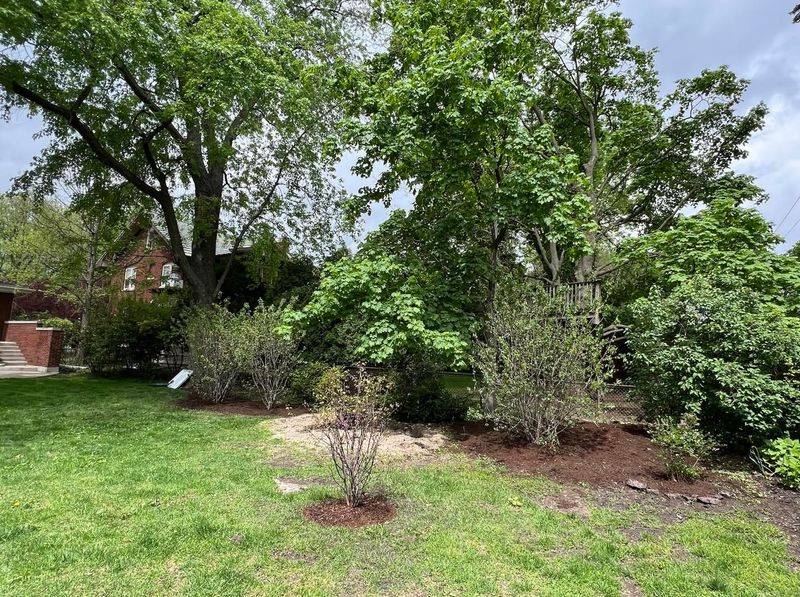
Green anoles spend most of their time off the ground, so the habitat features that matter most to them are vertical ones. Scan your yard from the fence line upward rather than looking at the soil surface, and the clues become easier to read.
A property with mature trees, dense shrubs, climbing vines on a trellis or fence, and walls or outbuildings that hold heat through the afternoon is essentially a purpose-built anole landscape.
North Carolina’s reptile records describe the green anole as a strongly arboreal species that relies on trees, shrubs, and woody vines as primary habitat. A yard with multiple vegetation layers, say a canopy tree over mid-height shrubs over a low ground cover, gives anoles distinct zones for basking, hunting, and retreating from heat or predators.
When those layers exist, several individuals can partition the space without directly competing, which contributes to the impression that they are everywhere.
Ground-level features also play a supporting role. N.C.
Cooperative Extension’s guide on reptile and amphibian habitat identifies snags, fallen tree sections, rock walls, and leaf litter as useful refuge and microhabitat features for reptiles. An anole resting under a log pile or in a dense shrub is invisible; the same animal on a sun-warmed brick wall is obvious.
Yards that retain some structural complexity at ground level alongside vertical vegetation give anoles more options and tend to support them more reliably through the season.
Recent yard changes can shift which features get used without necessarily causing a population increase. Adding a trellis, letting a vine mature, or allowing a shrub to fill in can open up previously unused space.
One new climbing surface does not prove it caused the surge, but it can explain why anoles are suddenly concentrated in a spot where you never noticed them before.
Do More Anoles Mean More Pests?

The pest question is one of the first things homeowners ask, and the honest answer is more nuanced than the clickable version. Green anoles do eat insects, spiders, and other small arthropods.
NC Wildlife’s profile lists flies, crickets, moths, butterflies, termites, ants, beetles, and spiders among their prey, along with occasional worms or slugs. That is a genuinely broad diet, and it means anoles are consuming some of the arthropods moving through your yard every day.
Where the logic breaks down is in the leap from “anoles eat insects” to “more anoles proves you have a pest outbreak.” Research on green anole ecology does not support a reliable one-to-one relationship between anole numbers in a residential yard and pest abundance. A green-anole land-use study published in Acta Oecologica found differences in prey biomass and female body condition across habitat types, but no straightforward link between human disturbance levels and arthropod abundance.
In other words, prey availability can influence where individual anoles establish territories, but counting lizards from your porch is not a substitute for actually monitoring pest populations.
Anoles are generalist hunters, not targeted pest controllers. They are as likely to eat a beneficial ground beetle or a pollinator resting on a shrub as they are to catch a mosquito.
Mosquitoes in particular are fast, small, and often active at dawn and dusk when lizard activity is lower, so counting on anoles to manage mosquito or tick pressure is not a reliable strategy.
What anoles can do is consume a portion of the small arthropod community present in the yard. That is a useful ecological function, but it does not substitute for identifying and monitoring actual pest problems separately.
If you are seeing plant damage or biting insects, those issues deserve their own investigation rather than a lizard-count estimate.
Make Sure You’re Looking at Green Anoles

Before drawing any conclusions about what the lizards in your yard mean, confirm you are actually looking at green anoles. The name is misleading because green anoles can shift from bright green to brown or gray depending on temperature, stress, activity level, and the surface they are resting on.
A brown lizard on a brown fence board is not automatically a different species. Color alone cannot close the identification.
The features that actually distinguish a green anole are body shape and specific markings. Green anoles have a noticeably long, slender, pointed snout compared to most other small lizards in the state.
Males display a pink to reddish dewlap, a fan-shaped flap of skin under the throat that extends during territorial or courtship behavior. Neither sex carries the bold, light-bordered pattern running down the back that is typical of brown anoles.
NC Wildlife’s identification guidance and the North Carolina reptile database both emphasize these structural cues over color.
Regionally, the green anole is the species you are most likely to encounter in North Carolina’s Coastal Plain and southern Piedmont. Records extend into parts of the mountains, but cold-temperature limits thin out the population at higher elevations.
This is a meaningful distinction from Florida, where introduced brown anoles have become extremely common and now overlap extensively with native green anoles. UF/IFAS research on Florida’s brown anole situation documents how that species competes with green anoles and even preys on juveniles, but that dynamic does not apply wholesale to North Carolina, where brown anoles have not established widespread populations.
If you see a lizard with a bold dorsal stripe or blotched pattern and a stockier body, photograph it and report it to NC Wildlife rather than assuming it is simply a color-shifted green anole. Accurate identification matters before you make any decisions about habitat or management.
Let the Lizards Stay—and Improve the Yard Carefully
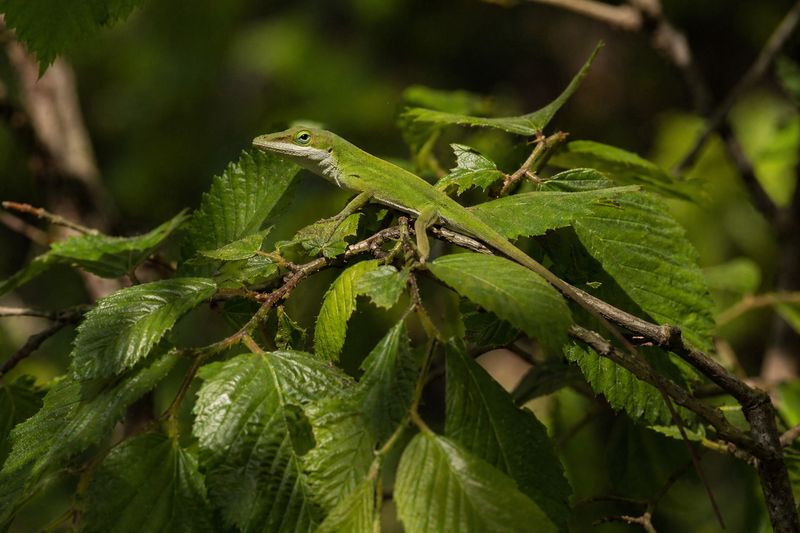
Green anoles are native wildlife, and the most straightforward response to finding them in your yard is to leave them alone and make small adjustments that keep the habitat functional. That does not require a major landscaping project.
Retaining existing trees, shrubs, and woody vines is usually more valuable than planting anything new, because mature structure is what the lizards are already using.
N.C. Cooperative Extension’s reptile habitat guidance points to snags, fallen logs, rock features, and leaf litter as low-effort additions that provide refuge for reptiles and amphibians without requiring much maintenance.
A section of log set near a shrub border, a small rock pile in a sunny corner, or a patch of leaves left under a hedge gives anoles places to shelter during temperature swings and retreat from predators. These features also support the broader arthropod community that the lizards hunt.
Handling healthy wild anoles is something to avoid. NC Cooperative Extension recommends observing reptiles without touching them, and that guidance applies here.
Green anoles are fragile; their tails detach under stress, and handling introduces the risk of injury or disease transmission in both directions. Watching them from a comfortable distance is genuinely the better experience anyway, especially when a male is in full display mode.
Capturing, relocating, keeping, or selling native anoles is a separate issue with legal weight behind it. NC Wildlife’s amphibian and reptile possession permit page makes clear that collection and possession of native reptiles are regulated activities in North Carolina.
Treating the lizards as pets to catch or give away is not a casual option. The most sustainable relationship with a yard full of anoles is the one where they stay wild, you stay observant, and the habitat keeps doing what it is already doing well.
Use IPM to Investigate Pests, Not Anole Counts
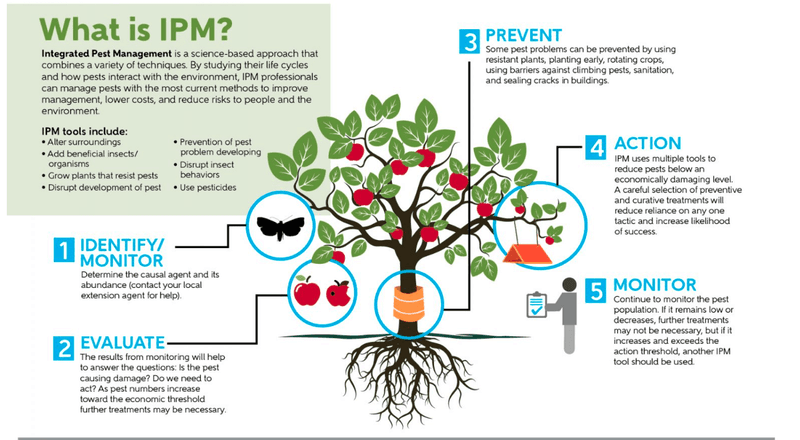
Anole sightings are not a pest-monitoring system. If you are genuinely worried about mosquitoes, ticks, or damage to your plants, the correct response is to investigate those concerns directly rather than reading lizard numbers as a proxy.
EPA’s introduction to integrated pest management lays out the framework clearly: identify the actual pest, monitor its abundance and the damage it causes, set a threshold for when action becomes necessary, and then choose the least-risk control that is effective for that specific problem.
Each step matters. Skipping identification and jumping to treatment is one of the most common yard-management mistakes, and it often results in applying a product that does not target the actual problem while harming non-target organisms, including beneficial insects and wildlife like anoles.
A single mosquito or one chewed leaf does not automatically justify a spray application. The threshold question, meaning how much damage or pest pressure actually requires a response, is something that varies by pest type, plant value, and health risk.
Broadcast pesticide spraying in response to seeing anoles is a particularly poor choice. EPA guidance on reducing pesticide impacts on wildlife is direct: use pesticides only when needed, treat only the affected area, and keep products away from water and any wildlife habitat.
Spraying the entire yard to reduce insects will reduce the food supply for anoles and other beneficial predators, and it may expose the lizards themselves to toxic residues.
When a treatment is genuinely necessary, the product label is the starting point and the legal boundary. EPA’s pesticide label guidance explains that the label is legally enforceable; applying a product in a way that contradicts its label instructions is a violation, not just a suggestion to ignore.
Spot-treating the specific affected plant or area, following label directions exactly, and timing applications to minimize contact with pollinators and wildlife are the practical steps that protect both your yard and the native animals living in it.
The Right Takeaway for a North Carolina Summer Yard

A summer surge of green anoles in a North Carolina yard most reliably points to one thing: the yard currently offers a workable mix of warmth, vertical structure, shelter, and accessible prey. Seasonal breeding, juvenile emergence, and conspicuous adult behavior can amplify that impression well beyond what the actual population change might justify.
Separating what you are observing from what you can actually conclude keeps the response proportionate.
The practical next steps are straightforward. Inspect the yard’s habitat features, note what vertical structures and shelter spots exist, and let the anoles use them.
Monitor any real pest concerns, such as plant damage or biting insects, through direct observation rather than lizard counts. NC Wildlife and EPA’s IPM framework both support the same principle: identify, monitor, and respond to specific evidence rather than reacting to impressions.
Leave healthy native anoles undisturbed. A yard that supports them is already doing something right for native wildlife, even if it is not a perfect ecological system.
The lizards showing up every summer is less a takeover than a seasonal check-in from animals that have called this landscape home far longer than any fence or garden bed has.