
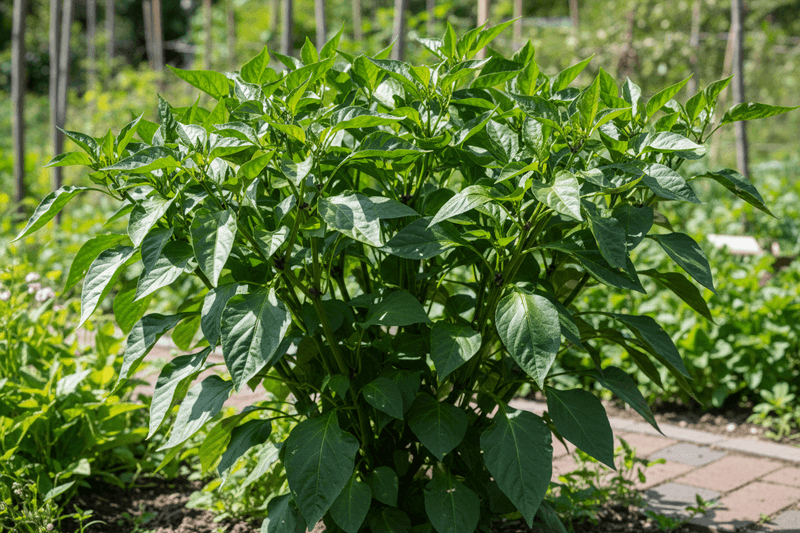
Your pepper plant looks like a showpiece – full, green, and bursting with growth – yet week after week, you find nothing but empty branches where fruit should be. This is one of the most frustrating problems Southern gardeners face in late summer, and the cause is rarely as simple as how often you water.
Heat, moisture swings, fertilizer history, and even hidden pest damage can all play a role, and sorting out which one is hurting your harvest starts with knowing what to look for.
Bushy growth does not identify the cause of missing peppers
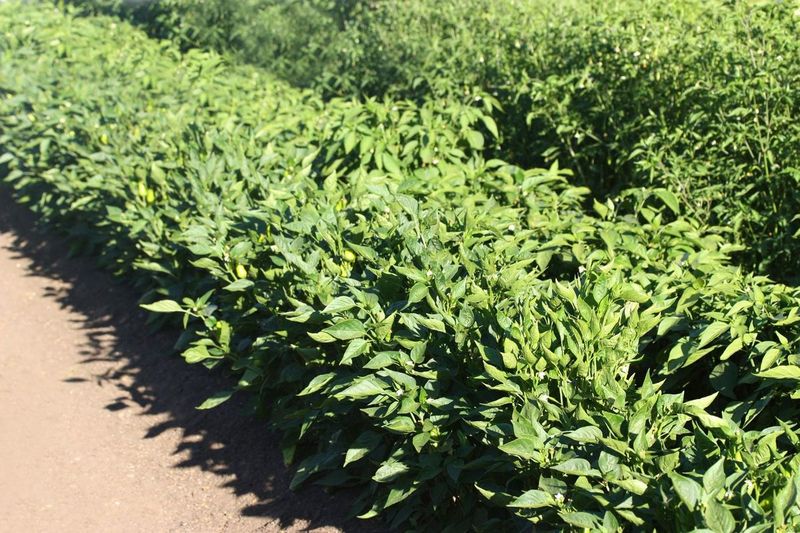
A pepper plant that looks full and healthy on the outside can be hiding a serious reproductive problem. Leaves and stems keep growing even when flowering and fruit set have stalled, so a bushy canopy tells you the plant is alive and photosynthesizing – it does not tell you why fruit never formed.
Many gardeners assume the problem is overwatering or too much nitrogen when they see lush foliage without fruit. Kansas State University Extension guidance on tomato and pepper fruit set notes that heat, drought, wind, and cultivar sensitivity can all produce the same leafy-but-fruitless appearance, so foliage alone is not a reliable diagnostic clue.
Excess nitrogen remains a real possibility after heavy fertilizer or manure use, but it should not be assumed just from looks.
Two distinct problems also tend to get lumped together here. Flower drop and failure of small fruits to develop are fruit-set problems, meaning the plant never successfully completed pollination or early fruit development.
Blossom-end rot is something different – it affects peppers that have already formed and shows up as sunken, leathery, dark areas at the bottom of the fruit. University of Illinois Extension distinguishes these clearly, and the remedies are not the same.
Before changing anything about your watering routine, the diagnosis needs to account for heat, moisture patterns, fertilizer history, pest activity, and pollination conditions.
Heat may be overriding otherwise good pepper care
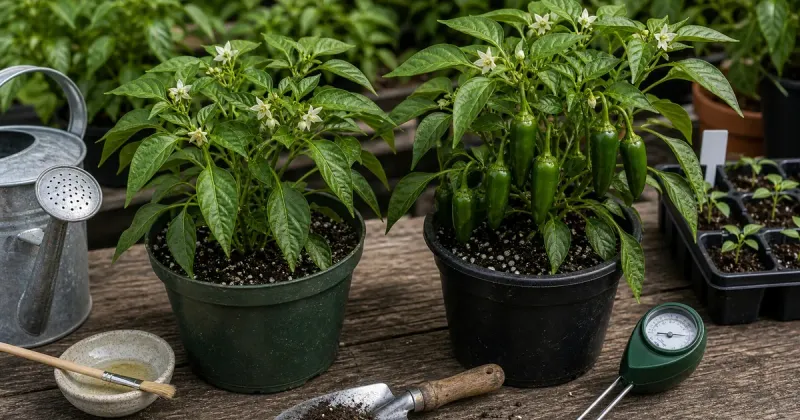
When late-summer temperatures stay consistently high, heat becomes the first and most important factor to examine – not watering frequency. Sustained high daytime temperatures can reduce pollen viability and interfere with fertilization, meaning flowers open and fall off without ever producing fruit, regardless of how carefully you water.
University of Maryland Extension research on poor blossom and fruit set identifies high temperatures as a major cause of pepper blossom drop, noting that daytime heat above roughly 85 to 95 degrees Fahrenheit and nighttime temperatures that stay above approximately 70 to 80 degrees Fahrenheit can disrupt fruit set. These thresholds are approximate and vary by cultivar, so they function as warning signs rather than hard rules.
Bell peppers are generally more sensitive to heat than many hot-pepper types. If a jalapeño or serrano nearby is setting fruit during the same weather, that does not rule out heat stress in your bell pepper – the two types simply have different tolerances.
Research published in Plant, Cell and Environment by Erickson and Markhart found that specific stages of flower development in bell peppers are particularly vulnerable to elevated temperatures, with pollen function affected well before visible symptoms appear on the plant.
Dry soil or rapid swings between wet and dry conditions can make heat stress worse by adding another layer of physiological strain during an already difficult period. Heat is frequently the dominant cause of late-summer blossom failure in Florida and Texas gardens, and correcting moisture is most useful when it is paired with an honest look at what the thermometer has been doing.
Check for moisture swings instead of assuming watering caused the failure
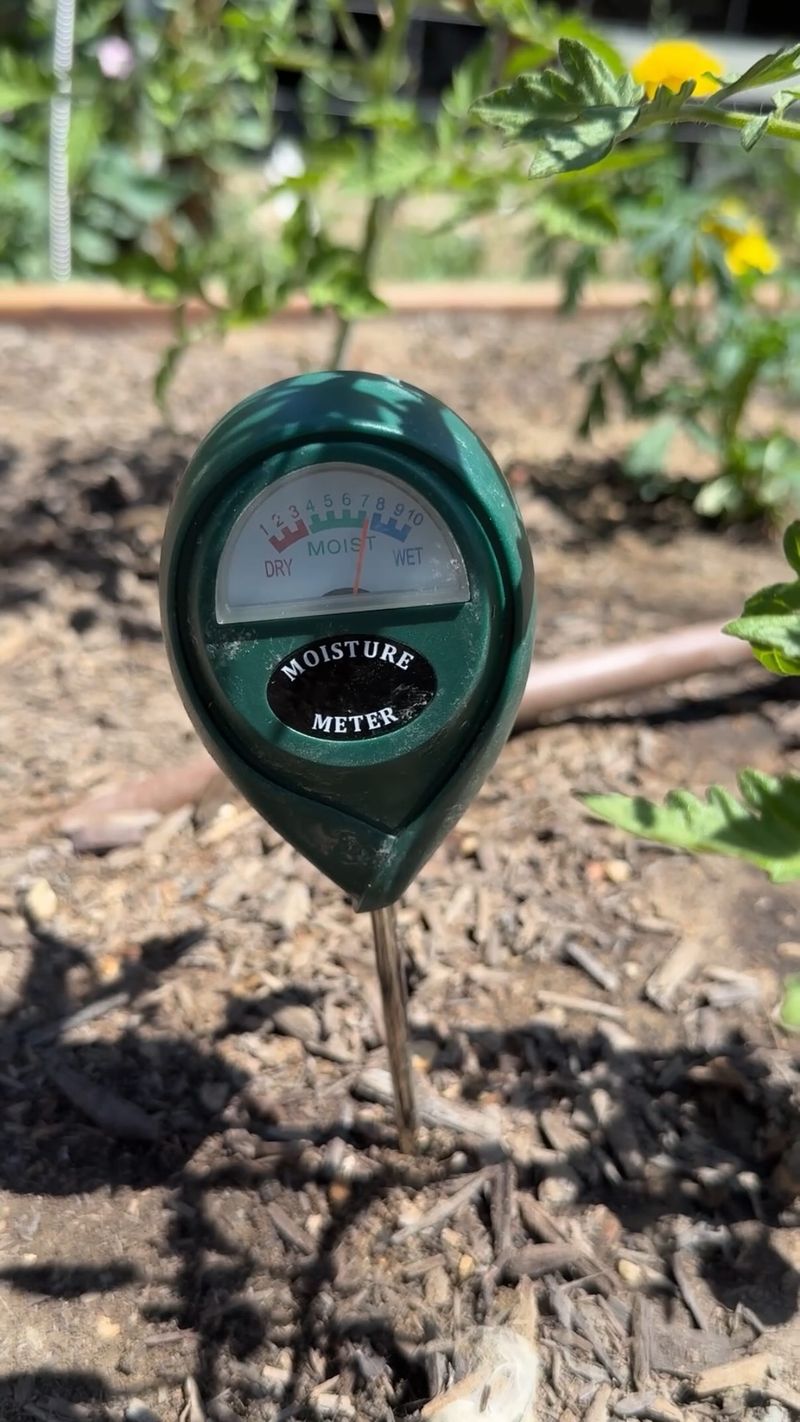
Irregular moisture is worth investigating as a contributing factor, especially when heat is already pushing the plant to its limits. Long dry spells can cause flowers and small fruits to drop, and repeated cycles of very dry soil followed by heavy watering can stress the plant further during the exact window when it needs stable conditions most.
UC IPM guidance on watering peppers and eggplants consistently recommends uniform moisture during flowering, fruit set, and early fruit development. Letting the soil dry out severely and then soaking it repeatedly is harder on the plant than either consistent moisture or even occasional light dryness, because the swings themselves create stress.
Rather than reviewing your watering schedule on a calendar, check what is actually happening in the root zone. Push a finger or a trowel several inches into the soil near the plant.
If the soil at depth feels dry or barely damp, the plant likely needs water now. If it feels wet and cool well below the surface, additional irrigation may not be the answer.
The goal is steady, moderate moisture throughout the root zone during the weeks when flowers are forming and fruits are starting to develop – not a fixed number of watering days per week.
Water thoroughly when the root zone begins to dry
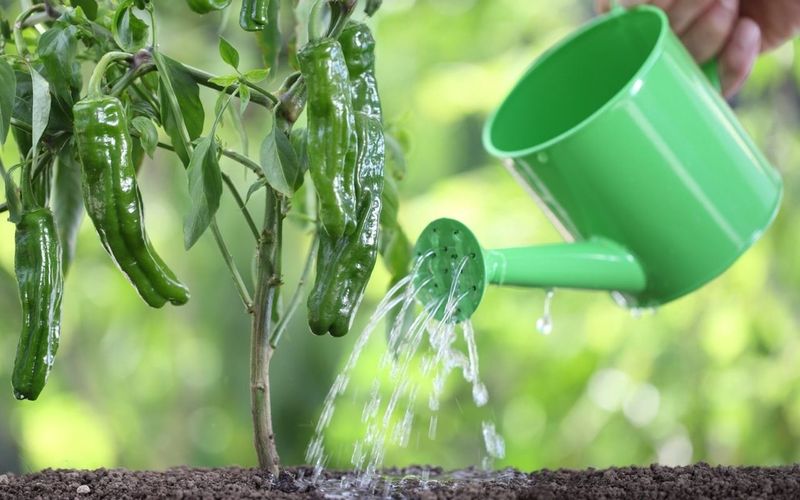
Knowing when to water matters less than knowing how to water once you decide the soil needs it. The practical target is moistening the full root zone, which for established pepper plants sits roughly 6 to 12 inches below the surface.
Applying water slowly gives it time to move downward rather than running off the surface or pooling at the top inch of soil while the roots below stay dry.
Iowa State University Extension guidance on watering the home vegetable garden suggests that about 1 inch of water per week from rainfall and irrigation combined serves as a broad starting point for many home vegetable gardens. That figure is a starting point only, not a universal rule.
Sandy soils common in much of Florida drain quickly and may need more frequent attention. Containers dry out faster than garden beds.
Large, established plants draw more moisture than young transplants. Extreme heat accelerates evaporation from both the soil surface and the plant itself.
UF/IFAS guidance on pepper production in Miami-Dade County highlights the role of drainage, mulch, and drip irrigation in Florida’s sandy soils, where water moves through the profile quickly and root zones can dry between irrigations faster than gardeners expect. The practical decision rule in any soil type is the same: check moisture at root depth, and water when it begins to dry out – not on a fixed schedule that ignores rainfall, soil type, and current temperatures.
Keep the soil moist without keeping the roots waterlogged
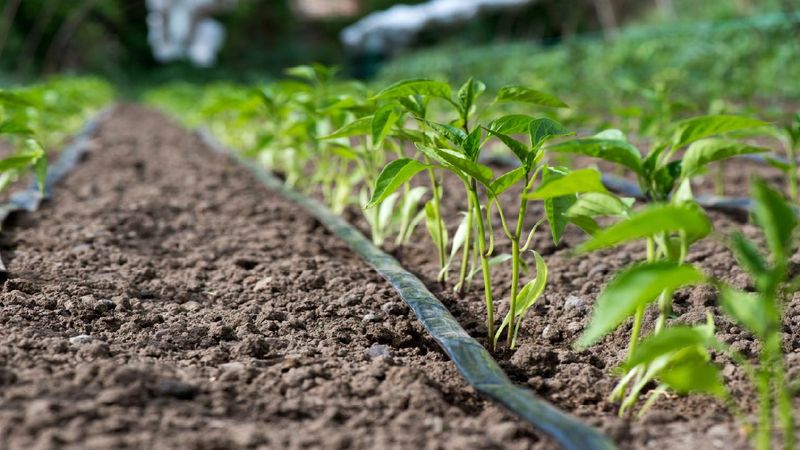
Consistent moisture and constant saturation are not the same thing, and confusing the two can create a different set of problems. Pepper roots need both water and oxygen to function.
When soil stays waterlogged for extended periods, oxygen is displaced and roots begin to suffer – sometimes before any visible symptoms appear above ground.
UC IPM information on Phytophthora root and crown rot on peppers explains that saturated conditions are a primary driver of this serious root disease, which can make a plant look wilted or declining even when the soil feels wet. If your pepper plant is showing signs of stress despite regular watering and you notice the soil stays soggy for days after irrigation or rain, drainage is the issue to address first – not more water.
University of California Agriculture and Natural Resources guidance on growing peppers recommends using organic mulch to slow evaporation and help stabilize soil moisture during hot, dry, or windy weather. A 2 to 3 inch layer of straw, wood chips, or similar material over the root zone can make a meaningful difference in how quickly the soil dries between waterings.
Keep mulch a few inches away from the main stem to prevent rot at the crown.
Drip lines, soaker hoses, or careful hand watering at the soil surface are preferable to overhead sprinklers because they deliver water directly to the root zone while keeping foliage dry. Wet leaves and splashing soil can spread bacterial and fungal diseases.
In Florida and other humid Southern regions, heavy summer rains may already be supplying more water than the plant needs, so check the soil before adding more.
Inspect fertilizer history, flowers, fruit, and pollination clues
Before adjusting your watering routine again, take a few minutes to work through the other common reasons a pepper plant stops setting fruit. Start with fertilizer history.
Heavy applications of nitrogen-rich fertilizer or fresh manure can push a plant toward vigorous vegetative growth at the expense of flowering and fruit development. However, appearance alone cannot confirm this.
A soil test and an honest look at what has been applied over the past several weeks give you more reliable information than leaf color or plant size.
Kansas State University Extension notes that excess nitrogen is a legitimate cause of delayed fruit set but should be considered alongside heat and moisture stress rather than assumed from foliage alone. If you have not fertilized heavily, nitrogen is less likely to be the issue.
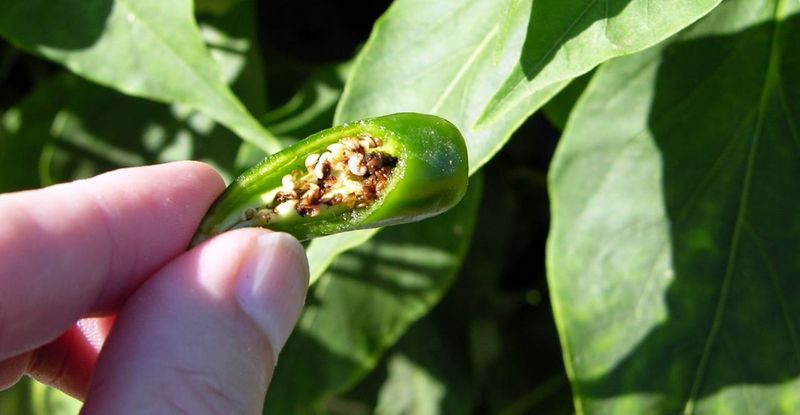
Next, look carefully at the flowers and any small developing fruits. Thrips are tiny insects that feed inside blossoms and can prevent fruit set; damaged flowers may appear distorted, streaked, or drop early.
UF/IFAS Miami-Dade gardening guidance also flags the pepper weevil as a serious pest in Florida, where weevil larvae can destroy buds or immature pods and cause fruit to drop before it develops. If you see chewed, discolored, or prematurely falling flowers and buds, inspect closely for insect evidence before treating – any pesticide used must be registered for peppers and for the specific pest, and pollinator exposure should be minimized during bloom.
On the question of pollination: peppers generally self-pollinate, so a lack of bees is not automatically responsible for missing fruit. Oklahoma State University Extension confirms that peppers do not require insect visitors to set fruit, which means hand-pollinating every flower is not a reliable cure when high temperatures are the underlying problem.
Heat can impair pollen function regardless of how pollination is attempted.
Use moderate shade now and watch for recovery after the heat
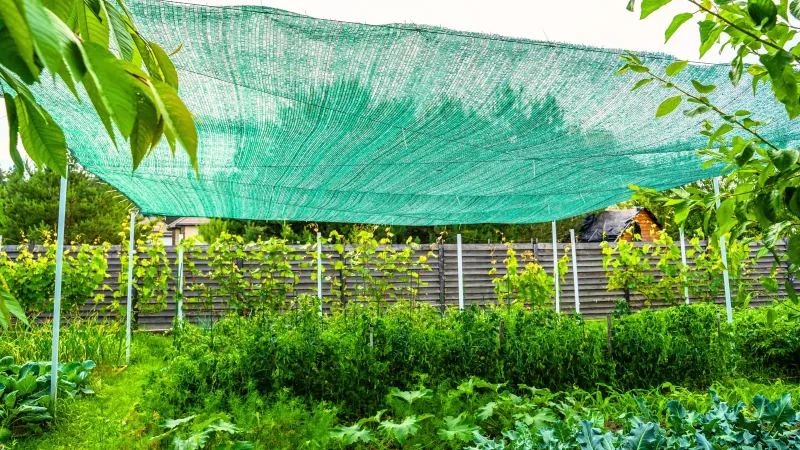
Once you have checked moisture at root depth, corrected any wet-dry swings, and ruled out pests and fertilizer problems, the most practical remaining step during a heat wave is temporary shade. A shade cloth that blocks roughly 30 percent of sunlight can lower temperatures around the plant and reduce both heat and water stress without cutting off the light the plant needs to stay productive.
University of Delaware Cooperative Extension identifies approximately 30 percent shade cloth as a useful starting point for vegetables including peppers during extreme heat events. Heavier shade is not automatically better – too much shade reduces photosynthesis and can slow the plant’s recovery once temperatures ease.
The shade structure should be temporary. Remove it or reduce coverage once nighttime temperatures begin to drop and daytime highs become more moderate.
UC ANR growing guidance and several other extension sources note that pepper plants may resume normal production after a heat-related pause, so a fruitless stretch in August does not mean the season is over. Monitor new flower buds as conditions improve and continue maintaining even, well-drained moisture.
Oklahoma State University Extension recommends harvesting fruit promptly once peppers do form, since leaving mature fruit on the plant can slow the development of new ones. The clearest path forward is a short checklist: confirm root-zone moisture is steady, correct any swings between dry and saturated, add moderate shade during the worst heat, and investigate specific symptoms – blossom-end rot, pest damage, or unusual foliage – before reaching for calcium supplements, extra fertilizer, or pesticides.
A patient plant in managed soil often surprises you when the thermometer finally drops.