

Scorpions and Texas summers go together whether homeowners like it or not, and finding one near the front door is enough to make anyone rethink what they grow on the porch. Rosemary has gotten attention lately as a possible porch plant that might discourage scorpions, and there is a small laboratory study behind that idea.
The science is more limited than the headlines suggest, but rosemary is still a genuinely good choice for a hot Texas porch for other reasons. Understanding what the research actually says helps you use this plant wisely alongside the prevention steps that matter most.
Why hot weather can bring scorpions closer to the house
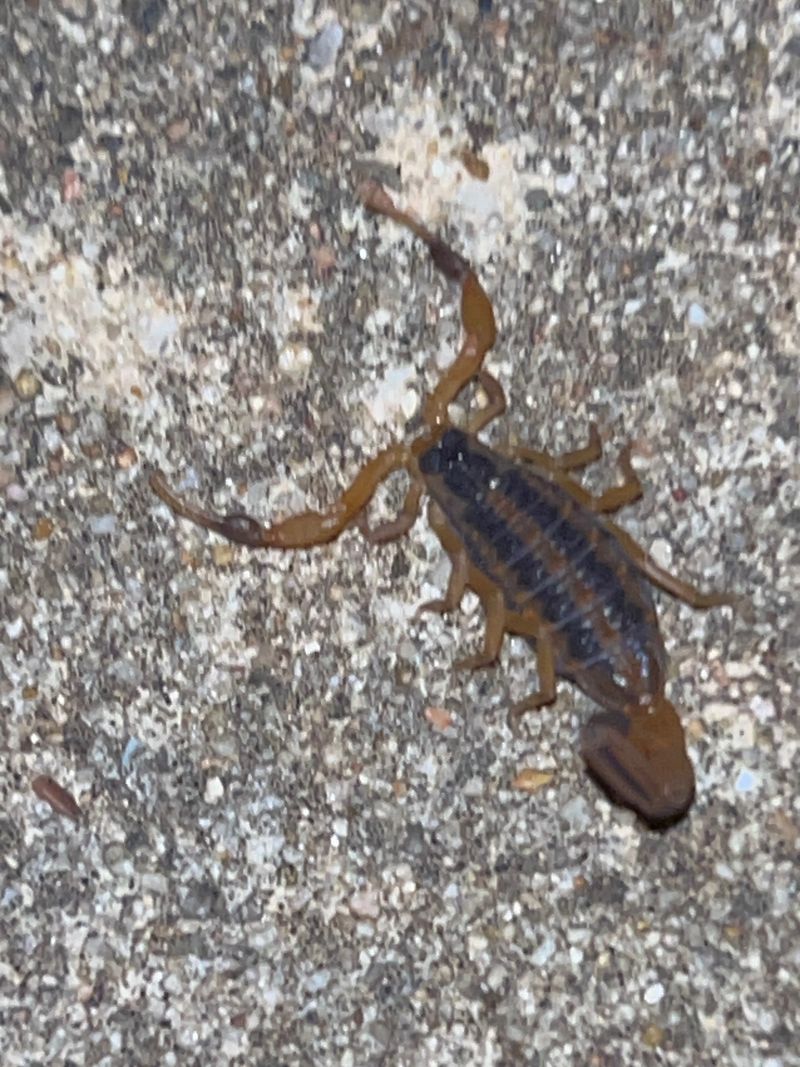
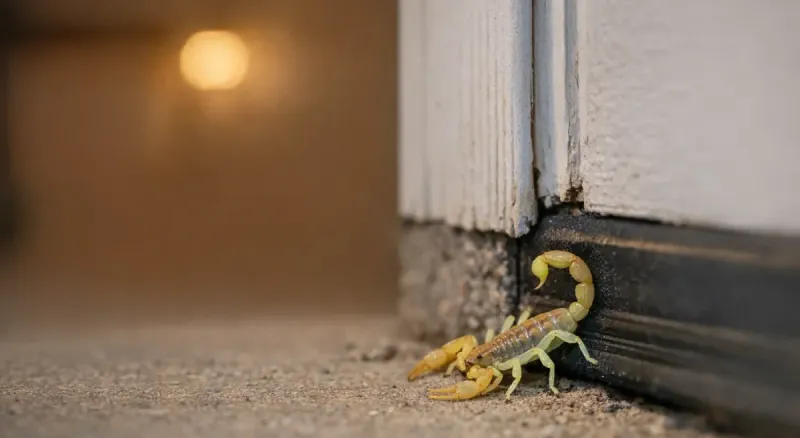
Texas is home to 18 recorded scorpion species, but one stands apart from the rest. The striped bark scorpion is the only species found throughout the entire state, making it the scorpion most Texas homeowners are likely to encounter, whether they live in the Panhandle, the Hill Country, or the Gulf Coast.
According to Texas A&M AgriLife Extension’s scorpion identification and control guide, striped bark scorpions are nocturnal and spend daylight hours tucked into cracks, beneath rocks, under boards, and inside bark or other debris. They are built for concealment, and any sheltered spot near the house qualifies as potential cover.
Hot weather can push scorpions toward living areas. When attic temperatures climb to extremes, scorpions may move down through gaps and into cooler interior spaces.
The porch and the front threshold sit exactly at the edge of that transition zone, which is why entry management matters during the warm months.
None of this means a scorpion encounter is guaranteed or that every house faces the same level of activity. What it does mean is that the entryway is a practical place to focus habitat management, because it is where outdoor conditions and indoor spaces meet most directly.
Reducing shelter and access points at the door is a sensible first step that does not require any particular plant.
What the rosemary research actually tested

A 2019 study published in the Journal of Arachnology gave rosemary its scientific foothold in scorpion conversations. Researchers placed 16 adult striped bark scorpions individually inside a small indoor arena that had two distinct zones: one section of sand treated with mineral oil and one section treated with rosemary oil.
That published study found that scorpions spent significantly more time on the mineral-oil-treated sand than on the rosemary-oil-treated sand. The result was statistically significant, with a reported P value of 0.0031, meaning the pattern was unlikely to be random chance.
Scorpions, when given a choice between the two surfaces, consistently preferred to stay away from the rosemary-oil-treated side.
The study also tested 1,8-cineole, one of the major chemical components of rosemary oil, separately. Scorpions did not show significant avoidance of that single compound, which suggests their response depended on the complete oil mixture rather than just one isolated ingredient.
What the experiment measured was short-term surface choice inside a controlled indoor arena. Scorpions were not observed near a door, a living plant, or an outdoor porch.
The researchers did not track whether the avoidance persisted over time, whether it would hold in an open outdoor space, or whether it would change the number of scorpions entering a home. The study is a useful starting point, but its scope is genuinely narrow, and the distance between its findings and a real Texas porch is significant.
Why a rosemary plant is not the same as rosemary oil
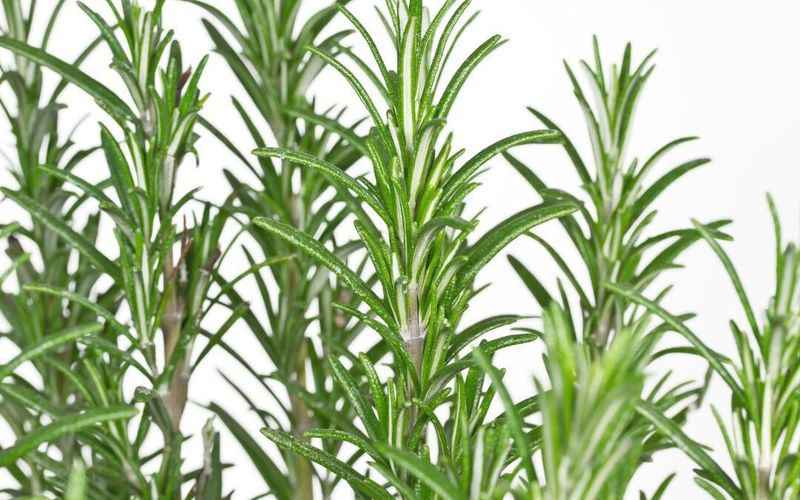
The leap from “scorpions avoided rosemary-oil-treated sand in a lab” to “a rosemary plant on your porch will keep scorpions away” skips over a lot of unanswered questions. A living rosemary plant releases volatile compounds through its foliage, but at concentrations far lower than a directly applied oil treatment.
No cited research has measured how much volatile material a potted rosemary plant disperses outdoors, how far that dispersal reaches, or how long it lasts under Texas heat and wind.
Laboratory avoidance in a two-minute arena test also does not tell us whether scorpions would avoid approaching a porch, avoid entering a house, stop reproducing nearby, or create any measurable reduction in sting risk around a real home. Those are bigger, more complex behaviors that the study was not designed to address.
The researchers themselves called for further work on large-area use, duration, adaptation, and the plant itself, which signals that they viewed their findings as a beginning rather than a conclusion.
The tested scorpions were collected in Oklahoma and studied under controlled indoor conditions. Applying those results automatically to every Texas scorpion species or every Texas region would be an overreach.
The striped bark scorpion is the most common Texas species and the one tested, but Texas habitats, temperatures, and scorpion populations vary considerably.
Treating the study’s findings as proof that a rosemary container guards a doorway sets up an expectation the evidence cannot support. The more honest and useful framing is that rosemary oil produced a measurable short-term avoidance response in one small study, and a living plant remains untested for outdoor household scorpion control.
Why rosemary still suits a Texas porch
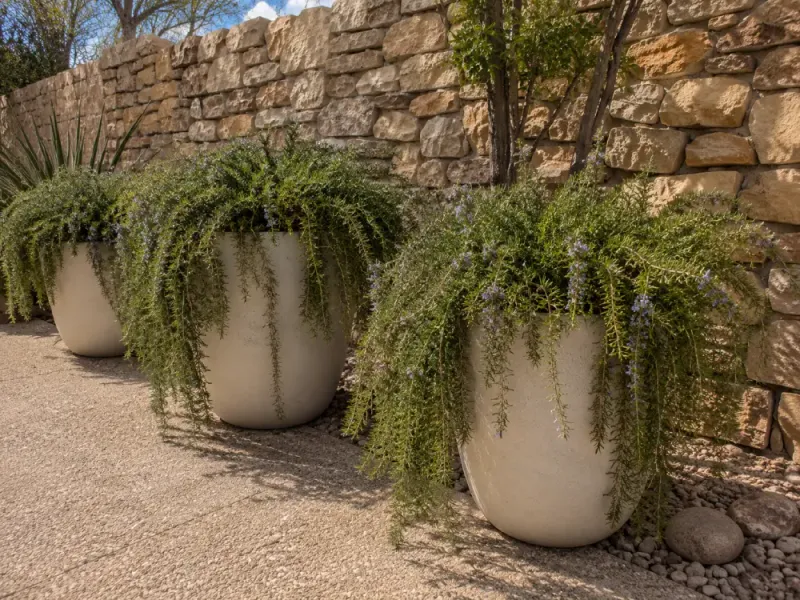
Even setting aside the scorpion question entirely, rosemary earns its place on a Texas porch through sheer horticultural performance. Few herbs handle triple-digit heat and low rainfall as reliably, and a well-grown rosemary plant in a container can look attractive through months when other plants struggle to survive.
Texas A&M AgriLife Extension’s rosemary growing guide recommends full sun, well-drained soil, and a watering approach that lets excess water drain fully from the pot rather than sitting around the roots. Overwatering and poor drainage are the two most common reasons rosemary fails in Texas containers, so the setup of the pot matters as much as where you place it.
Use a container with drainage holes and fill it with a fast-draining potting mix, such as one formulated for cacti or herbs. Water when the top inch of soil feels dry, then water thoroughly and let the pot drain completely.
A saucer that traps standing water under the pot will work against the plant’s needs and should either be emptied promptly or removed.
The Texas A&M guide on growing herbs in Texas reinforces that rosemary thrives in the state’s hot, dry conditions when drainage is managed correctly. Grown this way, it gives you a fragrant, culinary-grade herb that doubles as a low-maintenance porch plant.
Its value as a scorpion deterrent is limited and uncertain, but its value as a heat-tolerant container plant for a sunny Texas entry is well established.
Place the container without adding shelter at the threshold
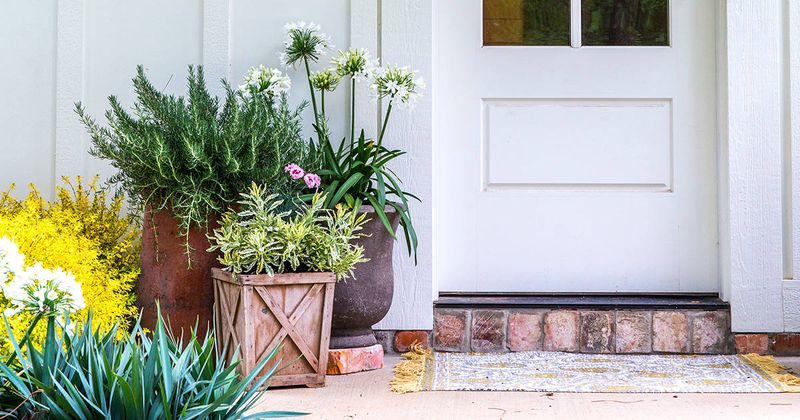
Where you put the pot matters, and not just for sunlight. Scorpions are drawn to sheltered spots: cracks, gaps, dark corners, and any object resting directly against a foundation or door frame.
A container pushed tight against the threshold or stacked near a gap in the siding creates exactly the kind of covered nook that scorpions use for daytime cover.
A more practical placement keeps the pot near the entry for visual effect but off to the side and away from door edges, foundation openings, and window frames. Leave enough clear space around the base of the pot that nothing accumulates beneath it.
A saucer left filled with water, a cluster of leaves caught under the rim, or a gap between the pot and the wall can all create sheltered microhabitats without any intention on your part.
These placement recommendations come from an inference based on Texas A&M’s habitat guidance for scorpion management, not from a study that tested rosemary container placement specifically. No researcher has measured whether a pot positioned six inches from the door versus two feet away changes scorpion behavior at a Texas home.
The practical logic is that keeping the entry zone uncluttered and free of shelter is good scorpion management regardless of what plant sits nearby.
Rosemary works well as a movable container plant precisely because you can shift it for cleaning, check underneath it easily, and keep the whole area tidy without much effort. That mobility is a genuine advantage for an entry-area plant in a scorpion-active region.
Use exclusion and habitat management as the primary plan
A rosemary pot is a pleasant addition to a porch, but it is not a scorpion prevention plan. The steps that Texas A&M directly recommends for reducing scorpion pressure around a home are practical, physical, and do not depend on any plant.
Start by removing the materials scorpions use for cover. Boards, rocks, logs, bricks, trash piles, and accumulated debris near the structure all create sheltered hiding spots.
Clearing them away from the foundation eliminates the daytime refuges that scorpions depend on. Keep nearby grass mowed short, and prune any tree or shrub branches that touch or overhang the house, since scorpions can travel along branches to reach a structure.
Sealing entry points is equally important. Cracks in the foundation, gaps around pipes, and openings around utility lines are all potential scorpion entry routes.
Weather-stripping around doors and windows that do not fit tightly helps close the gaps that scorpions can squeeze through, and maintaining tight-fitting screens on windows and vents reduces access further.
According to Texas A&M’s scorpion control guidance, these habitat modification and exclusion steps are the primary recommended prevention measures for Texas homeowners. They address the actual conditions that allow scorpions to live and move near a structure.
Rosemary can complement these steps as a heat-tolerant porch plant with some limited laboratory interest, but no container herb substitutes for a well-sealed, debris-free entry zone. Handle the physical work first, then add the plant.
Avoid turning a plant idea into an essential-oil hazard
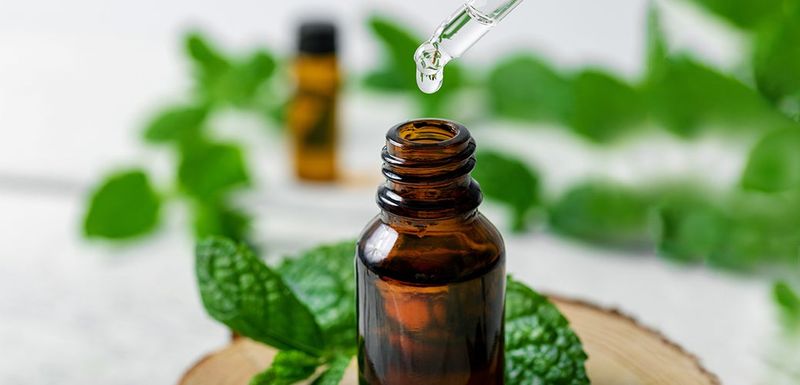
Rosemary the plant and rosemary the concentrated essential oil are two very different things, and treating them as interchangeable can create real problems. The ASPCA lists rosemary as nontoxic to dogs, cats, and horses, which makes the living plant a reasonable choice for households with pets.
That safety assessment applies to the plant itself, not to concentrated rosemary oil.
ASPCA Animal Poison Control advises that concentrated essential oils can harm pets through ingestion, skin or coat contact, and accidental exposure. Applying rosemary oil around door frames, spraying it on porch surfaces, or diffusing it near pet areas is not a safe DIY scorpion treatment.
The study that found scorpion avoidance used oil applied to sand in a controlled lab setting, not a method intended for household use around people or animals.
Poison Control also notes that essential oils can be toxic when misused, particularly around children and pets, which reinforces why homemade oil applications should not be treated as harmless natural alternatives.
Lavender sometimes appears alongside rosemary in scorpion-deterrent claims, but Clemson Cooperative Extension cautions that aromatic plants often do not repel pests simply by growing nearby, and no comparable primary study supports lavender as a scorpion deterrent. If you choose to use any pesticide product around the porch or foundation, Texas A&M’s guidance is clear: follow the product label precisely, and do not assume that naturally derived products are automatically safer or longer-lasting than other options.
Treat rosemary as a useful add-on, not a barrier
The practical action plan here is straightforward. Grow rosemary in a sunny, well-drained movable container, keep it off to the side of the door rather than against the frame, and empty or remove any saucer that collects standing water.
According to Texas A&M AgriLife Extension, fast-draining soil and full sun are the two conditions rosemary needs most to thrive through a Texas summer.
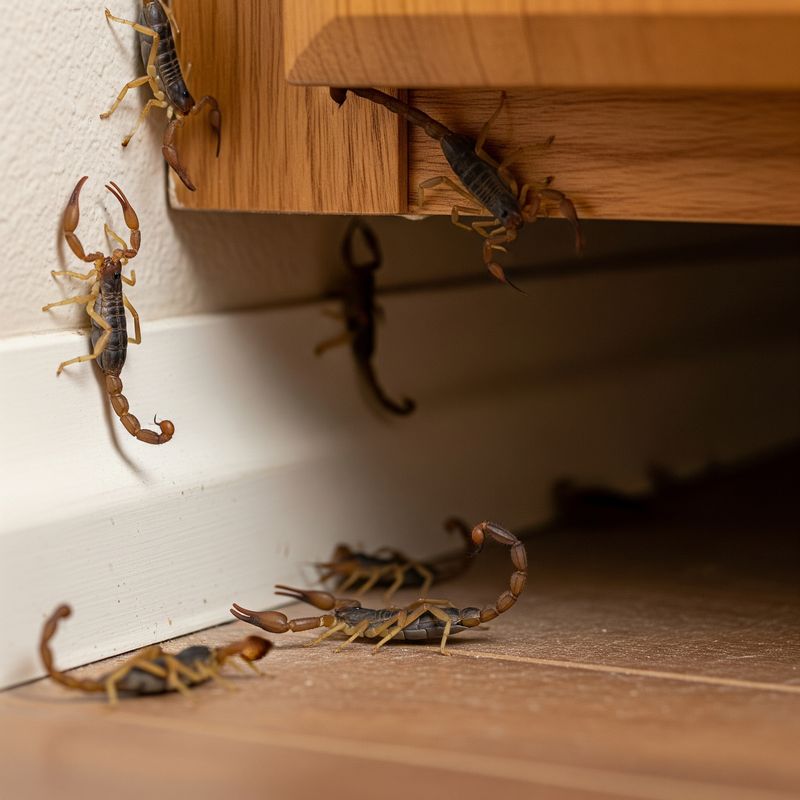
Keep the doorway itself free of debris, clutter, and any objects that create sheltered gaps near the foundation. Check weather-stripping and screens regularly, seal cracks around pipes and utility lines, and clear the yard debris that scorpions use for cover.
Texas A&M’s exclusion guidance covers these steps in detail, and they remain the foundation of any honest scorpion management approach.
As for the plant’s role in all of this: the 2019 laboratory study found that rosemary oil produced short-term avoidance in 16 striped bark scorpions tested on treated sand indoors. A living rosemary plant in an outdoor container has not been tested for household scorpion control.
Rosemary earns its spot on a Texas porch as a heat-tolerant, fragrant, culinary herb that happens to have more laboratory interest than most plants. That is a reasonable add-on to a well-managed entry, not a replacement for one.