
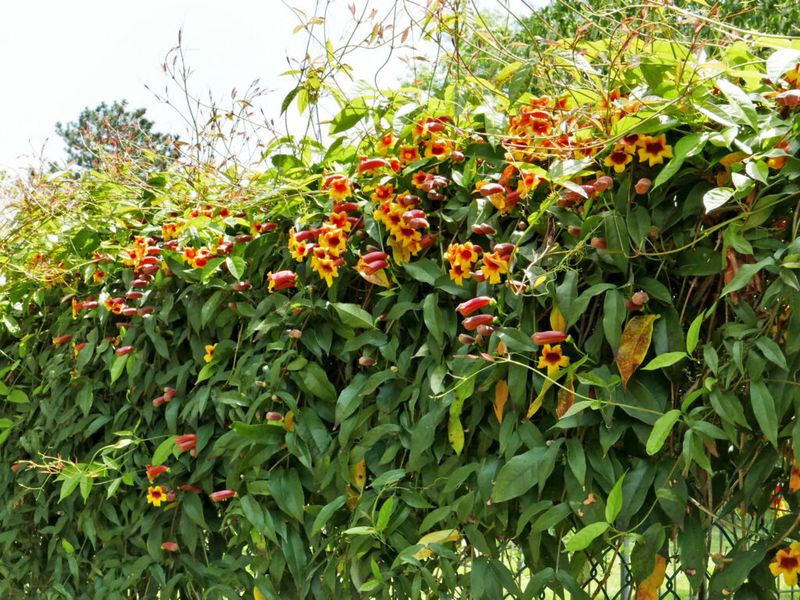
Crossvine is a fast-growing native vine that most North Carolina homeowners walk right past at the nursery, and that oversight is worth reconsidering. Trained on a fence or trellis along a wooded property edge, it can fill in quickly, support hummingbirds and pollinators, and give you a living screen where bare wire or chain-link used to stand.
Managing your yard boundary well matters because ticks are a real concern across North Carolina, and a thoughtfully planted edge combined with smart habits can make outdoor time feel safer and more enjoyable.
Crossvine Offers a Native Living Screen
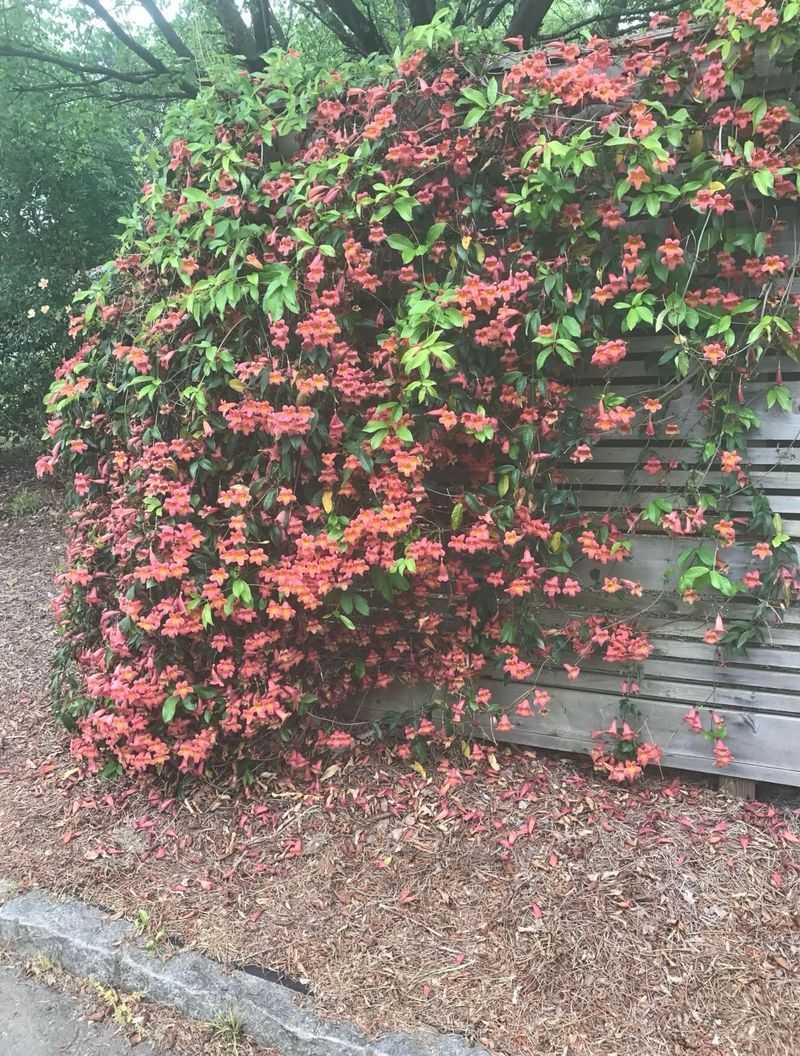
Calling crossvine underrated is an editorial opinion, not an established ranking, but the case for it is genuinely strong. NC State Extension describes Bignonia capreolata as a rapid-growing native perennial vine found throughout North Carolina, from the Coastal Plain to the Piedmont and into the Mountains.
It is listed for hardiness zones 5a through 9b, which covers the entire state.
On a sturdy fence, arbor, or trellis, crossvine can reach roughly 30 to 50 feet at maturity. It climbs using branched tendrils that grip bark, wire, wood, and other surfaces without the aggressive stem-twining that can strangle a support structure over time.
That climbing habit makes it far easier to train deliberately along a boundary than many other fast vines.
The flowers appear in late winter through early spring and are tubular, orange-red to yellow, and attractive to hummingbirds, bees, butterflies, and other pollinators. NC Sea Grant’s eco-friendly planting guide highlights its wildlife value alongside its native credentials, making it a useful choice for homeowners who want the screen and the habitat benefit at the same time.
Crossvine is often described as semi-evergreen to evergreen, but that label deserves a qualifier. In much of North Carolina it stays dark and glossy green through winter.
In colder areas or after an unusually hard freeze, the foliage may shift to reddish-purple, and severe winters can kill top growth back to the ground before the plant resprouts from the roots. UGA Extension similarly characterizes crossvine as semi-evergreen with a fast growth rate, which aligns with what North Carolina gardeners typically observe.
Plan for year-round screening in most of the state, but expect occasional winter setbacks in the mountains or during unusually cold winters statewide.
A Privacy Screen Does Not Repel Ticks
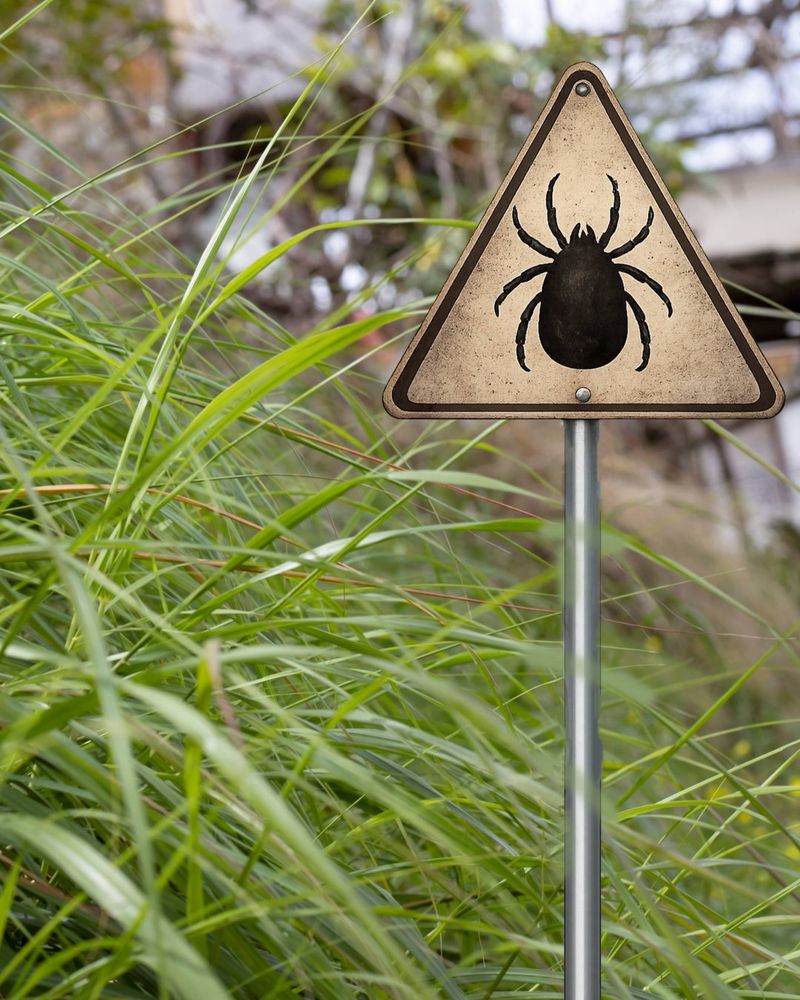
Before planting crossvine along a wooded boundary, one point needs to be stated plainly: no reliable evidence shows that crossvine repels ticks, blocks their movement, or controls them in any way. The vine is a privacy screen and a wildlife-support planting.
Those are real, worthwhile benefits. Tick management is a separate job that requires different tools.
Ticks occur in wooded, brushy, grassy, and shaded habitats across North Carolina. They do not enter a yard through a specific gap that a vine can plug.
Instead, they are transported by animal hosts including deer, rodents, and pets, and they wait for a passing host in the kind of humid, sheltered microhabitats that occur throughout wooded and edge environments. CDC tick prevention guidance focuses on reducing human contact with those habitats, not on any single plant species as a barrier.
The key distinction for crossvine is where and how it grows. A vine trained above the ground on a trellis or fence is a very different situation from dense ground-level brush, leaf litter, and unmanaged vegetation.
University of Maine tick management guidance consistently points toward clearing leaf litter, cutting back brush, and keeping grass mowed as the landscape steps most likely to reduce tick contact at the yard edge.
Allowing dense vegetation to accumulate at ground level near a path, play area, or patio can actually increase tick contact risk rather than reduce it. Published research on tick habitat associations reinforces that brushy, shaded, and humid conditions at ground level are where tick encounters are most likely.
Crossvine trained up off the ground on a well-maintained support does not create those conditions, but the surrounding area still needs to be managed deliberately.
Design the Boundary Between Screen and Lawn
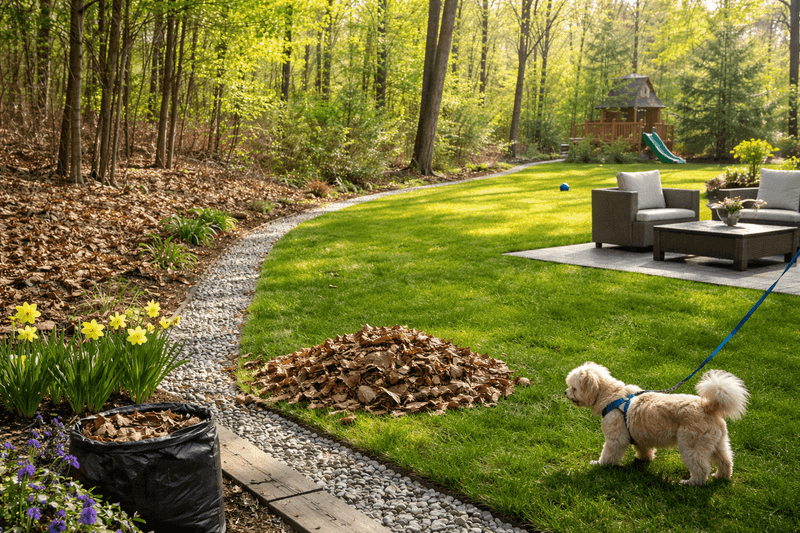
Practical layout matters as much as plant selection when you are working with a wooded edge. The goal is to keep the privacy planting where it looks good and supports wildlife, while keeping the areas where people actually spend time as far from dense edge habitat as the property allows.
Train crossvine on a sturdy trellis, cattle-panel-style frame, arbor, or existing fence placed at the wooded boundary itself. That puts the vine where the sightline problem is, keeps it elevated above the ground, and gives you a defined edge to work from.
Playground equipment, patios, and decks should be positioned away from the wooded edge and dense brush wherever possible, which is consistent with CDC Lyme disease prevention recommendations for yard layout.
Between the vine’s support structure and the mowed lawn, consider installing an approximately 3-foot-wide strip of gravel or wood chips. This strip serves as a maintained boundary and may help reduce the amount of time people and pets spend moving through dense edge vegetation.
The CDC’s tick management handbook describes such a buffer as a possible risk-reduction measure, while noting that effectiveness varies with property conditions, shade, woodland density, initial tick abundance, and how consistently the buffer is maintained.
That variation matters. A study of 143 residential yards found associations between tick abundance and features like stone walls, fencing, and trash, but did not detect a statistically significant effect from gravel or wood-chip barriers.
The researchers noted that few properties in the study had barriers, which limited the analysis. The takeaway is that a maintained strip is reasonable practical guidance and a sensible boundary feature, but it does not guarantee lower tick exposure and should not replace other precautions.
Think of the layout in three zones: the wooded edge where the vine grows on its support, the maintained buffer strip between the support and the lawn, and the open, mowed, frequently used space where your family spends most of its time. Each zone has a different management job, and keeping them distinct is what makes the overall design work.
Give Crossvine the Support and Conditions It Needs
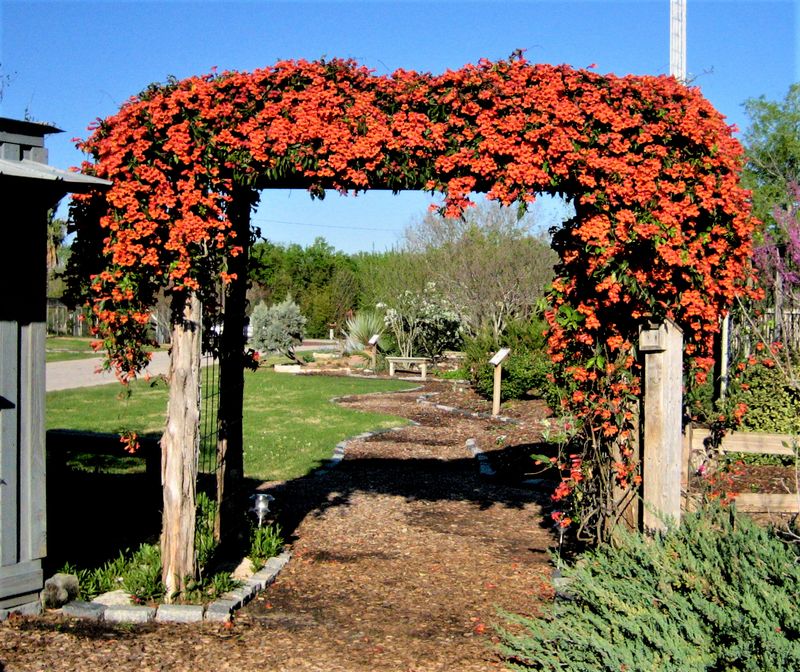
Crossvine’s reputation for rapid growth is well earned, but that growth still depends on getting the basics right in the first season or two. Rushing past the establishment phase is the most common reason a fast vine stays small for years before it finally takes off.
Light is the most important variable for flowering. NC State’s plant profile for crossvine notes that it tolerates conditions from dappled shade through full sun, and that more sunlight generally produces better and more abundant flowering.
A trellis positioned along a wooded boundary will often catch at least partial sun, especially if the vine can grow up above the canopy line. If the boundary is deeply shaded all day, expect more foliage than flowers.
Soil should be moist to occasionally dry and well-drained. Crossvine is tolerant of a range of soil types and handles drought reasonably well once established, but it appreciates organic matter worked into the planting hole when conditions allow.
Poorly drained, waterlogged soil is more likely to cause problems than drought.
The vine climbs with branched tendrils that wrap around stems, wires, bark, and other supports. This means the support structure needs to be genuinely sturdy before the vine matures.
A lightweight plastic trellis will not hold a 30-foot vine that has been growing for several years. Cattle panels, heavy-gauge wire fence, wooden arbors with solid posts, or an existing wooden or metal fence are all appropriate choices.
Make sure whatever you install is anchored well before the vine reaches full weight.
Winter conditions in the North Carolina mountains can knock top growth back to the ground in an unusually hard year. NC State notes that crossvine resprouts from its roots after such setbacks, so the plant itself usually survives, but it may take a full growing season to rebuild the screen.
Setting realistic expectations from the start means you will not be caught off guard if a cold winter temporarily opens gaps in your boundary planting.
Maintain the Vine and Protect the Home
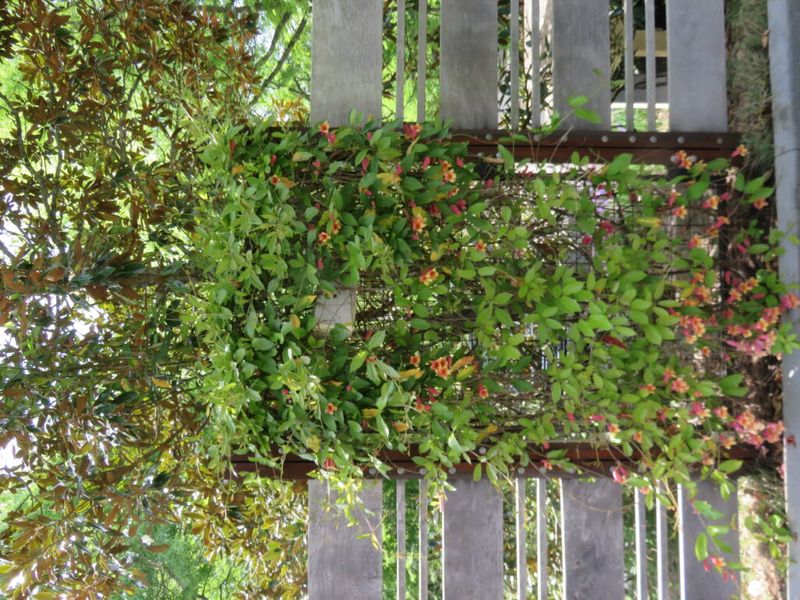
Crossvine is not a plant-and-forget choice. It earns its place in a managed landscape, and the maintenance it requires is straightforward once you build it into your seasonal routine.
Guide new growth onto the support structure as the vine establishes, and prune it back when stems start moving beyond the intended boundary. NC State reports that crossvine can spread by both seed and root suckers, so pulling suckers as they appear at the base of the plant is an important habit to establish from the first growing season.
Left unchecked, suckers can push the vine into lawn areas, garden beds, or neighboring plantings well beyond the original trellis.
USDA plant guidance similarly warns that unmanaged crossvine can spread quickly by root suckers and recommends pruning when spread beyond the intended area is not desired. Checking the base of the planting every few weeks during the growing season is enough to stay ahead of sucker growth before it becomes a larger project.
If you are using a wood-chip buffer strip alongside the vine’s support, that strip also needs regular attention. The CDC tick management handbook notes that wood chips mixed with leaves can break down over time into conditions similar to leaf litter, which is exactly the type of ground cover that tick management guidance recommends removing.
Refresh the chip layer periodically and keep leaf litter from accumulating on top of or within the buffer strip.
Fire safety is a consideration that often gets overlooked with ornamental vines. NC State gives crossvine a high flammability rating.
That means it should not be planted within the defensible space closest to your home, which is generally the zone immediately surrounding the structure. Keep the vine at the property’s wooded boundary, not climbing a porch railing, house wall, or attached structure.
The same high-flammability concern applies to Carolina jessamine, a sometimes-suggested native alternative that also carries a high poison severity rating, making it an unsuitable casual substitute in yards where children or pets spend time.
Use Proven Tick Precautions Around the Yard
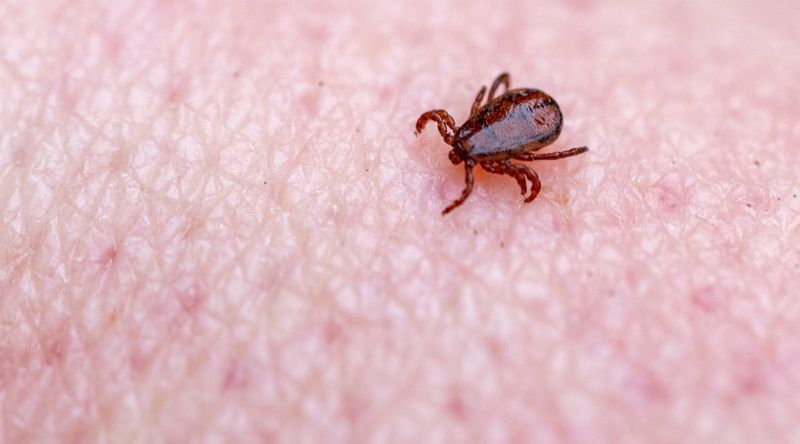
Landscaping choices like crossvine and a maintained buffer strip can be part of a thoughtful yard plan, but they do not replace the precautions that actually address tick exposure directly. Ticks are present throughout North Carolina in every region and season, and NC DHHS tick surveillance data identifies several medically important species in the state capable of transmitting illnesses including Rocky Mountain spotted fever, ehrlichiosis, Lyme disease, and STARI.
Keep the lawn mowed and manage the edge vegetation around the areas where your family spends the most time. Tall grass, brush piles, leaf litter, and overgrown borders close to patios, play areas, and frequently used paths create the kind of humid, sheltered habitat where ticks concentrate.
Clearing those conditions from the immediate yard does more for exposure reduction than any planting choice.
When spending time outdoors, especially near wooded or brushy areas, use an EPA-registered repellent on exposed skin and treat clothing with permethrin or choose clothing pre-treated with it. CDC tick prevention guidance recommends tucking pants into socks and wearing long sleeves when moving through wooded or tall-grass areas, then doing a full body check after coming inside.
Pay close attention to the scalp, behind the ears, under the arms, the back of the knees, and around the waistband.
Remove any attached tick promptly using fine-tipped tweezers, grasping the tick as close to the skin as possible and pulling upward with steady pressure. CDC Lyme prevention guidance advises against twisting, burning, or applying substances to the tick, as these methods can increase the risk of infection transmission.
Pets that go outdoors regularly need their own prevention plan. CDC guidance on preventing ticks on pets recommends checking dogs and cats daily, especially after time spent near woods or brush, and using veterinarian-recommended tick prevention products consistently.
Pets can carry ticks inside and transfer them to people without anyone noticing. NC DHHS tick-borne disease surveillance data underscores that tick-related illness is not a rare event in the state, making these habits worth keeping year-round rather than just during the warmest months.
Use Crossvine for Screening, Not Tick Control
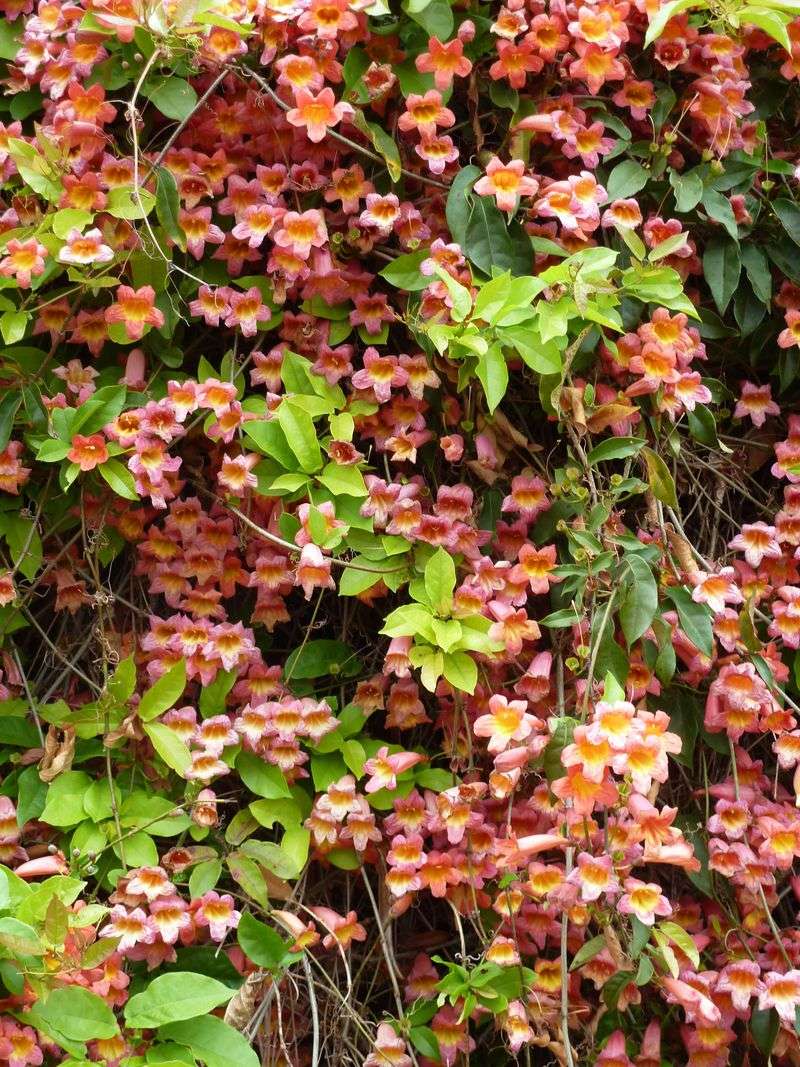
Crossvine earns its spot at a wooded boundary by doing two things well: screening sightlines with fast native growth, and feeding hummingbirds, bees, and butterflies through the seasons. NC State’s crossvine profile confirms its value as a native, wildlife-supporting vine suited to conditions across the state.
Train it above the ground on a sturdy support, manage root suckers, and keep it well outside the defensible space nearest your home.
Tick exposure is a separate problem that requires its own strategy. Manage the lawn and edge vegetation, position recreation areas away from dense brush, use repellents and appropriate clothing, check for ticks after every outdoor session, and follow veterinary guidance for pets.
A maintained gravel or wood-chip buffer between the vine’s support and the lawn may help reduce contact with edge habitat in some settings, but the CDC tick management handbook is clear that barrier effectiveness varies and that no single landscape measure makes a property tick-proof. Personal and pet precautions remain the most reliable part of any exposure-reduction plan.
A yard that looks like it belongs in the North Carolina landscape and keeps the family safer outdoors is not a contradiction. Those two goals just need to be handled with the right tools in the right places.