
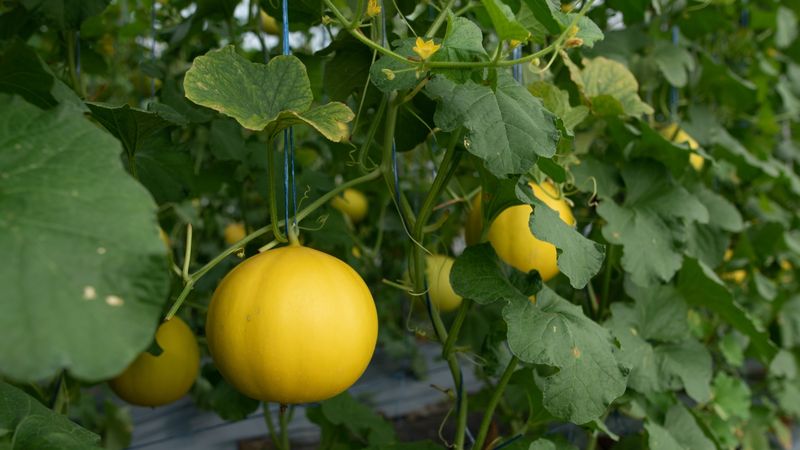
Watching your melon vines race across the garden while the fruit barely grows is one of the more frustrating sights in a summer garden. That gap between vigorous plants and disappointing harvests has more than one explanation, and blaming fertilizer right away can lead you in the wrong direction.
Heat, poor pollination, inconsistent watering, and plant health all play real roles. Working through a short checklist before reaching for another product will save you time and protect the fruit you still have a chance to size up.
Lush vines make nitrogen plausible, not certain
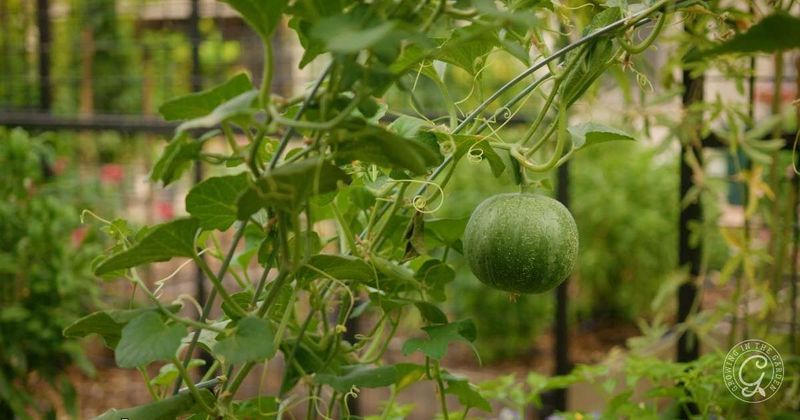
Melon vines are supposed to sprawl. Many cultivars will cover six feet or more of bed space under perfectly normal growing conditions, and a plant with dark-green leaves reaching in every direction is not automatically a sign that something has gone wrong with your fertilizer program.
Variety, spacing, soil fertility, irrigation, and the length of your warm season all affect how large a vine gets, as Mississippi State Extension guidance on muskmelon varieties makes clear.
That said, a specific pattern does make excess nitrogen worth suspecting. When vines are unusually dark green, growing extremely fast, and producing very few female flowers or poor fruit set alongside all that foliage, high fertility becomes a more credible explanation.
Oklahoma State Extension identifies high fertility as a condition that can push plants toward predominantly male flowers and poor fruit set, while University of Minnesota Extension’s vining vegetable guide links excess nitrogen to delayed fruiting and excessive vegetative growth.
Small fruit during late-summer heat, on its own, does not point to nitrogen. Heat stress, failed pollination, uneven watering, disease, pests, cultivar characteristics, and too many fruits per plant can all produce the same result.
The combination of exceptionally lush, dark-green growth plus delayed or failed fruiting is the pattern worth acting on, not sprawl and small fruit alone.
Why repeated or late nitrogen can disrupt fruiting
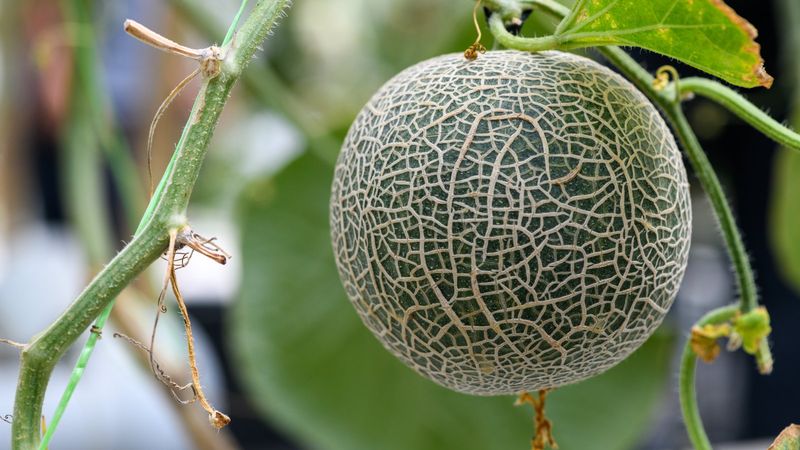
Nitrogen encourages leafy, vegetative growth. That is exactly what you want early in the season when the plant is building the root system and canopy it needs to support fruit.
The problem shows up when nitrogen keeps arriving after the plant should be shifting its energy toward flowering and fruit development.
Repeated applications through the growing season can keep the plant in a vegetative mode longer than is helpful. University of Minnesota Extension warns that applying nitrogen too late, after fruit set has begun, can cause fruit-production problems.
Texas A&M’s cantaloupe production guide connects excessive nitrogen to delayed maturity and reduced fruit quality, two outcomes that compound the frustration of an already short late-summer window.
Stopping nitrogen now will not recover flowers that already dropped or fruit that aborted weeks ago. What it can do is remove a potential obstacle so the plant has a better chance of setting and sizing whatever fruit comes next.
Oklahoma State’s gardening column guidance reinforces that high fertility is a correctable condition, but the correction works on future production, not on fruit that has already been lost.
Find the failing stage before choosing a treatment
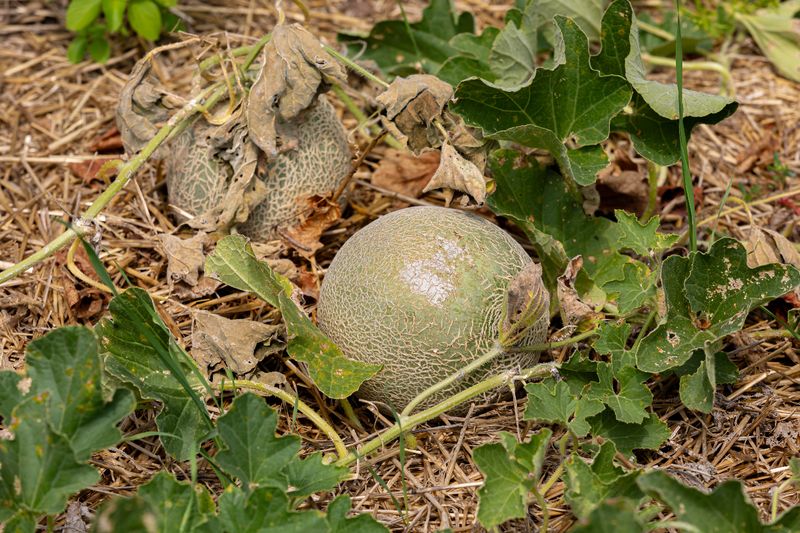
Before you adjust anything, figure out exactly where the plant is failing. The answer changes the likely cause and the appropriate response.
A plant with very few or no female flowers is dealing with a different problem than one that sets flowers but drops them quickly. Few female flowers can point to excess fertility, heat, stress, or a cultivar that naturally produces more male flowers early in the season.
Flowers or tiny fruitlets that fail shortly after opening are more likely connected to heat, pollination failure, water stress, or insect damage, as Utah State University’s cantaloupe guide identifies very hot weather and water stress among the main causes of poor fruit set.
Fruit that actually sets but stays undersized is a separate pattern. Inconsistent watering, poor pollination, disease reducing leaf function, too many fruits competing on one plant, or simply a small-fruited cultivar may be more relevant than nitrogen in this case.
Check your seed packet or catalog description; some varieties top out at two or three pounds under the best conditions. University of Georgia’s cantaloupe production bulletin and University of Minnesota’s home melon guide both note that Oklahoma State’s vegetable FAQ also lists these competing explanations.
One more clue: if your melons reach a normal size but taste watery or bland, look toward excess irrigation near ripening, insufficient sunlight, disease, or premature harvest before suspecting nitrogen.
Pause nitrogen and test the soil before adding anything else
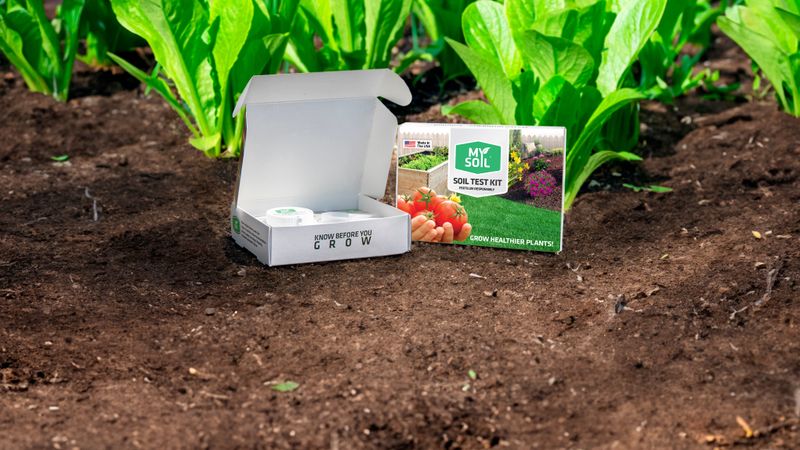
When your melon plant looks exceptionally leafy and is fruiting poorly, the safest first move is straightforward: stop any routine nitrogen applications you have been making. Adding another product to try to counterbalance the plant adds more variables to an already complicated situation and can make the problem harder to read.
A soil test should come before any additional fertilizer goes into the ground. University of Minnesota’s soil-testing guide for lawns and gardens explains what a basic test can reveal about existing nutrient levels and pH, and their plant analysis resource covers how to interpret results in a crop context.
When you factor in your results, account for everything you have already applied: compost, aged manure, slow-release granules, and liquid feeds all contribute nitrogen and other nutrients over time.
Commercial nitrogen figures from state university guides are not direct backyard recipes. University of Florida’s muskmelon production guide lists commercial-season nitrogen rates per acre for Florida mineral soils, but those numbers depend on bed spacing, soil type, irrigation method, and yield targets that rarely match a home garden.
University of Georgia similarly ties cantaloupe fertilizer recommendations to local soil pH, residual nutrients, and soil type. Testing is the only way to know what your specific beds actually need, and it cannot reverse fruit that has already aborted or sized poorly.
Maintain steady moisture while fruit sizes
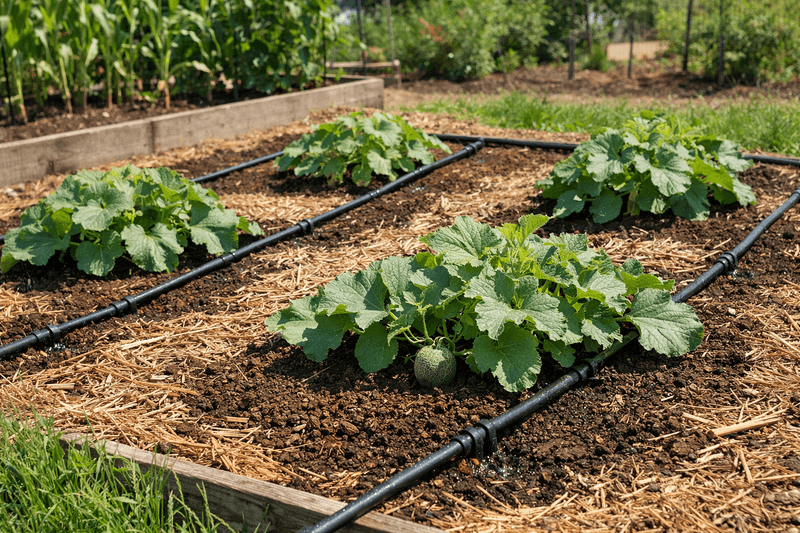
Water management is a separate problem from the nitrogen question, and it deserves its own attention. Drought or inconsistent soil moisture during vine growth, flowering, and fruit sizing can reduce both yield and fruit size regardless of how well you have managed fertilizer.
University of Georgia Extension identifies water stress during flowering and fruit development as a major cause of yield reduction in cantaloupe. Oklahoma State’s cantaloupe production fact sheet recommends abundant moisture during vigorous vine growth and until early-set melons are fully sized.
Letting the soil dry out repeatedly during this window can stunt fruit even when every other condition looks fine.
Overwatering creates its own set of problems. Too much water can reduce sugar concentration, contribute to fruit cracking, and encourage rot.
Oklahoma State advises reducing irrigation as melons approach ripeness, but that late-season adjustment is a fine-tuning step for fruit that is already near full size, not permission to let the plant wilt during active fruit development. Aim for consistent, even moisture through a drip system or careful hand watering rather than alternating between dry spells and heavy soakings.
Heat and pollination can block fruit on healthy-looking vines
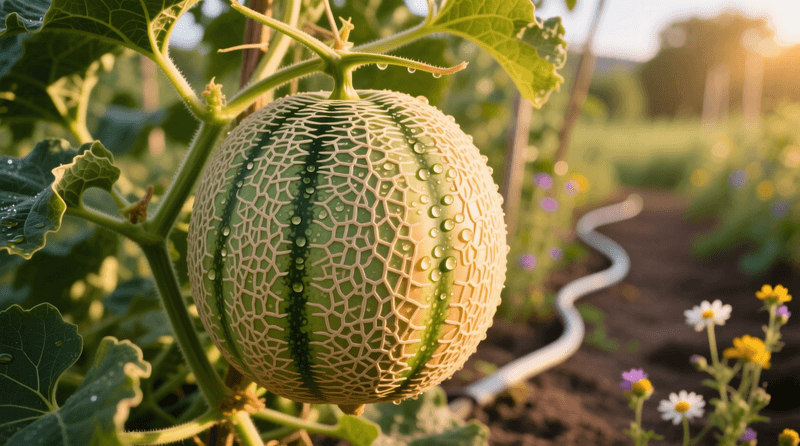
A vine can look completely healthy and still fail to produce fruit if the conditions at flowering time are wrong. Two factors that often go unexamined are temperature and pollinator activity.
University of Minnesota Extension reports that daytime temperatures in the 90s or nighttime temperatures in the 70s can cause flower and small-fruit abortion. Utah State University similarly lists very hot weather among the primary reasons cantaloupe fruit fails to set.
When temperatures stay elevated for days at a stretch, even a well-fed, well-watered plant may drop its flowers before pollination can succeed.
Melon flowers have a short window for pollen transfer, usually just a few hours on the morning they open. University of Minnesota’s pollination requirements guide and Utah State’s vegetable pollination resource both emphasize that inadequate pollen transfer can cause fruit failure, small fruit, or misshapen fruit.
Check your garden during the morning hours to see whether bees are actively visiting flowers. Avoid applying any insecticide while bees are present, and preserve nearby flowering plants where practical to support pollinator visits.
University of Minnesota’s home melon guide notes that hand-pollination can serve as a backup option in small gardens, but checking for bee activity and reducing pesticide exposure should come first. No fertilizer adjustment can restore fruit that was lost to heat or a missed pollination window.
Inspect vines, leaves, roots, and fruit for other causes
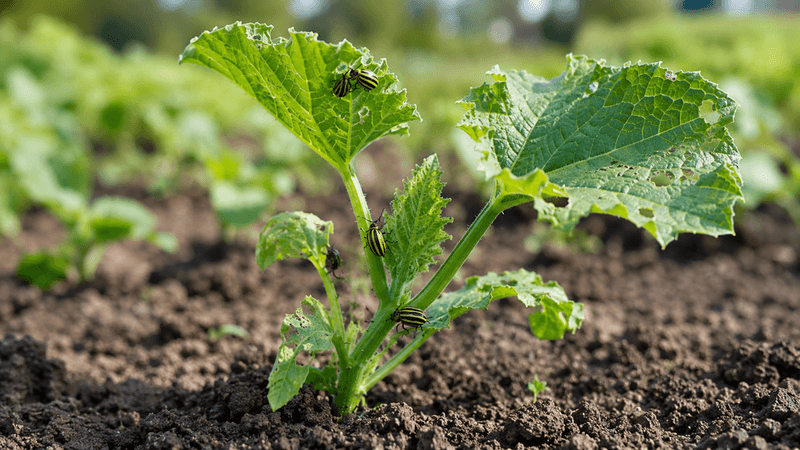
Before making any nutrient correction, spend a few minutes looking at the whole plant from vine tips to soil level. Pest and disease problems can mimic the symptoms of high nitrogen or heat stress, and treating the wrong cause wastes time and may make things worse.
Oklahoma State’s cantaloupe production fact sheet and their 2025 gardening column identify cucumber beetles, squash bugs, vine borers, foliar diseases, root problems, and nematodes as potential causes of weakened vines and reduced fruit production. Cucumber beetles can spread bacterial wilt, which collapses vines quickly.
Squash vine borers hollow out stems from the inside, cutting off water and nutrient flow before you see obvious wilting. Check the base of each main stem and look for entry holes or frass.
Foliar diseases like powdery mildew reduce the leaf area available for photosynthesis, which limits the energy the plant can put into fruit. Root problems and nematode pressure are harder to see above ground, but stunted growth combined with otherwise unexplained fruit failure is a reason to look at what is happening below the soil surface.
On potassium: adding it automatically is not a reliable fix for small melons. University of Florida research on muskmelon nutrition shows that potassium responses depend on soil status, crop system, and existing nutrient levels.
University of Georgia ties potassium recommendations to soil test results, not to symptoms alone. Correct what a test confirms is low, and skip the potassium if the soil is already adequate.
Use a measured rescue instead of chasing a quick fix
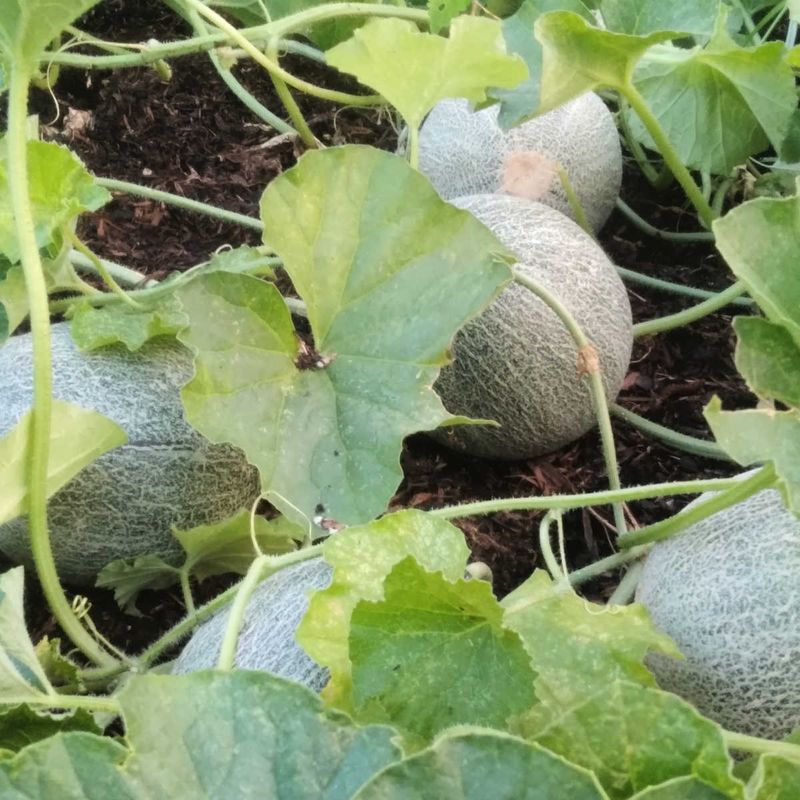
Pulling together everything covered so far, a measured response looks like this: stop any routine nitrogen applications, get a soil test before adding anything new, and keep moisture consistent while fruit is actively sizing. Check for bee activity during morning flower hours and reduce insecticide use while pollinators are present.
Walk the plant carefully and look for pest damage, disease symptoms, and root issues before reaching for a corrective fertilizer.
Several approaches are not worth pursuing. All-day shade cuts the sunlight melons need for sugar production.
Severe pruning is not an established fix for nitrogen-related small fruit. Flushing the soil with heavy irrigation can move excess nutrients into groundwater and worsen flavor near ripening, as EPA nutrient pollution guidance and Oklahoma State’s cantaloupe fact sheet both caution against.
Deliberate drought during fruit sizing reduces yield and size. Potassium is only worth adding if a soil test shows it is actually low.
Guaranteed bloom or fruit fertilizers are not a reliable shortcut for a plant dealing with heat, pollination gaps, or disease.
Set realistic expectations: the steps above may prevent additional imbalance and create better conditions for fruit that sets later in the season, but they cannot enlarge melons that are already undersized or restore fruit that aborted weeks ago. The plants that reward this kind of steady, diagnostic attention are the ones that quietly produce a late flush of decent fruit while the gardener who chased quick fixes is still wondering what went wrong.