
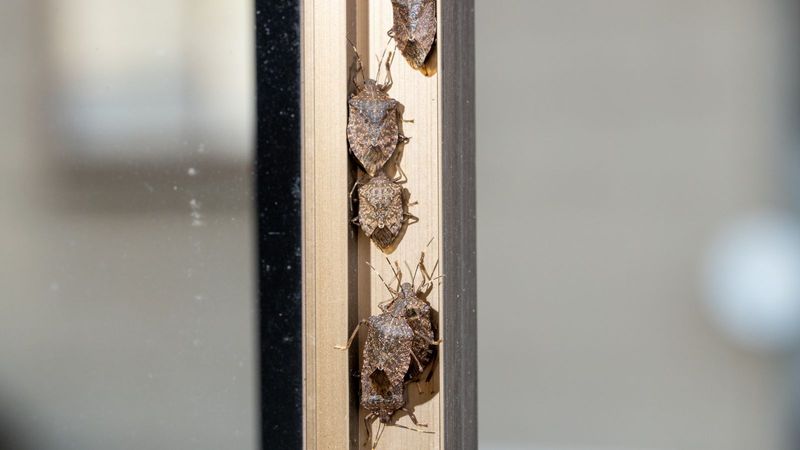
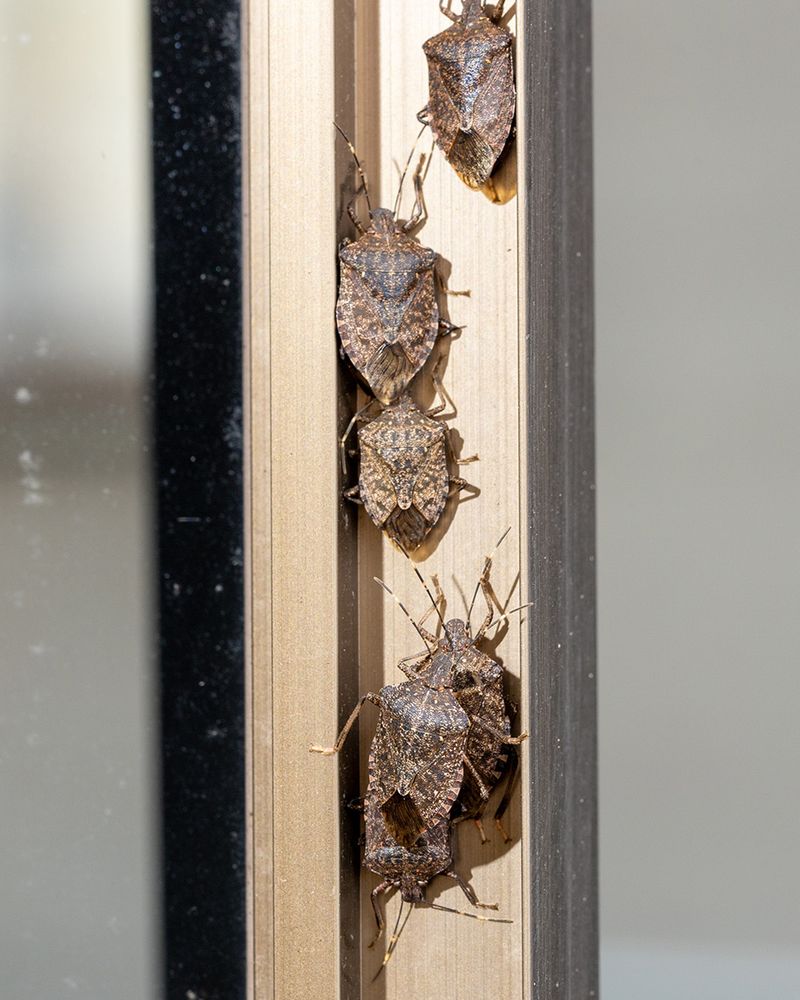
Stepping onto your porch one July morning to find a dozen shield-shaped bugs clustered on the siding can stop you cold. Before you reach for a spray can, those insects are actually sending you a useful message about your yard, your garden, and the season ahead.
Stink bugs in North Carolina can reflect several different species, not all of them harmful, and reading the situation correctly will save you time, protect your plants, and keep beneficial insects alive. A calm, step-by-step look at what is drawing them there and what to do next is the most practical response you can take right now.
A Porch Cluster Can Signal Movement—Not Necessarily an Infestation
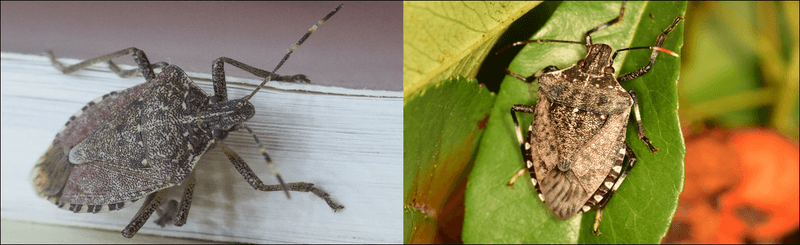
Seeing stink bugs pile up on your porch wall in summer can feel alarming, but a cluster on the siding is more useful as a signal than a verdict. A summer gathering on a porch can plausibly reflect two things happening at once: adults moving through a maturing landscape as garden and field plants ripen, and the porch itself offering a warm, sunny, light-colored surface that is simply attractive to resting insects.
The sighting alone cannot tell you which species you are looking at or where those individuals came from.
NC State Extension reports that the brown marmorated stink bug is established across much of the Piedmont and mountain regions of the state, while it has not become as prevalent in the Coastal Plain, though isolated occurrences exist there. That regional pattern is worth knowing, but it should not be read as a current population measurement for any specific yard or neighborhood.
Insects you see on a sunny August afternoon may have flown in from nearby woods, field edges, roadside vegetation, or a neighboring property’s host trees rather than originating in your own garden beds.
One detail that often surprises homeowners: stink bugs do not reproduce inside homes. Adults use buildings as sheltered overwintering sites, not as nesting grounds.
Summer adults and nymphs are active in the landscape, but the stronger, more concentrated movement toward buildings traditionally occurs in September and October as insects seek protected places to wait out winter.
An EPA overview of the brown marmorated stink bug confirms that these insects are primarily a nuisance indoors rather than a structural pest. They do not bite people or pets and do not damage the building itself.
Treating a summer porch cluster as an early cue to improve exclusion and inspect nearby plants is a more durable response than immediate spraying, and it sets you up ahead of the season when indoor pressure is genuinely higher.
Which Stink Bug Is Gathering at the Door?
Grabbing a can of spray before you know exactly what you are dealing with is the most common mistake homeowners make with shield-shaped insects. Several stink bug species live in North Carolina, and not every one you find on your siding is the invasive brown marmorated stink bug or a plant-damaging pest.
Identifying what you actually have is the first productive step.
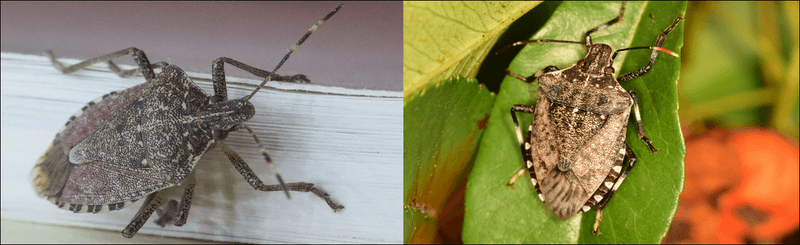
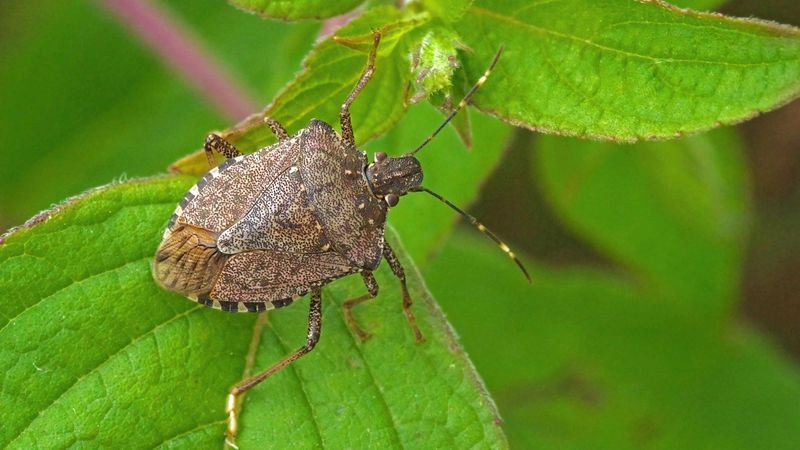
The brown marmorated stink bug (BMSB) is roughly 14 to 17 millimeters long, roughly the size of a dime, with a shield shape and mottled brown coloring across its back. According to EPA identification guidance, the most reliable field marks are alternating light and dark bands on the last two antennal segments and along the outer edge of the abdomen.
Those banded antennae are what set it apart from many lookalikes.
NC State Extension specifically cautions that BMSB can be confused with native brown stink bugs, dusky stink bugs, rough stink bugs, squash bugs, and other insects. A native brown stink bug and a brown marmorated stink bug can look nearly identical to a hurried glance, so a photo taken in good light, ideally from above and from the side, is worth the extra thirty seconds.
Some of the shield-shaped bugs in your yard may actually be working in your favor. UC IPM notes that predatory stink bugs such as spined soldier bugs actively hunt caterpillars, beetle larvae, and other soft-bodied pests.
Killing every stink bug you find without checking can remove those beneficial predators from your garden. Before treating a group of insects, photograph a few representative individuals and compare them against a reliable field guide or your local Extension office’s identification resources.
Why Does the Porch Become the Meeting Place?
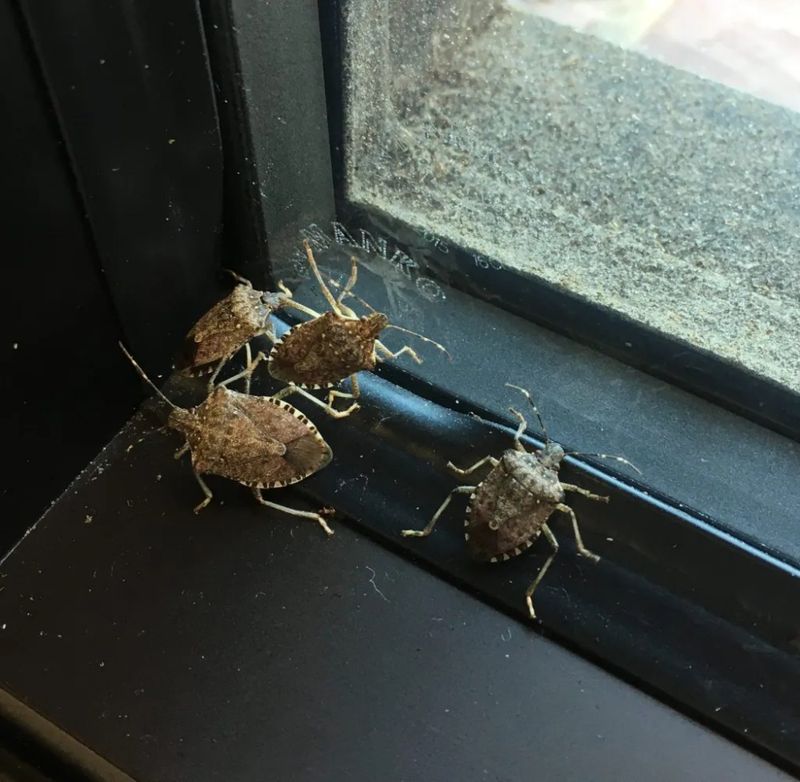
Porches do not produce stink bugs, but certain porch conditions make them a preferred stopping point. Understanding that distinction keeps you from treating the wall as the problem when the real factors are light, warmth, and insect communication.
Adult brown marmorated stink bugs release aggregation pheromones that draw other adults to a location once a suitable site has been selected. Utah State University Extension explains that this pheromone-driven clustering can become self-reinforcing: the more adults gather, the stronger the chemical signal becomes for others flying nearby.
A cluster that looks alarming by midweek may have started with just a handful of insects earlier in the week. The porch wall is not generating insects; it is simply a location that qualified as suitable and then advertised itself chemically to passing adults.
The physical characteristics of many porches add to that effect. Oregon State University Extension guidance identifies sunny walls, particularly southern- or western-facing exposures, and light-colored surfaces as common congregation sites for stink bugs and similar insects.
A white or cream-painted porch on the south side of your house absorbs and radiates heat in a way that shaded portions of the building do not, making it measurably more attractive on a warm August afternoon.
Lighting compounds the situation after dark. UC IPM notes that stink bugs are attracted to light, and that porch fixtures positioned immediately beside doors, light spilling through window screens, and bright indoor light visible through an open entryway can all increase nighttime activity around entry points.
Turning off unnecessary porch lights, repositioning fixtures away from the door frame where practical, and keeping doors closed after dark can reduce that nighttime draw without any chemical application at all.
The Yard Conditions Worth Inspecting First

A cluster on the porch is a prompt to walk the property, not a verdict about what you will find. Stink bugs can arrive from multiple directions, including neighboring fields, roadside vegetation, and mature trees well beyond your fence line, so the yard inspection is about gathering evidence rather than confirming guilt.
Start with fruiting vegetables and any fruit trees in the garden. NC State Extension lists tomatoes, peppers, okra, beans, corn, peaches, apples, pears, plums, and caneberries as documented BMSB host plants in North Carolina.
Turn fruit over and look at the skin. Feeding injury can show up as discoloration, hard or pithy spots just beneath the surface, deformed growth, shriveling, or a small area of decay at the puncture site.
Mild cosmetic damage on one or two tomatoes is a different situation than widespread feeding across an entire row, so note the extent of what you find before deciding on a response.
Habitat edges deserve a separate pass. NC State’s fruiting vegetable management guidance points out that crops planted near woods or corn fields can see higher stink bug pressure, because BMSB commonly moves among habitats as host plants mature and become less suitable.
If your garden beds run along a tree line or adjoin an unmowed margin, that edge is worth checking carefully for active feeding.
Wild host trees on or near the property are also worth noting as context. NC State Extension identifies tree-of-heaven, paulownia, catalpa, wild cherry, and black walnut as documented wild hosts.
Their presence near your property can help explain why pressure feels higher in some years or at certain times in summer, but finding one of these trees is a clue rather than a mandate to remove it. Mature trees provide habitat value and removing a healthy tree is not supported as a practical stink bug control measure for homeowners.
Plant Damage and Egg Masses Help Assess Local Activity
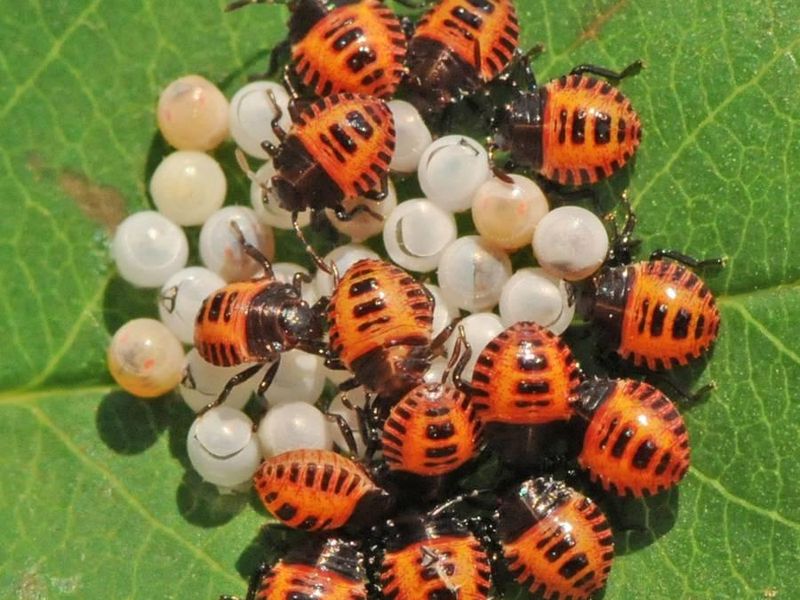
Once you are walking the garden, two specific things are worth hunting for: feeding damage on fruit and foliage, and egg masses on leaf undersides. Neither finding proves that your yard is the source of the insects on your porch, but together they tell you whether stink bugs are actively feeding or reproducing on your plants right now.
Egg masses are easy to overlook because they are laid on the undersides of leaves. EPA reports that female brown marmorated stink bugs lay clusters of approximately 20 to 30 eggs from May through August, with NC State giving an average of about 28 eggs per mass.
The eggs are pale green to yellowish, barrel-shaped, and arranged in a tight, orderly cluster that can look almost decorative. Check the undersides of large-leafed plants in your garden, including tomatoes, beans, and any ornamental trees nearby, because that is where females prefer to deposit them.
Feeding damage on fruit and vegetables can be harder to attribute with certainty, especially after the insects have moved on. NC State Extension describes stink bug feeding injury on fruiting vegetables as discoloration, hard or pithy spots beneath the skin, deformed growth, shriveling, and sometimes a small area of decay at the feeding puncture.
On apples and peaches, the damage often appears as a dimpled, corky spot just under the surface that only becomes obvious when you cut the fruit open.
Finding egg masses confirms that reproduction is occurring on local plants. Finding feeding damage confirms that insects are or were actively using those plants.
What neither observation establishes is whether those same insects are the ones gathering on your porch wall, since pressure can arrive from outside your property at the same time. UC IPM recommends basing garden decisions on plant injury and scouting rather than on the number of insects visible on a wall, because porch counts do not reliably reflect what is happening in the beds a few yards away.
Seal the Entry Before the Fall Shelter-Seeking Period
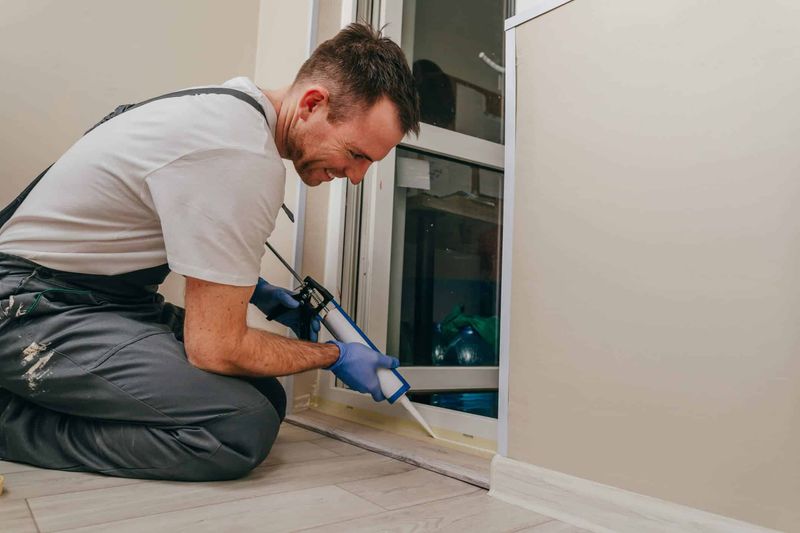
Physical exclusion is the most durable response available to a homeowner, and summer is the right time to get it done. Waiting until October, when stink bugs are actively pressing against the building in search of overwintering shelter, means you are sealing gaps while the pressure is highest.
Starting now, while the cluster on your porch is still a warning rather than an invasion, gives you a meaningful head start.
Work through the building methodically. EPA guidance on stink bug exclusion covers cracks around windows and door frames, gaps at the foundation, openings where utility lines and pipes enter the building, crawlspace vents, and chimneys.
Foam backer rod combined with exterior caulk handles most narrow gaps around window frames and door casings. Larger structural gaps at the foundation or crawlspace may need hardware cloth or foam board depending on the opening size.
Screens, door sweeps, and weather-stripping are equally important. Hold a bright flashlight against a closed exterior door at night and look for light leaking around the perimeter; any gap you can see is a gap a stink bug can use.
Replace torn or loose-fitting screens and add a door sweep if the bottom of the door does not sit flush against the threshold. These are inexpensive fixes that continue working season after season, unlike perimeter sprays that break down quickly in sunlight and rain.
UC IPM notes that exterior sprays may temporarily deter entry but degrade rapidly outdoors, making sealing openings a more reliable long-term strategy. Combine the physical work with lighting changes: turn off or relocate unnecessary porch fixtures away from door frames, and keep doors closed at night rather than relying on a screen door alone.
Reducing both the entry gap and the light signal that draws insects to that gap addresses the problem from two directions at once.
Protect the Garden Without Erasing Beneficial Insects
Garden responses to stink bugs work best when they are proportionate, targeted, and informed by what you actually found during your inspection. A few feeding marks on a tomato calls for a different response than widespread egg masses and active nymphs across multiple beds, and the species of insect you identified matters just as much as the damage level.
For small plantings, hand-picking is a practical first line of action. Drop adults and egg masses into a container of soapy water rather than crushing them, which releases the characteristic odor and is less pleasant for everyone involved.
Fine-mesh row covers can physically exclude stink bugs from vulnerable crops, but they require active management. UC IPM cautions that covers must be opened or removed during bloom periods because they also block the pollinators that fruiting crops depend on for a good harvest.
Predatory stink bugs and other natural enemies complicate any decision to spray broadly. NC State Extension notes that pyrethroids can kill beneficial insects and should be reserved for severe infestations rather than used as a routine response.
Many garden insecticides are also not highly effective against adult stink bugs, meaning a broad application can harm the natural enemies working in your favor while providing only modest relief from the pest itself.
Any pesticide use requires careful label compliance. EPA pesticide safety guidance is clear that the label is a legally enforceable document, and using a product inconsistently with its label is illegal regardless of whether the product is synthetic or marketed as organic.
Organic or “natural” products carry their own risks and are not automatically harmless to beneficial insects. EPA pollinator protection guidance specifically identifies bloom-time applications, time-of-day restrictions, drift, and runoff as important considerations.
If a spray is needed, apply it in the early morning or evening when blooms are closed and bees are less active, and only to plants where identification and scouting have confirmed a genuine feeding problem.
What to Do If They Still Get Inside
Even well-sealed homes occasionally let a few stink bugs through, especially during the late-season push in September and October. Having a simple indoor plan ready means you handle the situation calmly rather than resorting to sprays that are generally ineffective inside the home and can leave residues on surfaces where children and pets spend time.
Vacuuming is the recommended removal method. Crushing or flicking stink bugs releases their defensive odor, which is unpleasant and can linger on fabric or flooring.
EPA notes that the vacuum itself may retain the smell for a short time after use, so emptying the canister promptly into an outdoor trash container is a good habit. A dedicated shop vacuum kept in the garage can serve as your stink bug vacuum without affecting your main household unit.
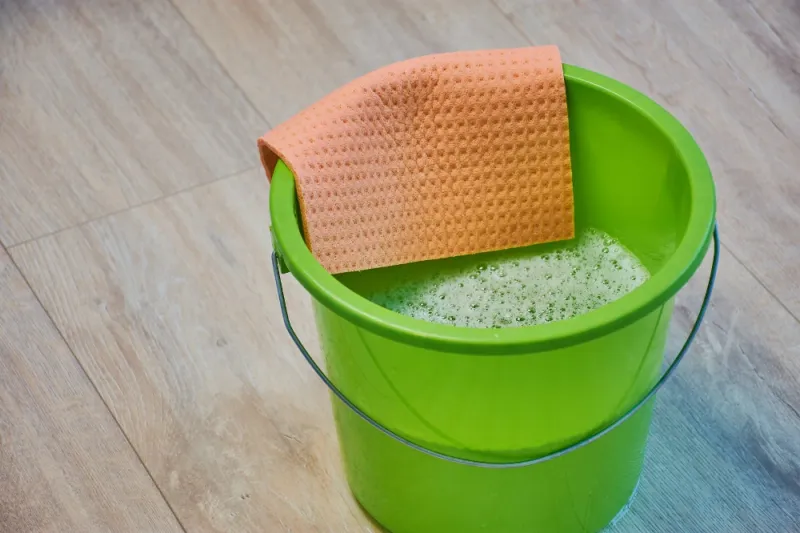
A lamp positioned a few inches above a shallow pan of soapy water can collect some indoor adults overnight. Adults are drawn to the light, fall into the soapy water, and cannot escape.
This is a supplemental collection method that works best when the room is otherwise dark, and it does not replace the exclusion and lighting work described earlier. Think of it as a way to reduce the number of insects already inside rather than as a solution to why they are entering in the first place.
Indoor adults are a nuisance, not a structural threat. They do not reproduce inside the home, they do not damage wood or wiring, and the population will not grow from within.
Keeping the vacuum accessible and the soapy-water trap running on nights when you notice indoor activity addresses the symptom while the real work of sealing entry points addresses the cause.
Use the Porch Sighting as a Timely Check, Not a Panic Signal
A cluster of shield-shaped bugs on your porch wall in July or August is genuinely useful information when you treat it as a starting point rather than an emergency. The practical sequence is straightforward: photograph representative insects and confirm the species before acting, then walk the garden to check fruiting vegetables and leaf undersides for feeding damage and egg masses.
What you find there tells you whether stink bugs are actively using your plants, even if it cannot tell you whether those plants produced the insects now resting on your wall.
NC State Extension’s guidance on the brown marmorated stink bug in North Carolina is a reliable reference for both identification and regional context as you work through that checklist. Nearby habitat, including woods, field margins, and roadside vegetation, may be contributing to the pressure you see, which means exclusion and lighting changes matter regardless of what the garden inspection turns up.
UC IPM’s stink bug guidance reinforces that sealing entry points is more durable than any spray, and that the goal is a layered response rather than a single fix. Seal the gaps now, adjust the porch lighting, hand-pick where the garden warrants it, and let predatory insects keep doing their work.
A porch full of stink bugs in summer is less a sign of failure than a reminder that the landscape is active, and the homeowner who reads that signal early is the one best prepared when fall arrives.