
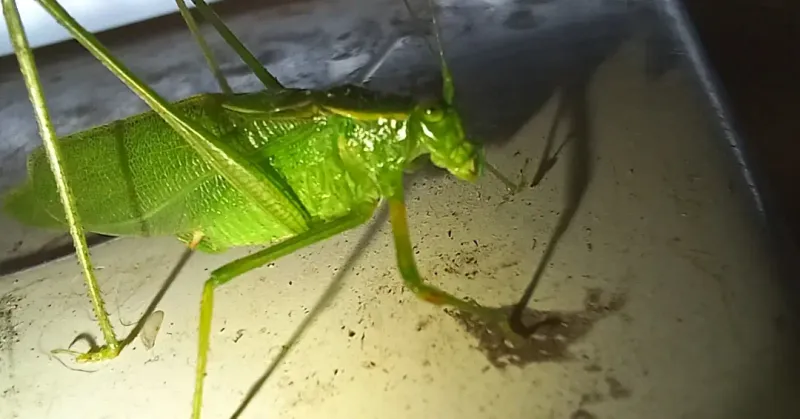
If you step outside on a warm summer evening in North Carolina and hear a wall of sound coming from the trees, you are probably listening to katydids. That chorus can feel like a sudden takeover, loud enough to make you wonder what changed in your yard.
The truth is more interesting and a lot less alarming than it sounds.
The chorus starts with courtship, not a yard diagnosis
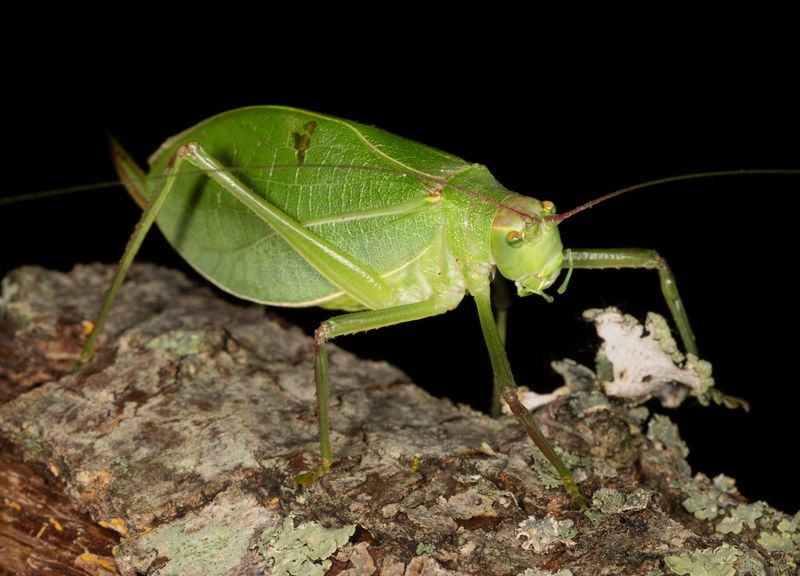
Male katydids produce that nighttime racket by rubbing specialized structures on their forewings together, a process called stridulation. Mississippi State Extension’s profile of the common true katydid explains that males call to attract females, and when many males call at the same time, the combined sound can be remarkably powerful.
That is courtship in action, not a report on your mulch depth or your mowing schedule.
The impression that katydids have “taken over” is a completely understandable reaction to a sudden wall of sound on a quiet summer night. What you are actually hearing is a communication system, not a population alarm.
Groups of males can create a chorus that seems nonstop, especially when they are spread across the shrubs and trees closest to your house.
Separating what you hear from what it means is the first step toward a useful response. Missouri’s Department of Conservation notes that katydid song is fundamentally a mating signal, produced and repeated through the night during the active season.
A loud chorus tells you that calling males are present and active. It does not tell you that one precise yard condition changed, that a population exploded, or that your landscape is in trouble.
Think of the sound as evidence of behavior, not a measurement of abundance. Reframing the experience that way makes the rest of the investigation a lot more straightforward.
Why a louder night does not prove more katydids
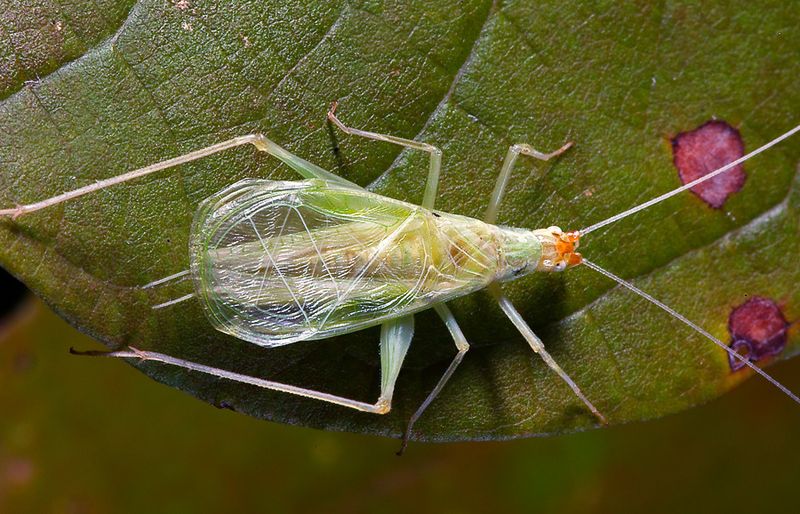
Perceived volume is a tricky measure. A night that sounds twice as loud as last summer does not necessarily mean twice as many katydids are in your yard.
Several things can change how much sound reaches your ears without any change in the actual number of insects present.
More males calling at once, a species with a naturally louder call, insects positioned closer to the house, less wind and competing noise, or weather conditions that help sound travel farther can all make a chorus sound bigger. Research on the common true katydid documents that groups of males calling together produce a far more intense sound than a single individual, which means even a modest number of callers can create an impressive chorus on the right night.
Synchronized calling adds another layer of complexity. Studies on katydid chorus synchronization show that males time their calls in relation to neighbors, which can produce bursts of overlapping sound that feel relentless to a listener standing nearby.
That synchronization is a communication strategy, not a sign that the population grew.
Early research on insect acoustic communication established that sound transmission varies with environmental conditions, including temperature, humidity, and vegetation density. A calm, humid night in August carries sound differently than a breezy night in June.
Your yard’s tree canopy, fence lines, and even the angle of your house can focus or amplify what you hear from a fixed spot on the porch.
The practical point is this: chorus volume alone cannot tell you whether katydid numbers went up, stayed the same, or shifted at all. Treat a loud night as interesting, not diagnostic.
North Carolina has several katydid stories to tell
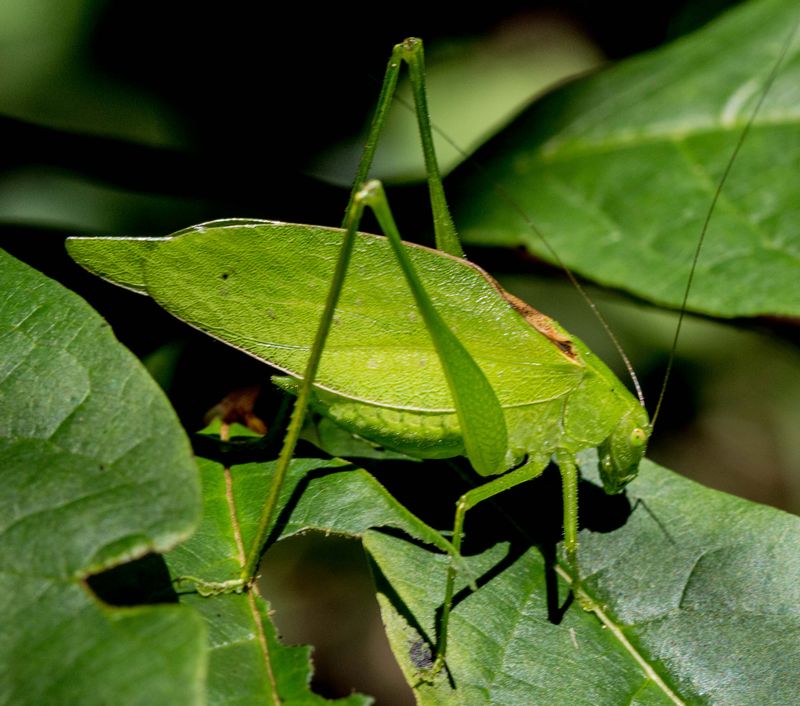
Not every katydid in a North Carolina yard is the same insect. North Carolina’s orthoptera checklist documents numerous species across the state, including common true katydids, angle-winged katydids, meadow katydids, coneheads, and bush katydids.
Each has its own appearance, call, preferred habitat, and seasonal schedule, so “katydids” in a yard is not a single story.
Species differences matter for what you hear and when you hear it. Some katydids peak in midsummer, others call later into fall.
UC IPM’s katydid resource notes that some species have one generation per year while certain bush katydids may produce a partial second generation, so the calling window varies. Treating “every summer night” as a universal North Carolina katydid schedule misses the fact that timing shifts by species, elevation, and local conditions.
Identifying the insect before drawing conclusions is genuinely useful. Katydids share a few reliable field marks: antennae that are at least as long as the body and often much longer, a flattened leaflike shape that blends into foliage, and a strong preference for nighttime activity high in shrubs and trees.
University of Minnesota Extension’s katydid identification guide highlights these same features as the key traits to look for.
Grasshoppers are the insect most commonly confused with katydids, but the distinction is straightforward once you know where to look. Grasshoppers have short antennae and are far more active during daylight hours, while katydids keep those long antennae and are overwhelmingly nocturnal.
The Smithsonian’s explainer on insect sound production places katydids firmly in the nighttime-calling group, which helps confirm the identification when you hear the chorus after dark. Knowing which insect you actually have shapes every decision that follows.
What may have changed around the yard remains uncertain
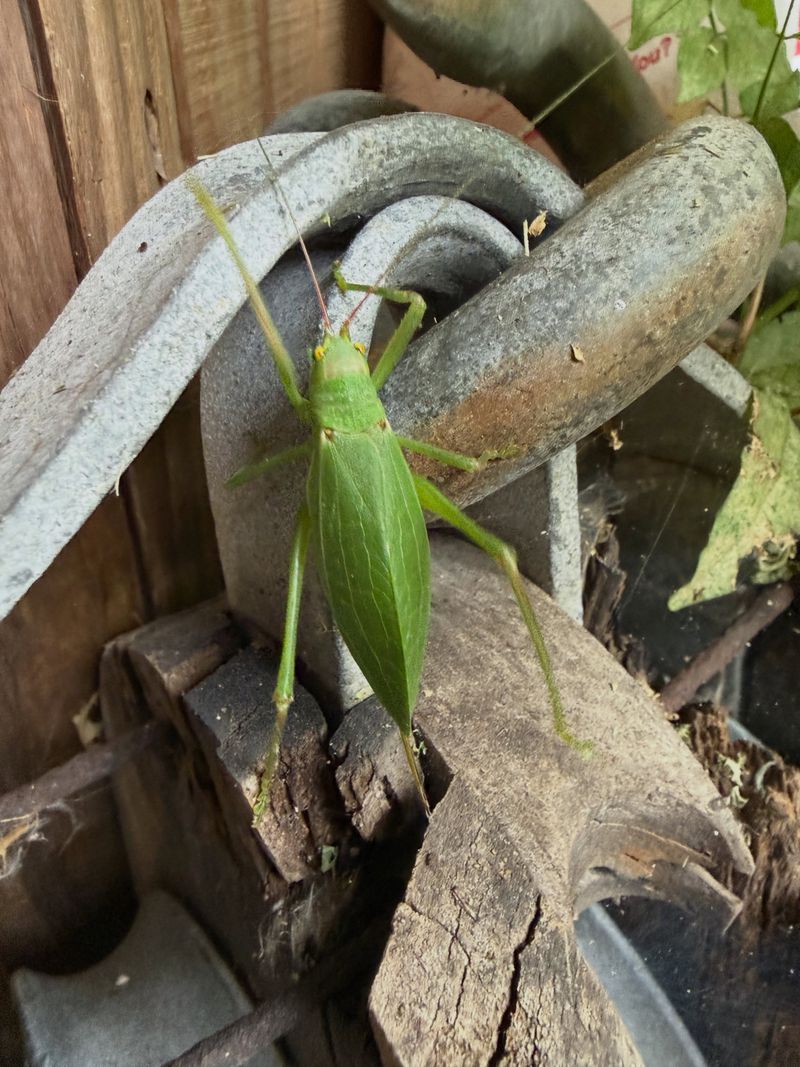
Homeowners often want a clear cause: more mulch, less mowing, a new porch light, a wetter summer. Those are reasonable things to wonder about, and environmental conditions do influence where and when katydids are heard.
The honest answer, though, is that available evidence does not hand North Carolina homeowners a formula linking one yard change to a katydid chorus.
A 2026 study on light and katydid activity found that artificial light affected katydid behavior in two Indian ecosystems, but the results differed by site and habitat type. That finding is worth knowing, but it does not confirm that your porch light caused a surge in your North Carolina yard.
Research findings on temperature, humidity, and habitat structure are similarly species- and location-specific.
Classic work on acoustic insect communication established that environmental conditions shape how sound travels, which means the same number of katydids can sound louder or quieter depending on the night. Vegetation density near the house, fence placement, and even the direction of a light breeze can change what a listener hears from a fixed spot.
That is a sound-transmission effect, not necessarily a population effect.
Seasonal conditions, nearby vegetation growth, and species composition all shift from year to year without a single identifiable cause. A yard that hosted mostly one species in June may have a different mix calling in August.
The chorus alone cannot sort those variables out. What it can do is prompt a closer look at the plants, which is where useful information actually lives.
Staying curious about the yard without jumping to a single-cause explanation is the most accurate position the evidence supports.
The leaves and fruit—not the volume—set the damage threshold
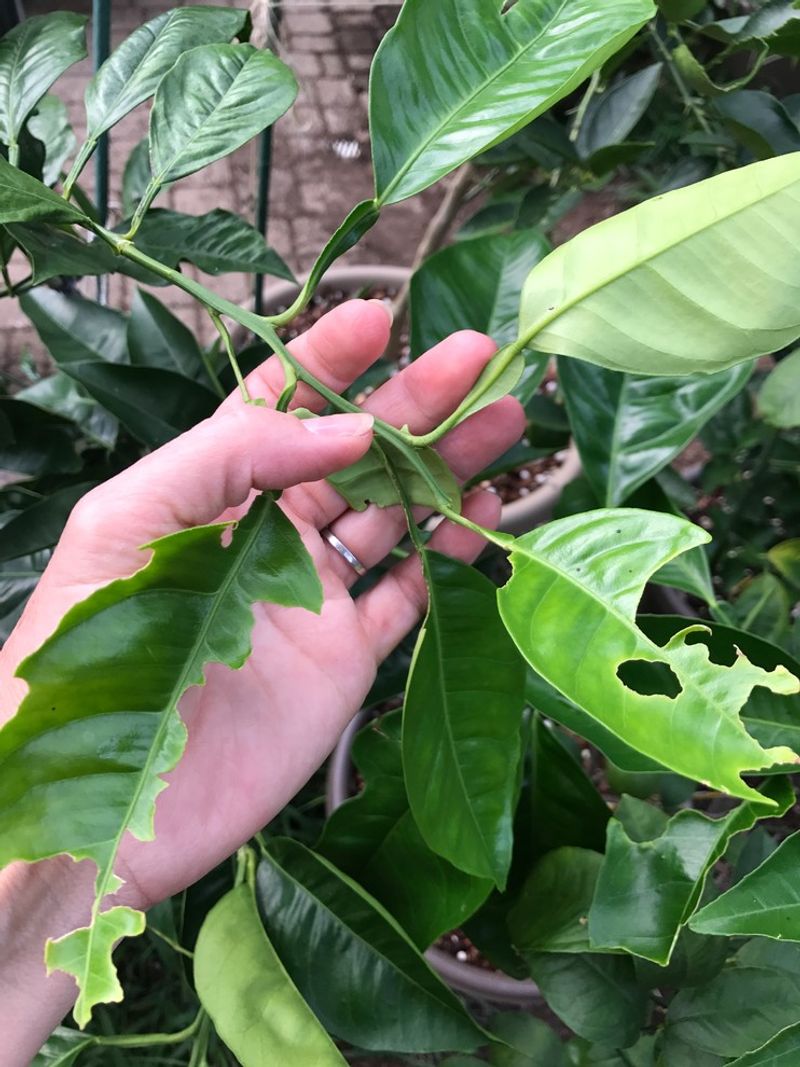
Sound is not a damage indicator. Walking the yard with a flashlight and looking at the plants themselves is what actually tells you whether katydids are causing a problem.
UC IPM’s katydid management guidance directs homeowners to look for fresh holes in leaves, ragged margins on young growth, and shallow surface scars on developing fruit rather than using insect presence or sound as the treatment trigger.
Individual katydids tend to move after feeding on a small number of leaves, so the feeding pattern is often scattered rather than concentrated. That movement habit means a single plant rarely shows catastrophic defoliation from katydids alone, and most ornamental shrubs recover without intervention.
University of Minnesota Extension states clearly that katydids found in trees and shrubs generally do not harm them.
NC Cooperative Extension similarly describes katydid control as usually unnecessary, characterizing them as leaf-eaters whose typical feeding rarely rises to a level that justifies treatment. Mature landscape trees and established ornamental shrubs in most North Carolina yards fall into this low-concern category.
Young trees, citrus, and developing fruit crops are the exceptions that deserve a closer look. UF/IFAS research identifies broadwinged katydids as capable of defoliating young trees or feeding on citrus fruit, with a few individuals able to mark multiple fruits in a single season.
If you have newly planted trees, container citrus, or fruit crops showing repeated feeding on the same plant, that warrants monitoring rather than a wait-and-see approach. The key distinction is between a plant that can shrug off occasional feeding and one that is still establishing roots and cannot afford repeated defoliation.
Protect vulnerable plants without treating the whole yard

When a plant inspection turns up real, localized feeding on vulnerable plants, the response does not need to be a yard-wide spray. UC IPM recommends starting with the least disruptive options: hand-pick visible katydids directly from the plant, and do it in the early morning when cooler temperatures make the insects slower and easier to catch.
A container of soapy water handles disposal quickly.
Fine insect netting or floating row cover placed over vulnerable plants gives developing fruit and young foliage a physical barrier that does not involve any chemistry at all. UF/IFAS extension guidance on protecting crops from katydid feeding specifically recommends netting and row cover as practical options for growers who want to limit damage without reaching for pesticides.
These methods work best when applied before feeding becomes heavy, so early monitoring pays off.
Blanket spraying in response to nighttime noise is a poor fit for any integrated pest management approach. The chorus alone does not confirm plant damage, and broad insecticide use exposes pollinators, beneficial predators, and other non-target organisms that share the yard.
EPA pollinator protection guidance outlines strategies for reducing pesticide risk to bees and other beneficial insects, including avoiding applications on or near blooming plants.
If a pesticide becomes genuinely necessary after confirmed damage, the product label is the legal and practical authority on how to use it safely. EPA’s introduction to pesticide labels explains that label directions covering use site, application rate, timing, reentry intervals, and environmental restrictions are legally enforceable.
Nighttime application is sometimes assumed to be automatically safe because katydids are active then, but that assumption is not correct. Some pesticides remain toxic after application, and the label controls timing regardless of when the target insect is most active.
A loud chorus belongs in the food web, not a health test
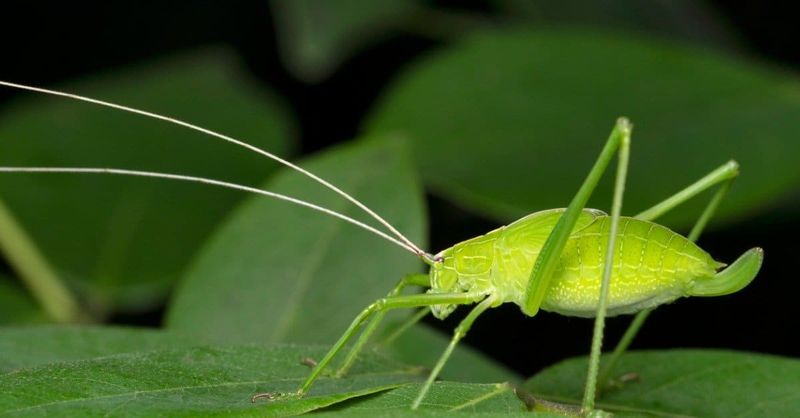
Katydids are not simply beneficial insects that improve every plant in the yard. Most species feed on plant material, including leaves, flowers, seeds, and occasionally fruit, while some are omnivorous and a few are predatory.
Missouri’s Department of Conservation field guide to katydids describes them as prey for birds, reptiles, mammals, and predatory wasps, which places them squarely in the nighttime food web as a food source rather than as pest controllers.
That food-web role is meaningful ecological context without being a guarantee of yard health or ecosystem functioning. A loud chorus does not confirm that the yard has a balanced insect community, that pests are being kept in check, or that the landscape is thriving.
What it does confirm is that katydids are present in enough numbers to attract the attention of the predators that eat them.
NC State Extension’s guidance on managing backyards for birds notes that insects and spiders are especially critical food for young songbirds during the nesting season. Katydids, as large soft-bodied insects, fit that profile well.
Their presence may support the birds and reptiles that visit the yard at night, but that is a byproduct of their being there, not a service they perform on the homeowner’s behalf.
Expecting katydids to reduce ticks or mosquitoes goes further than the evidence supports. Their role is to participate in the food web as both consumer and prey, and a loud chorus is compatible with that role without proving anything specific about the yard’s condition.
Let the inspection, not the chorus, decide what you do next

A simple decision sequence works better than reacting to sound. First, confirm that the insect you are hearing is actually a katydid: look for very long antennae, a flattened leaflike body, and nighttime activity high in shrubs or trees.
Then inspect the plants that matter most, checking young trees, citrus, and developing fruit for fresh holes, ragged leaf edges, or surface scars before moving on to established ornamentals.
NC Cooperative Extension’s overview of katydids, cicadas, and crickets reinforces that control is usually unnecessary, which means the default response to a loud chorus is monitoring, not treatment. UC IPM’s katydid guidance points to confirmed plant damage as the threshold that justifies action, starting with the least disruptive option that matches the actual problem.
A loud nighttime chorus is usually compatible with a normal nighttime food web and does not, by itself, call for eradication. The sound tells you that katydids are active and communicating.
The plants tell you whether the yard has a problem worth solving. Those are two separate questions, and only one of them has a useful answer on any given summer night.