
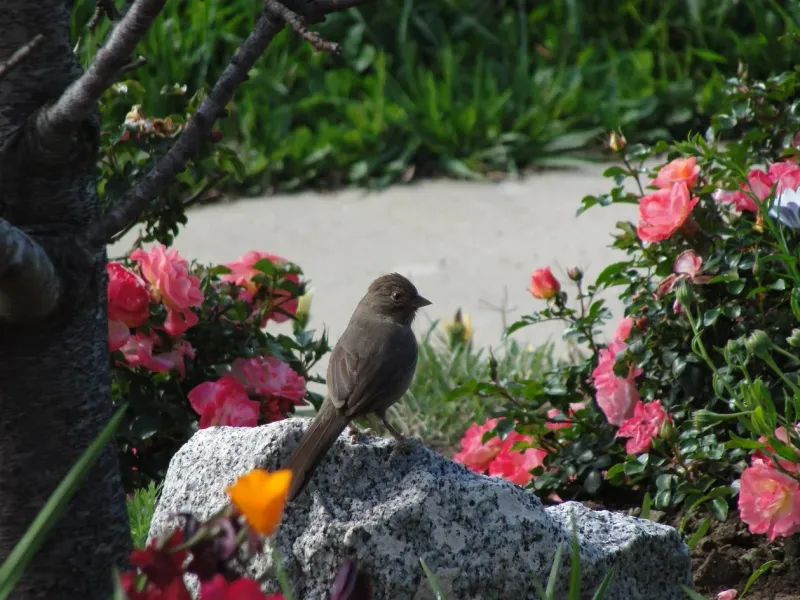
A plain brown bird is already working your garden beds, and most California homeowners have no idea what it is. The California Towhee is a year-round ground forager that scratches through leaf litter searching for seeds and small insects, and it does this quietly along bed edges and under shrubs where few people think to look.
Giving this bird a better foothold in your yard is simpler than you might expect, and it starts with rethinking what a well-kept garden bed actually needs to offer.
Meet the Plain Brown Bird Working the Bed Edges
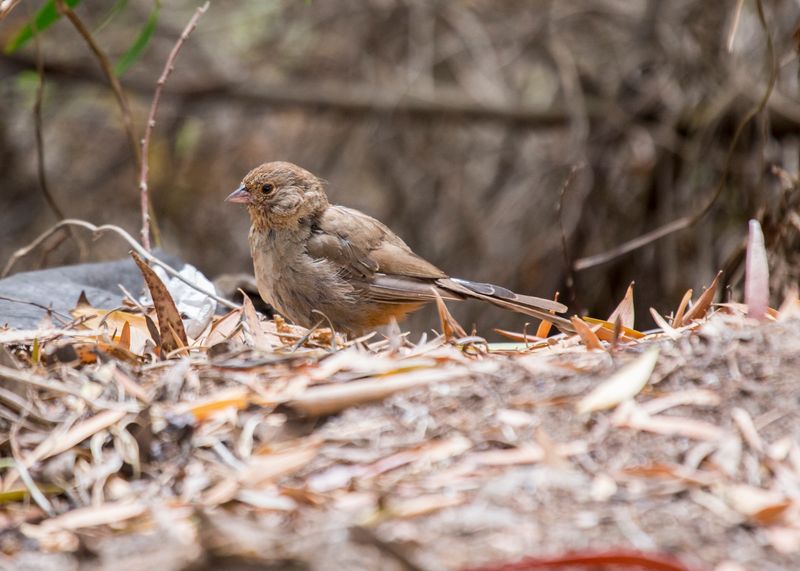
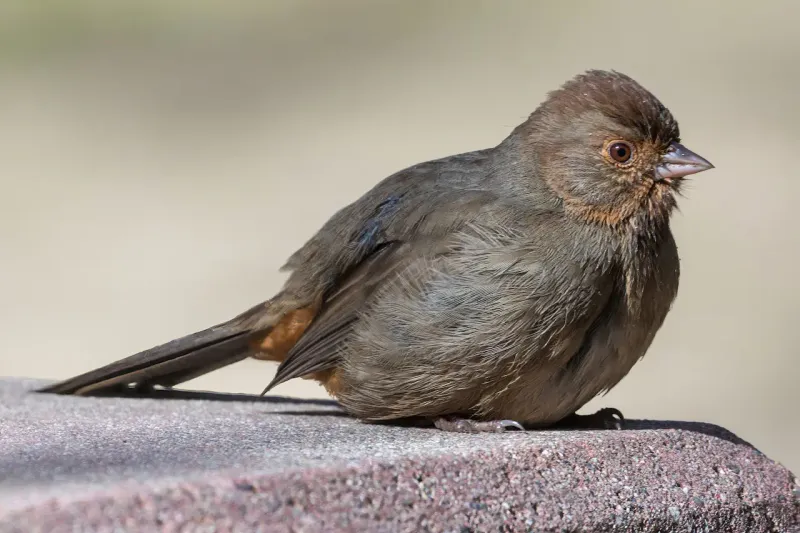
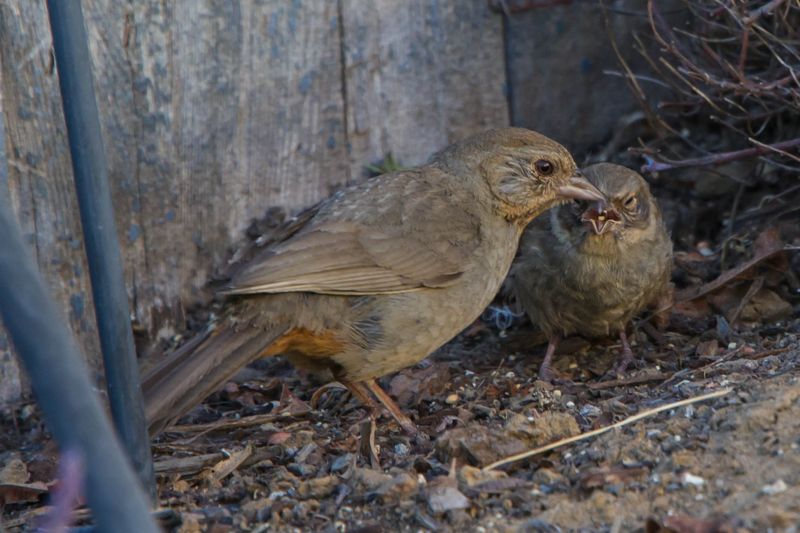
Plain, patient, and easy to overlook, the California Towhee blends so completely into a garden’s background that most homeowners have watched one for years without ever naming it. The bird is a warm brown from head to tail, with a long tail that bobs slightly as it moves, a faintly streaked throat, and a rusty or buff patch under the base of the tail that flashes briefly when it hops.
No bold stripes, no bright colors, no dramatic crest – just a sturdy ground bird that looks, at first glance, like a large sparrow moving in slow, deliberate steps along the bed edge.
According to Cornell Lab’s California Towhee species account, the bird is a common resident of California and occurs from southwestern Oregon through Baja California, using gardens, scrub, chaparral, and urban edges as its primary habitat. That range matters.
California Towhees are not Florida birds or standard Texas backyard visitors. Readers outside California, southwestern Oregon, or Baja California should check whether they are seeing a Canyon Towhee, which is the likely look-alike across much of the interior Southwest, or an Eastern Towhee in the Southeast, before applying any guidance here.
Inside their range, these birds are genuinely year-round residents. They do not migrate, which means the same pair or small group may use your garden through every season.
The National Park Service’s Presidio of San Francisco profile notes that California Towhees commonly occupy gardens and urban edges, so a bird scratching near your patio or along a shrub border is not a rare visitor – it is a neighbor. Recognizing the species is the first practical step toward making your yard more useful to it.
What Its Two-Footed Scratch Actually Uncovers
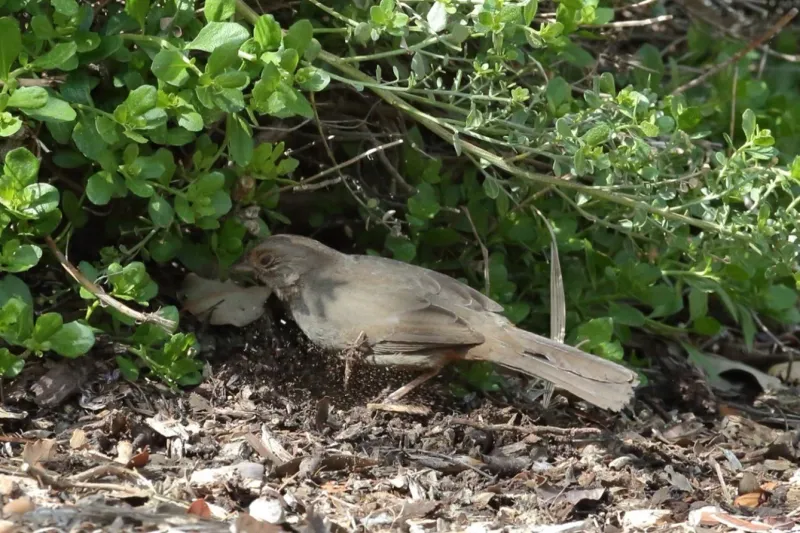
Watch a California Towhee long enough and you will see the move that makes it useful in a garden: a quick, two-footed backward hop that drags both feet through leaf litter simultaneously, flicking debris backward and exposing the soil layer beneath. The bird repeats this motion in short bursts, pausing to pick up whatever appears – a seed, a small beetle, a spider – before hopping forward and scratching again.
It is methodical rather than frantic, and it covers ground efficiently along bed edges, beneath shrubs, and anywhere loose organic material has settled.
The California Department of Fish and Wildlife life-history account documents a wide diet that includes weed and grass seeds, grains, fruits, beetles, true bugs, grasshoppers, flies, spiders, and other insects. Insects become especially important during the breeding season, making up roughly one-third of the diet at that time.
Nestlings are more dependent on animal food than adults are, so a yard that supports some insect life provides more than seeds alone.
The distinction worth holding onto is the difference between eating some seeds and controlling weeds, or finding some insects and eliminating grubs. A towhee scratching through your beds may consume seeds from plants you consider weeds, and it may pick up beetles or insect larvae along the way.
Those are real behaviors with real dietary records behind them. What the research does not show is that a California Towhee reliably reduces weed germination in a managed bed or provides measurable control of soil-dwelling beetle larvae.
The Animal Diversity Web account for Pipilo crissalis confirms that adults eat substantial plant material year-round, so the bird is not primarily an insect hunter outside of breeding season. Framing it as a free weeder or a grub exterminator sets an expectation the bird cannot reliably meet.
Its genuine value is as a year-round forager that uses your garden’s organic layers when those layers are available.
The Tidier the Bed, the Fewer Foraging Clues It Offers
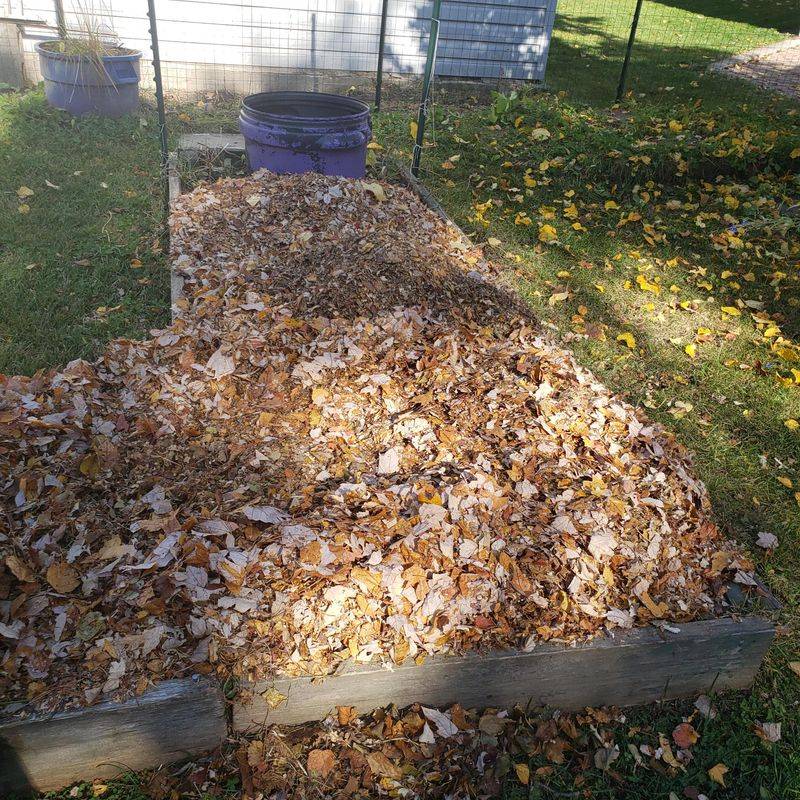
A bed that has been raked completely bare, edged to a hard line, and treated with a preventive insecticide broadcast across the whole yard gives a California Towhee almost nothing to work with. The leaf layer is gone, so there is nothing to scratch through.
The exposed soil is often compacted or crusted, making it harder to expose seeds or invertebrates. The insect population has been reduced by the broad treatment, cutting off a portion of the diet the bird relies on, particularly during breeding season.
The California Department of Fish and Wildlife account notes that towhees prefer open ground adjacent to brushy cover, which is a specific habitat configuration that an immaculate, fully raked bed rarely provides. The National Park Service Presidio profile reinforces this, describing the bird’s preference for the edge between open foraging ground and dense low vegetation.
The correction here is not to stop maintaining your beds. Drainage still matters.
Plant health still requires airflow. Access paths need to remain clear.
The practical adjustment is to carve out a small, intentional zone – under a dense shrub, along a back fence, or in a corner that does not affect drainage or fire clearance – where leaf litter or loose mulch is left in place rather than removed on every pass. That zone gives the bird a place to scratch without requiring you to abandon care across the whole yard.
One additional note for homeowners in wildfire-prone areas: EPA guidance on reducing pesticide impacts on wildlife supports reducing unnecessary treatments, but applicable local defensible-space and fire-safety rules take priority over any habitat recommendation. Check your jurisdiction’s requirements before retaining leaf accumulations near structures or within required clearance zones.
A Useful Towhee Bed Pairs Open Ground With Cover

The single most useful adjustment a California homeowner can make for a California Towhee is spatial rather than elaborate: position a strip of accessible, lightly mulched or bare soil immediately beside a dense shrub, low hedge, or brushy planting. The bird uses open ground to scratch and find food, but it retreats quickly to nearby cover when something startles it.
A bed that is all open ground without shelter nearby offers foraging access but no safety. A bed that is all dense vegetation without any reachable open soil offers cover but no scratching surface.
The National Park Service Presidio account describes this edge habitat – open ground next to brushy cover – as the configuration the bird actively seeks. Replicating it does not require redesigning the whole yard.
A California lilac, a native coffeeberry, a toyon, or even a dense ornamental shrub can serve as the cover component if it grows low enough to provide quick escape routes from ground level.
Plant selection matters beyond just providing shelter. Audubon’s Native Plants for Birds project documents that locally native plants support the insect communities that birds use as prey, in addition to producing seeds and fruits directly.
A native grass clump, a seed-producing perennial, or a fruiting shrub adds food value that an ornamental bed of non-native cultivars typically cannot match.
Choosing natives is a habitat strategy, not a guarantee. Whether a towhee shows up and uses the space also depends on the broader neighborhood, the availability of cover in adjacent yards, predator pressure, and the regional landscape.
Audubon’s yard bird-friendly guidance frames native planting as one component of a broader habitat approach rather than a single fix. Improving the spatial structure of your bed gives the bird a reason to stay longer when it does visit, and that is a realistic and worthwhile goal on its own.
Reduce Pesticide Exposure Without Surrendering Plant Protection
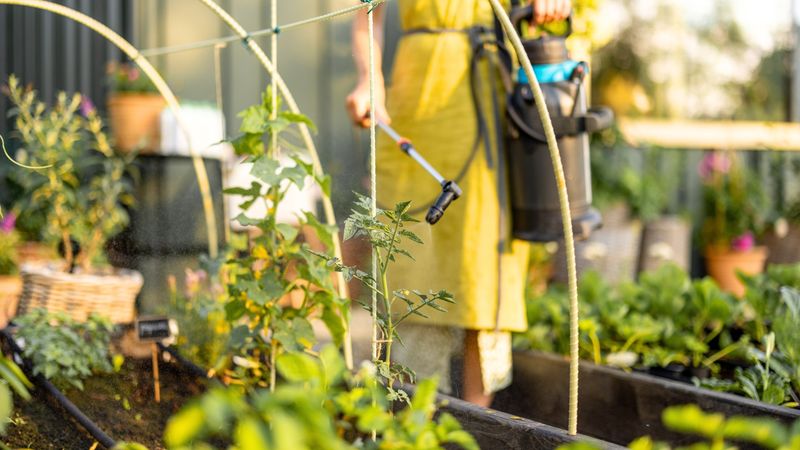
Insects are a documented part of the California Towhee’s diet, particularly for growing nestlings, and broad insecticide applications across an entire yard can reduce the invertebrate populations that make a garden useful foraging territory. That is the practical reason to treat pesticide use as a stewardship question rather than a routine maintenance step.
Reducing unnecessary applications is a precautionary choice, not a proven method for attracting more towhees or guaranteeing a specific food-web outcome.
EPA guidance on reducing pesticide impacts on wildlife recommends monitoring for actual problems before treating, applying pesticides only to affected areas rather than broadcasting across the whole yard, choosing landscape practices that reduce the need for chemical intervention in the first place, and following product labels carefully. Those four steps translate directly into homeowner action: scout before you spray, treat the affected plant or bed section rather than the entire property, consider mulch, proper watering, and plant selection as first-line defenses, and read the label for timing and buffer distance guidance.
The distinction between unnecessary prophylactic spraying and a targeted, necessary response to a serious problem is worth holding clearly. A whole-yard broadcast insecticide applied on a calendar schedule whether or not a pest problem exists is the kind of treatment most likely to remove insect prey from a broad area.
A targeted application to a specific shrub with a documented infestation, following label directions, is a different situation entirely.
Targeted treatment may still be appropriate and necessary for serious plant damage, structural pest problems, or public-health concerns. The goal is not to eliminate all pesticide use but to avoid treatments that are broader, more frequent, or more preventive than the actual situation requires.
That shift benefits the garden’s insect community and, by extension, any birds that forage there.
Food and Water Can Supplement Habitat, Not Replace It
Habitat comes first. A yard with cover, open foraging ground, native plants, and reduced pesticide pressure gives a California Towhee more consistent value than a feeding station surrounded by bare, over-treated beds.
Supplemental food and water are useful additions once the habitat basics are in place, but they work better as enhancements than as substitutes for a structurally functional yard.
California Towhees are more likely to use ground-scattered seed or a low tray than a hanging feeder, which makes sense given that they spend nearly all their time at or near ground level. Cornell Lab’s California Towhee account lists millet as a food they may accept, making white proso millet a reasonable choice for a ground tray.
Offer small amounts at a time rather than filling a large tray that sits for days, and position the feeding area away from spots where cats or dogs regularly patrol.
Ground feeding requires consistent sanitation. Remove spoiled seed, accumulated hulls, and wet clumps before they develop mold, and clean the tray or feeding surface regularly.
Cornell Lab’s feeder-cleaning guidance recommends scrubbing feeders with a dilute bleach solution and rinsing thoroughly. If you notice sick-looking birds in the area, pause feeding temporarily and clean the site thoroughly before resuming.
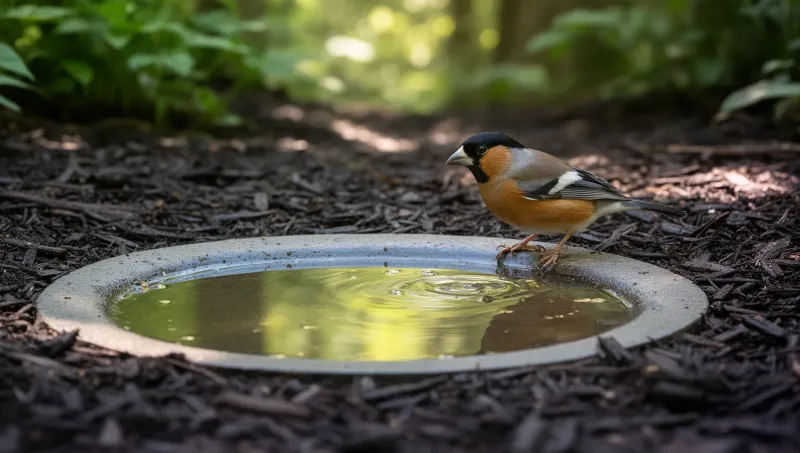
A shallow birdbath provides drinking and bathing access that towhees will use. Keep the water level low – a few inches is sufficient – and refresh it regularly.
CDC guidance on Salmonella in wild songbirds recommends cleaning birdbaths weekly or whenever visibly dirty to reduce disease transmission risk at shared water sources. A birdbath that sits for two weeks without cleaning can become a hazard rather than a benefit, so build the cleaning step into a regular weekly routine.
Tolerate Normal Scratching While Protecting Vulnerable Beds
Ordinary towhee foraging is not destructive in most established beds. The bird scratches through loose mulch or leaf litter, picks up what it finds, and moves on, leaving the surface slightly rearranged but not damaged.
That kind of low-level disturbance is worth tolerating in areas where the plants are established and the mulch layer is not critical to retaining moisture around vulnerable roots.
Some situations call for a different approach. Freshly seeded beds, transplanted seedlings, and shallow-rooted ground covers can be disturbed by repeated scratching before plants are established.
Fruit set on low-growing plants may attract attention. Droppings accumulate if a bird returns to the same spot consistently, which can be a concern on clean paths, patio furniture, or edible crops.
Cornell Lab’s species account notes that towhees can also become territorial around reflective surfaces, repeatedly striking windows or mirrors – a behavior that harms the bird and is worth addressing with temporary covering or window tape.
Protecting a specific vulnerable bed does not require deterring the bird from the whole yard. A wire cloche over a new transplant, bird netting over ripening fruit, or a temporary barrier of chicken wire laid flat over a freshly seeded area gives the seedlings time to establish while leaving the rest of the garden accessible.
Those are targeted corrections, not a declaration of conflict with the bird.
The underlying principle is straightforward: plant health, sanitation, drainage, and applicable site-safety guidance take priority over any blanket habitat advice. A towhee scratching in a bed that drains poorly or accumulates debris against a structure is a lower priority than fixing the drainage or clearing the debris.
Cornell Lab’s feeder-sanitation guidance applies the same logic to feeding areas: maintain them actively rather than letting conditions deteriorate in the name of wildlife support.
The Goal Is a More Functional Bed, Not a Free Gardening Service
The strongest takeaway from all of this is modest and achievable: combine a small leaf-litter or loose-mulch zone, open ground beside nearby cover, a selection of native seed-producing plants, fewer unnecessary pesticide treatments, and optional clean water or food. That combination makes your yard structurally more useful to a California Towhee without requiring you to abandon tidy maintenance or accept an unmanaged garden.
The California Department of Fish and Wildlife life-history account documents that these birds eat weed and grass seeds along with small invertebrates as part of their regular diet. A towhee foraging in your beds may consume some of both.
What it will not do is systematically clear your beds of weeds, eliminate soil grubs, or provide dependable pest control season after season. The National Park Service Presidio account frames the bird as a garden resident and forager, not a garden service provider, and that framing is the right one to carry forward.
Support California Towhees for what they genuinely are: a year-round ground forager that fits naturally into a well-structured California yard and adds a small, real measure of food-web activity to the beds where it scratches. A garden that earns a towhee’s regular presence has usually gotten a few other things right as well.