
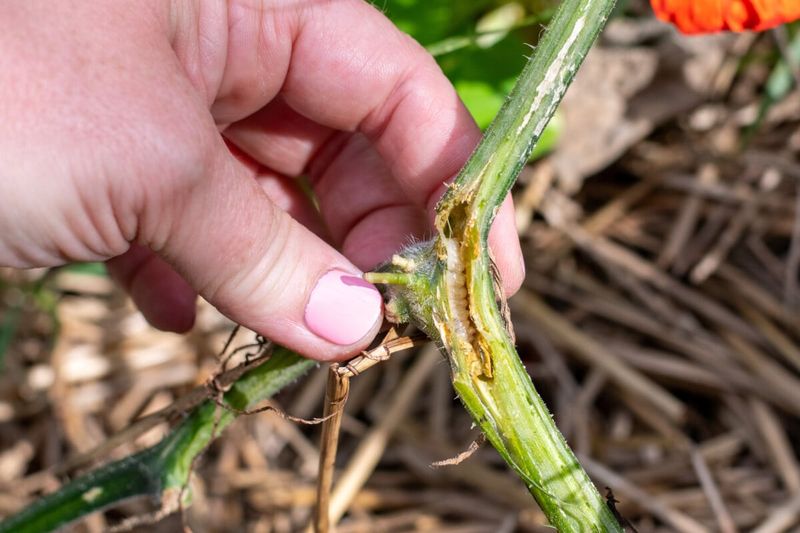
Watching your squash plants collapse in the afternoon heat is one of the more alarming sights in a summer garden, especially when watering does not seem to help. The problem might be heat stress or dry soil, but it could also be something tunneling silently inside the stem.
Knowing how to tell the difference can save your crop or at least help you make a smarter plan before the damage spreads.
Morning wilt changes the diagnosis
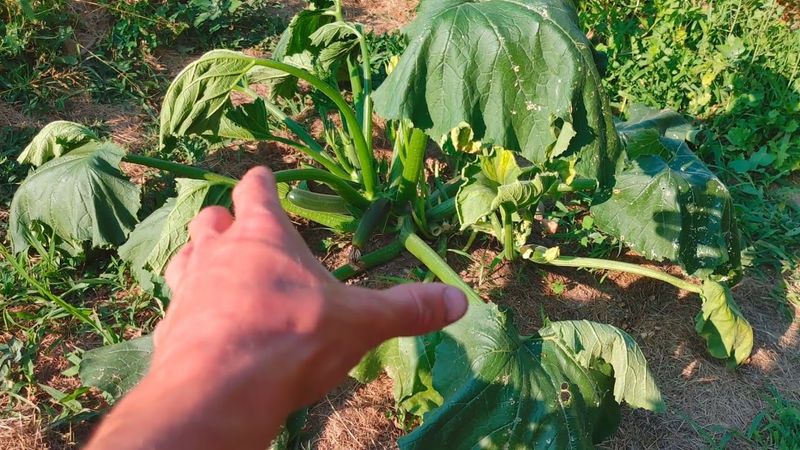
A squash plant that droops at noon on a 95-degree day is not automatically in crisis. Many healthy cucurbits temporarily lose their stiffness during the hottest hours when the sun is pulling moisture out of the leaves faster than the roots can replace it.
That kind of midday slump often corrects itself by late afternoon or the following morning without any intervention beyond consistent soil moisture.
The pattern that raises real concern is a plant that stays wilted after the heat breaks. University of Minnesota Extension guidance on squash vine borers identifies morning wilting as a stronger warning sign, because a plant suffering from heat or temporary water stress usually recovers once temperatures drop, while a plant with disrupted water movement inside the stem may not.
Before you diagnose anything, water the plant appropriately and check it the next morning. If it perks up, the issue was likely heat or moisture.
If it stays limp, or if it declines quickly over a day or two despite reasonable soil moisture, that pattern points toward something affecting the plant’s ability to move water at all. Extension vegetable IPM updates note that persistent wilt despite adequate moisture is the cue to look more closely, not the midday collapse by itself.
The stem base reveals what the leaves cannot
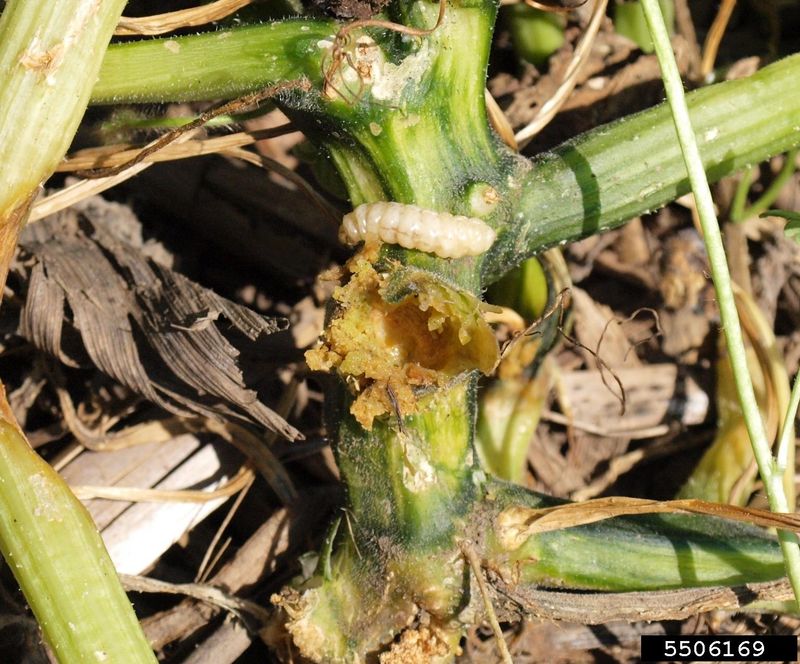
Once you have confirmed the wilt is not going away on its own, move your attention away from the leaves and get down to soil level. The lower stem and crown of the plant, the thick section right where it meets the ground, are the first places to examine when squash vine borer is a possibility.
Run your fingers along the stem and look closely for small entry holes, often no bigger than a pinhole at first. The most useful clue is frass, the moist greenish, orange, or sawdust-like material that larvae push out of the tunnel as they feed.
Minnesota Extension’s squash vine borer page specifically highlights frass at the stem base as one of the most telling signs, more specific than wilt alone. You may also notice swollen, discolored, mushy, or rotting tissue near the entry point.
Work through the inspection methodically: check the crown first, then move several inches up the main stem. If the crown looks clean, do not stop there.
UMN guidance on growing giant pumpkins notes that borers may tunnel anywhere along the vine on larger cucurbits, not only at the crown. For ordinary bush zucchini or summer squash, the base is the most productive place to start, but for a long sprawling pumpkin vine, a hole and frass could appear farther along the stem.
A hidden larva interrupts water movement
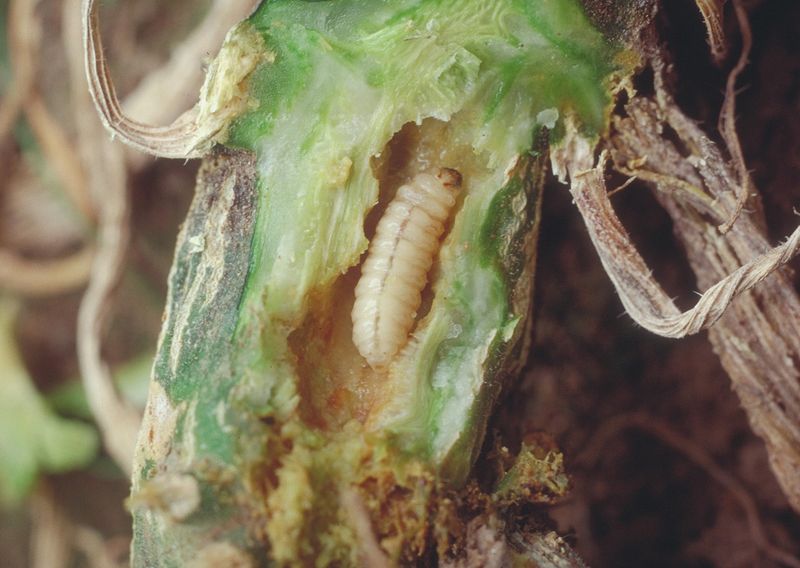
Squash vine borer larvae do their damage from the inside out. The adult moth, Melittia cucurbitae, lays flat reddish-brown eggs individually on the lower stem or crown.
When an egg hatches, the tiny larva immediately chews into the stem and begins feeding on the soft tissue inside.
As the larva grows, it tunnels through the water-conducting tissues that move moisture from the roots up to the leaves. That internal disruption is why watering the soil does not fix the wilt: the plant may have enough water at the roots, but the pathway to deliver it has been blocked or damaged.
Minnesota Extension describes this process, noting that larvae tunnel inside the stem and produce the characteristic holes and frass visible on the outside. UF/IFAS research on squash vine borer further explains the larva’s development inside susceptible cucurbit hosts, particularly squash and pumpkin.
A mature larva is white or cream-colored with a distinct brown head, and it can reach about an inch in length. Finding one is useful confirmation, but the absence of a visible larva does not rule out the pest.
A small larva may be deep inside the stem or in a section you have not yet cut into. Frass at a hole, combined with persistent wilt, is already a meaningful signal without requiring you to locate the insect itself.
Other causes leave different clues
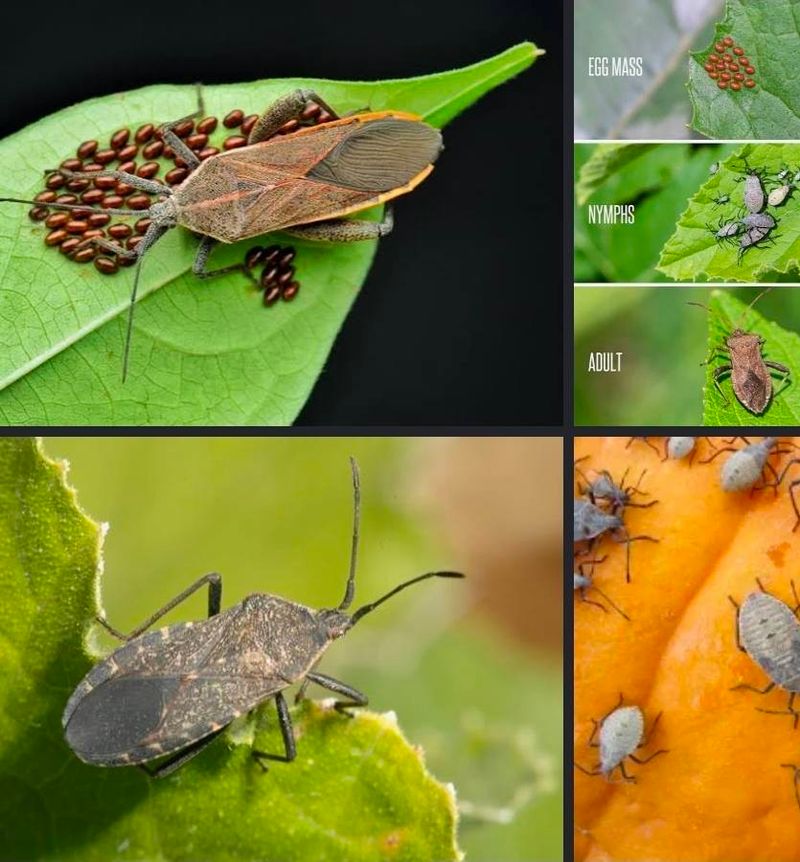
Finding no hole and no frass at the stem base does not mean the plant is fine, but it does mean squash vine borer moves down the suspect list. Several other problems can cause squash and zucchini to wilt quickly, and each one leaves its own trail of evidence.
Squash bugs are a common culprit in Southern gardens. These gray-brown insects cluster on leaves, stems, and sheltered areas near the soil and lay neat rows of copper-colored eggs on the undersides of leaves.
UGA Extension coverage of squash bugs in cucurbit crops describes their feeding damage, which causes leaves to yellow, brown, and eventually collapse. The difference from vine borer is that you will find the insects or their eggs on the plant surface, not a larva tunneling inside the stem.
Bacterial wilt is a separate threat. Cucumber beetles transmit the bacterium as they feed, and it colonizes the plant’s vascular system, producing a sudden collapse that can look identical to vine borer wilt.
Penn State Extension’s guide to insect pests on squash covers bacterial wilt alongside other cucurbit problems. A plant felled by bacterial wilt will show no stem hole or frass at the base.
Downy mildew and other foliar diseases typically announce themselves with leaf symptoms first, including yellow patches, gray-purple fuzz on the undersides of leaves, and rapid defoliation. Penn State Extension’s cucurbit downy mildew resource outlines how to recognize these patterns.
Heat stress and root problems, including compacted soil, waterlogged roots, or physical damage, can also produce wilt without any pest involvement.
Can the plant still be rescued?
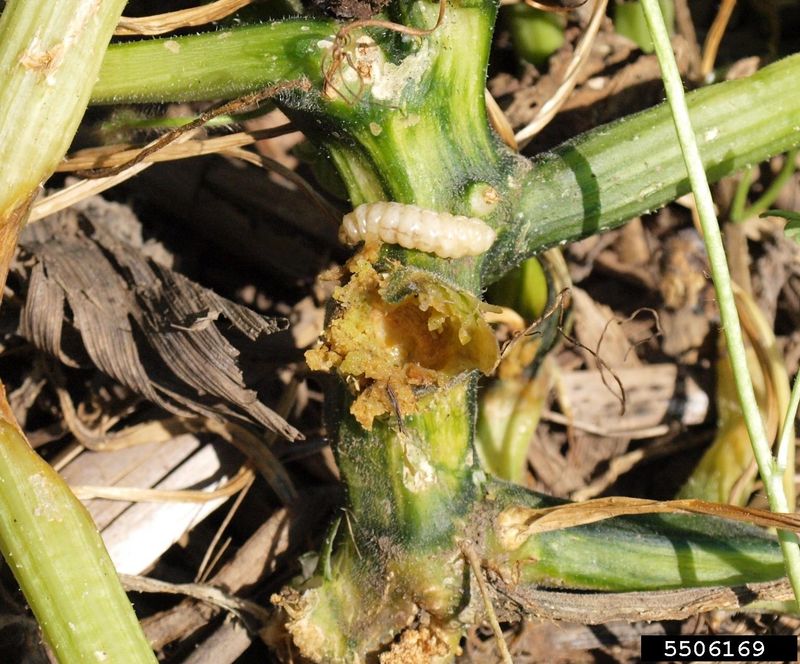
Rescue is sometimes possible, but the outcome depends heavily on how much damage is already done and how early you catch it. A plant with one small entry point and limited tunneling has a better chance than one with a mushy, extensively hollowed crown.
If inspection reveals a reachable larva and the stem damage is not severe, UGA Cooperative Extension guidance on squash vine borer describes a careful procedure: use a thin, clean blade to slit the stem lengthwise near the damaged area, remove the larva if you can reach it, and then cover the wounded section with moist soil. The goal is to encourage the plant to develop new roots from the buried stem tissue, which may allow it to continue growing even if the original entry point is compromised.
Some extension sources mention pressing the slit stem back together or securing it, though that step is optional rather than essential. Minnesota Extension similarly notes that mounding soil over the stem after damage may help the plant root and survive.
Keep the mounded area consistently moist to support rooting.
Be realistic about the limits of this approach. A plant with multiple entry points, extensive rot, or a fully destroyed crown is unlikely to recover regardless of what you do.
For heavily damaged vines, removing the plant promptly and focusing on sanitation and prevention for the next planting is often the more productive choice.
Spraying after tunneling is usually too late
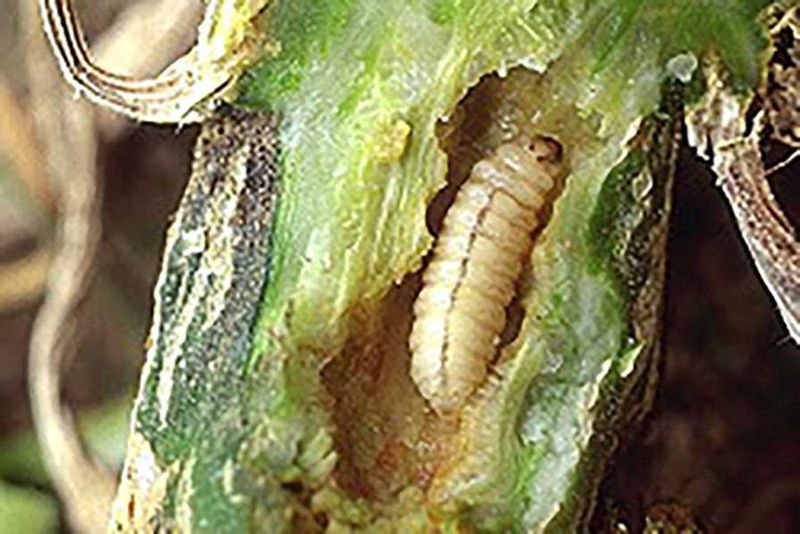
Reaching for a spray bottle the moment you notice wilt is a natural impulse, but chemical treatments have a narrow window of usefulness against squash vine borer. Once a larva is inside the stem, the outer layer of the vine shields it from contact insecticides.
Purdue Extension’s vegetable insect guide explains that preventive or precisely timed treatments must target newly hatched larvae before they tunnel into the stem, making timing the critical variable rather than product strength.
Bacillus thuringiensis, commonly called Bt, is sometimes suggested as a safer option, but UF/IFAS guidance on natural pest management products in Florida indicates that common Bt-k formulations are not reliably effective against squash vine borer, and larvae already inside the stem cannot be controlled with Bt. Do not treat Bt as a rescue option once tunneling is underway.
UF/IFAS research on squash vine borer in Florida reinforces that chemical control is most relevant during the egg-hatch and pre-entry window, not after damage appears. If you choose to use an insecticide for future plantings, identify the pest correctly first, then select a product specifically labeled for squash vine borer on the crop you are growing.
Follow every label instruction precisely: rate, timing, days-to-harvest interval, protective equipment, and pollinator precautions. The EPA’s pesticide label guidance is clear that the label is legally enforceable, not just advisory.
Avoid spraying open flowers, apply in early morning or evening when bees are less active, and never assume that a product effective against caterpillars in general will work against this specific pest.
Southern timing makes late summer worth checking
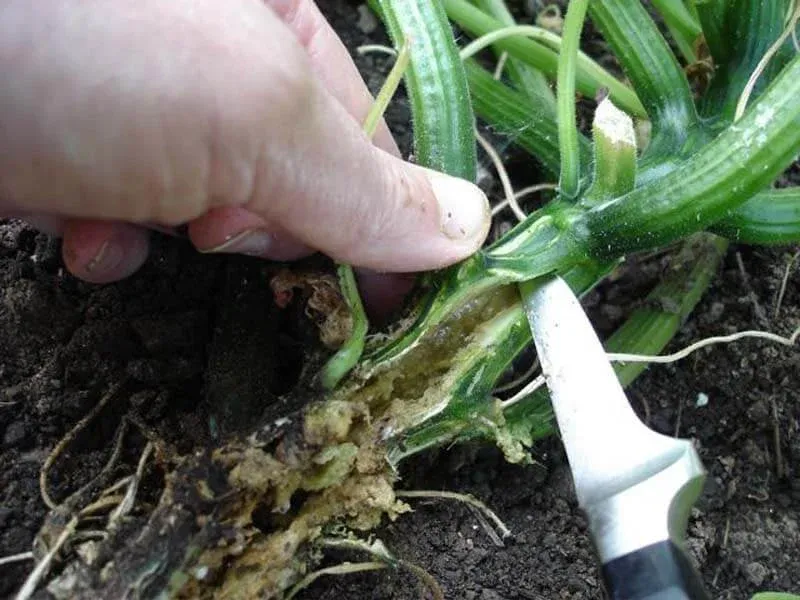
Gardeners in the northern states often hear that squash vine borer is mainly a concern from early to mid-summer, and for those regions that advice fits. Southern growers face a different situation.
UF/IFAS research on squash vine borer describes adult activity in Florida running from roughly mid-May through late October, with the possibility of two overlapping generations in the same season. A Florida or Texas gardener who planted a late-summer crop or kept a spring planting going should not assume the pest season is over.
That extended window also means prevention strategies matter more in the South than a single spray event would suggest. Lightweight row covers placed over young plants can block egg-laying adults while the plants are small, but covers must come off at flowering so bees can reach the blossoms.
Penn State Extension’s squash pest guide includes row covers among the mechanical exclusion options, alongside timed planting as a way to reduce overlap with peak adult activity.
Staggered planting can help some gardeners sidestep the heaviest pressure, though the timing is region-specific and not foolproof. Crop choice also plays a role.
Some Cucurbita moschata varieties, including certain butternut squash types, show lower susceptibility than summer squash or pumpkins according to Minnesota Extension’s vine borer overview. This is reduced preference, not immunity, and results vary.
After any season with vine borer pressure, pull spent vines promptly and dispose of them rather than composting. The pest overwinters in or near the soil, so clearing crop residue and rotating where you plant cucurbits each year can reduce, though not eliminate, future pressure.
Check the base before you give up on the vine
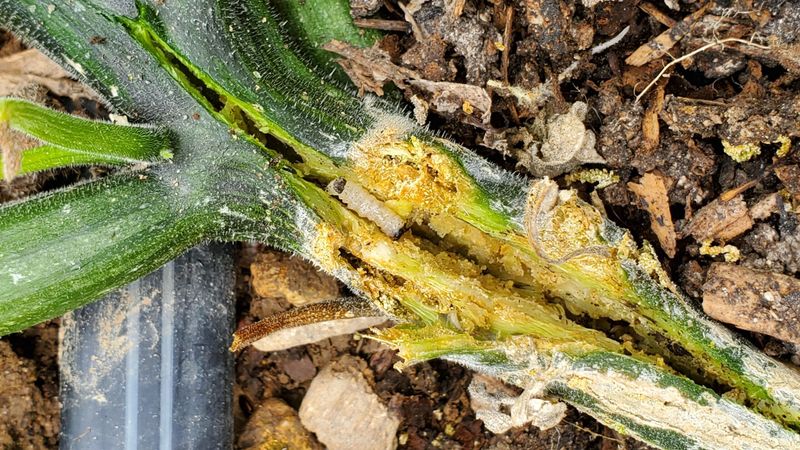
When a squash plant wilts and does not recover, a short, methodical check gives you far better information than guessing from the leaves alone. Start the next morning, before the heat builds, and see whether the plant has recovered.
If it has not, kneel down and examine the lower stem and crown closely for a hole, frass, or damaged tissue. Minnesota Extension’s squash vine borer resource frames this stem-base inspection as the key diagnostic step after persistent wilt.
For pumpkin vines, check farther along the stem as well, not only at the crown. Compare what you find against the other causes covered here: squash bugs on the plant surface, cucumber beetle feeding, signs of bacterial wilt, or leaf symptoms that point to a disease.
Then choose your next step based on the actual evidence, whether that is a careful larva removal, a decision to pull the plant, or a prevention plan for the next planting.
One symptom never makes a certain diagnosis, but a careful look at the right place at the right time gives you a real chance to act on facts instead of assumptions.