
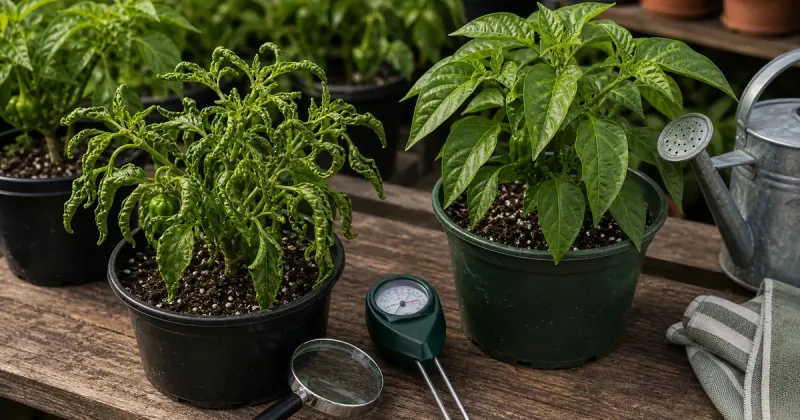
Spotting your pepper plants with tight, leathery curled leaves during a late-summer heat wave can send any gardener into a panic. The good news is that this pattern often reflects a plant coping with environmental stress, not a sign that your growing season is over.
However, curled leaves alone cannot tell you whether the cause is dry soil, waterlogged roots, scorching heat, a pest, or something else entirely. Working through a simple root-zone check first will point you toward the right response.
What Heat-Related Leaf Roll Looks Like
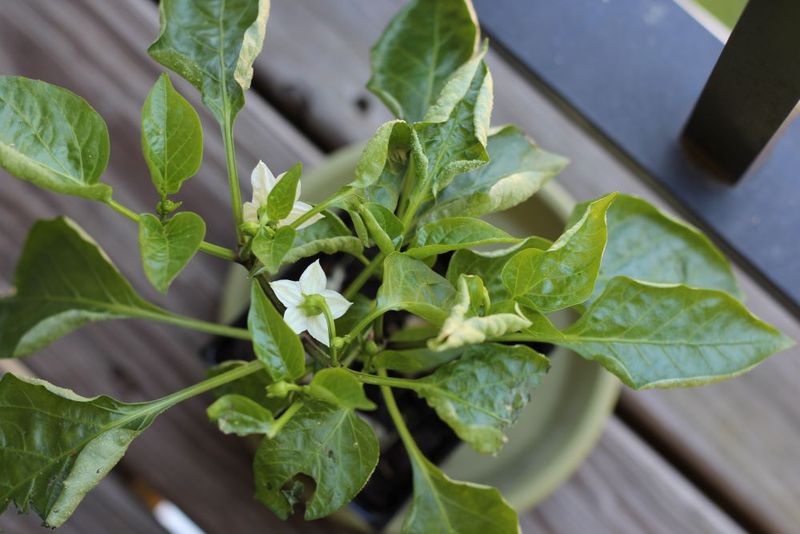
Pepper plants have a built-in response when temperatures climb and water loss accelerates: they curl their leaves inward or downward, reducing the surface area exposed to sun and wind. The result is a leaf that looks stiff, slightly shiny, and rolled along its edges, almost like a taco shell in miniature.
Washington State University’s Hortsense diagnostic resource identifies drought, high soil moisture, and high temperatures together as common triggers for this physiological leaf roll in peppers, and notes that affected plants generally stay green, productive, and unstunted.
That last detail matters. A plant showing physiological leaf roll typically keeps producing flowers or fruit, holds its normal green color, and shows no major distortion or mottling on the leaves themselves.
UC IPM’s guide to physiological leaf roll in vegetables confirms that this type of curl commonly occurs without yellowing of new leaves or stunting, and that no corrective treatment is required when the plant fits that description.
Hot, windy conditions can speed up moisture loss even when the soil still holds some water, so the plant may curl as a precaution rather than as a distress signal. The visual pattern is reassuring in one sense, but it cannot tell you on its own whether the root zone is dry, saturated, or somewhere in between.
Before reaching for the hose or adjusting anything, you need to look at what is actually happening below the soil surface.
How Shallow or Inconsistent Watering Can Add Stress
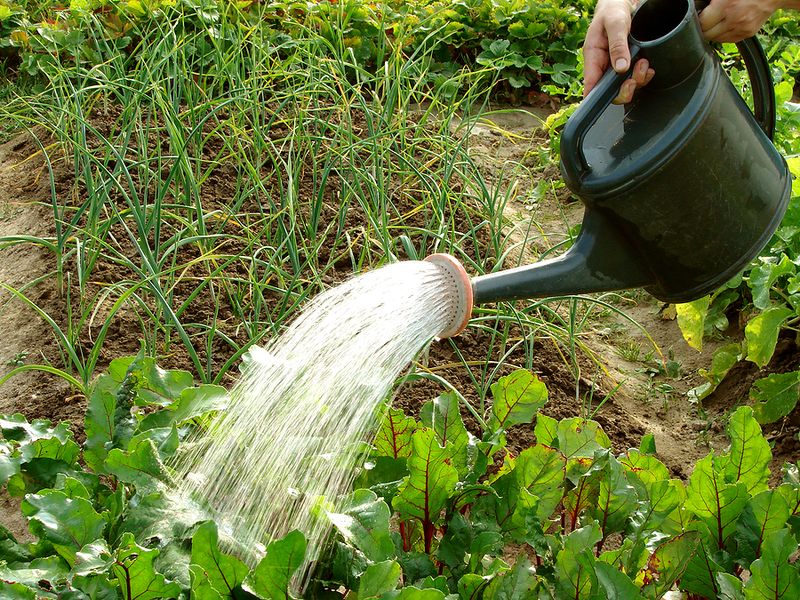
Watering a little every day sounds attentive, but if each session only dampens the top inch or two of soil, the roots growing several inches deeper never get reliable access to moisture. Over time, a root system conditioned to shallow water stays close to the surface, where soil dries out fastest during hot afternoons.
University of Minnesota Extension’s pepper-growing guide emphasizes consistent soil moisture as essential for healthy pepper growth, and notes that fluctuating moisture contributes to problems including blossom drop and reduced fruit quality.
Swinging between bone-dry soil and a heavy soaking creates a different kind of instability. The plant experiences repeated cycles of water shortage followed by sudden surplus, and roots may struggle to absorb moisture efficiently through either extreme.
UMN’s irrigation strategies for vegetables supports steady, root-zone-targeted watering rather than irregular flooding as a more reliable approach to managing soil moisture through summer heat.
Here is the qualification that the title of this article could not fit: high soil moisture can accompany physiological leaf roll just as readily as dry soil can. Washington State University lists both drought and excess moisture as potential contributors to the same curling symptom.
That means seeing curled leaves is not permission to water more freely. You need to confirm what the root zone actually contains before deciding whether to add water, hold back, or check drainage.
Check Soil Moisture Before You Water
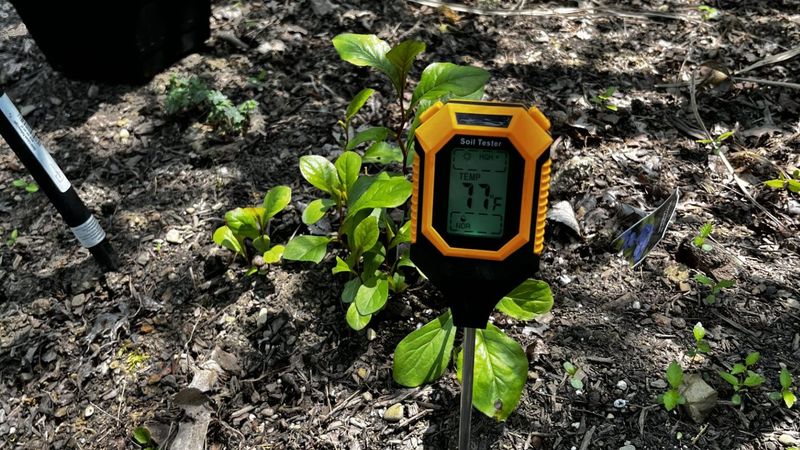
Leaf appearance is not a reliable irrigation trigger on its own. A plant can curl its leaves during a hot afternoon even when the root zone holds adequate moisture, simply because the air is hot and dry enough to stress the foliage.
Reaching for the hose every time leaves look tight can push a moderately moist soil toward saturation, which creates a different set of problems.
The more dependable method is to push two or three fingers into the soil several inches down, near the active root zone of the plant. If the soil at that depth feels dry and crumbly, the plant likely needs water.
If it feels cool and slightly damp, it probably has enough for now. If it feels wet or you can squeeze water from a handful, drainage may be the issue rather than supply.
University of Minnesota Extension’s heat-gardening guidance specifically cautions that a wilted or curled plant should not automatically trigger watering without first checking root-zone conditions.
Texas A&M AgriLife’s home vegetable gardening guide recommends wetting soil to at least 6 inches during irrigation, which also means the soil at that depth should be your reference point before you start. Saturated soil calls for assessing drainage and reducing excess irrigation, not adding more.
UF/IFAS pepper production guidance for Florida describes peppers as moisture-sensitive and vulnerable to flooding, reinforcing the case for checking conditions before irrigating rather than watering on a fixed schedule.
Water a Dry Root Zone Slowly and Thoroughly
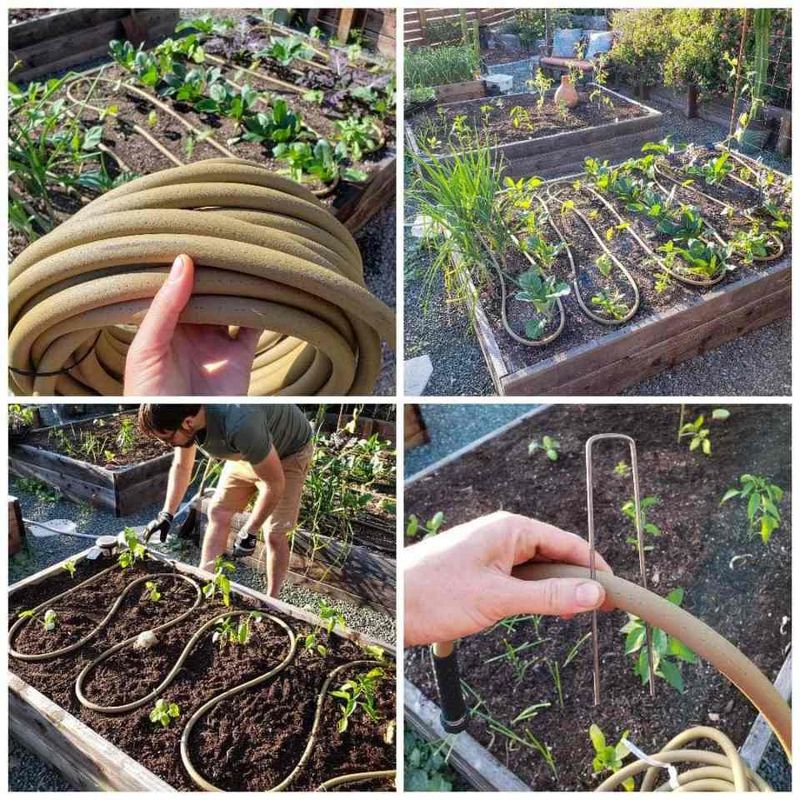
When a finger-test confirms the root zone is genuinely dry, the goal is to move water down through the entire active rooting depth rather than just dampening the surface. Applying water too quickly causes runoff before it can penetrate, and the top inch may look wet while the roots several inches below stay dry.
Slow, steady application at the base of the plant gives water time to move downward through the soil profile.
Texas A&M AgriLife recommends wetting the soil to at least 6 inches when irrigating vegetables, which serves as a practical target for a thorough session. The same guidance notes that light, sandy soils need more frequent irrigation than heavier clay soils because they drain faster and hold less water between sessions.
Texas A&M’s vegetable gardening guide and UMN’s irrigation strategies both treat roughly one inch of water per week as a planning benchmark, not a fixed prescription. Rainfall, temperature, wind, soil type, plant size, and drainage all shift how often you actually need to irrigate.
Consistent moisture through the growing season supports not just leaf health but also flowering, fruit set, and fruit quality. Oklahoma State University Extension’s pepper production fact sheet notes that moisture fluctuations can contribute to blossom drop and reduced yields, and University of Georgia Extension’s guidance on blossom-end rot links inconsistent moisture delivery to fruit quality problems.
Directing water to the soil line rather than spraying foliage is the practical preference because prolonged leaf wetness can increase disease risk, though overhead watering in the morning when foliage can dry quickly is acceptable when drip or soaker options are not available.
Adjust the Plan for Beds, Containers, and Drainage
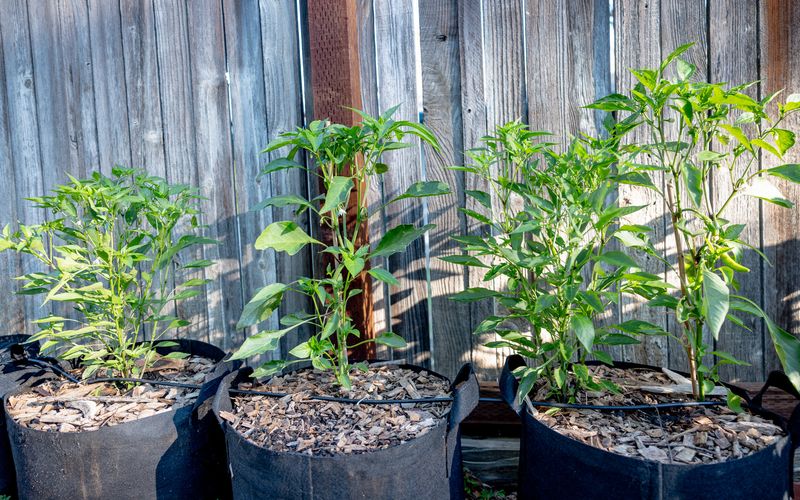
Not every pepper grows under the same conditions, and a single watering schedule will not fit all of them. Sandy soil drains quickly and dries out faster than clay or loam, so plants growing in light soil may need more frequent checks even when in-ground beds.
Windy sites and locations with extreme afternoon heat increase evaporation from both the soil surface and the plant itself, compressing the window between adequate moisture and dry stress.
Container peppers face a more demanding situation than bed-grown plants because the limited soil volume dries out much faster. A pot sitting in full sun on a concrete patio can go from adequately moist to bone dry within a day during a Southern heat wave.
UF/IFAS pepper production guidance describes peppers as sensitive to flooding, which applies to containers just as much as beds. Drainage holes are not optional: without them, frequent watering quickly leaves roots sitting in standing water, which impairs oxygen exchange and can promote root-rotting organisms.
Texas A&M AgriLife’s vegetable guide and UMN’s pepper-growing resource both support adjusting irrigation frequency based on soil type, plant size, and weather rather than following a universal calendar. For containers, check the root-zone moisture daily during hot stretches and water when the soil is dry several inches down, but do not assume the container needs water simply because the surface looks dry or the leaves are curled.
The soil check remains the most reliable guide regardless of where the plant is growing.
Reduce Heat Without Masking the Real Problem
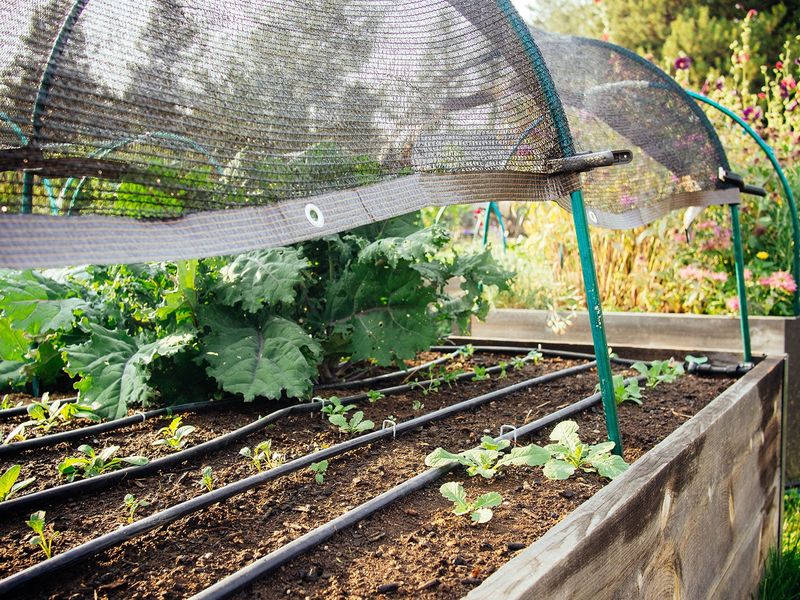
Once you have assessed and addressed the root-zone moisture situation, a few supportive steps can help reduce the rate at which the soil dries out and lower the heat load on the plant. Organic mulch applied around the base of your peppers moderates soil temperature and slows surface evaporation, giving roots a more stable environment between irrigation sessions.
Texas A&M AgriLife’s home vegetable gardening guide recommends a layer of organic mulch around growing vegetables to help conserve moisture. Keep the mulch pulled back slightly from the stem to avoid trapping moisture against the base of the plant, which can invite rot.
Temporary afternoon shade is another option worth considering when heat is extreme and the plant is otherwise green and healthy. A shade cloth positioned to block the harshest midday and afternoon sun can reduce both air temperature around the foliage and the rate of moisture loss.
UMN’s heat-gardening guidance and UConn Extension’s drought and heat resource both describe temporary shade as a supportive measure for heat-stressed vegetables.
Neither mulch nor shade corrects dry soil, poor drainage, or waterlogged roots. They reduce demand, not supply.
Heat can also reduce flowering and fruit set in peppers independently of any leaf curling, with Utah State University Extension’s pepper guide and Oklahoma State’s pepper production fact sheet noting that high temperatures can affect pollination and fruit set regardless of how well the plant is watered. If flowers are dropping or fruit is not setting, heat itself may be the primary factor, not a watering error.
Recognize Curl That Needs a Broader Diagnosis
Physiological leaf roll associated with heat and moisture stress tends to appear relatively uniformly across older, mature leaves while new growth at the growing tips looks normal. When the pattern breaks from that, the cause is probably not environmental stress alone.
Twisted, cupped, or puckered new leaves, especially combined with yellowing, mottling, stunting, or malformed fruit, call for a closer look at the plant rather than an irrigation adjustment.
UC IPM’s physiological leaf roll guide distinguishes environmental curl from disease or pest damage by the absence of yellowing, stunting, and distortion in true physiological cases. Flip leaves over and examine the undersides and growing tips before drawing any conclusions.
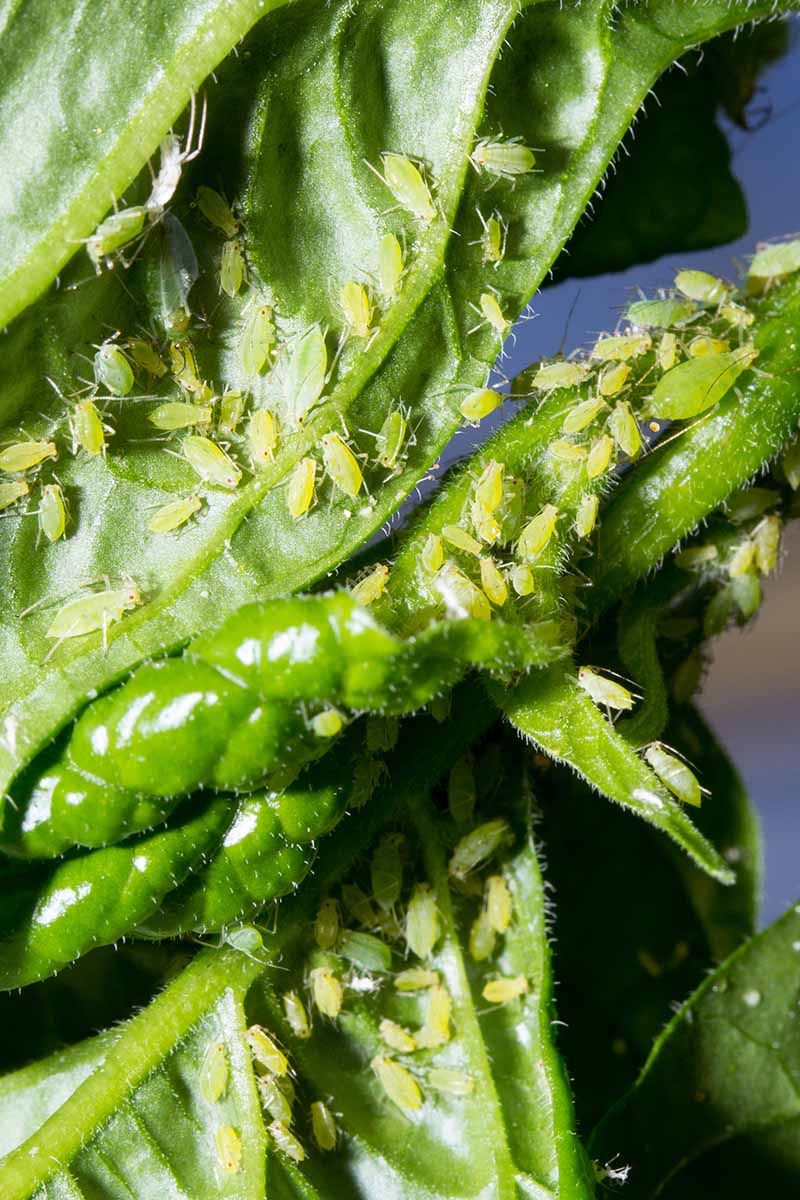
UMN’s aphid identification resource notes that heavy aphid populations can cause curled or twisted leaves, yellowing, stunting, and a sticky honeydew residue on leaf surfaces. Aphids cluster on new growth and leaf undersides, so a quick look with a hand lens can confirm or rule them out quickly.
Thrips are a smaller but equally disruptive threat, particularly in Florida and Texas growing conditions. UF/IFAS vegetable insect identification guidance and Texas A&M AgriLife’s chilli thrips resource describe the characteristic signs: silvery or bleached flecking on leaf surfaces, tiny black droppings, and cupped or distorted tissue.
Viruses can produce curled, mottled, distorted leaves and stunted growth; Utah State University Extension’s pepper guide notes that virus-infected plants may need removal because no cure exists. Texas A&M’s fall vegetable gardening guide also flags herbicide injury as a cause of twisted, cupped, or irregularly shaped new leaves, especially when symptoms concentrate on plants near a recently treated lawn or appear across several plants at once.
Do not remove plants or apply treatments based on curl alone. Gather these additional clues first.
Use the Plant’s Overall Health to Decide What to Do Next
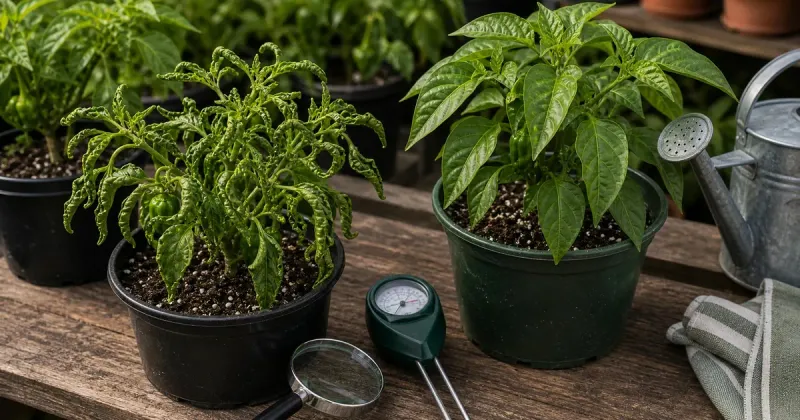
A practical sequence works better than reacting to a single symptom. Start by checking the root zone several inches down to classify the soil as dry, adequately moist, or saturated.
If it is dry, apply water slowly at the base and work toward steadier moisture going forward. If it is saturated, assess drainage and reduce irrigation rather than adding more.
Once you have addressed soil conditions, add mulch to conserve moisture and consider temporary shade if heat is extreme and the plant is otherwise healthy.
Then step back and look at the whole plant. Washington State University’s Hortsense fact sheet and UC IPM’s physiological leaf roll guide both indicate that no corrective action is needed when a pepper plant remains green, unstunted, and productive despite curled leaves.
Removing those curled leaves is generally unnecessary and can actually reduce the canopy that shades developing fruit from sunscald. Let the plant keep what foliage it has unless disease or pest damage gives you a clear reason to act differently.
UMN’s irrigation strategies guide supports making irrigation decisions from root-zone observations rather than from a rigid schedule or a quick glance at the foliage. If steady moisture and improved drainage do not resolve the curling over the following week or two, and if new growth continues to look distorted or discolored, broaden your diagnosis toward pests, viruses, or herbicide exposure.
A pepper that keeps growing new leaves, flowering, and setting fruit is telling you it is managing the heat, even if it does not look picture-perfect doing it.