
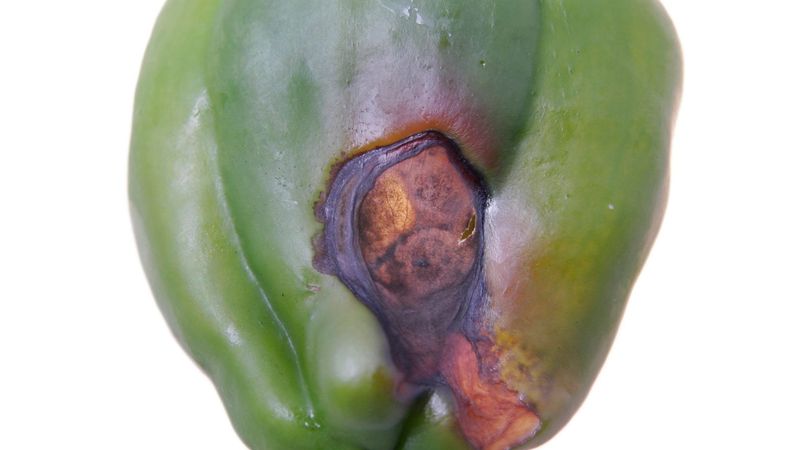
Pulling back a pepper leaf to find a dark, sunken patch on the fruit is one of the more discouraging sights in a summer garden. That browning spot has a name, a cause, and a fix that most gardeners never expect.
Before blaming the heat and reaching for a spray bottle, take a closer look at exactly where and how that lesion is forming, because the location and texture tell you far more than the calendar does.
Start With the Lesion’s Location and Texture
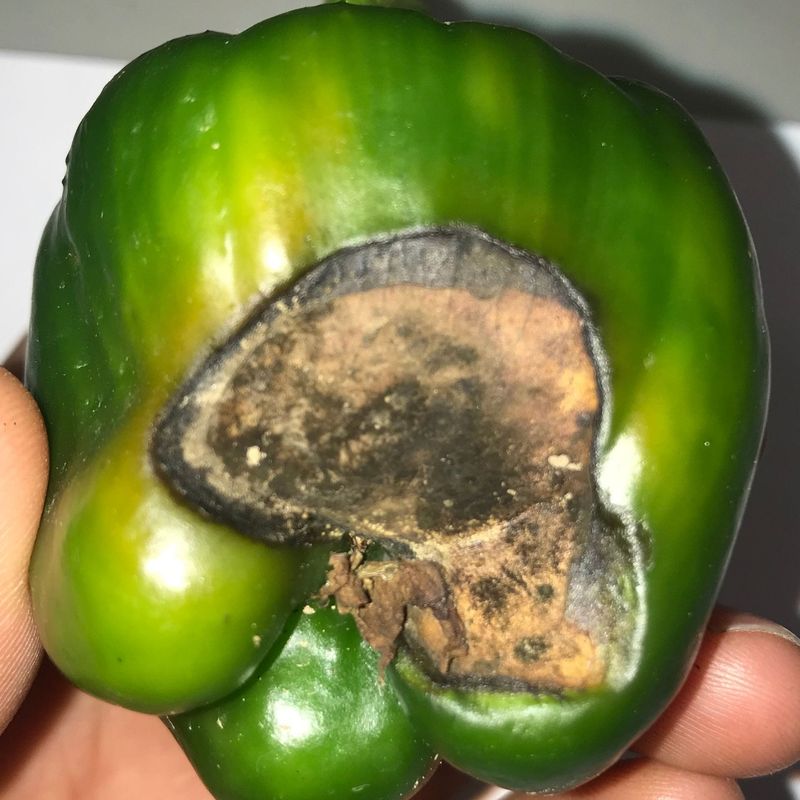
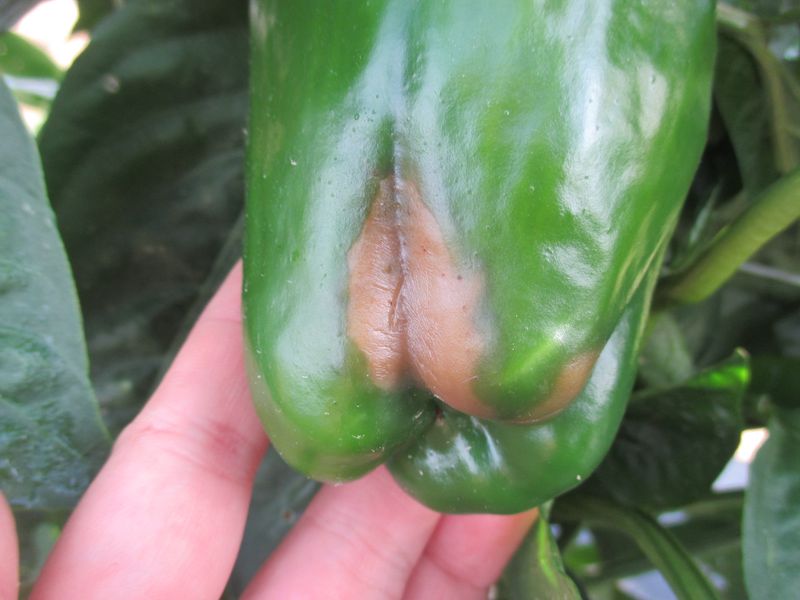
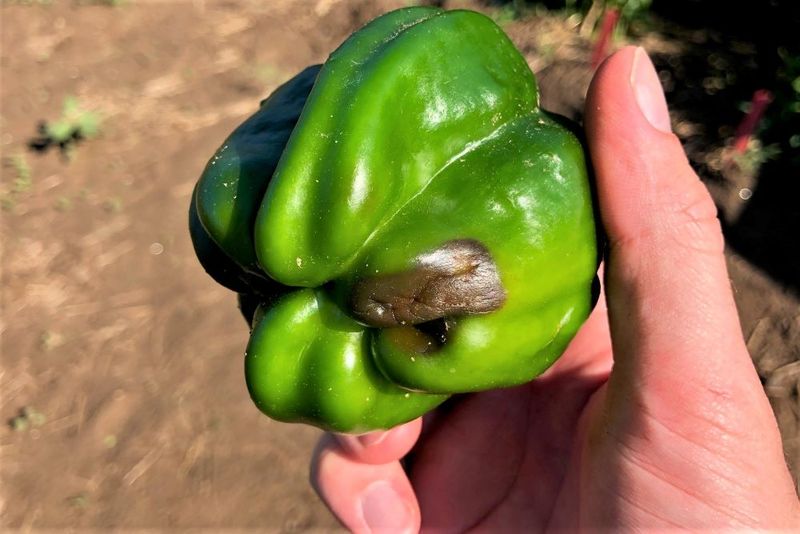
A sunken brown patch on a pepper during hot weather does not automatically confirm blossom-end rot. The pattern that points most strongly toward BER is a tan, brown, or dark discoloration appearing at the blossom end of the fruit – the bottom tip opposite the stem – or on the nearby lower sidewall.
That area starts as a discolored or water-soaked spot, then enlarges and collapses inward as the tissue dies, eventually becoming dry and leathery in texture.
According to UF/IFAS guidance on blossom-end rot in bell peppers, the disorder originates in the fruit tissue itself rather than spreading from an infectious pathogen. That distinction matters for how you respond.
Because BER is not a disease in the traditional sense, no spray or fungicide will reverse it.
Secondary fungi or bacteria can move into the dead tissue later, making the lesion look wetter, softer, or moldy over time. That secondary colonization sometimes causes gardeners to assume they are dealing with a disease from the start.
UNH Extension notes that BER on peppers is not always confined to the exact bottom tip – it may also develop on the lower sidewall near the blossom end, which is why the symptom can be confused with other problems. Reserve judgment about patches that appear higher on the fruit or only on the sun-facing side, since those locations suggest a different cause.
Heat Raises Risk, but Water Movement Explains BER
Peppers need a steady, reliable flow of water through their tissues during fruit development, and calcium travels with that flow. Calcium is relatively immobile in the plant and reaches developing fruit mostly through the xylem, the vascular pathway that carries water upward from the roots.
When that delivery becomes unreliable, the rapidly expanding cells at the blossom end can run short of calcium even when the surrounding soil contains plenty of it.
UGA Cooperative Extension’s guide to bell pepper defects explains that several conditions can reduce dependable water and calcium uptake, including drought stress followed by a sudden irrigation or rain event, root injury from cultivation or pests, and excessive vegetative growth that competes with fruit for available calcium. Heat and rapid fruit development can add to that pressure, but neither factor alone explains why BER happens.
Blaming summer heat is too simple. A pepper plant growing through the same hot week without moisture swings, root damage, or overly lush canopy growth may produce clean fruit.
The more accurate picture is that multiple stresses can converge to disrupt water and calcium delivery during the critical window when fruit cells are expanding fastest. UGA’s publication on calcium nutrition of pepper and tomato reinforces that the localized deficiency in the fruit is what drives tissue death, regardless of what the broader soil calcium level reads.
Stabilize Moisture in the Root Zone
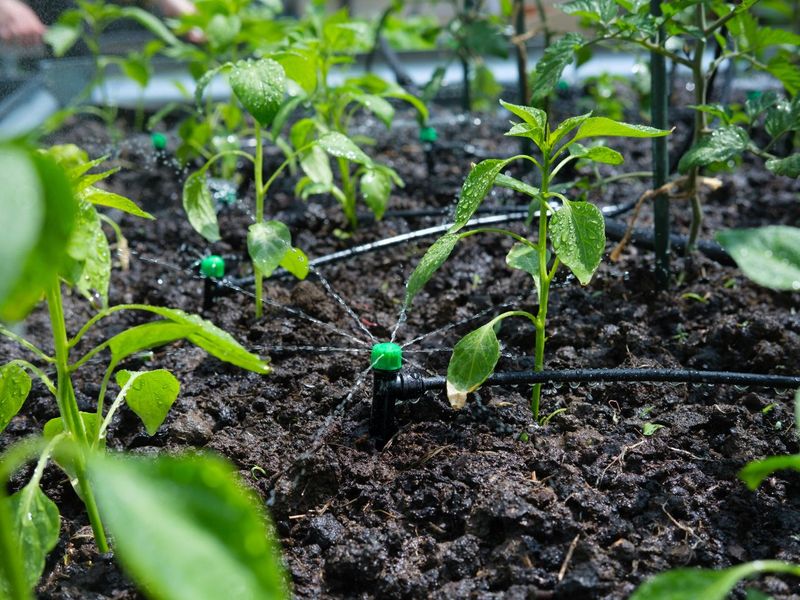
Consistent soil moisture is the most practical first response when BER appears. The goal is to wet the entire root zone thoroughly and then keep conditions from swinging between bone-dry and waterlogged.
Shallow or infrequent watering that only moistens the top inch or two of soil does not accomplish this, and overhead sprinkling can lose moisture to evaporation before it reaches the roots.
Utah State University Extension’s BER resource recommends drip irrigation or a soaker hose as a more effective delivery method because water goes directly to the soil at the root level. A two-to-three-inch layer of mulch over the root zone helps hold moisture between waterings and reduces the sharp swings that stress developing fruit.
Straw, wood chips, or shredded leaves all work for this purpose.
Avoid keeping the soil constantly saturated. Roots sitting in waterlogged conditions can be damaged just as surely as roots in drought, and poor drainage creates its own disease risks.
UGA extension guidance points out that no single inches-per-week figure applies across all soils, container sizes, climates, and irrigation setups. Southern gardeners growing in sandy coastal soils will drain faster than those with clay-heavy beds, and container peppers dry out far more quickly than in-ground plants.
Monitor soil moisture and plant appearance rather than following a fixed schedule, and adjust based on what the conditions in your specific garden are telling you.
Remove Affected Peppers and Protect Their Roots
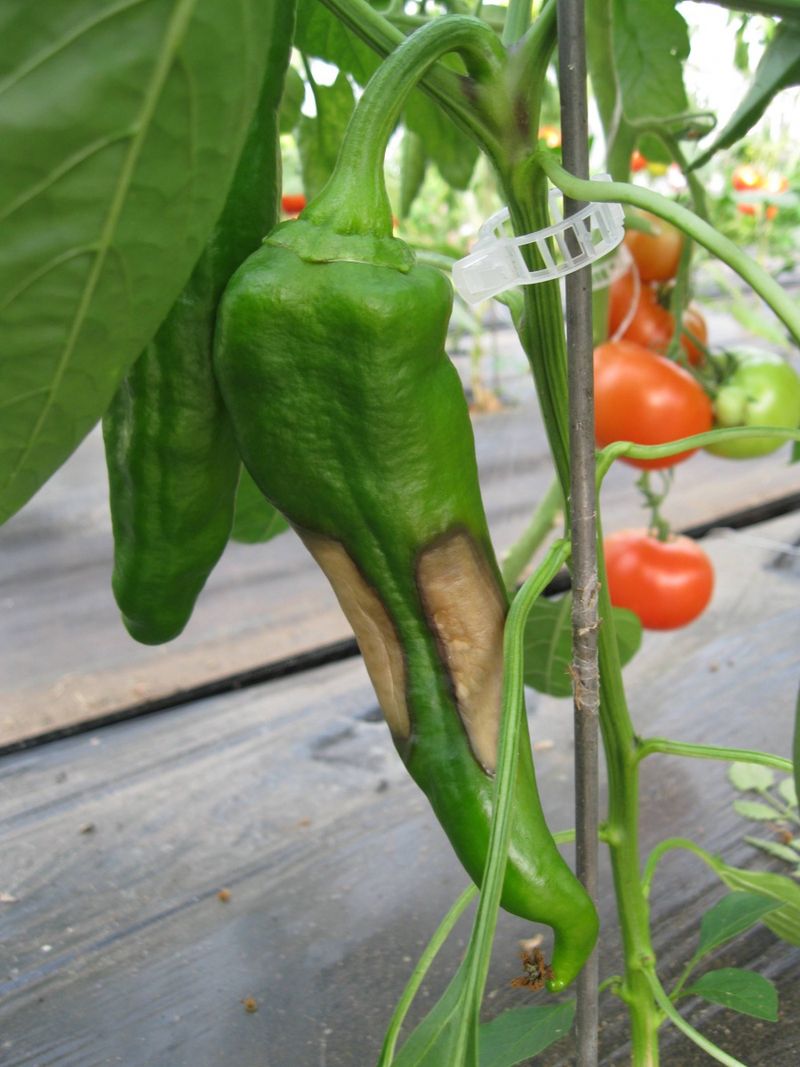
Once BER has killed fruit tissue, that damage is permanent. No watering adjustment or amendment will reverse a lesion that has already formed, so heavily affected peppers should come off the plant.
Removing them redirects the plant’s resources toward new fruit that may develop under better conditions, rather than sustaining peppers that will not recover.
UNH Extension advises pulling affected fruit promptly and then focusing on stabilizing the root zone environment for later-developing peppers. Improvement in subsequent fruit is possible when moisture and root conditions are corrected, but it is not a certainty.
Some plants continue to show BER on a portion of fruit even after conditions improve.
Root protection deserves equal attention. Avoid hoeing, digging, or cultivating within a foot or more of pepper stems, since surface roots extend outward and are easy to slice accidentally.
USU Extension notes that root injury reduces both water and calcium uptake, which feeds directly into the conditions that allow BER to develop. Control weeds by pulling them carefully by hand or by maintaining a mulch layer that suppresses new growth without requiring repeated soil disturbance near the base of the plants.
Do Not Reach for Calcium Without Testing the Soil
Calcium is at the center of BER biology, so it feels logical to add calcium when the problem appears. The trouble is that the disorder frequently occurs when soil calcium is already adequate.
Adding more calcium to soil that does not need it will not fix water uptake problems or smooth out moisture swings, which are the more common culprits.
University of Minnesota Extension’s review of common soil remedies addresses two popular home fixes directly. Crushed eggshells decompose slowly in garden soil and are unlikely to release meaningful calcium during the current growing season.
Epsom salt, another frequent recommendation, supplies magnesium and sulfur – not calcium – and unnecessary applications can push nutrient levels out of balance rather than correcting them.
Foliar calcium sprays are sometimes promoted as a fast solution, but calcium moves poorly from leaf tissue into developing fruit. Ohio State University Extension’s review of pepper BER notes that research on foliar calcium sprays remains inconclusive, and UGA describes the evidence as insufficient to recommend them as a reliable treatment.
Fertilizer choices also matter. Excessive nitrogen, particularly from ammonium-heavy fertilizers, can push rapid leafy growth that competes with fruit for available calcium and may interfere with uptake.
UGA’s bell pepper defect guide cautions against over-fertilizing with nitrogen during fruit set. Run a soil test before adding any calcium amendment, and follow the test recommendations and fertilizer label rather than adding products based on a general assumption that the soil is deficient.
Check for Sunscald and Pepper Diseases
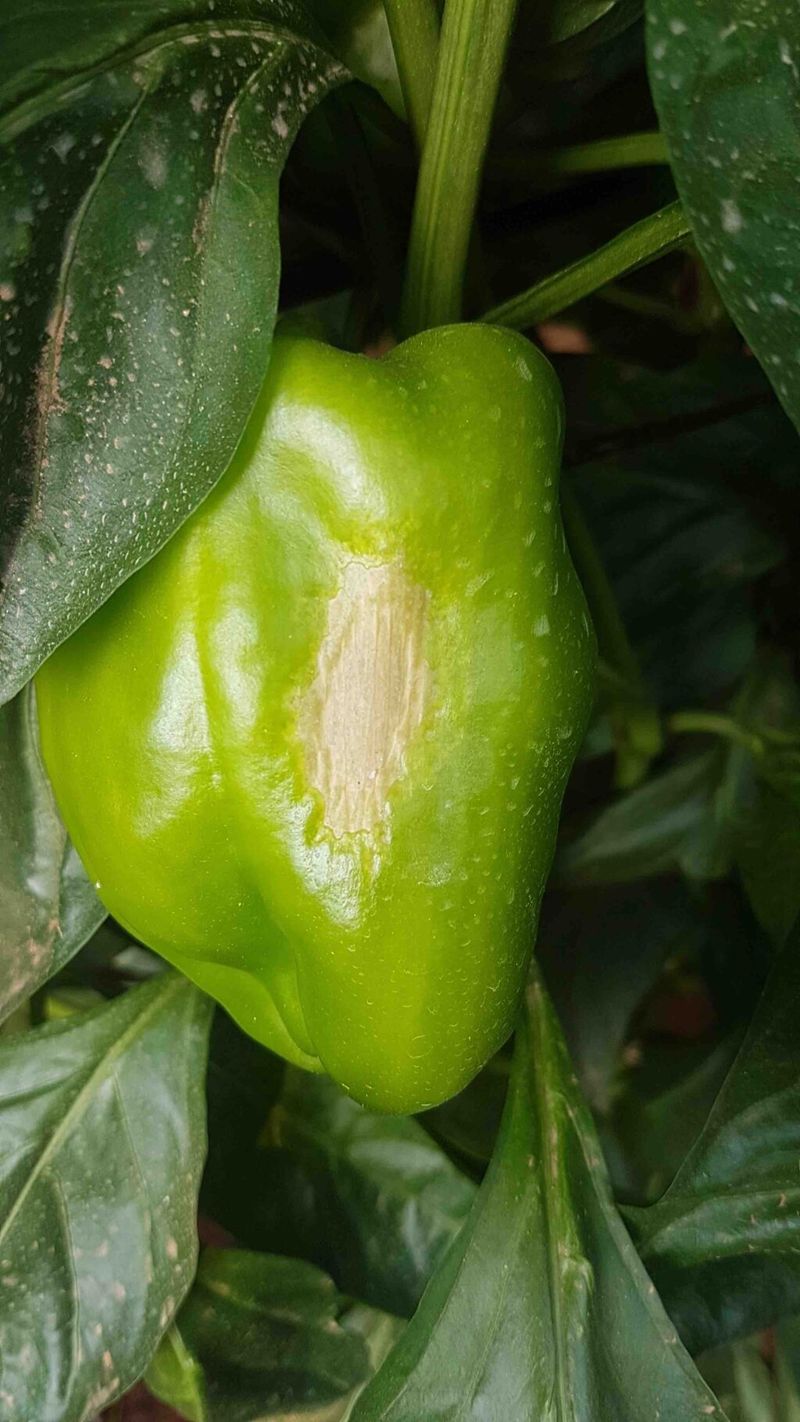
When a lesion does not fit the classic BER pattern, the diagnosis deserves a second look. Sunscald is a common source of confusion because it also produces discolored, damaged patches on pepper fruit during summer heat.
The differences are worth knowing. Sunscald typically affects tissue on the side of the fruit that faces direct sunlight, and the damaged area tends to be pale tan, white, or translucent with a dry or papery texture rather than the darker, sunken, leathery appearance more typical of BER.
University of Minnesota Extension’s pepper fruit problem diagnostic tool identifies sunscald as a separate condition tied to sun exposure, while BER is associated with the blossom end or nearby lower sidewall regardless of which direction the fruit faces. If you rotate an affected pepper and the patch consistently sits on the sun-exposed face rather than at or near the blossom end, sunscald is a stronger candidate than BER.
Anthracnose can also produce sunken lesions on pepper fruit, but it tends to appear on ripe or overripe fruit on the sidewalls rather than at the blossom end. Under moist conditions, anthracnose lesions may develop pinkish or salmon-colored spore masses that are not present with BER.
Phytophthora is a different concern that more often involves water-soaked lesions combined with wilting or collapse across a larger portion of the plant, not just isolated fruit damage.
Work through the full picture before settling on a diagnosis: note where exactly the lesion sits, what texture and color it shows, whether the fruit was ripe or still green, whether the affected side faced the sun, and whether any spores or broader plant symptoms are visible. A brown patch alone is not enough information.
Use a Simple Prevention Sequence for New Fruit
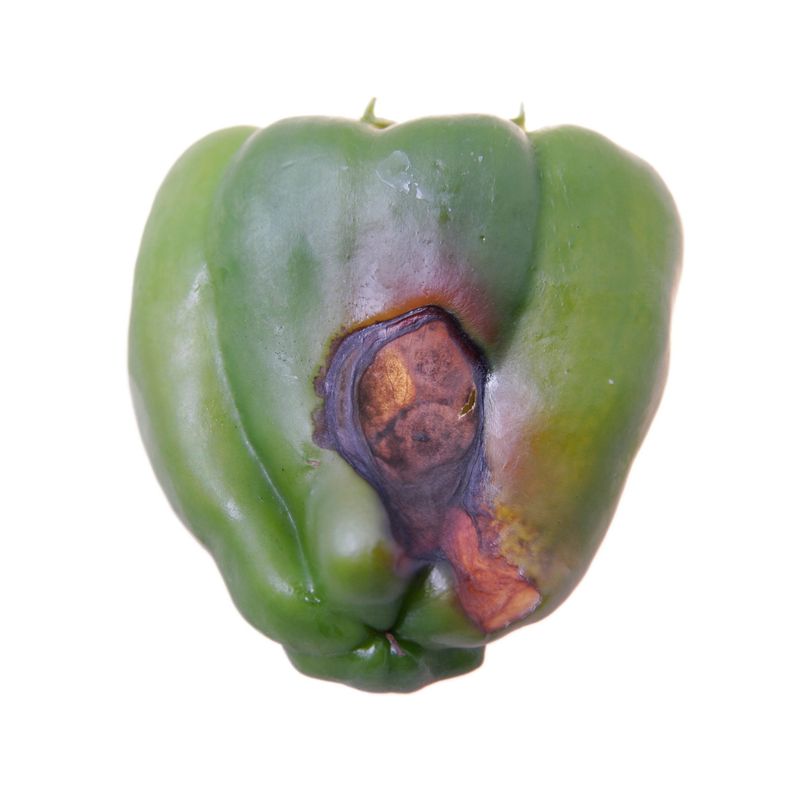
Putting together a straightforward response sequence helps when BER appears mid-season. Start by examining the lesion carefully: check whether it sits at the blossom end or nearby lower sidewall, and note whether the texture is dark, sunken, and leathery.
If it fits that pattern, remove badly affected fruit and shift attention to improving conditions for new peppers already forming on the plant.
Keep the root zone evenly moist with deep, consistent watering and a layer of mulch to buffer against dry spells. Use drip irrigation or a soaker hose when possible, and avoid practices that disturb roots near the stem.
Hold off on extra nitrogen fertilizer during fruit development, and do not add calcium amendments unless a soil test shows a correctable deficiency. UF/IFAS guidance on BER in bell peppers consistently ties the most reliable improvements to stable moisture and root-zone care rather than to any single product.
Watch newly developing fruit over the following weeks. Some plants respond well once conditions stabilize; others may continue showing occasional BER on a portion of fruit through the end of the season.
If new lesions keep appearing in locations that do not fit the blossom-end pattern, revisit the diagnostic clues from the previous section rather than assuming BER is still the cause. USU Extension frames the goal plainly: reliable water delivery to developing fruit is the intervention, not a product on a shelf.
The pepper plant will often tell you whether that is working.