
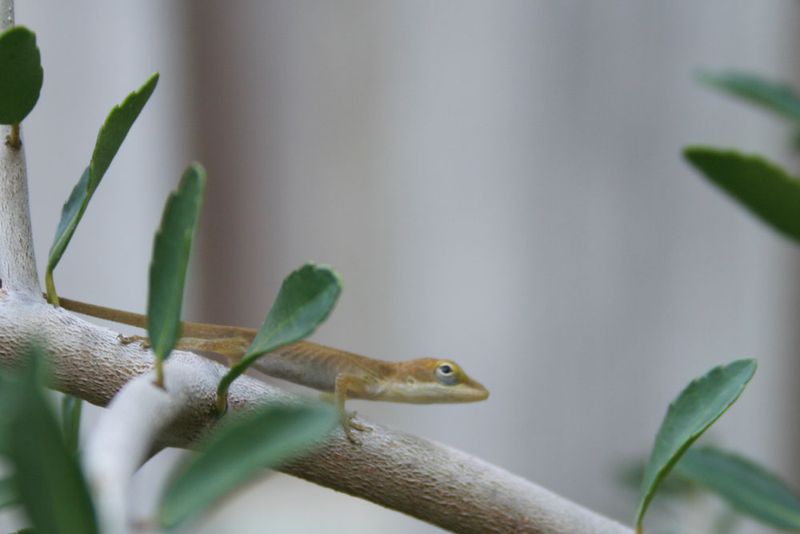
Spotting a gecko on your porch at night feels like a small victory for the backyard ecosystem, and plenty of Texas homeowners wonder whether planting the right native shrub could bring more of them around while keeping roaches at bay. Yaupon holly is one Texas-native plant worth considering for its dense, evergreen structure and drought toughness, but the honest story is more layered than any single plant can deliver.
A wildlife-friendly porch setup can support gecko activity under the right conditions, yet cockroach management inside the home still depends on sealing gaps, removing food sources, and using the right products. Understanding what the plant can and cannot do will help you make smarter choices for both your landscape and your pest situation.
Porch lights explain why Texas house geckos appear at night
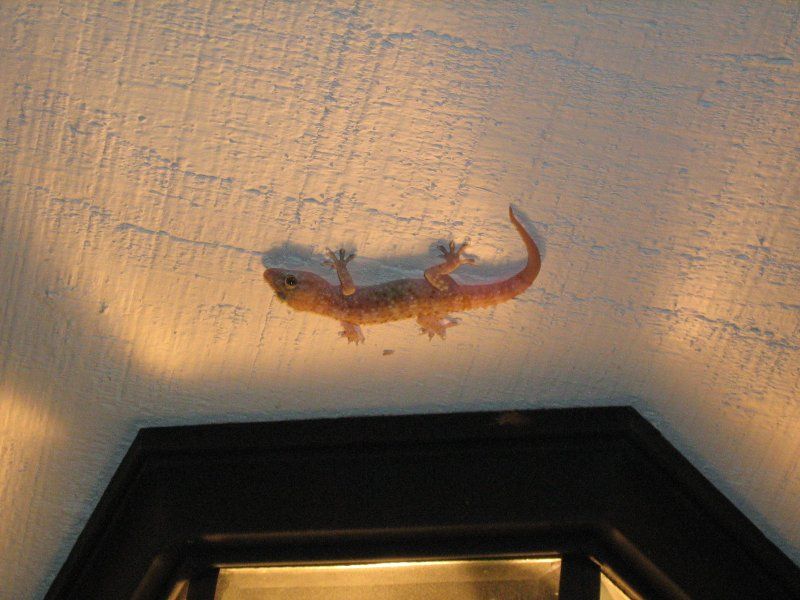
Two introduced gecko species account for most of the small lizards Texans notice on their porches after dark. The Mediterranean house gecko (Hemidactylus turcicusHemidactylus frenatus) and the common house gecko () are not native Texas reptiles but have established themselves across the state, thriving in warm urban and suburban environments.
Both species are nocturnal hunters that have learned to take advantage of one very specific human habit: leaving the porch light on.
Porch lights pull moths, beetles, flies, and cockroaches toward the exterior walls of a home, and Texas A&M AgriLife Extension’s house gecko fact sheet confirms that these introduced geckos commonly position themselves near those lights to hunt. The light itself is the draw, not any particular plant growing nearby.
A gecko standing motionless under the fixture is essentially waiting for its meal to arrive on its own.
Texas A&M also notes that cockroaches are among the insects house geckos may consume, and a published observation documents a common house gecko taking a large American cockroach. That detail is real, but it describes a single predation event rather than a reliable pest-control outcome.
A gecko eating one roach near the porch tells you nothing about whether cockroaches are breeding inside the walls, under the refrigerator, or in a bathroom drain where no gecko can follow.
Visible gecko activity on your porch reflects local prey density, available shelter, and nighttime lighting conditions. Whether a native shrub is growing nearby matters far less than whether the light is on and insects are gathering.
Expecting a plant to serve as a gecko magnet misreads what actually brings these lizards to the wall.
Native habitat does not prove a gecko attractant or roach repellent
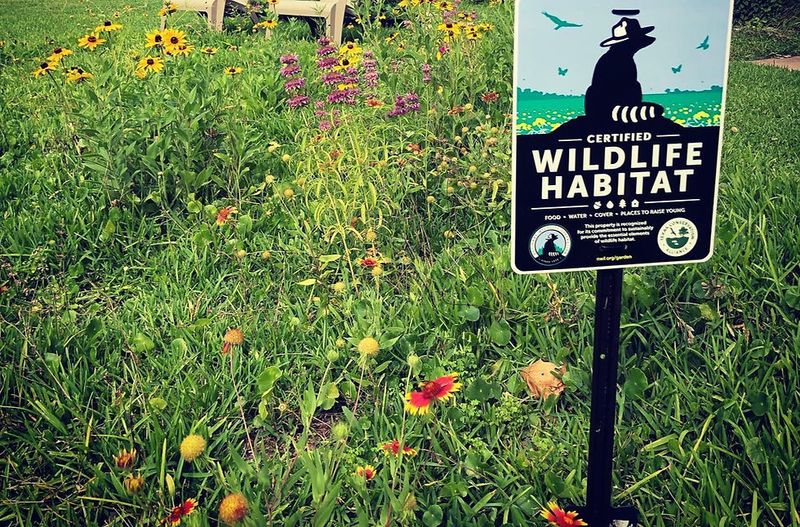
Three separate claims are often bundled together when someone says a native plant will attract geckos and keep roaches away, and it helps to pull them apart. First, native plants can provide shelter and cover for wildlife.
Second, native vegetation supports insect populations, which in turn feed insect-eating animals. Third, a specific named plant can attract a particular lizard species or drive cockroaches away from an area.
Texas Parks and Wildlife Department’s Wildscapes guidance supports the first two ideas clearly, but no authoritative source tests yaupon holly or any other Texas-native shrub as a species-specific gecko attractant.
The distinction matters because the first two claims are about habitat ecology, while the third is a marketing-style promise. Native plants genuinely do contribute to urban food webs.
TPWD’s habitat resources page explains that local wildlife recognizes native species as food and shelter sources, which means a native shrub can support the insect populations that feed lizards, birds, and other predators. That is a real ecological benefit, but it does not translate into a guaranteed gecko arrival or a reduction in cockroach numbers.
The cockroach-repellent angle deserves its own correction. Research on plant-based insect repellents generally involves concentrated essential oils tested in laboratory settings, not intact landscape shrubs growing in a garden bed.
NC State Extension’s review of insect repellent products notes that plant-derived repellents often work only on direct contact and leave little residual effect, and extension specialists routinely caution that repellent claims for garden plants are frequently overstated. A yaupon planted near your steps is not emitting a chemical signal that pushes cockroaches off your property.
Why yaupon holly makes a reasonable habitat-based choice
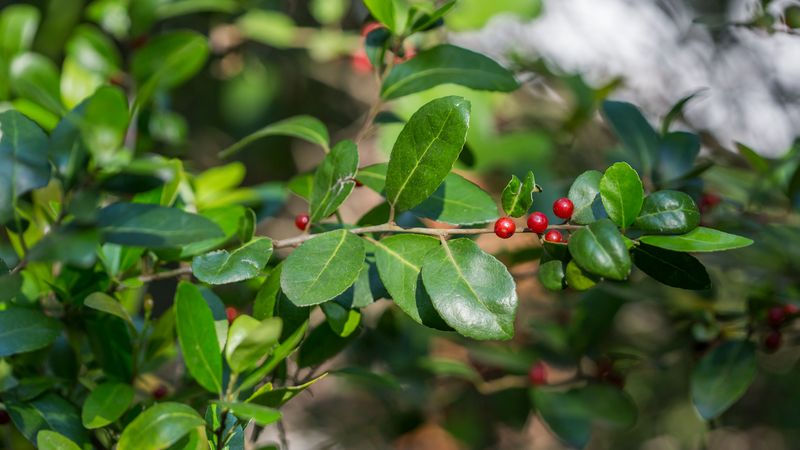
Yaupon holly (Ilex vomitoria) earns its place in this conversation not because any study connects it to gecko activity, but because its documented landscape traits line up well with what general lizard-habitat guidance recommends. It is an editorial candidate grounded in practical horticulture rather than a tested reptile-attraction formula.
The plant is native across Texas, from the piney woods of East Texas to the Edwards Plateau and into the southern plains. NC State Extension’s yaupon holly profile describes it as an evergreen shrub tolerant of drought, clay soils, and both full sun and partial shade conditions.
It can be grown as a dense hedge, a multi-stem specimen, or a small tree, and its fine-textured foliage holds year-round, meaning it does not drop its cover in winter the way a deciduous shrub would. That consistent structure is what makes it potentially useful as shelter near a porch.
Yaupon also supports wildlife beyond any gecko connection. Its small white flowers provide early-season nectar for pollinators, and its red berries feed birds through fall and winter.
Dense branching gives small mammals and songbirds cover from predators. These are genuine, documented ecological contributions that make it a worthwhile landscape plant on their own terms, separate from any pest-management expectation.
Whether geckos actually use a yaupon planting near your porch will depend on local prey availability, the presence of suitable crevices or resting spots, nighttime lighting, and other site-specific factors that the plant itself cannot control. Yaupon can provide structure consistent with general lizard-habitat guidance, but that is a starting condition rather than a cause-and-effect guarantee.
Choose it for its landscape performance and ecological value, and treat any gecko activity that follows as a welcome bonus rather than a promised outcome.
Apply general lizard-habitat principles around the porch
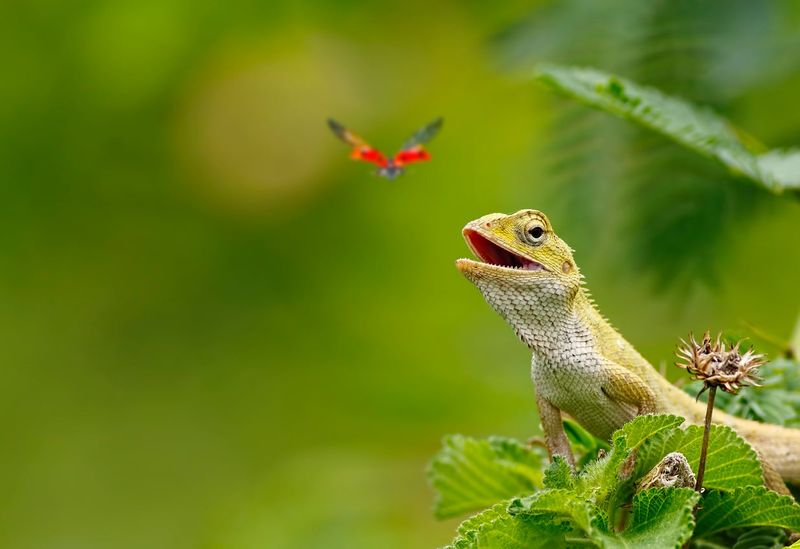
General lizard-habitat guidance centers on four basics: food, water, shelter, and space. UF/IFAS Extension’s landscaping-for-lizards guidance recommends dense vegetation with vertical layers and minimizing unnecessary pesticide use so insect prey stays available.
Translating that advice into a porch-edge planting means choosing a shrub with enough structure to offer resting spots and shade, positioning it where insects are likely to concentrate, and resisting the urge to spray broad-spectrum insecticides that would eliminate the food supply before any lizard gets a chance to use it.
A practical approach would place a yaupon holly or a similarly dense native shrub a few feet from the porch edge, leaving a clear gap between the foliage and the foundation. A handful of flat rocks or rough-textured pavers nearby can add basking and hiding spots that lizards use in daylight hours.
A shallow water source, kept clean and refilled regularly, addresses the water need without creating standing-water problems beside the house.
The porch light itself connects the habitat setup to nighttime gecko behavior. Texas A&M AgriLife’s house gecko fact sheet makes clear that geckos gather where insects concentrate, and porch lights are the primary driver of that concentration after dark.
A shrub that supports insect diversity during the day may contribute to the local prey pool, but the light is what brings the hunt to your wall at night.
None of this constitutes a tested formula for attracting Texas house geckos. The layout reflects general habitat principles applied to a specific site, and whether geckos appear will depend on factors well outside your control, including what is already living in the neighborhood.
Approach the planting as a habitat improvement for the broader yard ecosystem, and manage your pest expectations separately.
Maintain a wildlife-friendly edge without creating entry routes

Dense plantings near the house create shelter, but they also create problems when they are allowed to press against the structure. Foliage touching a door frame, soffit, or foundation vent gives cockroaches, rodents, and moisture a direct bridge into the building.
Keeping a clear gap between any shrub and the exterior wall is not just good gardening practice, it is a basic pest-prevention step that supports the wildlife-friendly yard without undermining your home’s first line of defense.
Trim yaupon and any other porch-edge planting so branches stay several inches from siding, vents, and entry points. Check after heavy rain or a growth flush during warm months, since yaupon can put on new growth quickly when conditions are favorable.
Irrigation water should drain away from the foundation rather than pooling in saucers or settling against the base of the wall, because standing moisture attracts cockroaches and can accelerate wood decay. EPA’s pest-control guidance lists moisture control alongside exclusion as a foundational step in any home pest-management plan.
One additional consideration applies specifically to readers in wildfire-prone areas of Texas or anywhere subject to defensible-space requirements. NC State Extension’s yaupon holly profile lists the species with a high flammability rating.
That does not disqualify it from most urban and suburban landscapes, but it does mean that homeowners in fire-risk zones or within a designated defensible-space perimeter should check local fire-safety guidelines before siting yaupon close to the house. Many Texas counties and municipalities have specific recommendations about plant spacing and flammability near structures.
Supporting wildlife at the porch edge and maintaining a well-sealed, dry building exterior are not competing goals. They just require attention to where the planting stops and the structure begins.
Use integrated pest management for cockroaches inside the home
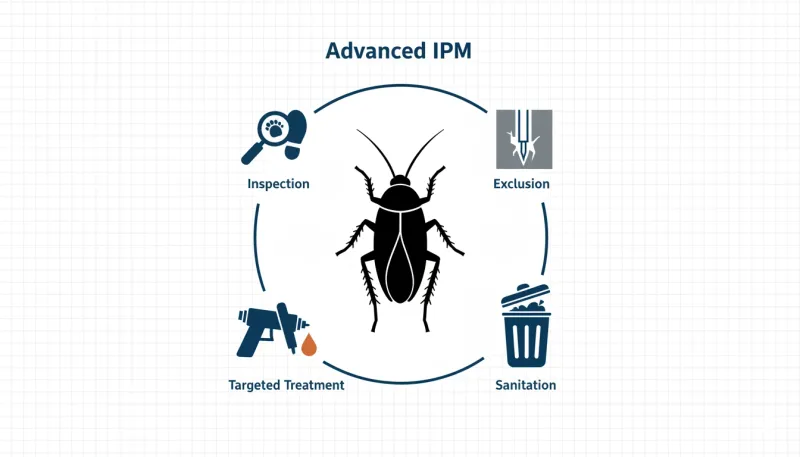
Cockroach control inside the home requires a different set of tools than anything happening in the yard. The species matters first.
German cockroaches (Blattella germanica) almost always live and reproduce indoors, cycling through wall voids, appliances, and cabinet interiors where no gecko will ever reach them. American, Oriental, Turkestan, and wood cockroaches more commonly live outside and enter buildings opportunistically through gaps, drains, and utility penetrations.
UC IPM’s cockroach management guide explains that control strategy should follow species identification, since indoor breeders and occasional invaders require different responses.
A reliable integrated pest management sequence starts with removing what cockroaches need. Fix leaky pipes, eliminate standing water, store food in sealed containers, and empty trash regularly.
Reduce clutter in cabinets, under sinks, and in storage areas where roaches hide and breed. Seal cracks around baseboards, pipes, electrical outlets, and door frames with caulk or appropriate filler.
Monitoring sticky traps placed along walls and in corners can tell you where activity is concentrated and which species you are dealing with.
Once you know where the problem is, gel baits and other registered products applied according to the label are generally more effective and less disruptive than broadcast sprays. EPA guidance on pesticide use recommends starting with the least-toxic, most targeted option and always reading the label for safety requirements, including precautions for children, pets, and non-target wildlife.
Broad insecticide sprays around the perimeter can also reduce the insect prey that geckos depend on, and Texas A&M AgriLife warns that glue boards and sticky traps placed where geckos travel can trap and kill them, so placement matters.
If you cannot identify the species, the infestation persists after consistent IPM efforts, or the source of entry is unclear, a licensed pest management professional can inspect and recommend a plan suited to your specific situation. A gecko eating an occasional roach near the door is a pleasant sight, but it is not a substitute for addressing what is happening inside the wall.
Set the right expectation for a yaupon-planted porch
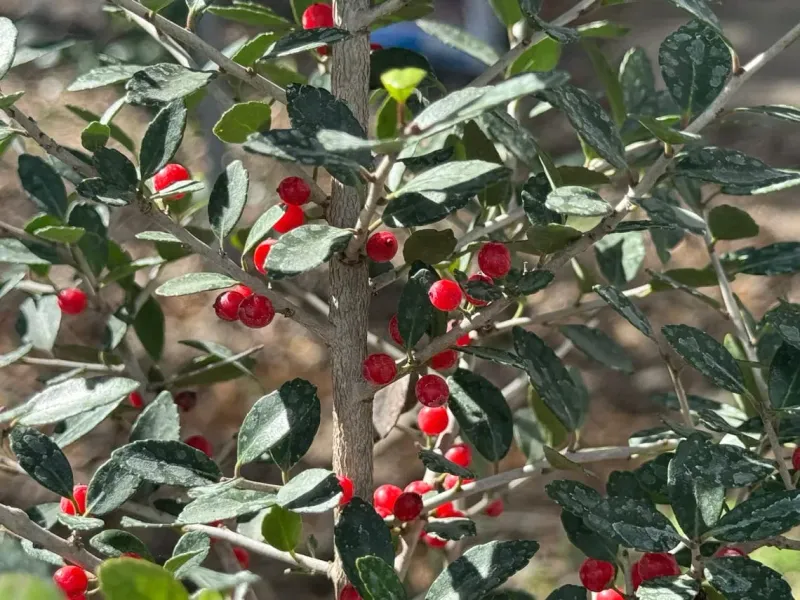
Yaupon holly is a practical, low-maintenance choice for a Texas porch planting if it suits your soil, light, and space. Its evergreen density, drought tolerance, and native status give it real landscape value, and those qualities align with the kind of structure that general lizard-habitat guidance recommends.
NC State Extension’s yaupon holly profile documents its adaptability across a wide range of Texas conditions, making it a reasonable starting point for a wildlife-aware porch edge.
What you should not expect is a guaranteed gecko audience or a cockroach-free perimeter. UF/IFAS lizard-habitat guidance frames vegetation as one piece of a habitat system that also includes food availability, water, shelter features, and space.
Local gecko populations, neighborhood prey density, and your porch lighting setup will determine whether geckos show up, not the shrub alone. Plant it, maintain the gap from the foundation, keep foliage trimmed away from entry points, and let the habitat develop on its own timeline.
For cockroaches, the yard and the house are separate problems. UC IPM’s cockroach guidance is consistent on this point: exclusion, sanitation, monitoring, and labeled products are the tools that address indoor infestations.
A native shrub does not substitute for any of those steps, and a gecko on the wall does not confirm that the home is clear.
A well-placed yaupon gives you a tough, ecologically useful plant that earns its spot in the yard whether or not a gecko ever claims the wall above it.