
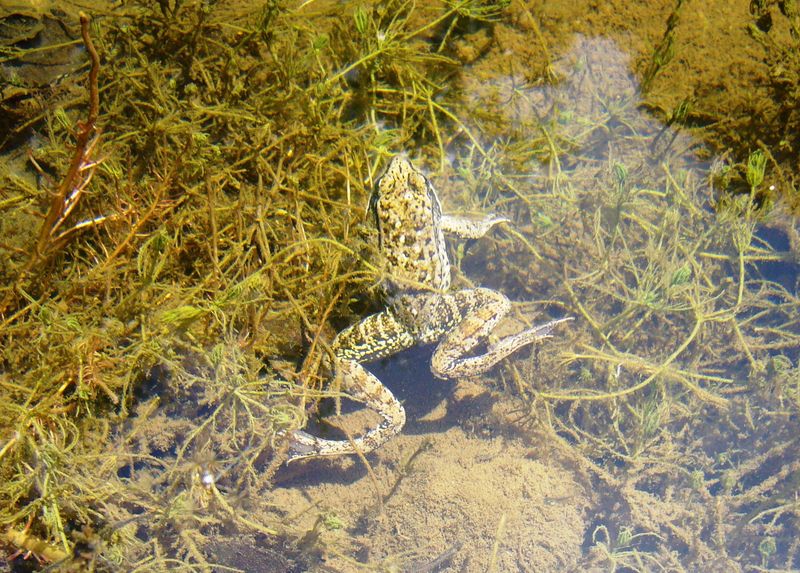
Spotting a small frog clinging to a garden wall or tucked under a pot on a warm California night can feel like a surprise gift from the wild. These little visitors are not random wanderers – they showed up because something in your yard quietly suited them.
Understanding what drew them in, and what their presence actually tells you, helps you become a more informed steward of your outdoor space without jumping to conclusions about what they can or cannot do for your garden.
A tree frog is reading your yard’s hidden conditions
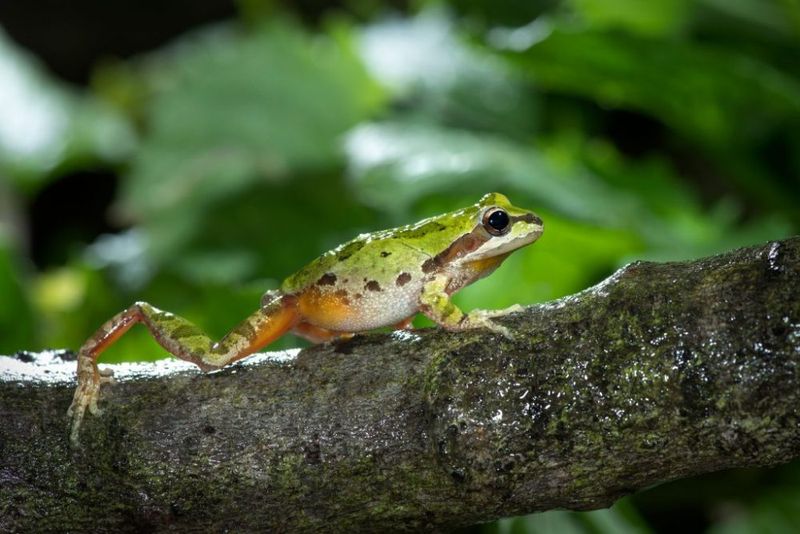
Finding a tree frog in your California garden is genuinely good news, but it pays to be precise about what the sighting actually reveals. A visiting frog has located a workable pocket of conditions – some combination of moisture, usable shelter, vegetation or ground cover, and enough small prey to make foraging worthwhile.
That pocket might be as small as the shaded corner behind a planter or the damp soil under a dense shrub, and it may reflect very little about the rest of your property.
Adult Pacific and Baja California treefrogs forage on land and can travel away from their breeding sites, sheltering in leaf litter, rock crevices, logs, and dense plants during the day. National Park Service documentation of the Baja California treefrog confirms that adults use a wide range of moist terrestrial refuges, not just the water’s edge.
So one frog on your patio tells you that a usable refuge exists nearby, not that your entire yard meets some ideal standard.
What the sighting cannot tell you is equally useful to know. A single frog does not prove that your property is pesticide-free, drought-free, or organically managed.
It does not confirm that your pest populations are in perfect balance or that the yard has achieved some ecological milestone. Frog presence is a local habitat clue, more like a signal on a weather instrument than a report card grade.
The frog found what it needed in a specific spot, and that spot may be quite small and specific. Treat the sighting as useful, directional information – a prompt to look closer at where the frog was resting, what moisture source it may be using, and what shelter it found – rather than a sweeping endorsement of your garden’s overall health.
Why California gardens can attract frogs during the dry season
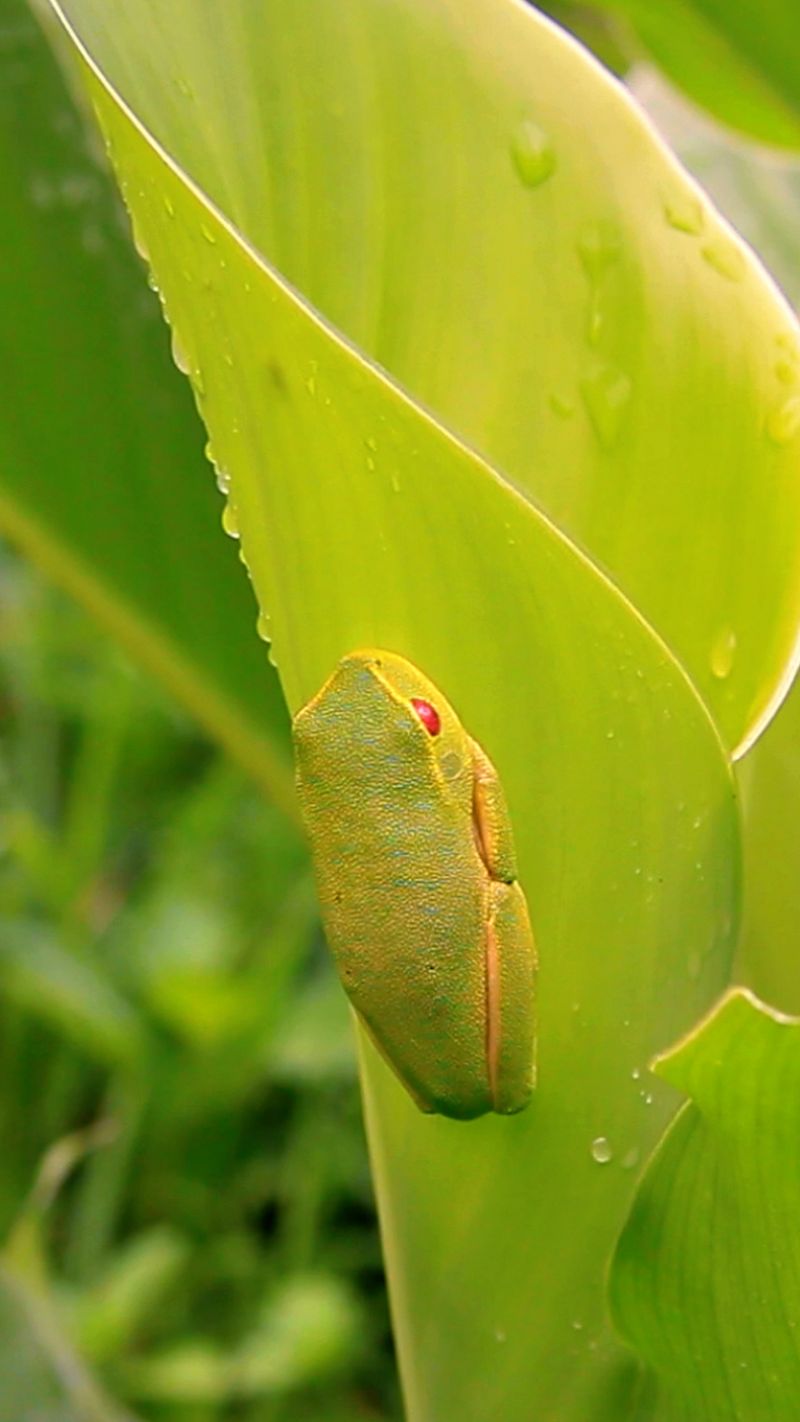
California summers are hot and dry by design, so it surprises many homeowners to find frogs active in their yards during the driest months. The explanation usually comes down to microclimates.
A shaded bed that stays noticeably cooler than the surrounding pavement, a stretch of soil kept damp by a drip line, a pot saucer holding a shallow puddle, or even a slow drip from a worn hose connection can create a refuge that functions very differently from the broader landscape around it.
Pinnacles National Park amphibian records note that Pacific treefrogs can remain active near water and moist habitat through much of the year, though they are less commonly heard during the driest periods. What that means practically is that a well-irrigated garden bed, a shaded corner under a dense shrub, or a nearby ornamental pond can extend a frog’s activity window well into summer even when the surrounding hills are brown and dry.
Adult treefrogs do not need to live at the water’s edge. They breed in ponds, streams, ditches, and seasonal pools, but after breeding season, adults forage across terrestrial habitat – sometimes moving a meaningful distance from any standing water.
If your neighbor has a koi pond or a seasonal drainage channel runs near your block, the frog in your garden may have walked from there. The moisture in your yard keeps it comfortable while it hunts.
Checking your own yard for these microclimate sources is a practical first step. Look for damp soil that stays moist overnight, dense ground cover that traps humidity, or any container collecting water.
None of those conditions mean you are overwatering. In a California summer, a small shaded refuge can be exactly what a frog needs while the wider yard stays water-wise and sensibly dry.
Which frog is visiting? Identification matters in California
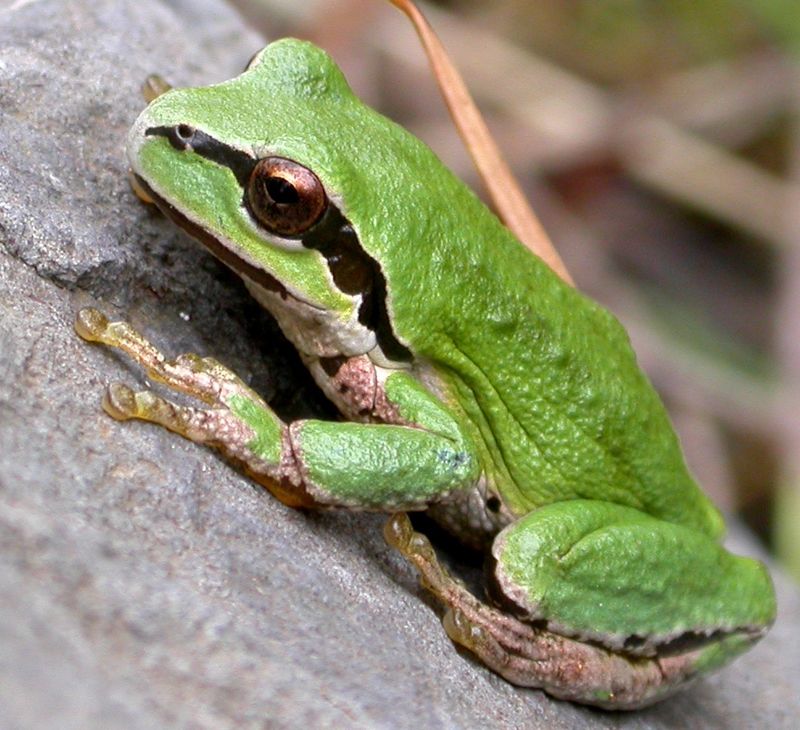
Not every small frog you find in a California garden is the same species, and identification matters more than it might seem. California is home to several native treefrog species that look similar to a casual observer.
Depending on where you live, you might be seeing a Northern Pacific treefrog, a Baja California treefrog, a Sierran treefrog, or a California treefrog. All of them are small – typically up to about two inches long – and all of them can shift color across a range that includes green, gray, tan, brown, bronze, and nearly black.
Trying to pin down a species from color alone will often lead you to the wrong answer.
More reliable clues include the dark stripe running from the snout through the eye, which is characteristic of several California chorus and treefrog species, along with the visible sticky toe pads that let them climb smooth surfaces. Geographic range matters too – California Herps’ treefrog identification guide walks through how range and call overlap differently for each species, and listening to the frog’s call at night can be one of the clearest clues available.
If confident identification matters to you, a local herpetologist or a naturalist group like iNaturalist can help.
The bigger reason identification matters is safety – for you, for the frog, and for local ecosystems. California also has the federally threatened California red-legged frog, which receives specific habitat protections.
If you find an unfamiliar frog near a natural wetland, creek, or open space, especially one that is larger than the typical treefrog or has a reddish underside, do not handle or disturb it.
American bullfrogs are a separate and serious concern. California Department of Fish and Wildlife’s bullfrog invasive species page identifies them as voracious predators that consume native wildlife and are known carriers of chytrid fungus, a pathogen that has devastated amphibian populations worldwide.
Bullfrogs are large, with a distinctive tympanum visible behind the eye, and they should never be released, transported, or treated as equivalent to small native treefrogs. If you spot one, you can report the sighting to CDFW rather than attempting to handle it yourself.
Frogs eat garden invertebrates, but they are not a pest-control guarantee
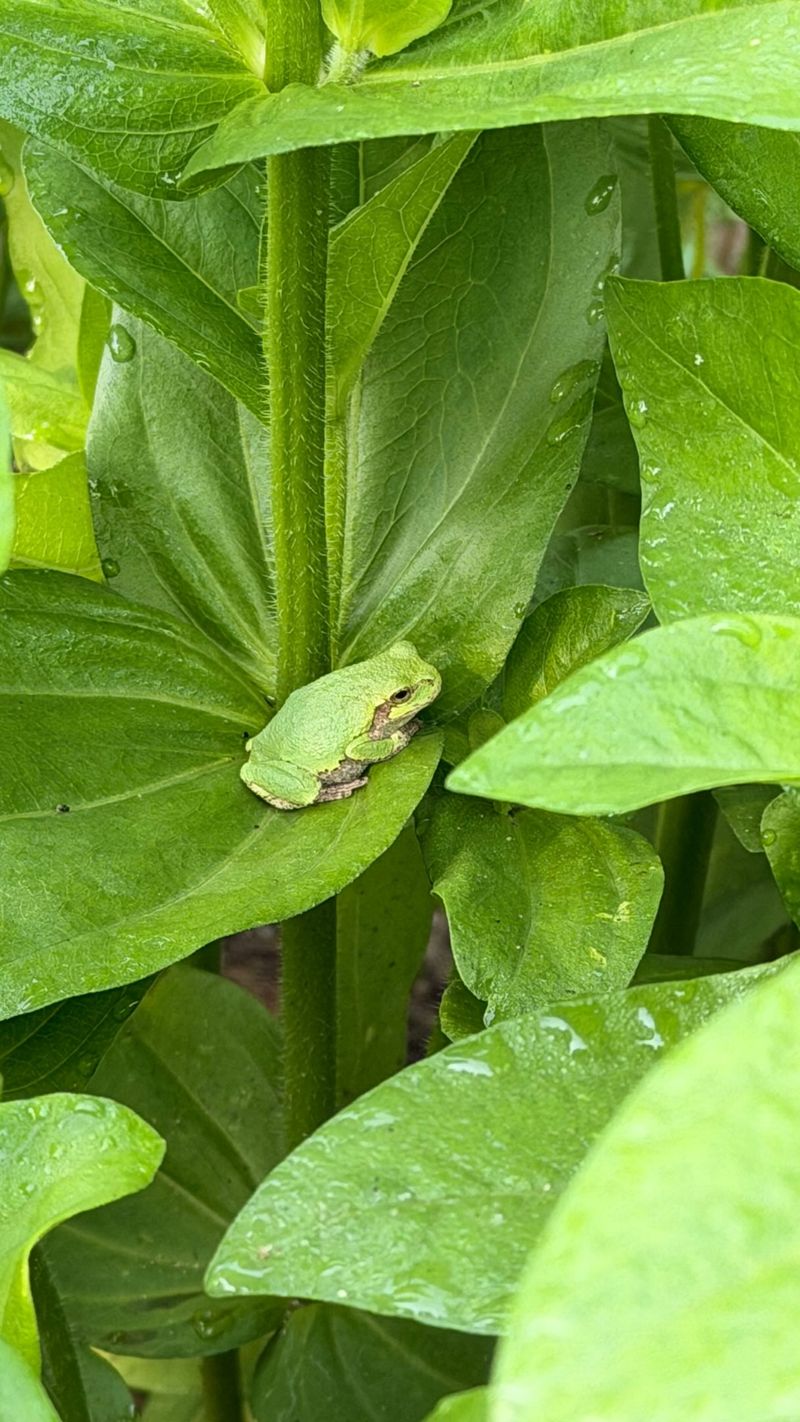
One of the most appealing ideas about having frogs in the garden is that they will take care of the bugs for you. The reality is more nuanced, and understanding the difference between what frogs actually eat and what they reliably deliver for pest management helps you set realistic expectations.
California treefrogs do eat a broad range of terrestrial invertebrates. California Department of Fish and Wildlife habitat accounts for the Pacific treefrog list insects, spiders, slugs, isopods, centipedes, and earthworms among documented food items, and a USGS-supported diet study of California anurans found that Northern Pacific treefrogs consumed terrestrial prey at every sampled site.
That is a genuinely wide menu, and it does include many organisms that gardeners would rather not have in their beds.
The important qualification is that frogs are generalist hunters, not targeted pest controllers. They eat what they encounter and what they can catch, which means a foraging treefrog may consume a slug, a ground beetle, a moth larva, a beneficial parasitic wasp, or a neutral earthworm in the same evening.
The California OEHHA CalEcotox profile for the Pacific treefrog supports the dietary breadth but does not establish that frog presence reliably suppresses any specific garden pest.
No published California study demonstrates that having treefrogs in a home garden will eliminate aphids, reduce caterpillar damage, or control mosquito populations at a meaningful scale. Frogs are worth welcoming for many reasons, but counting on them as a substitute for other pest management strategies is likely to leave you disappointed.
Think of their foraging as one small, unpredictable layer in a garden that has many moving parts, rather than as a service you can schedule or depend on.
Make the garden easier for native treefrogs to use
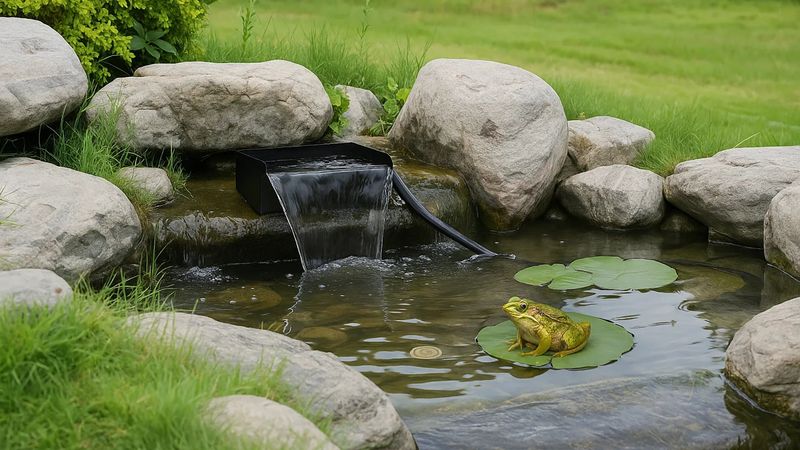
Supporting native treefrogs in your garden does not require turning the whole yard into a pond or sacrificing water-wise landscaping. Most of what frogs need from foraging habitat is already present in a reasonably naturalistic garden – the goal is to stop removing it rather than to add a lot of new infrastructure.
Shaded cover is the most valuable thing you can preserve. A dense low shrub, a clump of ornamental grasses, a patch of leaf litter left at the base of a fence, a flat rock leaning against a wall, or a small log at the edge of a bed can all serve as daytime refuges where a frog stays cool and moist until nightfall.
UC Master Gardener wildlife pond guidance recommends surrounding any water feature with exactly this kind of habitat – dense vegetation, rocks, and cover – because frogs use the surrounding land as much as the water itself.
NPS documentation of the Baja California treefrog confirms that adults use moist terrestrial refuges extensively, which means the habitat around a water feature often matters as much as the feature itself. A frog that has a shaded, leafy corner to retreat to during the day is more likely to remain and forage in the area at night.
The practical checklist is short: keep some areas lightly mulched with leaf litter or bark, leave a few rocks or a small log in a shaded bed, avoid blowing or raking every corner bare, and let some low-growing native plants stay dense near the ground. None of these changes require extra irrigation.
Most simply mean doing a little less in specific spots. These steps can make a yard more usable for treefrogs, but they are habitat support rather than a colonization guarantee.
Frogs will come if the conditions suit them and if a breeding population exists nearby.
A pond helps only when it also protects frogs and people
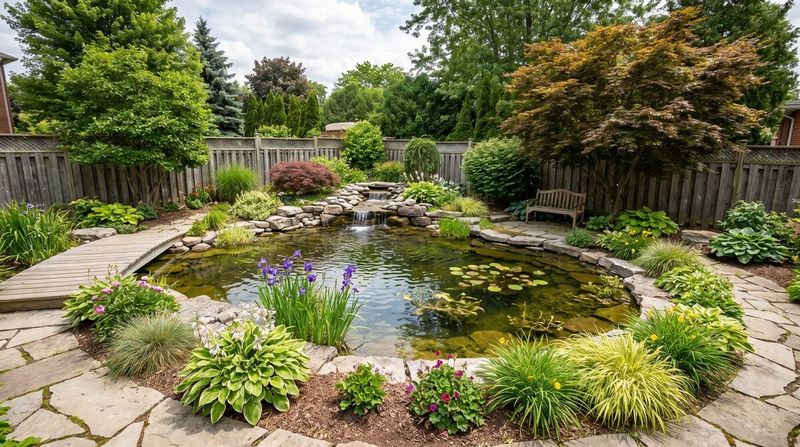
Adding a water feature is one of the most direct ways to support amphibians in a California garden, but open water comes with responsibilities that matter for both wildlife and public health. A pond that is built and managed carelessly can become a mosquito breeding site rather than a frog refuge, so the design and upkeep decisions matter as much as the decision to add water at all.
A wildlife-friendly pond should have shallow edges, a gradual slope, or physical aids like rocks, branches, or a wooden ramp that allow animals to exit the water easily. Frogs, lizards, and other small wildlife that fall into a steep-sided container often cannot get out.
UC Master Gardener wildlife pond guidance recommends surrounding the pond with dense habitat plantings and advises keeping chemicals out of and away from the water. Pesticide runoff into a pond can harm amphibians directly through their permeable skin.
Mosquito management is non-negotiable alongside any open water feature. CDC guidance on mosquito control at home recommends emptying and scrubbing small containers weekly, eliminating unnecessary standing water, and keeping stored water covered or screened.
Pot saucers, buckets, and forgotten containers near the pond can breed mosquitoes faster than the pond itself if left unmanaged.
UC IPM mosquito management guidance and UC ANR’s pond and fountain mosquito guidance both recommend water movement, regular maintenance, and biological controls appropriate to the site rather than improvising with pesticides or adding exotic fish. Do not add fish casually to a pond intended to support frogs.
Many fish species, including common mosquito fish, will eat frog eggs and tadpoles, and California guidance warns that nonnative mosquito fish must not be released into natural waterways. If mosquitoes become a persistent problem in your pond, contact your local vector control district for site-specific advice rather than reaching for a chemical solution or an unfamiliar fish species.
The safest frog-friendly choice is less chemical exposure and less handling
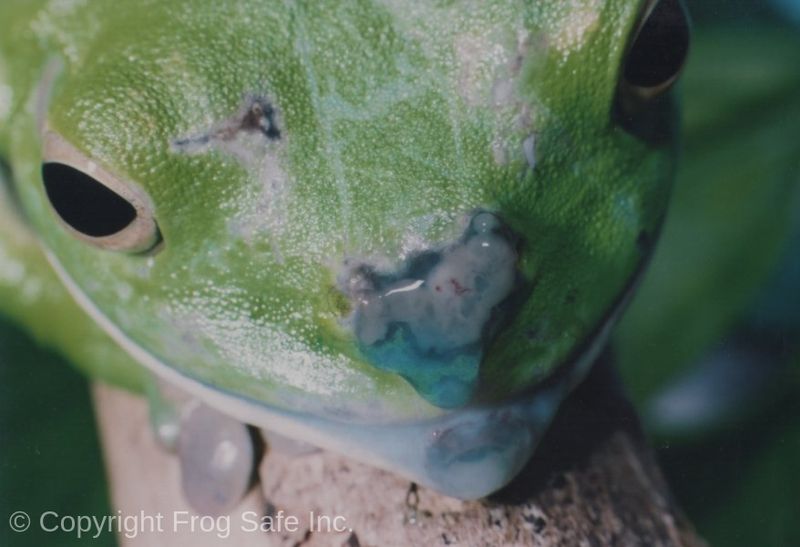
Two of the most direct threats to garden frogs are also among the most controllable: pesticide exposure and unnecessary human handling. Addressing both is straightforward once you understand why each one matters.
Frogs do not have the same chemical barriers that mammals do. They absorb water and dissolved substances directly through their permeable skin, which means a pesticide applied to nearby soil, foliage, or pavement can reach a frog without the animal ever touching the product directly.
EPA research on pesticide uptake and toxicity in frogs documents measurable biochemical effects from dermal exposure, even at concentrations that might seem low. The practical response is to prioritize integrated pest management – physical controls, beneficial habitat, and targeted interventions – before reaching for a spray.
When a pesticide is necessary, follow the label precisely, keep applications away from water features and any area where frogs shelter, and prevent runoff from reaching soil or drainage channels where frogs forage.
Never treat nighttime spraying as a safer option around frogs. Treefrogs are most active after dark, so spraying at night could coincide directly with their foraging.
The label, local regulations, and distance from water and wildlife are the relevant guides, not the time of day.
On the handling question, the advice is simple: leave healthy frogs where they are. USGS disinfection protocols for herpetofaunal pathogens reflect a broader concern in amphibian conservation – moving animals between locations can spread chytrid fungus and other pathogens that have caused catastrophic declines in frog populations worldwide.
A frog relocated from your garden to a neighbor’s pond, a local park, or a nearby creek carries whatever it has been exposed to into a new environment. Unnecessary handling also stresses the animal and may introduce human skin oils and residues.
If a frog appears healthy and is in a safe location, the best action is to watch it and leave it alone.
What the summer visitors really tell you
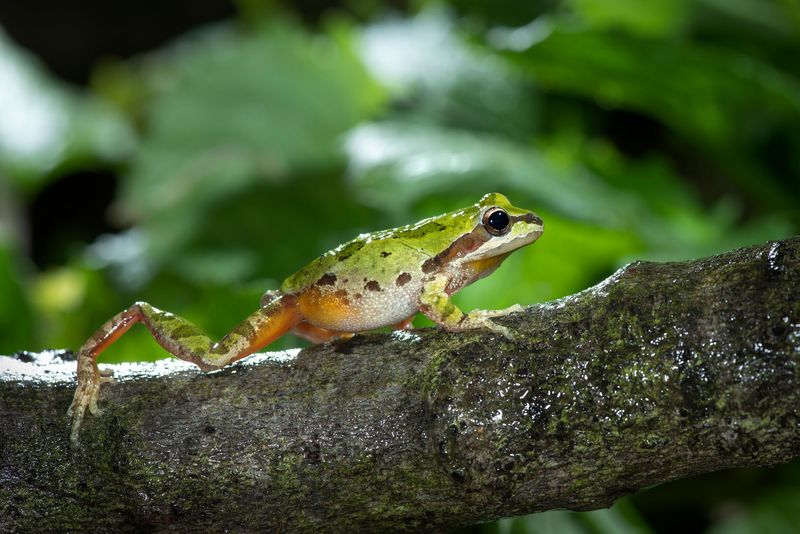
A tree frog in your California garden this summer is pointing at something specific and local – a pocket of moisture, usable cover, accessible prey, and probably a breeding habitat somewhere nearby. That is genuinely useful information about your yard’s microclimate, and it is worth paying attention to.
What it is not is a certification that your garden is perfectly balanced, chemical-free, or capable of handling your pest concerns on its own.
The most useful next steps are concrete and modest. Find where the frog was sheltering and notice what conditions that spot offers.
Preserve shaded cover, leaf litter, and damp refuges where you can. If you have or want a water feature, build in shallow exits, surrounding habitat, and a mosquito management plan from the start.
Reduce pesticide use across the board, keep any applications away from water and wildlife, and follow every label. When you find a healthy native treefrog, as documented by the National Park Service for the Baja California treefrog, the right response is simply to leave it in place and let it do what it came to do.
A garden that quietly supports native wildlife does not have to be wild or wet. It just has to offer a few small corners where something other than a human decided to stay.