
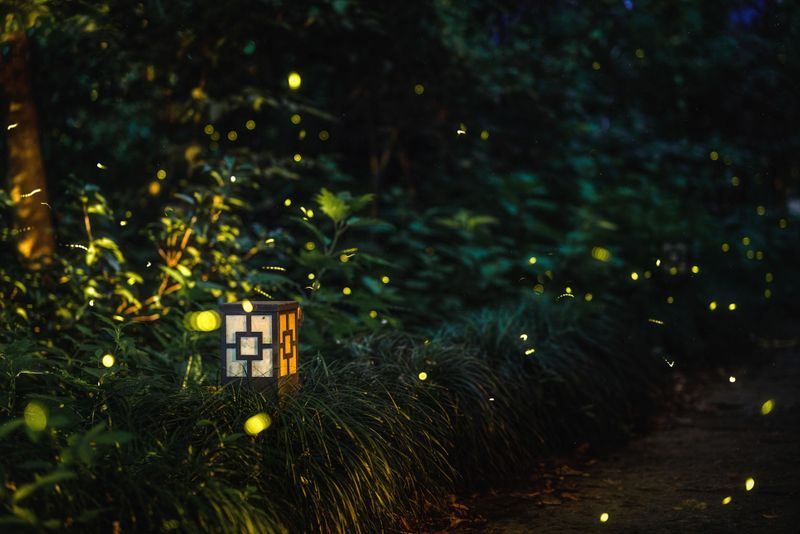
Fireflies blinking along a summer fence line feel like something out of a childhood memory, and plenty of Central Texas homeowners want more of that in their yards. One native grass, inland sea oats, has earned attention for its ability to thrive in shaded spots where little else grows and to contribute the kind of ground-level cover that fireflies need to shelter and survive.
The plant alone will not bring fireflies back or guarantee a light show every summer, but paired with smart maintenance habits, it can help make your fence line a more welcoming place for these insects. Understanding what the grass actually does, and what else needs to happen around it, gives you a much more realistic path to seeing fireflies on warm evenings.
Inland sea oats fits a shady Texas fence line
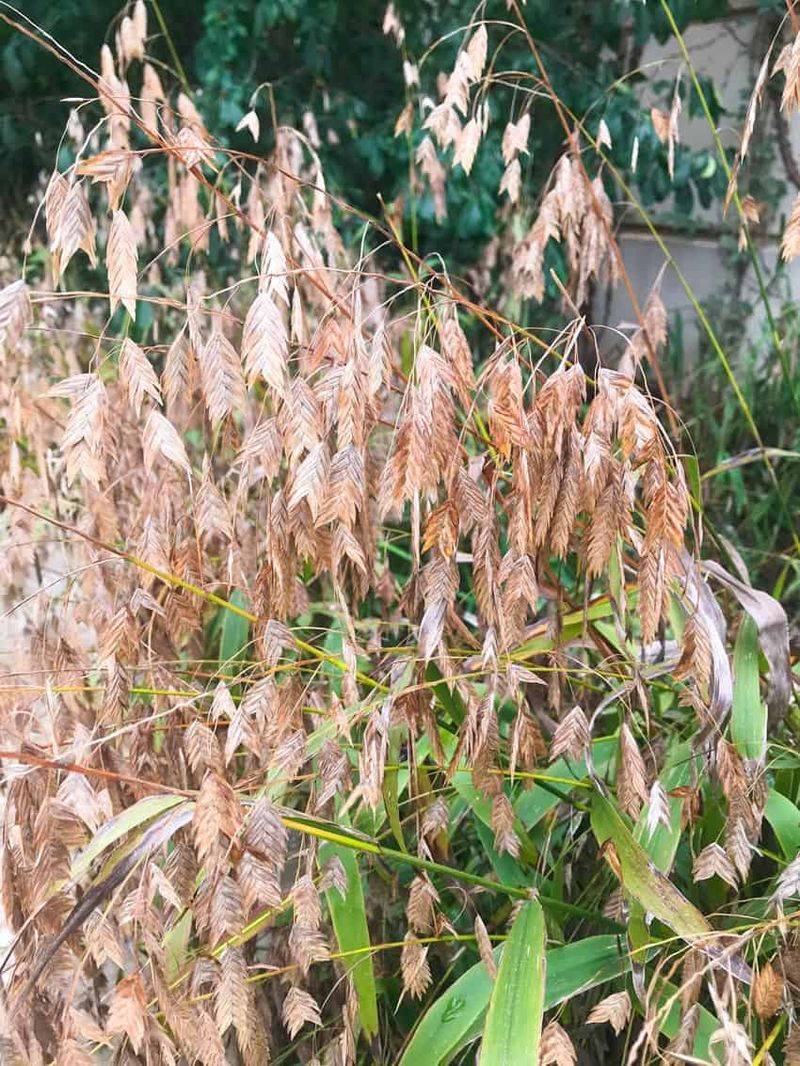
Chasmanthium latifolium, commonly called inland sea oats, is a clumping native grass that earns its place along shaded Central Texas fence lines where most ornamental plants struggle or fail. Before going further, one distinction matters: inland sea oats is not the same plant as coastal sea oats (Uniola paniculata), which grows on Gulf Coast dunes.
The two share a common name but occupy entirely different habitats, and inland sea oats is not a beach plant.
According to Texas Tech University Plant Resources, this grass is heat- and drought-tolerant once established, prefers partial shade, and handles the kind of seasonally damp conditions found near drainage paths, tree canopies, and sheltered fence edges. The Native Plant Society of Texas places it naturally along riverbanks, floodplains, limestone glades, and moist woodland edges, which maps closely to what a shaded fence line with decent soil can offer.
Its clumping foliage builds ground-level structure and can contribute shelter and cover at the base of a fence, which is useful for fireflies that need layered vegetation for resting and perching. The plant does not attract fireflies the way a flower attracts a pollinator.
There is no species-specific lure at work. What inland sea oats offers is native vegetation suited to a difficult microhabitat, and that vegetation can become one piece of a broader environment where fireflies are more likely to find the conditions they need to survive.
The grass helps indirectly by improving the ground habitat
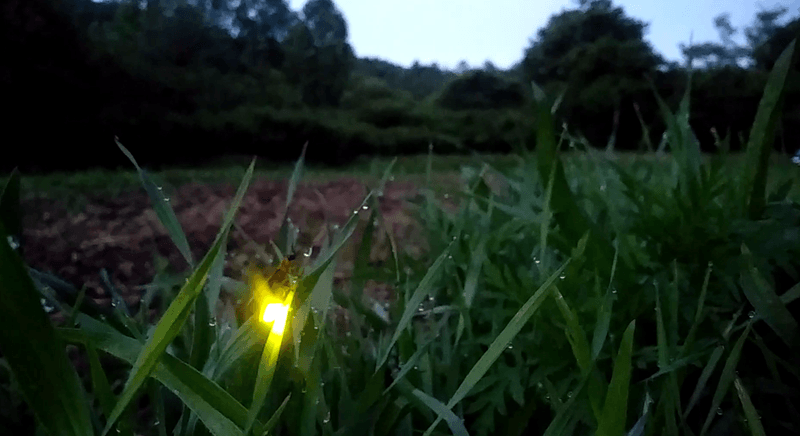
Most people picture fireflies as the blinking adults they see on summer evenings, but the adult stage is actually the shortest part of the insect’s life cycle. According to the University of Texas at Austin Biodiversity Center, firefly larvae may spend roughly two years underground or near the ground, feeding on grubs, slugs, and other soft-bodied invertebrates.
Adults are short-lived and generally do not feed at all.
That long larval period is where a plant like inland sea oats can make a difference, though the connection is indirect. The grass does not serve as a larval food plant.
Firefly larvae eat other invertebrates, not vegetation. What the plant contributes is structure: its clumping foliage can shade the soil around it, slow moisture loss, and create a more sheltered microenvironment near the ground.
The Xerces Society consistently identifies moisture, water-retentive soil, and damp leaf litter as foundational habitat conditions for firefly larvae and their prey.
Inland sea oats can help maintain some of those conditions along a suitable fence line, but the grass cannot compensate for problems elsewhere in the habitat. If prey invertebrates are scarce because of pesticide use, if the soil dries out completely between rains, if the ground is regularly disturbed, or if no local firefly population exists nearby to begin with, the plant’s presence will not change the outcome.
The Xerces firefly conservation guidelines make clear that vegetation is one component of habitat, not a standalone solution. Larvae may be present in or near the soil and leaf litter around such a planting, but they do not necessarily live inside the grass itself, and their presence depends on far more than what one plant can provide.
Choose a site with shade, shelter, and workable moisture
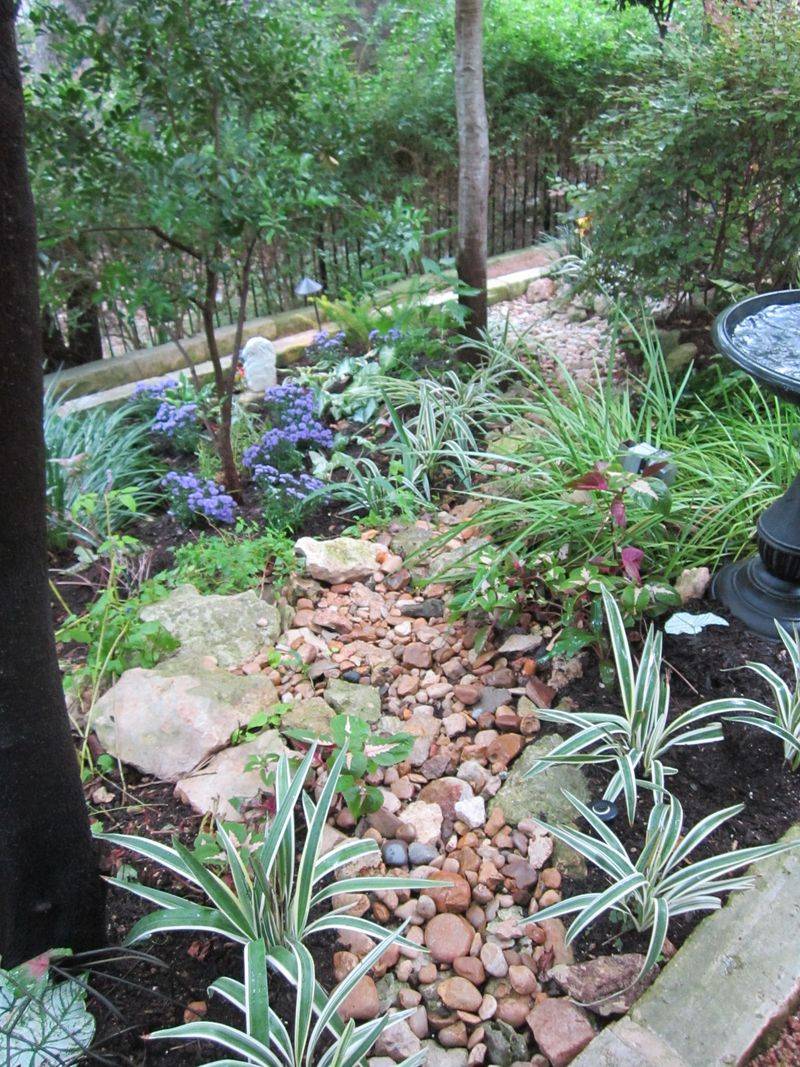
Before buying a single plant, walk the fence line and take an honest look at the conditions. Inland sea oats performs best in shade or part shade, and both Texas Tech and the Houston Audubon Society specify moist soil as a key requirement.
A fence line baking in full afternoon sun with fast-draining rocky soil is not the right spot. A stretch shaded by a live oak, cedar elm, or neighboring structure, with soil that holds some moisture after rain, is a much better candidate.
Proximity to existing trees, shrubs, drainage paths, or other established vegetation helps in two ways. First, those features already create the kind of layered edge that fireflies use for shelter.
Second, they often influence soil moisture in ways that make the site more suitable for the grass itself. The Native Plant Society of Texas notes that inland sea oats can become assertive in spots with more light and abundant moisture, so a partly shaded location with reasonable drainage tends to be the most manageable fit in a home landscape.
The guidance here applies most directly to Central Texas, including the Austin area and the Hill Country fringe. Texas covers multiple ecoregions, and a planting prescription that works in a shaded Austin backyard may not translate to far West Texas, the Gulf Coast, or the Panhandle.
Match the plant to your local light, soil, and drainage before assuming the same result. The Firefly Conservation and Research habitat guide and the City of Austin wildlife habitat program both reinforce the value of site-specific plant matching over one-size-fits-all planting lists.
Fence placement is a reasonable ecological inference from the plant’s native range and firefly habitat needs, not a formula proven to produce fireflies at a given density or timing.
Use a clump or small drift to build continuous cover
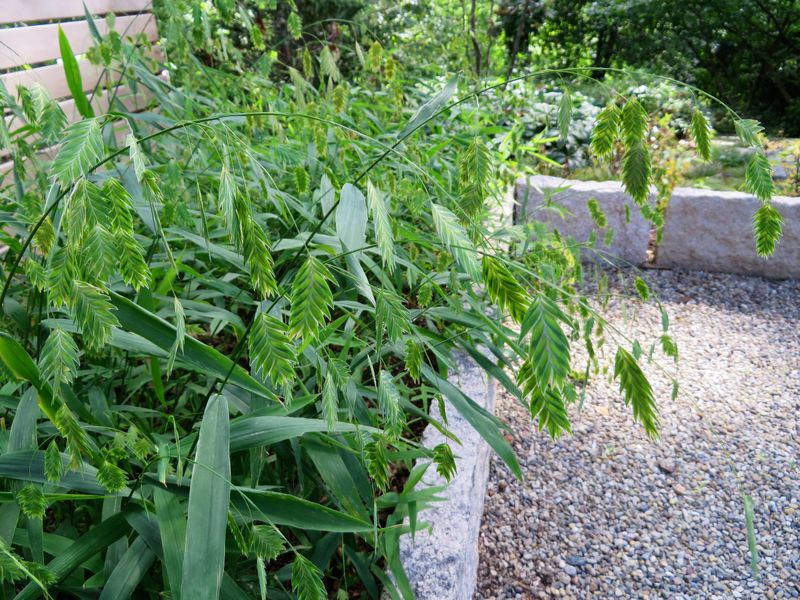
A single specimen of inland sea oats can look attractive along a fence, but a clump or small drift of plants may create more continuous ground cover and structure than one isolated plant. That distinction matters for habitat purposes because fireflies benefit from layered vegetation at multiple heights and textures, not from a single accent plant surrounded by bare soil or turf.
The Xerces firefly conservation guidelines recommend diverse native vegetation rather than sparse, ornamental placements.
No cited study establishes that a particular density of inland sea oats attracts more fireflies than a smaller grouping. The case for a drift is a practical habitat-design inference: more plants mean more foliage canopy near the ground, more root structure contributing to soil moisture retention, and a longer continuous edge of sheltered microhabitat along the fence.
Firefly Conservation and Research includes inland sea oats among plants associated with good firefly habitat without specifying a planting formula, which is an honest reflection of where the evidence currently stands.
When placing the grass, aim to keep some natural soil and leaf litter accessible near the planting rather than filling every gap with more plants or ground covers. The goal is a layered edge, not a solid carpet of vegetation.
The Native Plant Society of Texas notes that the grass spreads gradually by seed and rhizome, so starting with a modest grouping and letting it fill in naturally over a season or two is a reasonable approach. That gradual expansion can help the planting blend into the fence edge rather than sitting as an isolated ornamental accent with little ecological connection to the ground around it.
Protect the soil and leaf litter around the planting
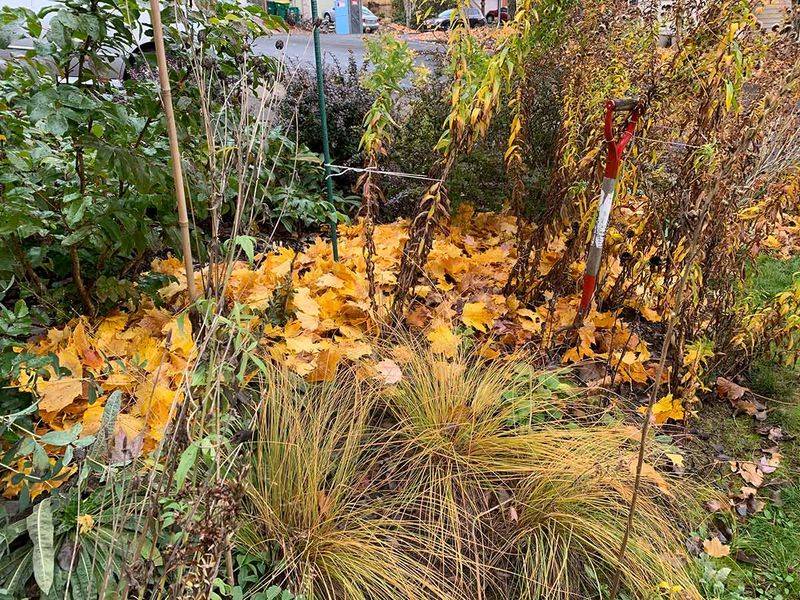
Planting the grass is only part of the job. What happens to the ground around it afterward can matter just as much for firefly habitat as the plant itself.
Firefly larvae and flightless females may be present in or near the soil and leaf litter adjacent to a planting like this, and those life stages can be harmed by raking, digging, trampling, or aggressive seasonal cleanups. The Xerces firefly conservation brochure specifically flags ground disturbance as a threat to the insects’ ability to complete their life cycle.
The practical approach is to leave some natural leaf litter in place near the grass rather than clearing the bed to bare soil each fall or spring. Natural leaf litter is different from a thick layer of shredded wood mulch or rubber mulch.
According to Firefly Conservation and Research, dense artificial mulch can interfere with egg-laying and block larval movement through the soil. The goal is damp, accessible ground, not a sealed surface.
Moisture management follows the same logic. The Houston Audubon Society notes that inland sea oats tolerates poorly drained areas, but the habitat target is a moist microenvironment rather than a saturated one.
Standing water, flooding, or excessive irrigation creates its own problems, including mosquito habitat and root stress. A fence-line bed that stays reasonably damp after rain, shaded enough to slow evaporation, and left largely undisturbed through the growing season is closer to what firefly habitat guidance describes than a heavily managed ornamental bed.
The Xerces Society reinforces that undisturbed, moist ground is consistently among the most important habitat features for fireflies, regardless of what plants grow above it.
Avoid pesticides that remove fireflies and their prey
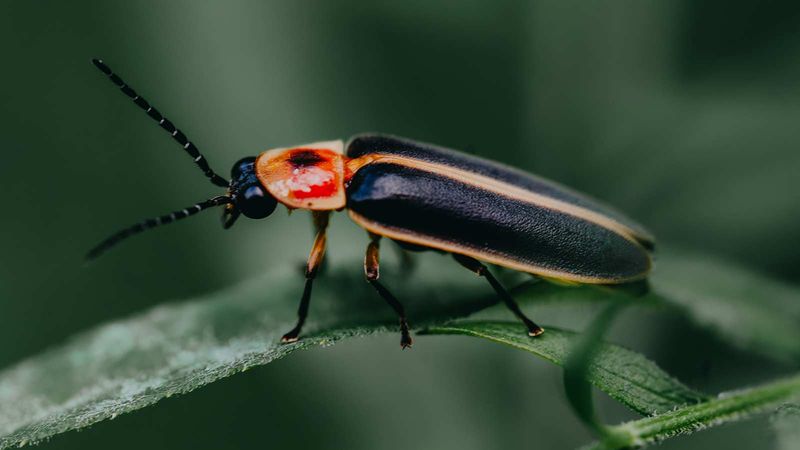
A well-planted, moisture-conscious fence line can still fail fireflies if pesticides are applied nearby. Routine insecticide use, mosquito spray services, and broad-spectrum pesticide applications can harm fireflies directly and reduce the soft-bodied invertebrates that larvae depend on for food.
The Xerces Society fact sheet on protecting fireflies from pesticides notes that while research on firefly-specific pesticide effects remains limited, the available evidence points to meaningful risk from common yard chemicals.
One assumption worth correcting: a product labeled natural or organic is not automatically safe for fireflies or their prey. Neem oil and diatomaceous earth are sometimes treated as harmless alternatives, but both can affect non-target invertebrates.
The Xerces firefly conservation guidelines recommend avoiding unnecessary pesticide use and relying on nonchemical controls where practical, rather than substituting one chemical class for another and assuming the habitat is protected.
The UT Austin Biodiversity Center points out that firefly larvae feed on grubs, slugs, and similar invertebrates during their two-year time in the soil. Pesticides that reduce those prey populations remove a resource the larvae need to survive long before they ever become the adults you might see flashing.
Cutting back on unnecessary chemical applications around the fence-line habitat is one of the more direct actions a homeowner can take, but it should be understood proportionally: reducing pesticide exposure removes a major pressure on the habitat, and it does not promise a visible rebound or substitute for the moisture, undisturbed ground, and local population conditions that also have to be in place.
Reduce artificial light to support firefly courtship
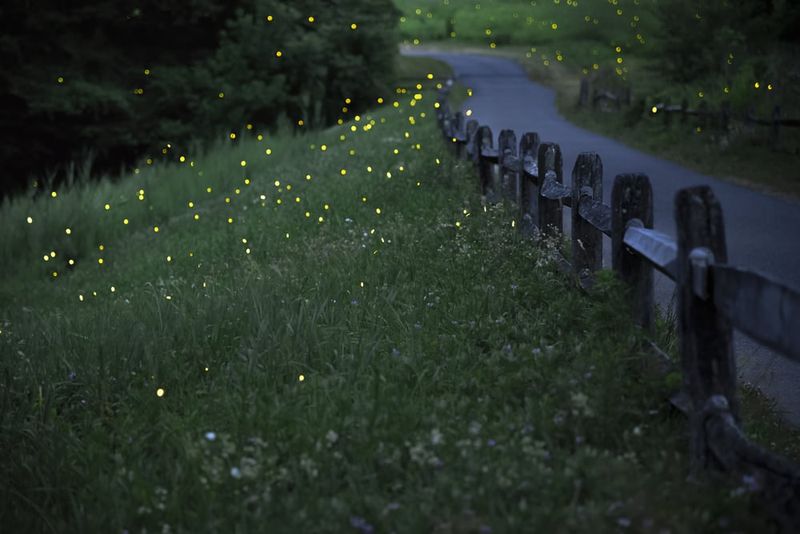
Outdoor lighting is easy to overlook when thinking about a backyard habitat planting, but it can affect whether fireflies in the area are able to communicate and mate successfully. Peer-reviewed research published in a 2022 study on artificial light and firefly mating found that artificial light can reduce flashing behavior and lower mating success in some firefly species.
An earlier experimental study on light pollution and nocturnal insect courtship found similar interference effects on nocturnal insect behavior.
For homeowners, the translation is practical. Keep the fence edge as dark as possible during firefly activity periods, which in Central Texas means especially from April through June and again in October.
Where lighting is necessary for safety or security, use shielded fixtures that direct light downward rather than outward, and add timers or motion sensors so lights are not burning all night without purpose. The Xerces Society blog on firefly status in the U.S. and Canada identifies artificial light as one of the identified pressures on firefly populations.
Darker conditions near the fence may help fireflies that are already present in the area flash, court, and find mates more reliably. That is a useful outcome, but it has a ceiling.
Reducing light does not cause fireflies to recolonize a yard where they have been absent, and it does not guarantee activity in any given season. Think of it as removing a friction point for insects already nearby rather than as a signal that draws fireflies in from a distance.
Expect habitat support, not a guaranteed summer light show
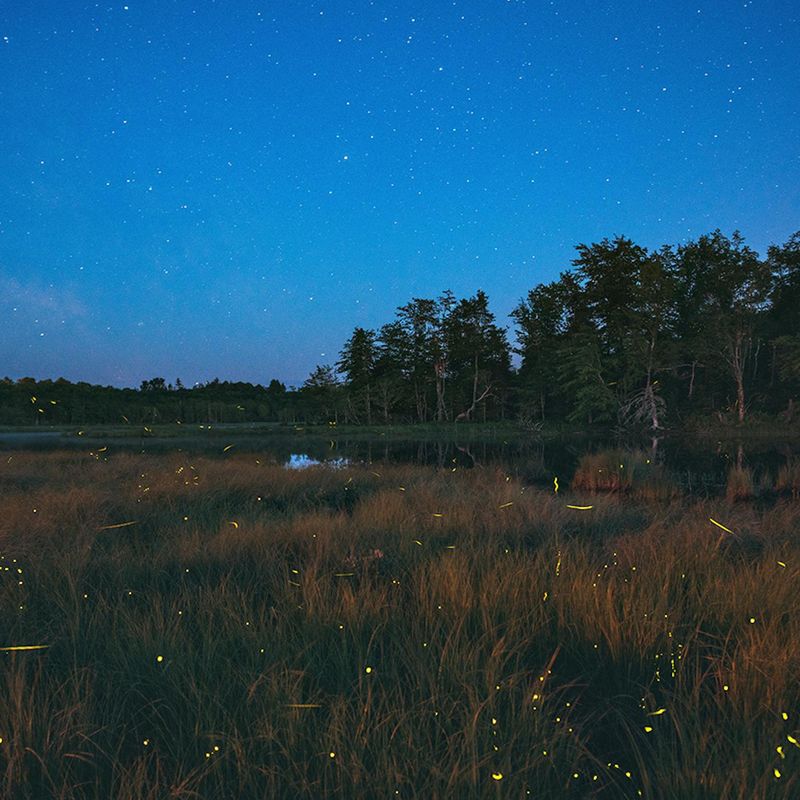
Central Texas does have neighborhood fireflies, and the timing is more nuanced than a simple “every summer” promise. The UT Austin Biodiversity Center reports that the Austin area commonly sees larger firefly flights in April, May, and June, with a smaller emergence in October.
Species, weather, rainfall, drought, and local habitat conditions can all shift that timing and affect how many fireflies appear in any given year.
Some Texas firefly species are closely tied to riparian corridors, creeks, rivers, and ephemeral streams. The Texas firefly field guide from Firefly Conservation and Research identifies Photinus texanus as a Central and southern Texas species associated primarily with those wet-edge habitats.
A fence planting, even a well-maintained one with good moisture and undisturbed ground, cannot fully recreate a riparian corridor. Yards near creeks or drainage features may see more firefly activity than properties farther from those corridors, regardless of what is planted along the fence.
The Xerces Society also notes that firefly population monitoring data are limited and that the causes and extent of any declines are not fully understood for most species. Claiming that one planting reverses a population trend would go beyond what the evidence supports.
What inland sea oats can realistically do is make a suitable shady fence edge more supportive when combined with moisture-conscious care, undisturbed ground, low pesticide exposure, and reduced lighting. The fireflies still have to find their way there on their own terms, in their own season, and a yard that keeps the conditions right gives them a better chance of staying when they do.