
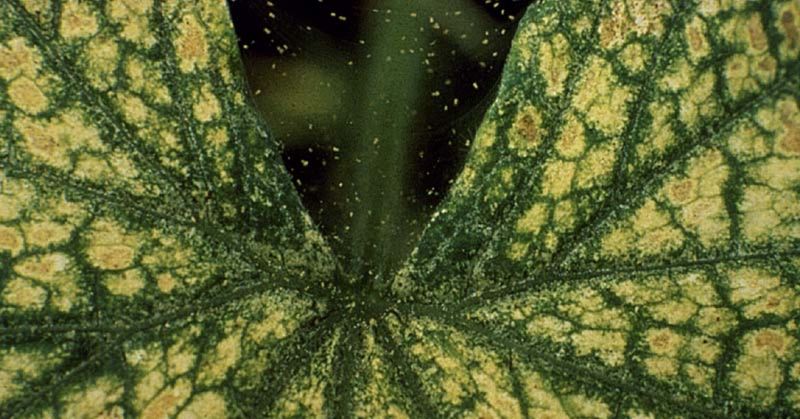
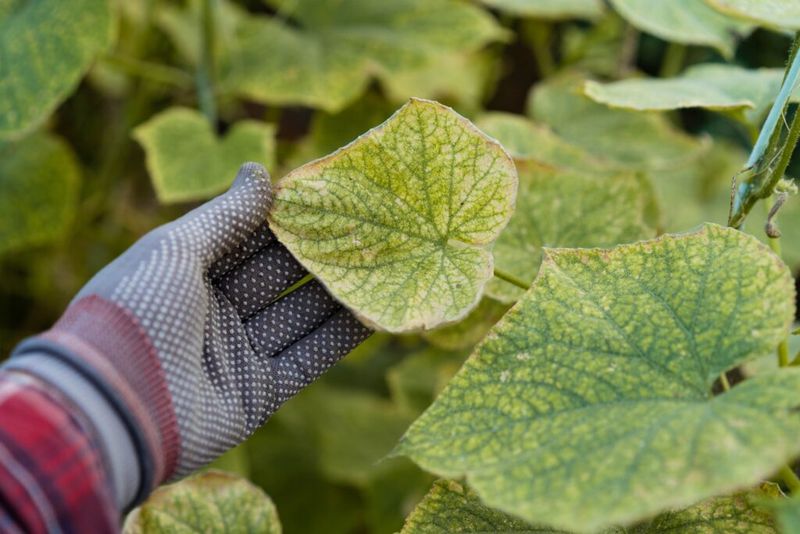
Walking out to your cucumber patch and finding the leaves looking dusty, bleached, or covered in tiny pale dots is one of those moments that stops a gardener cold. That look raises a strong suspicion of spider mites, especially during hot, dry stretches in Southern gardens, but the appearance alone is not enough to be certain.
Several other problems can produce a nearly identical result, and treating the wrong cause can make things worse. A quick inspection of the leaf undersides is all it takes to move from suspicion to a real answer and a same-day plan.
Silvery stippling makes spider mites a strong suspect—but not a verdict
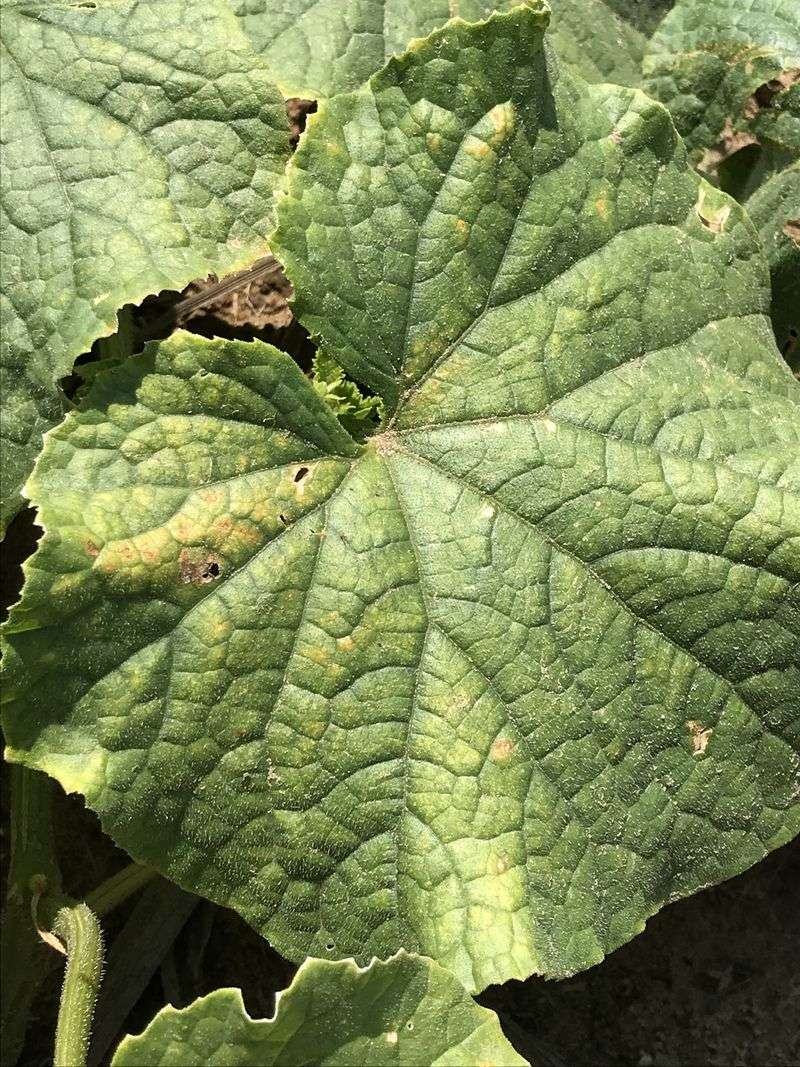
Fine white, yellow, or gray speckling on cucumber leaves during a hot, dry spell is one of the most recognizable signs that spider mites may be at work, but that pattern alone cannot confirm the diagnosis. The damage begins at the cell level: tiny feeding punctures scatter across the upper leaf surface, each one destroying a small pocket of chlorophyll.
Early on, the leaf looks lightly dusted or freckled. As feeding continues, those individual specks merge into a bleached, gray-green, or bronzed cast that gardeners sometimes describe as a silvery sheen.
Cucumbers are documented hosts for twospotted spider mites and related species, and UC IPM guidance on spider mites in cucurbits confirms that heavy infestations can dry and drop leaves entirely. Hot, dry, and dusty conditions favor rapid population growth, which is why the symptom pattern tends to appear or worsen during late-summer heat waves in Florida and Texas gardens.
What the appearance cannot tell you is whether mites are actually present. Powdery mildew, downy mildew, thrips, leafhoppers, whiteflies, drought stress, and chemical injury can all produce leaves that look silvery, pale, or speckled.
Treating for spider mites when a fungal disease or another pest is responsible wastes time and can harm the plant. Before reaching for any spray or remedy, spend two minutes checking the leaf undersides for the pest itself.
How spider mites damage cucumber leaves so quickly
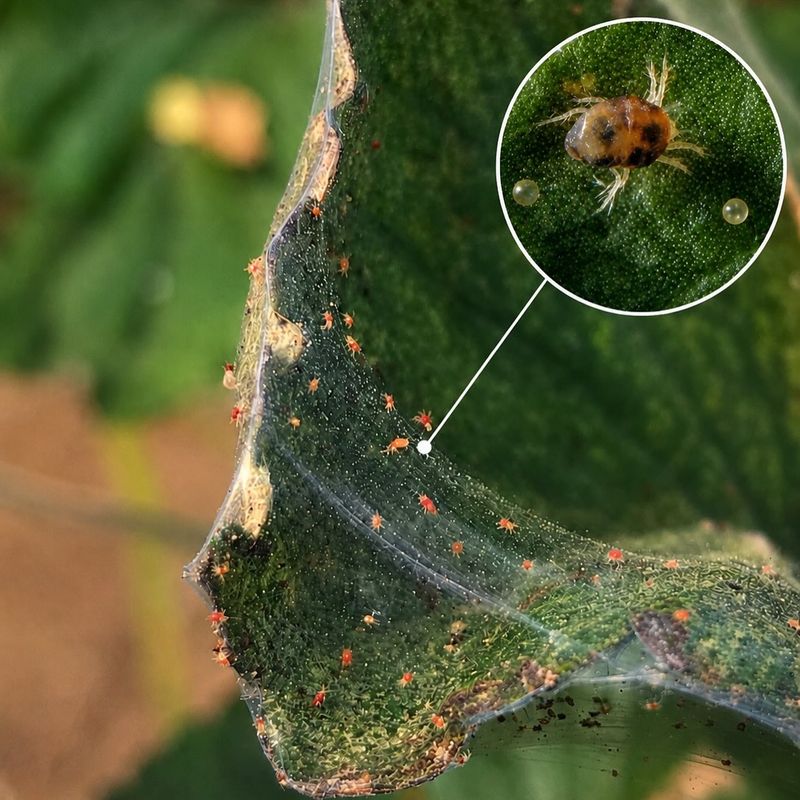
Spider mites are not insects. They are arachnids, closely related to ticks and spiders, and they feed in a way that is uniquely destructive to leaf tissue.
Each mite uses piercing mouthparts to puncture individual plant cells and drain their contents. That cell-by-cell removal kills the chlorophyll in each puncture site, leaving behind the tiny pale dot that gardeners notice first.
Multiply that process across thousands of mites feeding simultaneously, and a leaf can go from lightly freckled to bleached and brittle within days.
Temperature is the main engine behind how fast that damage escalates. UC IPM’s spider mite resource notes that warm conditions can compress the mite life cycle to roughly five to seven days, meaning a small colony can become a large one before a gardener notices anything is wrong.
Above roughly 90 degrees Fahrenheit, populations can become numerous in less than two weeks.
Drought stress adds a second layer of trouble. A cucumber plant that is already short on water has fewer resources to tolerate feeding injury, so the visible damage appears more severe and progresses faster than it would on a well-hydrated plant.
Dry conditions also reduce the humidity that can slow mite reproduction. Critically, though, mites can and do infest cucumbers that receive adequate water.
Drought stress raises the risk and worsens the outcome, but it is not a requirement for an infestation to take hold.
Confirm the pest on the leaf undersides
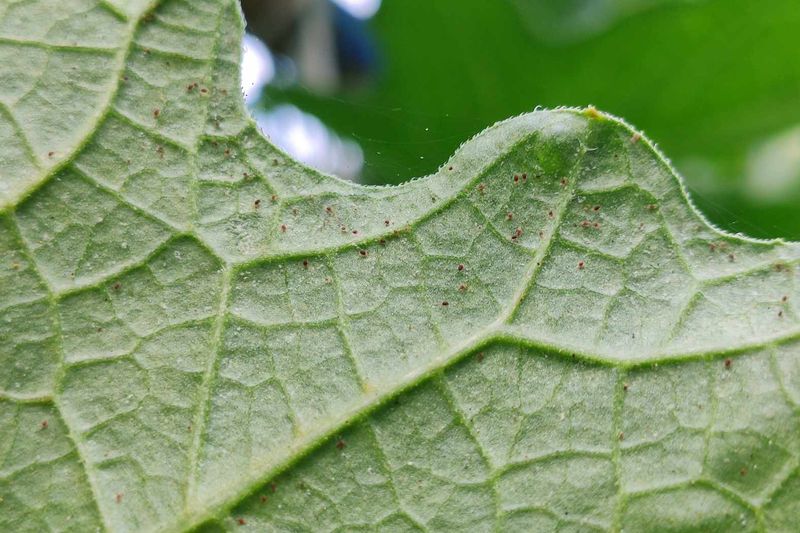
Grab a 10x hand lens before doing anything else. Turn over two or three of the most damaged leaves and look at the underside surface carefully.
Spider mites are generally less than 1/20 of an inch long, which puts them right at the edge of naked-eye visibility, but a hand lens makes them easy to see. You are looking for tiny moving specks, pale round eggs, translucent cast skins left behind after molting, and fine silk webbing stretched across the leaf surface or along the veins.
If a hand lens is not available, try the white-paper test. Hold a sheet of white paper or cardboard under an affected leaf and tap or shake the leaf firmly.
Then watch the paper surface closely. Moving specks that crawl around after landing support a mite diagnosis.
University of Minnesota Extension guidance on spider mites recommends this approach as a quick field check, though a hand lens remains the most reliable tool for confirming what you are seeing.
Webbing is a strong indicator of mite activity, but its absence does not clear the plant. Light infestations often show stippling well before webbing becomes visible.
Check several leaves from different parts of the plant, because mite colonies tend to start on older lower leaves and spread outward. Also scan nearby plants and any dusty garden edges or weedy borders, since UC IPM notes that spider mites feed on a wide range of plant species and move between hosts.
An infestation on a neighboring ornamental or weed can keep reseeding your cucumbers even after treatment.
Begin the same-day response with water and observation
Once you have confirmed mites are present, the first response does not require any product at all. Start at the root zone.
Push a finger an inch or two into the soil near the plant’s base. If the root zone is dry, water the cucumber thoroughly before doing anything else.
A plant under water stress is more vulnerable to mite feeding, and rehydrating it is one of the fastest ways to improve its condition and reduce the stress that makes damage worse.
After watering, use a garden hose with a spray nozzle set to a firm, focused stream and direct it at the undersides of the affected leaves. UC IPM’s cucurbit spider mite guidance and University of Minnesota Extension both describe water sprays as a suppression measure that dislodges mites and breaks up webbing.
That is exactly what the goal is here: reduce the active population and disrupt the colony, not eradicate every mite in a single pass.
Eggs and mites sheltered in leaf folds or on nearby plants will not be reached by one water treatment. Plan to reinspect every two to three days, especially if the weather stays hot and dry.
Look for new stippling on leaves that were previously undamaged, and check whether existing colonies are growing or shrinking. That pattern of fresh damage is the clearest signal of whether the population is still building or starting to come under control.
Protect the predators that can suppress an outbreak
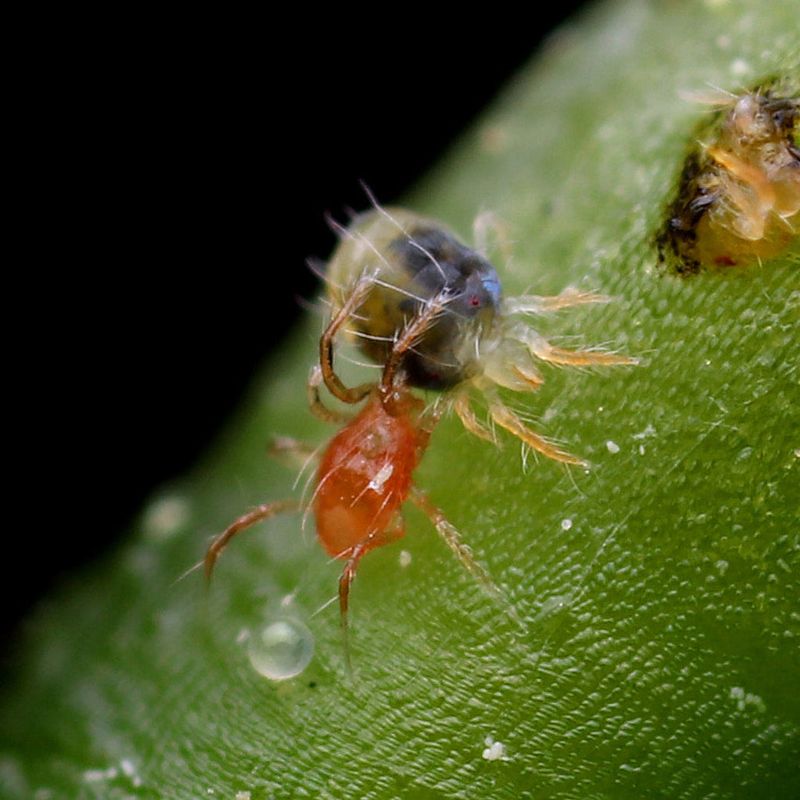
Your cucumber patch almost certainly has allies you have never noticed. Predatory mites, predatory thrips, lacewings, minute pirate bugs, and lady beetles all feed on spider mites and can put a meaningful dent in a growing colony when they are present in useful numbers.
These natural enemies work quietly, but they are one of the main reasons many mite outbreaks stay manageable rather than becoming catastrophic.
The fastest way to lose that protection is to apply a broad-spectrum insecticide. UC IPM’s spider mite resource and related UC IPM guidance on webspinning spider mites both warn that pyrethroids and other persistent insecticides can kill predatory insects and mites while leaving spider mite eggs unharmed.
The result is a population rebound with fewer natural controls in place, which can produce a worse outbreak than the one you were trying to treat.
Before considering any chemical treatment, ask whether a broad-spectrum product was applied recently. Pyrethroid use in the weeks before a mite outbreak is a common contributing factor.
If natural enemies are visible on the plant, that is a reason to hold off on spraying and give them time to work. Protecting what is already present in your garden costs nothing and preserves options that a spray can eliminate in a single application.
Use contact sprays only when the label and conditions allow
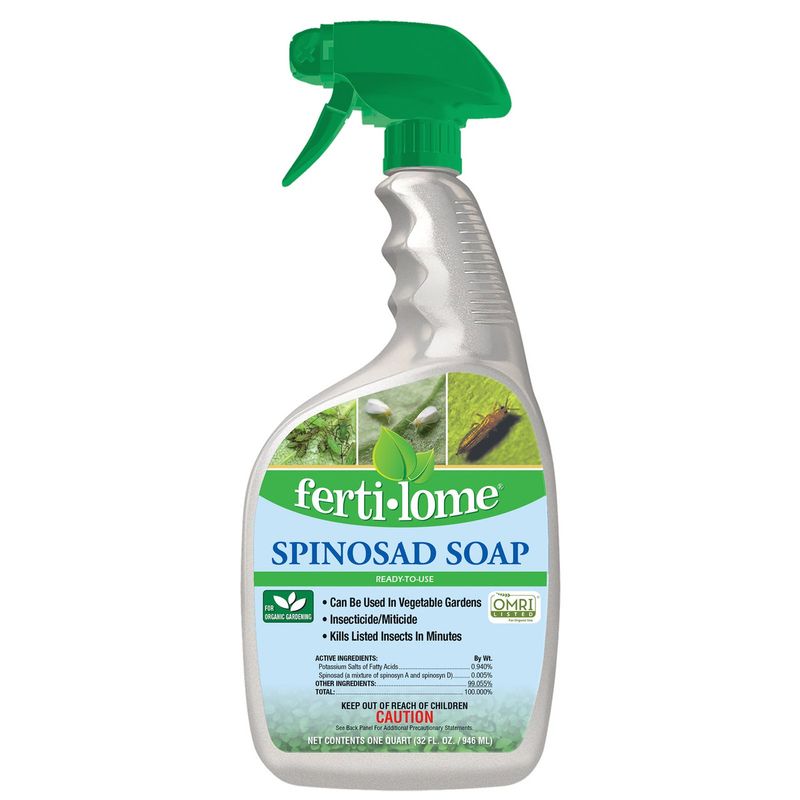
When water sprays and predator protection are not bringing the population down and new damage keeps appearing on healthy leaves, a contact treatment may be the next step. Insecticidal soaps and horticultural oils are the most commonly recommended options for home gardeners.
Both work by direct physical contact with the mite, not by residual toxicity, which means thorough coverage of the leaf undersides is not optional. Missing the underside surface where mites live and feed means the product accomplishes very little.
Both materials also require repeat applications. UC IPM’s less-toxic insecticides guide explains that soaps and oils do not affect eggs, so a follow-up spray several days later is typically needed to reach newly hatched mites before they reproduce.
University of Minnesota Extension reinforces that a single treatment is rarely sufficient when populations are active.
The product label is the legal and practical authority for every application decision. The EPA’s introduction to pesticide labels states that labels are legally enforceable, and EPA guidance on reading the label first makes clear that the label governs concentration, protective equipment, reentry intervals, harvest intervals, and application conditions.
Use only a product whose current label specifically lists cucumbers or an applicable edible crop group and names spider mites as a target pest.
Florida and Texas gardeners should also verify state registration and check current extension guidance from University of Florida IFAS or Texas A&M AgriLife before applying anything, because rates and restrictions can differ by state and setting. Do not apply soaps or oils to drought-stressed plants, in direct midday sun, or during excessive heat unless the label specifically permits those conditions.
Test a small section of foliage first, since phytotoxicity varies by product, plant condition, and temperature. Homemade dish-soap mixtures are not a substitute for registered insecticidal soap; extension guidance consistently warns that improvised solutions can burn cucumber foliage.
Separate spider-mite injury from its look-alikes
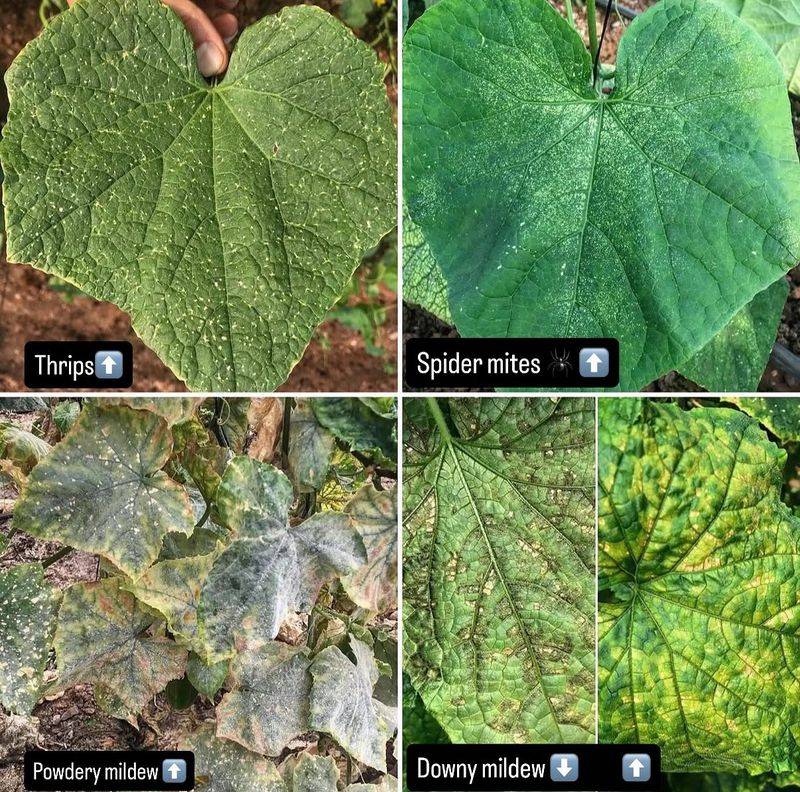
Reaching for a miticide before ruling out other causes is one of the most common mistakes in cucumber pest management, and several problems can look remarkably similar to spider mite injury at a glance. Working through the differences takes only a few minutes and can save a plant from the wrong treatment.
Powdery mildew produces a white, fluffy, or powdery fungal coating on the leaf surface, often appearing after pale yellow spots develop on the upper side. According to UC IPM’s guide to powdery mildew on cucurbits, the growth is fungal and sits on top of the leaf tissue rather than creating the cell-by-cell pitting that mite feeding produces.
Downy mildew behaves differently: it tends to cause angular yellow or brown patches bounded by leaf veins, sometimes with gray, white, or brownish growth on the undersides, and it is associated with wetter, more humid conditions rather than the hot and dry pattern that favors mites.
Thrips and leafhoppers can also cause stippling or a silvery sheen on cucumber leaves. Leafhopper injury tends to produce larger, coarser stipples, and the insects or their cast skins may be visible without the fine webbing that accompanies heavy mite infestations.
Whiteflies are another possibility: UC IPM’s cucurbit whitefly resource notes that whitefly feeding can give leaves a whitish or silvery appearance, often accompanied by sticky honeydew deposits and sometimes sooty mold. If you shake the plant and a cloud of tiny white insects rises, whiteflies are the more likely culprit.
Drought stress and chemical injury round out the list. Both can produce pale, papery, or discolored patches that resemble mite damage.
University of Minnesota Extension’s cucumber growing guide points out that water stress can mimic and compound mite symptoms, making the two hard to separate without a careful look at the leaf undersides. When no mites, eggs, cast skins, or webbing are present after a thorough inspection, revisit the diagnosis before treating.
Measure recovery by new damage, not by perfect old leaves
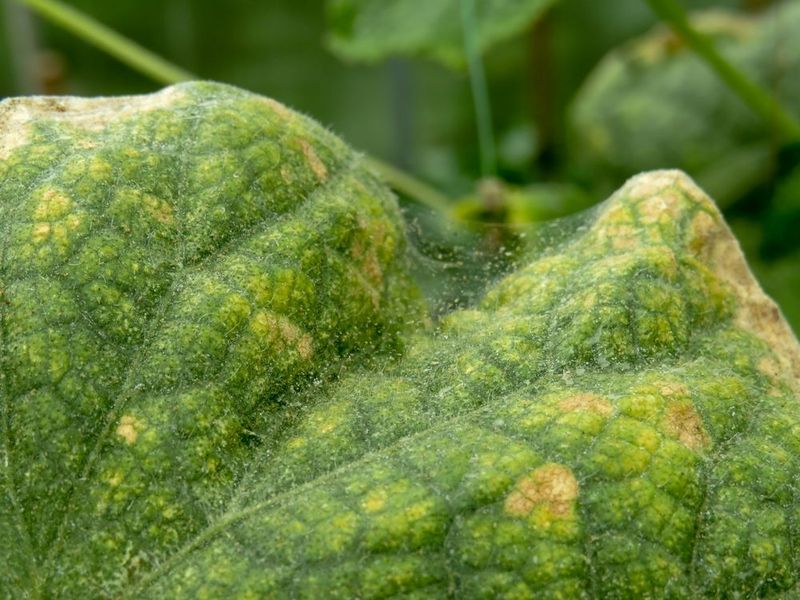
Recovery from a spider mite infestation is not the same as restoration. Leaves that already show stippling, bronzing, or necrosis will not turn green again once the feeding cells are gone.
The chlorophyll those mites removed does not come back. Setting the right benchmark from the start prevents a lot of frustration: the goal is to stop new damage, not to erase what has already happened.
Track progress by watching the newest leaves and the tips of actively growing vines. If mite populations are declining, new growth should emerge without the fine stippling pattern.
UC IPM’s cucurbit spider mite resource and University of Minnesota Extension both emphasize consistent monitoring during and after treatment because mite populations can rebound quickly in hot weather. Continue checking every few days and inspect nearby plants, since reinfestation from a neighboring host is common.
A plant that has lost a significant portion of its canopy may carry reduced vigor, lower fruit yield, and smaller cucumbers for the rest of the season. That outcome is not always preventable once damage is extensive, and promising otherwise would not be honest.
The practical sequence that gives a plant the best chance is straightforward: confirm the pest, hydrate the root zone, wash the leaf undersides, protect natural enemies, monitor consistently, and escalate to a properly labeled contact treatment only when the evidence calls for it. A cucumber that gets that care early has the best odds of finishing the season productively.