
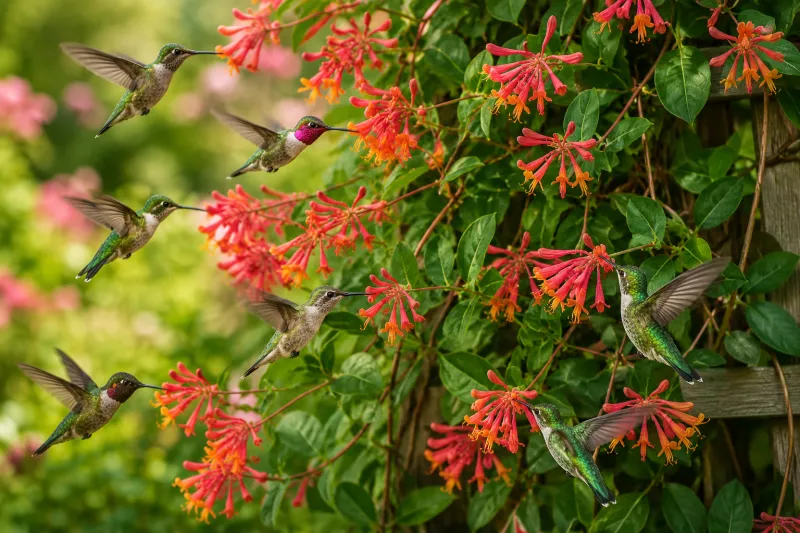
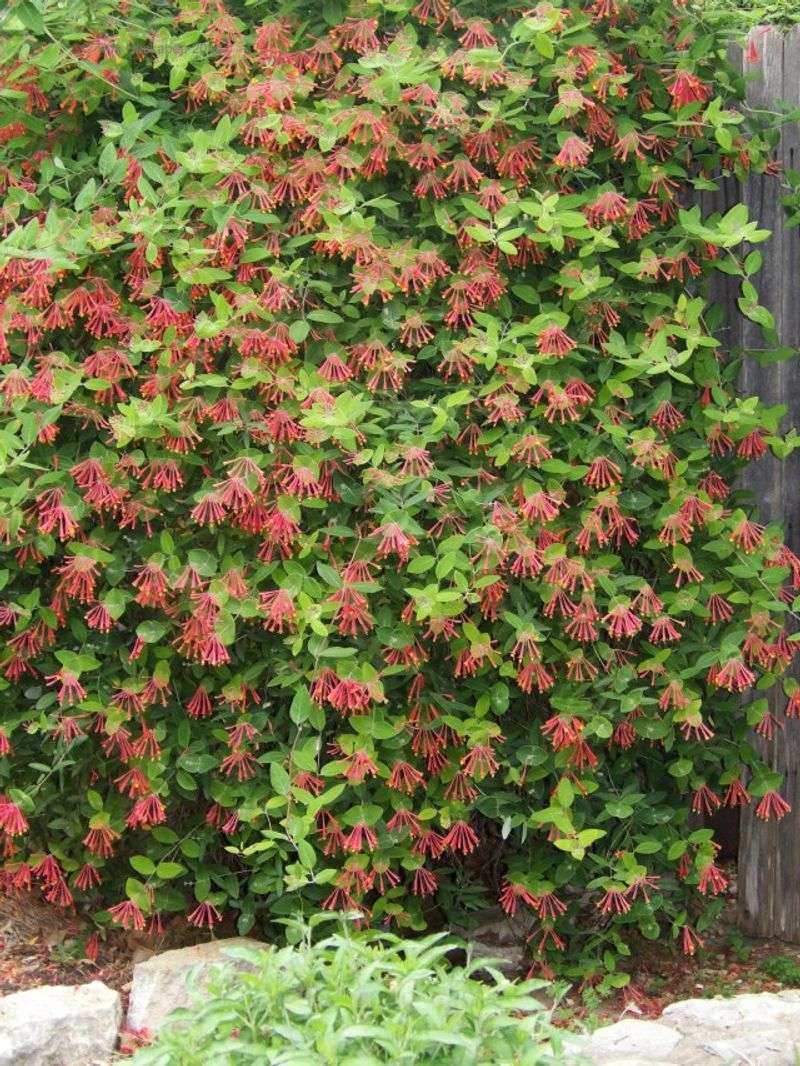
Coral honeysuckle is a Texas native vine that produces clusters of red-orange tubular flowers from spring into summer, making it one of the more reliable nectar plants you can grow along a fence or trellis in Central Texas. Hummingbirds are drawn to those long, narrow blooms, and the vine can rebloom through warm weather when conditions cooperate.
Getting that payoff means choosing the right plant, placing it well, and understanding what a single vine can and cannot do for the birds that pass through your yard.
Coral honeysuckle offers a native nectar source for Central Texas fences
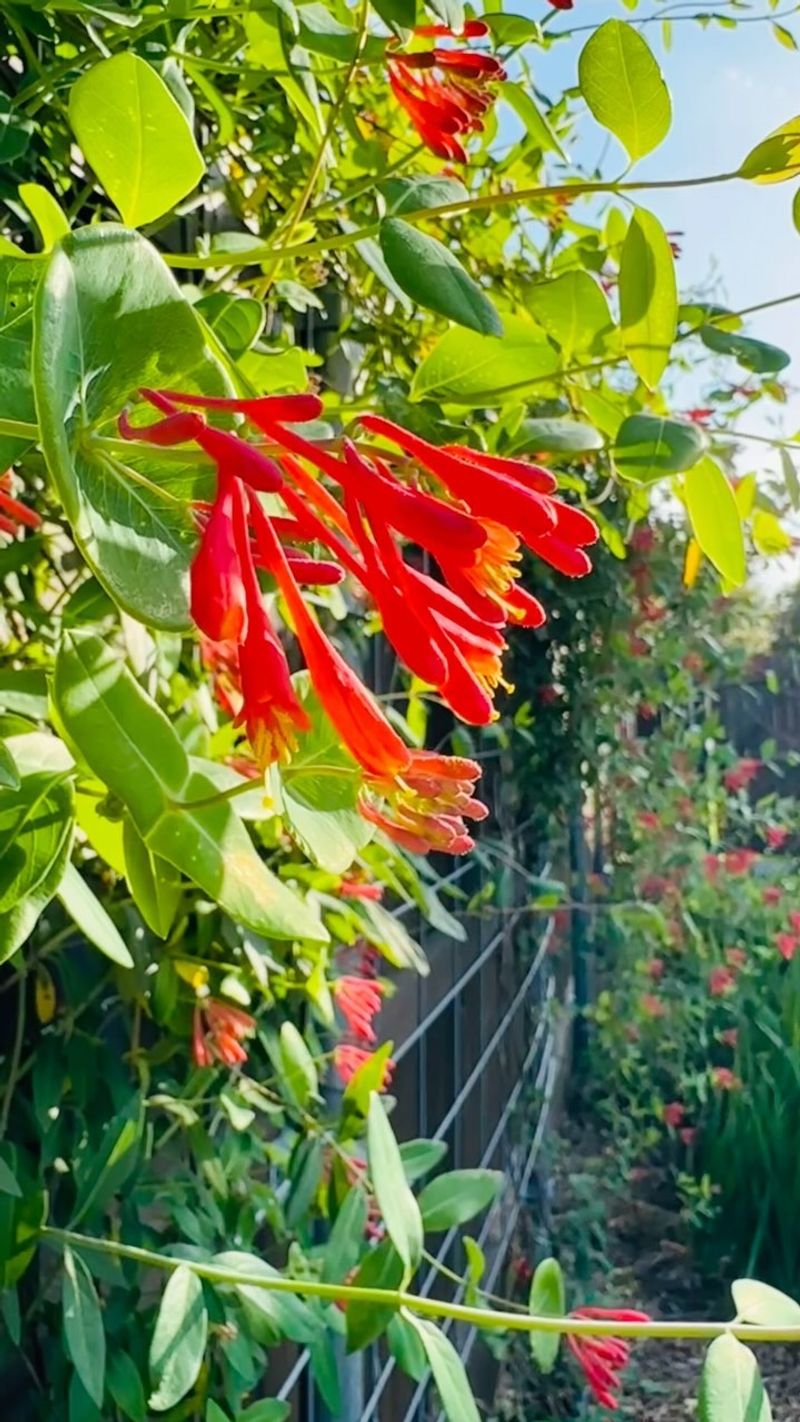
Lonicera sempervirens, sold under the common name coral honeysuckle or trumpet honeysuckle, is a perennial twining vine native to North America and documented across several Texas ecological regions, including the Edwards Plateau at the heart of the Hill Country. Its flowers are long, narrow, and tubular, colored in shades of red and orange that hummingbirds readily investigate.
Native Plant Society of Texas documentation on Lonicera sempervirens confirms it as a true Texas native, which matters because the common name “honeysuckle” covers many species, including nonnative ones that can become invasive.
Japanese honeysuckle (Lonicera japonica) is the most common example of a nonnative honeysuckle that spreads aggressively in some Texas landscapes. Coral honeysuckle is botanically distinct, so always check the label for the full scientific name Lonicera sempervirens before purchasing.
Getting the right plant is the first practical step, and it is easy to overlook when plants are simply tagged “honeysuckle” at a nursery.
A fence or trellis gives the vine the vertical support it needs to climb and spread its flowers into open air where hummingbirds can reach them. North Carolina State Extension’s profile of Lonicera sempervirens lists a typical mature height of roughly 10 to 20 feet, so the structure needs to be sturdy enough to carry that load over several years.
The fence itself is not wildlife habitat; it is simply a frame that positions the flowers at a height and exposure that makes them accessible to passing birds. What happens after that depends on the vine’s health, the season, and the broader conditions in and around your yard.
Set realistic expectations for spring and summer flowers
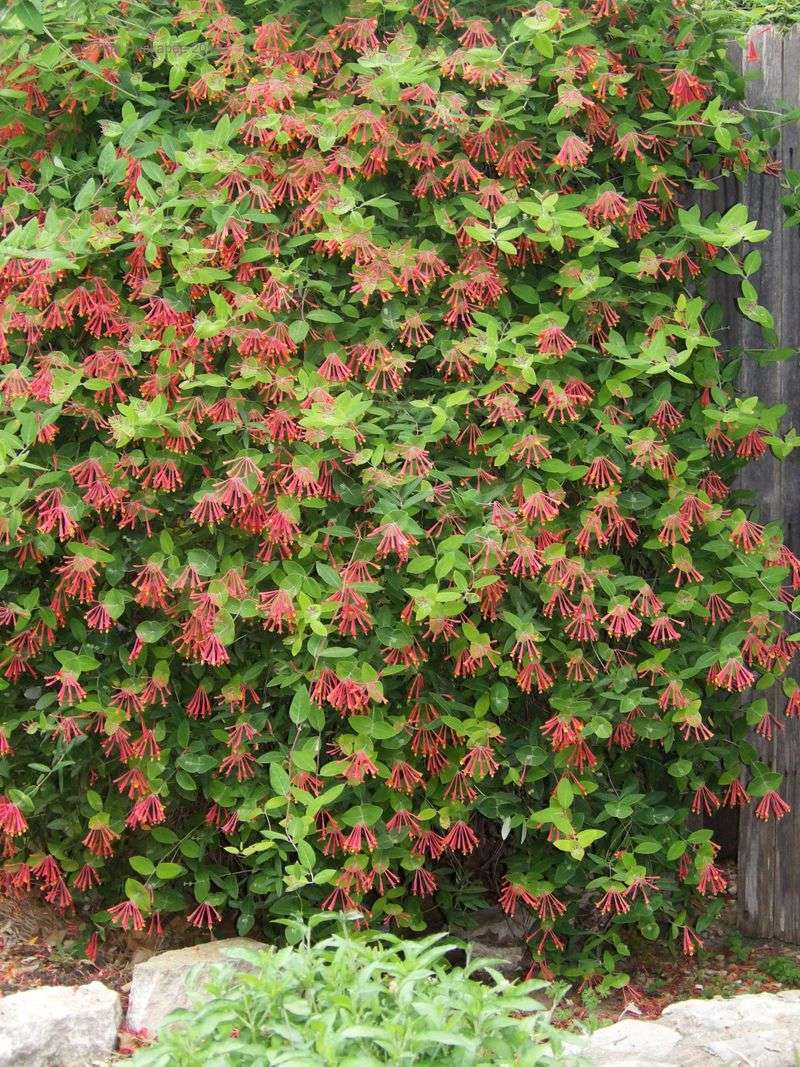
One of the most useful things to know before planting coral honeysuckle is what its bloom window actually looks like in Texas. Texas A&M AgriLife Extension guidance on coral honeysuckle describes it as a vine that can rebloom in late spring and through summer, and a Texas Parks and Wildlife wildlife-management planting guide places its flowering window from March through December under suitable conditions.
That is a wide potential range, but “potential” is doing real work in that sentence.
Actual flowering in any yard depends on sunlight exposure, soil moisture, how well the vine established, whether it was pruned at the right time, and the local microclimate. A vine in full sun with adequate moisture in a favorable year may rebloom reliably into summer.
A vine in partial shade on rocky soil during a drought year may flower once and then hold back. Treating the bloom window as a possibility rather than a schedule keeps expectations grounded in how Texas summers actually behave.
Hummingbird visits follow a similarly conditional pattern. In Central Texas, Black-chinned Hummingbirds are the most characteristic summer species, arriving in spring and departing by fall.
Ruby-throated Hummingbirds are more strongly associated with eastern Texas, though they do appear in Central Texas during migration. Texas Parks and Wildlife’s introduction to hummingbirds in Texas notes that species presence and timing vary by region, season, weather, food availability, and territory behavior.
A large observational study published in Landscape and Urban Planning found more hummingbird sightings in yards that combined feeders, diverse nectar-producing plant species, endemic plants, and greener surrounding landscapes. That research did not test coral honeysuckle specifically, and it did not establish that any one plant causes repeat visits.
The practical takeaway is that coral honeysuckle can be a useful piece of a hummingbird-friendly yard without being the whole answer.
Choose a support and placement that fit the site
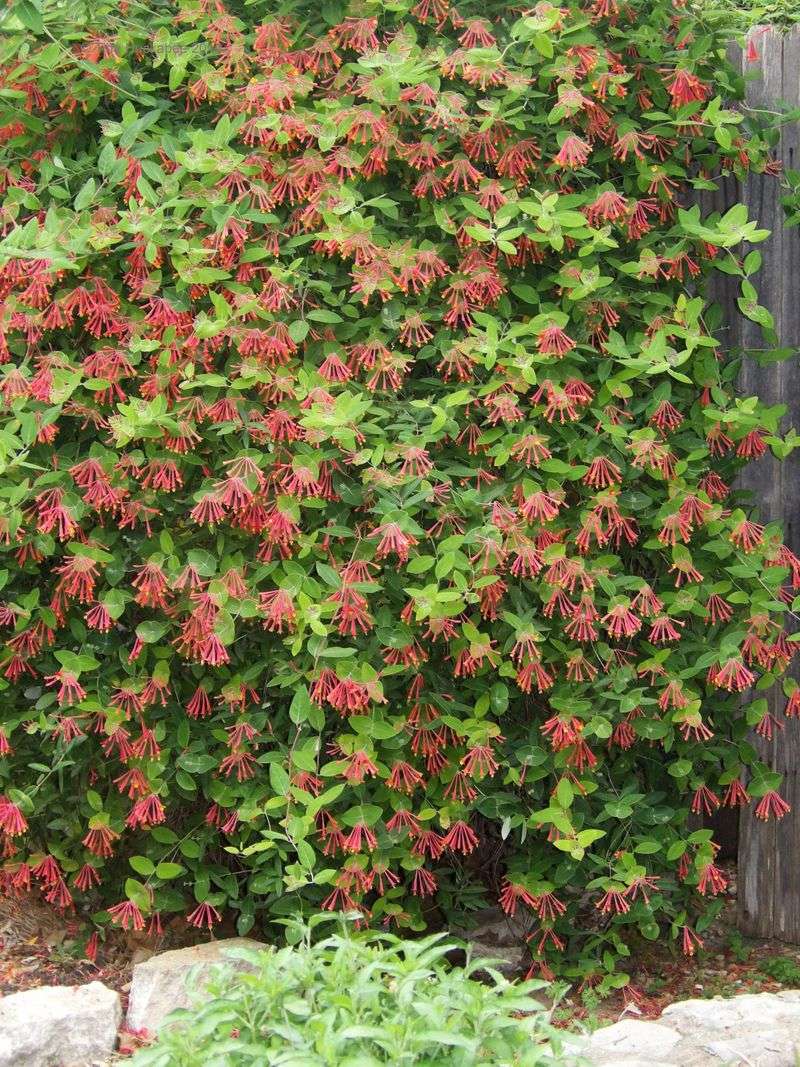
Before you buy the vine, pick the structure. Coral honeysuckle twines rather than clinging with adhesive pads, so it needs something it can wrap around: a fence with horizontal rails, a freestanding trellis, an arbor, or a sturdy wire system.
NC State Extension’s coral honeysuckle profile puts the typical mature size at 10 to 20 feet, so a lightweight or flimsy structure will struggle within a few growing seasons. Plan for that weight and spread from the start.
Full sun produces the best flowering. The vine tolerates partial shade, but flower production tends to drop when sunlight is limited, and in a yard where hummingbirds are the goal, fewer flowers means fewer opportunities for visits.
A south- or east-facing fence that gets at least six hours of direct sun daily is a reasonable target in most Central Texas yards. Soil preference is medium moisture and well-drained; heavy clay that holds standing water or pure caliche without amendment can slow establishment and reduce vigor.
Placement relative to your house deserves separate consideration in wildfire-prone parts of the Hill Country. Arizona Cooperative Extension Firewise landscape guidance identifies the area within roughly five feet of a structure as a critical zone where flammable fuels should be minimized.
That guidance comes from Arizona and is framed as general defensible-space advice, not a Texas-specific rule or legal standard. Hill Country homeowners should check with local fire departments, county emergency management offices, and their insurance carriers for applicable local recommendations.
The practical default for most yards is a freestanding fence or trellis positioned away from siding, eaves, and attached porches. Firewise defensible-space principles support keeping vegetation separated from structures as a general precaution in fire-prone regions.
A fence along a property line or a freestanding arbor in an open part of the yard gives the vine room to grow, keeps flowers visible to birds from multiple angles, and avoids placing combustible plant material directly against the house.
Water and prune the vine to support reblooming
Coral honeysuckle earns its reputation as a drought-tolerant plant, but that description applies to an established vine growing under appropriate conditions, not to a plant that was put in the ground last month. Central Texas Gardener’s coral honeysuckle resource notes that the vine handles drought once established but appreciates supplemental moisture during prolonged dry periods.
During the first growing season, consistent watering at the root zone, roughly once or twice a week depending on heat and soil type, gives the plant the best chance to build a root system deep enough to handle a Texas summer.
Even after establishment, watch the vine during extended dry stretches. Wilting midday in July heat is normal for many plants and often reverses by evening, but wilting that persists into the morning is a sign the plant needs water.
Letting an established vine go severely dry during a prolonged drought can reduce flowering and set back the growth that produces new blooms. Drought tolerance is a useful trait in a Texas plant; it is not a reason to stop monitoring.
Pruning timing matters because coral honeysuckle flowers on new growth. NC State Extension advises pruning after flowering rather than cutting the vine back just before or during the main bloom period, which would remove the growth that carries the flowers.
Light shaping after a flush of blooms encourages fresh growth and sets up the conditions for a second round of flowers later in the season.
Fertilizer choices also affect the balance between foliage and flowers. Texas A&M AgriLife Extension notes that excess nitrogen pushes vigorous leafy growth at the expense of blooms.
If you fertilize at all, a low-nitrogen or bloom-promoting formulation used sparingly is a safer choice than a standard high-nitrogen lawn fertilizer applied near the vine’s root zone. None of these practices guarantee a long rebloom season, but they create the growing conditions where reblooming is more likely.
Build the broader habitat hummingbirds need
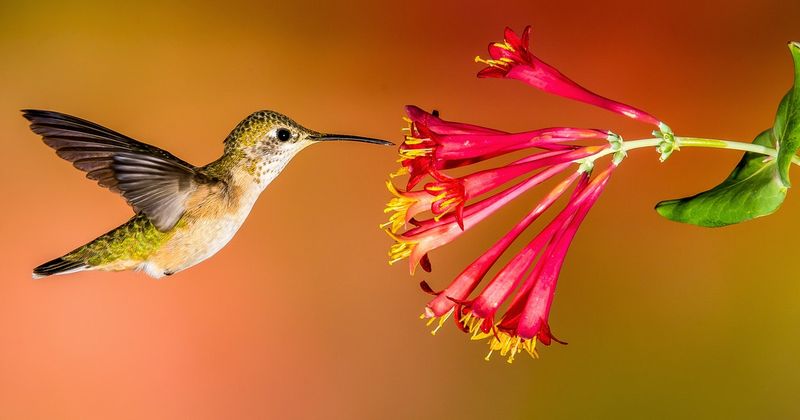
Coral honeysuckle is a strong starting point, but hummingbirds need more than one nectar source to make a yard worth returning to. Texas Parks and Wildlife’s hummingbird habitat guide recommends combining nectar plants with shelter, perches, water sources, and plants that support small insects and spiders.
Hummingbirds eat insects and spiders in addition to nectar, so a yard with only flowers misses part of what these birds actually need to fuel themselves through a Central Texas summer.
Layering native plants with different bloom periods is the most practical way to extend the window when nectar is available. Turk’s cap (Malvaviscus arboreus var. drummondii) blooms through summer and fall and is well-suited to Central Texas conditions.
Autumn sage (Salvia greggii) offers red flowers over a long season. Texas betony (Stachys coccinea) and various native salvias also attract hummingbirds and fill gaps when coral honeysuckle is between flushes.
No single combination works identically in every yard, but the goal is to avoid a long stretch of weeks with no flowers at all.
The observational research published in Landscape and Urban Planning found that yards with more nectar-producing plant species, more endemic plants, and greener surrounding landscapes correlated with more hummingbird sightings. Those are associations from a broad national dataset, not proof that any specific planting causes visits.
The practical reading is that diversity and habitat quality across the yard, and even the surrounding neighborhood, matter more than any single plant choice.
A shallow water source such as a mister, dripper, or small basin with moving water gives hummingbirds a place to bathe and drink. Perches, including dead branches or open stems near the vine, let territorial birds rest and watch their feeding area.
Texas Parks and Wildlife’s Ruby-throated Hummingbird page notes that hummingbirds are strongly territorial and will defend productive feeding areas, which means a well-stocked yard may attract a resident bird that holds the space through the season. Recent research on urban hummingbird habitat reinforces that native plant diversity and surrounding greenery are among the factors most consistently associated with hummingbird presence in residential areas.
Use feeders as an optional supplement
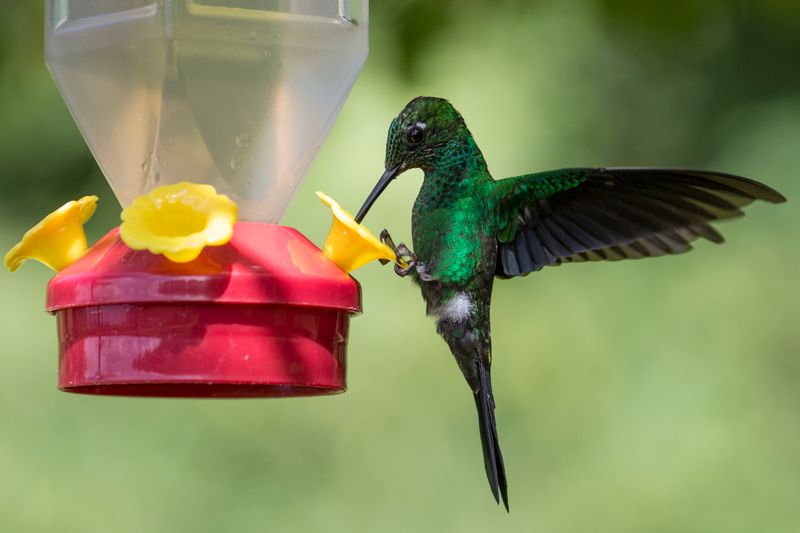
A feeder can extend the nectar available in your yard during gaps between bloom cycles or during the weeks before the vine fully establishes. Audubon’s guidance on hummingbird-friendly yards gives clear preparation instructions: mix four parts water with one part plain white granulated sugar.
That ratio closely approximates the natural sugar concentration in many flowers hummingbirds use. Do not substitute honey, which can ferment and grow dangerous mold, and skip artificial sweeteners entirely, which provide no caloric value to the bird.
Red dye is also unnecessary. Hummingbirds are drawn to red by the color of the feeder itself or the flowers nearby, not by dye in the liquid.
Many commercial red nectars contain dye that has not been proven safe for hummingbirds, so plain sugar water in a red or orange feeder is the cleaner option.
Cleaning frequency matters more during hot weather than at any other time of year. Audubon’s guide to attracting hummingbirds and orioles recommends cleaning feeders every two to three days under normal conditions and daily when temperatures climb or whenever the nectar turns cloudy or develops any visible growth.
In a Central Texas summer, that often means daily cleaning from June through August. A feeder with spoiled nectar can make birds sick and will drive them away rather than attract them.
A feeder supplements a yard that still benefits from flowers, cover, water, perches, and insect availability. Relying only on a feeder skips the habitat elements that make a yard genuinely useful to hummingbirds across the full warm season, so treat it as one resource among several rather than a stand-alone solution.
Treat coral honeysuckle as habitat support, not a guarantee
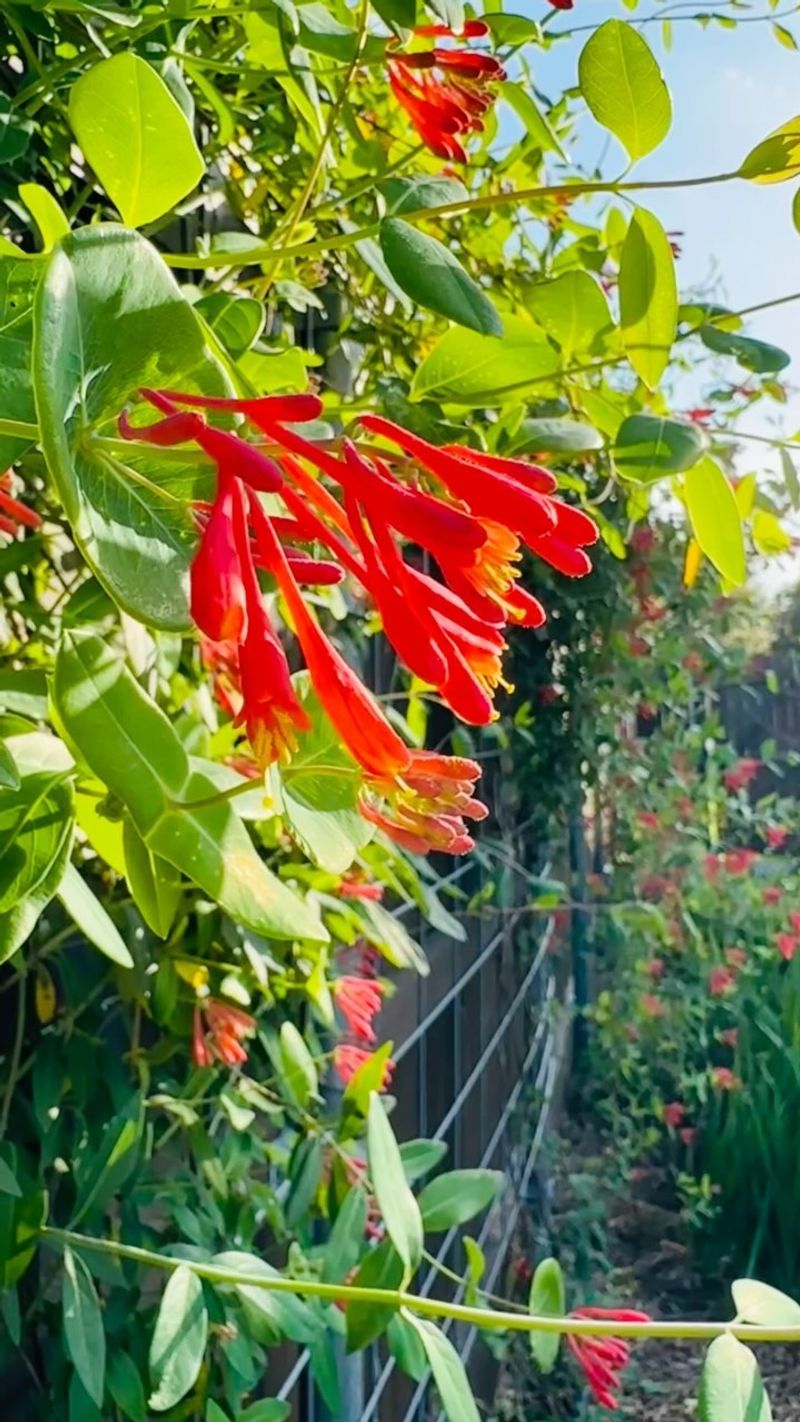
Getting the most from coral honeysuckle starts at the point of purchase. Confirm the botanical name Lonicera sempervirens on the label, because Native Plant Society of Texas documentation makes clear that not every plant sold as honeysuckle is native or appropriate for Texas yards.
Once you have the right plant, install it on a sturdy support in full sun, amend the soil if drainage is poor, and water consistently through the first growing season.
Prune after flowering rather than before, keep nitrogen fertilizer minimal, and check soil moisture during prolonged dry stretches even after the vine matures. NC State Extension confirms that new growth is what carries the blooms, so pruning at the wrong time removes the vine’s flowering potential for that cycle.
Those steps support healthy growth and create the conditions where reblooming into summer is possible, but no combination of good care can promise a specific number of bloom cycles or guarantee that hummingbirds will visit on any given day.
The observational research on urban hummingbird sightings found that plant diversity, surrounding greenery, and multiple habitat features together correlate with more visits, not any single vine or feeder. Pair coral honeysuckle with other native nectar plants, a water source, open perches, and insect-supporting vegetation to build a yard that is genuinely useful to hummingbirds across the warm season.
In wildfire-prone Hill Country areas, follow local defensible-space recommendations and keep the vine on a freestanding structure away from the house rather than against siding or eaves. A well-placed vine in a habitat-rich yard is not a hummingbird magnet with an on-off switch; it is a recurring invitation that the birds may or may not accept, depending on conditions well beyond any gardener’s control.