
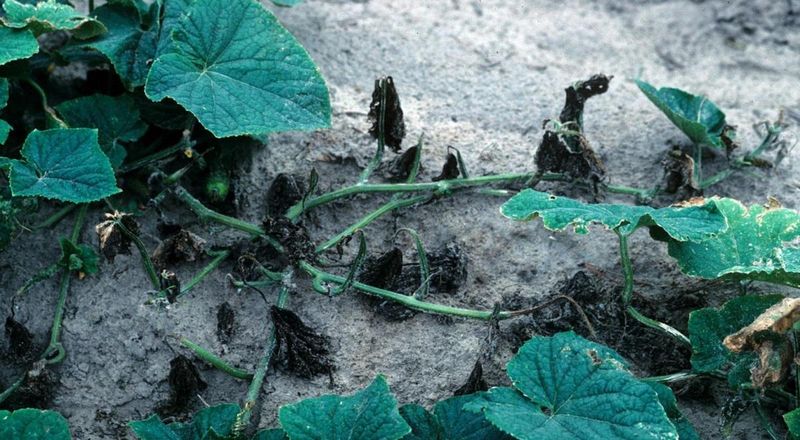
Walking out to your garden and finding a healthy-looking cucumber vine completely flopped over is one of the most disheartening sights of late summer. Bacterial wilt is a serious and credible suspect when this happens, but it is not the only explanation, and the collapse you noticed this morning may have roots in a problem that started days or weeks ago.
Sorting out the real cause matters because the right response depends entirely on what actually went wrong. This guide walks you through the key signs to check, the questions to ask, and the steps to take before you pull a plant or reach for a spray bottle.
Bacterial wilt is an important possibility, not an overnight diagnosis
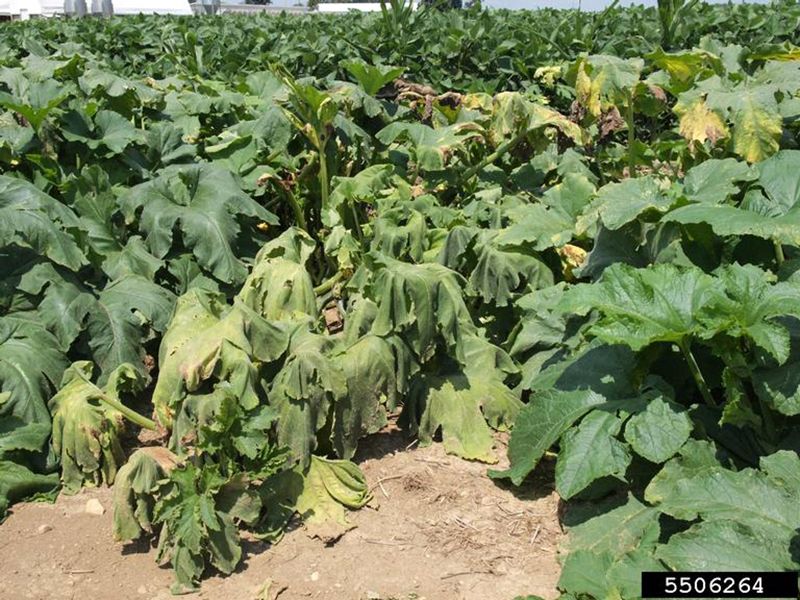
Bacterial wilt, caused by Erwinia tracheiphila, is one of the more serious diseases a cucumber grower in the South can encounter. The bacterium gets into a plant when cucumber beetles feed on leaves and stems, leaving wounds that allow the pathogen to enter.
Once inside, University of Minnesota Extension guidance on bacterial wilt explains that the bacterium colonizes the plant’s water-conducting tissue, eventually blocking the movement of water and nutrients through the vine.
Early symptoms often start small. A gardener might notice a single leaf looking dull green or limp, or one runner beginning to flag while the rest of the plant still looks fine.
That localized wilting can then spread to additional stems and, eventually, to the entire vine.
The part that catches people off guard is the timeline. APS educational resources on bacteria, beetles, and bacterial wilt note that symptoms may not appear until one to three weeks after a beetle feeding event, meaning the infection was already underway long before the vine looked sick.
The collapse that seems to happen overnight is usually the final stage of a process that began much earlier, which is why bacterial wilt should be treated as a credible possibility to investigate rather than an automatic conclusion.
Cucumber beetles connect feeding injury with bacterial-wilt risk
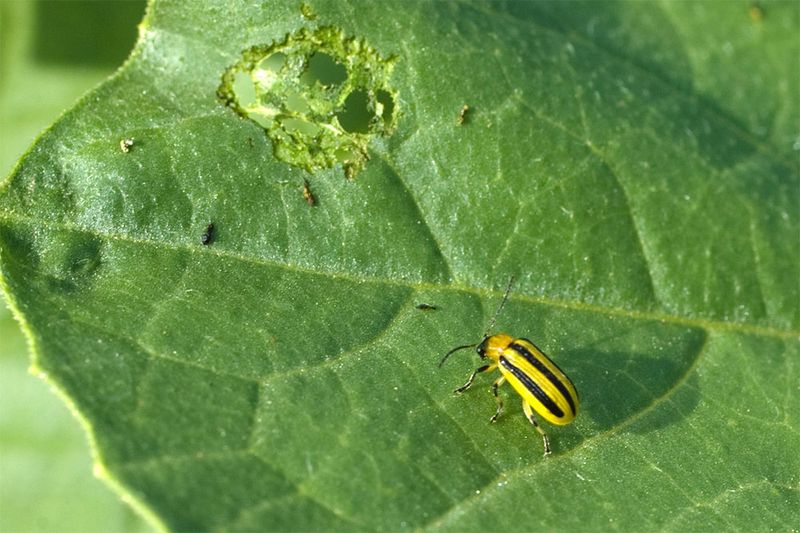
Cucumber beetles are the primary way Erwinia tracheiphila moves from plant to plant. When a beetle that carries the bacterium chews on a leaf or stem, it deposits the pathogen directly into the feeding wound.
From there, the bacterium can work its way into the vascular system of the plant.
Two main types show up in Southern gardens. Striped cucumber beetles are yellow with three bold black stripes running lengthwise down their wing covers.
Spotted cucumber beetles are yellow-green with a pattern of black spots on their backs. Extension guidance on cucumber beetles notes that both types can transmit the bacterium, and across the South, the species present, their abundance, and their seasonal activity can vary considerably by location and year.
Finding beetles on your cucumber plants is worth noting, but it does not confirm that your vine has bacterial wilt. Not every beetle carries Erwinia tracheiphila, and a plant can host beetles without becoming infected.
University of Florida EDIS guidance on cucumber beetles describes them as occasional pests in Florida whose pressure can shift by season and region, which is a reminder that beetle activity does not follow the same script everywhere in the South. Spotting beetles raises the level of concern, but the diagnosis still requires more than their presence alone.
Check heat, water, roots, and the right kind of insect damage
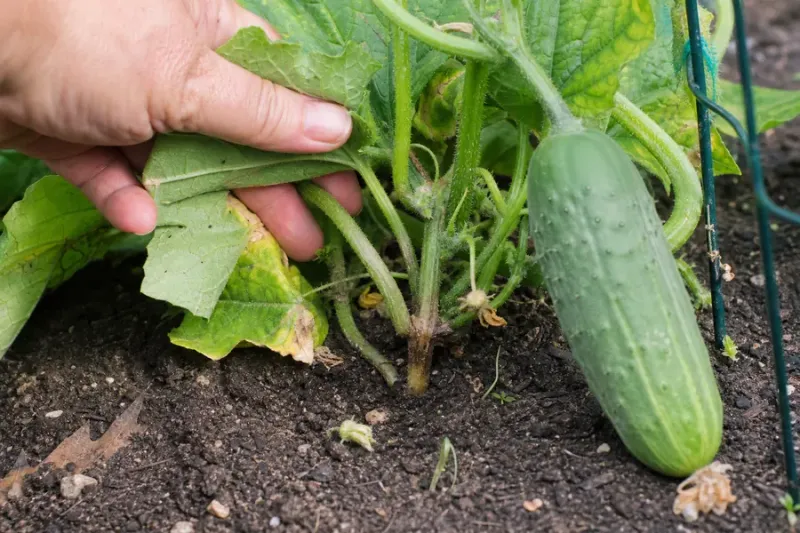
Before settling on any disease diagnosis, start with the simplest explanations. Cucumber plants wilt in afternoon heat even when they are perfectly healthy, and a vine that looks collapsed at two in the afternoon may look completely normal by the next morning.
Check the soil several inches below the surface, not just at the top. If the soil is dry at root depth and the plant perks up after temperatures fall or after a thorough, deep watering, University of Minnesota Extension advice on gardens in heat supports heat or drought stress as a more likely explanation than bacterial wilt.
Root problems are another possibility. Compacted soil, root rot from overwatering, root-knot nematodes, and Fusarium wilt can all interrupt water movement and cause a vine to flag or collapse.
Gently checking the crown and lower stem for discoloration, soft tissue, or rot can help distinguish root-level trouble from a vascular disease like bacterial wilt. Oklahoma State Extension’s cucurbit disease guide lists several vascular and root diseases that can produce similar symptoms in the same season.
Squash vine borer damage is sometimes raised as a cause of sudden vine collapse, but this comparison applies mainly to susceptible squash, pumpkins, and related Cucurbita plants. If you grow those alongside cucumbers and notice wet, sawdust-like frass or holes near the crown, Extension guidance on growing cucurbits points to borer damage as a plausible cause in those crops.
For cucumber vines specifically, borer damage is not a routine explanation, and other causes deserve priority.
Use stem streaming as supporting evidence
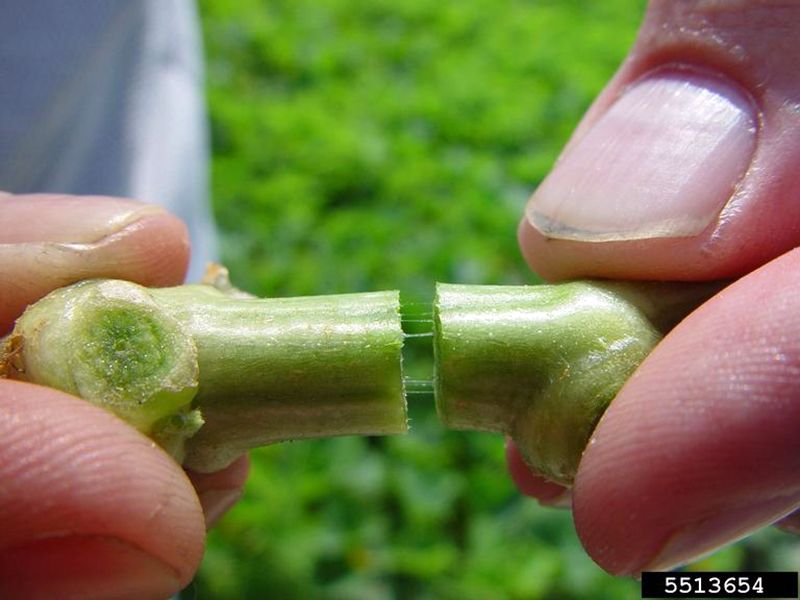
One field check that can support a bacterial wilt suspicion is the stem streaming test. Cut a symptomatic stem close to the crown of the plant, press the two cut surfaces firmly together for a few seconds, then slowly pull them apart.
If thin, thread-like strands of sticky bacterial ooze stretch between the surfaces as you separate them, that is a sign consistent with bacterial wilt. University of Minnesota Extension describes this as a useful field indicator in cucumber.
The test has real limits, though. Cornell’s cucurbit disease key notes that the streaming sign may not appear consistently, and a negative result does not mean the plant is free of the disease.
Early infections, partially dried tissue, or other variables can all affect whether the ooze forms clearly.
Treat a positive result as supporting evidence that raises the likelihood of bacterial wilt, not as a definitive confirmation. When symptoms overlap between heat stress, root problems, vascular diseases, and bacterial wilt, or when the plant is already completely dead and dried, a field test alone is not enough to be certain.
In those situations, sending a sample to a plant disease clinic or contacting your local extension office is the most reliable next step. UGA Extension advice on getting a plant diagnosis explains how to submit a sample and what to expect from the process.
Remove a likely infected vine instead of trying to spray it healthy
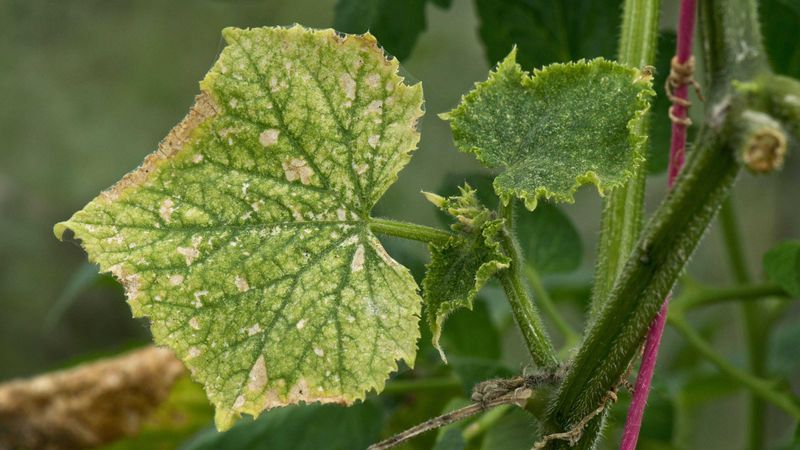
Once a cucumber vine shows strong signs of bacterial wilt and other causes have been reasonably ruled out, removal is the recommended response. The goal is to reduce the opportunity for cucumber beetles to feed on infected tissue and then carry Erwinia tracheiphila to nearby healthy plants.
University of Minnesota Extension and APS educational resources both advise removing affected plants for this reason.
No spray will reverse a systemic infection. Copper compounds, bactericides, fungicides, and insecticides cannot reach bacteria already established inside a plant’s vascular tissue, and applying them to a confirmed bacterial-wilt case will not save the vine.
This is different from a plant that is wilting due to heat or drought stress, where adjusting watering depth and timing may allow recovery. The distinction matters: do not assume that watering harder will fix a diseased plant, and do not assume that pulling a plant is always necessary before checking whether moisture stress is the real culprit.
Bacterial wilt does not spread reliably through soil the way some fungal diseases do. Oklahoma State Extension’s cucurbit disease management resource confirms that the main transmission pathway is beetle feeding, not soil contact.
Ordinary soil sanitation alone will not prevent this disease from returning if beetles are still present and active in the garden.
Protect healthy plants from cucumber beetles
After removing a suspected vine, the priority shifts to protecting whatever healthy cucumbers and other susceptible cucurbits remain. Hand-picking beetles into a container of soapy water is a practical starting point for small home gardens, especially when beetle numbers are low enough to manage by eye.
Regular scouting in the early morning, when beetles tend to be less active, makes this approach more effective.
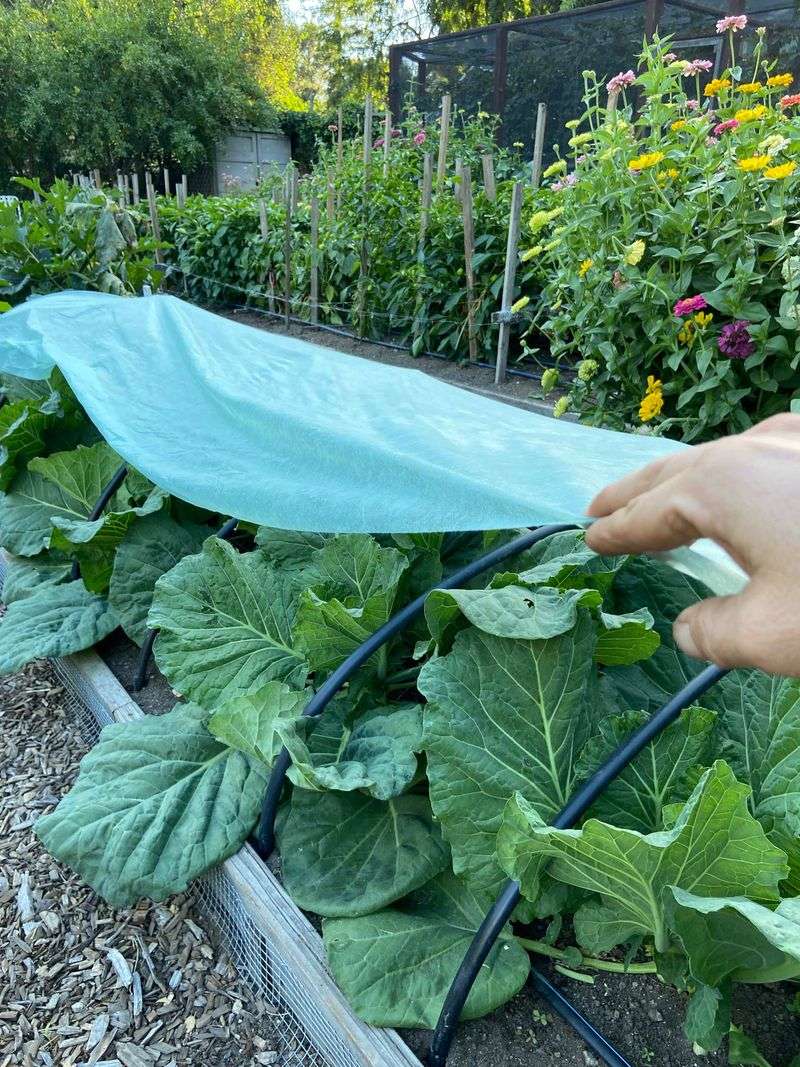
Floating row covers can block beetles from reaching young plants entirely. University of Minnesota Extension guidance on extending the growing season describes row covers as a reliable physical barrier for early-season protection.
For cucumber varieties that require insect pollination to set fruit, covers need to come off when flowers begin to open, because bees and other pollinators cannot reach blooms through the fabric. Parthenocarpic cucumber varieties are an exception – these can set fruit without pollination, so covers may stay on longer.
Check the seed packet or cultivar description to know which type you are growing.
If beetle pressure is high and physical methods are not keeping up, an insecticide may be worth considering. Extension guidance on cucumber beetles and Mississippi State Extension’s home vegetable garden pest guide suggest using treatment thresholds as regional decision aids rather than fixed rules, since pest pressure and registered products vary across the South.
Always read the current product label before applying anything. EPA guidance on pesticide labeling clarifies that the label is the legal document governing rate, application method, preharvest interval, and crop registration.
Avoid applying any pesticide to open flowers when bees are foraging, in keeping with EPA pollinator protection recommendations, unless the label specifically permits it under those conditions.
Follow a short decision path before blaming bacterial wilt
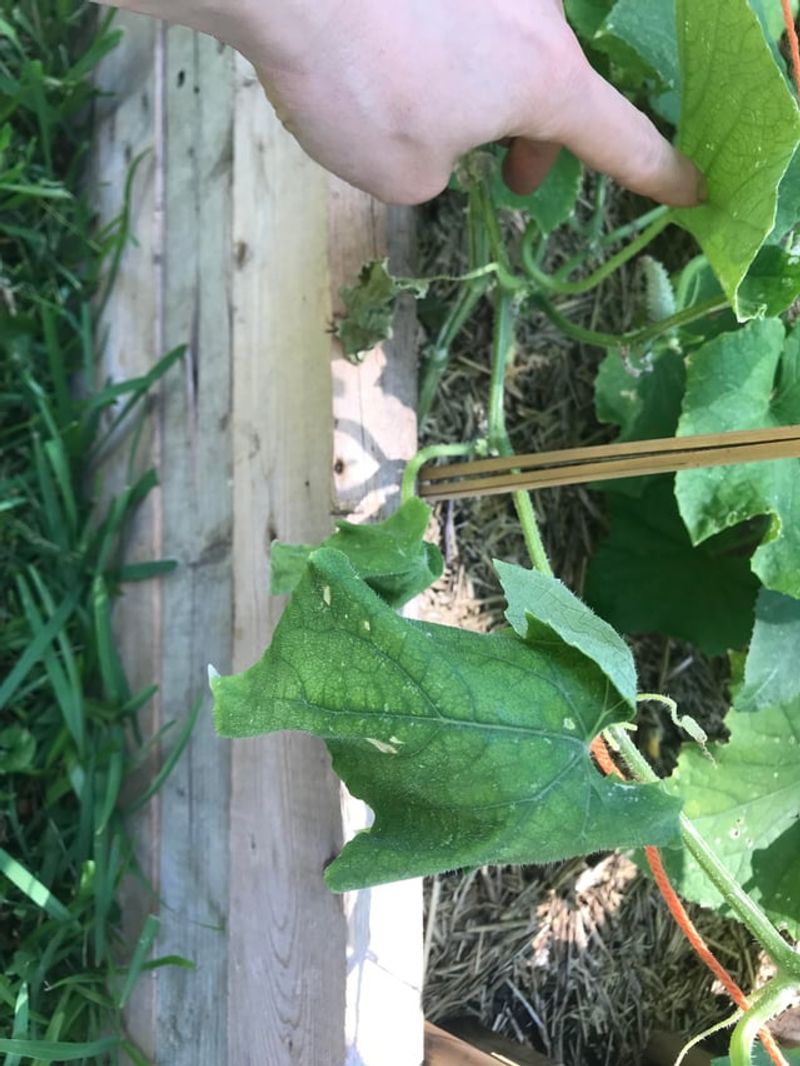
When a cucumber vine looks collapsed in the morning, work through a short checklist before drawing conclusions. First, check whether the plant recovers on its own as temperatures fall in the evening or overnight.
Recovery after heat is a strong sign that water or heat stress, not disease, is the problem. University of Minnesota Extension heat-garden guidance is clear that temporary afternoon wilting in cucumbers can be entirely normal during hot spells.
If the plant does not recover, check soil moisture several inches down, inspect the crown and lower stem for rot or frass, and look over the foliage for cucumber beetles. Then try the stem streaming test and treat any positive result as supporting evidence rather than a final verdict.
University of Minnesota Extension recommends combining these observations rather than relying on any single sign.
Bacterial wilt deserves serious attention when a cucumber vine declines rapidly and other causes do not fit the picture, but late-summer heat and an overnight-looking collapse do not establish the diagnosis on their own. APS resources on bacterial wilt reinforce that infection and visible symptoms are often separated by days or weeks.
When signs conflict or the plant is too far gone to read clearly, contact your local extension office or plant disease clinic for a reliable answer. A vine that strongly suggests bacterial wilt should come out to protect neighboring plants – and that one practical action, taken promptly, is often the most useful thing a gardener can do.