
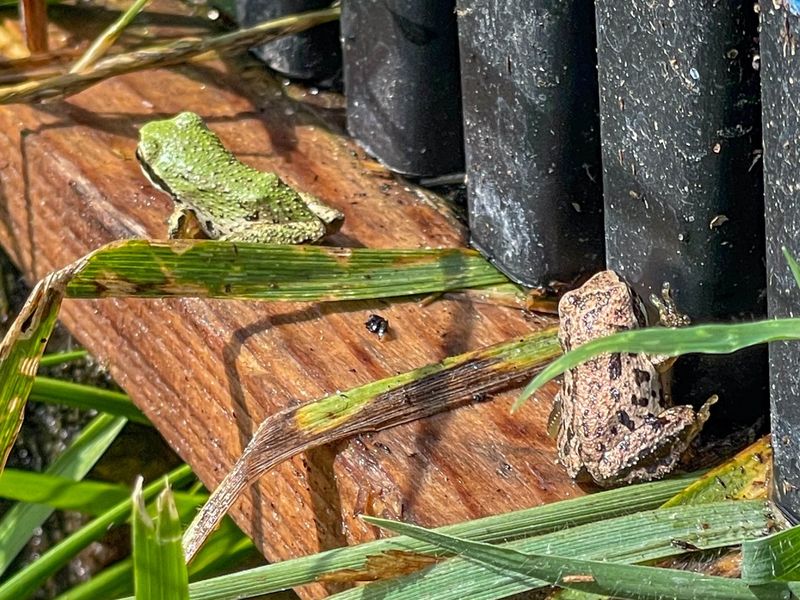
Spotting a small frog clinging to a fence post or tucked under a pot in your California garden can stop you in your tracks. Most homeowners have no idea whether to celebrate, worry, or wonder what they did to attract it.
The answer is more practical and more interesting than you might expect, and understanding it can help you make smarter choices for your yard all summer long.
The “tree frog” in your yard may not be one species
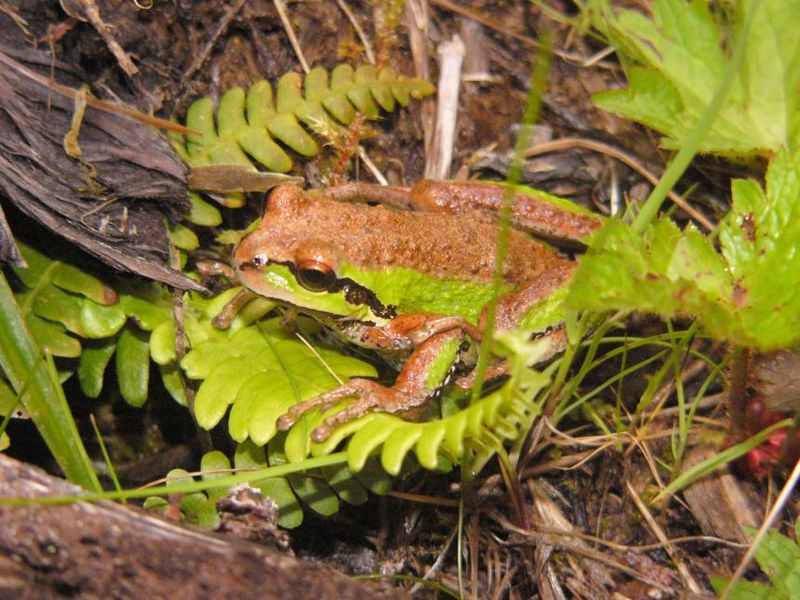
Calling a small frog in your garden a “tree frog” is a reasonable shorthand, but in California that label covers several related species that can look surprisingly alike. Depending on where you live in the state, the animal may be a California Treefrog, a Baja California Treefrog, a Sierran Treefrog, or what has historically been called a Pacific Chorus Frog.
U.S. Fish and Wildlife Service taxonomic records recognize these as distinct, and the grouping that used to be called the Pacific Treefrog has since been split into multiple species, which means even a confident-sounding common name can refer to more than one animal.
Most of these frogs are small, typically running from about one to two inches long. They often have visible toe pads that help them grip smooth surfaces, and many carry a dark stripe running through the eye and along the side of the head.
Coloring ranges widely across green, brown, gray, reddish, and mottled patterns, and a single individual can shift its shade over time. The National Park Service describes California Treefrogs as often grayish or mottled to match rocky stream habitat, while chorus frogs in other parts of the state may lean greener or browner depending on their surroundings.
Color alone cannot tell you which species you are looking at. A green frog in a coastal garden and a gray frog near a Sierran seasonal pond may look like different animals but belong to closely related groups, while two frogs of the same species may look quite different from each other.
The USGS species profile for the Baja California Treefrog notes overlapping range and appearance with neighboring taxa, reinforcing why visual identification can be unreliable. Species identity matters when you are trying to interpret habitat or breeding behavior, because what holds true for a canyon-stream California Treefrog in the Santa Monica Mountains may not apply to a chorus frog appearing near an irrigated inland garden or a Sierra foothill pond.
A sighting points to one useful resource, not a perfect garden
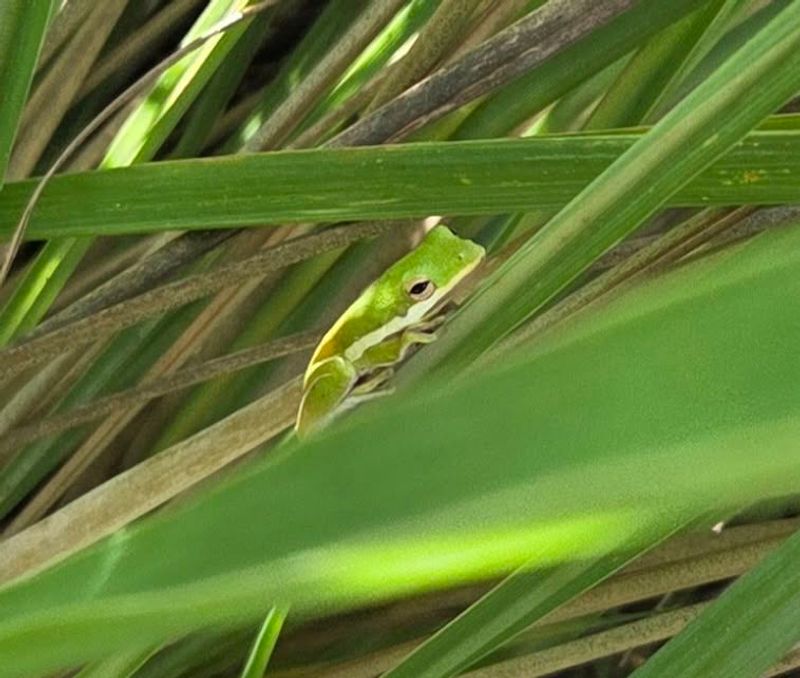
Finding a frog in your yard does not mean the whole property is unusually wet or that you have accidentally built a perfect amphibian sanctuary. More likely, the frog found one thing it needed: a patch of shade, a damp corner under a pot, a shrub with enough leaf cover to rest in, or a cluster of insects near an outdoor light.
An OSU Extension guide on Pacific Chorus Frogs notes that these animals commonly use grass, shrubs, and ground-level cover and can turn up in urban and suburban settings far from obvious natural water sources.
The list of features that can attract a visiting frog is longer than most people realize. Shaded soil that stays slightly cooler and moister than the surrounding yard, irrigated plantings, rocks or logs that hold warmth at night, brushy corners, leaf litter, nearby drainage channels, seasonal pools, or simply a good supply of invertebrate prey can all be enough to draw an animal in.
The California Department of Fish and Wildlife reports that Pacific Treefrogs can be active year-round except during cold or dry periods, and nighttime movements often follow rain or irrigation rather than a fixed seasonal schedule.
Many of these so-called tree frogs spend far more time at ground level than the name implies. They shelter in grass, under low vegetation, and among rocks rather than high in a canopy, which means a frog resting in a garden bed or along a fence line is behaving completely normally.
The animal may also have traveled from nearby habitat, a creek corridor, a neighbor’s pond, or a drainage easement, using your yard as a temporary stop rather than a permanent home. A sighting is worth noticing and worth supporting, but it does not prove that your entire property meets some ideal standard of moisture, soil health, or chemical cleanliness.
Does a summer visitor mean the frogs are breeding there?
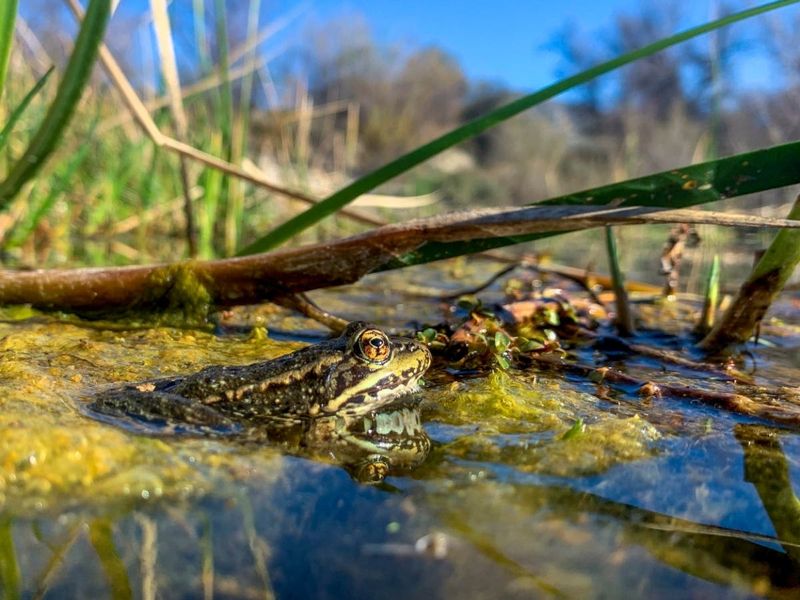
Seeing a frog in your garden in July or August is exciting, but it does not automatically mean that frogs are reproducing on your property. Adult frogs routinely use gardens as daytime refuges or nighttime feeding grounds without any breeding activity happening nearby.
The two things, visiting and breeding, require very different conditions and are easy to mix up when you only see the adult.
Breeding habitat for California’s chorus-frog species varies considerably by species and locality. Seasonal ponds, quiet pools, slow-moving streams, roadside ditches, wetlands, and artificial ponds have all been documented as breeding sites depending on the taxon and region.
The National Park Service notes that California Treefrogs are associated with rocky washes, streams, and quiet pools, and that their eggs are attached to submerged debris in still or slowly flowing water. That egg-attachment detail applies specifically to California Treefrogs; breeding behavior and egg placement vary across the other chorus-frog species found in the state, so it should not be treated as a universal rule for every frog you might encounter.
Young frogs add another layer of complexity to a summer sighting. California Department of Fish and Wildlife records indicate that tadpoles can complete metamorphosis in roughly 40 to 75 days, after which the newly transformed juveniles disperse into surrounding terrestrial habitat.
A small frog turning up in your garden in midsummer may have hatched weeks earlier at a pond, stream, or ditch somewhere nearby and simply wandered into your yard while establishing a home range. CaliforniaHerps documentation on Sierran Treefrogs reflects similar dispersal patterns for related taxa.
The honest read on a summer frog in a California garden is that the animal found something useful there, whether that is shade, prey, cover, or proximity to a water source it used weeks ago. Breeding in your yard is possible if you have a suitable water feature, but a single adult frog resting under a pot or hunting near a porch light is not strong evidence of reproduction.
Pay attention to whether you hear calling males, see egg masses in standing water, or notice multiple small juveniles appearing at once. Those are the signs worth investigating further.
Frogs eat invertebrates, but they will not replace pest control
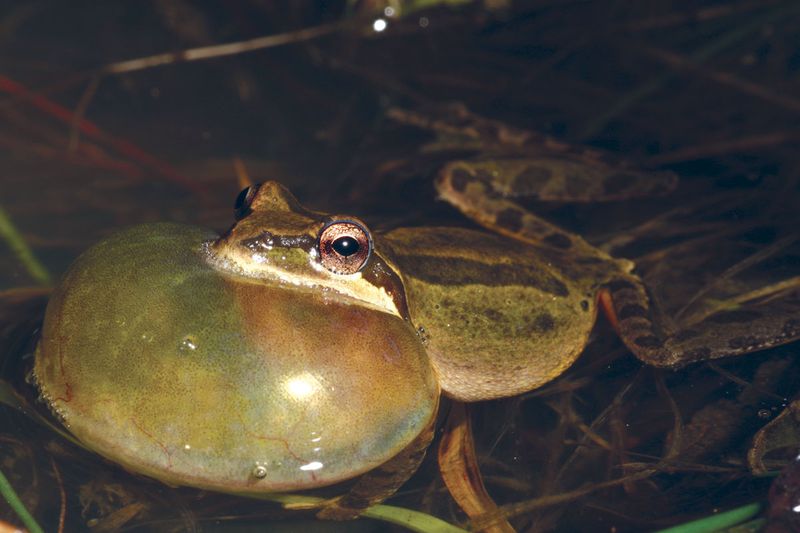
One of the most appealing things about having frogs in a garden is the idea that they are quietly working through the insect population while you sleep. That part is true in a general sense, but the details matter before you start counting on them to solve a pest problem.
The National Park Service confirms that California Treefrogs eat insects, spiders, and other small invertebrates, and the California Department of Fish and Wildlife similarly describes chorus frogs as invertebrate predators active during warmer months.
A USGS diet study from the Cache Creek watershed found that Northern Pacific Treefrogs consumed predominantly terrestrial prey, meaning the insects and other invertebrates they catch tend to be ground-level or low-vegetation species rather than flying pests at a distance. That finding applies to the population studied and should not be read as a statewide diet profile for every chorus-frog species in California, since diet varies with the species, the site, and whatever prey happens to be available.
What this means practically is that a frog in your garden is a genuinely useful presence. It may reduce local populations of beetles, flies, ants, caterpillars, and similar invertebrates in the microhabitat where it hunts.
However, no available evidence supports expecting a frog or two to eliminate a mosquito problem, clear an aphid infestation, or substitute for an integrated pest management plan when a real pest issue develops. Frogs are beneficial predators, not a replacement service.
Treating them as a bonus rather than a solution keeps expectations realistic and protects the frog from being blamed if the garden’s pest situation does not improve on its own.
Support useful habitat without keeping the yard wet
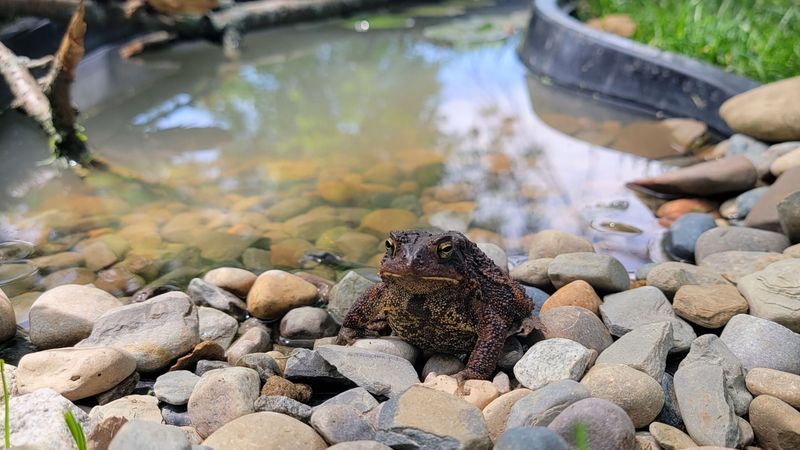
Supporting frogs in a California garden does not require turning your yard into a bog. The goal is targeted habitat, not a perpetually soggy landscape, and that distinction matters in a state where drought conditions, water restrictions, and wildfire risk are permanent considerations rather than seasonal ones.
Start with what you probably already have or can preserve without adding water. Shaded plantings that keep soil slightly cooler, rocks or logs that offer hiding spots, and ground-level vegetation that gives frogs somewhere to rest during the day all serve the same function as elaborate habitat features.
The OSU Extension guide on Pacific Chorus Frogs emphasizes habitat structure, specifically cover, moisture retention, and insect availability, rather than prescribing a particular plant list. Native plants are a reasonable preference where they suit your site and climate zone, but the structural benefit of shade and shelter matters more than the specific species providing it.
If you want to add a water feature, design it carefully. A wildlife pond should include planted edges, shallow areas or gradual slopes that allow frogs to enter and exit easily, and active maintenance to prevent stagnant pockets.
California Department of Fish and Wildlife records and the OSU Extension guide both flag fish and bullfrogs as significant predators of native frog eggs and tadpoles. Temporary or seasonal ponds that dry out periodically may actually be better for native frogs because fish and bullfrogs are less likely to persist in them.
CDC mosquito-control guidance makes clear that any standing water requires active management to avoid becoming a mosquito breeding site.
Leaf litter, brush piles, and dense low vegetation can benefit frogs, but these same features can conflict with fire-safety requirements in many California communities. U.S.
Forest Service amphibian research acknowledges that habitat management involves real tradeoffs in fire-prone landscapes. Before adding any accumulation of dry organic material near structures, check your local fire department’s defensible-space rules and applicable county or state guidelines, because requirements vary significantly by jurisdiction and there is no single statewide prescription that applies everywhere in California.
Protect frogs from pesticides and prevent mosquito habitat
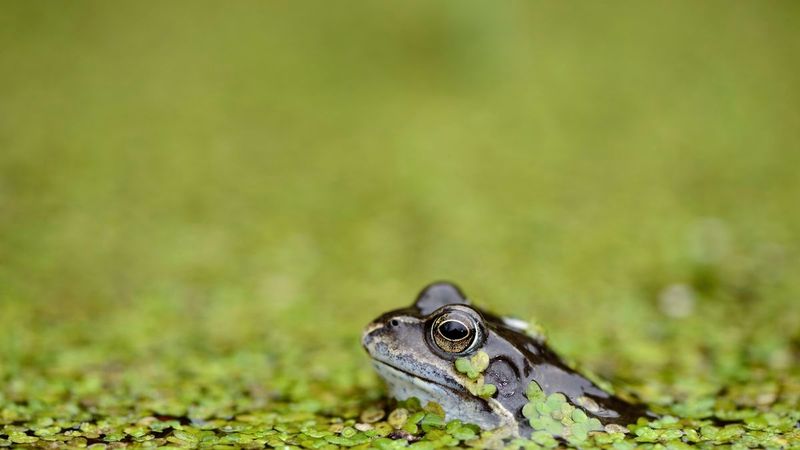
Frogs have permeable skin, which means they absorb substances from the surfaces they rest on, the water they sit in, and the prey they eat. EPA research on pesticide uptake in frogs identifies dermal contact, dietary exposure, and aquatic contamination as all relevant routes of concern for amphibians.
A frog resting on treated soil or hunting near a recently sprayed bed can encounter pesticide residues without you ever applying anything directly to the animal.
The safest overall approach is integrated pest management: monitor for pests first, try cultural or mechanical controls before reaching for a spray, and use targeted treatments only when a problem actually warrants them. EPA ecological risk-assessment guidance and EPA materials on reduced-risk pesticide use both reinforce reading and following every product label, minimizing drift, and keeping pesticides away from ponds, drainage areas, and any surface where runoff could carry residues into water.
California has also moved to restrict certain neonicotinoid products for non-agricultural outdoor use; the California Department of Pesticide Regulation explains the current rules and answers common questions about what is and is not permitted.
On the mosquito side, frogs are not a reliable solution for containers, saucers, rain barrels, or other small water-holding objects in your yard. The EPA mosquito life-cycle overview notes that mosquitoes can complete their aquatic development in surprisingly small amounts of water, including bottle caps, plant saucers, and clogged gutters, where frogs simply do not forage.
CDC home mosquito-control guidance recommends emptying and scrubbing water-holding containers at least once a week, covering rain barrels with tight-fitting screens, and maintaining ponds so that shallow, sheltered edges do not become stagnant. Penn State Extension’s pollinator-friendly mosquito-control resource offers additional mechanical and cultural strategies that reduce mosquito habitat without harming beneficial wildlife.
Keeping these two responsibilities, pesticide caution and container management, separate and consistent is more effective than relying on any single creature to handle either one.
Observe the frog and improve habitat in place
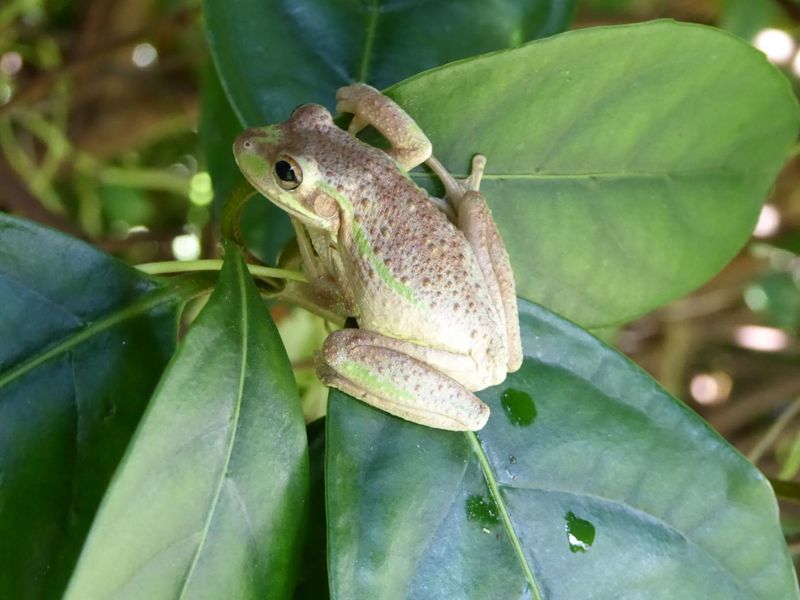
When a frog shows up in your garden, the most useful thing you can do is leave it alone. Wild amphibians do best when they are allowed to use the habitat they have already chosen rather than being relocated to what seems like a better spot.
Moving a frog to a pond or a different part of the yard can stress the animal, potentially expose it to unfamiliar pathogens, or place it outside the terrestrial cover it was actually using. Improve the habitat where the frog already is: preserve the shade, the ground-level cover, and the local insect activity that drew it there in the first place.
If you do make contact with a frog, wash your hands with soap and water afterward. CDC guidance on reptiles and amphibians advises that children younger than 5 should not handle amphibians because of Salmonella risk, a recommendation that applies whether the animal is a pet or a wild visitor.
Keeping handling to a minimum protects both the frog and the people in your household.
A summer frog sighting is a useful clue, not a report card. The NPS Pacific Coast amphibian overview and U.S.
Forest Service amphibian research both reinforce that amphibians are sensitive to habitat change, drought, and contaminants, but presence alone does not confirm that every condition in your yard is ideal. The frog found at least one resource it needed, whether that was shade, a moist corner, nearby prey, or access to habitat close by.
That is worth preserving. A garden that quietly offers a frog a place to rest and hunt is already doing something right, even if it never becomes a breeding pond.