
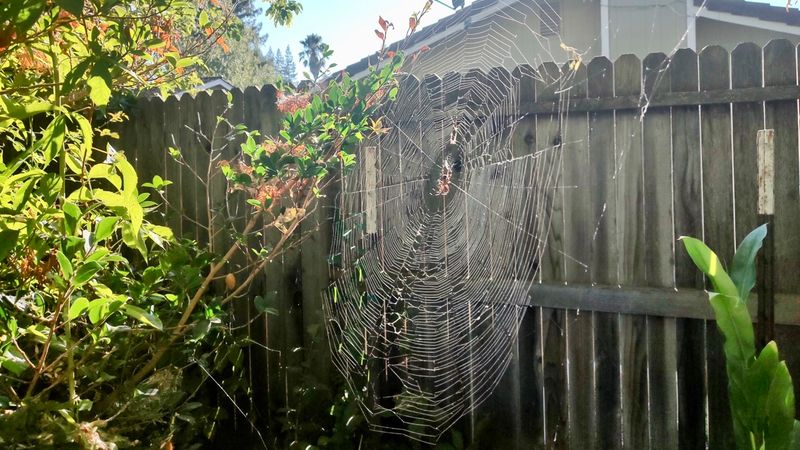
Most California homeowners never think twice before sweeping down a web stretched across the garden gate, but that web was working. The spiders building those circular traps in your yard are genuine allies, catching flying insects day and night without any help from you.
Before you grab the spray can again, it is worth understanding exactly what these spiders can and cannot do, because the honest answer is more useful than the hype.
The garden web is useful—but it is not a pest-control program
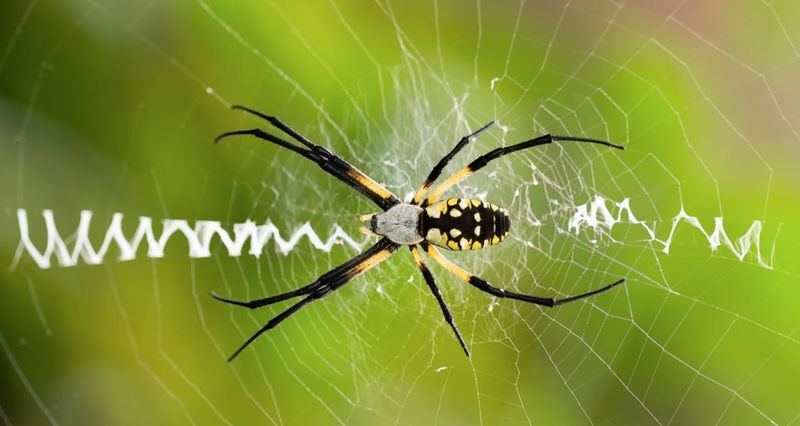
California is home to more than 1,000 spider species, which means the phrase “California garden spider” does not point to one confirmed creature. What most homeowners notice are orb-weavers, members of the family Araneidae, which build the familiar wagon-wheel webs across garden beds, along fences, and between shrubs.
UC IPM’s guide to common garden spiders describes these spiders as beneficial visitors that wait in their webs for prey and recommends protecting them because they consume insects and other pests.
The promise is real, but it has limits. An orb-weaver’s web intercepts whatever flying insects happen to pass through that spot.
That makes the spider a supplemental, opportunistic predator, not a managed pest-control program. A web in your tomato bed may catch small flies, gnats, or the occasional winged aphid, but it cannot be dialed in to target a specific pest or guarantee a measurable reduction in any insect population.
California Department of Pesticide Regulation guidance on spiders confirms that orb-weavers found openly in garden settings are generally not considered a health hazard, which means preserving their webs is a low-risk choice in appropriate locations. The practical payoff is free, passive predation on some of the insects moving through your yard, combined with a healthier balance of garden wildlife.
What a preserved web cannot do is replace a deliberate aphid-control plan, a mosquito source-reduction routine, or a targeted pesticide application when one is genuinely needed. UC Cooperative Extension notes that no control is recommended for orb-weavers and that moving an inconvenient web is preferable to treating the whole yard.
Think of the web as a useful bonus, not a substitute for the rest of your pest management toolkit.
Orb-weaver webs work best against passing flying insects
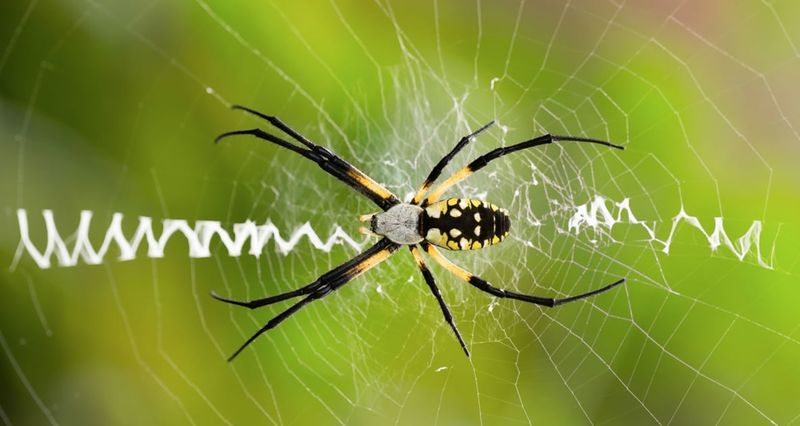
An orb web is essentially a passive trap. The spider positions it in a gap between plants or structures, then waits for an insect to fly through.
What lands in the web depends heavily on where the web sits, how large the mesh openings are, the size of the spider, the season, local weather, and which insects happen to be moving through that corridor on any given day.
Research on orb-weaver diets found that small flies and other flying insects make up the core of what these spiders capture. Winged aphids appeared in some diet samples, which shows that an airborne aphid can end up in a web.
The same research did not establish that orb-weavers reliably suppress aphid populations or push any specific pest below a damaging level. Occasional capture and meaningful population control are two very different things.
Prey capture is also opportunistic in a deeper sense. Studies on generalist predators in structured habitats show that a spider’s presence does not prove it is suppressing a target pest.
The web catches what comes to it. A spider positioned between flowering plants may intercept pollinators as readily as pest species, which is one more reason to treat spider conservation as a general ecological benefit rather than a precision pest-control tactic.
For California homeowners, the practical takeaway is straightforward. Orb-weavers are most likely doing useful work against small flies, fungus gnats, and other flying nuisances that drift through the garden.
Mosquitoes are also flying insects and could end up in a web, but a handful of webs scattered around the yard will not meaningfully reduce the mosquito population or your risk of bites. Match your expectations to what the evidence actually shows: useful supplemental predation on flying insects, not a targeted solution for any single pest.
Keep safe webs and move the ones that interfere
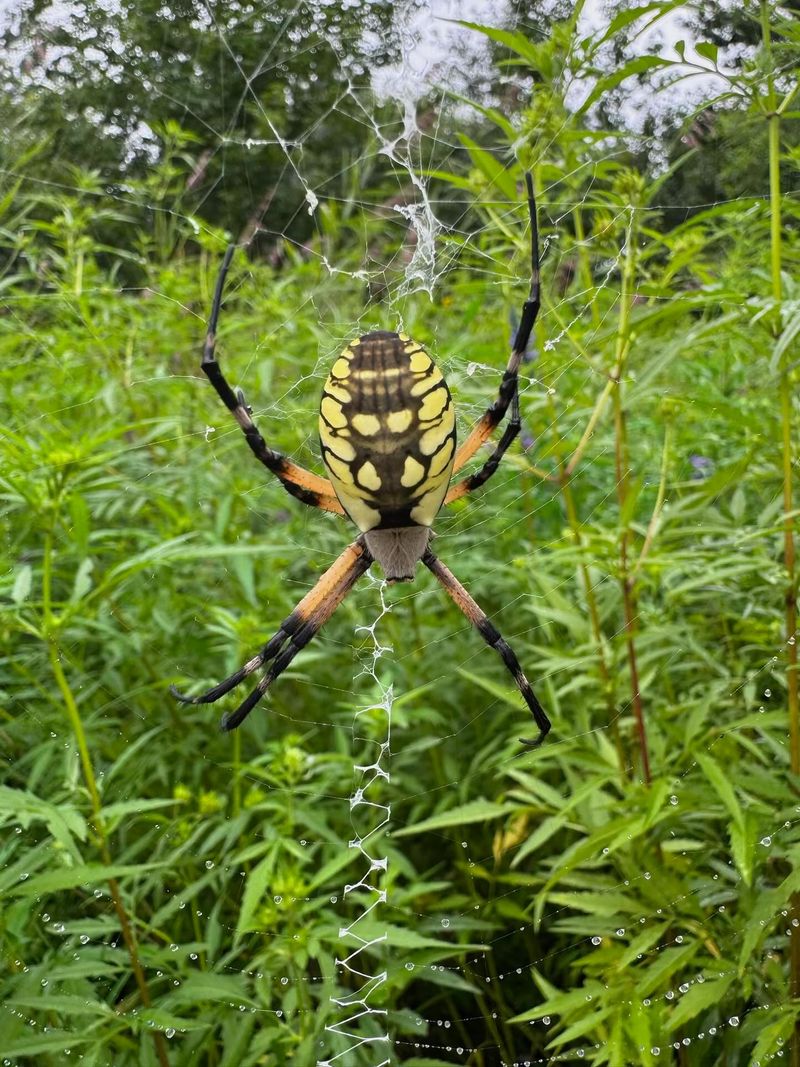
A simple location test separates webs worth keeping from webs worth moving. If a web sits in a garden bed, along a back fence, around a trellis, or in any spot where people do not regularly walk or reach, leave it alone.
The spider is working, and the web costs you nothing.
Webs that block a doorway, span a walkway, hang over stairs, cross a play area, or stretch across a workspace create real contact and access hazards. Brushing face-first into a web is unpleasant, and the startle response can be genuinely dangerous on stairs or in a workspace.
UC Cooperative Extension recommends carefully moving an inconvenient spider to a less disruptive location rather than treating the surrounding area.
Moving a web is easier than it sounds. Slip a container over the spider, slide a piece of cardboard underneath, and carry it to a sheltered spot in the garden, behind a shrub or along a fence line where it can rebuild.
A long-handled brush can also gently guide the spider off the web before you clear the strand. The key is avoiding direct hand contact with any spider you cannot positively identify.
UC IPM notes that most spiders seen openly during the day in California gardens are unlikely to bite or cause lasting harm. Even so, California also has widow spiders, which prefer dark, concealed, undisturbed spots rather than open garden webs.
CDPR best management guidance reinforces that readers should avoid handling any unidentified spider directly. Relocating one inconvenient web is always a better first move than spraying the entire yard.
Offer potential web anchors without promising a spider magnet
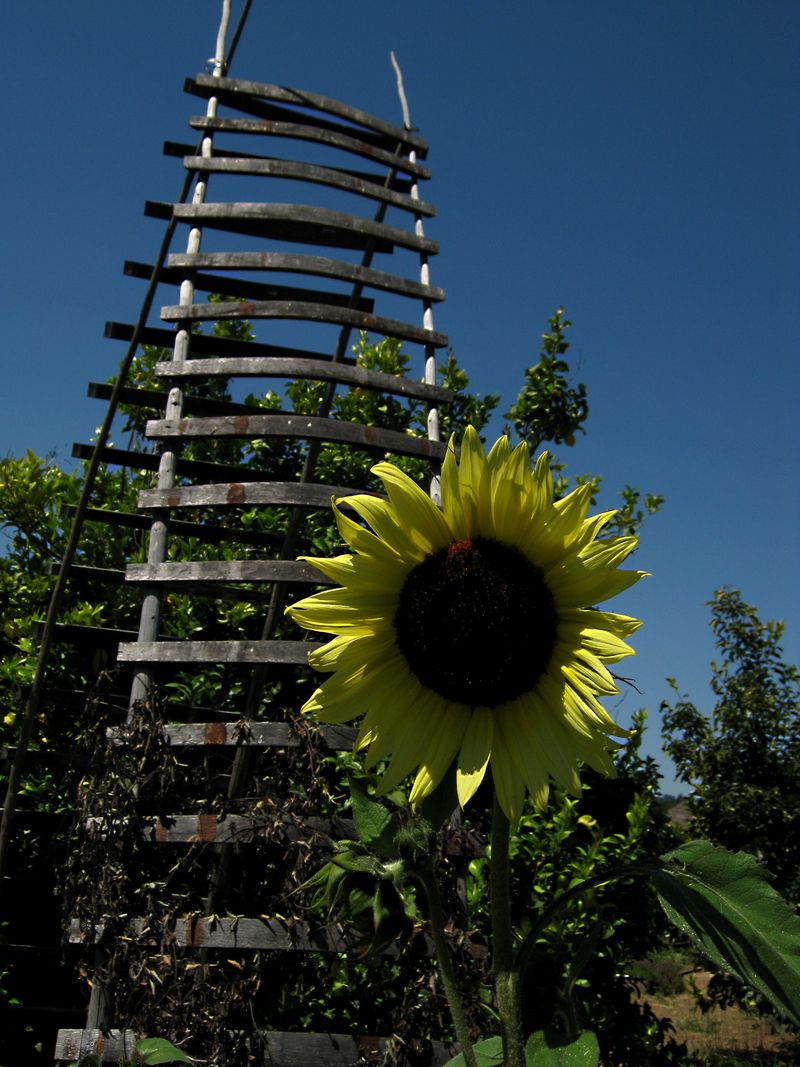
Orb-weavers need something to anchor their webs, and a garden with tall, sturdy plants and open vertical structures gives them more options than a flat, closely cropped bed. UC Master Gardener guidance specifically mentions tall plants such as tomatoes, sunflowers, and cornstalks, as well as arbors and trellises, as potential web supports.
Adding any of these features to a low-traffic corner of the yard creates a structural invitation, though it does not guarantee that a spider will show up or stay.
Web construction also depends on species, prey availability, local insect movement, weather, and season. A trellis in a spot with little insect traffic may sit empty while a corner of the yard with more activity draws a resident spider naturally.
Present these features as useful options, not as a reliable formula for attracting orb-weavers.
Lighting adjustments can complement this approach. UC IPM recommends keeping lights away from entryways where possible and limiting insect-attracting illumination near doors and windows.
Flying insects gather around bright entry lights, and spiders follow the food source, which is why webs appear so often at doorframes and window corners. Moving a light fixture a few feet away from the entry, switching to a yellow or warm-tone bulb that attracts fewer insects, or using a motion-activated fixture reduces the insect concentration at the door without eliminating light from the garden.
The result is a practical balance: taller plants and open structures in garden beds give spiders places to work where webs are welcome, while adjusted lighting reduces the insect draw that pulls webs into inconvenient spots near the house. Prey availability and location are central to where a generalist predator actually sets up, so shaping the insect environment shapes where spiders tend to appear.
Use IPM instead of routine broad spraying

Integrated pest management starts with a question most homeowners skip: what exactly is the problem, and how bad is it right now? EPA’s IPM framework lays out the sequence clearly: identify the pest, monitor its abundance and actual damage, determine whether an action threshold has been reached, use prevention and lower-risk controls first, and select a targeted product only when the situation genuinely calls for it.
Routine broad-spectrum spraying skips every step in that sequence. It applies a chemical to an area rather than to a specific pest at a specific location, which means it reaches far more organisms than the one causing damage.
California Department of Pesticide Regulation backyard IPM guidance identifies spiders as beneficial garden visitors and advises against broad insecticide sprays that can harm non-target organisms, including those spiders working in your beds.
The effects of pesticides on web-building spiders vary considerably by active ingredient, concentration, application method, exposure route, and spider species. Research on insecticide effects on orb-weavers documented changes in web construction and prey-capture ability after certain insecticide exposures.
Separate work on nonlethal pesticide effects found that impaired web-building in spiders could allow mosquito populations to rebound more quickly after spray applications. These findings do not mean every garden product kills every spider, but they do show that broad or poorly targeted applications can disrupt the natural enemies already working in the yard.
A meta-analysis of pesticide effects on natural enemies confirmed that broad-spectrum applications can harm beneficial predators and may facilitate secondary pest outbreaks. The practical guidance is simple: read the label, treat the specific problem in the specific location where it exists, and skip the broadcast spray when monitoring shows that pest levels have not reached a threshold that justifies intervention.
Treat aphids on the plant, not with a web-based promise
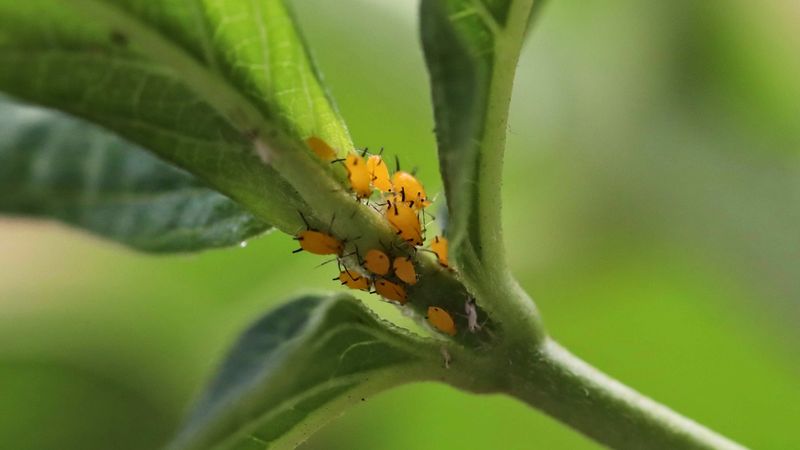
Aphid colonies cluster on stems and leaves, not in open airspace. Most aphids in a garden are wingless, which means they crawl rather than fly, and a web strung between two tomato stakes is not going to intercept them.
Diet research on orb-weavers found that winged aphids appeared in some samples, confirming that a flying aphid can occasionally end up in a web. That is opportunistic capture, not aphid management.
A more effective starting point is a close look at the plant itself. Check the undersides of leaves and the growing tips where aphids congregate.
A light infestation on an otherwise healthy plant often resolves on its own when natural enemies are present. A heavier infestation on a stressed plant calls for a different response.
A strong stream of water directed at infested stems knocks most aphids off effectively and costs nothing. Heavily infested shoots can be pruned and discarded before the colony spreads.
Beyond those physical controls, the most productive thing a California gardener can do for aphid pressure is protect the specialist natural enemies already working on the problem: lady beetles, lacewings, and parasitoid wasps all target aphids directly and efficiently. EPA’s IPM guidance places conservation of these natural enemies ahead of chemical intervention in the pest-management sequence.
Orb-weavers belong in the broader natural-enemy community of a healthy garden, but they are a supporting player in the aphid story rather than the lead. Treating aphid problems with the right tools, water, pruning, and specialist predators first, keeps the web-building spiders free to do what they actually do well: intercept flying insects passing through the garden.
Control mosquitoes where they breed
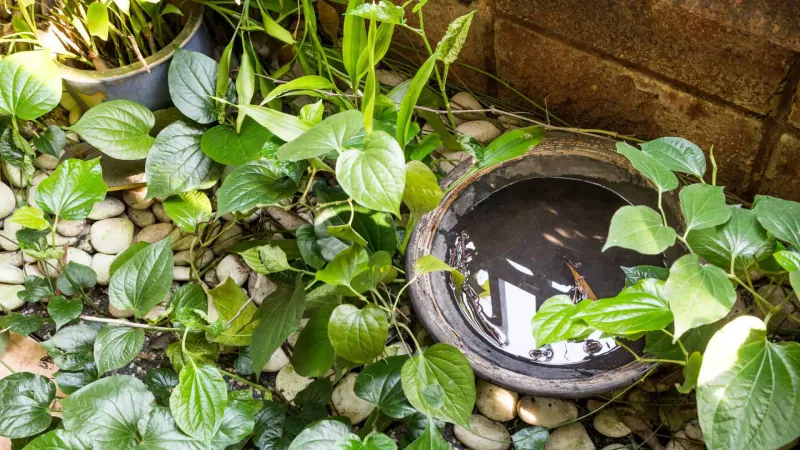
A few orb-weaver webs scattered around the yard may catch a mosquito here and there, since mosquitoes are flying insects and webs intercept flying insects. What those webs cannot address is the standing water where mosquitoes develop.
Every bucket, saucer, clogged gutter, toy, tire, and pool cover that holds water for more than a week is a potential mosquito nursery, and no spider web reaches into those spots.
CDC guidance on mosquito control at home centers on eliminating or managing those water sources directly: empty and scrub water-holding containers weekly, turn over or cover buckets, saucers, toys, tires, and trash containers, and keep rain barrels screened or tightly sealed. Pool covers that collect rainwater should be drained or tilted so water runs off rather than pools.
Tree holes are a less obvious breeding site that California homeowners often overlook. Filling them with sand or fine gravel eliminates the water pocket without harming the tree.
CDC guidance on tree holes covers this step in detail. For water that genuinely cannot be drained or covered, a Bti-based larvicide is an appropriate option.
UC IPM explains that Bti targets mosquito larvae, not pupae, and that labels must be followed for it to work correctly. Outdoor adulticide sprays and foggers can reduce adult mosquito numbers temporarily but do not address the breeding source and do not provide lasting control.
Personal protection remains necessary alongside source reduction. Window and door screens, EPA-registered repellents applied to skin and clothing, and protective clothing during peak mosquito hours all reduce bite risk in ways that spider webs simply cannot replicate.
Mosquitoes can carry West Nile virus and other pathogens in California, so source reduction and personal protection are not optional steps to skip in favor of garden ecology.
Let the spider help, then match the remedy to the pest
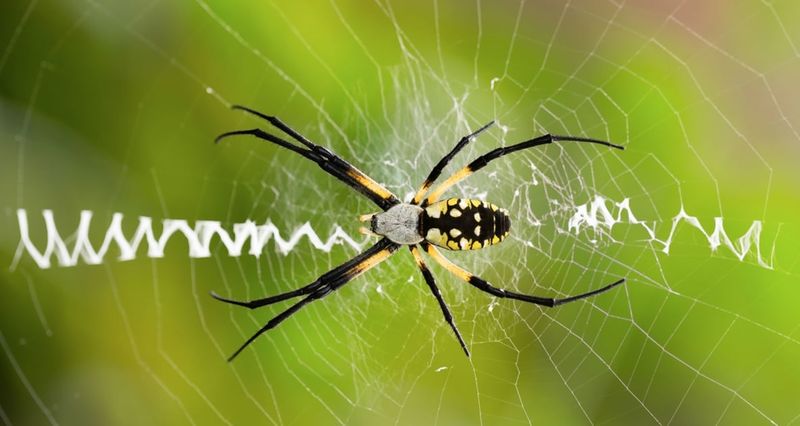
Putting this all together takes less effort than a spray routine. Preserve webs that sit in low-traffic garden areas, provide a few taller plants or open structures as potential anchors in spots where webs will not create a hazard, and reduce unnecessary broad-spectrum spraying by inspecting before you treat.
UC IPM’s guidance on garden spiders supports leaving orb-weavers in place wherever they are not causing a problem, and that is the foundation of the whole approach.
When aphids appear on a plant, check the infestation level first, wash or prune before reaching for a product, and protect the specialist predators, lady beetles, lacewings, and parasitoid wasps, that are better equipped for that job than any web. When mosquitoes are a concern, empty standing water weekly and use screens, repellents, and appropriate larval control.
EPA’s IPM framework keeps targeted treatment as an available option when monitoring shows it is genuinely needed, which means you are not giving up pest control, you are just using it more precisely.
Orb-weavers offer real but limited supplemental pressure against flying insects. UC IPM’s mosquito guidance makes clear that a wildlife-friendly yard and a well-managed yard are the same yard.
The spider handles what passes through its web; you handle what breeds in the bucket by the back fence. Both jobs matter, and neither one replaces the other.