
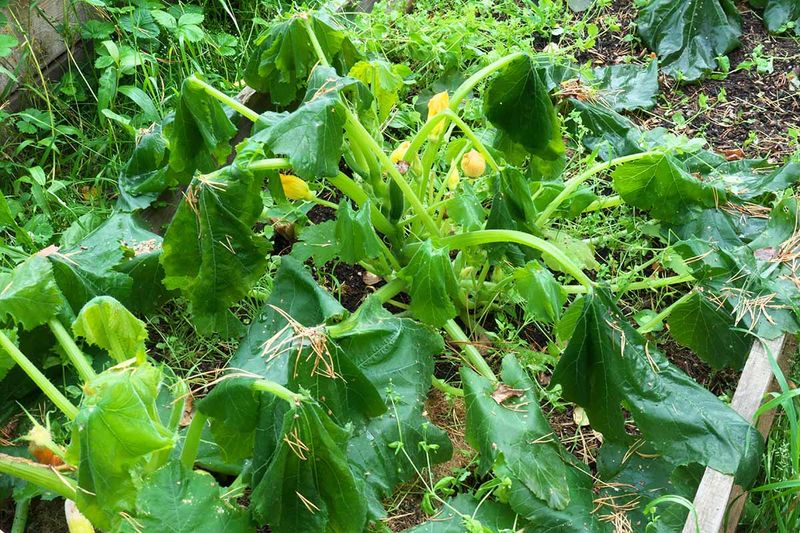
Watching your squash or zucchini droop on a hot afternoon can make any gardener nervous, especially when the leaves bounce back by morning. That recovery feels reassuring, but it does not tell you whether your plant is fine or quietly losing a fight with insects, disease, or root problems.
Learning to read the full picture, including the soil, the stem base, the leaves, and the crown, gives you a much better chance of catching a real problem before it ends the season.
Morning recovery is a clue, not an all-clear
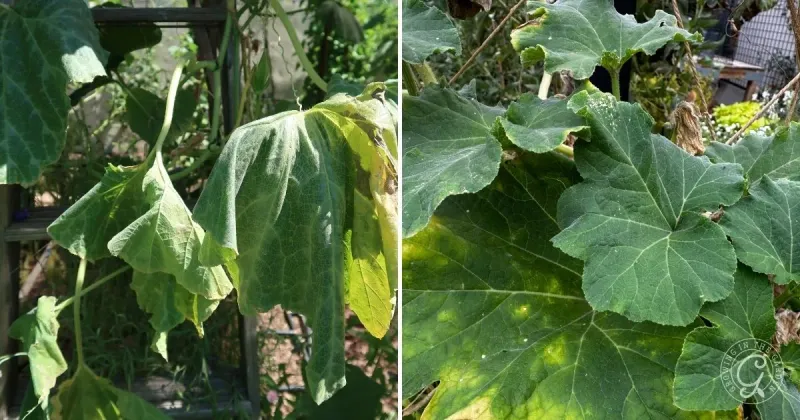
Overnight recovery in a wilting squash plant is genuinely useful information, but it narrows the field without settling the diagnosis. On a hot, windy day, leaves can lose water faster than the roots push it upward, even when the soil holds plenty of moisture.
Once temperatures drop in the evening, that balance tips back and the plant stands up again, according to University of Minnesota Extension guidance on heat stress.
The problem is that bacterial wilt can produce the exact same pattern in its early stages. Cucumber beetles transmit the disease, and infected plants often wilt during the heat of the day and appear to recover at night before the wilt becomes permanent.
Treating that overnight bounce as proof the plant is healthy, or as proof that root damage is the culprit, skips over several more likely explanations.
Track what the plant does over several days rather than making a call from a single morning. A plant that droops only when temperatures are at their peak and then recovers fully as conditions cool is behaving differently from one that wilts a little earlier each day and recovers a little less completely each night.
That trend, combined with a hands-on inspection, tells you far more than any single morning observation can.
Check the soil before you reach for the hose
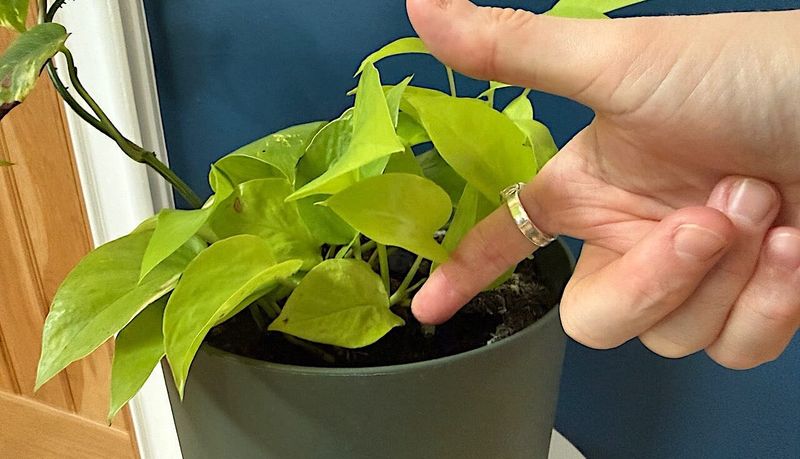
Before adding any water, push a finger or a trowel into the soil about two inches below the surface near the plant’s root zone. Soil that feels moist at that depth is not the reason your squash is drooping in the afternoon heat.
Watering a plant that already has adequate soil moisture does not help it, and in a bed with poor drainage it can actively make things worse.
When the soil genuinely is dry at that depth, water deeply at the root zone rather than giving the plant frequent shallow passes. University of Minnesota Extension’s vegetable garden watering guidance recommends deep, infrequent watering so roots are encouraged to grow downward rather than staying near the surface where they dry out fastest.
A two- to three-inch layer of organic mulch around the plant can hold soil moisture longer and keep the root zone cooler during the hottest hours of the day. Temporary afternoon shade from a row cover or shade cloth can also reduce water loss through the leaves when a heat wave is especially severe.
Just keep in mind that none of these measures will address insect damage, vascular disease, or root rot, which UC IPM links to saturated or poorly drained soil rather than dry conditions.
Inspect the lower stem for squash vine borer damage
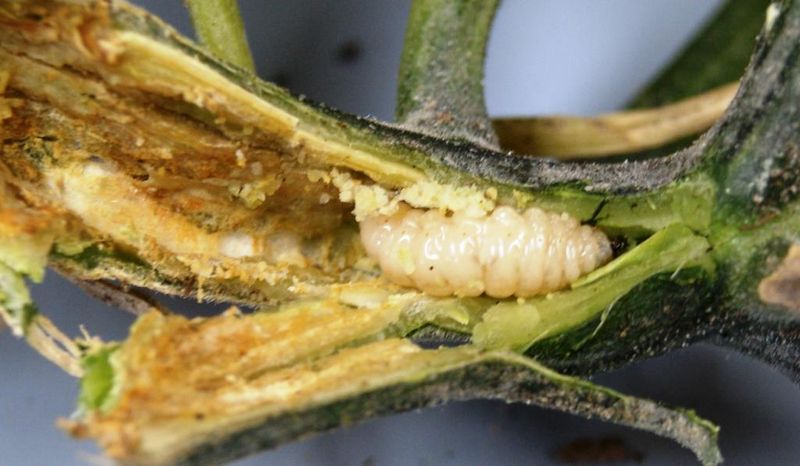
Kneel down and look closely at the stem where it meets the soil. Squash vine borer moths lay their eggs on or near the lower vine, and when the eggs hatch, the larvae chew straight into the stem and begin tunneling upward.
What you are looking for is a small, often ragged entry hole surrounded by green, orange, or sawdust-like frass that the larva pushes out as it feeds.
The damage matters because the larva destroys the vascular tissue inside the vine, which is what carries water from the roots up to the leaves. That is why a heavily infested plant wilts even when the soil is moist and the roots themselves look fine.
UF/IFAS Extension’s squash vine borer fact sheet describes the larvae as cream-colored caterpillars with a brown head that can reach about an inch in length, and notes that UF/IFAS has documented two overlapping generations in the southern United States, with adult moth activity in Florida running from roughly mid-May through late October.
You can carefully slit the stem lengthwise with a sharp knife to look for a larva, but finding nothing inside does not clear the plant. Mississippi State University Extension’s two-key-squash-pests newsletter notes that larvae eventually exit the stem to pupate in the soil, so an empty tunnel can still mean earlier borer activity caused the wilt.
Once a larva is established inside the vine, University of Minnesota Extension’s squash vine borer page explains that insecticide sprays cannot reliably reach it, making prevention far more effective than treatment after the fact.
Check leaves and crowns for squash bugs and bacterial wilt
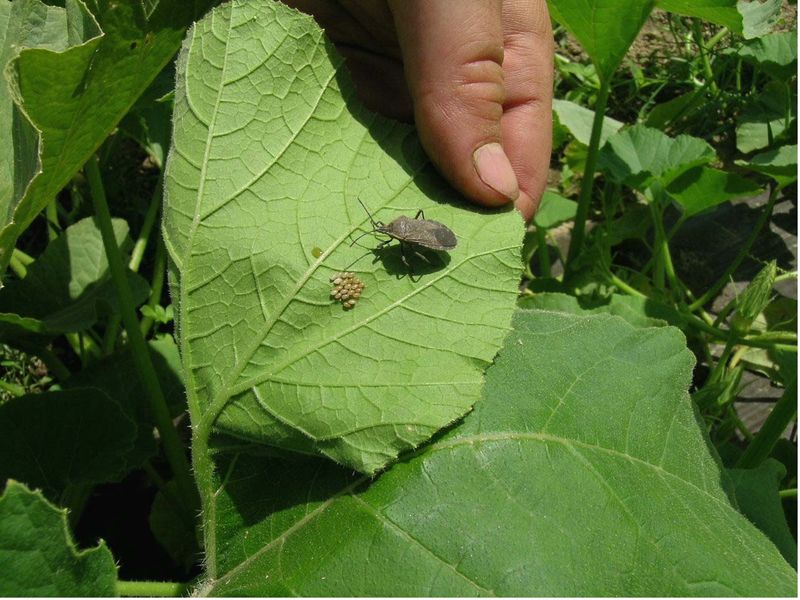
Flip several leaves over, especially the older ones closer to the crown, and look at the undersides carefully. Squash bugs tend to cluster in sheltered spots near the base of the plant.
Adult bugs are flat, gray-brown, and about half an inch long; nymphs are smaller and often gray or greenish. Egg masses appear as neat rows of coppery or bronze-colored ovals on the leaf undersides.
Heavy squash bug feeding can be severe enough to block water and nutrient movement through the plant, causing sections of it to wilt, yellow, and eventually turn black and brittle, all without producing any kind of hole in the stem. UC IPM’s squash bug profile notes that the bugs inject a toxic substance while feeding, which accelerates the damage.
Utah State University Extension’s squash bug resource recommends checking plants frequently because populations build fast once egg-laying begins.
While you are inspecting the plant, look for striped or spotted cucumber beetles on the leaves and stems. These beetles can transmit bacterial wilt, a disease caused by bacteria that colonize the plant’s water-conducting tissue.
Early on, University of Minnesota Extension’s bacterial wilt page describes a pattern of daytime wilting and nighttime recovery, followed by progressive, irreversible decline. There is no pesticide that cures an already infected plant.
A rough screening method involves cutting a symptomatic vine near the crown, pressing the cut ends together, then slowly pulling them apart to look for thread-like bacterial strands, but a negative result does not rule the disease out, and laboratory testing is more reliable if you need a firm answer.
Look for wet conditions and crown or root decay
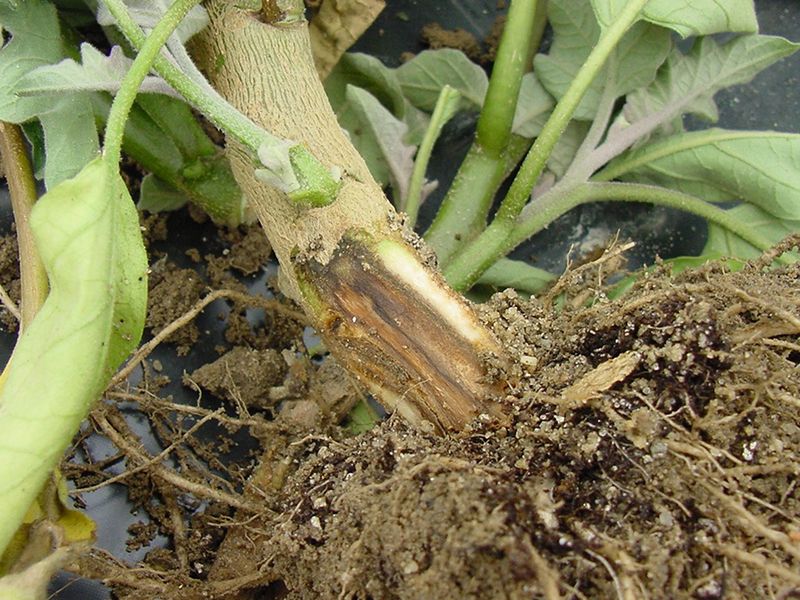
Root and crown rot belong in the conversation when the surrounding conditions point toward excess moisture rather than drought. Think about whether the bed drains well after rain, whether the plant sits in a low spot that collects water, or whether the soil has stayed consistently wet for several days.
Those conditions favor water molds like Pythium and Phytophthora, which attack roots and crown tissue and can cause rapid plant collapse.
UC IPM’s cucurbit root rot profile and the related UC IPM agricultural cucurbit root rot and damping-off page both link these diseases to saturated or poorly drained soil rather than to ordinary dry-weather stress. Gently move the mulch away from the crown and press on the tissue where the stem meets the soil.
Healthy crown tissue is firm and pale green or cream-colored. Crown rot typically shows up as dark, water-soaked, or mushy tissue at that junction.
If the crown looks suspicious, carefully expose a few roots and check their color and texture. Healthy roots are white or cream and firm; rotted roots are brown, gray, or black and may fall apart when touched.
University of Minnesota Extension’s Phytophthora page notes that the pathogen spreads through water movement in the soil, so improving drainage is more helpful than applying more water. A plant that collapses suddenly rather than drooping only during the hottest hours of the afternoon is a stronger candidate for crown or root disease than for simple heat stress.
Match the response to the evidence
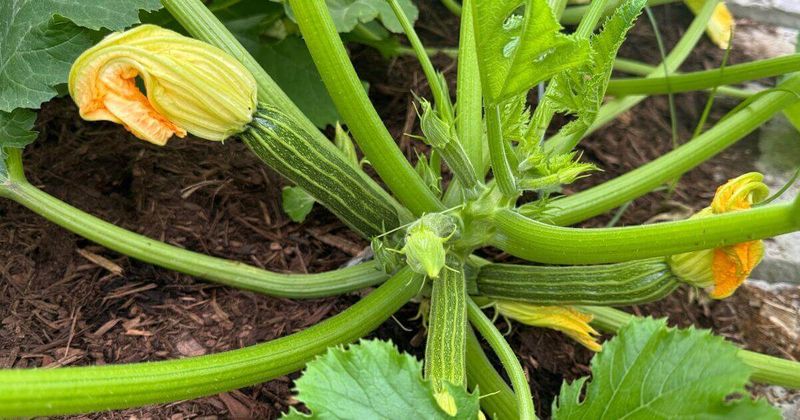
Once you have checked the soil, stem base, leaf undersides, crown, and roots, you have enough evidence to choose a response that actually fits the problem. For a plant that wilts only during the hottest part of the day, has moist soil at two inches, and shows no holes, frass, bugs, or crown damage, the likely explanation is heat stress.
University of Minnesota Extension’s heat-stress guidance suggests deep watering when soil is dry, adding mulch, and using temporary afternoon shade to reduce leaf water loss.
When squash bugs are present, hand-pick adults and nymphs into soapy water and scrape egg masses off leaves. Remove and dispose of badly infested or collapsed plants so the pest population does not carry over to healthy plants.
UC IPM’s squash bug management page emphasizes early detection because large populations are harder to reduce once they establish.
For squash vine borers, timing is everything. University of Minnesota Extension’s vine borer resource explains that preventive treatment must target eggs or newly hatched larvae before they tunnel inside the stem.
Row covers can exclude adult moths on young plants, but they must come off at flowering so pollinators can reach the blossoms. Once a plant is already wilting from established borer damage, spraying will not save it.
Similarly, University of Minnesota Extension confirms that no pesticide cures bacterial wilt in a plant that is already infected, so removing and bagging the plant to reduce beetle pressure on nearby plants is the more practical step.
Use pesticides only under the label
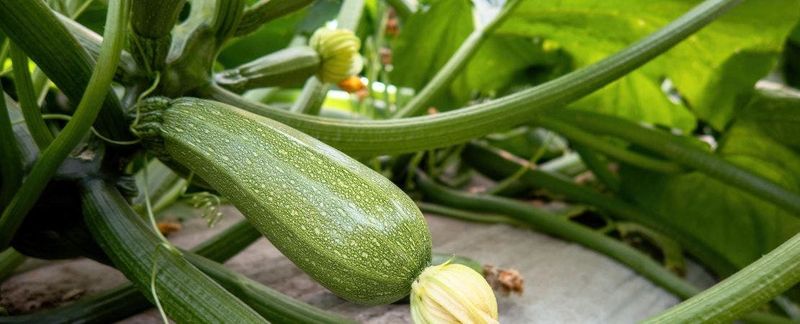
Any time a chemical treatment enters the picture, the product label is the legal authority on how it may be used. EPA’s introduction to pesticide labels makes clear that the label is a legally enforceable document, and EPA’s read-the-label-first guidance specifically tells food gardeners to check the preharvest interval before applying anything to a crop that will be eaten.
Using a product on a crop, pest, or at a rate not listed on the label is both illegal and potentially harmful.
Squash plants in flower present a particular concern. Bees and other pollinators visit squash blossoms regularly, and without them there is no harvest.
EPA’s pollinator protection strategies highlight the risk broad-spectrum insecticides pose to beneficial insects. Evening application is sometimes suggested as a way to reduce bee exposure, but it is not automatically safe, and the product label’s bloom-time restrictions and timing requirements take precedence over any general advice.
University of Minnesota Extension’s vine borer page also notes that products aimed at larvae outside the stem will not reliably reach borers already tunneling inside. Read the label for the specific crop, pest, application rate, and any restrictions before purchasing or applying any product.
Track the plant instead of guessing from one morning
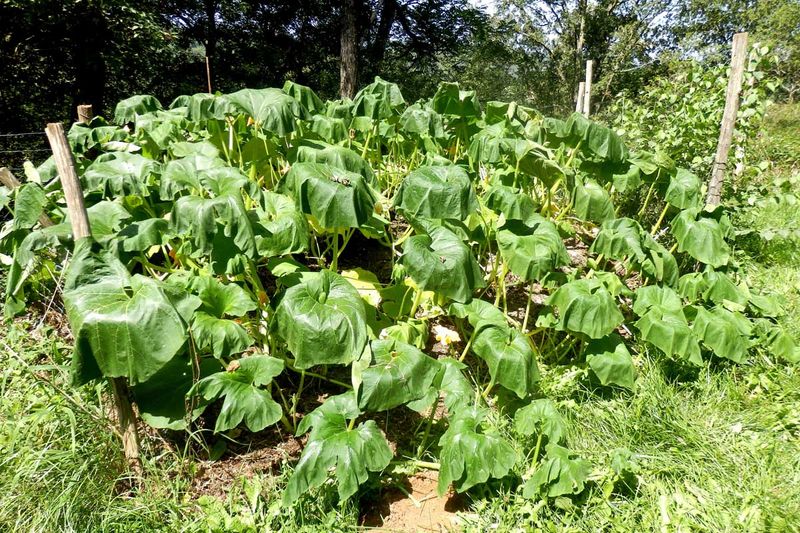
A single morning observation is a starting point, not a conclusion. Combine what you see when the plant recovers with everything you find during a hands-on inspection of the soil, stem base, leaf undersides, crown, and roots.
A plant that wilts only during extreme afternoon heat, holds adequate soil moisture, and shows no visible damage is a reasonable candidate for heat-stress management. A plant that wilts a little earlier each day, recovers less each night, or shows frass, bugs, soft crown tissue, or decayed roots needs a different response entirely.
Watch the trend for several days. University of Minnesota Extension notes that bacterial wilt progresses, while heat stress typically eases as temperatures moderate.
UF/IFAS Extension’s squash vine borer guidance and heat-stress resources from University of Minnesota Extension both point toward local extension offices for region-specific pest timing and treatment windows. No single symptom identifies a single cause, and the gardener who inspects methodically and tracks the pattern over time is far better positioned to act effectively than one who waters or sprays based on a morning glance.
The plant’s story unfolds over days, not hours.