
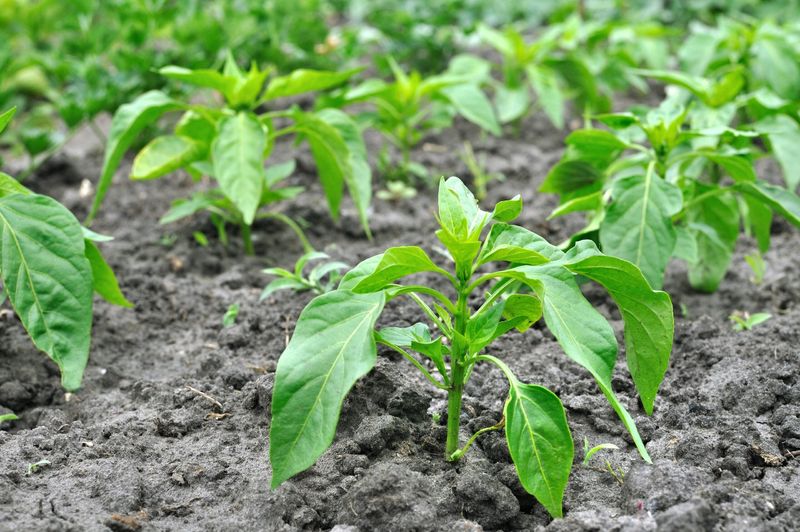
You walk out to check your pepper plants on a sweltering August morning, and the ground beneath them is littered with tiny fallen blossoms. The plants look full and green, maybe even healthier than ever, yet not a single pepper is forming.
For Southern gardeners in Florida and Texas, this maddening pattern shows up every summer, and understanding what is really driving it can save your crop before the season slips away.
A Lush Plant Can Still Be Failing to Set Fruit
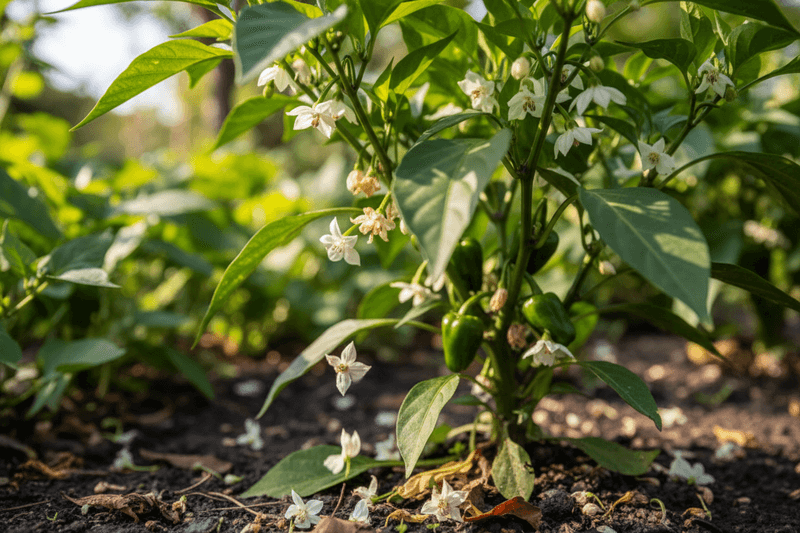
Pepper plants are stubborn optimists. Even when every flower they produce falls off without leaving a pepper behind, the plant keeps pushing out new leaves, branching vigorously, and looking like the picture of health.
Illinois Extension notes that a pepper plant with no developing fruit can actually appear unusually green and vigorous, because all the energy that would have gone into fruit production stays in the leaves and stems instead.
This is blossom drop, and it is different from blossom-end rot. Blossom drop means flowers or very small developing fruits abort and fall before they have a chance to grow.
Blossom-end rot, by contrast, produces a fruit that develops but then develops a dark, sunken lesion on the bottom end, which is linked to water-uptake problems rather than a failure to set fruit at all. Mixing up the two conditions leads to the wrong fix.
For a healthy-looking plant shedding blossoms in late-summer heat, sustained heat stress is the leading suspect, but it is not the only one worth checking. New Mexico State University Extension identifies water stress, hot dry wind, excessive humidity, insects, nutrient imbalances, and cultivar differences as additional factors that can all contribute to flower abortion.
A full diagnosis means looking at the whole growing environment, not just the thermometer.
Warm Nights Are One Sign of a Larger Heat Pattern
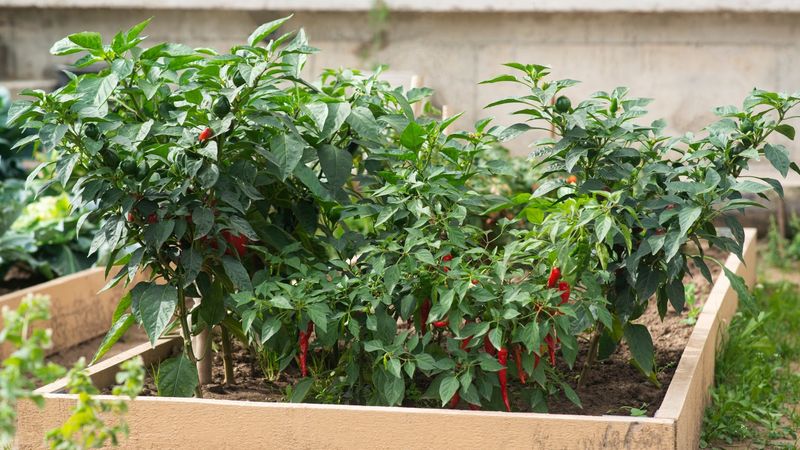
Nighttime temperatures get a lot of blame for pepper flower drop, and they deserve some of it, but treating a single warm night as an on-off switch oversimplifies a more complicated picture. University extension programs commonly report that nights above roughly 70 to 75 degrees Fahrenheit, combined with daytime highs around or above 90 to 95 degrees, can increase the risk of poor fruit set.
Texas A&M AgriLife Extension identifies these combined temperature ranges as conditions that can cause flowers or small fruits to abort.
Equally important, and often overlooked, is that cool nights can also cause problems. University of Maryland Extension notes that night temperatures in the 50s or below can reduce fruit set as well, particularly early in the season.
For a late-summer heat pattern in Florida or Texas, cold nights are rarely the culprit, but they are worth keeping in mind when diagnosing plants after an unusual cold front passes through.
Research on glasshouse sweet pepper found that the 24-hour mean temperature mattered more for fruit set than the difference between day and night temperatures alone. That finding matters practically: a stretch of hot days paired with warm nights, sustained over several days, can be more damaging than any single overnight reading.
University of Minnesota Extension also points out that smaller-fruited and hot-pepper types tend to tolerate temperature extremes better than large bell peppers, so responses vary depending on what variety you are growing.
Heat Can Damage the Flower Before Fruit Appears
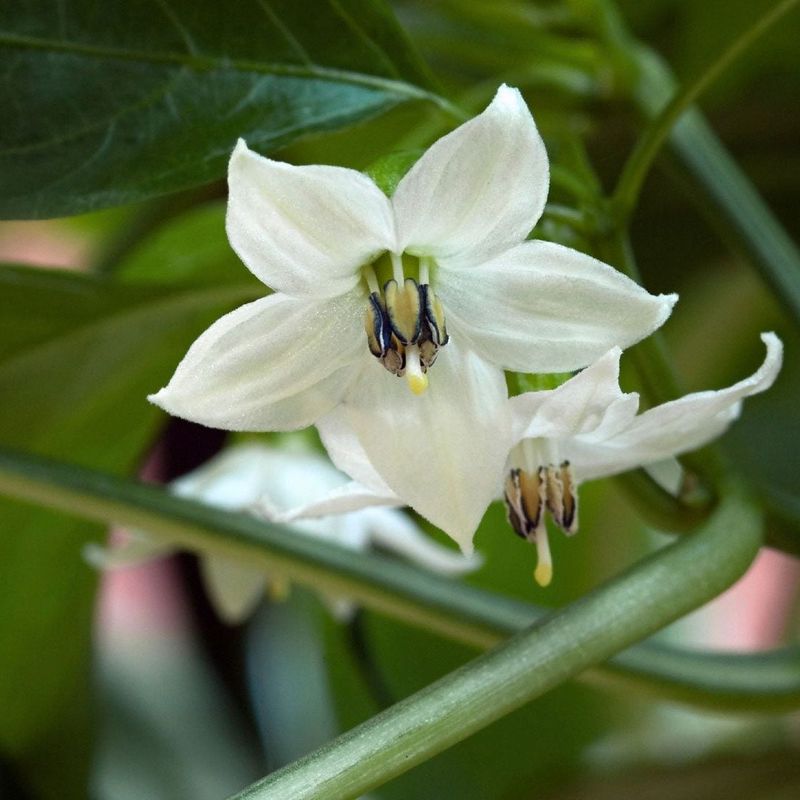
A pepper flower can look perfectly normal and still fail to produce fruit because the damage happened before the flower ever opened. Controlled research on bell pepper found that exposure to temperatures around 33 degrees Celsius (about 91 degrees Fahrenheit) during sensitive developmental stages reduced both fruit set and pollen viability.
Erickson and Markhart’s study in Plant, Cell and Environment showed that high temperatures could impair anther development, reduce the amount of viable pollen released, disrupt fertilization, and trigger abortion both before and after flowers opened.
The practical implication is that heat can cause reproductive failure through more than one pathway at once. Pollen that looks present may not be functional.
A flower that opens may never get properly fertilized even if pollinators visit. The problem is not simply that bees are missing from your garden.
Peppers are largely self-fertile, meaning they can pollinate themselves without insect help. Illinois Extension confirms that a lack of honey bees is not usually the primary explanation for every dropped pepper flower.
Insects can improve fruit size and seed count in some situations, but when heat has already reduced pollen viability or disrupted floral development, adding more pollinators will not reverse the underlying damage. Fixing the heat problem has to come first.
Check the Plant’s Microclimate Alongside the Forecast
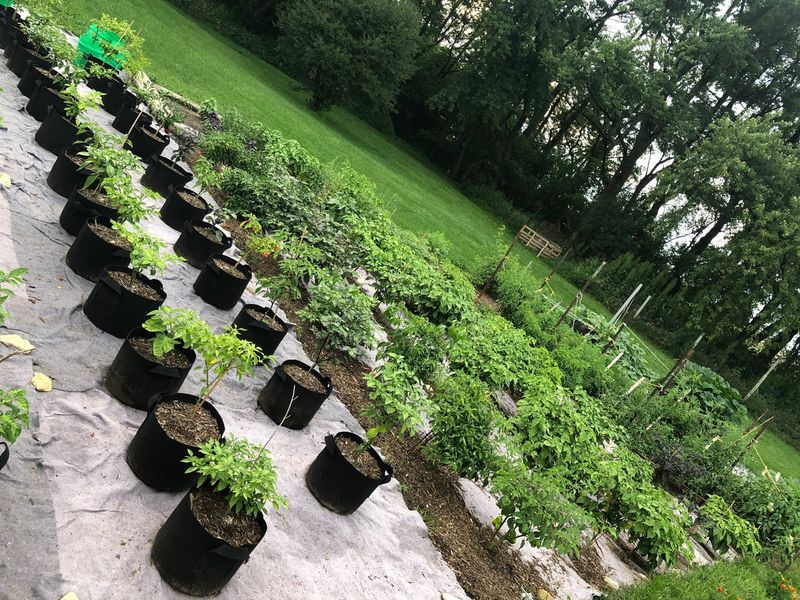
Before changing your fertilizer routine or concluding that pollinators are the problem, take a closer look at the conditions right beside your plants. Weather-station forecasts and app readings reflect conditions at a reporting location that may be well away from your garden.
A pepper growing against a south-facing brick wall, inside a container sitting on a concrete patio, under a plastic row cover, or inside a poorly ventilated tunnel can experience temperatures meaningfully higher than what the forecast shows.
University of Maryland Extension guidance on row covers points out that covers trap heat and can raise temperatures substantially around the plants underneath. Covers that help in spring can become a liability by midsummer.
Ventilating them during the day or removing them entirely as temperatures climb is a straightforward step that costs nothing.
Hot, dry wind adds another layer of stress that a forecast number will not capture. Wind speeds up water loss from leaves faster than roots can replace it, which can push a plant into water stress even when the soil feels adequately moist.
University of Minnesota Extension notes that high evaporative demand, root restriction, reflective surfaces, and limited root-zone volume can all overwhelm a plant’s water uptake under heat. Containers are especially vulnerable because the root zone heats up quickly and has less buffer than in-ground soil.
When possible, use a simple thermometer placed at plant level to compare what the plant is actually experiencing with what the weather app reports.
Reduce Heat Load and Stabilize the Root Zone
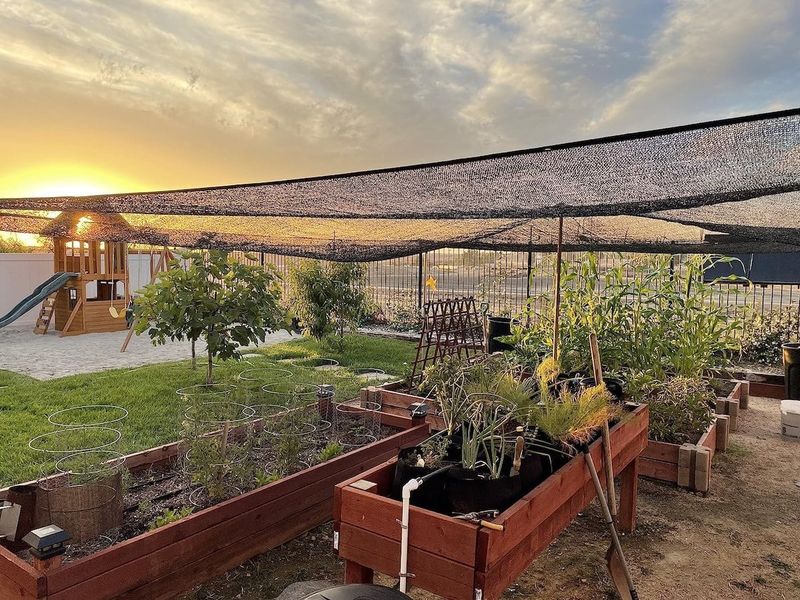
Once you have confirmed that heat stress is likely the main driver, the most useful response is reducing the burden on the plant rather than trying to force more blooms through feeding or other interventions. Start with anything that traps excess heat around the plant.
Remove plastic row covers or open their ends during the day. If the plants are growing under a low tunnel, increase ventilation so hot air can escape.
Soil moisture consistency matters more during heat waves than at any other time. Deep, thorough watering that soaks the entire root zone is more effective than frequent shallow sips that wet only the top inch or two.
Utah State University Extension recommends consistent moisture for peppers, noting that sandy soils and containers may need more frequent irrigation than heavier garden soil. Let the top inch dry slightly between waterings, but avoid letting the root zone dry out completely.
Mulch does two jobs at once: it slows evaporation from the soil surface and helps moderate soil temperature during hot afternoons. University of Georgia Extension’s guide to mulching vegetables recommends keeping organic or plastic mulch a few inches away from direct contact with the stem to avoid rot.
A two-to-three-inch layer of straw or wood chips over the root zone can make a noticeable difference in how quickly soil temperature rises during the day.
For plants in exposed beds or containers, temporary afternoon shade can reduce heat load during the hottest hours. Utah State University Extension reports that 20 to 30 percent shade cloth can reduce heat stress and flower-bud abortion in fruiting vegetables under persistently hot conditions.
Shade works best as a short-term tool applied in the afternoon, not as an all-day canopy that cuts off the light and airflow peppers need to stay productive.
Avoid Fertilizer, Calcium, and Pollination Overcorrections
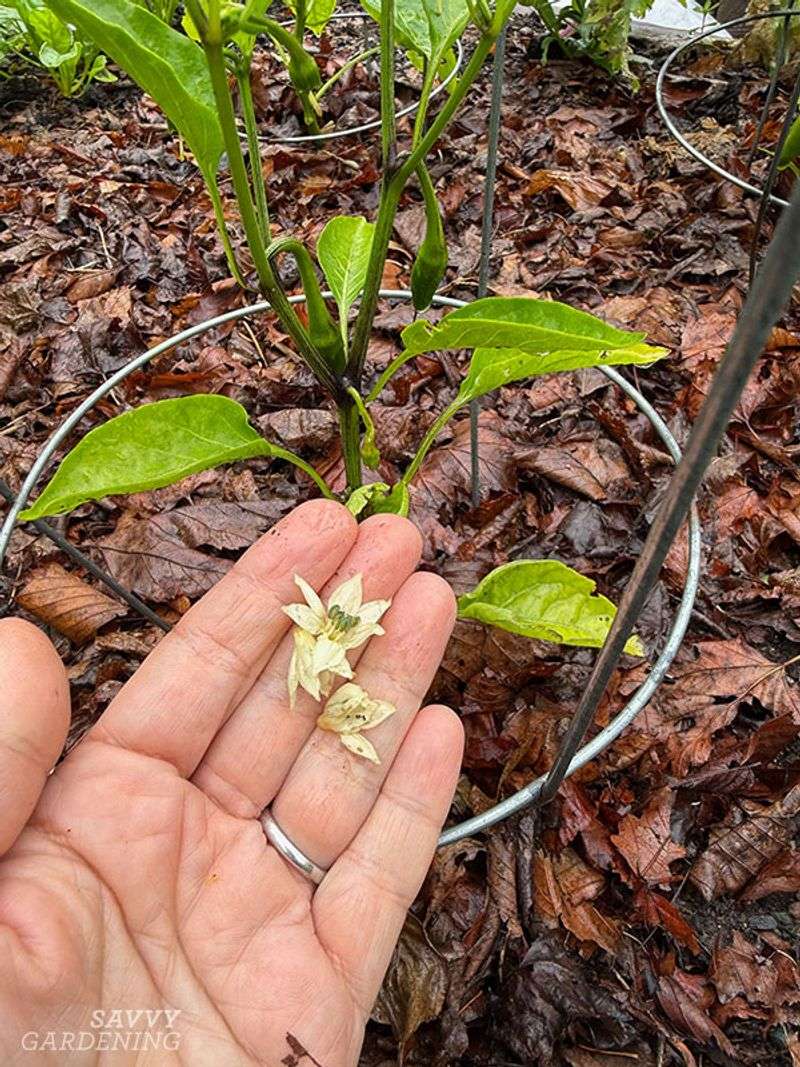
Watching flowers fall day after day creates real pressure to do something, and that urgency can push gardeners toward fixes that do not address the actual problem. One of the most common overcorrections is adding fertilizer, particularly high-phosphorus products marketed to encourage blooming.
Excess nitrogen encourages leafy growth at the expense of fruit set, and there is no reliable evidence that adding extra phosphorus will overcome heat-driven flower abortion. Illinois Extension advises that fertilizer decisions should be based on soil testing and crop needs rather than applied as a reflex when flowers drop.
Calcium supplements are another frequent misapplication. Calcium is relevant to blossom-end rot, the sunken lesion that appears on developing fruit, but blossom-end rot is primarily a water-movement problem rather than proof that the soil lacks calcium.
Ordinary blossom drop, where flowers fall before fruit forms, is a separate issue that calcium will not fix. Illinois Extension’s home vegetable gardening guide reinforces that the two conditions should not be confused or treated the same way.
Hand-pollinating every flower is also not a reliable first-line response when heat is the likely cause. When elevated temperatures have already reduced pollen viability or damaged floral tissues, physically moving pollen from one flower to another cannot restore function that heat has already impaired.
Research on bell pepper reproductive biology makes clear that heat disrupts the flower at a cellular level, not simply at the point of pollen transfer. After temperatures moderate and new healthy flowers appear, gardeners can assess whether a genuine pollination gap exists and respond accordingly.
In the meantime, checking for water stress, wind exposure, excessive humidity, insect damage, and cultivar suitability will point toward more productive adjustments.
Expect New Flowers Before You Expect Ripe Peppers
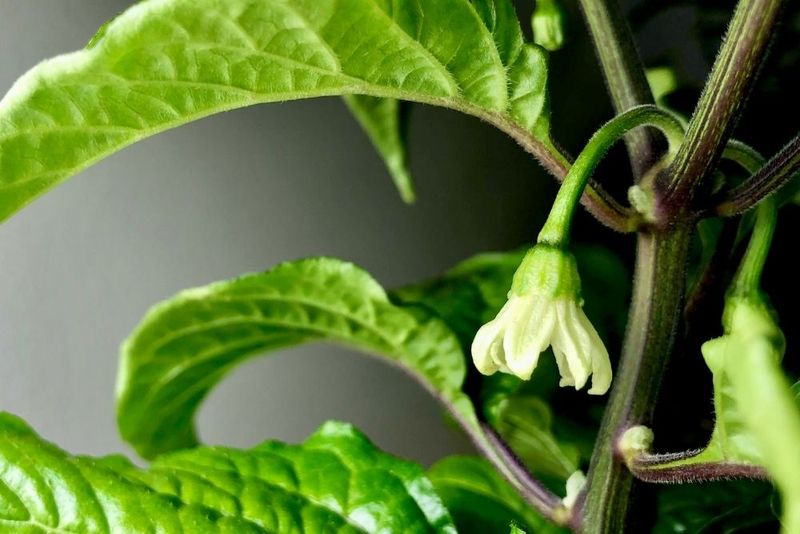
Recovery from heat-driven flower drop rarely looks dramatic at first. The harvest gap you notice in September may reflect flowers that were lost weeks earlier during a heat wave, not a sign that the plant is permanently damaged.
When temperatures moderate, even slightly, flowering and fruit set can resume on their own if the plant has been kept in reasonable condition throughout the stress period.
Illinois Extension notes that peppers can take roughly 35 to 45 days from flowering to full color, depending on variety and conditions. That timeline means new flowers appearing in early fall will not produce ripe fruit until well into the season, so patience is genuinely part of the plan.
University of Minnesota Extension reinforces that consistent care, not aggressive intervention, gives peppers the best chance of recovering their productivity.
Resist the urge to compensate with heavy feeding, hard pruning, or repeated hand-pollination once cooler nights arrive. Watch for new flower buds forming, keep moisture even, and maintain the mulch and airflow improvements already in place.
A pepper plant that survived a brutal Southern summer with its root system intact is far more capable of a strong fall finish than it might look right now. The best sign of real recovery is a new bud, not a bigger harvest this week.