
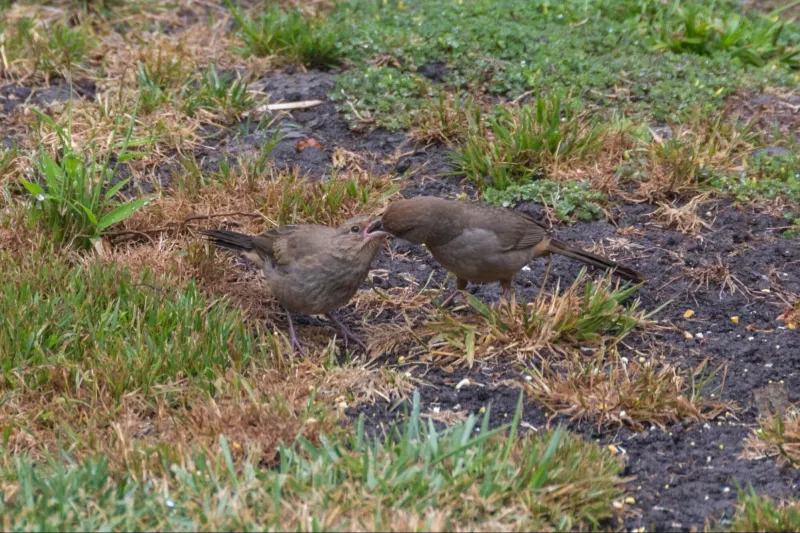
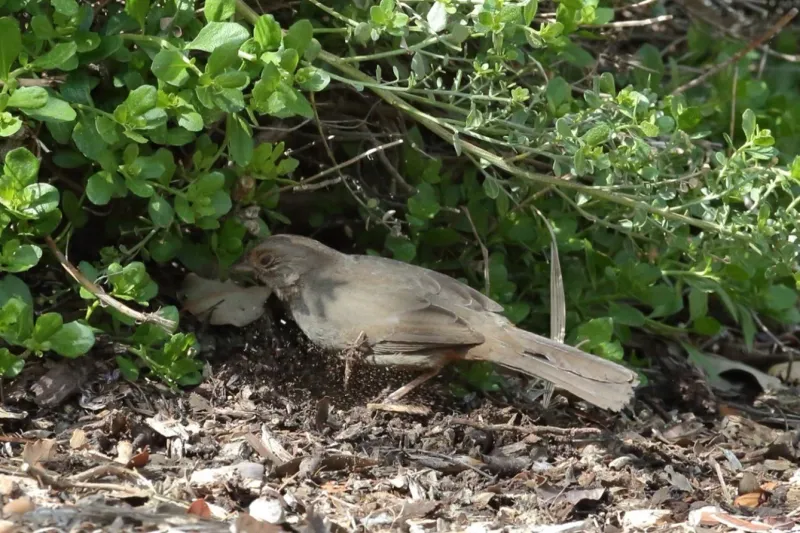
That plain brown bird kicking through the leaves near your fence is not just passing through. The California Towhee is a year-round resident across much of coastal and inland California, and the scratching you see is how it finds food.
Understanding what it actually eats and where it likes to forage can help you make a few small yard choices that benefit both the bird and the broader web of insects and plants it depends on.
First, make sure the brown bird is a California Towhee
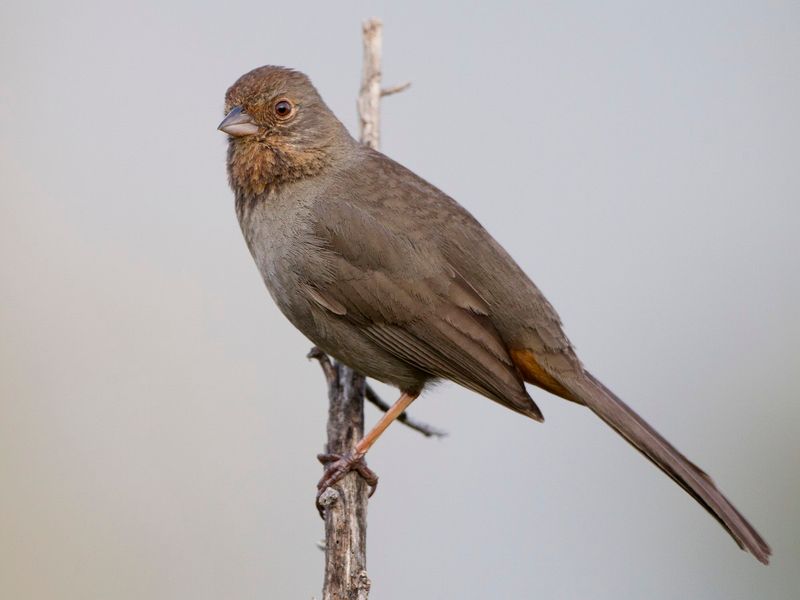
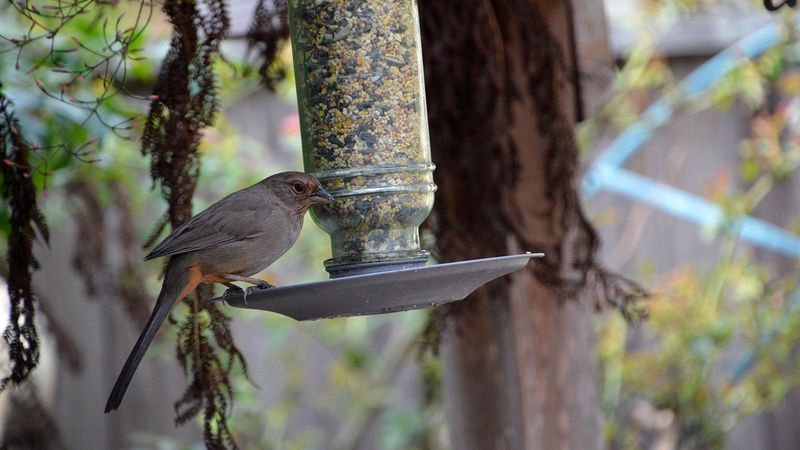
Plenty of brown, ground-scratching birds visit California yards, so getting the identification right matters before applying any habitat or fire-safety advice. The California Towhee is a large, stocky sparrowlike bird with uniformly plain brown plumage, a relatively long tail, and two field marks that set it apart from the crowd: rust-colored undertail coverts and a face that shades toward pale buff or orange around the bill and throat.
Cornell Lab of Ornithology’s California Towhee overview describes this combination as the reliable starting point for identification.
Range is the next filter. eBird range mapping shows the species concentrated along the California coast and inland valleys, reaching north into southern Oregon and south into Baja California. If you are in Florida, Texas, the Carolinas, or most of the interior West, the brown towhee scratching in your yard is almost certainly a different species entirely, and California-specific guidance will not apply.
The closest look-alike in North America is the Canyon Towhee, which occupies the Southwest and parts of the southern Great Plains. Canyon Towhees share the plain brown body but tend to show a more distinct breast spot and a slightly different face pattern.
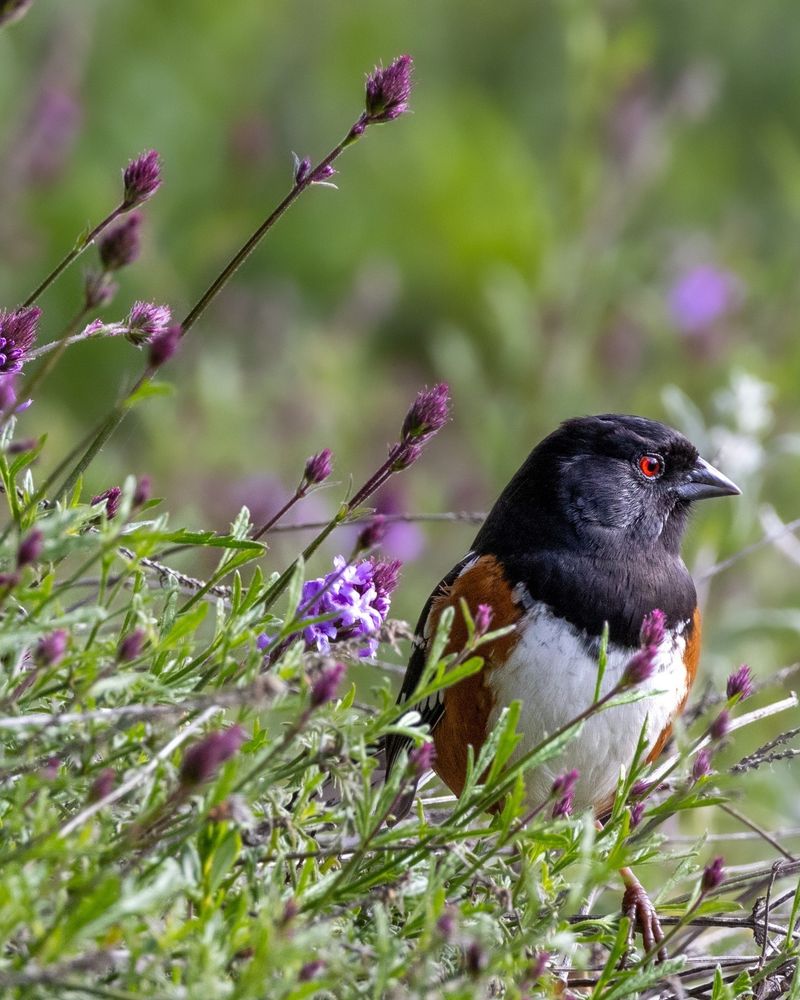
Audubon’s California Towhee field guide notes that the two species were once considered the same bird, which explains why they can be tricky to separate without a range map in hand. Eastern Towhees and Spotted Towhees are also ground-scratchers but carry bold black, white, and rufous patterning that makes them visually distinct once you see them side by side.
Before adjusting your yard, spend a moment confirming the bird’s location, body size relative to a nearby sparrow, and the color of its undertail. A correct ID makes every subsequent recommendation more useful and keeps fire-clearance and habitat advice pointed at the right species.
The scratching reveals a mixed diet, not a weed-control service
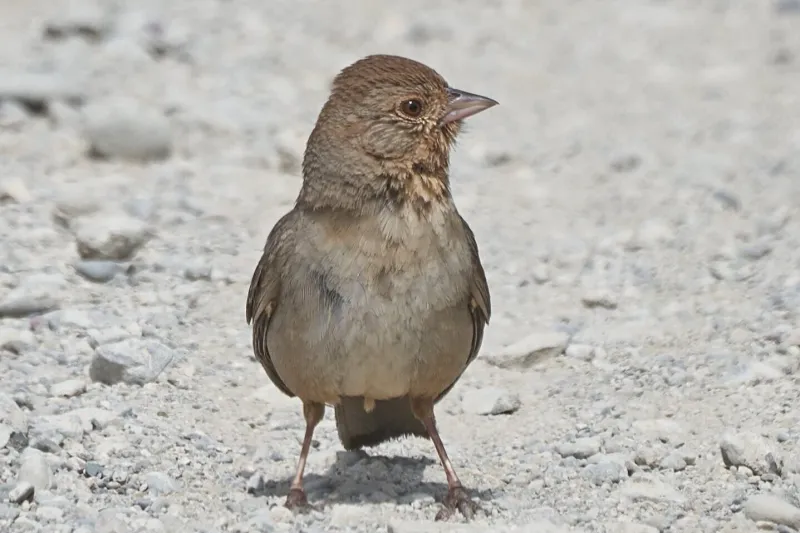
Watch a California Towhee for a few minutes and the scratching looks purposeful, because it is. The bird uses a quick two-footed backward kick to flip leaf litter and expose whatever is hiding underneath.
What it finds is mostly seeds: grass seeds, herb seeds, some weed seeds, waste grain, berries, acorns, and occasionally small fruits. Cornell Lab’s California Towhee life-history account places seeds at the center of the diet across all seasons.
Insects and other invertebrates fill a secondary but meaningful role. Beetles, grasshoppers, caterpillars, spiders, and similar prey show up regularly, and their share of the diet climbs during the breeding season.
Audubon’s species account notes that nestlings are fed mostly insects, making reliable invertebrate access especially important in spring and early summer.
Here is where the title of this article needs a correction. Documented consumption of weed seeds and insects tells us what a towhee eats, not that a resident pair will measurably prevent weeds from establishing or reduce the pest pressure in your vegetable beds.
No published source establishes that California Towhees clear weed seeds before they take hold or replace the monitoring and targeted treatment that integrated pest management requires. Treating a bird’s presence as proven biological weed or pest control overstates what the science actually shows.
One more nuance worth knowing: towhees are not uniformly helpful in the garden. Stanford Birds’ species account and other sources confirm that their diet can include cultivated fruits, peas, lettuce, and other garden produce.
A bird that eats weed seeds in one corner of your yard may sample ripe tomatoes in another. The honest picture is a mixed feeder whose habits sometimes align with your goals and sometimes do not.
Why leaf litter matters at the shrub-to-ground edge
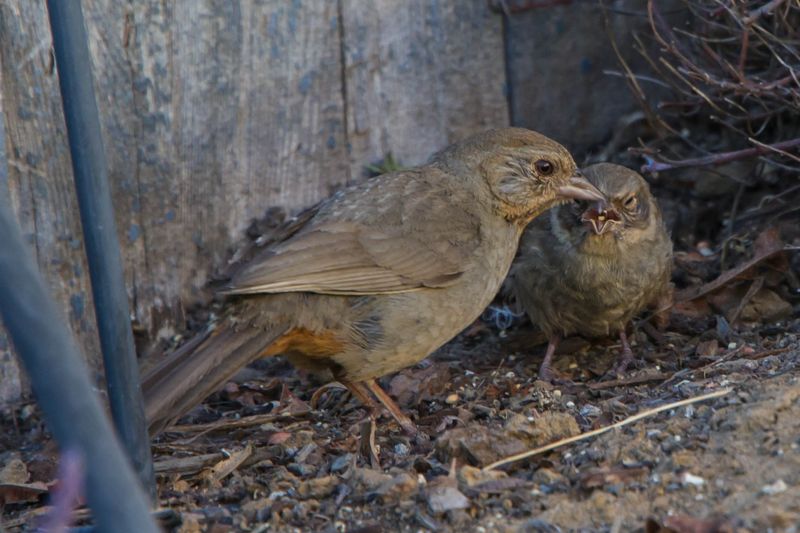
Ground structure shapes where a California Towhee will spend its time. The species forages almost exclusively at ground level, and it consistently works areas where accessible open soil or loose debris sits within a short hop of brushy cover.
California Department of Fish and Wildlife’s life-history account describes this shrub-edge preference as a defining feature of the species’ habitat use, repeated across suburban yards, chaparral margins, and riparian thickets alike.
The practical meaning for your yard is that the transition zone matters as much as either element alone. A patch of open ground without nearby cover offers limited appeal because the bird needs a quick escape route.
Equally, dense continuous shrubs with no accessible soil beneath them give the towhee nowhere to scratch. Audubon’s account and National Park Service observations at Point Reyes both reinforce that the bird works the edge, not the interior of dense vegetation.
Loose leaf litter in that edge zone adds a food-finding dimension. Decaying leaves shelter the insects, spiders, and small invertebrates that round out the towhee’s diet, and litter also concentrates fallen seeds near the surface where scratching can uncover them.
UC Agriculture and Natural Resources recommends retaining spring leaf litter when possible because it supports insect habitat, a benefit that extends to any ground-foraging bird that eats invertebrates. UC ANR’s bird-gardening guidance frames decaying leaves and wood as part of layered habitat structure, not as maintenance failures.
Framing this as a tested California-Towhee-specific yard prescription would go further than the evidence supports. What the sources establish is behavioral: the bird scratches loose ground near cover, litter holds food, and a yard that provides both gives the species something useful.
That is a practical synthesis, not a controlled study result.
Create one deliberately untidy foraging patch
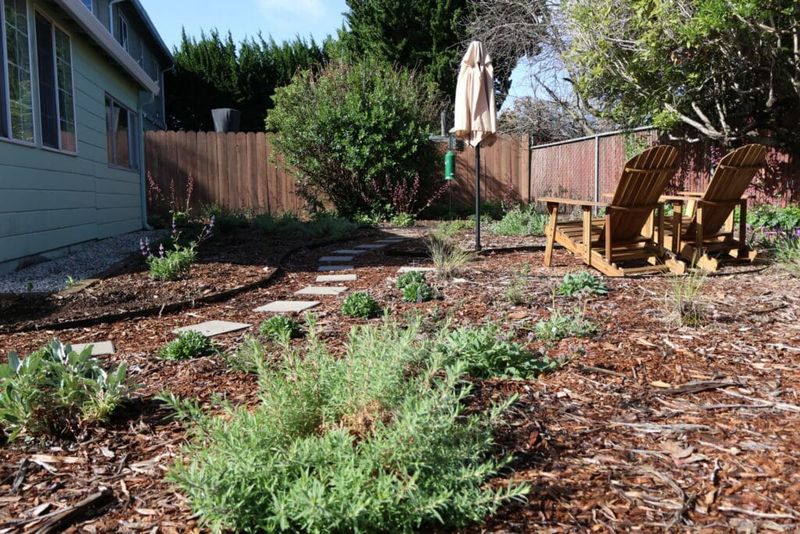
Turning the habitat concept into a yard change does not mean abandoning maintenance across the whole property. A single small patch, roughly the footprint of a dining table, beneath or alongside a suitable shrub can serve as a foraging zone while everything else stays tidy.
Paths, patios, drainage swales, vegetable beds, and the areas visible from the street should remain maintained as usual. The goal is one deliberate exception, not a wholesale shift to a less-kept yard.
Within that patch, a few specific choices help. Leave fallen leaves where they land under the shrub rather than blowing or raking them out.
Let any seedheads from nearby grasses or herbs stand through fall and into winter instead of cutting them back immediately after flowering. Keep a small area of exposed or lightly covered soil at the shrub’s drip line where a towhee can scratch without fighting through dense material.
California Department of Fish and Wildlife’s species account and UC ANR’s bird-gardening guidance both point to retained litter and accessible ground as habitat elements, not as a prescription tested specifically on California Towhees in residential settings.
A word on mulch: natural leaf litter and bagged or chipped mulch are not interchangeable. Dense, compacted coverings may reduce a bird’s ability to reach the soil surface compared with loose, airy leaf accumulation.
That is a cautious practical observation, not a California-Towhee-specific research finding, and no source establishes an ideal depth for any particular mulch product. If you already use mulch for moisture retention or weed suppression, keeping one corner of the patch lightly covered or bare gives the bird an easier entry point without requiring you to change your broader mulching approach.
UC ANR’s bird-friendly garden notes suggest thinking about habitat in zones rather than applying the same treatment everywhere, which aligns with the one-patch approach. A contained, site-appropriate foraging area respects both the bird’s needs and the practical demands of a maintained California yard.
Seed-producing plants extend the food supply
Plant choices can meaningfully expand what a towhee finds in your yard, though no single species guarantees visits or suppresses weeds as a side effect. The value is straightforward: more seed-producing plants mean more foraging opportunities spread across a longer season.
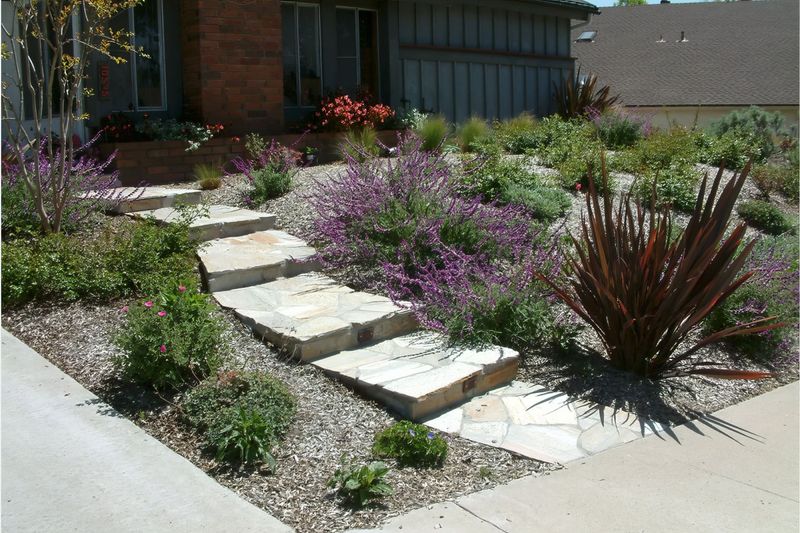
UC ANR’s native-plant bird-gardening guide lists several California natives that produce seeds useful to ground-foraging birds, including buckwheat, yarrow, native sages, coyote bush, willow, Ceanothus, native sunflower, California aster, and deer grass.
These plants also tend to require less supplemental water once established, which matters in a state where summer irrigation restrictions are common and drought resilience is a year-round concern. That said, plant selection should start with your specific site conditions: local climate zone, soil type, available water, and fire-risk requirements all influence which plants will thrive and which will create maintenance problems.
A native that grows well on a cool coastal slope may struggle in a hot inland valley without additional water, and a shrub that looks right for a foraging patch may be poorly placed near a structure in a high-fire-hazard zone.
Leaving selected seedheads standing rather than deadheading everything at once is a simple complement to planting choices. A California aster or native sunflower that has finished blooming still holds seeds that a towhee can reach from the ground after they fall.
Staggering your cutback schedule so that some plants are always in seed extends the food window without requiring new plantings.
UC ANR’s bird-friendly garden article frames plant composition and layered structure as more influential than any one recommended species. A mix of low shrubs, mid-height perennials, and open ground near cover will generally serve ground-foraging birds better than a monoculture of any single plant, however well-suited it is to the region.
Reduce pesticide exposure without demanding a chemical-free yard
Pesticide decisions affect the food web a towhee depends on, particularly during breeding season when insects make up a larger share of what adults and nestlings eat. Reducing unnecessary broad applications is one of the most direct ways a homeowner can keep that food supply intact, and it does not require eliminating every product from the garage.
The practical approach starts before reaching for any product. Prevention, monitoring, hand removal, and cultural controls, such as improving drainage, spacing plants for airflow, or removing diseased material promptly, address many common yard problems without chemical exposure.
When treatment is genuinely needed, EPA guidance on reducing pesticide impacts on wildlife advises using pesticides only when necessary, treating only the affected area rather than the whole yard, and following label directions precisely. Spot-treating a specific pest problem differs significantly from routine calendar-based applications across an entire lawn or bed.
Product choice matters, but not in the way marketing sometimes suggests. “Organic” and “natural” are not synonyms for harmless. EPA’s ecological risk assessment overview explains that pesticide risks vary by product, application rate, and exposure pathway, and EPA’s insecticide resource notes that insecticides are designed to kill insects, a category that includes the beetles, caterpillars, and other invertebrates that towhees and their nestlings eat.
Some formulations can also affect birds directly through ingestion or contact.
Connecting this to the towhee’s role: a yard with active, diverse insect life supports the bird’s breeding-season needs, and that insect community depends partly on how pesticides are used nearby. Towhees eating some insects does not replace monitoring or integrated pest management, but maintaining the insect food web gives the bird a reason to keep foraging in your yard rather than moving on.
Fire guidance sets the boundary for habitat-friendly cleanup
Any habitat recommendation for a California yard has to account for fire safety, and the two are not always compatible. Loose leaf litter, accumulated debris, and dry vegetation near structures are among the conditions that defensible-space guidance specifically addresses.
Wildlife-friendly practices must yield to applicable fire-clearance standards, not the other way around.
What those standards require depends on your property’s location, jurisdiction, and fire-hazard zone designation, so a single universal rule does not cover every California homeowner. CAL FIRE’s defensible space guidance and California Board of Forestry zone descriptions outline the framework, but local fire authorities and county ordinances can impose additional or different requirements.
Verifying what applies to your specific parcel is the right first step, not assuming that statewide guidance covers your situation completely.
Across commonly cited guidance, the area immediately around structures receives the most attention. Roofs, gutters, decks, and porches should be kept clear of leaves, needles, and debris.
Combustible mulch and accumulated dry material near foundations are flagged as ignition risks. UC ANR’s fire-network mulch guidance advises that combustible mulch should not be continuous across the landscape and should be limited in depth, and UC ANR’s wildfire-resilience landscaping resource identifies dry vegetation and accumulated litter as fire-risk factors in wider landscape zones.
UC Master Gardeners of Sonoma County’s wildfire-preparedness guide reinforces that plant placement, spacing, and debris management all contribute to a property’s fire behavior. The practical compromise is straightforward: keep structure-adjacent areas ember-resistant and clear as required, and locate any modest foraging patch only where clearance requirements, site conditions, and seasonal fire risk allow.
A small patch of loose litter beneath a shrub positioned well within your property’s compliant zone is a very different situation from accumulated debris against a wooden fence or under a deck.
Support the bird without disturbing nests or creating a feeder problem
Spring and early summer bring a different set of considerations. California Towhees nest low, often within dense shrubs at heights a homeowner could easily reach with pruning shears.
Trimming or removing shrubs while active nests hold eggs or young can destroy the nest and its contents, an outcome worth avoiding on both practical and ethical grounds.
U.S. Fish and Wildlife Service guidance on bird nests states that active nests containing eggs or young are protected under federal law, and USFWS avoidance and minimization measures recommend against vegetation removal or trimming that could disturb or destroy active nests.
This article presents that as avoidance guidance; the specific legal protections, exceptions, and permit requirements that apply to your situation should be verified with the relevant wildlife authority rather than assumed from general summaries.
Feeding is a separate question, and the honest answer is that it is not necessary to support a California Towhee. The species forages effectively on its own when habitat is available.
If you choose to offer seed, Cornell Lab notes that towhees are more likely to visit ground or tray feeders than hanging feeders, since they forage at ground level. However, California Department of Fish and Wildlife’s avian health program warns that contaminated or crowded feeders can contribute to disease transmission among songbirds.
Cleaning feeders regularly and removing uneaten seed before it spoils reduces that risk.
Finally, a towhee spending time in your yard does not signal that pest pressure is under control or that the yard has reached some ecological benchmark. A U.S.
Forest Service study of California Towhee populations found that high bird density did not necessarily correspond to high reproductive success, with nest predation playing a significant role. Presence and ecological health are related but not the same thing.
A small safe patch can make a maintained yard more useful
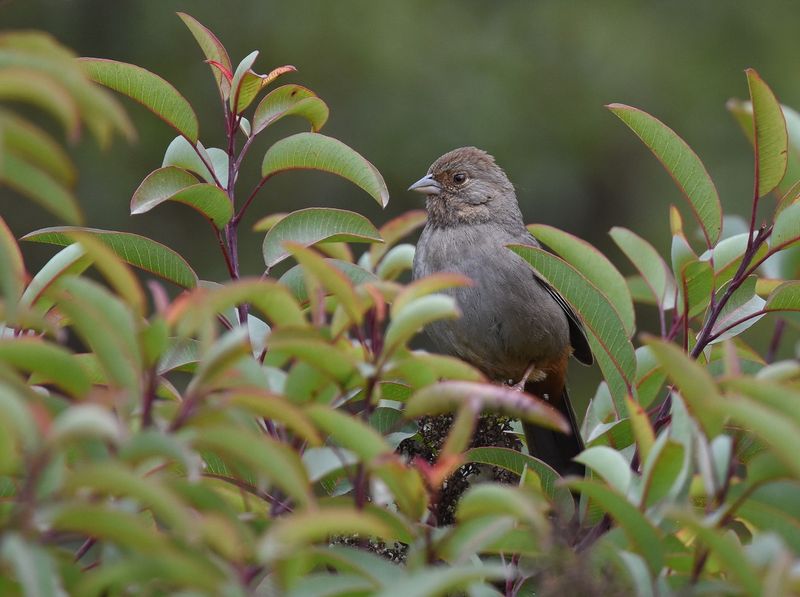
Putting this together does not require a yard overhaul. Start by confirming the bird is actually a California Towhee using range, body size, and the rust-colored undertail coverts as your check.
From there, the changes are modest and contained.
Pick one area near a suitable shrub where loose litter can accumulate and a small patch of accessible soil can remain. Leave selected seedheads standing through fall.
Scale back broad pesticide applications in favor of monitoring, hand removal, and targeted treatment when a real problem appears. Follow applicable fire-clearance requirements for your jurisdiction and fire-hazard zone, and keep structure-adjacent areas free of combustible debris regardless of any habitat intentions.
Avoid trimming active nests, and check with a wildlife authority if you are uncertain about protections that apply to your situation. UC ANR’s bird-gardening guidance and UC ANR’s bird-friendly garden notes both frame these choices as supporting a broader yard food web, not as a promise of any specific ecological outcome.
The goal is to support a local ground-foraging bird and the insects and plants it depends on, not to employ a towhee as weed or pest control. A yard that provides loose litter, seed-producing plants, and reduced pesticide pressure near shrubby cover gives the species something genuinely useful.
CAL FIRE’s defensible-space guidance sets the boundary for where that patch can safely sit. One well-placed, site-appropriate corner is enough – a small concession to the bird that has been quietly working your yard all along.