
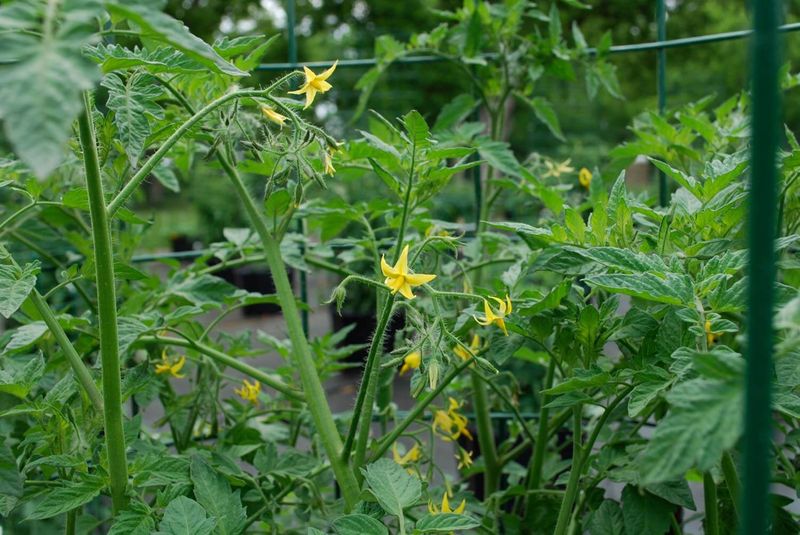
You walk out to your garden expecting to find tomatoes ripening on the vine, but instead you see a jungle of dark-green leaves and almost no fruit. It is a frustrating situation, and the temptation is to blame the fertilizer you added a few weeks ago.
Excess nitrogen can certainly push tomato plants toward leafy growth at the expense of fruiting, but in late summer across the South, relentless heat is just as likely to be behind the problem. Understanding which cause is actually at work will save you from making changes that do more harm than good.
Tall vines do not prove a nitrogen problem
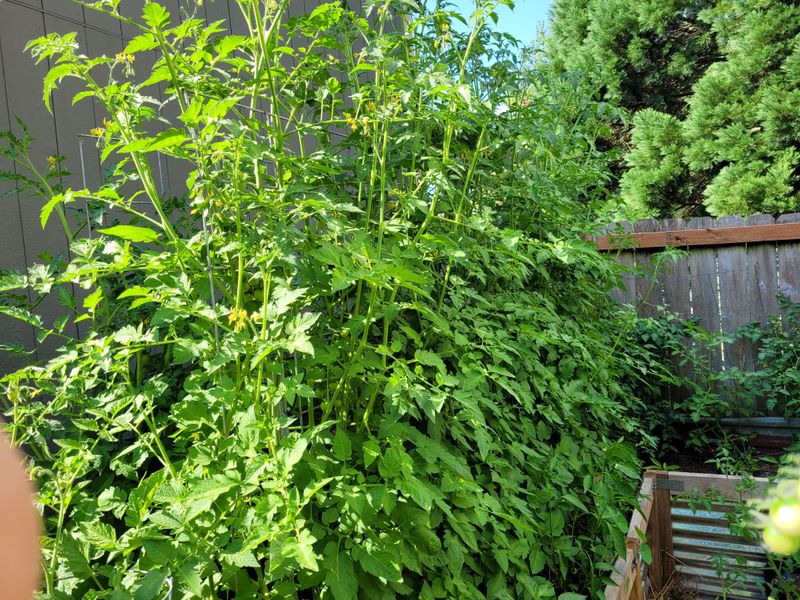
Lush, dark-green tomato vines that seem to grow faster than you can stake them are easy to blame on a nitrogen overdose, but the picture is more complicated than that. Indeterminate tomato varieties are bred to keep growing all season long, so tall, vigorous plants are sometimes just doing exactly what their genetics tell them to do.
Fertile soil, warm temperatures, and consistent watering can all produce impressively leafy plants without a single extra pound of fertilizer.
That said, excess nitrogen becomes a real suspect when leafy growth is paired with a specific history: recent applications of a high-nitrogen lawn fertilizer, fresh manure, heavy compost, or a concentrated vegetable fertilizer applied more often than the label recommends. University of Minnesota Extension notes that too much nitrogen can push tomato plants toward bushy, leafy development while slowing fruiting.
UGA Extension similarly reports that excessive nitrogen leads to rank vine growth at the expense of fruit set and can delay maturity.
The single most useful question to ask before changing anything is whether the plant is failing to produce flowers at all or whether it is making flowers that later fall off. Those two patterns point toward different causes, and sorting them out is where a smart diagnosis begins.
How excess nitrogen can delay tomatoes
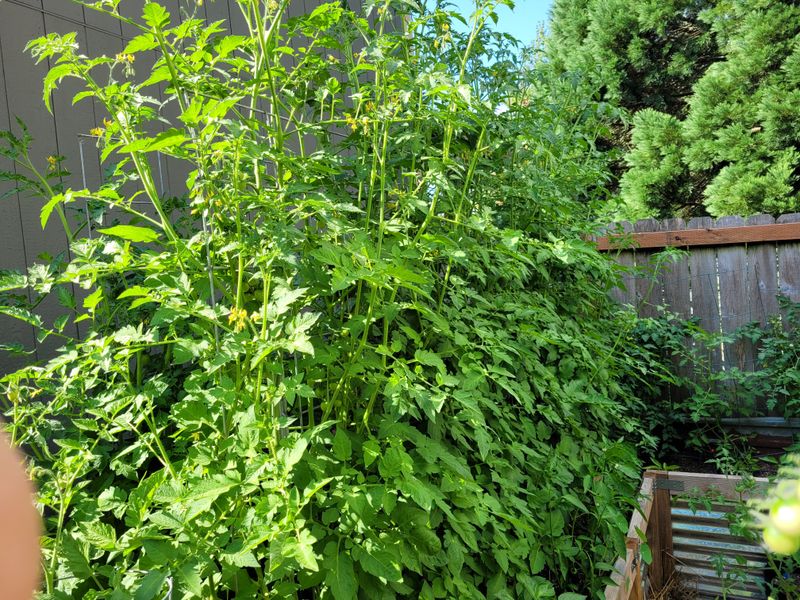
Nitrogen is the nutrient most responsible for green, leafy growth in plants. When tomatoes receive more of it than they can use for normal development, the plant tends to channel energy into producing stems and leaves rather than flowers and fruit.
The result is a vine that looks impressively healthy from a distance but sets little or nothing to harvest.
The mechanism is straightforward. Tomato plants need a shift in internal chemistry to move from vegetative growth into reproductive mode.
When nitrogen stays elevated in the soil, that transition can be delayed or partially suppressed, meaning flowering comes later or less abundantly than it should. Both UGA Extension and University of Minnesota Extension identify this pattern: excessive nitrogen can cause rank, overly leafy vine growth while postponing fruit set and maturity.
Nitrogen excess becomes a more credible explanation when you can point to a specific event: a lawn fertilizer accidentally broadcast over a nearby bed, a heavy spring compost application followed by additional synthetic fertilizer, or repeated feedings with a high-first-number product. If the fertilizer history is unremarkable and the soil has not received unusual inputs, late-summer heat deserves equal or greater attention as the primary reason flowers are failing to turn into fruit.
Late-summer heat can damage flowers directly
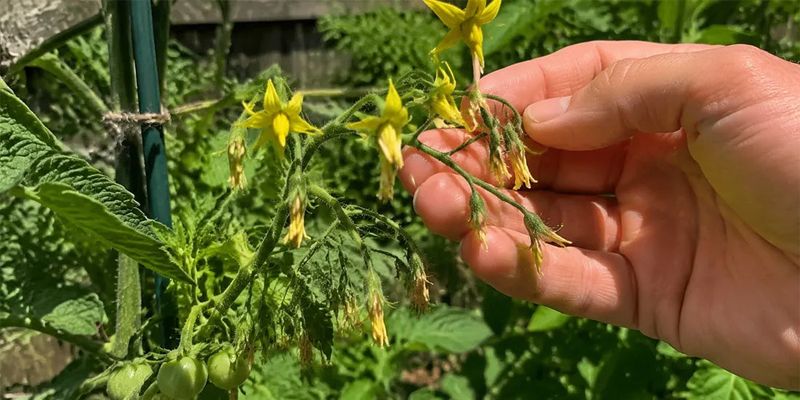
When daytime temperatures climb into the upper 80s and 90s and nights stay above roughly 70 degrees Fahrenheit, tomato flowers are under serious stress even if the foliage looks perfectly healthy. Heat affects the reproductive parts of the plant far more than the leaves, which is exactly why a plant can look lush and green while producing almost no fruit.
Oklahoma State University Extension reports that fruit set drops sharply when nighttime temperatures rise above approximately 70 degrees Fahrenheit or when daytime temperatures stay above roughly 92 degrees. Penn State Extension explains that high heat reduces pollen production, limits pollen release, and lowers germination rates, making successful pollination far less likely.
University of Arizona Extension adds that flower abortion under heat stress can happen even when the plant is otherwise well fed and watered.
Research published in Plant, Cell and Environment found that tomato plants held at 32/26 degrees Celsius day and night conditions showed sharply reduced fruit set compared with plants grown under cooler conditions, with variation across cultivars. A more recent study indexed on PubMed confirmed that heat stress impairs pollen viability and flower development through multiple biological pathways.
These temperature ranges are practical guides, not hard biological cutoffs. Cultivar, local humidity, soil moisture, and plant health all influence exactly when heat tips a plant into blossom drop.
The important takeaway is that stopping fertilizer alone will not restore fruit set while flowers and pollen remain heat-stressed.
Read the flowers before changing the fertilizer
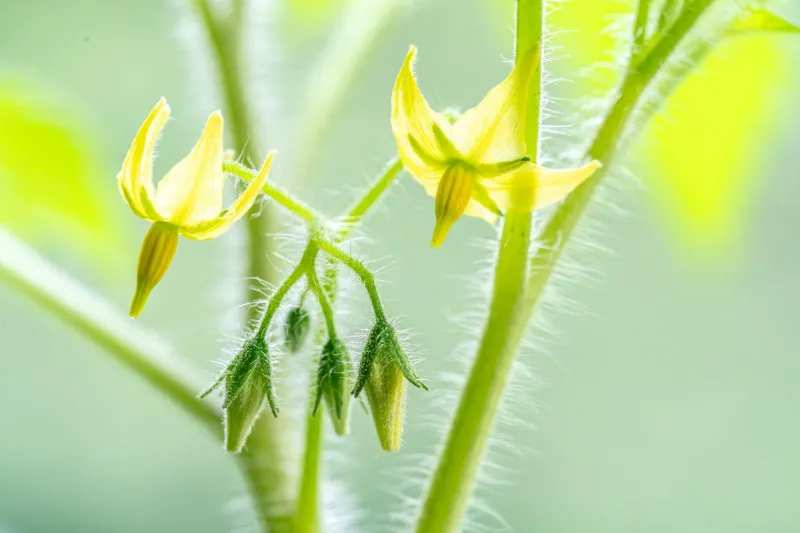
Before pulling the fertilizer bag or reaching for a spray bottle, spend a few minutes reading what the plant is actually telling you. The pattern of flower behavior is the most reliable clue you have, and it points toward different causes depending on what you observe.
No flowers at all suggests the plant is still stuck in vegetative mode, which can follow heavy nitrogen feeding, inadequate light, or simply a cultivar that takes longer to transition. Flowers that form and then fall before any fruit develops point more strongly toward heat stress, drought, rapid soil-moisture swings, root damage, or pests.
Tiny fruit that forms and then shrivels or drops usually indicates incomplete pollination, heat during the critical fruit-development window, or moisture stress. University of Minnesota Extension notes that high temperatures affect these stages differently, so identifying which stage is failing narrows the list of likely causes considerably.
Oklahoma State University’s blossom-drop guidance also identifies insufficient sunlight as a factor: plants receiving less than six hours of direct sun per day can show weak flowering even without a nutrient problem. Check your fertilizer records, note the timing of hot nights, and consider whether watering has been consistent before drawing any conclusions.
Tomatoes are largely self-pollinating, meaning they do not depend on bees the way cucumbers or squash do. University of Minnesota Extension explains that wind or vibration moves pollen within the flower, and UGA Extension confirms that low bee activity is not usually the first explanation for tomato fruit-set failure.
If flowers are present but not setting, look at temperature and moisture before assuming a pollination deficit.
Stop unnecessary nitrogen and steady the soil moisture
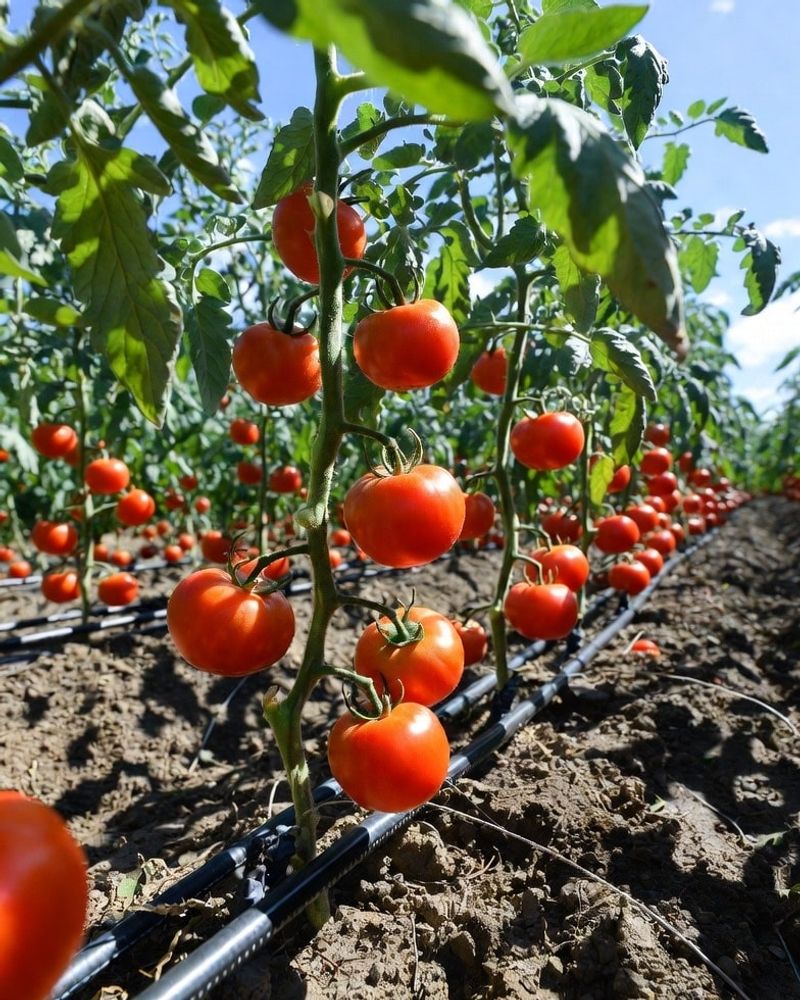
When a tomato plant looks excessively leafy and fertilizer history suggests recent high-nitrogen inputs, the safest first move is simply to stop adding more. That means holding off on lawn fertilizers near the garden, skipping additional compost top-dressings for now, and setting aside any vegetable fertilizer with a high first number on the label.
Resist the urge to immediately swap in a phosphorus-heavy bloom booster or a potassium product. University of Minnesota Extension’s fertilizing guide makes clear that adding nutrients without knowing what the soil already contains can create new imbalances rather than solving existing ones.
A basic soil test is the most reliable way to know whether your soil actually needs phosphorus, potassium, or any other nutrient before you apply it.
Soil moisture management is equally important and often overlooked. Dry soil, waterlogged roots, and rapid swings between wet and dry all add stress to a plant already struggling with heat.
Oklahoma State University’s blossom-drop column lists erratic watering as a contributing factor in flower drop. Applying two to three inches of organic mulch around the root zone slows evaporation and buffers temperature swings at the soil surface, as Oklahoma State’s mulch guidance supports.
Water at the root zone rather than overhead, and aim for consistent moisture rather than alternating between bone-dry and saturated. These steps reduce stress; they will not instantly override a heat wave, but they remove obstacles that make recovery harder.
Reduce heat without removing the light tomatoes need
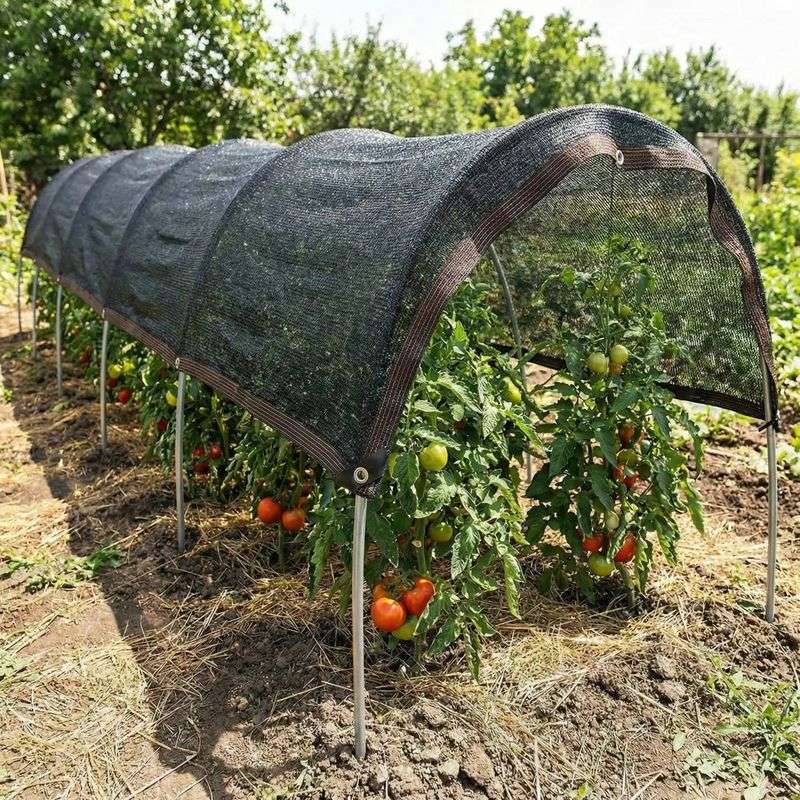
Providing some relief from extreme afternoon heat can help flowers survive long enough to set fruit, but the approach matters. Tomatoes need at least six hours of direct sunlight to flower and fruit reliably.
Any shade you add should be temporary and targeted at the hottest part of the day, not a permanent structure that cuts overall light.
A lightweight shade cloth draped over a simple frame during peak afternoon hours can lower canopy temperature without eliminating morning sun. Oklahoma State’s tomato disorders fact sheet notes that sunscald on fruit is itself a heat-related injury, which is one more reason to reduce direct afternoon exposure during a heat event.
Remove the cloth in the morning so the plant captures full sun when temperatures are more manageable.
Heavy pruning is not a useful heat-relief strategy. Removing large amounts of foliage stresses the plant and strips the leaf cover that shades developing fruit from direct sun, which increases sunscald risk rather than reducing it.
University of Arizona Extension cautions against aggressive foliage removal for this reason.
Gently shaking or vibrating a flower cluster can help move viable pollen inside the flower under suitable conditions, and Oklahoma State Extension acknowledges this technique. The key qualifier is viable pollen: if heat has already damaged the pollen or caused the flower to abort, vibration will not reverse those effects.
Think of it as a small assist under good conditions, not a rescue tool during a heat wave.
Skip calcium, bloom boosters, and blossom-set promises
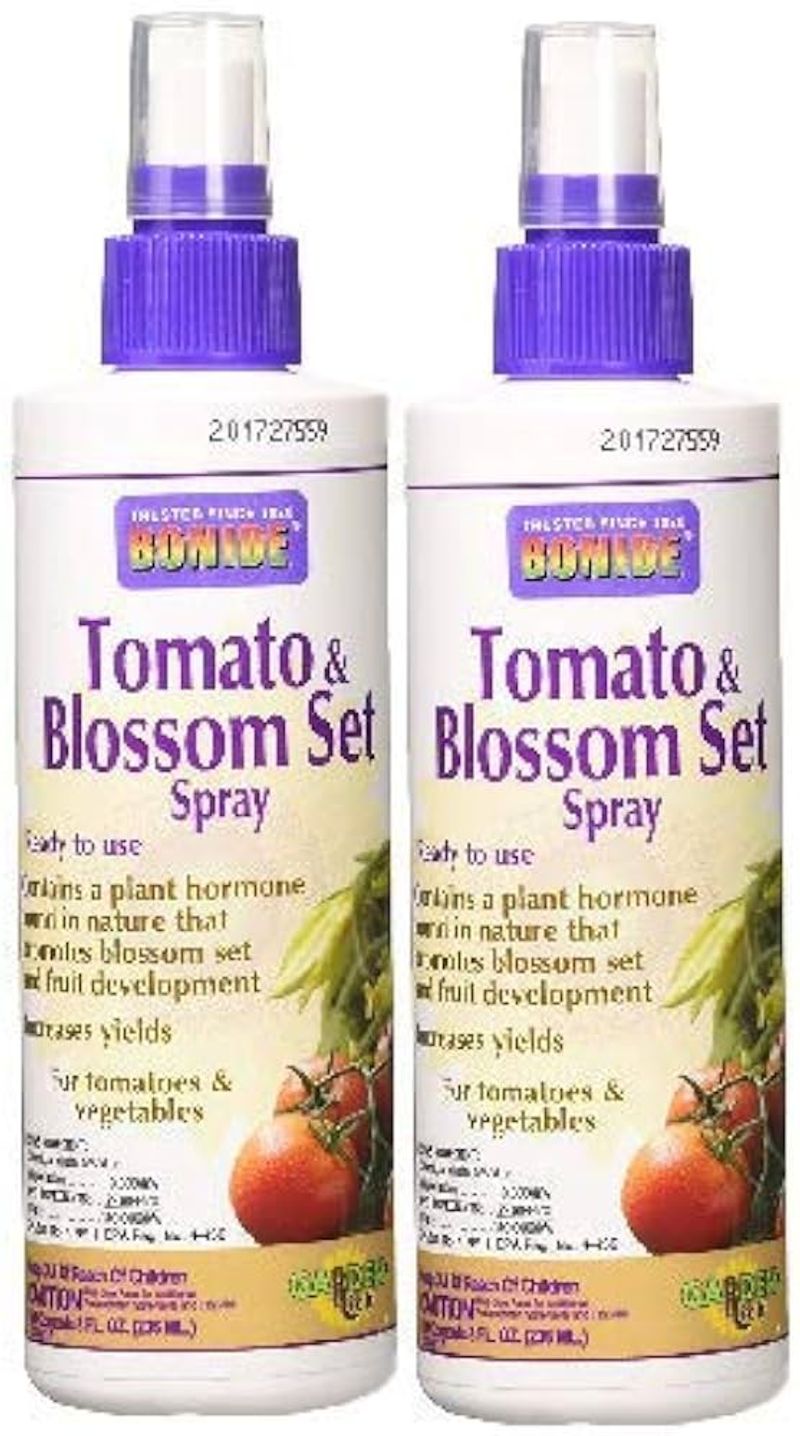
Several popular products get recommended whenever tomatoes fail to fruit, and most of them will not help with the problems described here. Calcium spray is one common example.
Calcium does not correct flowers dropping from heat stress or nitrogen excess. The disorder people often associate with calcium, blossom-end rot, is a completely separate problem.
University of Minnesota Extension explains that blossom-end rot appears after fruit has already formed and is generally linked to inconsistent water availability that limits calcium movement within the plant, not simply low calcium in the soil. Oklahoma State’s tomato disorders fact sheet reinforces that this condition is a physiological disorder tied to water uptake, not a soil-fertility deficiency you can spray away.
Bloom-booster fertilizers high in phosphorus or potassium are another common impulse purchase. Adding phosphorus to soil that already has adequate levels does not reliably improve fruit set and can contribute to environmental runoff.
As University of Minnesota’s fertilizing guide makes clear, fertilizer decisions should be based on soil-test results, not on symptoms alone.
Hormone or blossom-set sprays round out the list of products to skip. Oklahoma State Extension’s vegetable FAQ states that these products have little effect when high temperatures are causing the problem, and their blossom-drop column notes that hormone-induced fruit may turn out puffy or seedless.
Hand-shaking flowers cannot overcome heat-damaged pollen for the same reason: the underlying biology has to be working for any assist to matter.
Choose heat-tolerant varieties and better planting dates
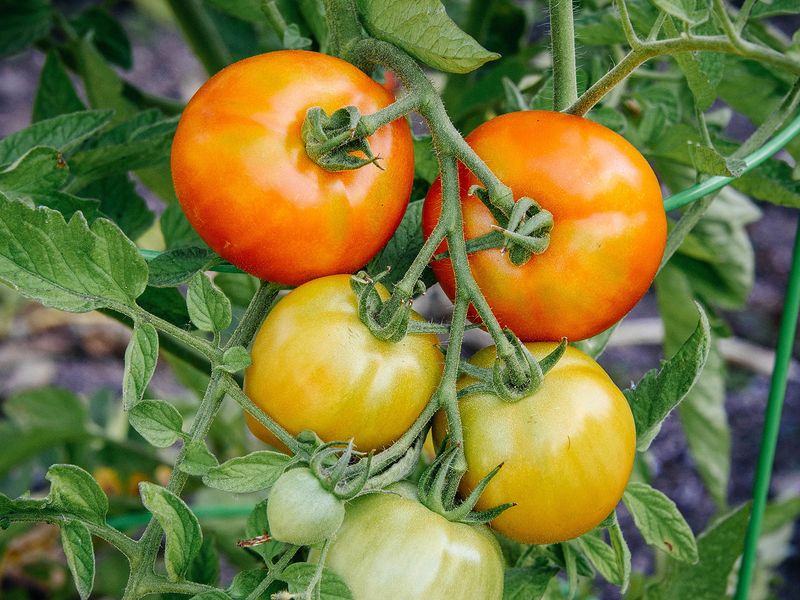
Once the current season is behind you, variety selection and planting timing become the most powerful tools in your toolkit. Hot-set and heat-tolerant tomato cultivars are bred to maintain better pollen viability and fruit set at higher temperatures than standard varieties, giving them a meaningful advantage in Southern gardens during late summer.
UF/IFAS variety trials list cultivars such as Florida 91, Solar Fire, and Phoenix among options suited to hot conditions or later-season Florida production. UGA Extension recommends hot-set types for fall plantings in Georgia, where late-season heat presents similar challenges.
These varieties improve the odds of fruit set; they are not immune to extreme heat, and a multi-week stretch of nights above 75 degrees will stress them too.
Planting timing matters as much as variety choice, especially in Florida. UF/IFAS planting guidelines list separate open-field production windows for north, central, and south Florida because the climate differences across the state are substantial.
Consulting your region’s specific calendar, rather than a generic national guide, helps you plant when temperatures are most likely to cooperate with fruit set. UF/IFAS production records support this regional approach.
When next season arrives, tie any fertilizer decisions to a current soil test rather than a routine bloom-booster application, so the plant gets what it actually needs rather than what a label assumes.
Use the pattern of symptoms to choose the next step
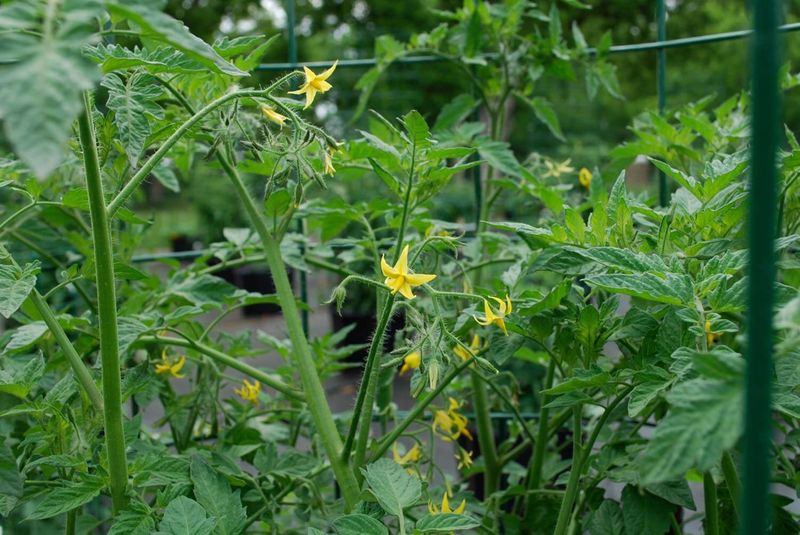
Lush green growth paired with a recent history of heavy fertilizer applications points toward nitrogen as a contributing factor, and stopping those inputs is a reasonable first step. Flowers forming and then dropping during a stretch of hot days and warm nights points strongly toward heat stress, and no amount of fertilizer adjustment will fix that until temperatures ease.
Both stresses can occur together, which is common in Southern gardens during late summer, and addressing one without the other will only get you partway there.
The practical path forward is the same in either case: stop unnecessary high-nitrogen fertilizer, keep soil moisture steady with mulch and consistent watering, and provide temporary afternoon shade if temperatures are extreme, without sacrificing the morning sun the plant needs. Penn State Extension and University of Minnesota Extension both reinforce that reducing stress from multiple directions gives the plant the best chance to recover.
Oklahoma State Extension adds that patience through the hottest weeks is often the most effective strategy of all.
A tomato plant that survives the heat with its roots intact and its soil balanced is well positioned to set fruit once cooler nights return.