
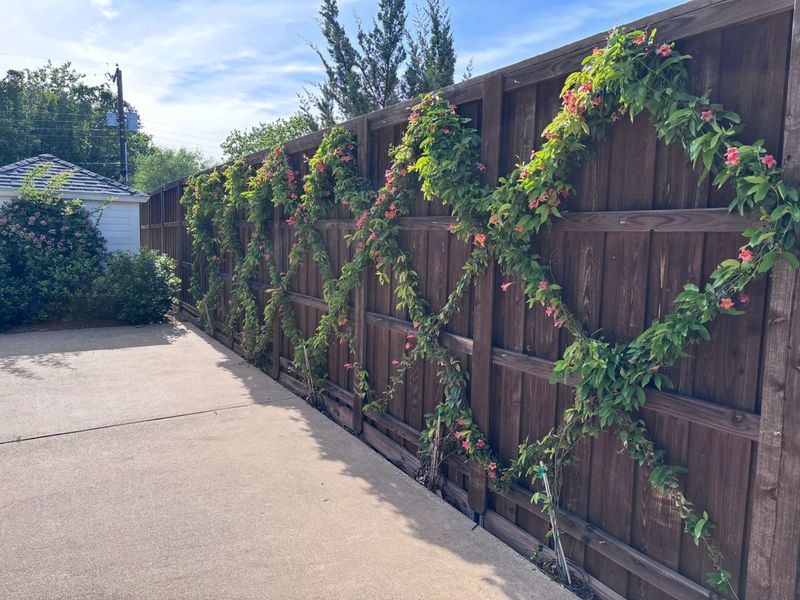
A bare fence in a Central Texas backyard can feel like a missed opportunity, especially when neighbors are dealing with the same blazing summers and rocky soil. Star jasmine, known botanically as Trachelospermum jasminoides, is a woody evergreen vine that covers fences with glossy foliage and releases a powerfully sweet fragrance from its creamy-white flowers each spring.
Getting the most from this plant means understanding when it actually blooms, how much water it truly needs, and what kind of support it requires to thrive in your specific corner of Central Texas.
Star jasmine can solve a Central Texas fence problem
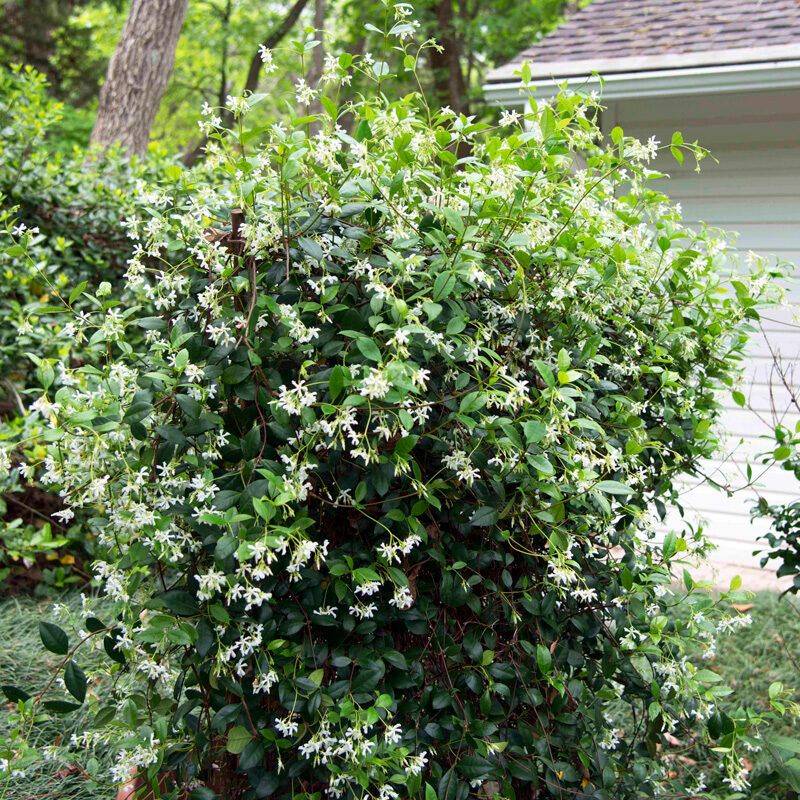
A bare wood or metal fence baking under a Texas sun offers almost nothing to the homeowner looking out the back window. Star jasmine, the woody evergreen vine sold under the scientific name Trachelospermum jasminoides, changes that equation by covering a fence with dense, glossy foliage and producing small, creamy-white, star-shaped flowers with a fragrance strong enough to notice from several feet away.
Common names for this plant include star jasmine and Confederate jasmine, and despite the familiar-sounding label, it is not a true jasmine in the genus Jasminum at all.
Texas A&M AgriLife Extension’s Earth-Kind plant-selection materials list Confederate jasmine as an adapted evergreen vine for several Texas regions, which covers much of Central Texas. That regional endorsement matters because it signals that the plant has been evaluated against Texas heat, soil, and drought conditions rather than simply imported from a national catalog with no regional testing behind it.
The vine’s twining stems allow it to weave through wire grids, trellis panels, or fence-mounted supports, building a living screen that stays green year-round. Mature plants can reach roughly 20 feet in height when given proper support and room to grow, so this is a substantial vine suited to a long fence run rather than a small decorative pot.
Calling it a universal Texas solution would overstate the case. North Carolina Extension’s plant profile for Trachelospermum jasminoides confirms that the plant performs best in well-drained soil with reliable sun, and those two conditions are not guaranteed on every Central Texas lot.
Rocky limestone caliche, heavy clay pockets, and shaded north-facing fences can all limit performance. Plant it on the right site, provide the right support, and star jasmine becomes a genuinely rewarding fence vine.
Put it in the wrong spot, and even a tough plant struggles.
Expect the main fragrance in late spring, not all summer
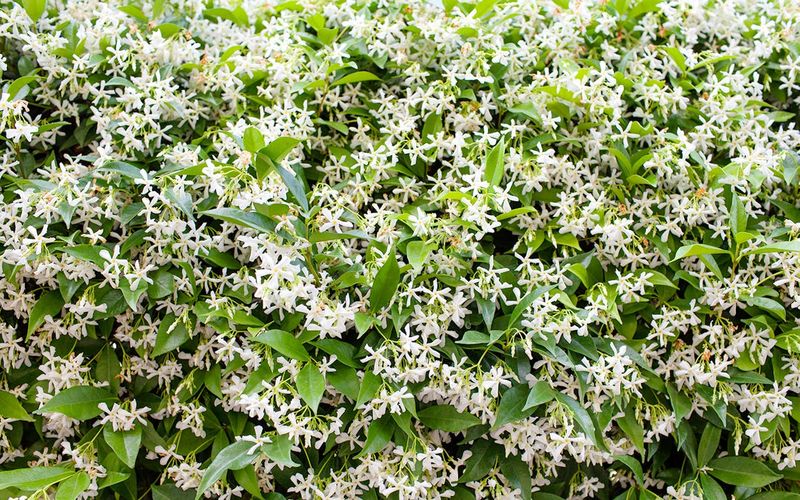
Gardeners who plant star jasmine expecting a wall of fragrant white blooms from June through September are setting themselves up for disappointment. The strongest and most dependable flowering period falls in late spring, typically around May into early June for Central Texas.
Missouri Botanical Garden’s plant profile describes the main bloom as late spring with sporadic additional flowers in summer, not a continuous flowering display through the hottest months.
That distinction matters when you are deciding whether this vine matches your expectations. Sporadic summer flowers mean you may catch another wave of fragrance on a cooler morning in July or August, but you should not count on the fence being blanketed in white blossoms every week from Memorial Day to Labor Day.
The title of this article leans into summer fragrance because flowers can and do appear after the main flush, but the word “sporadic” is doing real work in that description.
Sunlight plays a direct role in how well the plant performs at any point in the season. A sunny or at least sheltered location consistently produces better flowering than a shaded run of fence.
North Carolina Extension notes that excessive shade can result in thinner, weaker growth and fewer flowers overall. If your fence runs along a north wall or sits under a large oak canopy for most of the day, the bloom display will likely be thinner than what you see in catalog photos taken in full sun.
Where star jasmine genuinely earns its keep through summer is as an evergreen screen. The foliage stays dense and glossy even when flowers are absent, which means the fence remains covered and attractive through the heat.
Think of the late-spring bloom as the main event and any summer flowers as a welcome bonus rather than a scheduled performance.
Match the vine to the fence, light, and soil

Choosing a fence location for star jasmine is not just about where the bare wood is most visible from the patio. Sun exposure and soil drainage are the two site factors that most directly determine whether the vine thrives or merely survives.
Full sun to partial shade is the acceptable range, but a sunny, south- or east-facing fence section will generally produce denser growth and more flowers than a spot that receives only a few hours of morning light.
Soil drainage is equally non-negotiable. Missouri Botanical Garden’s entry for Trachelospermum jasminoides specifies well-drained soil as a basic requirement, and “heat tolerant” does not mean the plant can sit in a bed that holds water after rain.
Many Central Texas yards contain shallow soil over limestone, heavy clay that drains slowly, or low spots that collect runoff. Any of those conditions can cause root problems that no amount of sun will fix.
If drainage is questionable, amending the planting bed with coarse organic matter or raising the planting area slightly can help.
One of the most common errors with this vine is assuming it will grip a flat fence surface on its own. Star jasmine is a twining vine, meaning its stems wrap around supports rather than producing adhesive pads or aerial roots that cling directly to wood or masonry.
A bare wood fence without any attached wire, grid, or trellis gives the stems nothing to grab. Before planting, attach a wire grid, a section of concrete remesh, or a purpose-built trellis panel to the fence surface so the vine has something to wind through from the start.
Size expectations also deserve an honest look before purchase. Given adequate support and sun, star jasmine can reach approximately 20 feet tall with a spread of several feet.
That is a substantial vine, not a compact accent plant. A single vine planted at the corner of a fence may eventually cover eight to ten feet of horizontal run as it matures, though actual coverage speed depends on sun, soil quality, irrigation, and how much of the first season was spent establishing roots rather than sending out new shoots.
Plan for a large, long-lived plant rather than a quick seasonal filler.
Water deeply while the roots establish
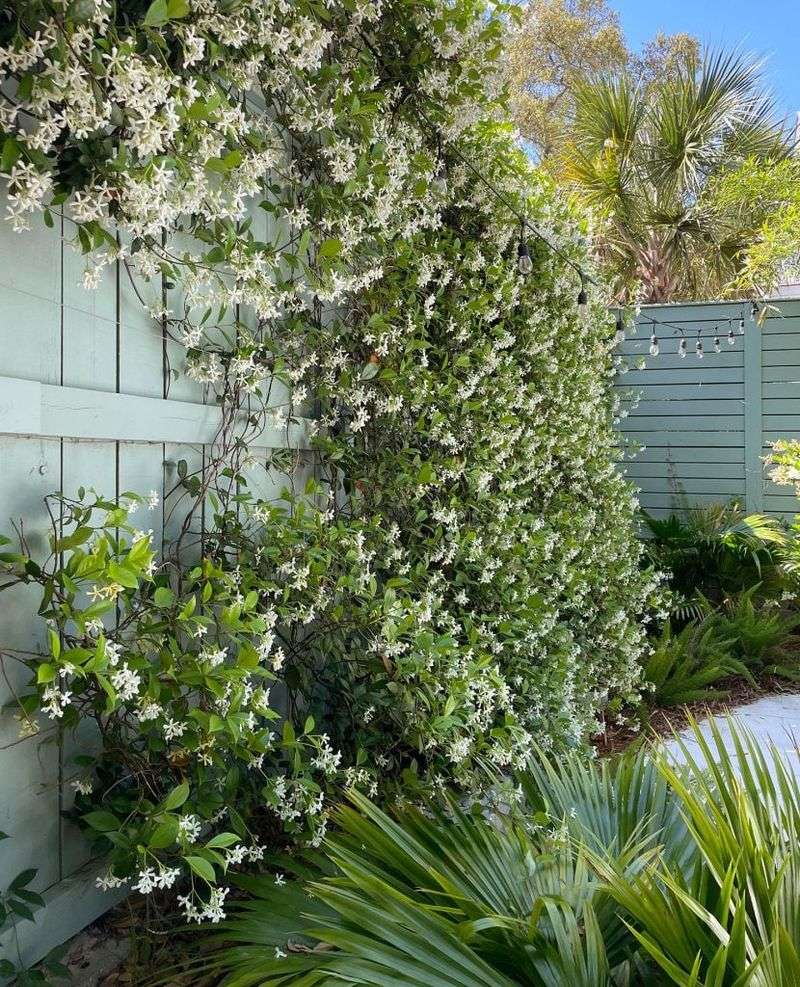
“Drought-tolerant” is one of the most misapplied phrases in Texas gardening, and star jasmine is a good example of why the full phrase matters. The complete version is drought-tolerant once established, and that qualifier changes everything for a vine going into the ground during a Central Texas summer.
A newly planted star jasmine has a root system confined to the original nursery container. Until those roots spread out into the surrounding soil and develop enough mass to draw moisture from a larger area, the plant is entirely dependent on whatever water you provide.
North Carolina Extension’s plant profile confirms that the vine needs regular irrigation during establishment, and skipping that step because the plant is labeled drought-tolerant is one of the fastest ways to lose a vine in its first summer.
University of Arizona Cooperative Extension guidance on drought and extreme heat recommends deep, thorough irrigation of the root zone rather than frequent, shallow sprinkling. Shallow watering encourages roots to stay near the surface where soil dries out fastest.
A slow, deep soak that moves moisture down through the root zone gives the plant a reason to push roots deeper, which is exactly what builds the drought tolerance the label promises. Adjust watering frequency based on your soil type, recent rainfall, current temperatures, and the plant’s age.
Once a star jasmine is fully established, it handles dry spells much better. Established plants can tolerate drought, but prolonged Central Texas heat waves combined with weeks without rain can still cause stress, leaf scorch, or slowed growth.
Check the soil before watering rather than following a fixed schedule.
Overwatering creates its own problems. Soil that stays constantly wet reduces the oxygen available to roots and can contribute to poor growth or root disease.
Aim for moist but not saturated conditions, especially in clay-heavy soils that hold water longer than sandy or amended beds.
A 3- to 4-inch layer of mulch spread around the base of the plant, kept a few inches away from the stems, helps on several fronts. Utah State University Extension’s water-wise landscaping principles note that mulch reduces evaporation, moderates soil temperature, and suppresses weeds competing for the same moisture.
In Central Texas, where summer soil temperatures can spike dramatically, that temperature buffer alone makes mulching worth the effort.
Train and prune the vine before it overwhelms the fence
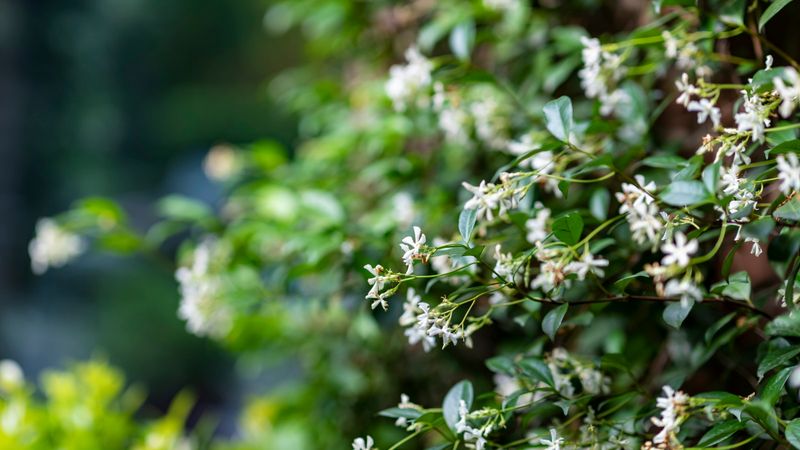
A vigorous star jasmine left entirely to its own devices will not stay neatly within the fence line. Stems that find nothing to grip will sprawl sideways, droop over the top rail, or send long shoots away from the fence in search of a support they can twine around.
Starting training early, while stems are young and flexible, saves a significant amount of corrective work later.
As new growth emerges, weave stems through the wire grid or trellis rather than letting them pile up in one spot. Distributing the vine horizontally across the fence surface from the beginning produces a more even screen than allowing one dense column to form at the planting point.
Tying stems loosely with soft garden twine or plant clips gives them directional guidance without cutting into the bark.
Pruning keeps the vine proportionate and shapeable. North Carolina Extension recommends pruning after flowering to avoid cutting off buds set for the next bloom cycle.
If preserving the spring flower display is your priority, wait until the main flush of late-spring blooms has finished before doing any significant cutting. For gardeners who care more about shape and size control than the next flower show, University of Georgia Extension’s guide to pruning ornamental plants recognizes that some vines can also be pruned before new growth begins in late winter.
The safest approach is to decide which matters more to you, bloom or shape, and time your cuts accordingly.
Dense evergreen growth against a wooden fence creates a specific maintenance concern worth taking seriously. A University of Georgia Extension county column on Confederate jasmine notes that thick, year-round coverage can trap moisture against wood and make inspection and repairs difficult.
Trimming the vine back from the fence surface periodically, rather than allowing it to press tightly against the boards, reduces that risk. This is a maintenance caution, not a prediction that the vine will destroy every fence it touches, but it is a real concern worth building into your annual routine.
Wear gloves whenever you prune. Broken stems and cut petioles release a milky latex sap, and while the available information does not establish a specific toxicity level for skin contact with star jasmine sap, gloves are a straightforward precaution that costs nothing.
Verify the plant’s identity and realistic safety profile
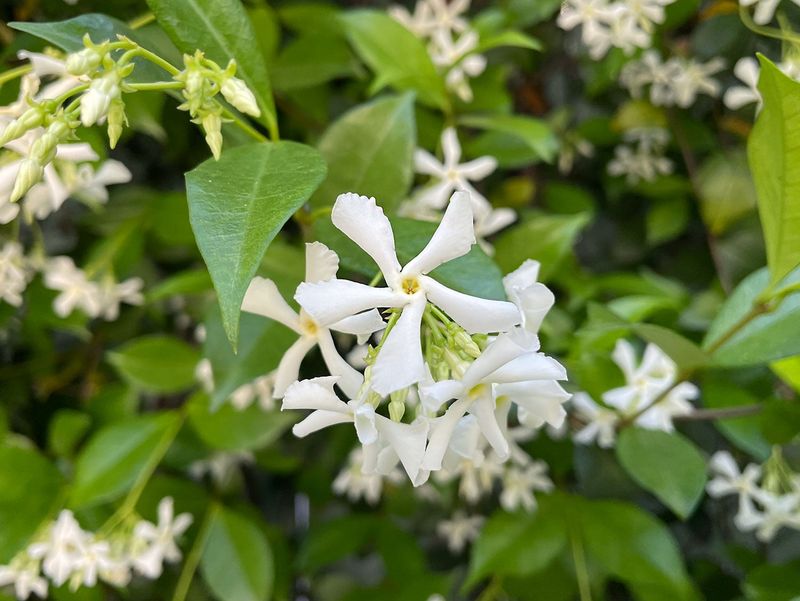
Garden centers in Central Texas carry several plants with similar-sounding names, and buying the wrong one means planting something with entirely different growth habits, size, and landscape uses. Star jasmine and Confederate jasmine are both common names for Trachelospermum jasminoides, the large, fragrant, evergreen flowering vine covered in this article.
A related species, Trachelospermum asiaticumT. jasminoides, is commonly sold as Asiatic jasmine and is used primarily as a low-growing ground cover rather than a vertical screening vine. North Carolina Extension’s plant toolbox entry for distinguishes the two species clearly: the flowering vine and the ground cover are related but serve different landscape functions and should not be treated as interchangeable.
A third plant causes confusion at the nursery level: Carolina jessamine, whose scientific name is Gelsemium sempervirens. North Carolina Extension’s profile for Gelsemium sempervirens describes it as a native vine with yellow, tubular flowers that bloom in late winter to early spring, which is a completely different flower color, shape, and bloom season from star jasmine’s white spring flowers.
Carolina jessamine also carries a well-documented toxicity profile that differs from star jasmine. If the vine at the nursery has yellow flowers, it is not T. jasminoides.
On the topic of pests, Missouri Botanical Garden notes that serious pest and disease problems are generally uncommon with star jasmine, though Japanese beetles may appear. The flowers attract bees, which is a modest pollinator benefit worth noting without overstating the plant’s wildlife value.
Safety questions come up when pets or children are in the yard. The ASPCA lists Trachelospermum jasminoides as non-toxic to dogs, cats, and horses.
A North Carolina Extension database entry applies a “poisonous” label to the species without providing a detailed toxicity assessment, which creates a conflicting picture. Given that conflict, the responsible position is to avoid any absolute toxicity claim for humans or pets, use the scientific name when the question arises, and consult a veterinarian or poison control center if accidental ingestion is a concern.
Use a practical decision rule before planting
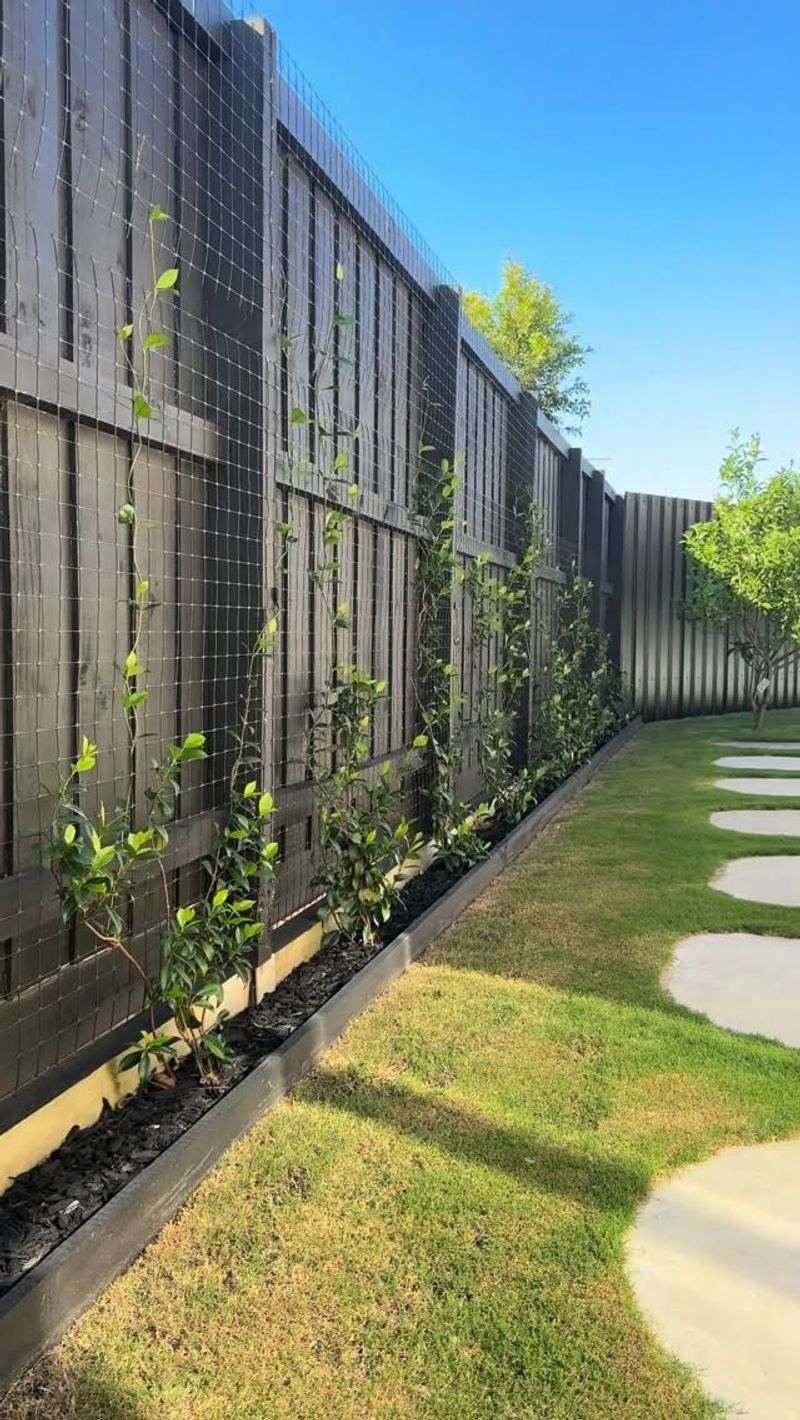
Before buying a star jasmine plant, run through four quick site checks: sunlight, drainage, support, and water access. A fence section that gets at least half a day of direct sun, sits in soil that drains after rain, already has or can accept a wire grid or trellis, and falls within reach of a hose or drip line is a strong candidate for this vine.
A shaded north-facing fence over heavy clay with no irrigation access is not.
The Texas A&M Earth-Kind Plant Selector exists precisely because Central Texas is not a uniform growing environment. Soil depth, limestone content, drainage patterns, reflected heat from walls and pavement, and local water restrictions all vary from one neighborhood to the next.
What performs well in a Georgetown yard with amended soil and drip irrigation may struggle in a far north Austin lot with two inches of topsoil over solid rock.
Set your expectations around the plant’s real strengths: a reliable evergreen screen that holds its foliage through Central Texas summers, a powerfully fragrant late-spring bloom in May and June, and the possibility of additional flowers appearing sporadically through summer when conditions cooperate. That combination, described honestly, is still genuinely appealing.
A vine that keeps the fence green all year and fills the yard with fragrance for several weeks each spring is worth the support hardware, the establishment watering, and the annual trim. The gardeners who enjoy it most are the ones who planted it on the right site and gave it what it needed in year one.