
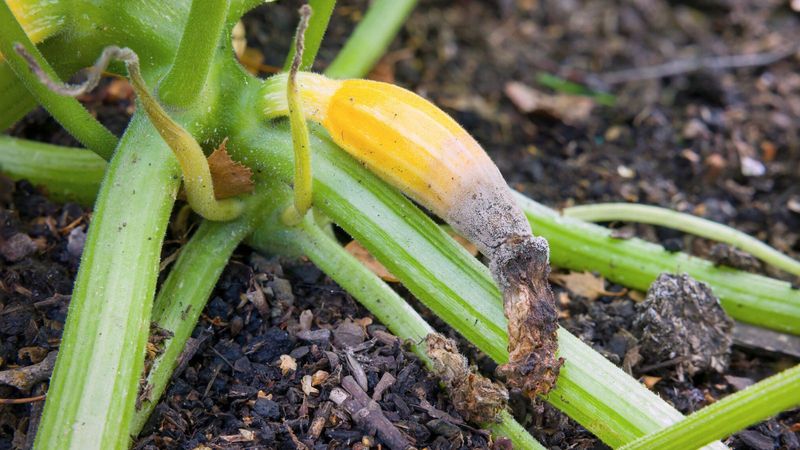
Watching a tiny zucchini turn brown and mushy at the tip before it ever reaches your kitchen is genuinely frustrating, especially when it keeps happening in the middle of summer heat. Many gardeners assume blossom-end rot is automatically to blame, but poor pollination and fungal wet rot can produce symptoms that look almost identical.
Knowing which problem you are actually dealing with changes what you do next, and getting that right can save the rest of your crop.
Start with the fruit’s texture and shape
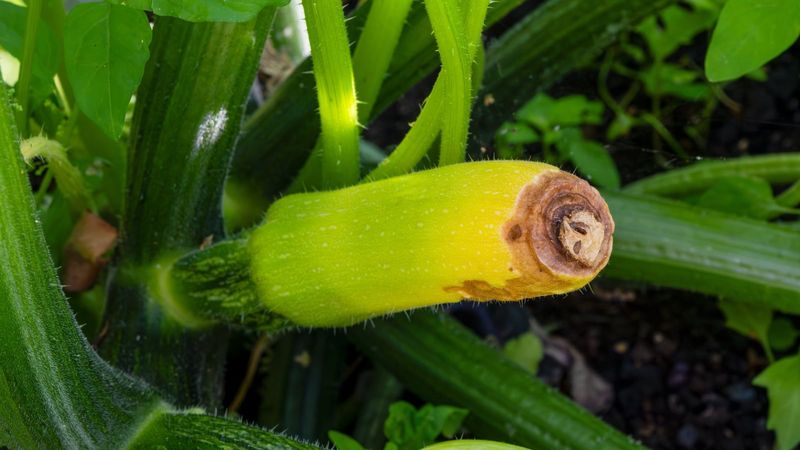
Not every tiny zucchini that browns and rots at the tip is suffering from the same problem. Before treating anything, take a close look at the texture, location, and shape of the damage, because those details point you toward the right diagnosis.
Classic blossom-end rot begins as a water-soaked or pale discoloration right at the blossom tip, the end opposite the stem. That spot gradually darkens and becomes sunken, dry, and leathery, with a sharp boundary between damaged and healthy tissue.
Utah State University Extension describes this progression as a physiological response rather than an infectious disease, which is why the rest of the fruit can look perfectly fine while the tip turns dark and papery.
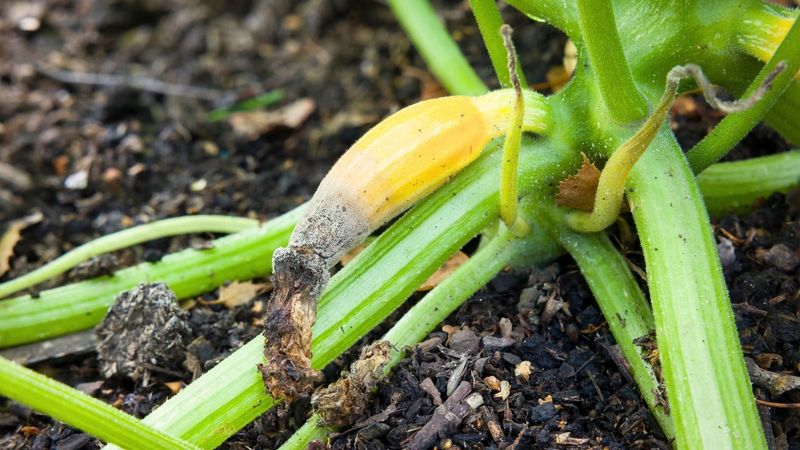
A different pattern calls for a different explanation. If the fruit never really grew in the first place, stayed very small, and looks misshapen or shriveled before rotting, poor pollination is a stronger candidate than blossom-end rot.
Soft, watery collapse at the blossom end, especially with any fuzzy or discolored growth, points toward fungal rot rather than a calcium-related problem.
Late-summer heat raises the odds of several things going wrong at once. University of Minnesota Extension notes that high temperatures can increase plant water demand, reduce pollinator activity, and contribute to fruit abortion in cucurbits, so heat alone does not tell you which disorder is present.
Match your observation to the symptom pattern first, then respond accordingly.
Understand what blossom-end rot actually means
Blossom-end rot is not a disease you can catch or spread from plant to plant. It is a physiological disorder, meaning the plant itself fails to deliver enough calcium to the developing fruit at the right time.
Calcium travels through a plant dissolved in water, moving through the xylem tissue from roots up to leaves and fruit. Fruit that grows quickly or sits at the end of a long transport chain can end up short-changed, especially when anything disrupts steady water movement.
USU Extension explains that drought, wet-to-dry soil swings, root injury, flooding, or excessive fertilizer salts can all interfere with how reliably calcium reaches the fruit. A peer-reviewed study in the Journal of Experimental Botany further describes how calcium transport to fruit is limited by low transpiration in the fruit itself compared with leaves, making the fruit especially vulnerable when uptake is uneven.
This is why blossom-end rot does not automatically mean your soil is low in calcium. University of Minnesota Extension points out that many soils already contain adequate calcium, and the real bottleneck is transport rather than supply.
Adding calcium products without a soil test often does nothing to fix the underlying water-movement problem.
Hot weather makes this worse indirectly. High temperatures push the plant to pull more water through its roots, and if soil moisture is uneven, the demand outpaces supply.
UGA Extension connects fluctuating moisture directly to disrupted calcium uptake, which is why the first response to suspected BER is steadying irrigation rather than reaching for a supplement.
Check whether pollination failed
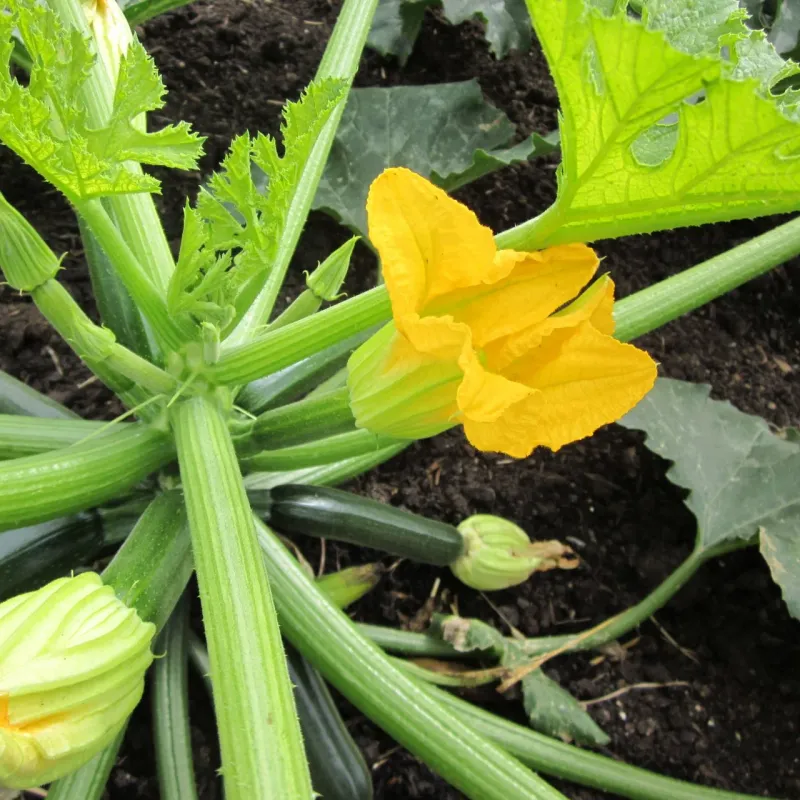
Before labeling a failed young zucchini as blossom-end rot, spend a moment checking how the plant is being pollinated. Poor pollination is a well-documented reason small summer squash forms and then quickly rots, and it is easy to overlook when heat stress is already on your mind.
Female zucchini flowers have a small swollen bump, the immature fruit, sitting between the flower petals and the vine. Male flowers attach directly to a slender stem with no such bump.
University of Minnesota Extension explains that zucchini flowers open for only a short window, usually in the morning, and need bee visits during that time to transfer pollen from male to female flowers. If pollinators are scarce, or if rain, high humidity, or heat keeps bees away during that window, fertilization may be incomplete.
A fruit that was never properly pollinated tends to stay small and misshapen rather than growing to a normal size and then developing a localized lesion. It may yellow, shrivel, or simply rot without ever setting a firm shape.
UMN commercial vining vegetable guidance notes that daytime temperatures in the 90s or nighttime temperatures in the 70s can contribute to flower and small-fruit abortion in cucurbits, though these are useful diagnostic markers rather than guaranteed failure points for every cultivar.
Heat can play a role in pollination failure and in other disorders at the same time, so a hot week is not enough on its own to name the cause. UMN pollination guidance recommends ensuring plants have access to active pollinators and that flowers are not consistently wet or covered during their brief open period.
If most of your failing fruit is tiny and misshapen rather than showing a defined tip lesion, start with pollination before assuming calcium is the issue.
Recognize fungal wet rot
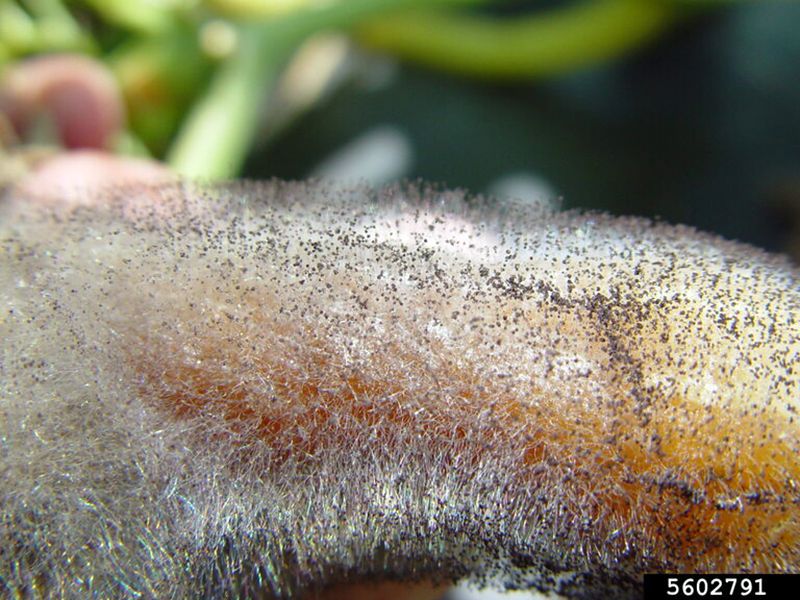
Soft, watery decay at the blossom end of a zucchini is a red flag that the problem may not be blossom-end rot at all. Fungal diseases, particularly Choanephora rot, can produce blossom-end collapse that looks superficially similar but has a very different cause and response.
UMN Extension’s Choanephora rot page describes this disease as a common squash problem during prolonged wet conditions. The blossom end softens and becomes watery, and the tissue often develops white, purple, or black fuzzy fungal growth as the infection progresses.
That fuzziness is the clearest signal that you are dealing with a fungal rot rather than a physiological calcium problem, and it changes what you should do next.
Fruit that has already failed can also attract secondary microorganisms, meaning a fruit that started with one problem may show overlapping symptoms by the time you notice it. White mold in cucurbits is another fungal possibility that can cause soft, collapsing tissue, and it should also prompt removal rather than calcium treatment.
Applying calcium products to mold-covered fruit accomplishes nothing useful.
Florida gardeners need to pay particular attention here. UF/IFAS guidance on squash production notes that squash is relatively sensitive to flooding and that Florida’s warm, wet summer conditions can favor blossom and fruit rots.
Managing drainage and avoiding waterlogged soil matters just as much as preventing drought stress, and in some seasons it matters more. Remove any fruit showing watery decay or fuzzy growth, and do not add it to a compost pile when fungal disease is suspected.
Keep soil moisture steady but not saturated
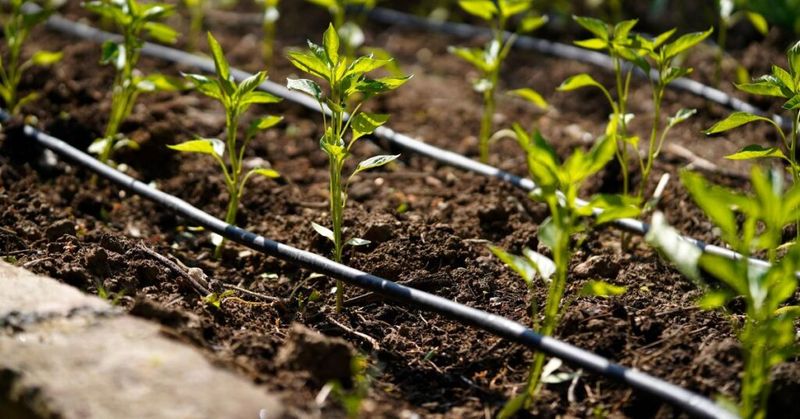
When blossom-end rot is your most likely diagnosis, the most effective immediate response is steadying how much moisture reaches the root zone, not dumping extra water on the plant or rushing to add supplements.
The goal is to keep the soil evenly moist at root depth without letting it dry out completely between waterings or stay soggy after rain. UMN Extension’s irrigation guidance for vegetables recommends watering deeply enough to moisten the root zone, then checking actual soil conditions before watering again rather than following a fixed schedule.
A general vegetable-garden reference of roughly 1 to 1.5 inches of water per week comes from UGA Extension home gardening guidance, but that figure needs adjusting for sandy soil, recent rainfall, plant size, and summer temperatures. Sandy soils dry faster and often need smaller, more frequent applications to stay consistently moist.
Mulch is a practical tool for moderating those swings. UGA Extension’s landscape watering guidance recommends roughly 2 to 3 inches of mulch around plants to reduce evaporation and buffer the soil against rapid drying.
Keep mulch pulled back a few inches from the stem to avoid trapping moisture against the crown.
Flooding and poor drainage are just as harmful as drought. UF/IFAS squash production guidance specifically flags that saturated or flooded soil can injure roots, reduce oxygen availability, and impair nutrient uptake, which can worsen calcium-delivery problems and open the door to wet rots.
USU Extension also lists root injury from flooding as a contributing factor to BER. If your garden drains slowly after rain, raised beds or improved soil structure will help more than any amendment.
Remove failed fruit and avoid root damage
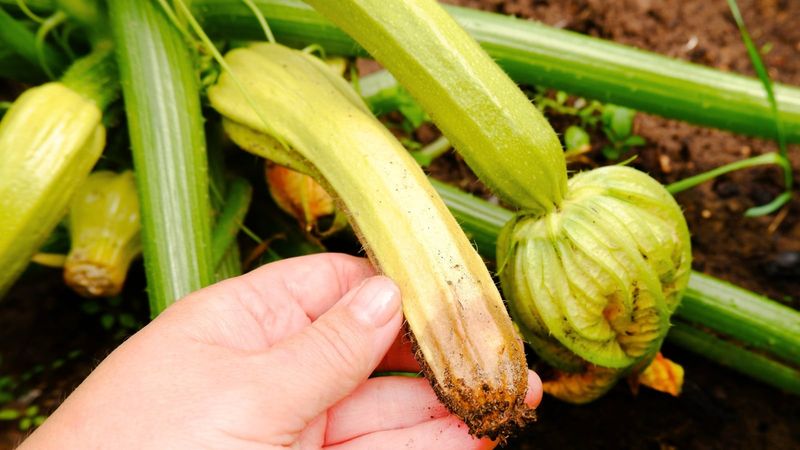
Rotted, moldy, or clearly stalled fruit will not recover on its own, and leaving it on the vine serves no purpose. Removing failed fruit gives the plant a cleaner slate to focus on developing the fruit that remains.
UMN Extension’s tomato disorder guidance, which also applies to squash family members, notes that BER damage on an affected fruit will not reverse. Removing it may help the plant direct resources toward healthier developing fruit, though it does not guarantee that the next fruit will be problem-free.
Think of removal as basic plant hygiene, not a cure. Fruit showing soft, watery decay or fuzzy fungal growth should be discarded rather than composted, since composting diseased material can allow pathogens to persist.
Root protection matters just as much as what happens above ground. USU Extension specifically warns against cultivating or hoeing close to zucchini roots, because even shallow soil disturbance can sever feeder roots that the plant relies on for consistent water and calcium uptake.
Once those roots are damaged, the plant struggles to pull moisture steadily from the soil regardless of how well you water.
Avoid working the soil aggressively around established zucchini plants during the growing season. If weeds are a problem, hand-pull them close to the stem rather than using a hoe, and let the mulch layer handle suppression farther out.
UMN’s Choanephora rot guidance also supports prompt removal of infected blossoms and fruit to reduce the source of fungal spores in the immediate area.
Test before adding calcium or fertilizer
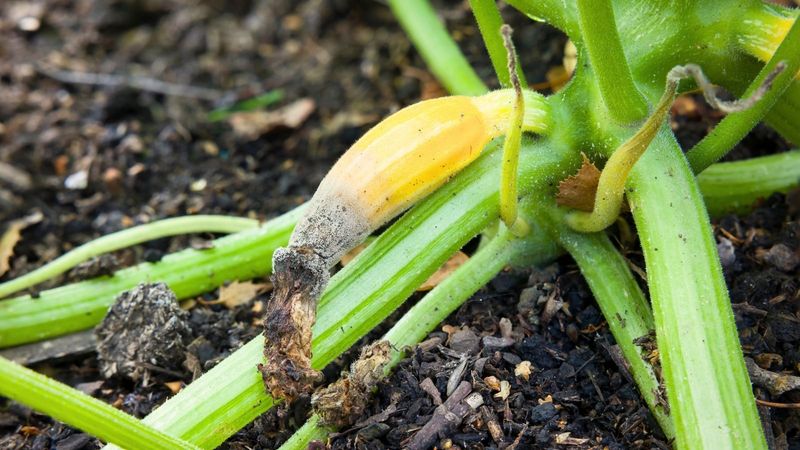
Reaching for a bag of lime, gypsum, or calcium nitrate feels like a logical response to suspected blossom-end rot, but applying amendments without knowing your soil’s actual status can cause problems rather than solve them.
UMN Extension is direct on this point: eggshells and Epsom salts are not reliable fixes for blossom-end rot, and excess magnesium from Epsom salts can actually interfere with calcium uptake. Lime can raise soil pH unnecessarily if the soil does not need it.
UF/IFAS guidance for Florida gardeners adds that well water in many parts of the state already supplies substantial calcium and magnesium, making additional lime applications potentially counterproductive. A basic soil test from your county extension office will tell you whether calcium or pH is actually a limiting factor before you spend money on amendments.
Nitrogen timing and type also matter. USU Extension and UGA Extension’s BER explainer both caution against heavy, late applications of nitrogen or ammonium-based fertilizers.
Rapid vegetative growth from excess nitrogen can outpace calcium distribution to fruit, and ammonium competes with calcium at the root surface. Follow soil-test recommendations and product labels rather than applying extra fertilizer in hopes of a quick fix.
Foliar calcium sprays are sometimes marketed as a BER remedy, but the evidence is inconsistent. UGA Extension’s BER publication describes foliar calcium evidence as inconclusive, and a controlled tomato study published in a peer-reviewed journal found that tested calcium sprays did not prevent BER or improve yield.
Zucchini research is not identical to tomato research, but the available data does not support sprays as a reliable substitute for steady moisture management and soil-test-based fertilization. A 2024 UGA Extension garden post reinforces this, recommending consistent irrigation as the primary tool rather than foliar applications.
Use a symptom-based decision guide
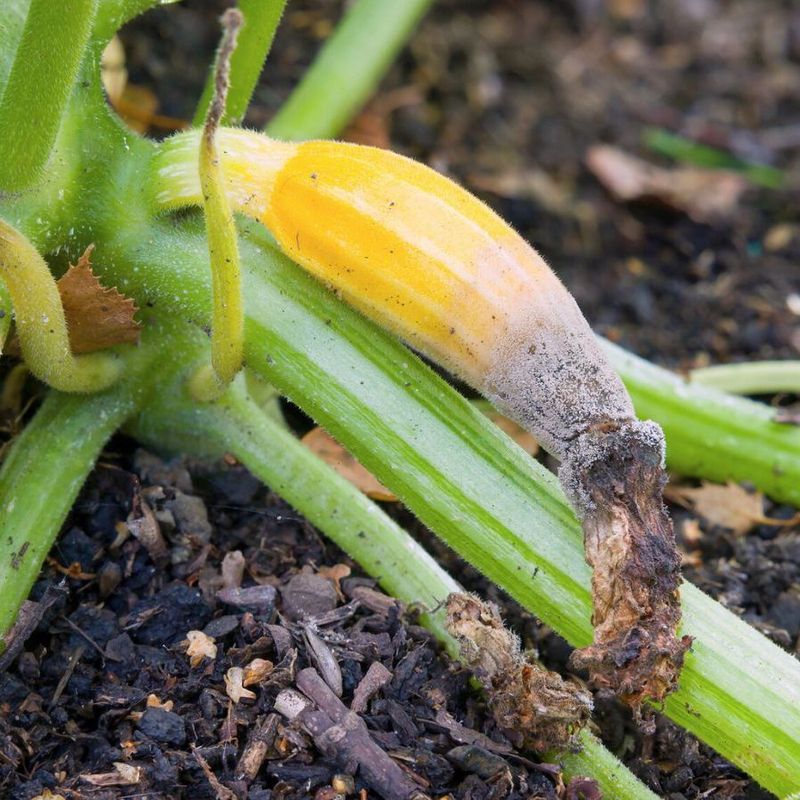
Working through a short symptom check is more reliable than assuming any single cause when your zucchini tips are failing. Start with what the damage actually looks like before deciding what to do.
A dry, sunken, dark, sharply localized, leathery lesion at the blossom end is the clearest indicator of blossom-end rot. If you see that pattern, focus on steadying root-zone moisture, protecting roots from physical disturbance, and soil-testing before adding any amendments.
A very small, misshapen fruit that never developed properly calls for a pollination check first. Soft, watery collapse or any fuzzy white, purple, or black growth points toward Choanephora or another fungal rot, and the response is removal rather than calcium treatment.
Remove clearly failed fruit in any case, maintain evenly moist but well-drained soil, and avoid disturbing roots. USU Extension and UMN Extension both note that late-summer heat can contribute to more than one problem at the same time, so overlapping symptoms are possible and a single later fruit cannot confirm what went wrong earlier.
Recurring patterns across multiple fruits give you better clues over time, but a cautious, symptom-led response will serve your garden better than any single-cause assumption.