
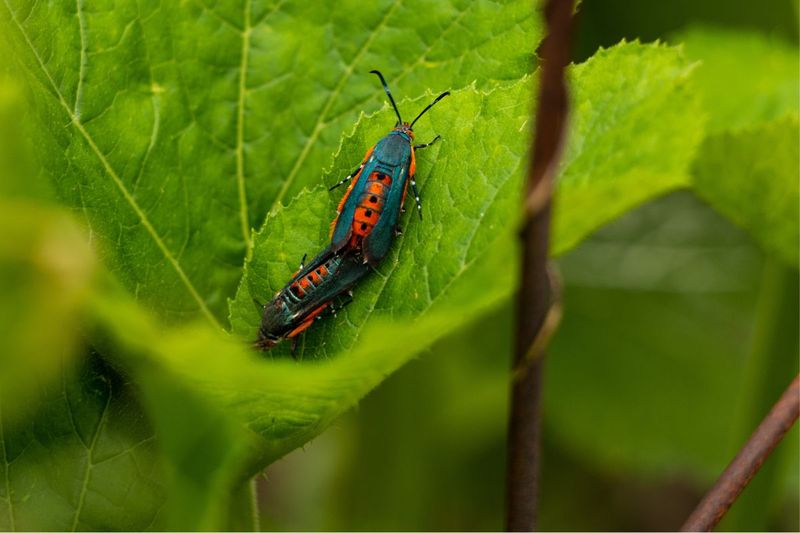
Few things are more disheartening than walking out to your garden and finding a cucumber vine that was thriving yesterday now lying flat in the summer heat. Before you grab the hose or reach for a spray bottle, slow down – the cause matters more than the speed of your response.
Squash vine borers can hollow out a cucurbit stem and cause sudden collapse, but they are not the automatic explanation for a failing cucumber plant, and treating the wrong problem can cost you the rest of the season. A quick, methodical inspection will tell you far more than the weather or the calendar ever could.
A collapsing cucumber does not automatically have a squash vine borer
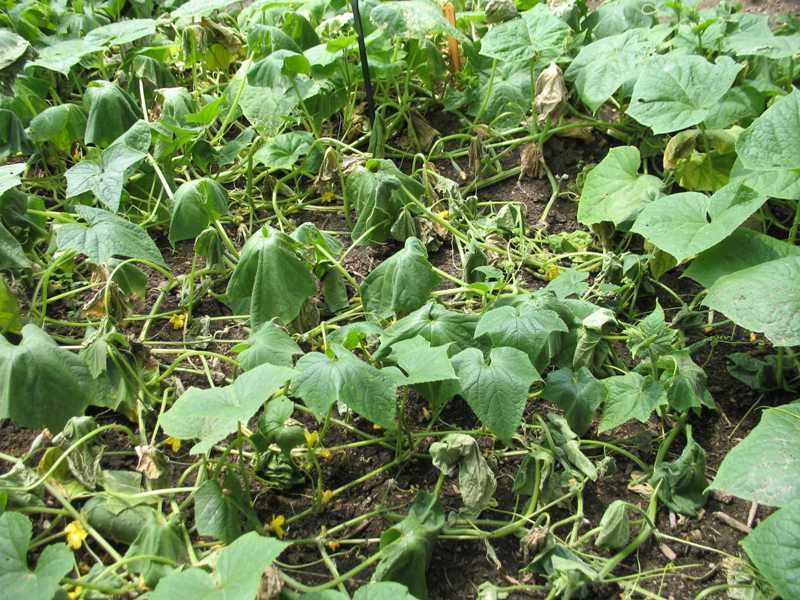
Walking out to find a cucumber vine flat on the ground feels like a crisis, and the instinct to name a culprit fast is understandable. Squash vine borers do tunnel through cucurbit stems and can cause dramatic wilting, but they are not the most likely explanation when a cucumber is the plant in trouble.
UF/IFAS research on the squash vine borer makes clear that the pest’s host range is centered on plants in the genus Cucurbita, which includes squash and pumpkins, and identifies cucumber as a minor, less typical host.
That distinction matters because it changes where you start looking. A cucumber that wilts and collapses shares symptoms with several other problems, and wilt alone cannot tell them apart.
Heat stress, inadequate or excessive watering, bacterial wilt, squash bugs, viruses, and root or crown disease can all produce a vine that looks exactly like one with a borer inside the stem.
The University of Minnesota’s cucumber diagnostic tool lists multiple causes for wilting leaves, reinforcing that a wilt-only diagnosis is unsafe. Treat squash vine borer as one possibility to confirm with physical evidence, not as the explanation to assume before you have looked at the plant closely.
Inspect the crown for the strongest borer clues
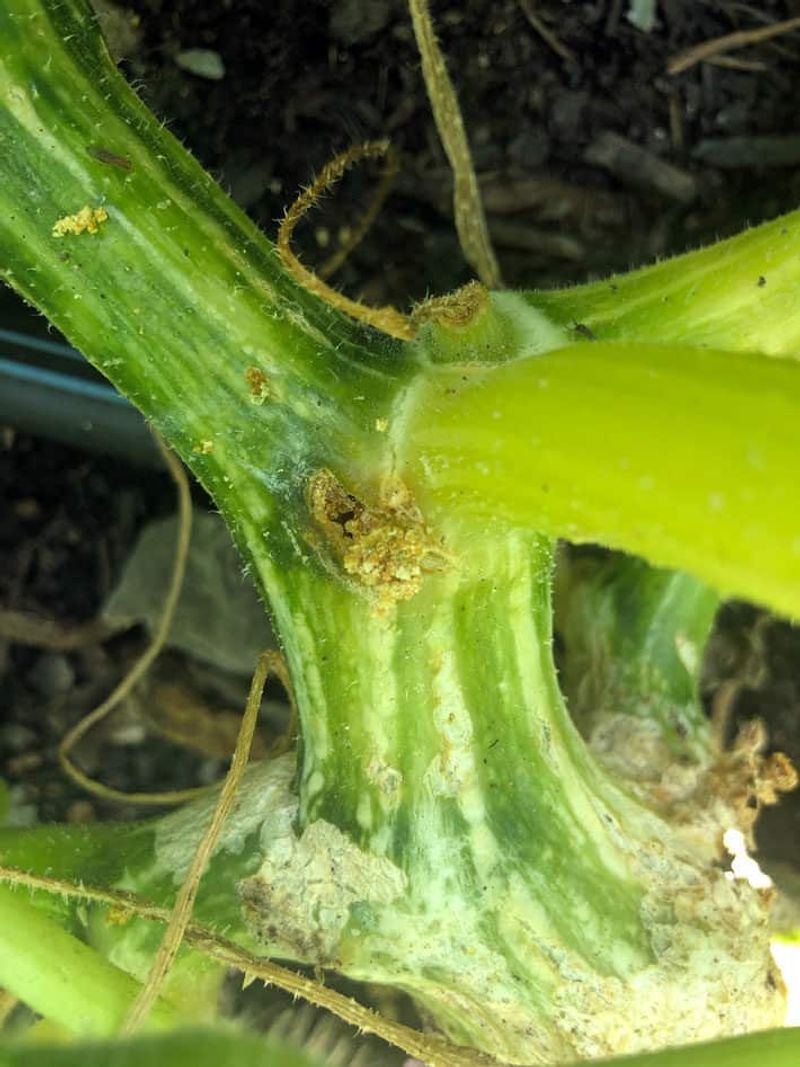
The crown of the plant, where the main stem meets the soil, holds the strongest clues when squash vine borer damage is a real possibility. Before checking the calendar or the weather forecast, get down close and look at the base of the stem and the first few inches above and below the soil line.
You are searching for a small, round entry hole surrounded by a wet, sawdust-like material that ranges from green to orange in color.
That frass is the most telling external sign of a borer at work. UF/IFAS describes the entry hole and frass as the primary field evidence for squash vine borer infestation, far more diagnostic than wilting alone.
Split or swollen tissue near the crown can also suggest internal feeding, though swelling and splitting have other causes too.
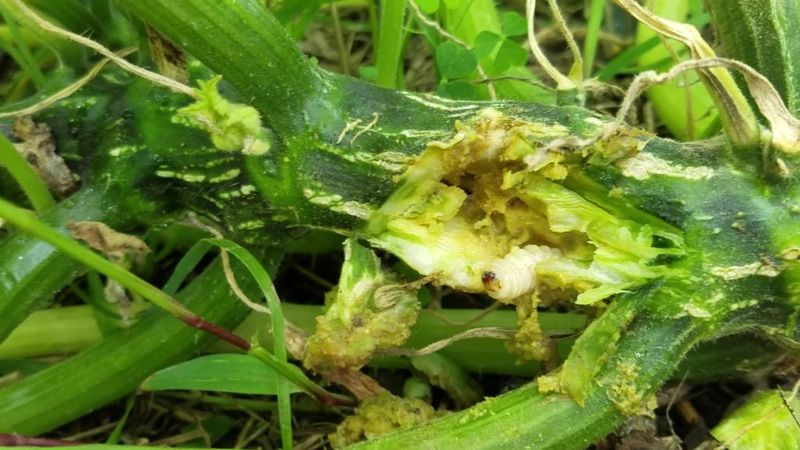
If you find those external signs, carefully slitting the stem lengthwise at that point may reveal a cream-colored larva inside, which would confirm the infestation. Keep in mind that suggestive external evidence and confirmed internal larvae are two different things.
University of Minnesota Extension recommends physical inspection of the stem as the most reliable way to identify borer damage, and the same logic applies here: a hole and some frass are a strong lead, but opening the stem provides the clearest answer. Internal stem injury is only one explanation for wilt, so keep the other possibilities in mind as you look.
Use the season as a clue, not a diagnosis
Timing can point you in a useful direction, but it cannot replace hands-on inspection. In many northern parts of the country, squash vine borer adult activity is commonly described as peaking from mid-June through July or into early August.
Treating that window as universal, however, would mislead gardeners in the South.
University of Minnesota’s insect diagnostic resource notes that regional differences in emergence timing are significant, and UF/IFAS reports that Florida and other Southern states can experience two overlapping generations, with adult moths present from mid-May through late October. That extended window means a Southern gardener cannot assume the borer season is over just because summer is winding down, nor can they assume a late-summer wilt is automatically borer-related simply because the calendar suggests peak activity.
The practical takeaway is to treat the time of year as a background factor rather than a trigger for a diagnosis. If your cucumber collapses in August in Georgia or Florida, the season is worth noting, but it does not substitute for walking out and checking the crown.
Hot weather in late summer also coincides with heat stress, drought stress, and bacterial wilt pressure, all of which can produce identical-looking symptoms. Combine timing with physical evidence from the plant itself before settling on any explanation.
Check soil moisture and overnight recovery before watering
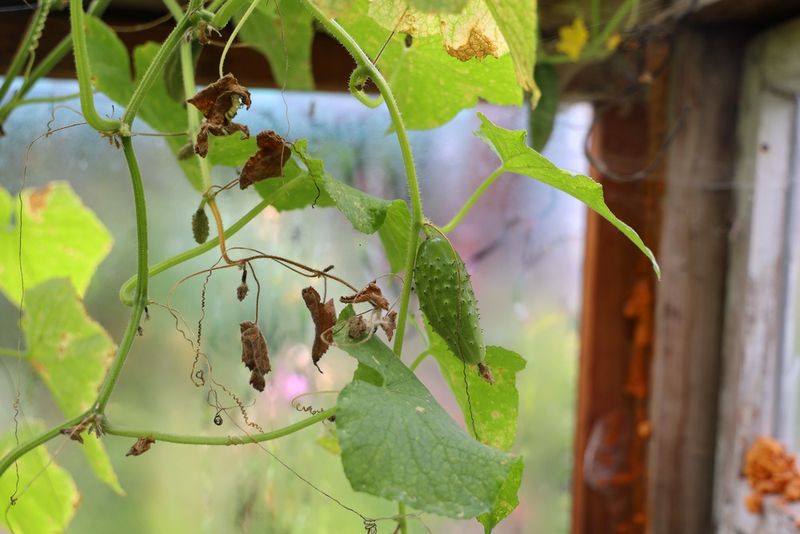
A cucumber that droops in the afternoon heat can look exactly like one that is dying of thirst, but adding water to the wrong situation can make things worse rather than better. The first physical check should be the soil itself: push a finger two to three inches into the ground near the root zone and feel whether the soil is dry, moist, or already saturated.
That one step separates several possible explanations before you do anything else.
UGA Extension guidance on heat-wave watering explains that plants sometimes wilt during the hottest part of the day as a temporary stress response, then recover on their own once temperatures drop in the evening. If your vine looks limp at two in the afternoon but stands back up by morning, heat stress rather than water deficit may be the explanation, and watering again on top of already-adequate soil moisture is unnecessary.
Wet soil paired with persistent wilt is a different signal entirely. That combination does not point to a single cause, but it should discourage reflexive watering and prompt a closer look at the plant for signs of root rot, crown disease, or stem damage.
UMN’s cucumber wilting diagnostic lists overwatering and saturated soil as conditions that can stress roots and cause collapse that looks identical to drought stress. Check the soil, then check the vine’s recovery overnight before deciding whether water is actually what the plant needs.
Treat bacterial wilt as an important cucumber alternative
Bacterial wilt deserves particular attention any time a cucumber declines suddenly, even when other causes seem plausible. The disease is caused by a bacterium spread primarily by cucumber beetles, and cucumbers are among the crops most commonly and severely affected.
UMN Extension’s bacterial wilt resource notes that cucumbers can die rapidly once infected, which means the window for a useful response is short.
Early in the disease, an infected vine may wilt during the day and partially recover overnight, which can make the problem easy to dismiss as heat stress. That recovery window closes as the infection progresses.
Scout the plant and nearby soil for small, yellowish-green or striped cucumber beetles, which are the primary vector. Their presence alongside wilting raises the likelihood of bacterial wilt considerably.
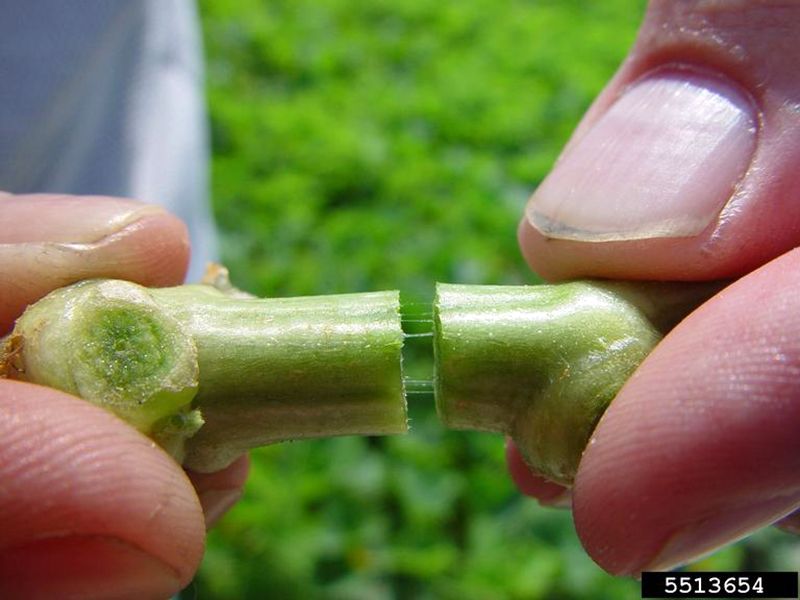
A quick field test can add useful information. Cut a fresh section of the lower stem, press the two cut surfaces together firmly for a few seconds, then slowly pull them apart while watching for thin, thread-like strings of bacterial ooze to bridge the gap.
Visible strings support a bacterial wilt diagnosis. Failing to see strings does not rule it out, since the test depends on technique and timing, and early infections may not produce a clear result.
Pesticides do not cure bacterial wilt, and a plant that is severely infected should be removed from the garden to reduce beetle pressure on nearby plants. UMN’s cucumber diagnostic confirms that wilting from bacterial wilt overlaps visually with other causes, which is exactly why scouting for beetles and running the stem test adds value before you make any decisions about treatment or removal.
Scout for squash bugs and other overlapping problems
Squash vine borers and bacterial wilt are not the only pests capable of collapsing a cucumber. Squash bugs are a common garden insect that can disrupt water and nutrient movement through a plant, and their feeding damage sometimes mimics the appearance of a vine that has lost its vascular function entirely.
UC IPM’s squash bug resource explains that heavy infestations inject a toxic compound into plant tissue while feeding, which can cause rapid wilting and, in severe cases, complete vine collapse. Squash and pumpkins are the preferred hosts, but cucumbers are not immune.
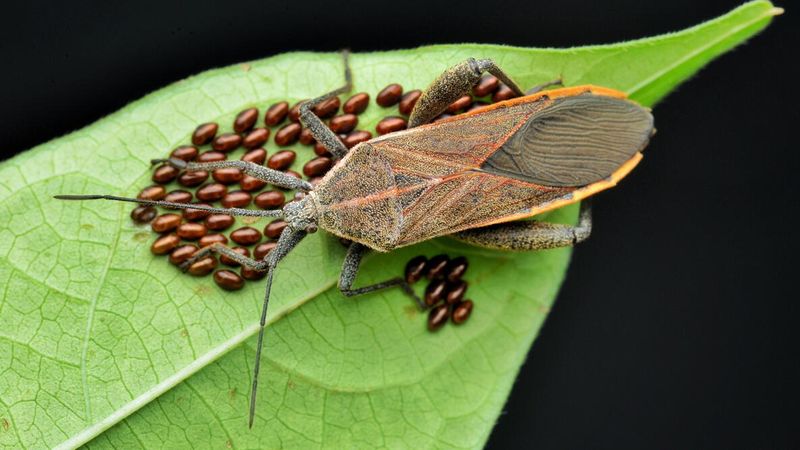
Check the undersides of leaves, the crown area, and any sheltered spots where the stem meets the soil or a trellis. You are looking for gray-brown adults roughly half an inch long, smaller pale-green or gray nymphs clustered together, and flat bronze-to-brown egg masses arranged in tidy rows on leaf undersides.
Beyond squash bugs, a wilting cucumber can also point to root or crown rots caused by Phytophthora and other soil-borne pathogens, viral infections that cause mosaic patterns alongside wilting, and water-related disorders from both under- and over-irrigation. UMN’s cucumber wilting diagnostic lists this range of causes, reinforcing that a wilt-only observation cannot safely identify any single problem.
Complete the inspection before settling on an explanation.
Open a stem only when the infestation remains localized
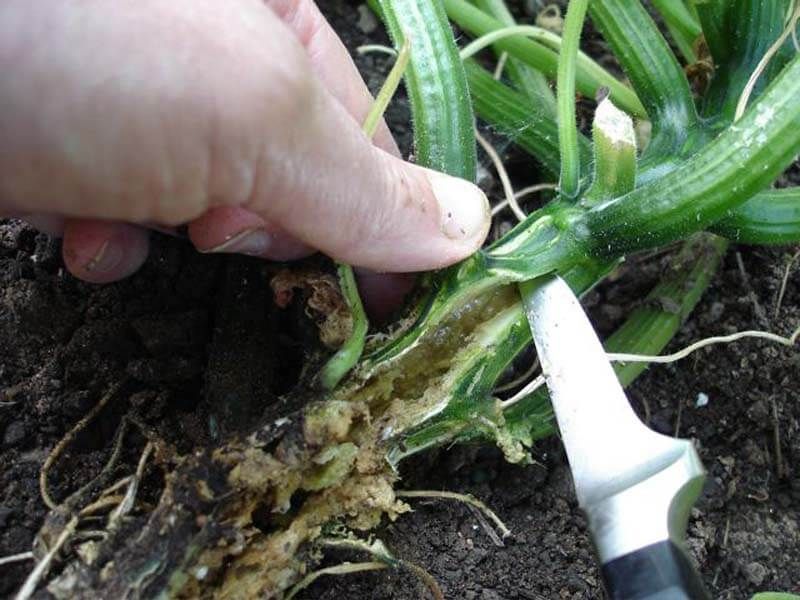
Stem surgery is a real option, but only under specific conditions. If you have confirmed squash vine borer damage through physical evidence – an entry hole, frass, and ideally a visible larva – and the damage appears limited to a short section of the vine with healthy tissue still present on either side, carefully opening the stem gives the plant a fighting chance.
The procedure itself is straightforward in concept but requires a steady hand. UGA Cooperative Extension’s squash vine borer guide describes slitting the stem lengthwise at the damaged area, removing the larva or larvae inside, pressing the stem halves back together, and supporting the wound with soil mounded over the area or a loose wrap to hold moisture against the cut surface.
Burying the damaged section encourages the vine to produce new roots above the injury, which can help compensate for the disrupted vascular tissue below.
The limits of this approach deserve equal attention. University of Minnesota Extension notes that manual removal is labor-intensive and is most realistic when the infestation is caught early.
A vine that has been extensively girdled, that has already collapsed fully, or that shows multiple entry points along the stem is unlikely to recover even after the larvae are removed. Attempt the procedure only when the plant still has substantial living tissue, and be realistic about the outcome if the damage is widespread.
Prevent future damage instead of spraying a wilted vine
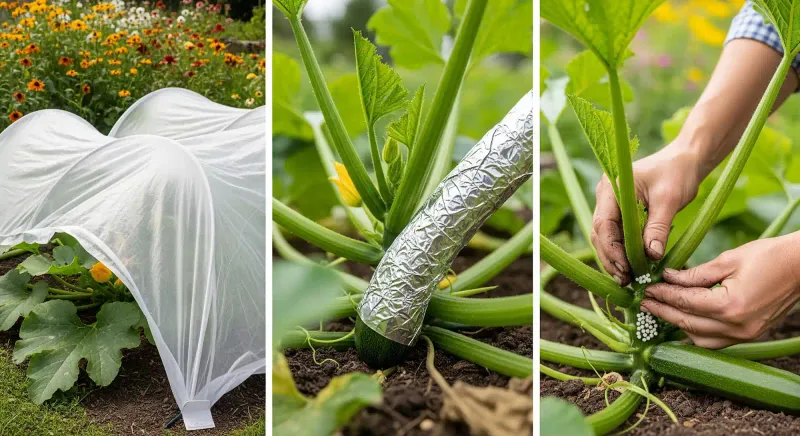
Reaching for a spray bottle after a vine has already wilted and collapsed is unlikely to help. Foliar insecticides generally cannot reach larvae once they are protected inside the stem, and they cannot repair the vascular damage that has already been done.
UMN Extension is direct on this point: insecticide timing is aimed at newly hatching larvae before they tunnel into the stem, not at larvae already feeding inside it.
Bt (Bacillus thuringiensis) is sometimes suggested as a natural rescue option, but the evidence does not support that use. UF/IFAS research on natural pest management products notes that insecticidal soaps, oils, and similar natural products are not very effective against squash vine borers, and both UF/IFAS and UMN caution that Bt cannot reach or kill larvae already inside the stem.
Prevention is where the real leverage is. Floating row covers, anchored firmly at the edges before adult moths begin laying eggs, can physically block access to the plant.
UF/IFAS recommends removing covers when flowers open so pollinators can reach the crop – a step that cannot be skipped. Any insecticide applied to or near blooming plants must follow the product label’s pollinator protection requirements; EPA guidance on pollinator protection outlines the legal and practical obligations that apply.
After the season ends, remove and destroy infested plant material rather than composting it, since larvae leave the stem and overwinter in the soil. Rotating cucurbits to a different garden area the following year reduces the chance that overwintering pupae will emerge directly beneath next season’s crop.
UMN’s cucurbit growing guidance also notes that trap crops such as Blue Hubbard squash may divert some egg-laying pressure but did not prevent borers from attacking the main crop in demonstration plantings, so they should not be treated as a reliable standalone solution.
Let the evidence determine the next step
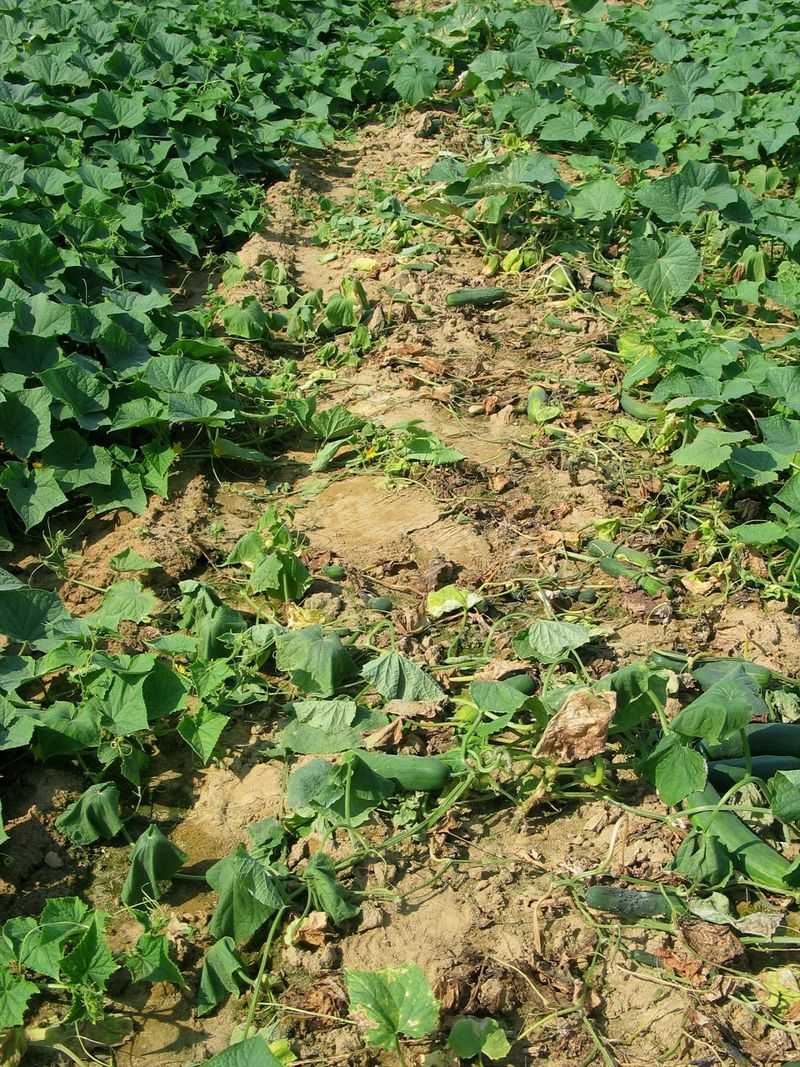
A clear decision path keeps panic from driving the wrong response. Start by checking soil moisture and watching whether the vine recovers overnight.
Then move to the crown and lower stem, looking for entry holes, frass, and split tissue. Scout leaf undersides and sheltered stem areas for squash bugs, and look for cucumber beetles anywhere on the plant.
If the crown inspection turns up physical evidence of borer activity and the damage is confined to a short section of stem with healthy vine remaining, stem surgery is worth attempting. If the plant shows symptoms consistent with bacterial wilt – cucumber beetles present, daytime wilting, thread-like ooze on the stem test – remove it promptly, since no spray will reverse the infection.
If soil moisture and overnight recovery point to heat stress, hold off on additional water and give the plant a day to respond.
The range of causes behind cucumber wilt means that no single symptom justifies automatic watering, automatic spraying, or automatic removal. Diagnosis first, then treatment – that sequence is what gives a struggling cucumber its best realistic chance.