
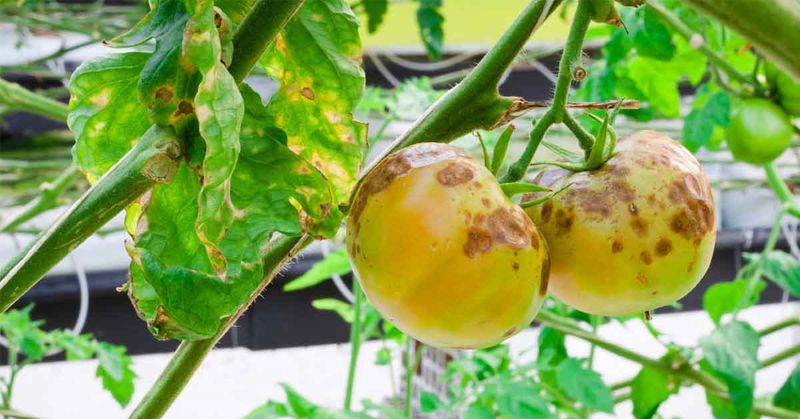
Spotting yellow blotches and brown patches on your tomato leaves in the middle of summer is enough to make any gardener uneasy. Several diseases and stress problems can cause similar symptoms, and picking the wrong explanation often leads to the wrong fix.
Early blight is a strong candidate when the damage starts low on the plant and the spots have a distinct bull’s-eye look, but confirming that pattern before acting can save you a lot of trouble.
Inspect the lower canopy for early-blight clues
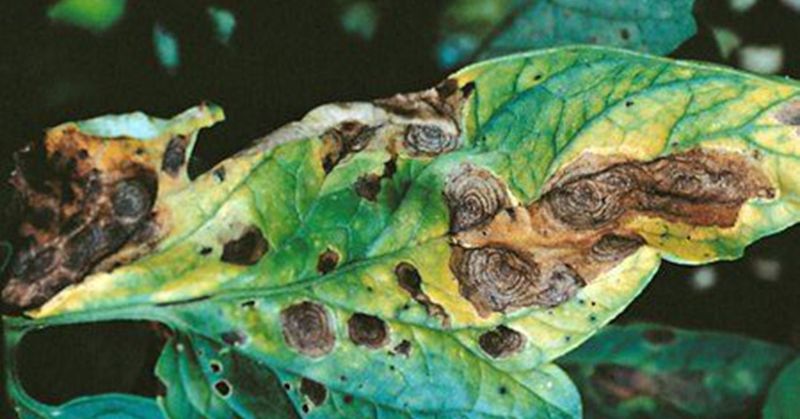
Older leaves near the bottom of the plant are the first place to look when you suspect early blight. The disease, caused primarily by the fungus Alternaria solani, typically begins as small, dark spots on those lower, more mature leaves rather than on new growth at the top.
As the spots enlarge, they often develop a brown or black center with concentric rings that resemble a target or bull’s-eye, and the tissue around the lesion usually turns yellow.
Lesions can grow to roughly one-half inch across, and University of Minnesota Extension guidance on early blight notes that affected leaves may eventually brown entirely and drop, which can expose developing fruit to sunscald as the plant loses canopy cover. Stem and fruit surfaces can also develop sunken, target-like lesions in more advanced cases, so check those areas too if the lower foliage looks suspicious.
Yellowing alone, brown patches alone, or the simple fact that it is late summer does not point clearly to early blight. The combination of older lower leaves, enlarging lesions, concentric rings, and yellow tissue around the spots is what makes early blight worth confirming.
UF/IFAS research on common tomato diseases in Florida identifies early blight as a common and recognizable problem but also makes clear that accurate identification matters before any treatment decision is made.
Warm, wet conditions accelerate the disease cycle
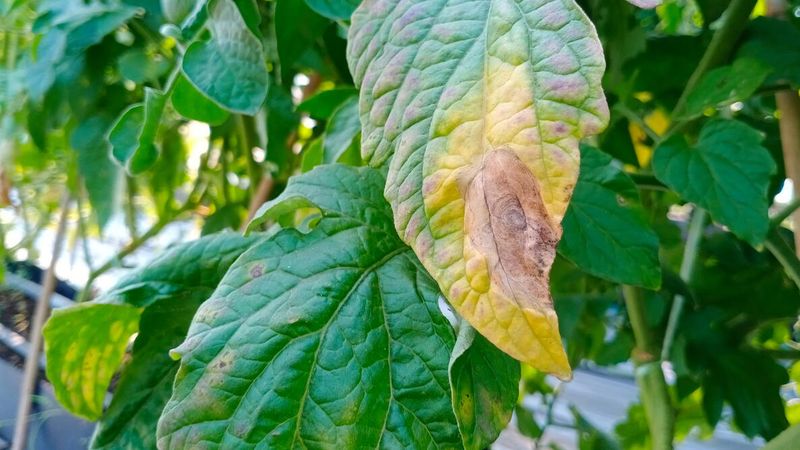
Late-summer weather in Florida and Texas can create exactly the combination that allows early blight to spread quickly, but heat alone is not the driver. Warm temperatures become a real problem for tomatoes when they arrive alongside humidity, rain, overnight dew, or overhead irrigation that keeps leaves wet for extended periods.
UF/IFAS extension documentation on tomato diseases reports that the pathogen is favored by warm conditions in roughly the 60-90 degree Fahrenheit range when combined with leaf wetness, and that spread can be rapid under those circumstances. Spores from infected lower leaves or contaminated soil move upward through rain splash, irrigation splash, wind, and even incidental contact during routine garden tasks.
Each newly infected leaf can become a fresh source of spores, allowing the disease to cycle repeatedly through the plant as long as wet conditions continue.
American Phytopathological Society documentation on early blight notes that symptoms may become visible within approximately five to seven days under favorable conditions. That window can feel alarmingly short, but the actual pace depends on how long leaves stay wet, the temperature range, the age and vulnerability of the foliage, cultivar susceptibility, and the amount of fungal inoculum already present in the garden.
A few dry, breezy days can slow the cycle noticeably, which is why moisture management is central to slowing the disease rather than simply waiting for cooler weather.
Compare look-alike diseases and noninfectious stress
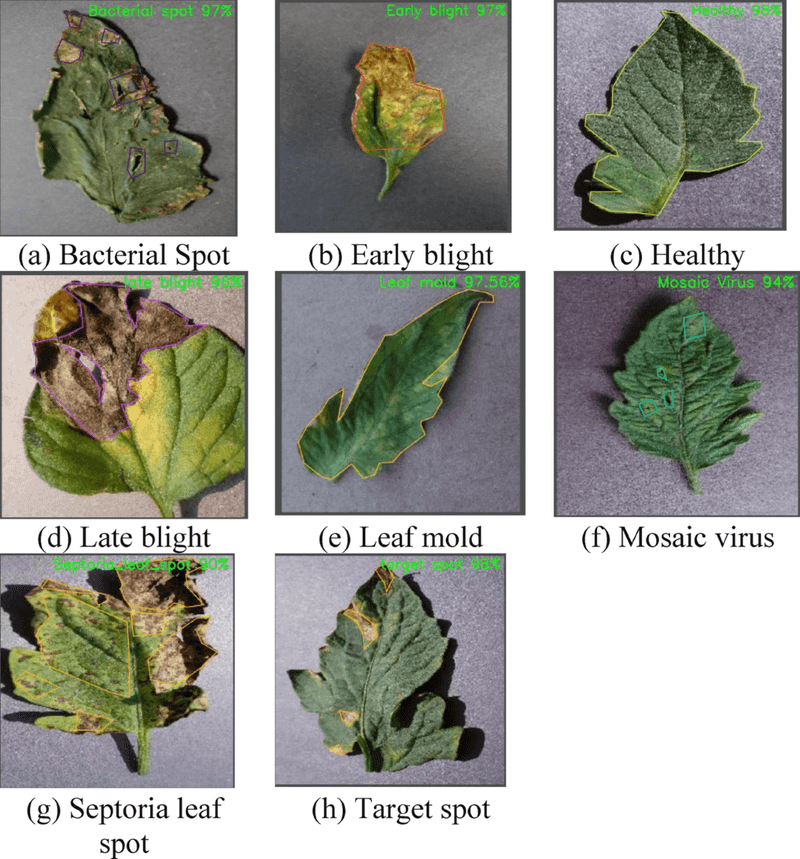
Treating the wrong problem wastes time, money, and sometimes makes things worse. Before acting on a suspicion of early blight, it helps to know what else can produce similar-looking damage on tomato foliage.
Septoria leaf spot is one of the most common sources of confusion. University of Minnesota Extension’s overview of tomato leaf spot diseases explains that Septoria typically produces numerous smaller spots, often less than one-eighth of an inch across, with tan or gray centers and darker margins.
Tiny black fruiting bodies may appear in the centers of those spots. Both diseases tend to begin on lower leaves, so early-stage symptoms can look nearly identical without close inspection.
Bacterial spot is a significant alternative in Southern gardens, particularly in Florida and Texas. Texas A&M AgriLife Extension guidance on bacterial spot describes lesions that start as small, water-soaked or greasy-looking spots, sometimes with yellow halos, that can appear angular where leaf veins limit their spread.
During wet periods, these spots may merge and cause widespread yellowing and leaf drop that resembles fungal disease.
Late blight is a different threat with a different profile. The UMN plant diagnostic tool for tomato leaf spots associates late blight with irregular, water-soaked olive-to-brown lesions that can spread with alarming speed, and it is more commonly linked to cool, wet conditions rather than the warm humidity of late summer.
Heat and drought stress produce their own distinct signals. UMN Extension guidance on heat stress in gardens describes wilting, leaf curling, crisp brown edges, bleaching, and flower drop as typical heat responses.
None of those produce the concentric target-like rings of early blight. Nutrient imbalances, salt injury, virus infections, pest feeding, and herbicide drift can also generate overlapping yellowing or spotting.
When the pattern on your plant does not clearly match early blight, UMN fruit and vegetable IPM specialists recommend submitting a sample or clear photographs to a county extension office or plant disease clinic before selecting any disease-specific treatment.
Prune damaged leaves without stripping the plant
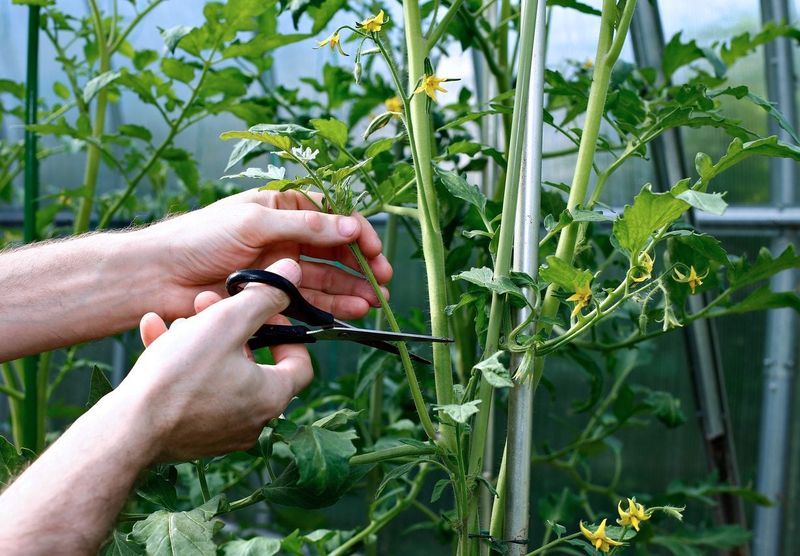
Once you have confirmed or strongly suspect early blight, the immediate step is removing clearly affected foliage, but the sequence and the limit both matter. Work only when the plant is dry, because wet foliage makes it easier to spread spores to healthy tissue during the pruning process.
Pinch off or cut leaves that show obvious lesions, working from the bottom of the plant upward. University of Minnesota Extension’s early blight management guidance advises sanitizing tools after working on an infected plant and washing hands before touching healthy plants, since spores can travel on blades and fingers just as easily as through rain splash.
A dilute bleach solution or rubbing alcohol works for tool sanitation between cuts.
Keeping roughly one-third of the foliage as the outer limit for removal in a single session is a practical boundary worth respecting. Stripping too many leaves at once stresses the plant and removes the canopy cover that protects developing fruit from sunscald and direct heat exposure.
In Southern gardens where summer sun is intense, bare fruit can scorch quickly once shading leaves are gone.
Removed leaves will not recover. Pruning cannot turn necrotic tissue green again, and the goal is not to reverse damage that has already happened.
The real purpose of removing affected leaves is to reduce the number of spores available to infect healthy foliage higher on the plant, buying time and slowing the upward spread of the disease.
Keep foliage dry and reduce soil splash
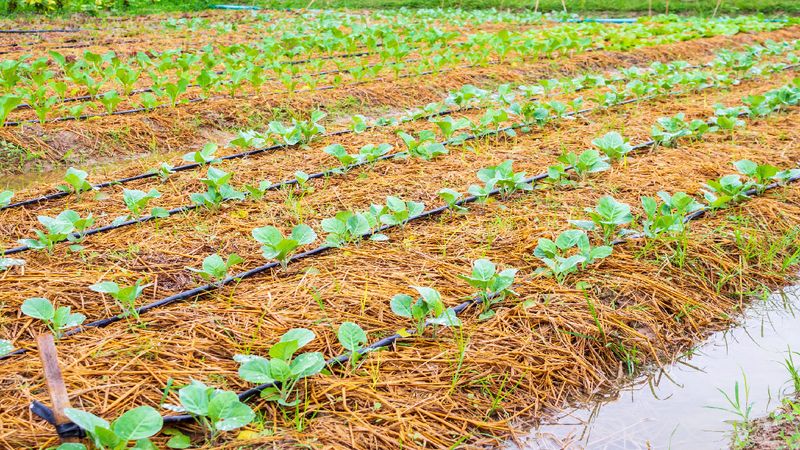
Environmental control is where lasting progress happens. Reducing how long leaves stay wet and limiting how spores move from soil to foliage can slow new infections significantly, even when some disease is already present in the garden.
Mulch laid beneath tomato plants is one of the most straightforward protective steps available. A layer of straw, wood chips, or similar material cushions the impact of raindrops and irrigation water on bare soil, which reduces the upward splash of spore-laden debris onto lower leaves.
UF/IFAS extension guidance on Florida tomato diseases lists mulching as a key cultural practice for managing foliar diseases, alongside staking, trellising, and appropriate plant spacing.
Staking or caging plants improves airflow through the canopy, which helps foliage dry faster after rain or dew. Crowded plants trap moisture and stay wet longer, creating the extended leaf-wetness periods that favor infection.
Removing weeds around the base of the plant also reduces humidity close to the soil and eliminates potential reservoir hosts for soilborne pathogens.
Watering method makes a real difference too. Extension recommendations for managing early blight consistently favor drip irrigation, soaker hoses, or careful hand watering at the soil line over overhead sprinklers, which wet the entire canopy and extend the period of leaf wetness.
Avoiding any garden work while foliage is wet, including staking, tying, and harvesting, reduces incidental spore transfer. These steps do not eliminate established disease, but they can meaningfully slow the pace at which new leaves become infected.
Use fungicides only when the situation and label support them
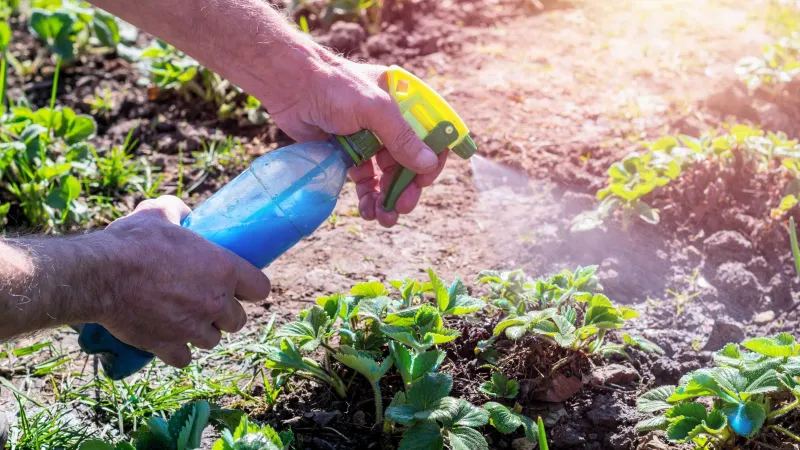
Many home gardeners will get through an early blight episode without ever reaching for a fungicide. Tomato plants can tolerate substantial leaf loss and continue producing fruit, and University of Minnesota Extension’s early blight guidance notes that most home gardeners do not need a fungicide program.
Keeping foliage dry, removing affected leaves conservatively, and reducing soil splash often provides adequate management through the rest of the season.
A fungicide program becomes more reasonable when a garden has experienced recurring early blight in past seasons, when the current infection is spreading quickly despite cultural controls, or when conditions strongly favor continued disease development. In those situations, Texas A&M AgriLife Horticulture guidance on early blight and Oklahoma State University Extension’s early blight factsheet describe labeled protective programs as a practical option for home gardens with anticipated disease pressure.
Products work best when applied preventively or very early in the disease cycle, before infections become established. Fungicides protect healthy tissue from new infections; they do not repair leaves that are already dead or restore necrotic spots to green tissue.
Choosing a product based on a photograph when bacterial and fungal causes remain possible is risky, since some treatments suited to fungal disease are not appropriate for bacterial infections.
Anyone using a pesticide must confirm that the product label specifically lists tomatoes and the target disease. The EPA’s guidance on reading pesticide labels makes clear that the label is the legally controlling document, and users are required to follow every instruction on it, including application rate, reentry interval, maximum number of applications per season, and preharvest interval before harvest.
Clean the garden and plan next season’s prevention
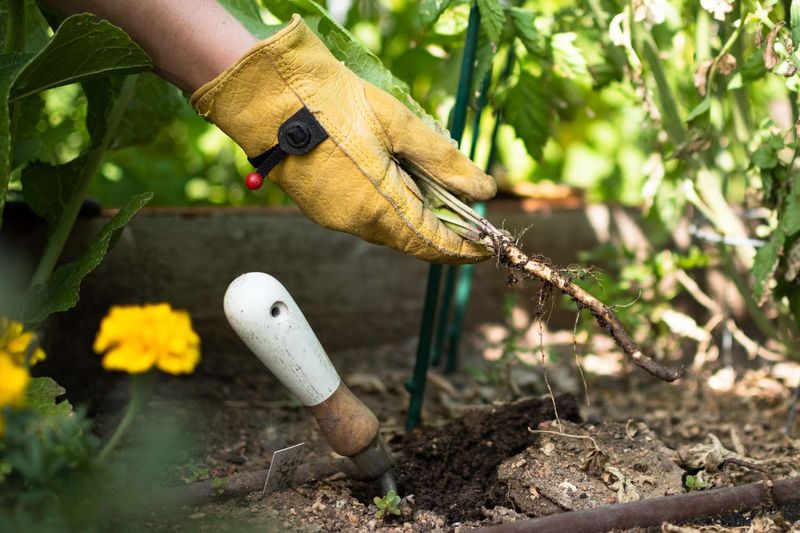
What happens after the last tomato of the season matters as much as anything done during the growing period. The fungus responsible for early blight can survive in infected crop debris left on or near the soil, and it can also persist in volunteer tomato seedlings and related solanaceous weeds such as nightshade that sprout around the garden.
The American Phytopathological Society’s documentation on early blight confirms that the pathogen overwinters in infected debris and can serve as the primary inoculum source for the following season. Removing all diseased plant material after harvest, including stems, leaves, and any fallen fruit, reduces the amount of fungal material available to cause problems next year.
Rotating tomatoes and peppers away from the same garden bed for at least two years, where the layout makes that feasible, gives the pathogen fewer host plants to persist on and allows soil pathogen levels to decline. University of Minnesota Extension’s guidance on managing plant diseases in home gardens lists debris removal and crop rotation as foundational practices for reducing disease carryover.
Composting diseased material requires careful qualification. It may enter a properly maintained, actively monitored hot-composting process only if that pile reaches the applicable recommended temperature and the material fully decomposes.
An unmanaged or cold pile sitting near the garden bed is not a safe disposal method, since it may preserve viable pathogen material and reintroduce it to the soil. When in doubt, bag and discard the affected material rather than risk contaminating the compost.
Resistant or tolerant tomato cultivars can reduce the severity of early blight in future seasons, but extension guidance on early blight management is consistent that variety resistance is not immunity. Selecting a resistant cultivar works best as one layer of a broader approach that still includes sanitation, adequate spacing, mulching, and moisture management.
Make a measured decision about a spotted tomato plant
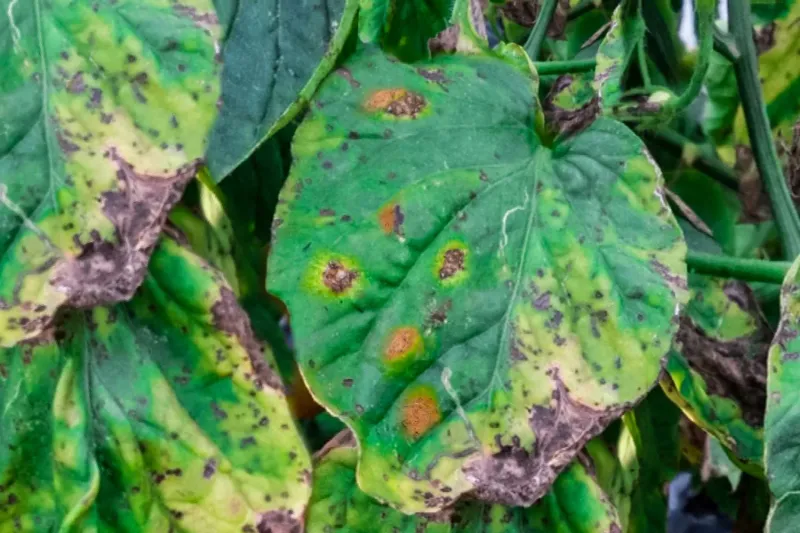
Older lower leaves with expanding brown spots, yellow halos, and concentric rings give you a reasonable basis for suspecting early blight and acting on that suspicion. Yellowing and brown patches without those specific details do not.
The pattern matters more than the season or the heat.
Remove affected tissue conservatively, keep remaining foliage as dry as possible, reduce splash from below, and hold off on disease-specific chemical treatments until the diagnosis is clear. Extension guidance on tomato leaf spot diseases and UMN IPM specialists who follow tomato leaf spot outbreaks each season both recommend county extension or plant-clinic review when symptoms remain ambiguous before any targeted chemical is selected.
Early blight management guidance frames the realistic goal plainly: protect the healthy leaves and fruit still on the plant rather than trying to undo damage that has already occurred. A tomato plant with some spotted lower leaves can still finish the season productively if the spread slows down.