
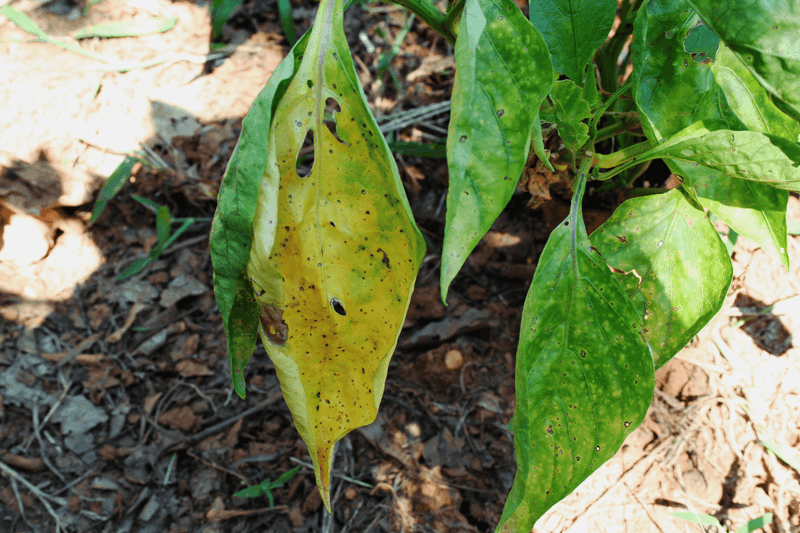
Watching your pepper plant shed its lower leaves one by one in the August heat is genuinely unsettling, especially when you have been tending it all season. The good news is that bottom-up yellowing and leaf drop does not point to one single cause, which means a quick, careful look at your plant can go a long way toward figuring out what is actually happening.
Whether you are growing in a Florida raised bed or a Texas backyard container, the checks described here will help you respond with confidence rather than guesswork.
Bottom-Up Leaf Drop Shows Where Stress Appears—Not What Caused It
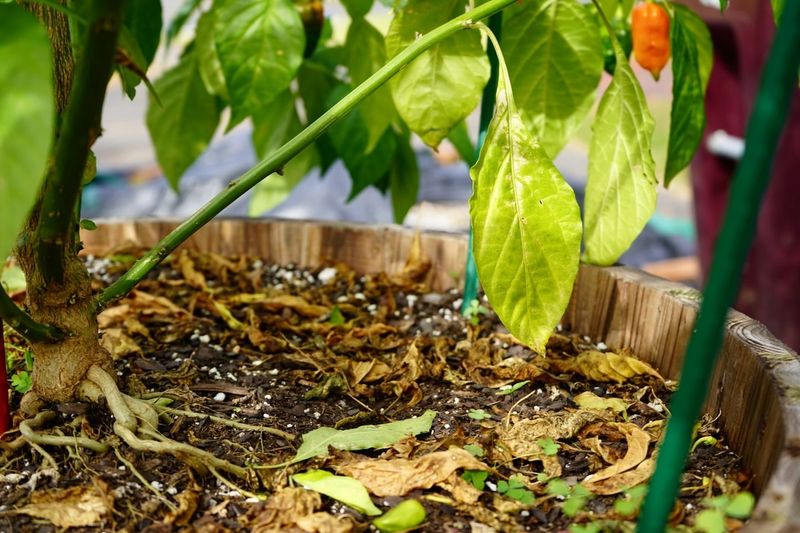
Older leaves on the bottom of a pepper plant are usually the first to show trouble, regardless of what that trouble actually is. Plants naturally pull nutrients back from aging foliage before shedding it, so lower leaves often decline first simply because they are the oldest tissue on the stem.
University of Maryland Extension guidance on vegetable leaf yellowing confirms that this remobilization pattern means lower-leaf symptoms can reflect several different stressors, not just one.
Gradual loss of a handful of the oldest leaves on an otherwise vigorous, fruiting plant looks very different from rapid yellowing that moves up the stem or strips the plant of multiple leaf layers within days. Virginia Cooperative Extension’s plant damage diagnostic guide notes that the location of symptoms tells you where the plant is struggling, not necessarily why.
A slow, limited drop on an otherwise productive plant is a far less urgent signal than widespread defoliation.
Late-summer heat can amplify the pace of decline by increasing water loss through leaves faster than roots can replace it. Oregon State University Extension’s heat-wave garden guide describes heat as a contributing stressor rather than a complete explanation.
Canopy condition, soil moisture, root health, and what you find on the leaf surfaces will all be needed to narrow the real cause.
Upper-Canopy Condition Helps Narrow the Diagnosis
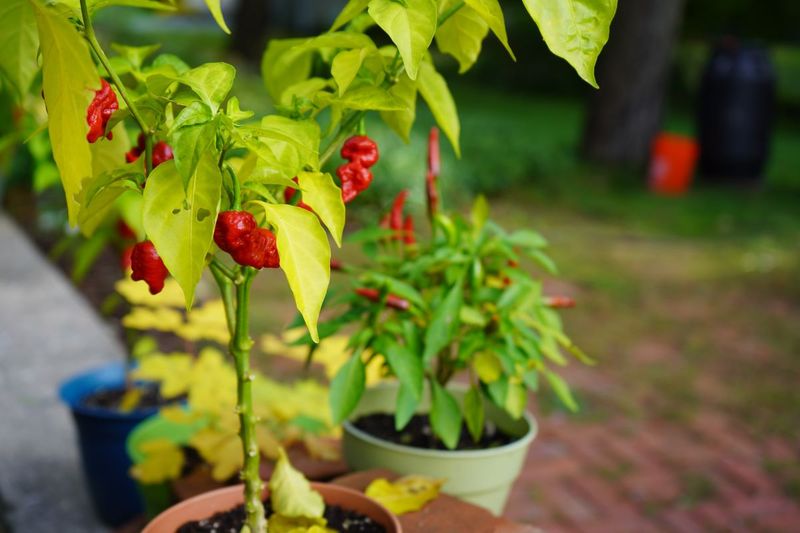
After noting where leaves are dropping, shift your attention upward to the newest growth. Actively growing tips, firm green stems, and peppers still forming on the upper plant are encouraging signs that the problem may be limited to older foliage.
Maryland Extension’s yellowing-leaves resource and Virginia Cooperative Extension’s diagnostic chapter both treat upper-canopy condition as a useful clue that helps distinguish localized older-leaf decline from a more systemic problem.
That said, healthy-looking new growth cannot rule out everything. Root disease, spider mites, and nutrient problems can be underway before they reach the upper canopy.
UC IPM’s root and crown rot guide for peppers points out that plants in early stages of root disease may still show some upper-canopy growth while declining below ground.
Yellowing that is moving into newer leaves, tips that look stunted or distorted, or a plant that wilts and does not recover overnight all signal a need for closer investigation. Branch-by-branch decline, where one side of the plant looks healthy while the other droops and yellows, can suggest a vascular problem such as Verticillium wilt.
Use the upper canopy as a clue, not a verdict, and keep checking soil, roots, and leaf surfaces before drawing conclusions.
Soil Moisture Narrows the Possibilities, but Roots and Drainage Matter Too
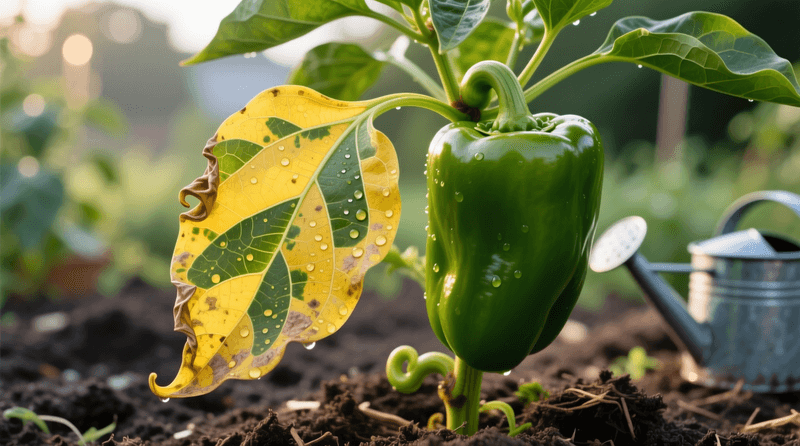
The most useful first step at home is checking the soil, not just glancing at the leaves. Push a finger about two inches into the ground near the plant’s root zone.
If the soil feels dry at that depth, water stress becomes a more plausible factor. Oregon State University Extension’s watering basics guide recommends this kind of direct moisture check rather than watering based on leaf appearance alone.
Hot, windy conditions can pull water from leaves faster than roots can replace it, so temporary midday wilting does not automatically mean the plant is dangerously dry. North Carolina Cooperative Extension’s explanation of wilting versus true water need makes clear that a plant that perks back up by evening may simply be responding to heat load rather than signaling a true moisture deficit.
Crispy leaf edges and dry soil together make drought or heat stress considerably more likely.
The tricky part is that overwatering can look almost identical to drought: both can cause yellowing, wilting, and leaf drop. If the soil stays persistently wet, drainage is poor, or you can see dark, soft roots when you gently check near the surface, root and crown rot diseases move up the list of possibilities.
Soil moisture alone cannot separate those two scenarios – drainage, root condition, and symptom distribution all factor in. When the root zone is genuinely dry, water slowly and deeply at the base; Utah State University Extension pepper guidance suggests wetting soil to roughly six inches rather than relying on a fixed daily schedule.
Leaf Undersides and Spots Can Reveal Pests or Disease
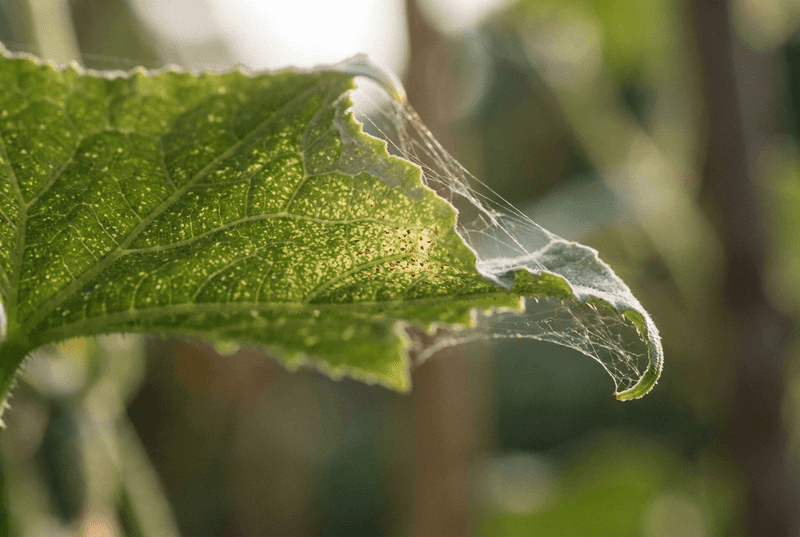
Before settling on heat or drought as the explanation, flip a few affected leaves over and look carefully at the undersides. Fine pale or yellow stippling scattered across the leaf surface, a bronze or washed-out color, and tissue that feels dry or papery are all signs consistent with spider-mite feeding.
UC IPM’s spider-mite resource notes that mites are often too small to spot without magnification and recommends holding a sheet of white paper under a branch and tapping it to dislodge mites, then watching for moving specks. Webbing on the underside is a strong confirming clue, though it may not appear until populations are large.
Spider mites tend to thrive when plants are already under water stress, which is why late-summer heat can set the stage for a mite problem that gets mistaken for pure heat damage. UF/IFAS arthropod management guidance for pepper describes the importance of scouting before treating, since broad-spectrum insecticides can kill the natural predators that keep mite populations in check.
Other leaf-surface clues point to different problems. White powdery patches, particularly on lower leaf surfaces, suggest pepper powdery mildew, which can cause yellowing and leaf drop while increasing fruit exposure to sun.
Water-soaked, greasy, or brown lesions with yellow halos are more consistent with bacterial foliar disease. Rapid wilt in one branch or across the whole plant, combined with a brown or tan streak inside the lower stem when cut, points toward Verticillium wilt.
Dark, rotted roots or crown tissue alongside yellowing and wilt raises concern about root diseases common in Florida pepper production. Each of these has a distinctive pattern; finding one changes the response considerably.
Nutrient Patterns Offer Clues, but Yellow Leaves Do Not Justify Guessing
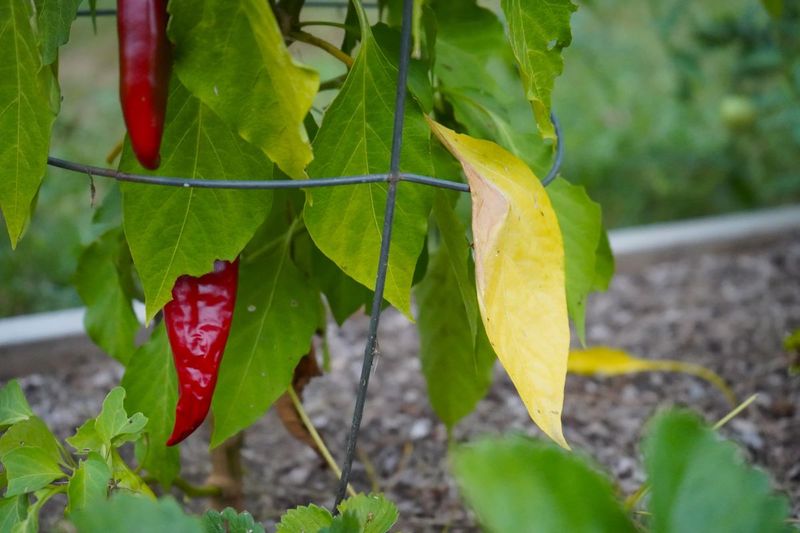
Once moisture, pests, and obvious disease signs have been assessed, nutrient deficiency becomes worth considering – especially if the plant has been in the same soil all season without fertilizer. Different deficiencies tend to show up in slightly different ways on older leaves.
University of Georgia Extension’s Southeast vegetable troubleshooting guide describes nitrogen deficiency as a general paleness or yellowing beginning on older, lower leaves, often paired with reduced overall growth.
Potassium deficiency typically appears differently: older leaves may show yellowing, bronzing, or scorching along the margins rather than uniform color loss. Oklahoma State University’s soil fertility handbook and Maryland Extension’s nutrient deficiency guide both describe this pattern.
Magnesium deficiency looks different again – yellow tissue appears between veins that stay green, a pattern called interveinal chlorosis, as described by University of Kentucky’s VeggieScout interveinal chlorosis resource. Iron deficiency, by contrast, usually shows up on younger leaves first, making it a poor match for a problem confined to the plant’s bottom.
The catch is that these visual patterns overlap with each other and with other stressors, so guessing at a product and applying it is not a reliable fix. Penn State Extension’s soil testing guidance recommends testing before fertilizing to confirm what is actually low.
Florida gardeners should be especially cautious: UF/IFAS soil sampling guidance notes that nitrogen is mobile in Florida’s warm, humid conditions and difficult to assess through a standard soil test. Applying fertilizer without confirmation can burn roots or push excessive vegetative growth at the wrong time.
A local Extension office or soil test is a more reliable path than visual diagnosis alone.
UF/IFAS plant tissue analysis guidance for Florida vegetable crops describes tissue testing as an additional tool when soil data and visual symptoms together still leave the cause unclear.
Correct the Confirmed Stressor Before Reaching for Products
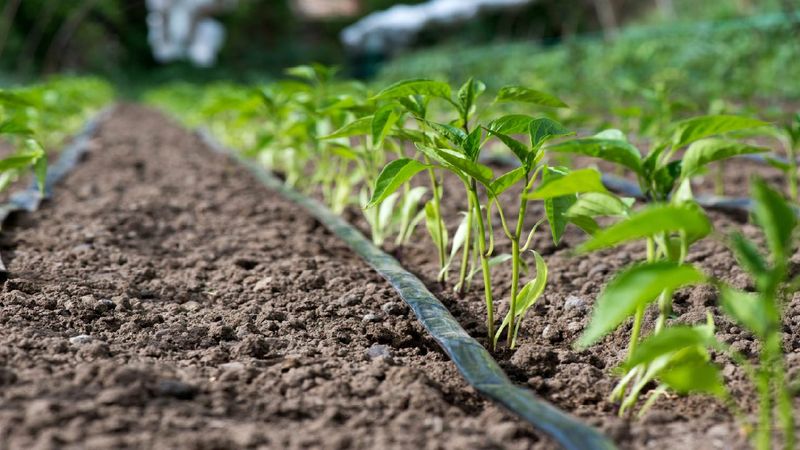
Once you have a clearer picture of what is happening, the response should match the actual finding rather than covering all bases with multiple products at once. For genuinely dry soil, water slowly and deeply at the root zone rather than applying a quick surface sprinkle.
Oregon State’s watering basics recommends soaking the root zone thoroughly rather than frequent shallow applications. A general range of about one to two inches per week is sometimes cited, but sandy Florida soils, containers, heavy clay, rainfall, wind, and fruit load can all shift how much and how often your specific plant actually needs water.
If the soil is already moist, adding more water is the wrong move and can make root problems worse. Oregon State Extension guidance on protecting plants during extreme heat reinforces that checking moisture before watering protects against overwatering.
Apply water at the soil line using drip irrigation, a soaker hose, or a slow hand pour. Routine overhead watering can keep foliage wet longer than needed, which raises disease risk – a concern highlighted in UF/IFAS pepper production guidance for Miami-Dade County.
Adding a modest layer of organic mulch around the root zone, kept a few inches away from the stem, can help moderate soil temperature and slow evaporation. University of Minnesota Extension’s mulching guide and their heat-gardening tips support mulch as a low-risk way to buffer roots from temperature swings.
During acute heat stress, delay heavy fertilization and hold off on pesticide or fungicide applications unless you have actually confirmed the relevant pest or disease. Maryland Extension’s vegetable fertilizing guide cautions that excess fertilizer can damage roots and foliage, especially when plants are already under stress.
Avoid Pruning and Treatment Mistakes That Increase Summer Damage
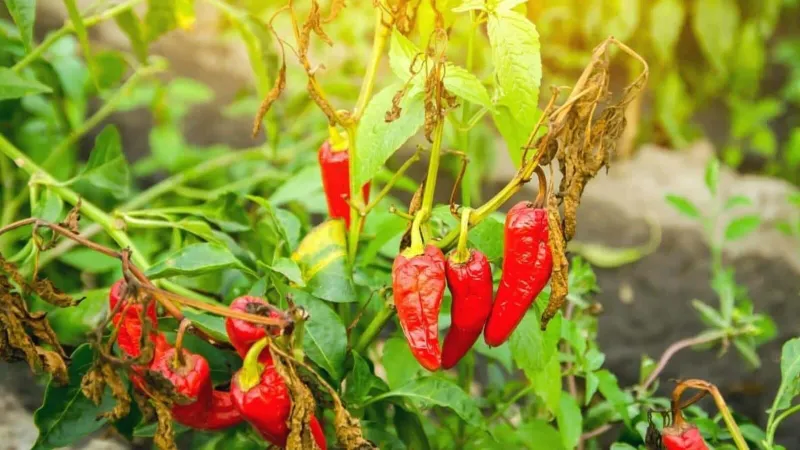
Removing foliage feels like doing something useful, but the wrong pruning decisions during extreme heat can create a new problem on top of an existing one. Limit removal to leaves that are completely dead or show clear signs of disease.
Illinois Extension’s sunscald guide for pepper and tomato explains that pepper fruit depends on surrounding foliage for shade, and sudden removal of healthy lower leaves can expose developing peppers to direct sun, causing pale, papery sunscald patches.
Selectively pulling off leaves that are dragging on the soil surface can improve airflow, which may help reduce foliar disease pressure. But stripping the lower canopy more aggressively than that is risky.
University of Georgia Extension master gardener guidance recommends disinfecting pruning tools between plants whenever disease is suspected, to avoid spreading pathogens from one plant to another.
On the treatment side, broad-spectrum insecticides applied without scouting can eliminate the predatory mites and beneficial insects that naturally keep pest mite populations in check, sometimes making a mite problem worse rather than better. UC IPM’s spider-mite resource and UF/IFAS arthropod management guidance both emphasize scouting before treatment.
Similarly, Epsom salts, calcium sprays, and fungicides are not reliable general cures for yellowing. Kentucky’s interveinal chlorosis resource and Kansas State Extension’s pepper nutrient disorder guide both make clear that visual diagnosis is imperfect and that applying products without confirmation can create imbalances rather than fix them.
UGA Extension’s site-conditions guidance reinforces that abiotic stressors like heat, drought, and root damage will not respond to fungicides at all.
Know When a Pepper Needs Local Diagnostic Help
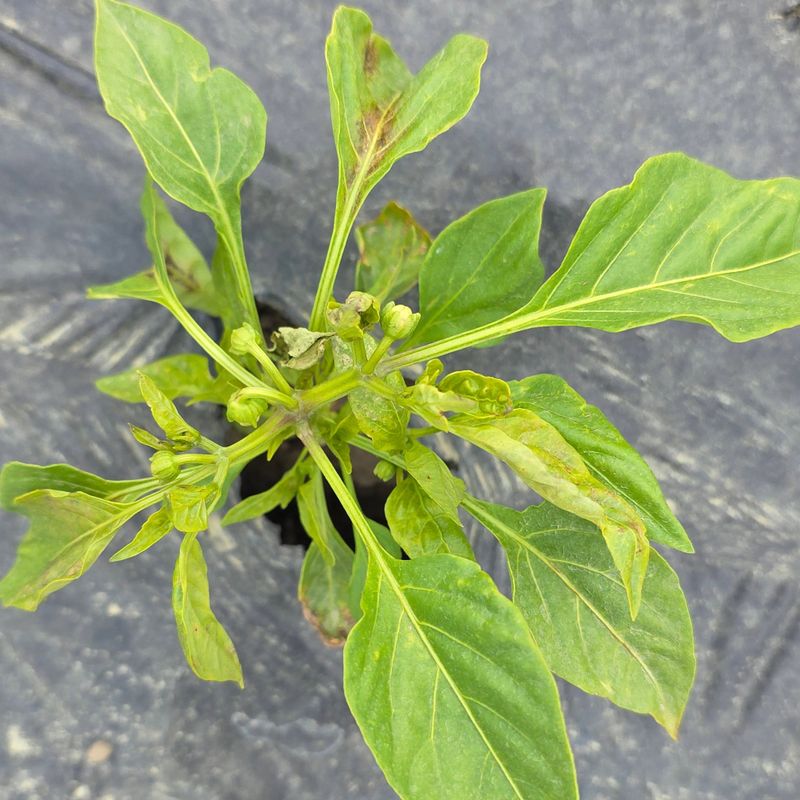
Some situations call for more than a home checklist. Reach out to your local Cooperative Extension office or a plant diagnostic lab when yellowing advances into new growth, when wilting becomes permanent rather than reversing overnight, or when several plants in the same bed decline in the same pattern at the same time.
UC IPM’s root and crown rot guidance and their Verticillium wilt page both describe conditions where visual home assessment reaches its limits and laboratory confirmation becomes valuable.
Dark or decayed roots, distinctive leaf spots with halos, white powdery growth, or persistent webbing on leaf undersides are all signs that warrant a closer look than a finger-in-the-soil check can provide. UC IPM’s pepper disease management resource and Penn State Extension’s poor plant health diagnostic guide both describe the value of systematic professional diagnosis when symptoms remain unclear or continue to spread.
Bottom-up leaf loss may follow ordinary aging or the accumulated pressure of a hot, dry summer, but combined observations – not leaf position alone – determine whether a simple correction is reasonable or a targeted diagnosis is needed. A plant that recovers after stress correction still will not regreen the leaves it has already lost; what matters most is protecting the root system and new growth going forward.