
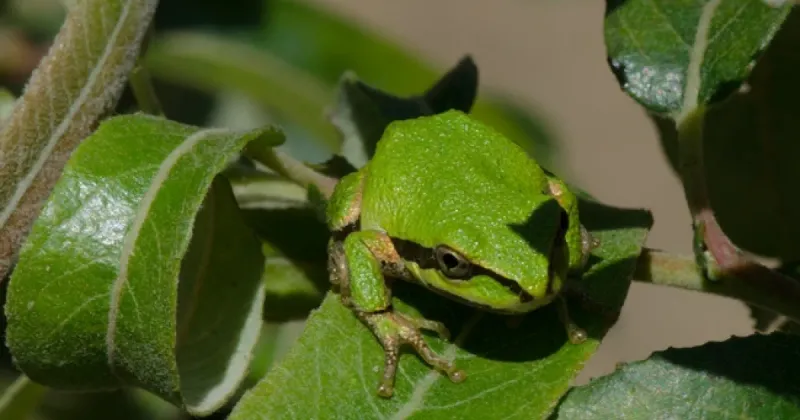
Finding a small frog clinging to a pot or tucked under a garden bed edge on a July evening can catch any California homeowner off guard. These little visitors are more common than most people realize, and their appearance carries some useful information about your yard, but also a lot of things it simply cannot tell you.
Understanding what a summer frog sighting actually means, and what it does not, helps you respond in ways that are good for the frog, good for your garden, and realistic about California’s dry-season conditions.
Start With a Cautious Identification
Calling any small frog in your California yard a “tree frog” is a reasonable starting point, but the label covers more ground than most people expect. Several related species share that common name in California, and none of them can be pinned down from a quick glance alone.
Before drawing conclusions about what the frog means for your garden, it helps to work through a basic identification framework rather than defaulting to a single species assumption.
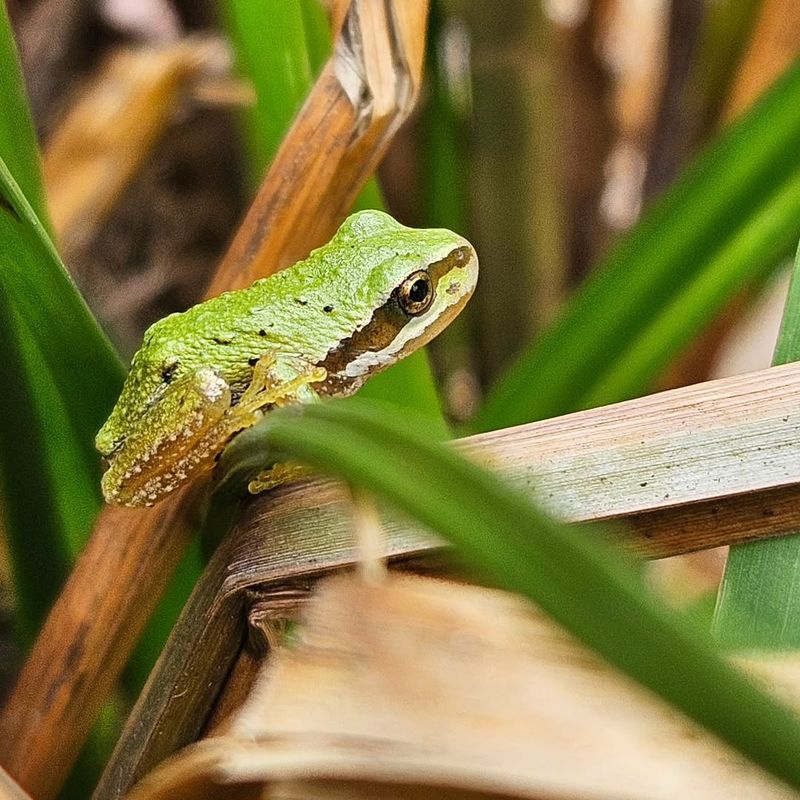
A plausible candidate in many parts of California is a member of the Pacific chorus frog group, sometimes still listed in older field guides as Pseudacris regilla. Two useful physical clues are adhesive toe pads that allow the frog to cling to smooth surfaces, and a dark stripe running from the tip of the snout through the eye and along the side of the head.
California Department of Fish and Wildlife life-history records describe these features as characteristic of the group, though they note that reliable identification may also depend on the frog’s call, its precise location in the state, and closer examination of color pattern, which can shift considerably even within a single individual.
One reason older sources may feel more definitive is that California populations once grouped broadly under a single Pseudacris regilla species have since been divided into multiple species, including the Sierran treefrog and the Baja California treefrog. The split matters because range, habitat use, and local abundance can differ between them.
Worth noting too: California wildlife guidance points out that some frogs called “treefrogs” actually spend most of their time on the ground or in low vegetation rather than up in trees, so the name itself can mislead. If you want a confident identification, photograph the frog from multiple angles, note where in California you are, and compare against current regional resources before settling on a species.
A Frog Signals Habitat Use, Not a Perfect Garden
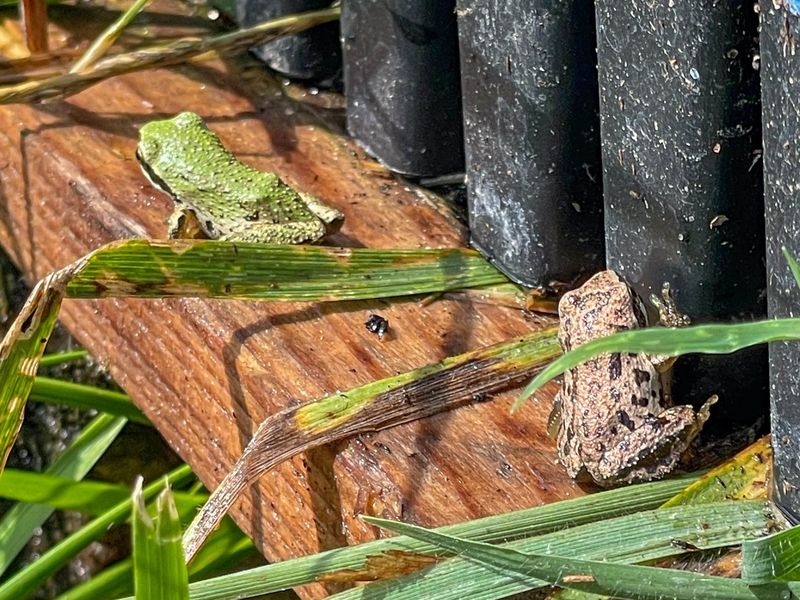
Spotting a frog in your yard feels significant, and it is, but the significance is narrower than many garden articles suggest. What a sighting reliably tells you is that the frog was able to reach your yard and found something useful there, at least long enough to stick around for a moment.
That is genuinely worth knowing, and it does not require inflating the observation into an environmental report card.
According to CDFW species biology records, Pacific chorus frog relatives turn up across a wide range of California habitats, including urban areas, grasslands, chaparral, and irrigated landscapes. Their presence in a yard suggests the site offers some combination of moisture, shelter, low vegetation, nearby breeding water, or accessible terrestrial insects.
Any one of those factors, or a mix of them, may be enough to draw a foraging adult.
What a single sighting cannot tell you is more important to keep in mind. One frog does not confirm that your garden is exceptionally healthy, chemically clean, or unusually biodiverse.
The National Park Service notes that amphibians can be sensitive indicators of environmental conditions, but sensitive indicator and reliable yard-health certificate are very different things. A frog can appear in a yard with recent pesticide use, compacted soil, or minimal plant diversity if it found a shaded corner or a damp patch to shelter in.
A sighting also does not prove that frogs are breeding on your property, that a specific irrigation practice caused their appearance, or that your insect population is unusually high. Adults of these species are documented foragers that move away from breeding sites, so a visiting frog may have come from a pond, ditch, or seasonal wetland several blocks away.
Think of the sighting as one useful data point rather than a verdict on your whole landscape.
Why a Summer Frog May Appear Without a Visible Pond
Many California homeowners assume that a frog in the garden must mean a pond is nearby. That assumption is understandable, but it is not always accurate.
Adult Pacific chorus frog relatives can move considerable distances from their breeding sites during the nonbreeding season, and a summer sighting in an irrigated yard may have nothing to do with water on your property at all.
Breeding habitat for these frogs typically includes quiet, shallow freshwater: seasonal ponds, slow-moving streams, irrigation ditches, shallow wetlands, and even roadside depressions that hold water long enough for eggs to hatch and tadpoles to develop. CDFW biology records document their occurrence in irrigation canals and roadside ditches alongside more natural water features, reflecting how adaptable these frogs are to human-modified landscapes.
Once breeding is finished, adults move into surrounding upland habitat. California wildlife habitat records note that nonbreeding individuals have been documented as far as roughly 910 meters from breeding sites, using vegetation, ground cover, and moist microhabitats to shelter during dry periods.
An irrigated flower bed, a shaded patch of mulch, a gap under a stepping stone, or a cluster of dense low plants can all serve as temporary refuges.
Activity patterns matter here too. National Park Service accounts of Pacific treefrogs at Yosemite describe them as most active from late afternoon into the night, especially following rain.
In a California summer, that means a frog you notice at dusk near a drip-irrigated bed may have traveled to that spot from a neighborhood drainage feature or a neighbor’s garden pond, drawn by localized moisture rather than a source on your lot.
Presenting those irrigated beds, shaded corners, and drainage features as plausible localized refuges is accurate. Treating them as proof of a hidden breeding population or a faulty irrigation system is not.
UC Master Gardener water-landscape guidance consistently emphasizes watering for plant needs rather than for wildlife attraction, and that principle applies here too.
Frogs Can Help the Food Web, but They Do Not Replace IPM
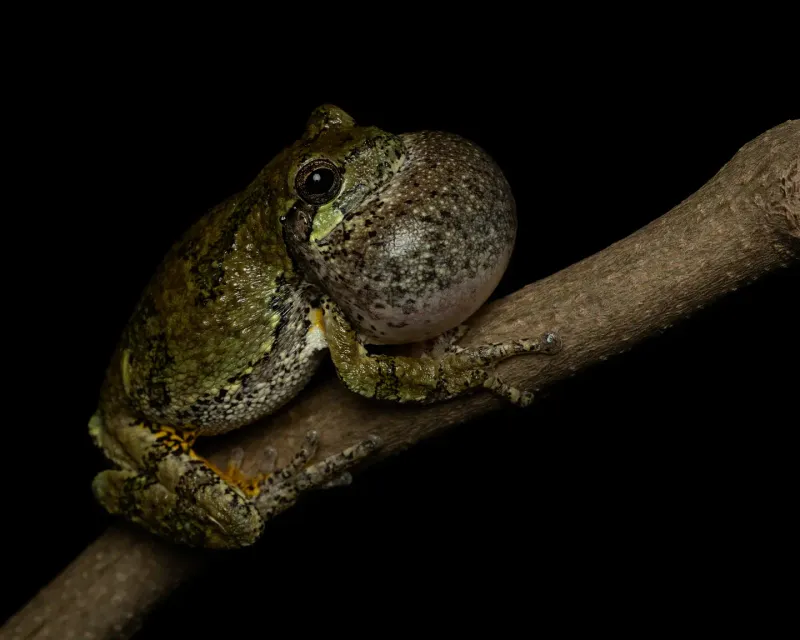
One of the most common things homeowners want to know when they spot a frog is whether it will help control garden pests. The short answer is: possibly a little, but not reliably enough to replace any part of a real pest management plan.
A diet study of anurans in California’s Cache Creek watershed found that Pacific treefrog prey was overwhelmingly terrestrial and included a range of insects and other invertebrates. That confirms these frogs are active predators of the kinds of creatures that also inhabit gardens.
A foraging frog moving through your beds at night may consume beetles, moths, ants, or other small invertebrates along the way.
What that study did not demonstrate is any measurable reduction in garden pest populations, mosquito numbers, or crop damage. Frogs are one predator among many in a garden food web, and their foraging is opportunistic rather than targeted.
A single frog will not clear aphids from a rose bush or meaningfully dent a mosquito population breeding in a nearby drainage ditch. Framing them as a useful part of the food web is accurate; framing them as a pest-control solution is not.
The more reliable path to managing garden pests is integrated pest management, or IPM. UC IPM guidance on protecting natural enemies and pollinators recommends identifying the pest before choosing a response, using cultural and mechanical controls where possible, making targeted spot applications only when necessary, and avoiding broad-spectrum or persistent insecticides when other options exist.
Following those steps protects the frog, protects the insects that frogs eat, and keeps your garden’s food web functioning rather than disrupting it with routine spraying.
Think of a visiting frog as a small bonus in a garden that already practices sensible pest management, not as a reason to skip the work of identifying what is actually damaging your plants.
Offer Refuge Without Overwatering
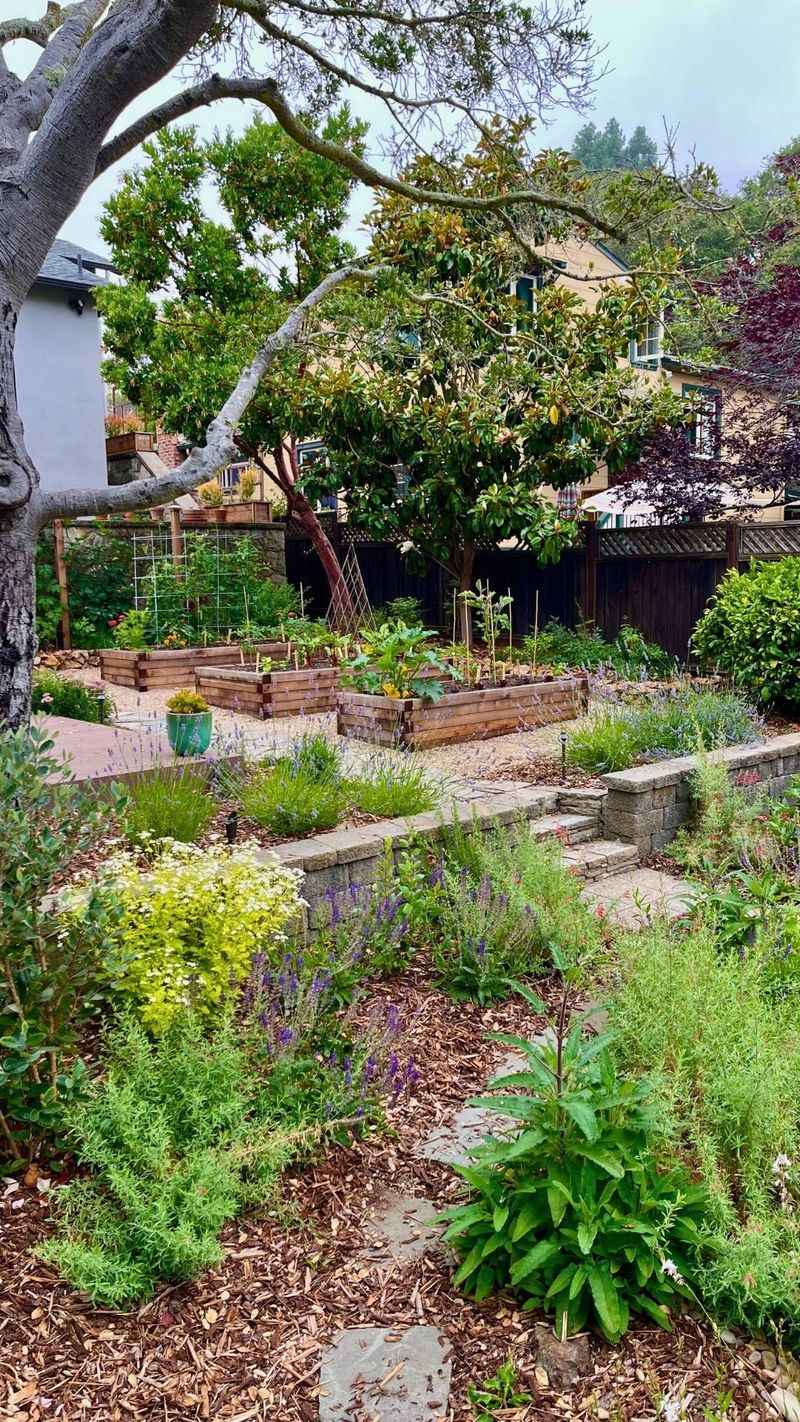
Creating a yard that a visiting frog can use does not require turning your garden into a bog. A few targeted habitat features, combined with sensible California watering habits, can make your property genuinely more hospitable without wasting water or creating conditions that conflict with local drought and conservation guidance.
On the habitat side, the most useful steps are straightforward. CDFW habitat records for Pacific chorus frog relatives describe adults using upland vegetation, ground cover, and moist microhabitats during nonbreeding periods.
Leaving some low, dense planting in a corner of the yard, keeping a few rocks, a small log, or a patch of leaf litter in a shaded area, and reducing unnecessary disturbance around those spots gives a foraging frog the kind of shelter it naturally seeks. You do not need to redesign your entire landscape; a single shaded, undisturbed corner can serve this purpose.
On the water side, the goal is efficiency, not abundance. UC Master Gardener water-landscape guidance for California emphasizes deep, infrequent watering that reaches plant root zones, regular inspection and maintenance of irrigation systems, and prompt correction of leaks or runoff.
Those practices also happen to create the kind of localized soil moisture that makes an irrigated bed more attractive to a sheltering frog without keeping the whole yard chronically wet.
UC ANR drought and water conservation guidance reinforces that water-wise landscaping and wildlife-friendly yards are compatible goals in California. Preventing runoff keeps water in the soil where plants and nearby wildlife can benefit from it.
Correcting leaks eliminates wasteful pooling that does not meaningfully support amphibians but does waste a resource under increasing pressure across the state.
The practical takeaway is this: water your plants well for their needs, fix what is broken, keep a modest patch of cover intact, and let that be enough. A wildlife-friendly yard in California is not a wet yard; it is a yard with localized, well-managed moisture and enough structure for small animals to feel safe.
Design a Pond for Amphibians, Not Just Ornament
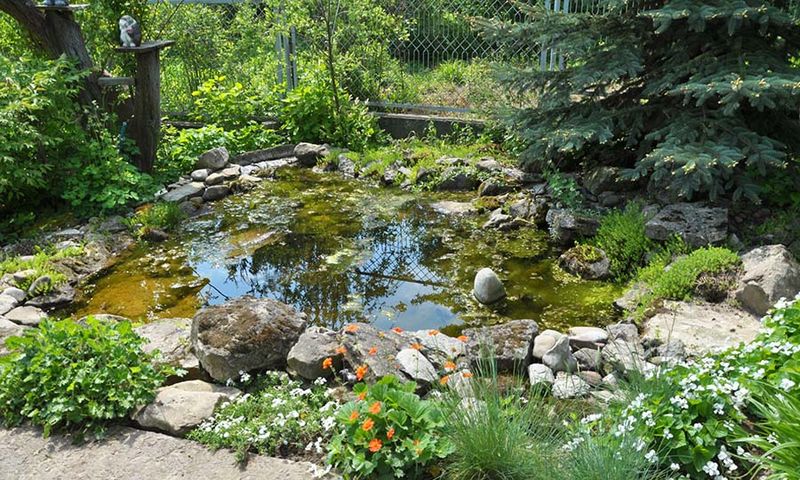
Adding a water feature to your yard can make it more attractive to amphibians, but a pond alone does not guarantee that frogs will arrive, settle, or successfully breed there. The design and maintenance choices matter more than the water itself.
Penn State Extension guidance on water features for wildlife explains that amphibians generally benefit from shallow, fishless water with surrounding wet vegetation, rocks, and logs at the water’s edge. Shallow water warms faster and supports the egg attachment and tadpole development that breeding requires.
Surrounding cover gives adults a place to retreat, hide from predators, and regulate temperature after leaving the water.
Fish are one of the most common reasons backyard ponds fail to support amphibians. Even small ornamental fish can consume frog eggs and tadpoles efficiently, and a pond stocked for visual appeal may actively work against the wildlife goal.
If attracting amphibians is part of the plan, a fishless design is the better choice.
Beyond fish, several other factors affect whether a pond delivers on its promise. Water quality, including algae balance, oxygen levels, and absence of runoff carrying fertilizers or pesticides, matters for tadpole survival.
Penn State Extension guidance on native plants for aquatic gardens recommends selecting regionally appropriate aquatic and marginal plants that stabilize banks, provide cover, and support the invertebrate communities that frogs eat. Nonnative aquatic plants can escape, spread, and degrade both the pond and connected waterways, so plant selection deserves attention.
Containment and overflow management also matter. A pond that overflows during winter rains can carry nonnative plants, pathogens, or even escaped animals into drainage systems.
Designing for controlled overflow and checking periodically for nonnative species keeps the feature from becoming a problem for the broader landscape. A well-designed, maintained wildlife pond can be a genuinely valuable addition to a California yard, but only when the homeowner can commit to managing it responsibly over time.
Protect Visiting Frogs From Garden Hazards
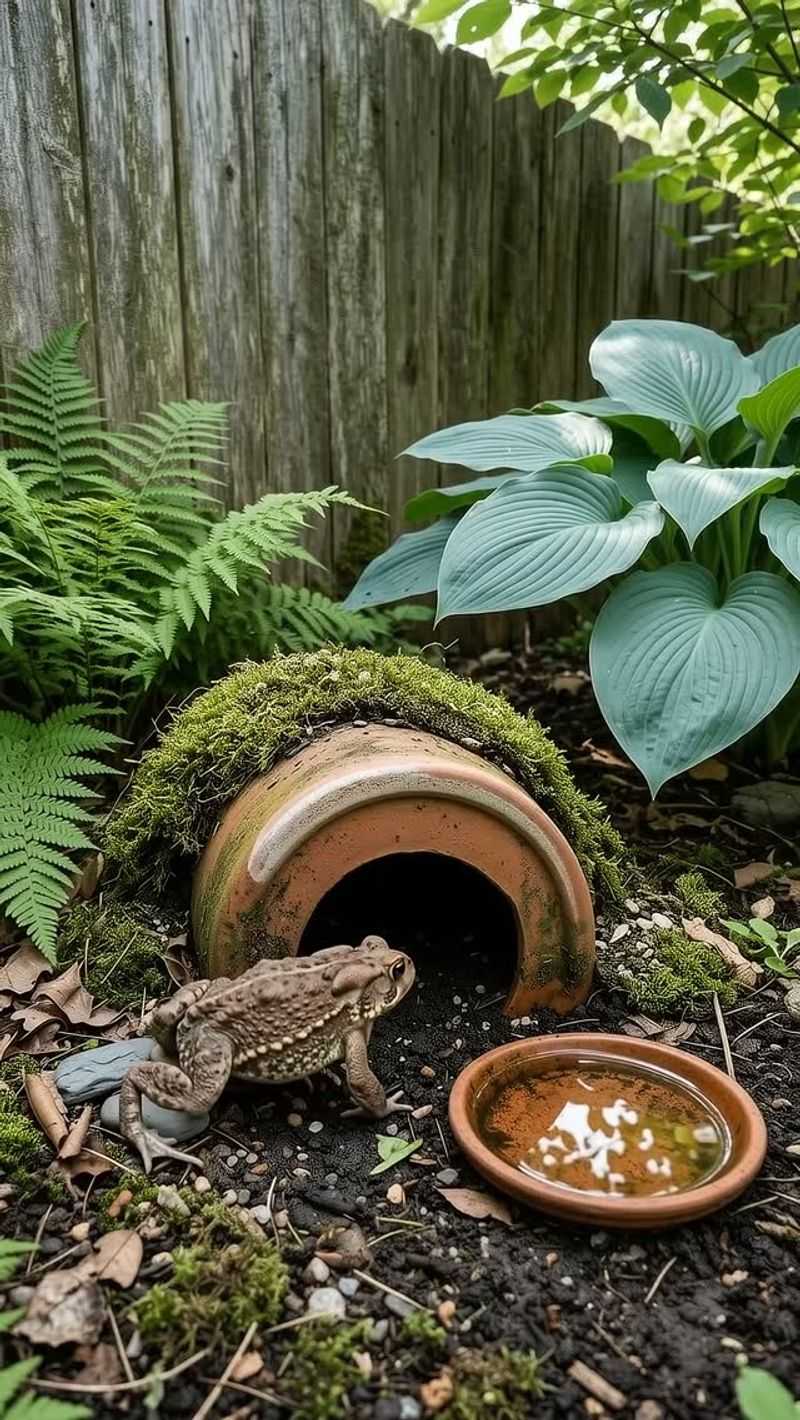
Routine garden care creates more hazards for visiting frogs than most homeowners realize, and the most common ones are worth knowing before reaching for a spray bottle or a trowel.
Pesticides are the most significant concern. Amphibians have permeable skin, which means they absorb substances from the surfaces they contact, the water they move through, and even the prey they eat.
EPA research on pesticide uptake and toxicity in frogs documents exposure pathways through both aquatic and terrestrial contact, underscoring that a frog does not need to sit in a puddle of chemical to be affected. Treated leaf surfaces, contaminated insects, and pesticide drift into moist soil can all create exposure.
A common misconception is that applying pesticides at night is safe because frogs are supposedly asleep. These frogs are actually most active after dark.
Evening and nighttime applications may reduce some daytime drift, but they do not protect foraging frogs that are moving through treated areas or consuming affected prey. EPA guidance on pesticide hazards for wildlife advises keeping products away from water, avoiding applications before heavy rain that could carry residues into drainage, following all product label directions, and using integrated pest management approaches that reduce overall pesticide load.
Handling is another hazard that is easy to overlook. Residues from sunscreen, insect repellent, hand lotion, or even traces of pesticide on garden gloves can transfer to a frog’s permeable skin during contact.
EPA amphibian and reptile conservation guidance recommends observing rather than capturing or relocating wild frogs as standard practice for homeowners.
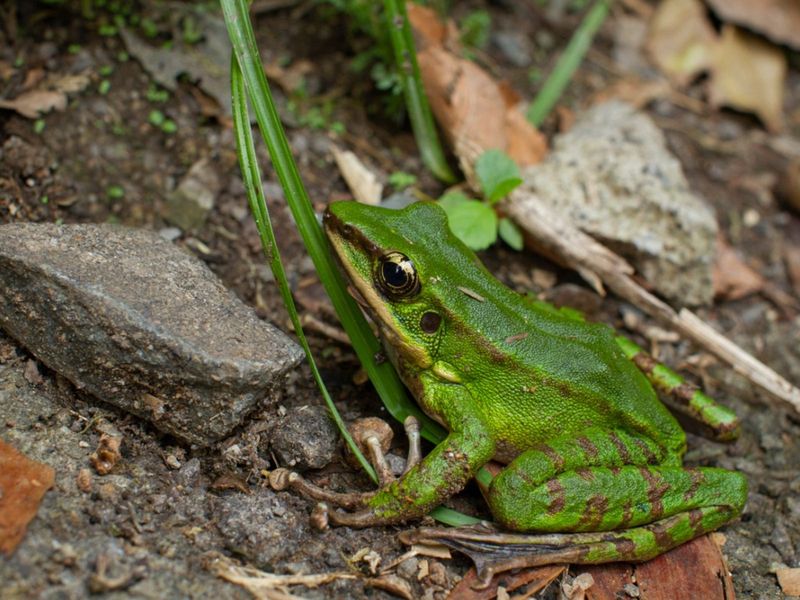
If you are unsure whether the frog you see is a native chorus frog relative or a nonnative American bullfrog, identification matters before taking any action. Bullfrogs are large, aggressive, and recognized by CDFW as an invasive species that competes with and preys on native amphibians.
Report suspected bullfrog sightings to CDFW rather than transporting or releasing the animal yourself.
For any native or potentially protected species, CDFW permitting guidance explains that collecting, capturing, transporting, or possessing certain amphibians may require authorization, with rules varying by species and purpose. The safest homeowner response is always to observe and leave the frog where it found suitable conditions.
Not every small California frog carries special legal protection – identification and location determine what applies – but checking before acting is the right habit. For reference, CDFW’s fully protected species list clarifies which animals carry the highest level of California protection.
Make the Sighting a Small, Responsible Garden Cue
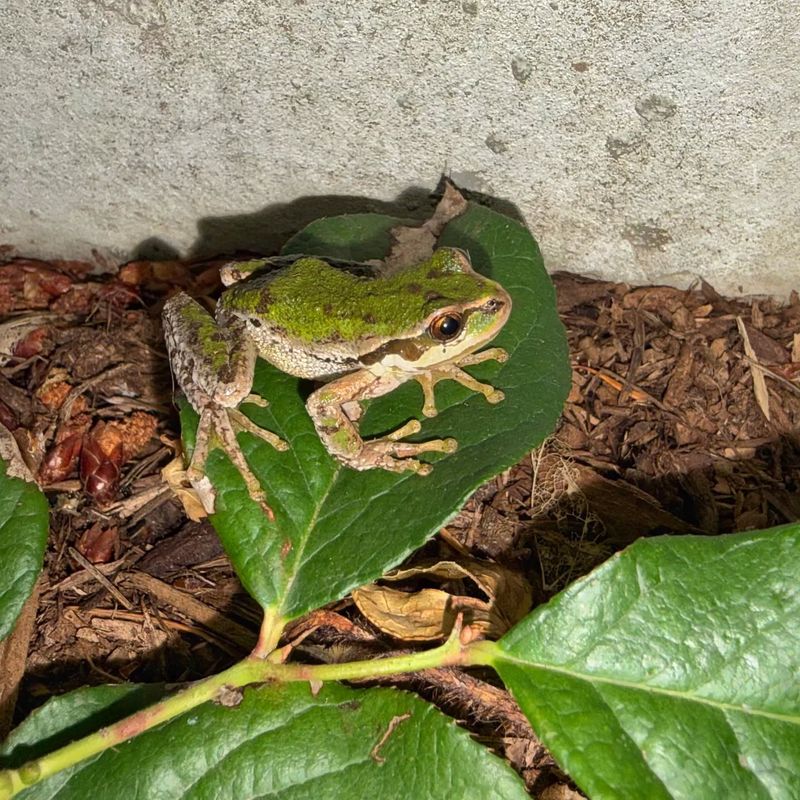
A frog in your California garden this summer is worth a moment of attention and a few practical responses, but not a wholesale change to how you manage your yard. Start with a careful look at identifying features and location before deciding what species you are dealing with, and resist the urge to draw conclusions that one sighting cannot support.
From there, the most useful actions are modest. Check that your irrigation is running efficiently and serving your plants rather than creating unnecessary pooling.
Leave a corner of the yard with some low cover, a rock, or a patch of leaf litter that a foraging frog can use. Replace any routine broad-spectrum spraying with targeted IPM practices that identify the pest before choosing a response.
What you do not need to do is overwater your yard, stock a pond with fish, attempt to move the frog to a better spot, or expect it to solve a pest problem. CDFW habitat records make clear that these frogs are capable foragers that find their own way to suitable conditions.
The most respectful and effective thing a California homeowner can do is make the yard a little safer and a little more habitable, then step back and let the visitor be exactly what it is: a small wild animal that found something useful in your garden.