
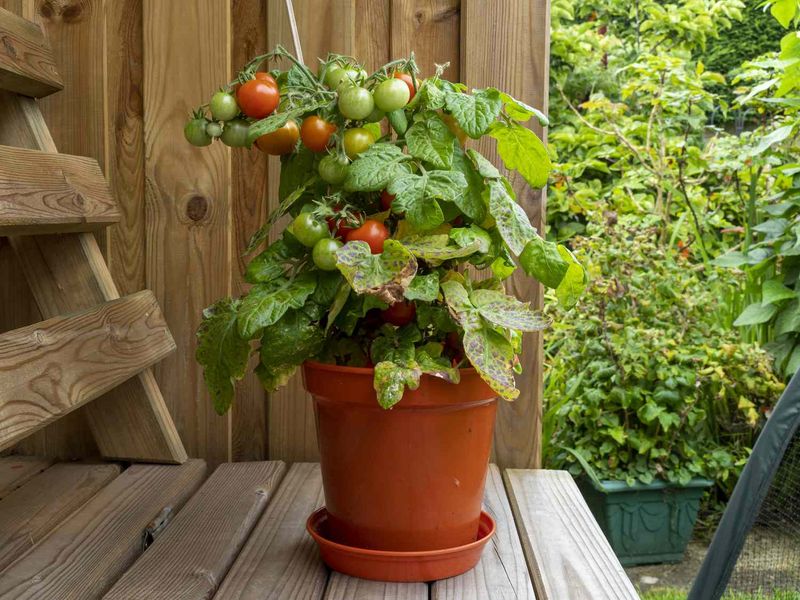
Watching your container tomatoes wilt by noon and produce tiny, stalled fruit is one of the more frustrating sights in a Southern garden. The good news is that a small pot and inconsistent moisture are genuinely common contributors, and both are fixable.
But heat, poor pollination, and other problems can produce the same symptoms, so a quick diagnosis before you start hauling bags of potting mix saves a lot of effort. This guide walks you through the checks, the fixes, and the moments when the answer is not as simple as a bigger bucket.
Small fruit and afternoon wilt do not prove one cause
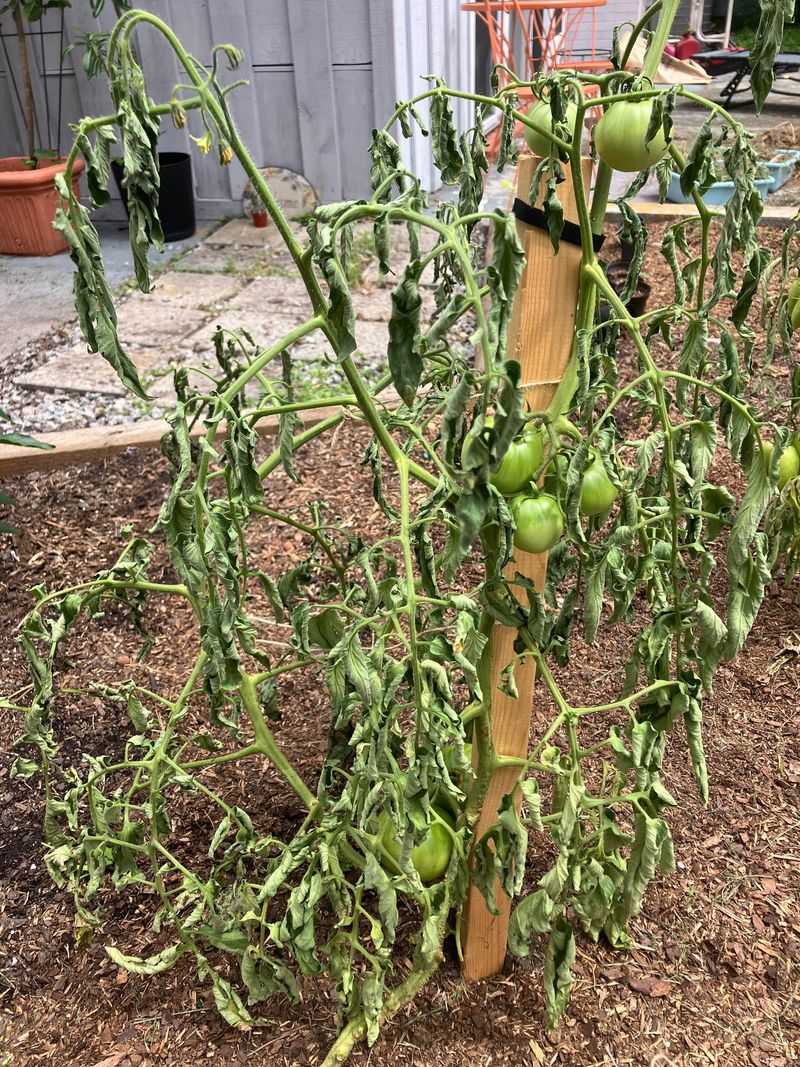
Seeing small or stalled tomatoes alongside a plant that droops every afternoon can feel like an obvious diagnosis, but the symptoms point toward several possible causes rather than one guaranteed culprit. What gardeners usually notice is a mismatch between how fast the plant demands water and how much the container can hold, especially in the intense sun, heat, and wind that Florida and Texas summers deliver.
University of Maryland Extension guidance on container vegetables notes that inconsistent moisture can reduce growth, cause wilting, contribute to fruit loss, and worsen physiological disorders such as blossom-end rot and cracking.
Before assuming the pot is the problem, clarify what “small tomatoes” means in your situation. Cherry, dwarf, and other small-fruited varieties produce compact fruit by design, and that is completely normal.
The concern here is unusually small or stalled fruit on a variety that should be producing larger tomatoes, often paired with blossom drop, repeated wilting, or leaves that look smaller than expected.
Late watering is not itself the usual cause of these symptoms. The real issue is delayed response after the pot has already dried out repeatedly.
Penn State Extension’s overview of heat stress in tomatoes also reminds gardeners that high temperatures alone can reduce fruit size and set even when soil moisture is adequate, so the rest of this guide focuses on diagnosing the root zone before recommending any fix.
A small container can run short of water quickly
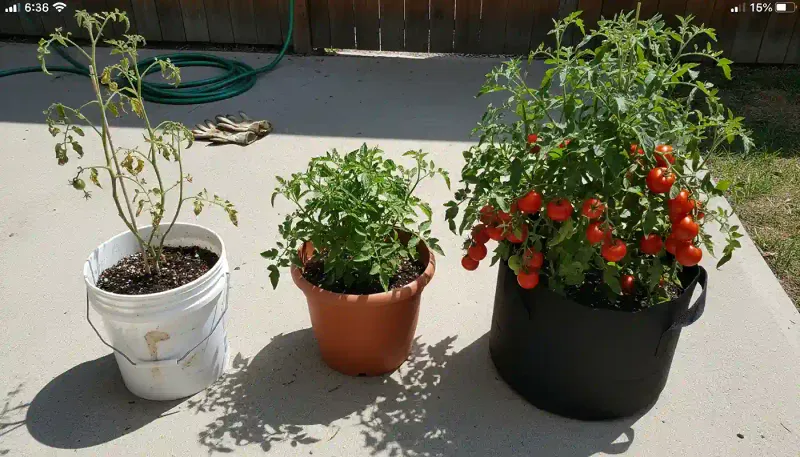
Container volume has a direct effect on how much water and nutrients a tomato plant can access between waterings. For many standard tomato varieties, University of Maryland Extension recommends roughly 5 gallons of growing medium per plant as a general starting benchmark, though compact, dwarf, cherry, and determinate types may manage in less, while large indeterminate varieties often benefit from considerably more.
A 5-gallon pot is a floor for many situations, not a guaranteed solution.
Planting one standard tomato per container is the safer approach. NC State Extension’s container gardening handbook points out that crowding two plants into one pot increases competition for both water and nutrients, which can worsen exactly the symptoms you are trying to fix.
Larger containers are more forgiving because they hold more of both, though they are not a cure-all for fruit size problems.
A published meta-analysis on rooting volume and plant growth found that doubling pot size increased plant biomass by an average of 43 percent across a broad range of species, but that result is not tomato-specific and does not translate directly into a yield prediction. Check for these signs that the pot has become too small: roots circling tightly inside, roots pushing out of drainage holes, a plant visibly too large for its container, or a pot that dries out within hours of a thorough watering despite mild weather.
Check below the surface before you water or repot
Afternoon wilt on a container tomato is not automatic proof that the pot is dry. Hot, direct sun can cause temporary midday drooping even when the root zone still holds plenty of moisture.
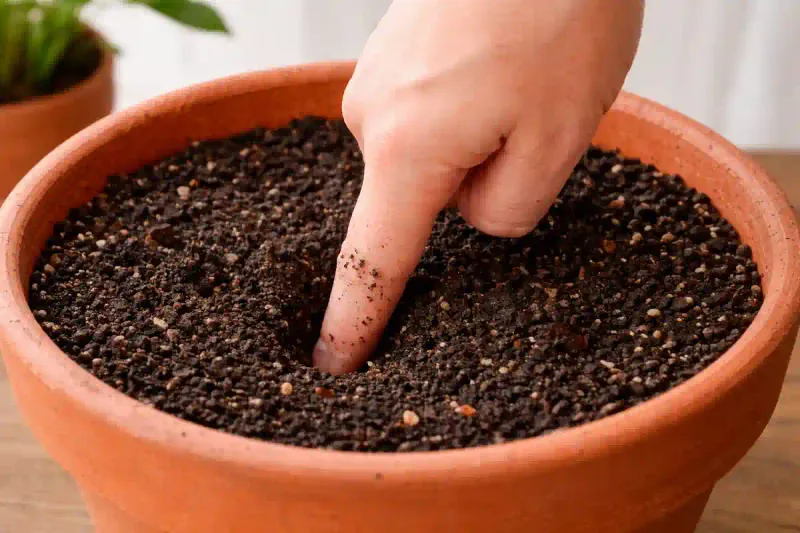
Judging by the top inch of soil or by one afternoon’s appearance often leads to overwatering, which creates its own set of problems. UF/IFAS Extension Sarasota County’s container tomato guidance recommends checking moisture several inches below the surface rather than relying on the top layer.
Push a finger or a wooden skewer three to four inches into the potting mix. If it comes out damp and cool, the plant may simply be reacting to heat rather than genuine drought.
Wait until late afternoon or early evening and see whether it perks back up on its own. A plant that recovers once the sun angle drops is likely experiencing heat wilt, not a water shortage.
A wilted plant with wet or waterlogged mix tells a different story. UF/IFAS guidance on efficient irrigation for edible landscapes notes that wet wilt can signal poor drainage, root damage, or root disease rather than underwatering, and adding more water to an already saturated container makes the situation worse.
The small-pot diagnosis becomes most reliable when rapid drying, repeated true wilting, and visible root crowding all appear together rather than in isolation.
Morning works best, but dry plants should not wait
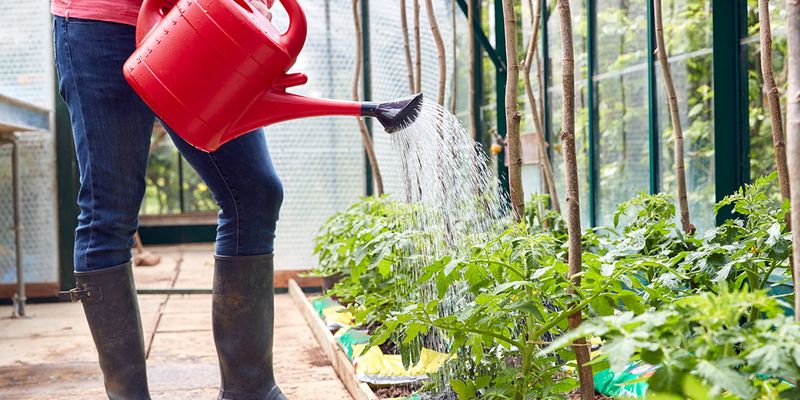
Watering timing matters, but not in the rigid way many gardeners assume. Early morning is the most practical default because it hydrates the plant before the hottest part of the day and gives any moisture that lands on foliage time to dry off, which reduces disease pressure.
University of Minnesota Extension’s hot-weather gardening guidance supports morning watering as the preferred routine for reducing heat stress and evaporation.
That said, a tomato plant with genuinely dry mix and visible wilt should not be left until the next morning as a matter of principle. Water it when you find it dry, even if that means late afternoon or evening.
UMN Extension’s summer garden care advice clarifies that evening watering directed at the soil is not automatically harmful. The stronger concern is prolonged leaf wetness from overhead irrigation, not the time of day itself.
Replace any fixed watering schedule with moisture-based checks. UMN Extension’s container plant care resource notes that pots may need daily watering in hot weather and sometimes twice-daily attention depending on container size, material, wind exposure, plant size, and potting mix type.
In a Florida or Texas summer, a small dark pot in full afternoon sun can dry out completely in a matter of hours, so the calendar is a poor guide compared to a quick finger check.
Water the dry root zone thoroughly and then slow the loss
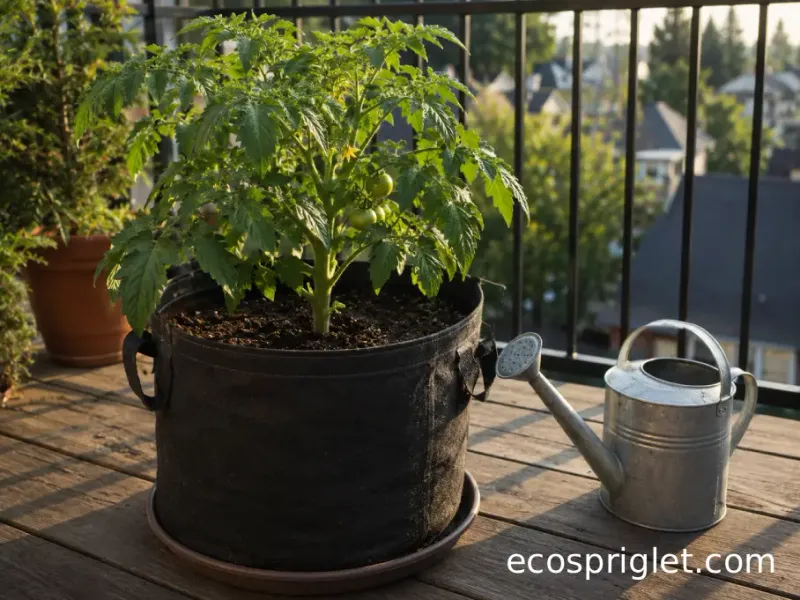
When the potting mix is genuinely dry several inches down, the response is straightforward: apply water slowly at the base of the plant until the root zone is thoroughly saturated and water begins to drain from the holes at the bottom. UF/IFAS Sarasota County Extension recommends emptying any standing water from the saucer after drainage is complete, because roots sitting in pooled water lose access to oxygen and can begin to deteriorate.
After the immediate rescue, adjust how often you water based on what you find below the surface, not on a fixed schedule. University of Georgia Extension’s tomato watering guide recommends drip irrigation, a soaker hose, or a wand directed at the soil surface to reduce evaporation and keep foliage as dry as practical.
A layer of mulch over the potting mix can also slow moisture loss and moderate root-zone temperature, both of which matter in a hot Southern summer.
Repeated severe drying despite thorough watering is a signal that the container setup itself needs adjustment. A larger pot, afternoon shade, wind protection, or some combination of those changes may be necessary to keep the root zone consistently moist without requiring two or three emergency waterings per day.
The goal is steady moisture with air in the root zone, not constant saturation, which deprives roots of the oxygen they need to function.
Build a container that holds moisture without staying soggy
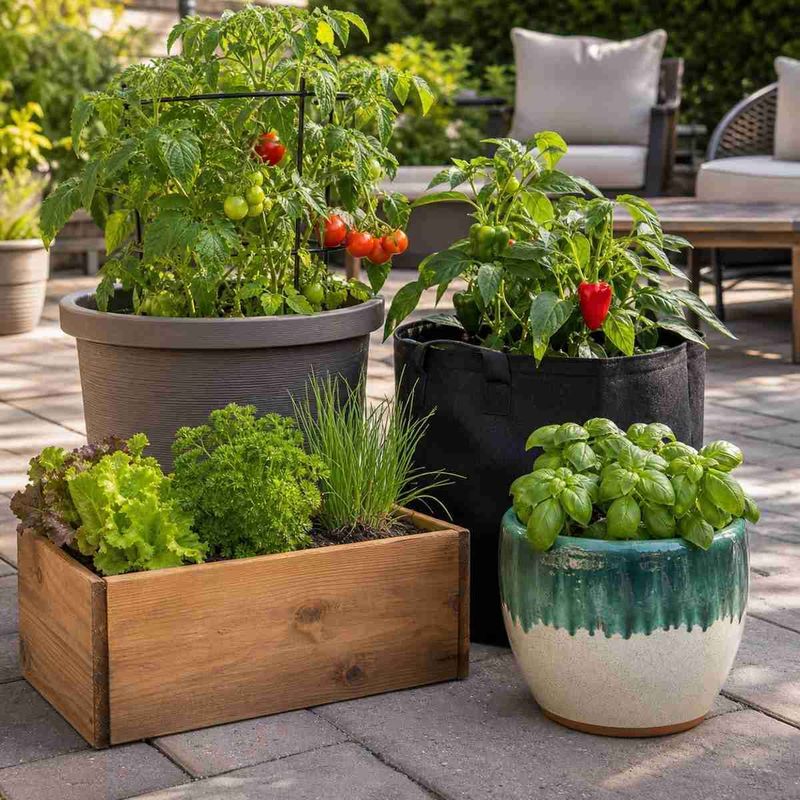
Getting the container setup right makes every watering more effective and cuts the frequency of emergency rescues. Start with a commercial potting mix rather than garden soil.
Iowa State University Extension’s container tomato guide explains that garden soil compacts in pots and restricts both air and water movement through the root zone, which can produce waterlogged conditions even when the surface looks dry.
Verify that drainage holes are unobstructed and raise the pot slightly so excess water can escape freely. Placing gravel or rocks at the bottom of the container is a common habit, but University of Maryland Extension notes that this practice does not improve drainage and can actually create a saturated zone just above the gravel layer.
Skip the rocks and focus on keeping the holes clear.
Reducing heat and evaporation around the container also helps. University of Georgia Extension’s container gardening resource suggests light-colored or insulated containers, afternoon shade from a fence or taller plant, and grouping pots together so they shade each other’s sides.
Dark containers absorb heat aggressively in full sun and can raise root-zone temperatures to levels that stress plants even when the mix is moist. Finally, frequent watering leaches nutrients out of the mix, so follow the fertilizer label carefully and avoid excess nitrogen, which pushes leafy growth at the expense of fruit according to UGA Cooperative Extension’s Georgia Homegrown Tomatoes bulletin.
If the mix stays moist, investigate heat and fruit-set problems
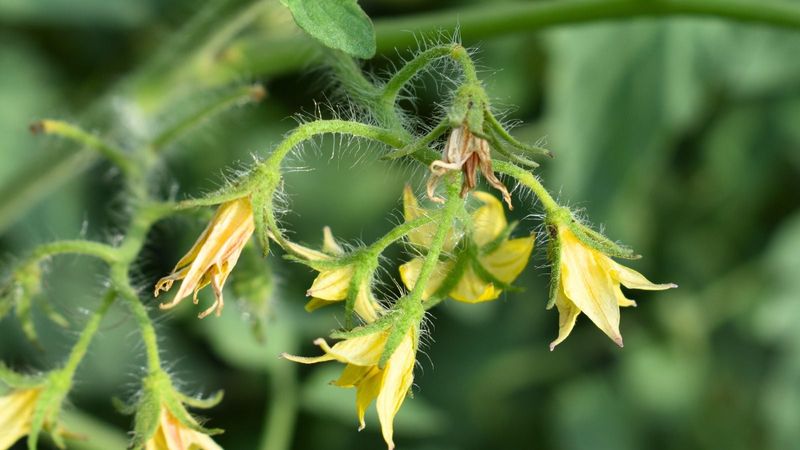
A container tomato that stays consistently moist but still produces unusually small fruit or drops its flowers before setting is telling you something other than a water shortage is at work. High temperatures are a frequent explanation in Florida and Texas summers.
Penn State Extension’s heat stress and tomatoes resource reports that temperatures above roughly 84 degrees Fahrenheit can begin to reduce fruit weight per plant and seed number, while sustained temperatures above 90 degrees can slow growth, pollination, and maturation. These figures are useful reference points rather than precise cutoffs for every cultivar or location, but they help explain why fruit can stall even in a well-watered pot during a Southern heat wave.
Other explanations deserve attention when moisture is adequate. Cultivar traits matter: some varieties simply produce smaller fruit under stress, and others are bred for compact fruit regardless of conditions.
Excessive nitrogen fertilizer can push the plant toward lush foliage and away from fruiting. Nutrient imbalances, poor drainage, or root damage can mimic drought stress on the surface while the underlying cause is entirely different.
University of Minnesota Extension’s tomato disorders page covers a range of physiological and nutritional problems that produce fruit and foliage symptoms worth comparing against what you observe.
Disease is also possible. UF/IFAS irrigation guidance for edible landscapes notes that wet wilt, unusual leaf spots or curling, and fruit discoloration alongside adequate soil moisture are reasons to look beyond watering habits.
Observable clues such as blossom drop on a well-watered plant, stalled fruit maturation, or leaf symptoms that do not match simple heat stress are signals to stop treating the problem as underwatering and investigate further.
Use steadier moisture as the test, not a guaranteed cure
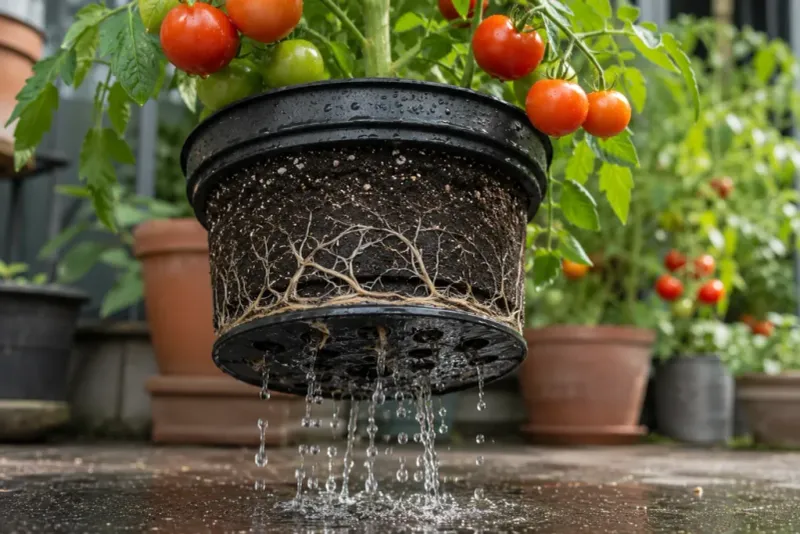
A practical sequence works better than a single dramatic fix. Start by confirming moisture below the surface, then inspect the roots and container size for signs of crowding.
Water thoroughly when the mix is dry, improve drainage if needed, and reduce afternoon heat and evaporation through shade, mulch, or a larger or lighter-colored container. Monitor new growth, flower development, and fruit set over the following two to three weeks rather than expecting overnight results.
A larger pot and steadier watering can remove two significant stressors without guaranteeing larger fruit, especially during sustained heat or when another problem such as poor pollination, nutrient imbalance, or disease is also present. University of Maryland Extension and Penn State Extension’s heat stress guidance both support the idea that reducing avoidable stressors gives the plant its best chance without promising a specific outcome.
The clearest takeaway is this: respond promptly to actual dryness rather than a fixed clock, and correct the container’s capacity and exposure so the plant stops depending on a last-minute afternoon rescue. A tomato that never has to recover from repeated severe wilting has far more energy left for setting and sizing fruit.