
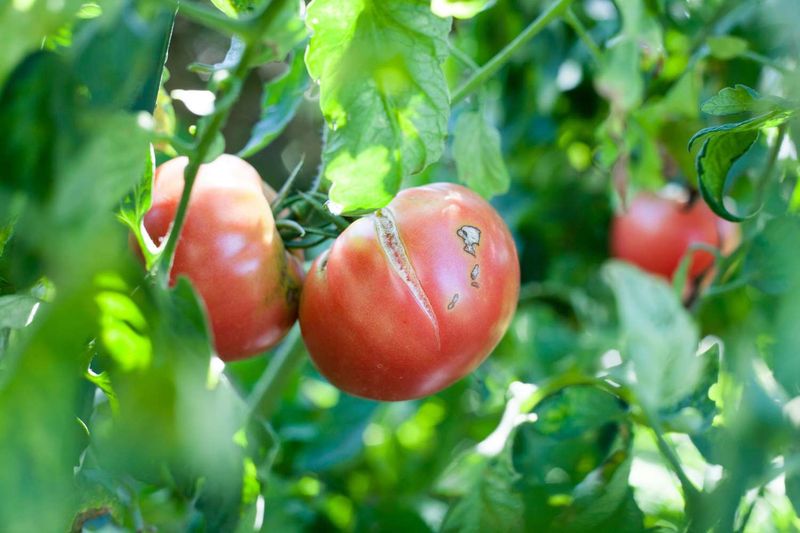
Few things sting a gardener more than walking out after a summer storm to find ripe tomatoes split wide open on the vine. That crack is not random bad luck.
It happens because the fruit took on water faster than its skin could keep up, and the late-summer pattern of dry spells followed by heavy rain makes Southern gardens especially vulnerable. Understanding exactly why it happens is the first step toward protecting what is left of your harvest.
The split starts when the fruit expands faster than its skin can stretch
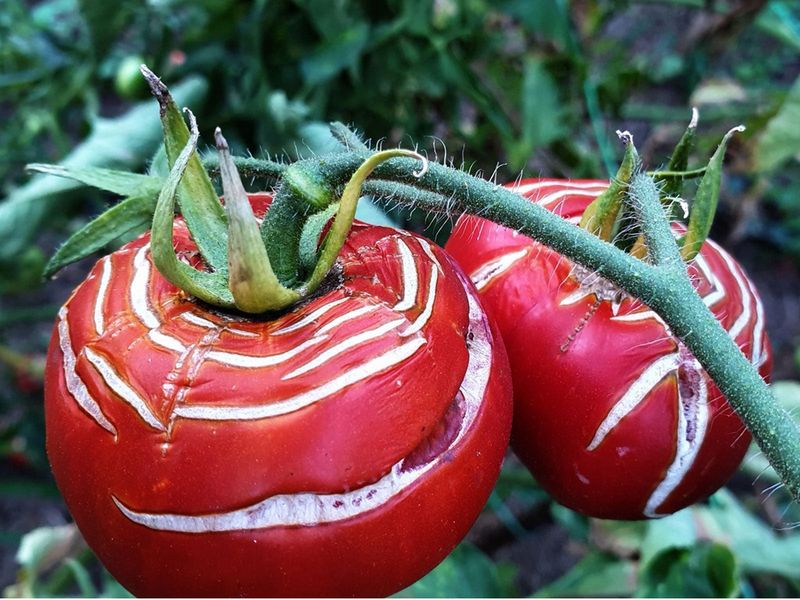
Tomato skin is not elastic enough to keep pace with rapid internal growth. When roots sit in dry soil for days and then suddenly receive a surge of water from heavy rain or a large irrigation event, the fruit draws that moisture in quickly and expands from the inside out.
The outer skin, which has already firmed and lost some flexibility as the tomato ripened, simply cannot stretch fast enough and splits open.
Gardeners in Texas and Florida recognize this pattern immediately. A week of summer heat with no rain dries the root zone, then one afternoon storm drops an inch or two of water in an hour, and the next morning the biggest tomatoes on the plant are cracked.
Penn State Extension explains that this rapid water uptake after a dry period is a well-supported trigger for growth cracking in tomatoes.
Cracking is a physiological growth disorder, not an insect attack or an infectious disease. University of Minnesota Extension and University of Georgia Extension both classify it this way, which matters because no spray or pesticide will fix the underlying cause.
The dry-to-wet swing is a strong trigger, but heat, direct wetting of the fruit surface, ripening stage, sunlight exposure, skin condition, and the genetics of the cultivar can all play a role in whether any individual tomato cracks.
Where the skin breaks identifies the common cracking pattern
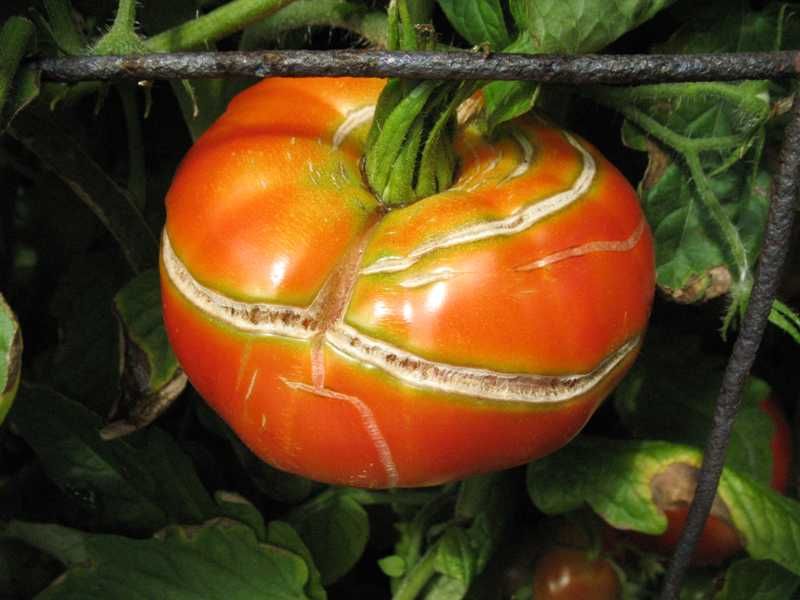
Before deciding how to respond, take a close look at where and how the skin broke. The location and shape of the crack can tell you which type of growth disorder you are dealing with, and not every mark on a tomato is the same problem.
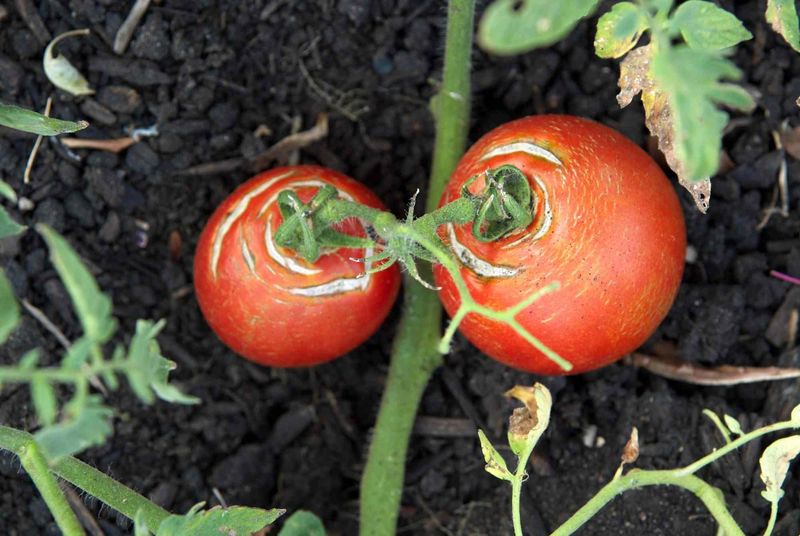
Radial cracks run outward from the stem scar like spokes on a wheel, sometimes extending several inches down the sides of the fruit. Concentric cracks form rings around the stem end or across the shoulders, circling the top of the tomato rather than radiating from the center.
University of Minnesota Extension and Penn State Extension both describe these two patterns as the most common growth cracks, and both are typically linked to the same moisture-swing mechanism.
A third type of surface damage looks quite different. Numerous fine, shallow cracks scattered across the shoulders or skin of the fruit, sometimes called rain check, cuticle cracking, russetting, or crazing, are not the same as one large growth split.
Penn State Extension notes that the exact causes of rain check are not fully settled, with rainfall, direct fruit wetting, temperature shifts, and cultivar susceptibility all implicated. Treating fine surface crazing as identical to a deep radial crack could lead you to the wrong response, so matching the damage pattern to the right cause matters before taking action.
Heat and ripening make a watering swing more damaging
Not every tomato on the same plant splits after the same storm, and that inconsistency confuses a lot of gardeners. The reason comes down to how several factors stack on top of each other to make certain fruit far more vulnerable than others growing just a foot away.
Ripening stage is one of the biggest variables. As a tomato transitions from green to red, its skin becomes less pliable and its internal growth is still pushing outward.
Fruit that is already at or near full color has less give in the skin than a tomato that still has several days of development ahead of it. Hot weather speeds up ripening and also raises the temperature of the fruit surface itself, which can affect skin condition and water movement.
High humidity, common across the South in late summer, adds to the stress environment. UMass Extension’s tomato cracking fact sheet and UC Cooperative Extension research both identify rapid growth, heat, humidity, light exposure, and ripening stage as factors that can modify how much a moisture swing damages the fruit.
Intense sunlight can raise the temperature of fruit surfaces and affect skin elasticity, particularly when leaf cover has been thinned through pruning or disease. Direct wetting of the fruit during a downpour adds pressure near the stem opening.
Penn State Extension notes that water can enter through openings near the stem scar, adding to internal pressure. Genetic susceptibility also plays a real role.
Large-fruited tomatoes and certain heirloom varieties may be more prone to cracking, though susceptibility varies by cultivar and growing conditions, so no blanket rule applies to every heirloom or slicer on the market.
Steady root-zone moisture lowers the risk before the next storm
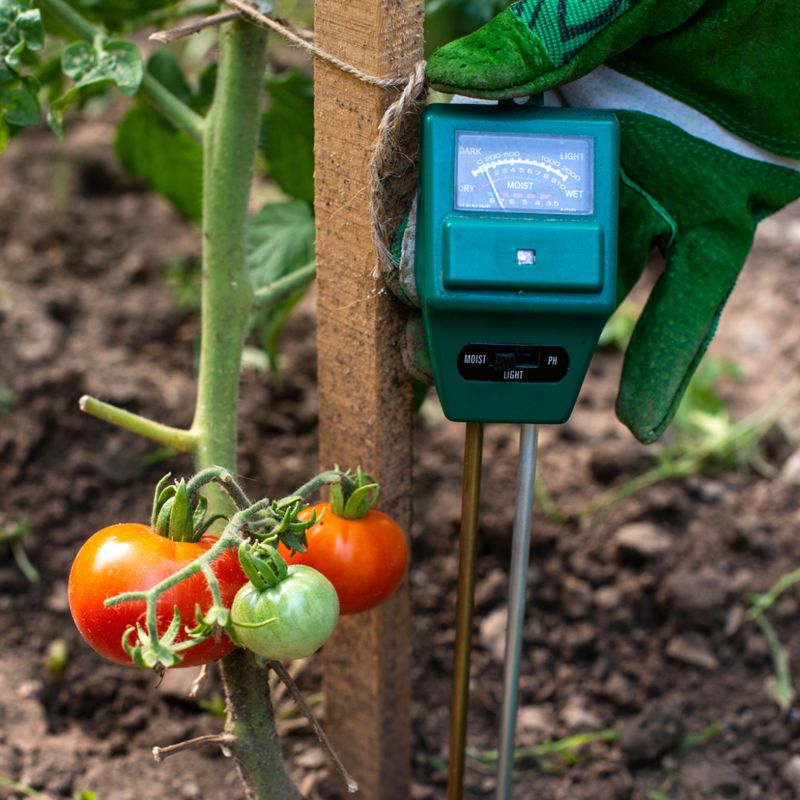
Preventing the next round of cracking starts below the soil surface, not at the garden hose. Keeping root-zone moisture as consistent as practical during fruit development is the most reliable way to reduce the sharp dry-to-wet swing that triggers growth cracks.
The goal is evenly moist, well-drained soil, not a constantly wet bed.
Checking moisture several inches below the surface before watering gives a far more accurate read than looking at the leaves or the top inch of soil. Leaf wilting in afternoon heat is common in Southern summers even when the root zone still holds adequate moisture, so watering by leaf appearance alone can lead to over-irrigation.
Push a finger or a soil probe four to six inches deep. If the soil at that depth feels dry, the plant needs water.
If it still feels moist, wait and check again in a day. University of Minnesota Extension’s tomato-growing guide and their vegetable garden watering guidance both recommend checking soil moisture at root depth rather than relying on surface appearance.
Light, frequent sprinkling can create shallow root systems that are even more vulnerable to rapid moisture swings because the roots never learn to reach deeper, more stable soil. Water thoroughly when the root zone needs it, wetting the soil to the full depth of the root system.
Then let it approach dryness before watering again, without allowing the soil to crack or the plant to wilt severely. UF/IFAS guidance on vegetable irrigation reinforces that the practical target is evenly moist, well-drained soil adjusted to local conditions, not a schedule that ignores what the soil and weather are actually doing on any given day.
Mulch and soil-directed irrigation smooth out late-summer swings
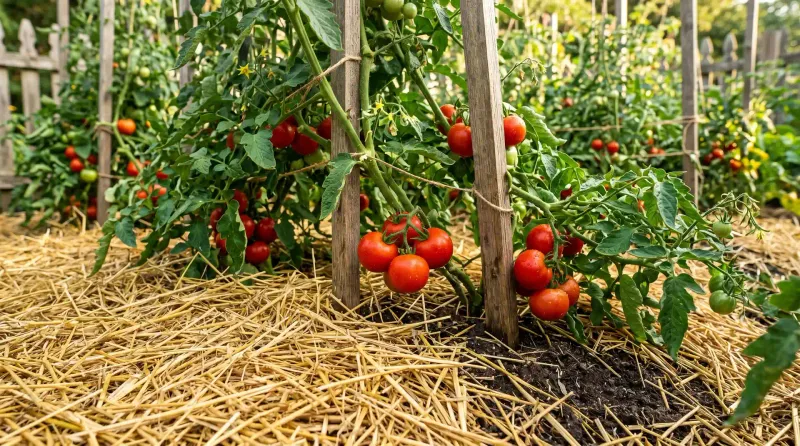
Two practical tools work together to protect root-zone moisture between rain events: mulch that slows evaporation and irrigation that puts water where the roots are instead of on the fruit and foliage.
A settled layer of organic mulch, roughly 2 to 3 inches deep, can meaningfully slow soil moisture loss during the hot, dry stretches that precede late-summer storms. UF/IFAS guidance on vegetable garden mulching recommends about 2 to 3 inches of settled mulch for many edible-garden situations.
Keep mulch pulled a few inches away from the base of the stem so air can circulate and moisture does not stay against the plant. Piling mulch too deep can intercept rainfall before it reaches the root zone, so more is not always better.
For irrigation method, drip lines or soaker hoses deliver water directly to the soil surface at the root zone rather than raining it down on foliage and fruit. University of Minnesota Extension’s irrigation strategies for vegetables notes that soil-directed irrigation improves moisture consistency and avoids routinely wetting plant surfaces.
Careful hand watering at the base of each plant can accomplish the same thing when drip equipment is not available.
A commonly cited planning reference is roughly 1 to 2 inches of water per week, including rainfall. UF/IFAS vegetable garden watering guidance and UF/IFAS tomato-growing information both note that this figure is a rough starting point, not a fixed rule.
Sandy Florida soils drain and dry far faster than heavier soils, often requiring more frequent irrigation. Container-grown tomatoes can dry out in a single hot afternoon.
Heat, wind, plant size, and mulch all shift the actual need, so let the root zone tell you when to water rather than following a rigid calendar.
After a storm, check the soil before adding more water
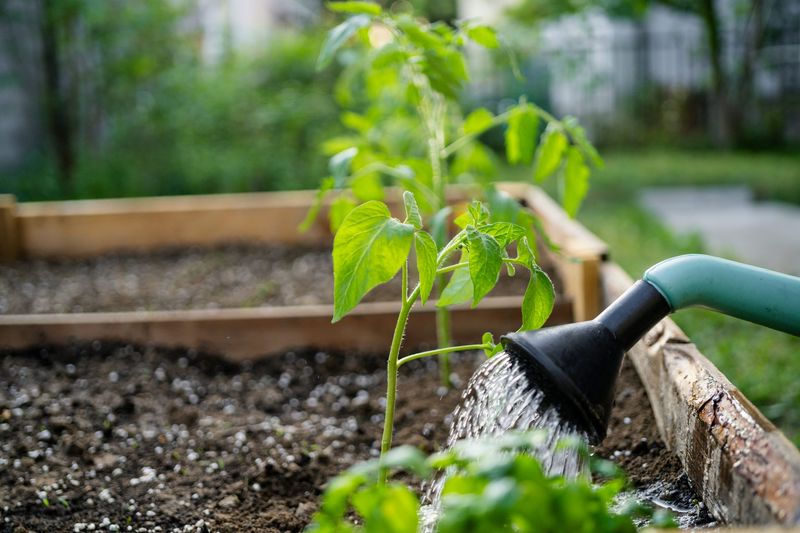
The instinct after a late-summer storm passes is sometimes to get back out and water, especially if the plants looked stressed before the rain hit. Resist that reflex until you know what the soil actually received.
Push a finger or probe several inches into the root zone. Saturated soil that cannot drain quickly is already stressing the roots, and adding more water on top of it can worsen waterlogging, leach nutrients out of reach, and create conditions that favor root diseases.
UF/IFAS post-storm garden guidance and UF/IFAS vegetable irrigation advice both caution against automatic irrigation after significant rainfall events. Let the soil guide the decision, not the calendar or the appearance of the foliage.
While you are assessing the garden after the storm, look at the leaf canopy as well. Healthy foliage provides shade that moderates fruit surface temperature and reduces the intensity of the sunlight hitting ripening tomatoes.
Excessive pruning before or after a storm can expose fruit to intense afternoon sun, raising the risk of sunscald alongside cracking. Preserve the leaf cover rather than cutting it back aggressively.
If fruit on the plant is already at the breaker stage, where the skin has just begun to shift from green toward pink or orange, Penn State Extension reports that harvesting at this stage before expected heavy rain may reduce cracking risk for that fruit. Tomatoes at breaker stage will continue ripening indoors at room temperature.
This is a risk-reduction tactic, not a guarantee, and University of Georgia Extension echoes the recommendation to monitor ripening fruit closely during periods of heavy or variable rainfall.
Next season, reduce exposure with the right cultivar and timing
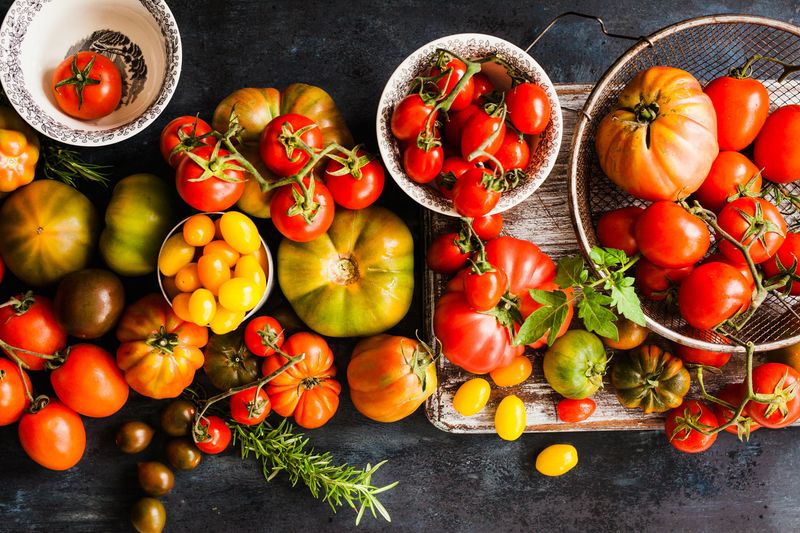
Responding to cracked fruit after the fact only gets you so far. Choosing the right tomato variety before the season starts can lower your baseline exposure to the problem without requiring you to rescue every split fruit in August.
Cultivars differ substantially in how prone they are to cracking. Smaller-fruited types, such as cherry and grape tomatoes, are often less susceptible than large slicers, partly because their smaller size means less total expansion pressure after a moisture swing.
University of Minnesota Extension and Utah State University Extension both recommend looking for cultivars described as crack-resistant or crack-tolerant when selecting varieties for gardens prone to moisture swings. These descriptions are worth seeking out on seed catalogs, transplant labels, and variety guides, though they represent reduced risk rather than immunity.
Trade-offs in fruit type, flavor, yield, or regional performance are real, so consider the full picture when comparing options.
Timing is equally important, especially for Florida gardeners. UF/IFAS tomato-growing guidance notes that tomato timing varies considerably across Florida, and UF/IFAS Pasco County guidance on growing tomatoes in central Florida explains that summer heat and disease pressure make midsummer a difficult season for many Florida plantings.
Late-summer cracking advice applies most directly to established plants, specific Florida regions with suitable conditions, or fall plantings timed to avoid peak heat. Texas gardeners face a similarly unforgiving August and may find fall plantings more productive and less crack-prone than trying to push a summer crop through the hottest weeks of the year.
A crack is not a blank check for eating or canning
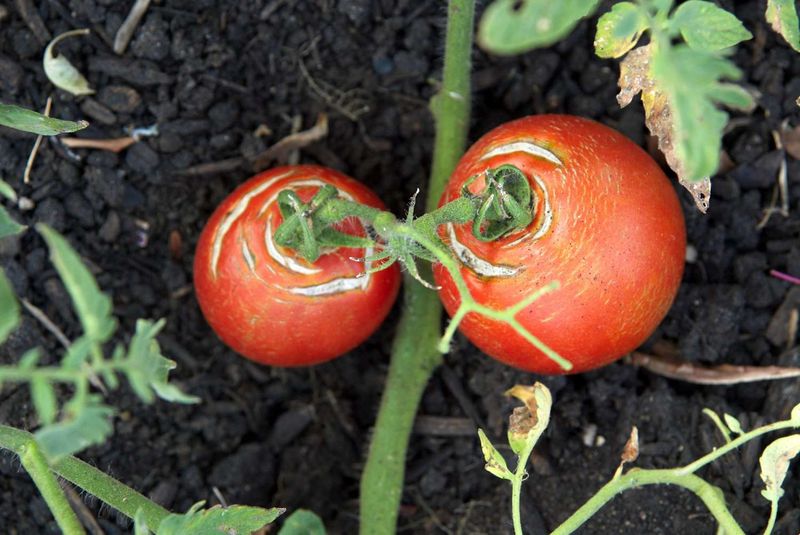
Before using any split tomato, take a moment to distinguish a growth crack from other types of damage that look similar but mean something different. Getting the diagnosis right affects both what you do with the fruit and whether it is safe to eat.
Blossom-end rot appears as a sunken, dark, leathery patch on the bottom of the fruit, the end opposite the stem, not as a split near the top. Catfacing produces puckering, scarring, distortion, or cavities, usually at the blossom end, and is tied to disturbances during flower development rather than a moisture swing.
Sunscald creates pale, yellow, or grayish-white flattened areas on fruit that has been exposed to intense direct sun, often after foliage loss. University of Minnesota Extension and University of Georgia Extension describe all three of these as distinct disorders with different causes, locations, and appearances from growth cracking.
The University of Minnesota tomato fruit crack diagnostic tool can help you match what you see to the right problem.
For handling cracked fruit, the standard is conservative. A tomato with a shallow, recent crack and no mold, soft rot, foul odor, disease lesion, or signs of deterioration may be suitable for prompt fresh use after thorough washing and trimming away the damaged tissue.
FoodSafety.gov guidance on fruit and vegetable safety makes clear that damaged areas are entry points for pathogens. Any fruit with mold, soft rot, or questionable deterioration should go in the compost, not on the cutting board.
Keep cracked or damaged tomatoes completely out of home-canning batches. Colorado State University Extension’s canning guide and University of Minnesota Extension’s tomato canning guidance both direct home canners to use only high-quality, undamaged tomatoes and to follow tested acidification and processing procedures.
A cracked tomato may look mostly fine, but the safest harvest is always the one that never split in the first place.