
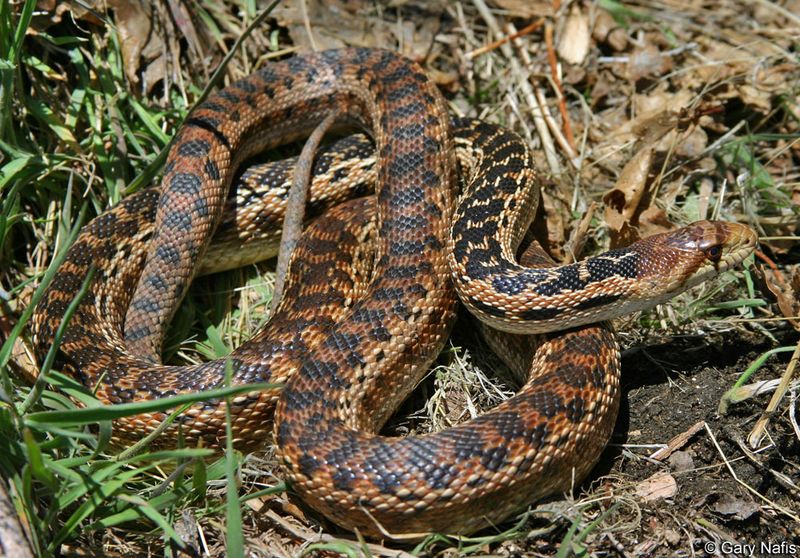
Most California homeowners who spot a large, patterned snake in the yard reach for a shovel before they reach for the facts. Gopher snakes are native, nonvenomous predators that quietly patrol millions of California properties, and understanding why one showed up can change how you respond to it.
The choice to remove or leave a snake has real consequences for both your yard and the local wildlife that depends on it.
A yard sighting may reflect opportunity, not a problem caused by the snake
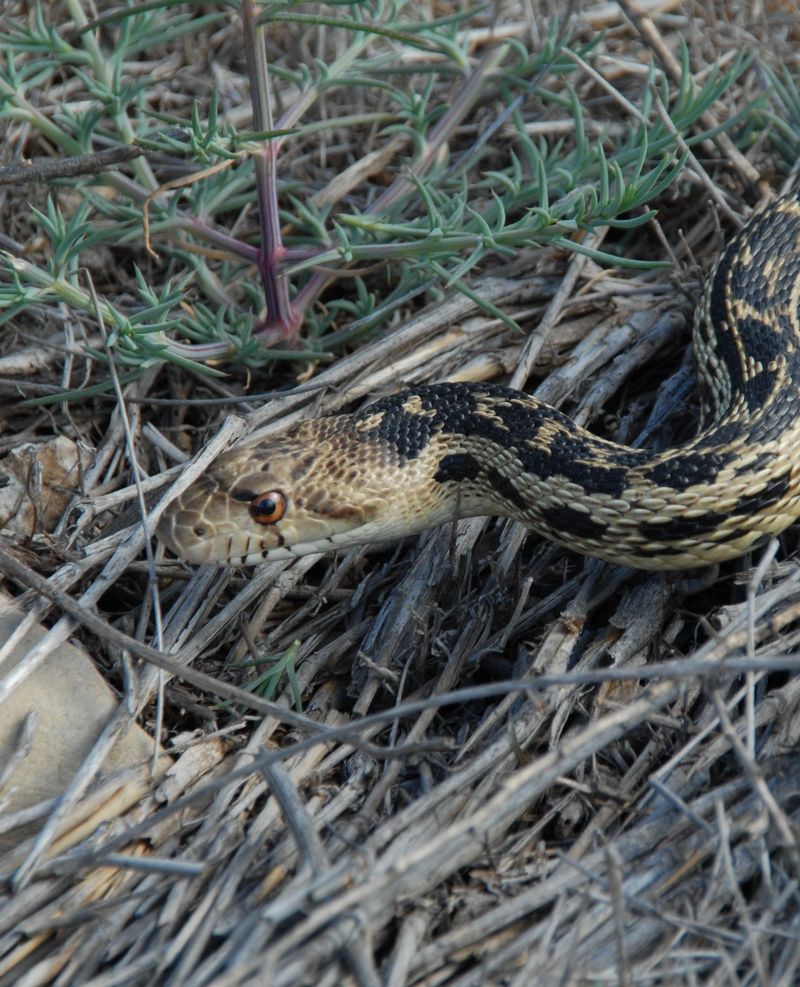
Finding a snake in your yard can trigger an immediate alarm response, but the snake itself almost certainly did not create the conditions that brought it there. Gopher snakes range widely across California, from coastal chaparral and inland valleys to desert edges and wildland-urban-interface neighborhoods, and they move through landscapes in search of food, warmth, shelter, and suitable basking spots.
A sighting may reflect that your property offers one or more of those things, not that the snake is a symptom of a crisis.
Several factors can explain a visit without pointing to a rodent infestation. Dense ground cover, wood piles, rock walls, or south-facing pavement can provide the warmth and cover a snake needs to thermoregulate and rest.
Proximity to open space, a creek corridor, or a neighbor’s property with suitable habitat can also bring a snake through your yard on a routine circuit. California Department of Fish and Wildlife guidance on snakes notes that snakes commonly appear in yards because of the shelter and prey those spaces provide, not because the snake is establishing a permanent residence.
A sighting is a reasonable prompt to look around the property with fresh eyes. Check for signs of active rodent activity – gnawed materials, burrow openings, droppings, or fresh soil disturbance – and assess whether clutter or dense vegetation near your home creates easy cover for small mammals.
That inspection is useful regardless of whether you ever see the snake again.
What a sighting does not do is confirm that rodents are out of control or that the snake caused any plant or structural damage. Treat the encounter as information worth acting on, not as a verdict.
UC IPM’s rattlesnake and snake management guidance reinforces that reducing prey and shelter is a more durable solution than focusing on the snake itself.
What gopher snakes actually eat in California
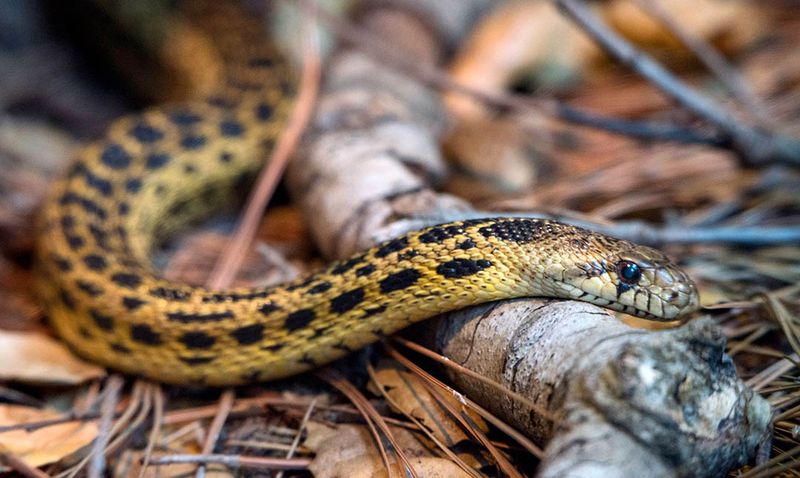
The name “gopher snake” leads a lot of people to picture a specialized pest controller that targets one rodent and ignores everything else. The actual diet is far broader than that, and understanding it helps explain both the snake’s ecological value and its limits as a yard ally.
A large-scale dietary study of more than 2,600 Pituophis catenifer specimens found that mammals made up 74.8% of recorded prey items across the species’ range. That category spans mice, rats, voles, ground squirrels, rabbits, and pocket gophers.
The remaining prey includes birds, bird eggs, lizards, smaller snakes, and other vertebrates. What a given snake actually eats depends on where it lives, how large it is, and which prey happens to be available in that particular habitat at that time of year.
Animal Diversity Web’s profile of Pituophis catenifer confirms this dietary flexibility, noting that the species is an opportunistic predator rather than a specialist. A gopher snake working a suburban inland-valley yard may focus on mice raiding a compost bin, while one near a coastal meadow might take ground squirrels or eggs from a low-nesting bird.
Neither snake is doing something unusual; both are responding to local opportunity.
Gopher snakes are also muscular constrictors capable of entering burrow systems to pursue prey underground. California herpetofauna records from the Ballona region document pocket gophers among the prey taken by gopher snakes in coastal California habitats.
That capability is real, but it does not translate into reliable, measurable gopher suppression in a specific yard. Pocket gophers reproduce quickly and can seal tunnel entrances with earthen plugs when a predator is nearby, which limits how much impact any single snake can have on an established colony.
The practical takeaway is that a gopher snake in your yard contributes to local predation across multiple rodent species, and that contribution has genuine ecological value. Expecting it to function as a targeted pest-control program, though, sets an unrealistic standard the animal was never built to meet.
Removing one snake could be counterproductive, but the yard-level effect is unknown
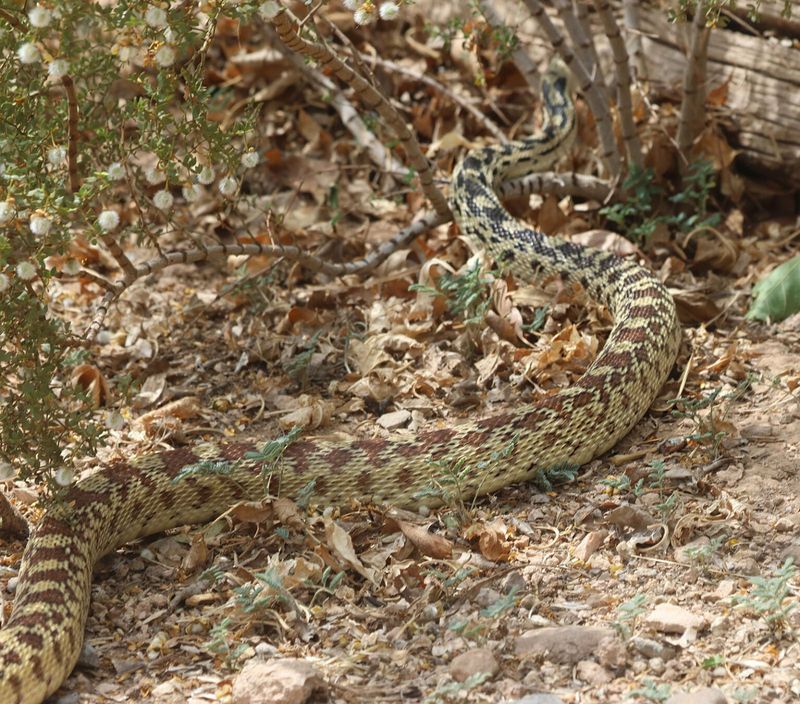
Removing a predator from an ecosystem can, in principle, reduce the predation pressure that keeps prey populations in check. That ecological logic is sound, and it supports the general case for leaving a nonvenomous native snake alone when you can safely do so.
What the available evidence does not support is a guarantee that killing or relocating one gopher snake will cause a measurable rodent surge in a particular California yard.
The relationship between a single predator and local prey numbers is complicated. Rodent populations are influenced by food availability, cover, weather, reproductive cycles, and the presence of multiple predator species, including raptors, foxes, coyotes, and other snakes.
Removing one gopher snake changes one variable in that system. Whether that change produces a noticeable outcome in your yard depends on factors that vary from property to property and season to season.
CDFW’s human-wildlife conflict guidance encourages coexistence with native snakes as a default, partly because these animals provide ecosystem services and partly because removal tends to be less effective than addressing the habitat conditions that attract both snakes and rodents. Leaving a snake that poses no direct safety threat is generally the path of least disruption.
It also matters what “removing” means in practice. Nonlethal exclusion from a structure, professional capture for relocation, and killing are three very different actions with different consequences.
CDFW’s nuisance wildlife guidance is clear that wildlife cannot simply be trapped and released in a new location without consequences, and California law prohibits releasing unwanted animals into the environment. Amateur relocation can stress or kill the snake and may spread disease.
If professional removal is genuinely needed, contact a licensed wildlife professional rather than attempting it yourself.
Finally, UC IPM’s pocket-gopher management guidance makes plain that predators rarely suppress gopher populations to the level homeowners need, which means that even a snake left in place cannot substitute for targeted rodent management when real damage is occurring.
A gopher snake cannot solve a confirmed pocket-gopher infestation
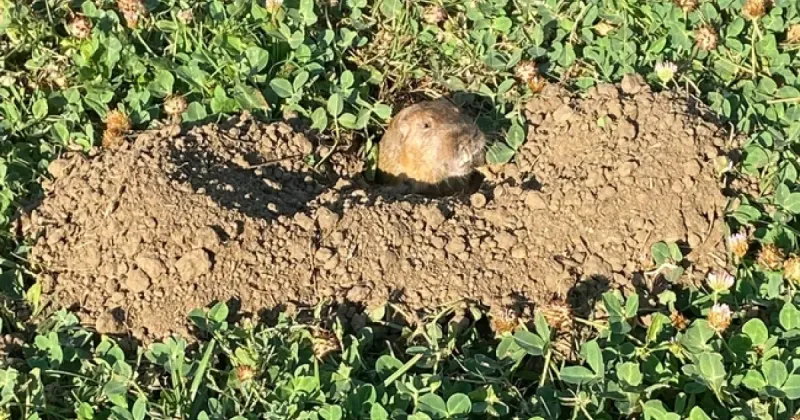
The common name carries an implicit promise it cannot keep. “Gopher snake” describes a species group with a documented history of eating pocket gophers, not a biological control agent that will clear an established infestation from your yard. Counting on a resident snake to solve active gopher damage is a gamble that usually loses.
UC IPM explains why: pocket gophers are prolific breeders that can produce multiple litters per year, and they respond to predator presence by sealing tunnel entrances with earthen plugs. UC IPM’s pocket-gopher home and landscape guidance states directly that natural predators, including snakes, rarely eliminate pocket gophers to the degree homeowners require, and that waiting for predators to handle the problem is not a reliable management strategy.
Before choosing any control method, confirm that pocket gophers are actually the cause of the damage. The clearest signs are fresh, fan-shaped or crescent-shaped mounds of loose soil with a plugged opening offset to one side, combined with plants that wilt or die suddenly as their roots are eaten underground.
Moles, ground squirrels, and other burrowing animals create different soil disturbance patterns, so a correct diagnosis matters before spending money or effort on the wrong solution.
CDFW’s rodent conflict guidance recommends monitoring and using control methods appropriate to the specific site. For confirmed pocket-gopher damage, the most effective options are typically trapping, underground wire-mesh exclusion barriers around high-value plants, or properly labeled control products applied according to the instructions.
Professional pest management is worth considering for large properties or persistent infestations.
The presence of a gopher snake in the yard is not a reason to skip these steps. The snake may occasionally take a gopher, and that predation is genuinely useful, but it operates on the snake’s schedule and prey-detection ability, not on your planting calendar or the gopher’s reproductive rate.
Protect valuable plants and structures with evidence-based IPM while avoiding unnecessary harm to the snake that may be providing at least some background predation pressure.
Safety comes before identification
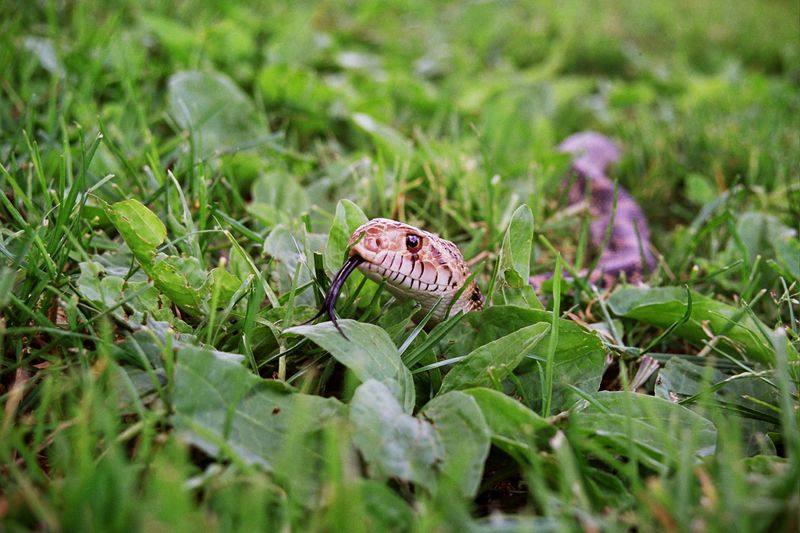
When you encounter a snake in your yard, the first priority is distance, not identification. Step back, keep children and pets away, and give the animal a clear path to move off on its own.
Most snakes encountered in California yards will leave quickly when they are not cornered or threatened.
Gopher snakes are nonvenomous, but that word does not mean incapable of biting. A gopher snake that feels cornered, restrained, or harassed will strike in self-defense, and the bite, while not medically dangerous in the way a venomous bite is, can be painful and can break skin.
More importantly, California is also home to several rattlesnake species, and a stressed encounter is not the moment to sort out which animal you are looking at.
Gopher snakes are well-known mimics. When threatened, they coil into a loose S-shape, flatten or broaden the head to look more triangular, hiss loudly, and vibrate the tail rapidly against dry leaves or soil to produce a rattling sound.
UC IPM’s rattlesnake guidance notes that this mimicry can make nonvenomous snakes look convincingly dangerous, and that the absence of an obvious rattle is not, by itself, a reliable safety check. Rattles can be broken or partially missing, and a tail vibrating in dry grass can sound similar enough to cause genuine confusion.
CDFW’s rattlesnake information advises that most snake bites occur when people attempt to handle, pin, or kill a snake they have encountered. That risk applies whether the snake turns out to be venomous or not.
Do not use a shovel, a stick, or any other tool to strike or pin the animal.
CDFW’s nuisance wildlife guidance recommends contacting a licensed wildlife professional or your local animal control agency when a snake cannot move away safely or when you are uncertain about the species. CDFW’s snake conflict page provides regional contacts for situations where professional assistance is needed.
The safest rule for any unidentified snake: give it space and let a trained person handle the rest.
Change the yard conditions that attract prey and unwanted encounters
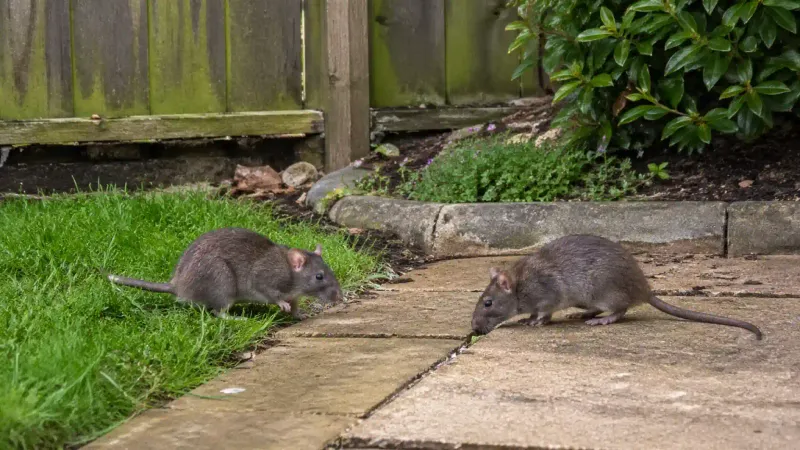
Addressing the conditions that draw rodents and snakes to a yard is more durable than reacting to individual animals. Because gopher snakes follow prey, cover, and warmth, modifying those features reduces the likelihood of repeated or unwanted encounters without requiring you to harm any wildlife.
Start with rodent attractants. Secure compost bins with tight lids, store birdseed in sealed metal containers, and remove fallen fruit promptly.
CDFW’s rodent conflict guidance identifies food access as a primary driver of rodent activity near homes, and reducing that access makes the yard less rewarding for the small mammals that snakes follow.
Next, reduce shelter that benefits both rodents and snakes. Wood piles, lumber stacks, dense brush piles, and accumulated debris near frequently used areas give mice and rats places to nest and give snakes places to rest and hunt.
Moving storage away from the house and clearing ground-level clutter can meaningfully reduce the appeal of those zones. UC IPM’s snake management guidance specifically lists clutter removal and vegetation management around paths as practical steps for reducing snake conflicts in residential settings.
Keep vegetation trimmed at ground level along walkways, doorways, and play areas. Overgrown grass and low-spreading shrubs near these zones create travel corridors for both rodents and snakes.
Sealing gaps and openings in foundations, siding, and garage doors prevents rodents from entering structures, which in turn removes a reason for snakes to patrol those perimeters. CDFW’s snake conflict guidance confirms that exclusion and habitat modification are the most sustainable ways to reduce snake encounters near living areas.
These steps protect the yard without treating a native predator as a nuisance to be eliminated.
Rodent poison can create a wildlife hazard
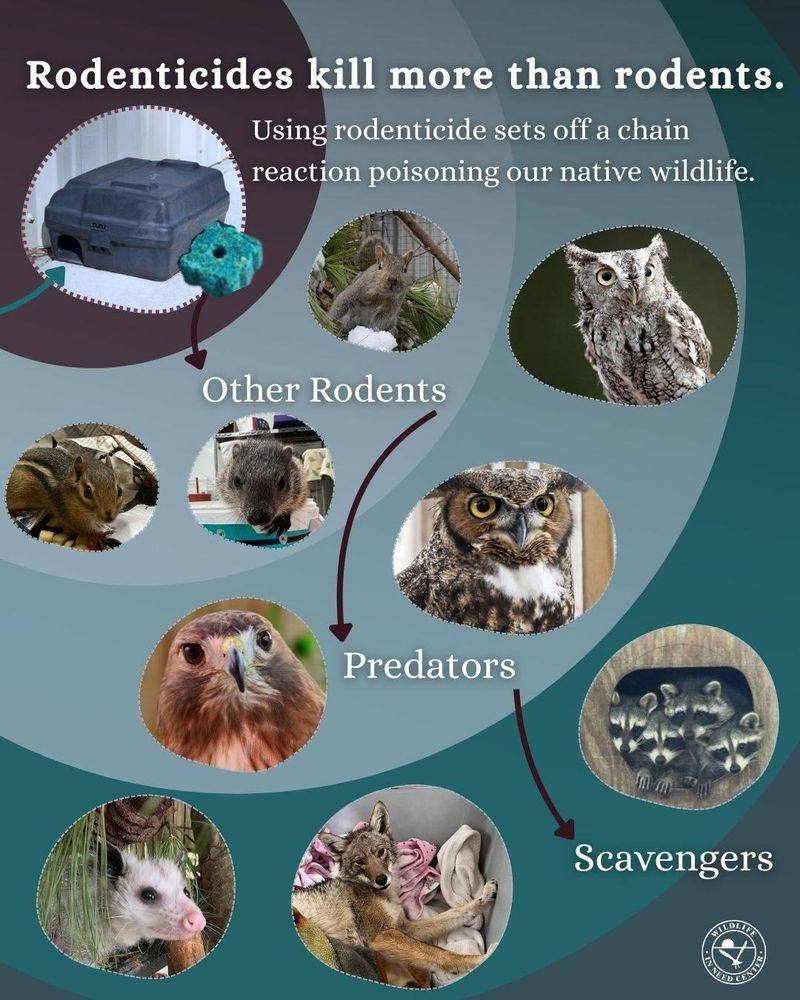
Rodenticides are sometimes the right tool for a confirmed rodent problem, but they carry risks that extend well beyond the target pest, and those risks are especially significant in yards where native predators like gopher snakes are present.
When a rodent eats a toxic bait and then moves slowly or dies above ground, it becomes easy prey for any predator in the area. A snake that eats a poisoned rodent can absorb the toxicant through that meal.
A population model published in PubMed examining Great Basin gophersnakes exposed to strychnine-poisoned pocket gophers modeled substantial long-term effects on snake populations under repeated exposure scenarios. That study used a specific modeled context and should not be read as a direct prediction for every California yard, but it illustrates that secondary exposure is a real pathway, not a theoretical one.
The U.S. Environmental Protection Agency also recognizes secondary exposure as a concern for reptiles and other predators in its rodenticide pesticide safety review, and ecological risk assessments such as the EPA bromethalin assessment document non-target exposure risks to wildlife beyond the intended pest.
The practical rules are straightforward. Never scatter bait loosely in areas where wildlife, pets, or children can reach it.
Use tamper-resistant bait stations that limit access to the target species. Follow the product label exactly, including California-specific restrictions that may apply to certain active ingredients in your area.
If a rodent control professional is involved, ask specifically about non-target exposure risks and what precautions are built into their approach. A gopher snake that patrols your yard is worth protecting from accidental poisoning, even when you have a legitimate rodent problem that requires treatment.
Protect the yard without treating the snake as the enemy
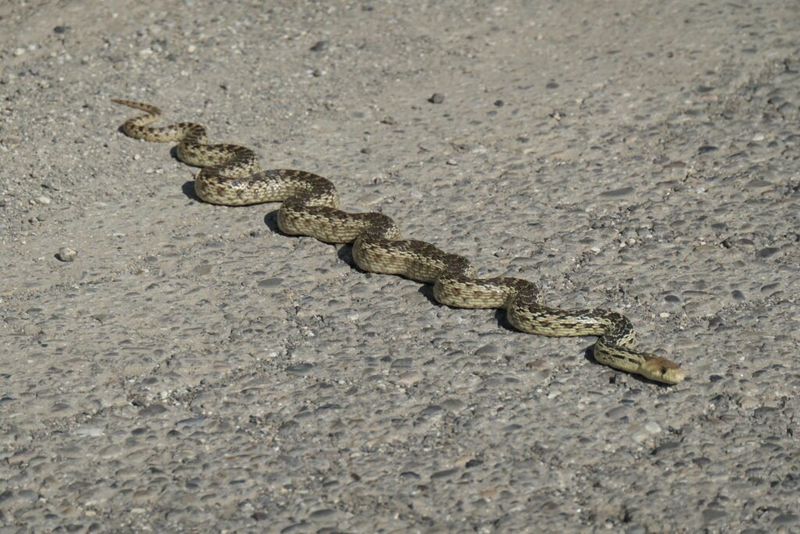
A gopher snake moving through your yard is, in most cases, doing exactly what it evolved to do: hunting, thermoregulating, and moving through available habitat. When the snake has a clear path away from people and pets, the simplest and most ecologically sound response is to leave it alone and let it go.
That decision becomes easier when the yard is already managed to reduce the conditions that create conflict. Controlling rodent food sources, clearing clutter near living areas, trimming ground-level vegetation, and sealing building gaps address the root drivers of both rodent activity and snake visits.
CDFW’s snake guidance consistently points to these habitat modifications as the foundation of long-term conflict reduction.
If signs of actual gopher damage appear – fresh crescent-shaped mounds, wilting plants with damaged roots – address that problem separately using the evidence-based methods described by UC IPM’s pocket-gopher management program. A gopher snake in the yard does not replace that work, and active plant damage should not be left unaddressed on the assumption that a predator will eventually handle it.
Gopher snakes provide a real but variable ecosystem service. Their presence may reduce some rodent activity over time, but neither keeping one nor removing one guarantees a particular outcome for your yard’s rodent population.
The most useful frame is not “ally versus enemy” but simply “native wildlife doing its job.” Give it space, manage what you can control, and the yard tends to take care of itself better than any single intervention could.