
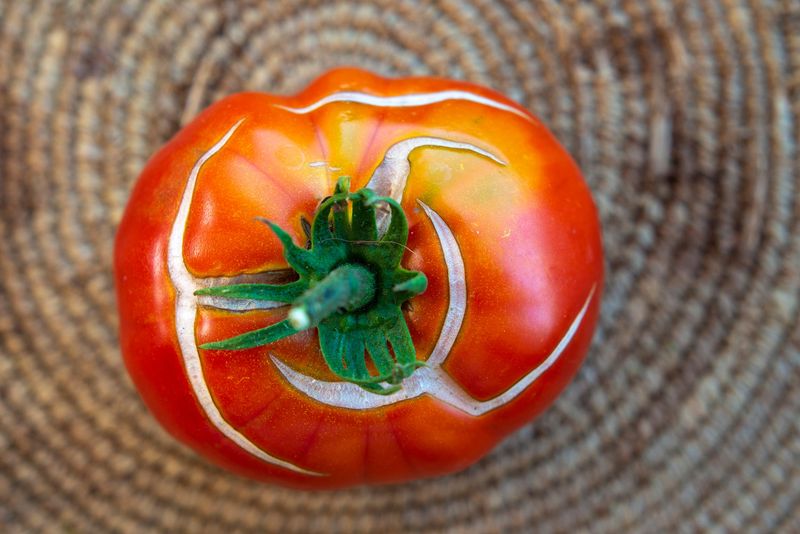
Pulling back a tomato plant’s leaves to find a ring of cracks circling the stem end is one of those garden moments that stops you cold. Those circular splits have a name, a clear cause, and a fix that most Southern gardeners can put into practice right now.
Understanding what actually drives the problem makes it far easier to protect the fruit still hanging on the vine.
Those rings usually mean the skin split during growth
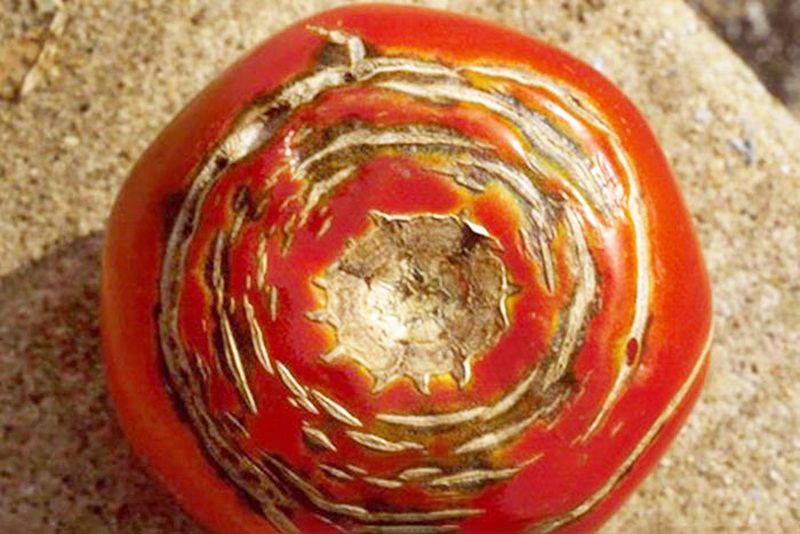
Circular cracks that form rings around the stem end of a ripening tomato go by a specific name: concentric growth cracks. University of Minnesota Extension’s tomato fruit crack diagnostic classifies them as an abiotic disorder, meaning no fungus, bacterium, or virus caused them.
The fruit’s own skin split under internal pressure, not because of any outside pathogen.
Knowing that distinction matters because it changes what you do next. You do not need to spray anything or pull the plant.
What you need to do is look more closely at how the crack runs so you can confirm what you are dealing with before adjusting your care routine.
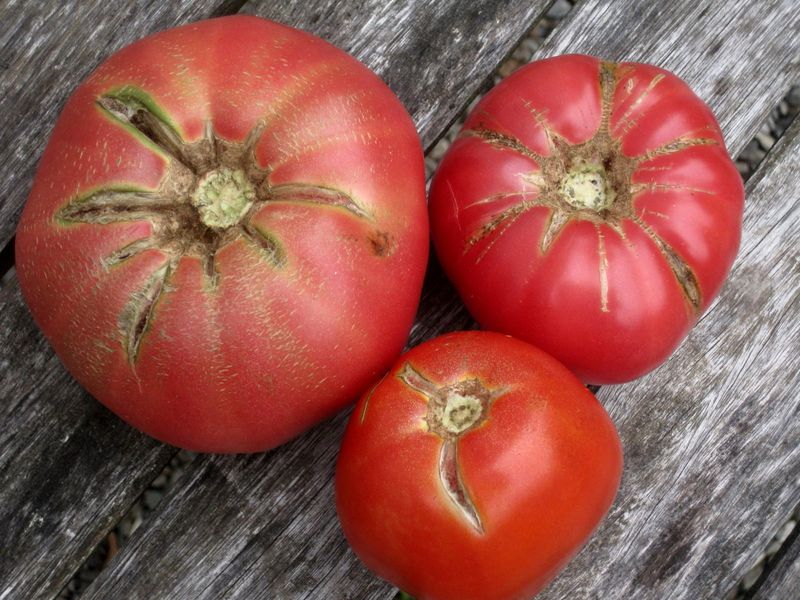
Concentric cracks circle the fruit in arcs, usually one to three rings stacked near the shoulder. Radial cracks are different: they run outward from the stem scar like spokes on a wheel.
Penn State Extension’s cracking guide notes that both types are commonly linked to rapid growth and fluctuating water availability, though their shapes and positions on the fruit differ clearly. Radial cracks tend to be longer and more jagged, while concentric cracks are smoother arcs that stay close to the stem end.
Spotting which type you have is the first step. If the rings circle the top of the fruit and the rest of the plant looks healthy, concentric growth cracking is the most likely explanation, and the rest of this article is aimed directly at that situation.
Heat sets the stage, but the dry-to-wet swing does the splitting
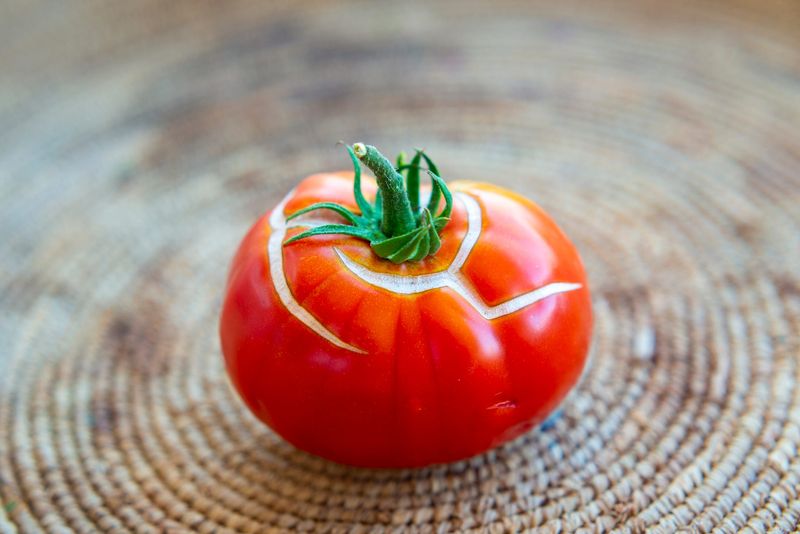
Plenty of gardeners blame late-summer heat when they find cracked tomatoes, and heat does play a real role, but it is not the whole story. The central mechanism is a sudden shift in water availability: soil that has been dry or stressed receives a heavy rain or a big dose of irrigation, and water rushes into the plant faster than the fruit’s skin can expand to accommodate it.
Pressure builds near the stem scar and the skin gives way in a ring.
Penn State Extension explains that the skin of a ripening tomato becomes less elastic as it matures, so fruit that is close to full color has less ability to stretch without tearing. Heat accelerates the rate at which fruit develops and ripens, which shortens the window during which the skin can still keep up with growth.
That is why late summer in Florida or Texas, when temperatures climb and afternoon storms dump water onto already-dry soil, is prime time for a round of concentric cracks.
Research published on PubMed confirms that tomato fruit continues growing during ripening, and that cuticle properties change as the fruit matures, affecting how well the skin can handle internal pressure. The University of Georgia Commercial Tomato Production Handbook associates increased cracking risk with temperatures around or above 90 degrees Fahrenheit combined with prolonged rain or wet soil, though that number is not a universal cutoff that applies equally to every variety or soil type.
Cultivar genetics, fruit size, direct sun exposure, and how heavily the plant is cropping all modify how severe the cracking becomes. Heat alone rarely explains the pattern; the dry-to-wet moisture swing is almost always part of the story.
Look at the whole fruit before calling it a crack problem
Not every split or blemish on a tomato is a growth crack, and misidentifying the problem can lead to the wrong response. A careful look at the shape, texture, and color of the marks, combined with a check of the rest of the plant, will usually point you in the right direction.
Rain check is a common look-alike. Rather than a few larger open rings, rain check produces many fine, rough, corky micro-cracks that often appear on the shoulders of the fruit.
The surface feels almost sandpapery. The UGA Commercial Tomato Production Handbook notes that the exact cause of rain check is still not fully resolved, though rainfall and cultivar susceptibility are associated with it.
Rain check is different enough in texture and distribution that most gardeners can tell them apart once they know what to look for.
Early blight is another condition that sometimes gets confused with growth cracking, but the two look quite different up close. Early blight produces dark, leathery, often raised target-like lesions on fruit, leaves, or stems.
It typically starts on lower foliage and is accompanied by leaf spotting or defoliation spreading upward through the plant. Penn State Extension’s tomato disease and disorder guide helps distinguish these patterns clearly.
Yellow or brown rings that are not physically split open deserve extra attention. UF/IFAS research on common tomato diseases in Florida describes several diseases that produce concentric fruit lesions, particularly when the rings are sunken, dark, expanding, or accompanied by plant-wide symptoms.
If the marks look like that, or if the plant itself is declining in ways that go beyond a few cracked fruits, a disease or virus may be involved rather than simple growth cracking.
Cracked fruit needs prompt, condition-based triage
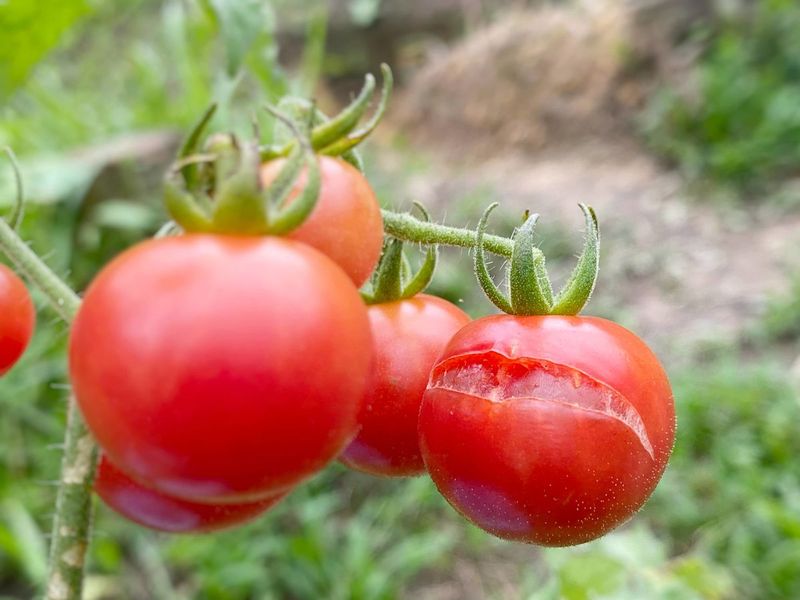
Once a crack appears, the clock starts running. An open split in the skin creates a path for fungi, bacteria, and insects to reach the soft interior.
Picking affected fruit as soon as you notice the cracking gives you the best chance of using it before decay sets in.
University of Arizona Cooperative Extension guidance on tomato challenges notes that damaged fruit can be eaten after the affected area is removed, but that advice applies most cleanly to cracks that are superficial and free of any sign of rot. If the crack is a clean, shallow split and the rest of the tomato smells and looks fine, trim away the cracked area and use the fruit right away.
Do not leave it on the counter for a day or two hoping it will improve.
Some fruit will not be salvageable, and it is worth knowing the clear signals. Mold growing in or around the crack, soft decay spreading into the flesh, a foul or fermented odor, or extensive mushy areas are all reasons to discard the tomato rather than try to rescue it.
Crack depth by itself is not a reliable discard rule; what you can see and smell tells you more than how far down the split goes. Prompt harvesting is the most practical triage tool available, so checking the garden every day or two during peak cracking conditions is time well spent.
Steadier root-zone moisture prevents the next pressure spike
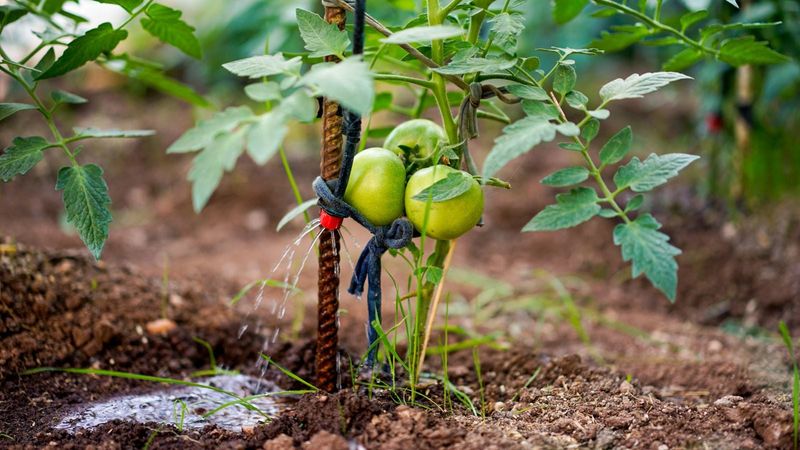
Keeping soil moisture more consistent is the single most effective step a gardener can take to reduce concentric cracking going forward. The goal is to avoid the pattern where plants dry down significantly and then receive a large surge of water all at once, whether from irrigation or a summer thunderstorm.
University of Minnesota Extension’s tomato disorder resource recommends avoiding cycles of wilting followed by heavy watering, and applying water slowly at the soil line rather than overhead. Drip irrigation or a soaker hose works well for this because water moves into the root zone gradually, giving the plant a steadier supply rather than a sudden flood.
UMN Extension’s irrigation guidance for vegetables reinforces that slow, targeted delivery at the root zone is more effective than broadcast watering for maintaining consistent soil moisture.
Mulch is a useful partner to irrigation. A layer of organic mulch around the base of the plant reduces evaporation from the soil surface and moderates how quickly the root zone dries between waterings.
Keep mulch around the stem rather than piled tightly against it, which can trap moisture near the crown and create its own problems.
Adjust your watering after rainfall rather than sticking to a fixed schedule. Penn State Extension points out that cracking can occur in any growing setting when root-zone moisture fluctuates, including containers, raised beds, sandy soils, and heavy clay.
Containers and sandy soils dry out especially fast in Southern summer heat and may need more frequent, smaller applications of water. UF/IFAS fertigation guidelines for Florida tomato production illustrate how frequently irrigation must be adjusted for local soil and conditions, a reminder that no single calendar schedule fits every garden.
Let actual soil moisture, not the calendar, guide when you water.
A healthy canopy protects ripening fruit from extra stress
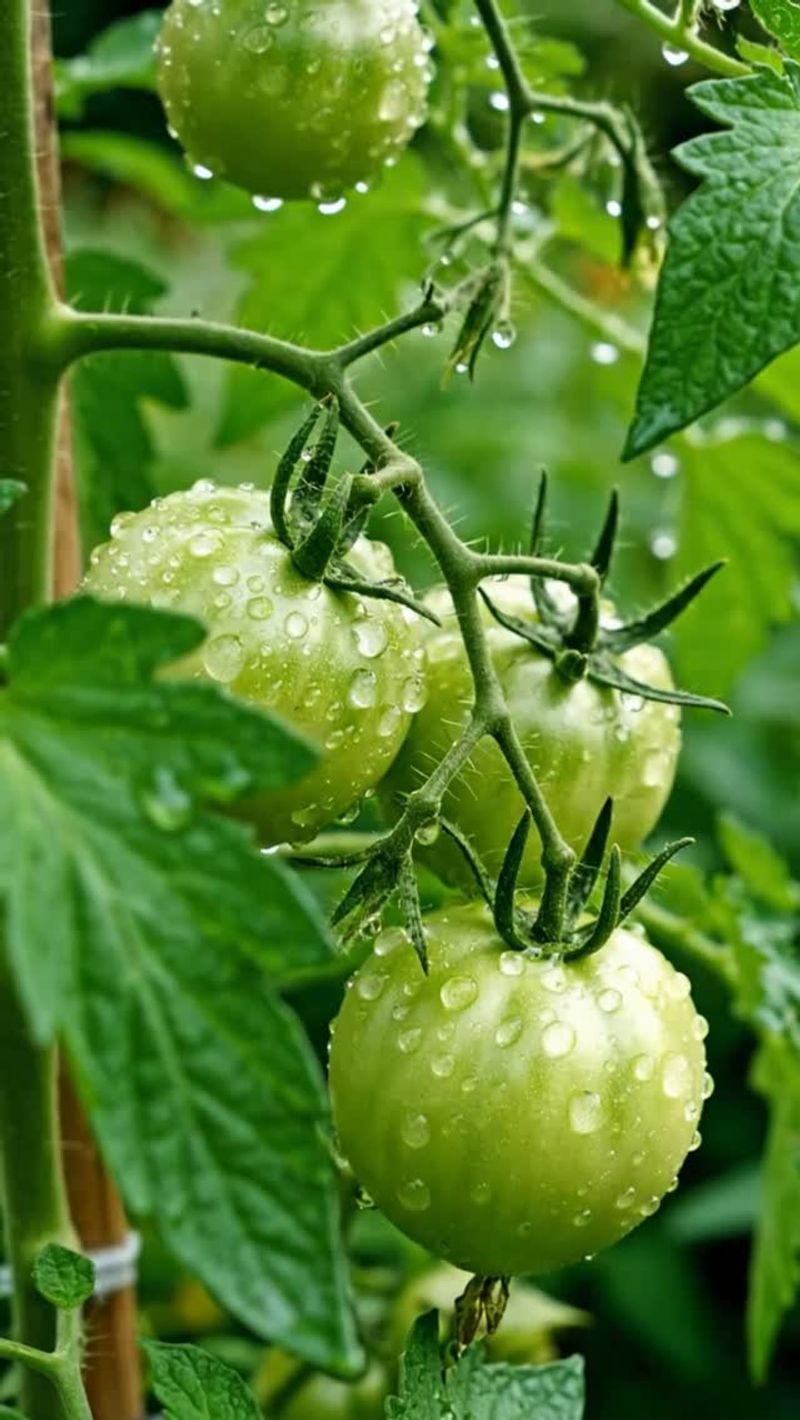
When tomatoes start cracking in hot weather, some gardeners respond by removing leaves to let more air and light reach the fruit. That impulse can backfire badly.
Foliage serves as a natural shade canopy that moderates the temperature of the fruit hanging beneath it, and removing too much of it can expose tomatoes to direct sunlight that raises surface temperature and compounds the stress that contributes to cracking.
The UGA Commercial Tomato Production Handbook advises against removing excessive foliage with the intent of speeding ripening, especially during intense heat. A well-leafed plant shades its own fruit, reduces the risk of sunscald, and helps keep conditions around the developing tomatoes more moderate than they would be on a stripped plant baking in afternoon sun.
Aggressive pruning during a heat wave is particularly risky. Suddenly exposing fruit that has been developing in shade to full direct sun can trigger a cascade of problems beyond cracking, including sunscald, which appears as white or tan papery patches on the side of the fruit facing the sun.
The better approach is to remove only clearly dead, diseased, or badly damaged growth, and to leave a healthy working canopy in place through the rest of the season. Protecting what the plant has already built costs nothing and can make a measurable difference in how many tomatoes come through the next stretch of heat in usable condition.
Earlier harvest and cultivar choice can lower future losses
Two choices available to every home gardener can meaningfully reduce cracking losses beyond the current watering season. The first applies right now; the second shapes what you plant next year.
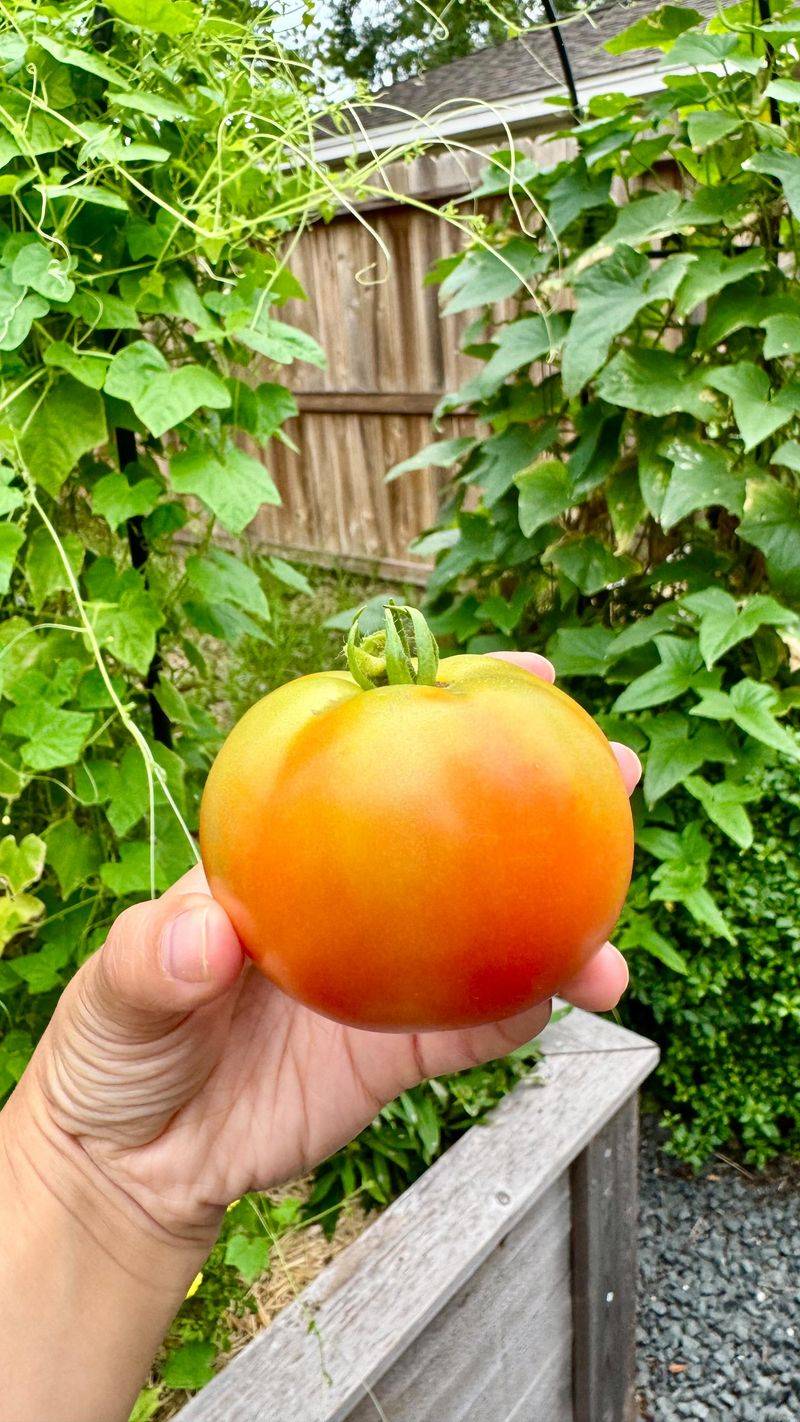
Harvesting tomatoes at the breaker-to-pink stage, rather than waiting for them to reach full red color on the vine, removes fruit from the period of greatest cracking risk. A tomato at the breaker stage has already committed to ripening and will finish indoors at room temperature without losing quality.
Penn State Extension identifies early harvest as a risk-reduction tactic for late-season cracking, though it does not guarantee protection if conditions are severe. Picking fruit a few days earlier is a simple, no-cost adjustment that costs you nothing in flavor while keeping more tomatoes out of the discard pile.
For future plantings, cultivar selection is worth serious thought. University of Minnesota Extension recommends choosing varieties described as crack-tolerant or crack-resistant when cracking has been a recurring problem.
Large-fruited types and many heirloom varieties tend to be more susceptible, though susceptibility varies by cultivar and growing conditions. UF/IFAS cultivar selection guidance for Florida highlights the importance of matching variety to local conditions, which includes cracking tolerance in hot, wet Southern summers.
Mississippi State University Extension reinforces that no variety is immune under severe dry-wet cycles or extreme weather, so crack-resistant cultivars reduce risk rather than eliminate it.
The practical fix is consistency, not a miracle amendment
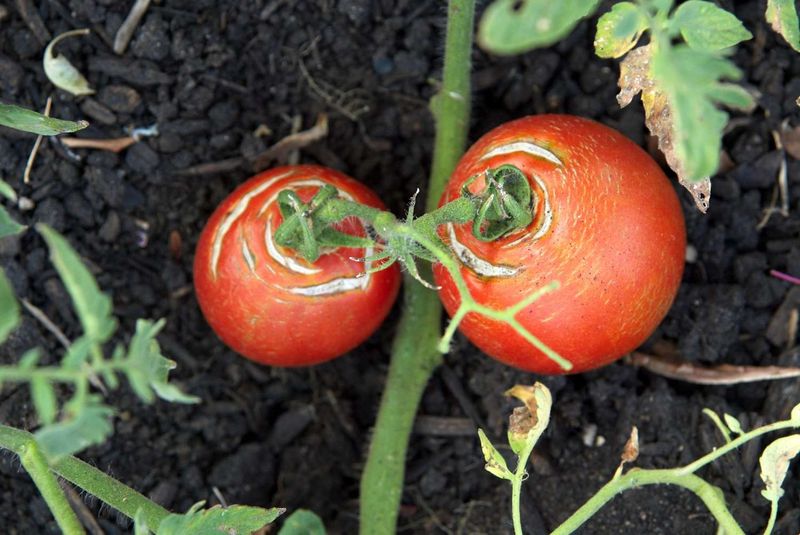
The checklist for reducing concentric cracking is short and manageable: confirm the circular rings are growth cracks rather than a disease lesion, keep root-zone moisture as even as possible, leave a healthy canopy in place, pick vulnerable fruit at the breaker-to-pink stage, and consider a less crack-prone variety for next season.
Skip the calcium sprays and Epsom salt. University of Arizona Cooperative Extension specifically rejects Epsom salt as a remedy for related tomato disorders, and concentric growth cracking is not the same disorder as blossom-end rot, so calcium supplements are not a supported general fix either.
Deliberately underwatering to “toughen” the fruit only sets up the next damaging moisture surge.
University of Minnesota Extension and Mississippi State University Extension both acknowledge that even good management cannot prevent every split when heavy rain, extreme heat, or rapid ripening combine. Consistency in the root zone is the most reliable tool available, and the gardeners who stick with it tend to lose far fewer tomatoes to the problem season after season.