
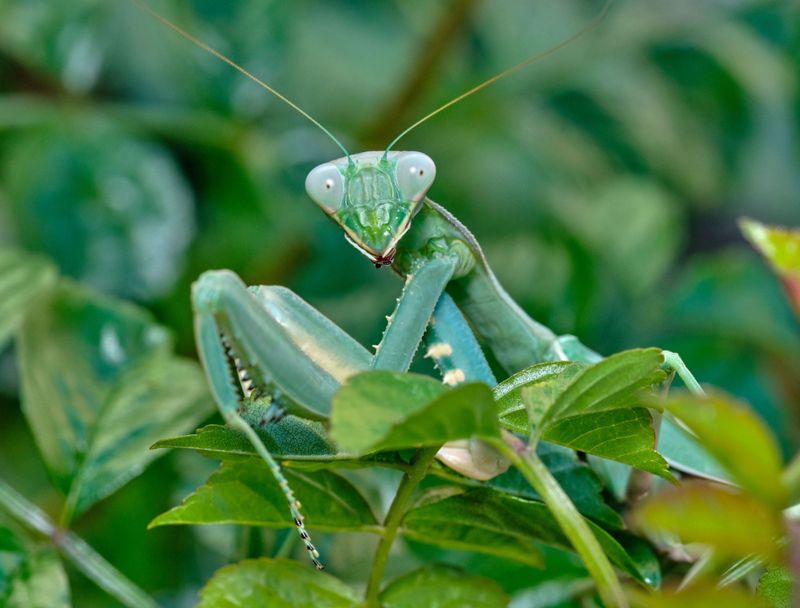
Spotting a praying mantis perched on your tomato plant feels like finding a tiny garden bodyguard, and plenty of California homeowners assume it is busy hunting every aphid and caterpillar in sight. The reality is a little more complicated, and understanding it can actually help you make smarter choices for your yard.
Mantises are fascinating creatures worth protecting, but assigning them a pest-control job they were never built for can leave your plants worse off and your garden’s real allies undervalued.
A California mantis may eat garden pests, but it does not patrol your beds
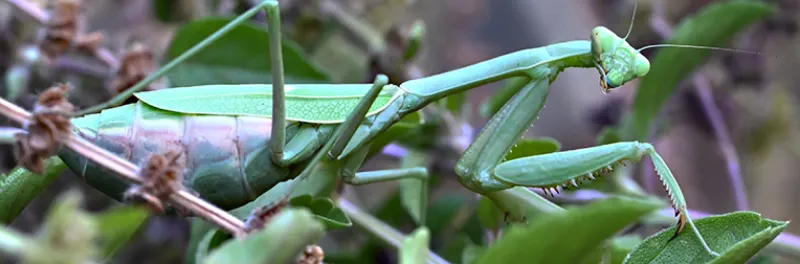
Watching a praying mantis hold perfectly still on a flower stalk for an hour straight is not laziness. That stillness is exactly how mantises hunt.
UC IPM’s guide to mantids describes them as ambush predators that wait motionless on vegetation, especially near flowers, and lunge only when active prey comes within reach of their spined forelegs. A mantis does not roam your beds looking for trouble the way a ground beetle might.
Because a mantis stays in one spot for long stretches, the insects it catches are mostly whatever happens to wander past. If an aphid crawls by, it may get eaten.
If a caterpillar climbs the same stem, that is fair game too. But a mantis has no particular interest in clearing out a colony of aphids clustered on the underside of a leaf two feet away, because it will simply never go looking for them.
UC IPM goes further than calling mantises passive hunters. UC ANR’s Real Dirt blog notes that mantises are not considered effective biological pest-control agents, partly because they are generalists with a broad diet and partly because any single individual eats relatively few insects over its lifetime.
Utah State University Extension echoes this, pointing out that mantises are not among the most effective biological-control agents available to gardeners.
None of that means a mantis in your garden is a problem. Leaving one undisturbed costs you nothing and adds a genuinely interesting creature to your yard.
The correction here is about expectation: a mantis may eat an aphid or caterpillar it encounters, but its ambush behavior and generalist diet do not add up to dependable, garden-wide pest suppression.
Which garden insects can a California mantis eat?
Mantises are not picky, and their menu is broader than most homeowners realize. Documented prey includes aphids, caterpillars, leafhoppers, flies, beetles, moths, and grasshoppers.
Because mantises target medium-sized, active insects that come within striking range, winged or mobile prey tends to dominate what they actually catch in practice.
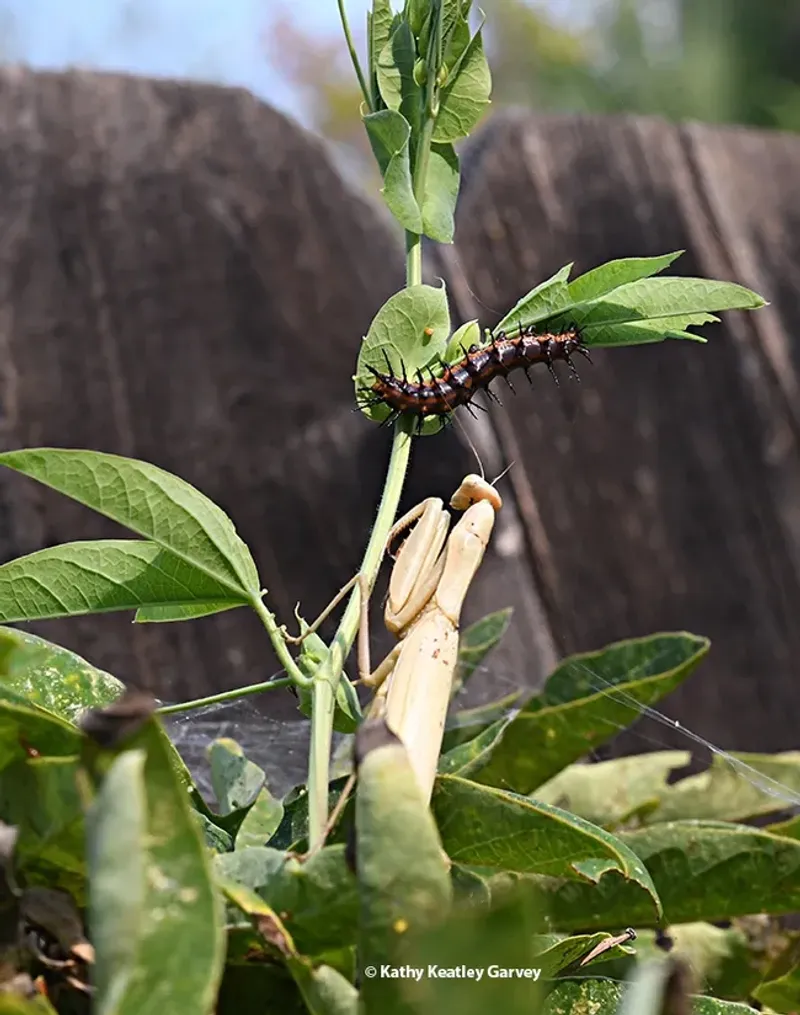
Caterpillars are a legitimate part of that list. A UC ANR field observation documents a mantis eating a Gulf fritillary caterpillar, which is a real-world example of the kind of soft-bodied larva a mantis can handle when one crosses its path.
That single documented case illustrates capability, not a reliable pattern of caterpillar suppression across a garden.
Aphids are physically small relative to an adult mantis, but they are still recorded prey. UF/IFAS entomology guidance lists aphids, caterpillars, leafhoppers, and other soft-bodied insects among mantis prey items.
A nymph mantis, which hatches at a tiny size, may actually be better scaled to catch small aphids than a full-grown adult is.
The critical distinction worth repeating plainly: “can eat” is not the same as “will reduce an infestation.” A mantis that eats three aphids from a colony of three hundred has not solved an aphid problem. Aphid colonies reproduce rapidly, and a single sit-and-wait predator with no preference for aphids over any other prey is not going to outpace that reproduction.
Leafhoppers, small moths, and flies are probably more typical mantis prey in California gardens simply because those insects are active and move through the mantis’s territory on their own.
Understanding the prey list is useful because it sets honest expectations. A mantis is a real predator of real garden pests, and that is worth appreciating.
What it is not is a targeted control tool for any specific insect problem you are trying to solve.
The same mantis may hunt pollinators and other garden allies
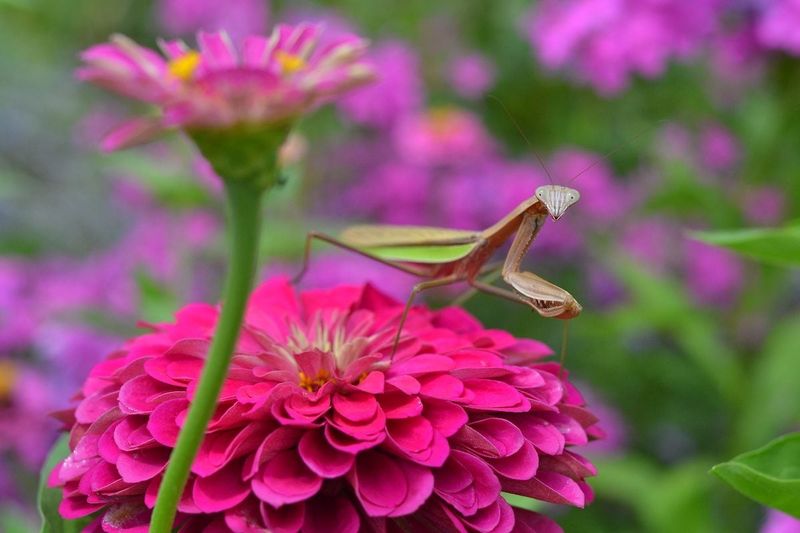
A mantis sitting on a flowering plant is not necessarily hunting aphids. Flowers attract a steady stream of flying visitors, including bees, butterflies, syrphid flies, and parasitoid wasps, and a mantis positioned there has access to all of them.
UC IPM describes mantis feeding as indiscriminate, meaning the mantis does not sort prey by whether it is a pest or a beneficial insect before striking.
That indiscriminate feeding has real consequences for the garden community. A mantis that catches a honeybee removes a pollinator.
One that catches a syrphid fly or a lacewing removes an insect whose larvae feed heavily on aphids. A parasitoid wasp eaten by a mantis is one that will never lay eggs inside a caterpillar.
UC ANR notes that mantises are harmless to humans but are not automatically beneficial to every garden system because of this broad predation.
Research also suggests that mantis presence near flowers can affect pollinator behavior beyond direct predation. A controlled pavilion study found that butterflies avoided flowers occupied by mantises, even when no predation occurred.
A related line of research published in PMC explored how predator cues shape foraging decisions in pollinators. These are findings from controlled experimental settings, not proof that a single mantis in your California yard is measurably reducing pollination.
The practical takeaway is more modest: a mantis on your zucchini flowers or lavender may be targeting the bees and butterflies visiting those blooms, not the pests feeding on nearby foliage.
None of this is a reason to remove a mantis you find in your garden. It is a reason to see the mantis clearly as a generalist predator rather than a one-sided ally.
Its presence is neither purely helpful nor purely harmful; it is simply one part of a complex yard ecosystem that works best when no single species is over-relied upon.
Support a mantis through passive conservation

The most effective thing a California homeowner can do for a mantis they spot in their yard is simply leave it alone. Avoid killing it, avoid moving it unnecessarily, and avoid disturbing any egg case attached to a nearby stem or fence post.
UC IPM recommends passive conservation as the appropriate homeowner response, framing it as supporting garden biodiversity rather than setting up a pest-control service.
Varied vegetation matters more than any single plant choice. A garden with layers of different plants, including shrubs, perennials, ground covers, and flowering annuals, gives mantises more places to wait and hunt.
That same structural variety also supports lacewings, lady beetles, syrphid flies, and parasitoid wasps. UC IPM’s biological control guidance recommends flowering and nectar-producing plants specifically to support those natural enemies, which are more tightly linked to aphid and caterpillar suppression than mantises are.
Pesticide restraint is where passive conservation has the biggest practical payoff. Broad-spectrum insecticides do not distinguish between a pest and a predator.
Spraying for aphids with a pyrethroid, for example, can kill mantises, lacewings, parasitoid wasps, and syrphid flies in the same application. UC IPM’s guidance on protecting natural enemies and pollinators advises avoiding broad-spectrum products whenever less-toxic options exist, particularly around flowering plants where beneficial insects concentrate.
Framing this as “mantis conservation” is slightly too narrow. The real goal is maintaining a yard where multiple natural-enemy species can survive and reproduce.
A mantis benefits from that environment, but so do the insects that more reliably target your specific pest problems. Protecting the whole community, rather than any single predator, is the approach that actually moves the needle on garden health.
Leave an outdoor mantis egg case outdoors
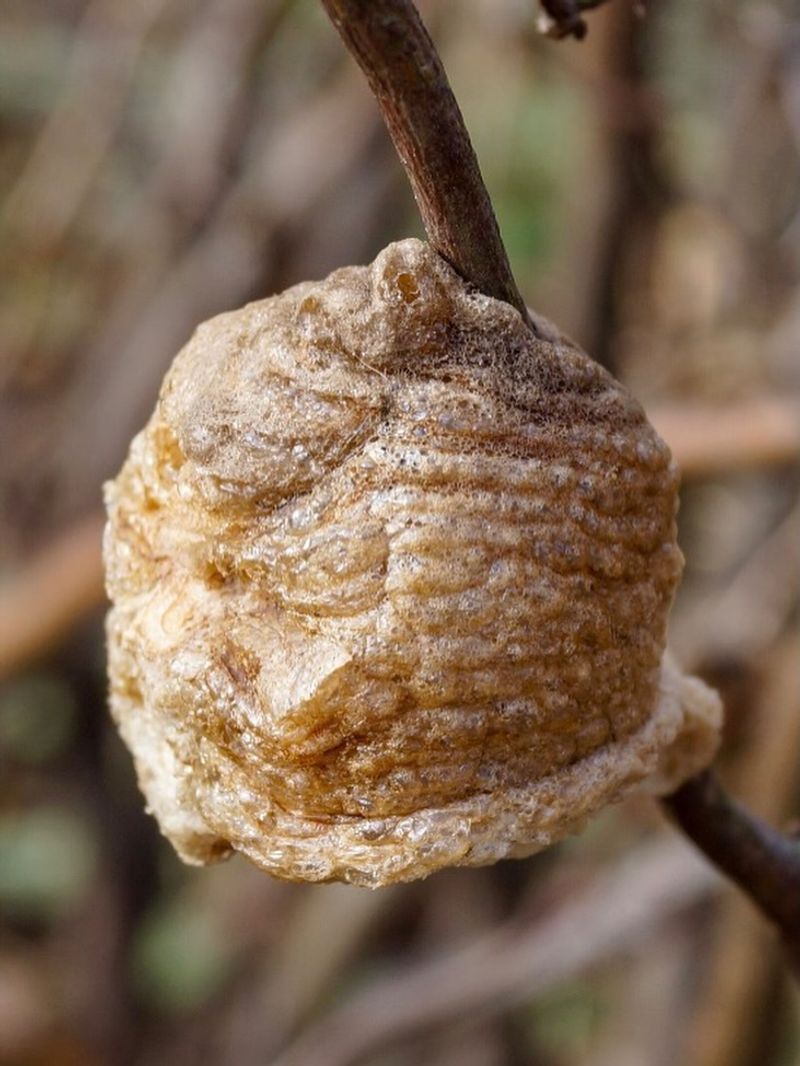
Finding a walnut-sized, tan, foam-textured mass on a garden twig in fall or winter almost certainly means you have a mantis egg case, called an ootheca. California mantises lay their oothecae in autumn, and the eggs stay inside that hardened foam structure through the cool months.
UC IPM notes that nymphs hatch from late winter into spring, and nymphs and adults are generally present in California gardens from spring through fall, with one generation per year.
The most important rule about an outdoor ootheca is to leave it where it is. University of Maryland Extension warns that bringing an egg case indoors exposes it to household warmth, which can trigger premature hatching weeks or months before any outdoor food source is available for the tiny nymphs.
An ootheca attached to a shrub stem or fence rail in your yard is already in the right place. Mark it with a small flag or ribbon if you are worried about accidentally pruning the branch, then leave it alone until spring.
Managing expectations about what hatches matters too. An ootheca can contain a large number of eggs, but that does not mean your garden will soon have a mantis on every plant.
Utah State University Extension points out that nymph mortality, dispersal to neighboring yards, and cannibalism among siblings all substantially reduce the number of mantises that survive to adulthood. A successful hatch is genuinely interesting to observe, but it does not translate into a sustained population of pest-hunting adults patrolling your beds.
Leaving an ootheca undisturbed is a low-effort way to support local mantis populations as part of a broader commitment to garden biodiversity. Treat it as you would a bird nest: something worth protecting simply because a living creature is using it, not because it will solve a specific garden problem.
Do not buy mantis egg cases to solve an infestation
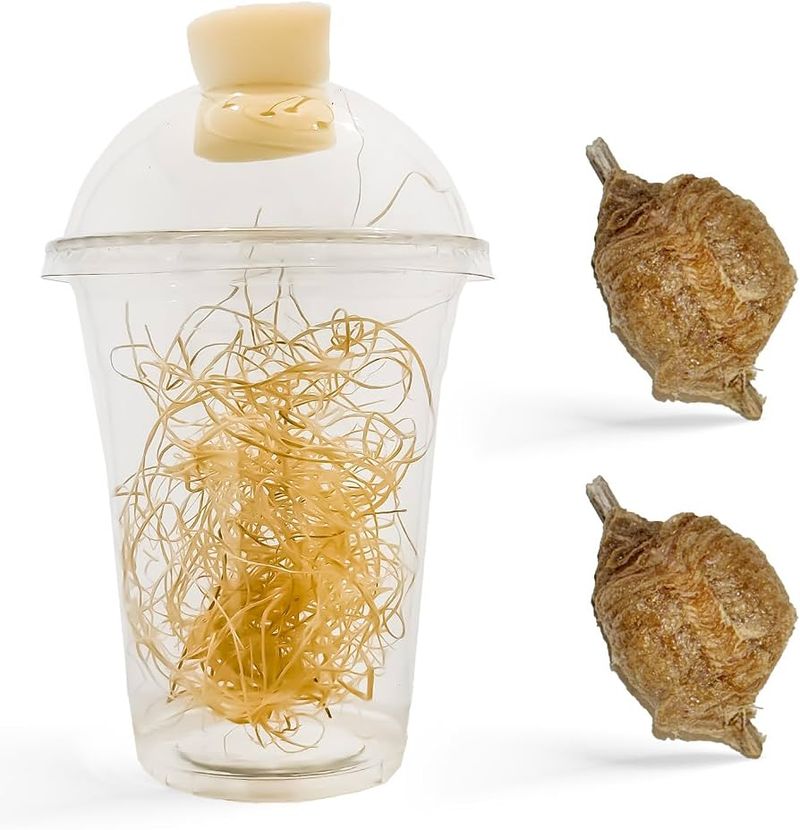
Garden centers and online retailers sell mantis egg cases as a biological pest-control product, and the marketing often implies they will clear out aphids or caterpillars once released. That promise does not hold up under scrutiny.
Utah State University Extension states plainly that commercially purchased mantids are not among the most effective biological-control agents, because they are broad-spectrum predators that may consume pollinators, other natural enemies, and one another rather than targeting the pest you are trying to manage.
The prey problem is the same whether a mantis hatched in your yard or from a purchased egg case. A released mantis will eat whatever active insect comes within reach, which may be an aphid, a caterpillar, a honeybee, a syrphid fly larva, or a sibling nymph.
Buying egg cases does not give you a targeted aphid hunter; it gives you more generalist predators with the same indiscriminate diet already described by UC IPM’s mantid profile.
Species identity adds another layer of complexity. California has both native mantis species, including the California mantid (Stagmomantis wheeleri) and the bordered mantid (Stagmomantis limbata), and several introduced species such as the Chinese, European, Mediterranean, and South African mantises.
A homeowner cannot reliably determine which species is present from color alone, because some species occur in multiple color phases. Commercially sold egg cases frequently contain introduced species, and releasing nonnative mantises raises ecological questions that go beyond simple pest management.
The bottom line is straightforward: if aphids or caterpillars are causing real damage in your garden, purchasing mantis egg cases is not a practical solution. The nymphs that hatch will disperse, cannibalize one another, and feed on whatever prey they encounter, with no particular preference for the insects you want gone.
For actual infestations, targeted IPM methods covered in the next section will serve you far better.
Use integrated pest management for real aphid or caterpillar damage
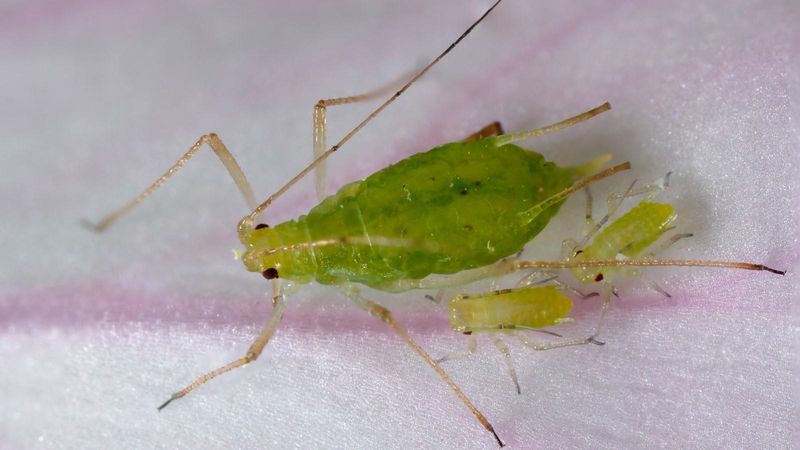
When aphids or caterpillars are actually damaging your plants, the starting point is accurate identification. Knowing which pest you have tells you how it reproduces, when it is most vulnerable, and which natural enemies already present in your yard are most likely to help.
UC IPM’s integrated pest management framework begins with identification and monitoring precisely because treatments chosen without that information often miss the pest’s vulnerable stage or harm the beneficial insects already working on the problem.
For aphids specifically, several physical controls work well before any product is applied. UC IPM’s aphid management guidance recommends pruning heavily infested leaves and shoots, then knocking remaining aphids off stems and foliage with a firm stream of water from a garden hose.
Both methods are free, immediate, and safe for every other organism in your yard. UC IPM also highlights ant management as an underappreciated step: ants actively protect aphid colonies from predators in exchange for honeydew, so placing sticky barriers on tree trunks or using bait stations to reduce ant access can allow lady beetles, lacewings, and parasitoid wasps to do their work unimpeded.
Established plants can often tolerate moderate aphid feeding without serious long-term harm, so monitoring before acting is genuinely useful, not just a procedural formality. If damage is escalating, habitat support for more targeted natural enemies is a practical next step.
UC IPM’s biological control guidance recommends flowering, nectar-producing plants to support lacewings, lady beetles, syrphid flies, and parasitoid wasps, all of which have much tighter predator-prey relationships with aphids and caterpillars than mantises do.
When a pesticide becomes necessary, the approach matters as much as the product choice. Identify the pest, confirm the damage threshold, try nonchemical methods first, then select the least-toxic effective option.
UC IPM’s pesticide stewardship guidance advises against applying any insecticide to flowering plants because of the risk to pollinators and natural enemies foraging there. Always follow the product label, which is a legal requirement, and avoid broad-spectrum treatments when a targeted product will handle the specific pest.
Enjoy the mantis without assigning it the wrong job
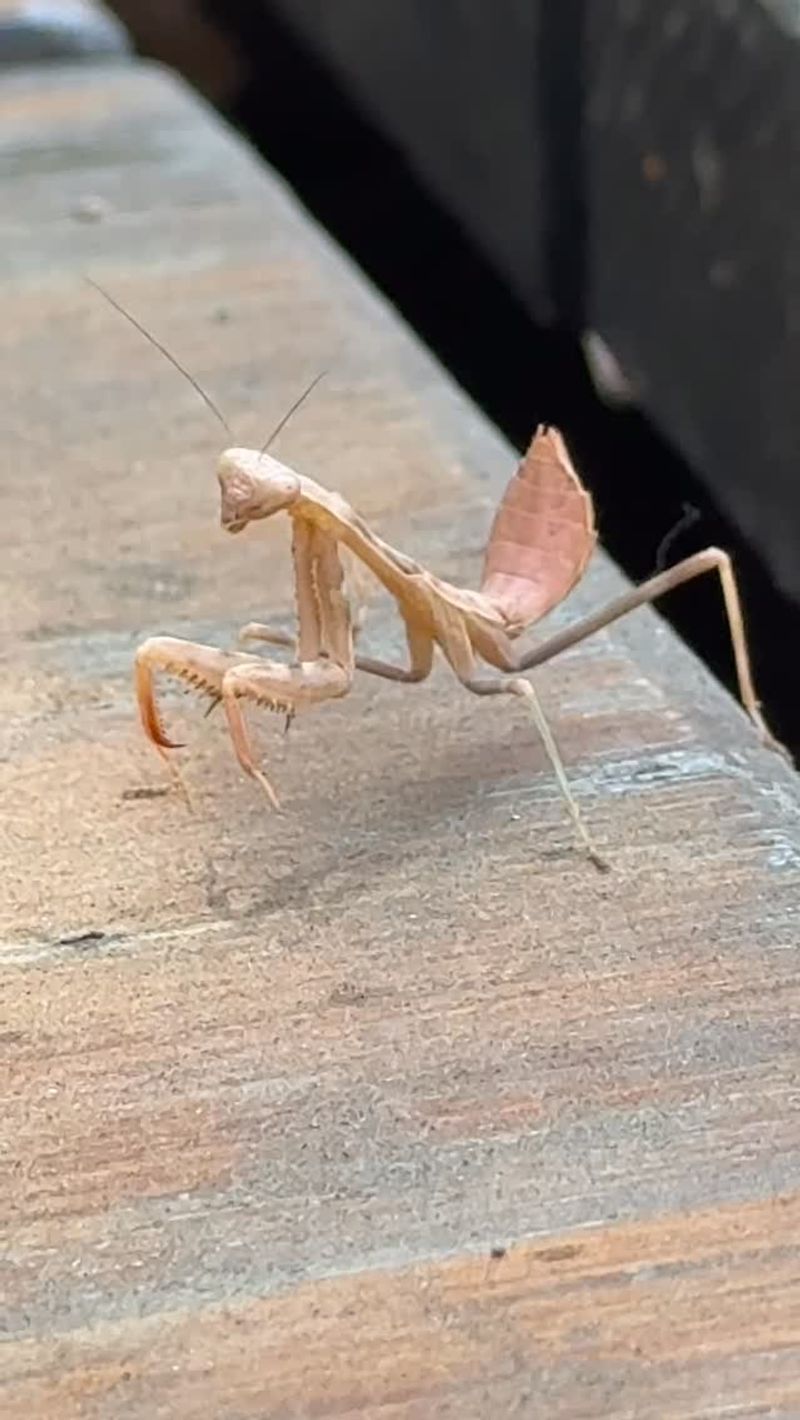
A mantis in your California garden is worth appreciating on its own terms. It is a capable, visually striking predator that has found enough habitat and prey in your yard to survive, and leaving it undisturbed costs nothing while adding genuine biodiversity to your outdoor space.
UC IPM frames passive conservation as the right homeowner response, and that framing holds whether the mantis you spot is a native species or one of California’s several introduced ones.
Managing aphids and caterpillars is a separate task that calls for observation, identification, and targeted integrated pest management rather than reliance on a generalist predator with no particular loyalty to your problem plants. The mantis may occasionally eat a pest it encounters, and that is a small bonus worth nothing more than a quiet acknowledgment.
Wildlife conservation and pest control are both worthwhile garden goals, but they work best when kept in their own lanes. Support the mantis because it belongs in a healthy California yard, and address damaging insect populations with methods designed for the actual problem.