
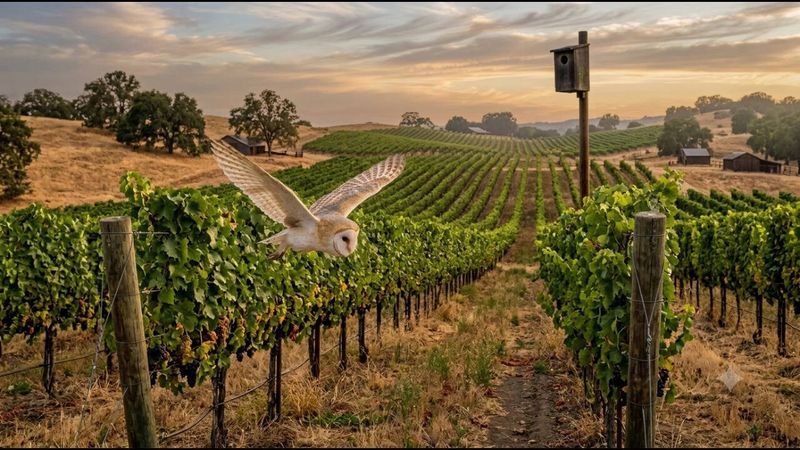
Barn owls are one of California’s most effective nocturnal hunters, quietly patrolling fields and open yards for mice, voles, and other small rodents while most homeowners sleep. A well-placed nest box can give a local pair a place to breed and roost, potentially adding natural predation pressure to your property.
That said, a box is not a guaranteed exterminator, and understanding what owls can and cannot do will help you make a smarter decision for your yard.
A nest box may help only where barn owls can hunt
California barn owls eat mice, voles, shrews, small rats, and occasionally pocket gophers and ground squirrels, making them genuinely useful predators where conditions are right. According to the California Department of Fish and Wildlife life history account for barn owls, this species is strongly tied to open and semi-open habitats across the state, from coastal grasslands to inland valley farmland.
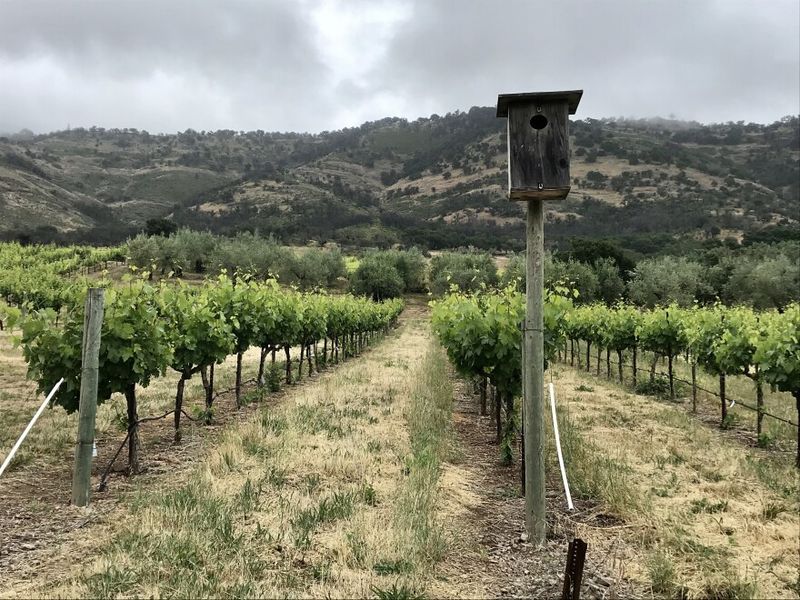
The most concrete California research on nest boxes and rodent control comes from vineyards, not residential neighborhoods. A 2022 Napa Valley vineyard study found that gopher activity declined during peak barn-owl hunting pressure near occupied boxes, while mouse abundance also declined but not significantly enough to draw firm conclusions.
The authors described the findings as limited and inconclusive for some prey categories.
More recent work pushed the evidence further. A 2026 Napa Valley study reported 38 to 52 percent reductions in predominantly deer-mouse abundance across observed hunting-pressure levels.
That is a promising result for agricultural integrated pest management in open vineyard landscapes, but it does not translate directly to a small suburban lot surrounded by fences and buildings.
For gopher problems specifically, UC IPM’s pocket gopher guidance states plainly that barn owls are unreliable for gopher control in small areas such as yards. The first decision rule for any homeowner considering a box is simple: if your property connects to open fields, grassland, pasture, orchard, or comparable semi-open space with active prey populations, a box is worth considering.
If your yard is enclosed by dense canopy, surrounded by pavement, or too small to support regular owl activity, a box is unlikely to change your rodent situation.
What a box can and cannot change
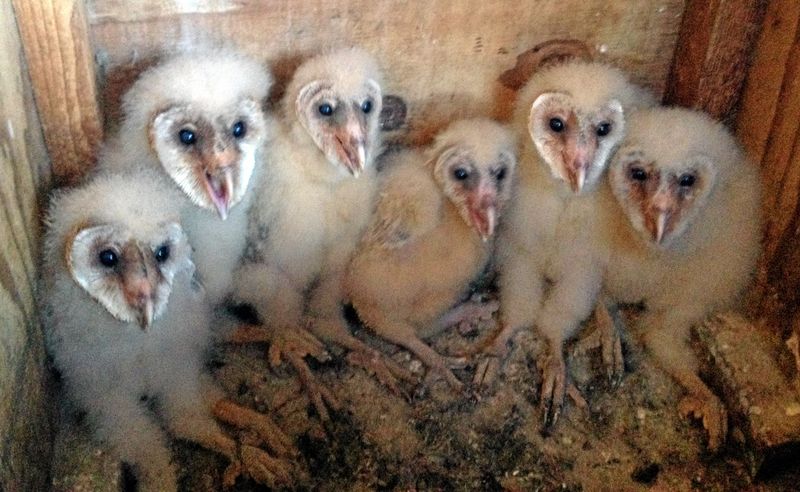
A nest box gives barn owls a place to breed or roost. What it cannot do is control where those owls choose to hunt each night.
According to the Audubon Society’s barn owl field guide, barn owls are primarily nocturnal hunters whose movements extend well beyond any single property, shifting toward areas where prey happens to be most available on a given night.
The 2026 Napa Valley research suggests that both direct predation and the perceived risk of predation may reduce rodent activity in areas where barn owls are actively hunting. The same study found that vegetation structure could influence how much rodents exposed themselves to owl predation, which is an interesting finding for agricultural landscape managers.
For a homeowner, it means any rodent benefit depends on whether owls are actually hunting your property regularly, not just whether a box sits in your yard.
A 2018 California review of barn owls in vineyard pest management identified major unanswered questions: how many rodents owls actually remove, whether that removal reduces damage enough to matter, and how landowners could optimize owl activity. Those questions remain partially open, and residential yards present additional complexity that vineyard research does not address.
Barn owls also respond differently to different prey. Larger adult rats and deep-burrowing gophers are less consistently taken than smaller rodents or juvenile animals.
A box may contribute to natural predation pressure on mice and voles, but homeowners should not count on it to solve a serious rat or gopher infestation on its own. The UC IPM pocket gopher guidance is direct on this point: targeted trapping and exclusion are more reliable tools for active gopher damage.
Choose the hunting landscape before you buy the box
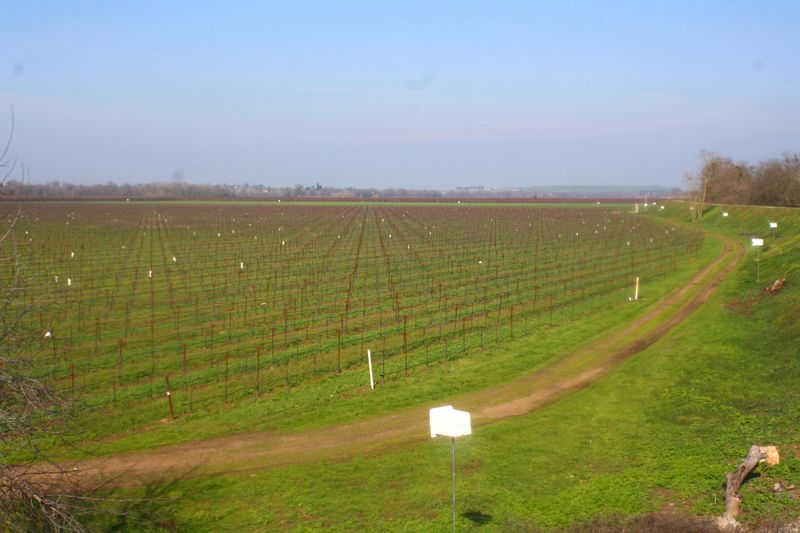
Before purchasing any hardware, walk the property and look honestly at what surrounds it. NestWatch’s nest box placement guidance identifies fields, grassland, marsh edges, pasture, orchards, and vineyards as the habitat types where barn owls are most likely to forage successfully.
A yard that backs up to a weedy field or an agricultural edge has a realistic chance of attracting a hunting owl. A yard enclosed by a tall wooden fence, dense tree canopy on all sides, or surrounded by paved streets offers far less appeal.
Habitat management should support open hunting areas, not create cover that helps rodents thrive near the house. The 2026 Napa Valley research found that vegetation structure can influence predation risk, which is useful context for vineyard managers.
For homeowners, the practical translation is different: keep grassy areas mowed short enough for an owl to spot prey from above, but avoid piling brush, deep mulch, or dense ground cover against the house foundation where rats and mice can shelter and breed unseen.
Noise is a real consideration that many first-time box owners overlook. NestWatch’s barn owl species page warns that hungry owlets can be surprisingly loud at night and advises placing the box away from bedroom windows and living areas where the racket will be most disruptive.
Pellets and feces also accumulate beneath an active box, so position it over an area where cleanup is manageable rather than directly above a patio, deck, or vehicle.
Small, densely built lots with no connection to open foraging habitat are poor candidates regardless of box quality. If a site assessment leaves you uncertain, contact a local wildlife organization or California-based barn owl conservation group before investing in installation.
Install a tested box with height and predator protection
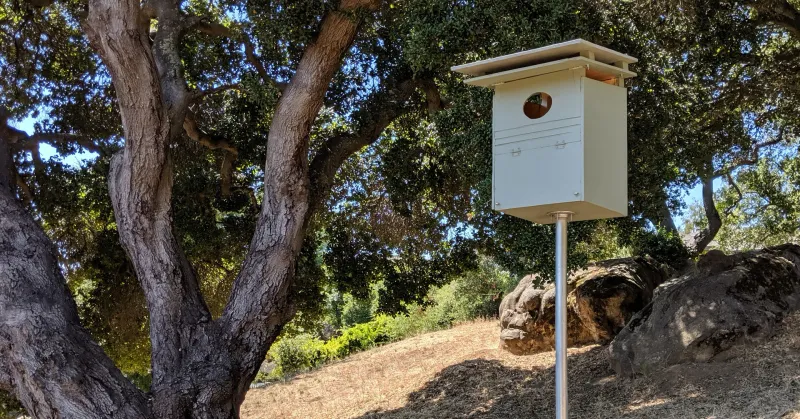
Not every wooden box with a hole in it will attract barn owls. Entrance dimensions, interior volume, structural stability, height, and predator protection all matter.
NestWatch’s nest box placement guidance specifies an elliptical entrance of approximately 3 3/4 by 4 1/2 inches, a mounting height of 8 to 25 feet above ground, and a minimum spacing of about 100 feet between barn-owl boxes on the same property. Use a design that has been tested for barn owls rather than adapting a smaller songbird box, which will not provide adequate interior space for a breeding pair and growing owlets.
Timing the installation correctly gives the box its best chance. NestWatch recommends having boxes in place well before the local breeding season begins.
For properties in southern California, February is a reasonable target installation month, since barn owls can begin breeding early in the year when conditions are favorable. An owl discovering a new box in spring, after nesting has already started elsewhere, is unlikely to use it that season.
Placement should give the entrance a clear, unobstructed flight path. Barn owls approach and depart on the wing, and a box surrounded by dense branches or positioned too close to a wall or fence will see less traffic.
Orient the entrance away from the direction of prevailing wind and rain to keep the interior dry.
Predator protection is not optional. Raccoons, snakes, and other climbing animals will investigate an accessible box and can destroy eggs or kill nestlings.
NestWatch’s pole installation guidance identifies cone baffles and stovepipe baffles as two effective ways to prevent climbing predators from reaching the box. Mount the baffle below the box on a smooth metal pole, and check periodically that it has not shifted or been bypassed by an overhanging branch.
After installation, give the box time. Barn owls may take a full season or longer to discover and accept a new site, and occupancy is never guaranteed even on a well-suited property.
Support hunting without feeding the rodents
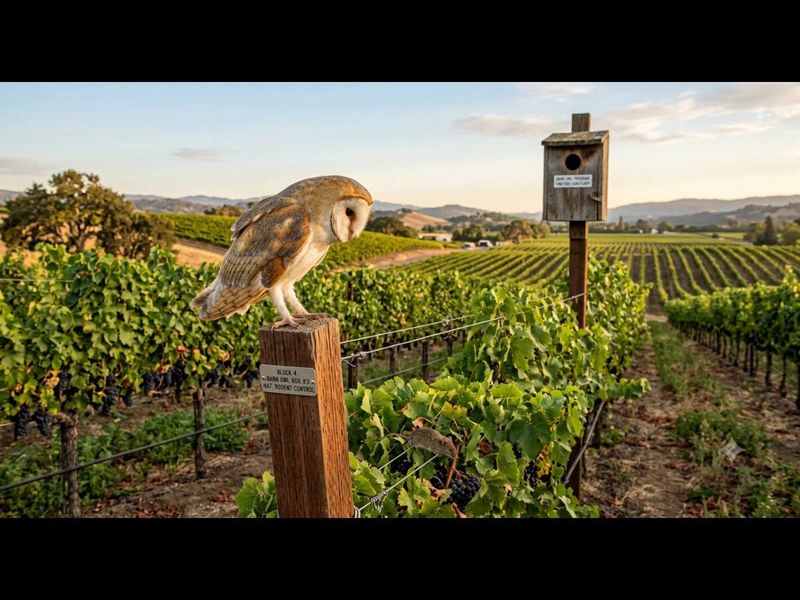
One of the more counterproductive things a homeowner can do is try to attract barn owls by increasing the rodent population near the house. Live-feeding owls or deliberately leaving food, shelter, or breeding conditions for rats and mice near buildings creates a worse rodent problem, not a better hunting situation.
The goal is to retain a usable open hunting landscape while making the home and outbuildings as uninviting to rodents as possible.
Start with the basics of rodent exclusion. Seal gaps and cracks at the foundation, around utility penetrations, and under doors.
Store birdseed, pet food, and chicken feed in sealed metal or heavy plastic containers. Keep compost bins secured, and make sure trash cans have tight-fitting lids.
UC IPM’s integrated pest management guidance emphasizes that sanitation and exclusion are foundational steps that no predator, including barn owls, can substitute for when rodents have reliable access to food and shelter inside or beside a structure.
Lawn and garden management should keep open areas genuinely open. Short grass in areas adjacent to the box gives hunting owls a clear view of prey moving below.
UC IPM’s vole guidance notes that dense groundcover and heavy mulch close to buildings create ideal shelter for voles and other small rodents, which is exactly the condition that draws rodents toward the house rather than out into open hunting territory.
According to NestWatch placement guidance, the surrounding landscape matters as much as the box itself for whether owls choose to hunt a given area regularly. Keeping that landscape open, prey-accessible, and free of dense rodent cover is the practical contribution a homeowner can make to the hunting partnership.
Avoid poison and leave occupied nests alone
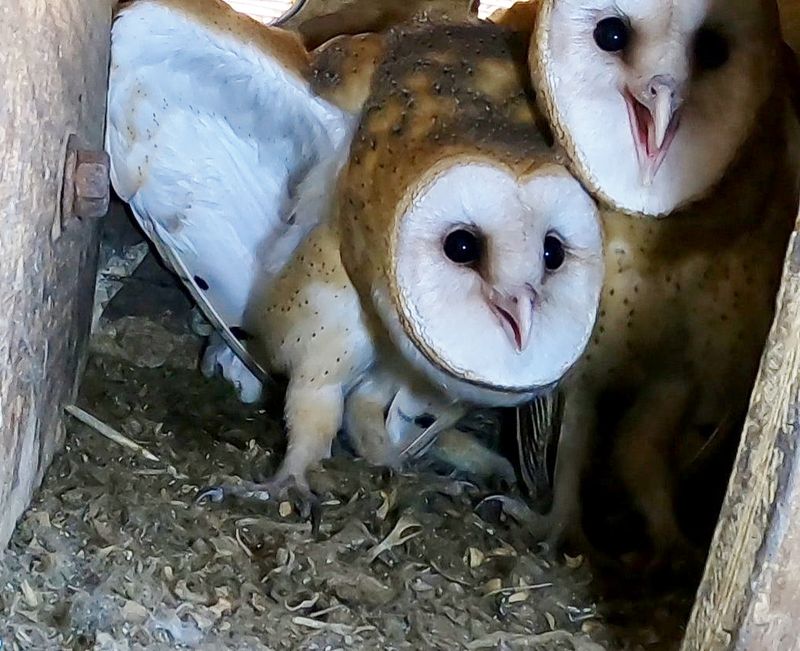
Rodenticides are one of the most direct threats to barn owls in California. When an owl eats a rat or mouse that has consumed anticoagulant bait, the owl absorbs the same toxic compounds.
The California Department of Fish and Wildlife’s Wildlife Health Lab avian investigations documented anticoagulant residues and diagnosed or suspected toxicosis in multiple raptors in 2024, including an American Barn Owl. Secondary poisoning does not require an owl to eat bait directly – eating a single poisoned rodent is enough to cause harm.
If pest pressure is severe enough that poison feels necessary, read the label carefully and follow every requirement. EPA rodenticide safety guidance requires tamper-resistant bait stations in situations where children, pets, or nontarget wildlife may be exposed.
Even full label compliance does not eliminate the risk to owls or other predators that eat poisoned carcasses. Avoiding rodenticides entirely is the safest choice for any property where barn owls are present or invited.
Once a box is occupied, the rules change significantly. Active barn owl nests, eggs, chicks, and dependent young are protected under the Migratory Bird Treaty Act.
The U.S. Fish and Wildlife Service’s guidance on bird nests makes clear that disturbing, moving, or destroying an active nest is a federal violation.
Do not open the box, reposition it, or attempt to clean it while owls are present.
Monitoring should happen from a comfortable distance using binoculars. NestWatch’s barn owl species page identifies April through May as a particularly sensitive nesting period when disturbance is most likely to cause abandonment.
Owlets are loud at night and pellets accumulate below the box during the nesting season – both are normal and expected. Wait until confirmed vacancy before approaching the box.
NestWatch identifies December as a generally suitable period for cleaning after the breeding cycle has ended and the box is empty.
Treat active gopher problems directly
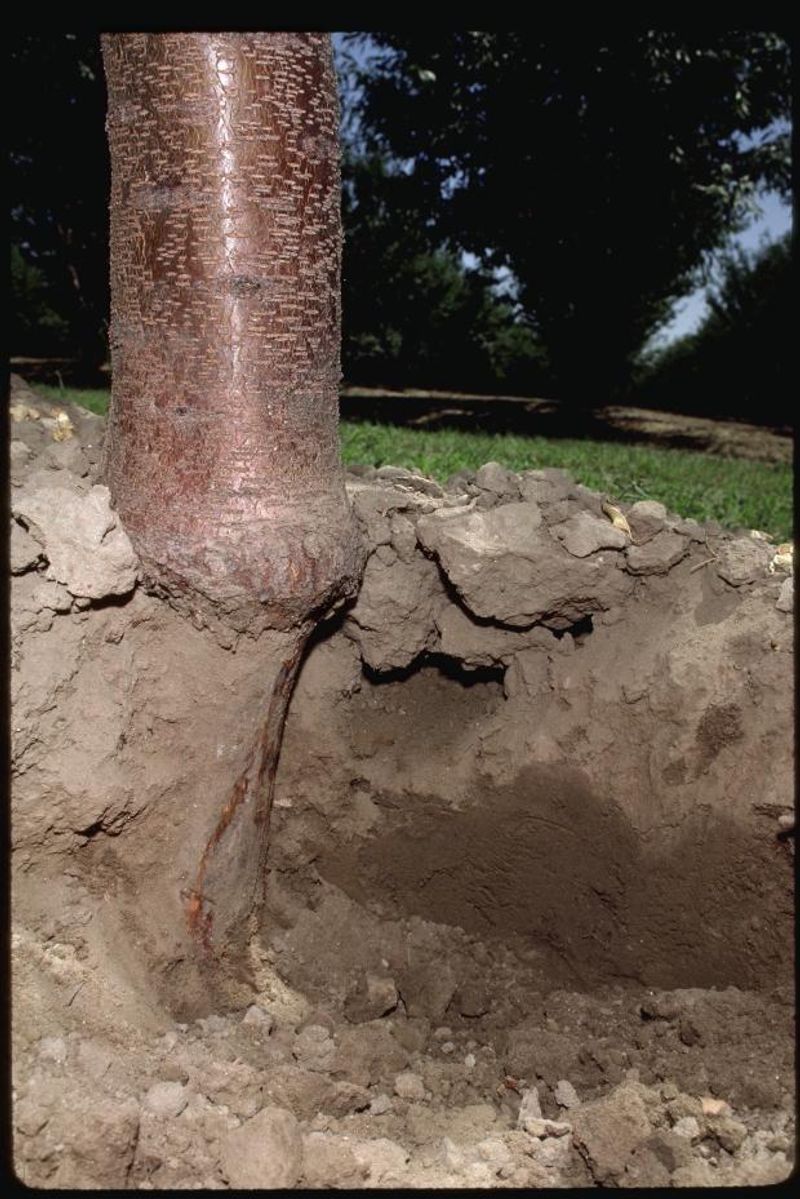
Waiting for an owl to solve an active gopher problem is not a practical strategy. A single pocket gopher can sever plant roots, collapse raised beds, and undermine drip irrigation lines within days of moving into a garden.
UC IPM’s pocket gopher management guidance is direct: barn owls are considered unreliable for gopher control in small areas such as yards, and homeowners should not delay treatment while hoping predators will resolve the situation.
The reason owls are unreliable for gophers specifically comes down to hunting behavior and scale. Barn owls range across wide territories at night, concentrating where prey is most accessible rather than patrolling one small yard systematically.
Gophers spend most of their time underground, surfacing briefly and unpredictably. Even on a property with a resident pair of barn owls, the overlap between owl hunting activity and gopher surface exposure is too inconsistent to count on for control.
A 2018 California review of barn owl use in vineyard pest management noted that key questions remained unanswered, including whether owl predation reduces rodent numbers enough to reduce actual crop or garden damage. For gophers in a residential yard, the answer from UC IPM is clear: use trapping as the primary tool, combined with exclusion barriers such as underground hardware cloth for raised beds and tree root zones.
For rats entering structures, sanitation and physical exclusion come first, followed by snap traps placed in areas inaccessible to children and pets. Integrated pest management means using the most targeted, lowest-risk method for each specific pest rather than relying on one approach for everything.
A barn owl box fits naturally into that picture as a complementary habitat measure, not as the treatment for an infestation that is already causing damage. Address the active problem with direct methods, then support owls as one part of a longer-term, wildlife-friendly yard strategy.
Expect a possible predator partner, not a guaranteed exterminator
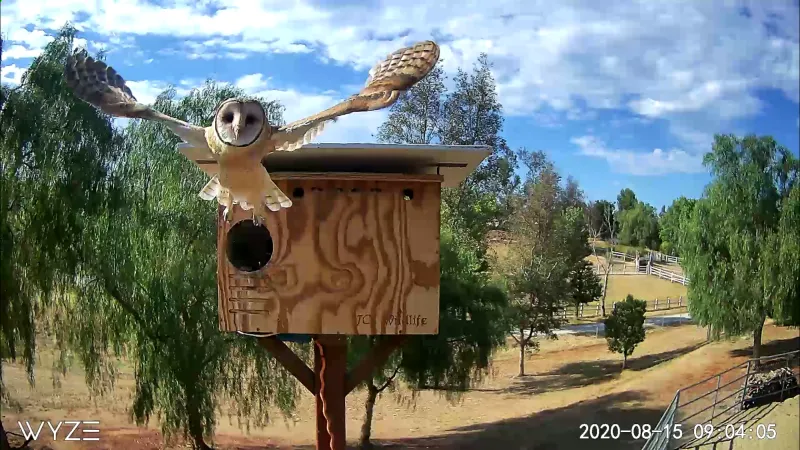
A barn owl nest box is worth installing on a California property that connects to open or semi-open foraging habitat, carries a realistic prey base, and has room for a pole-mounted box with a proper predator baffle. On that kind of property, a box may attract a breeding pair and add meaningful natural predation pressure to the landscape over time.
What a box cannot do is guarantee occupancy, confine owl hunting to your yard, or replace the sanitation, exclusion, and trapping that active rodent problems require. UC IPM and the 2018 California vineyard review both support treating barn owls as one component of integrated pest management rather than a stand-alone solution.
The California vineyard research is genuinely promising, but it applies to large open agricultural landscapes, not to a typical suburban lot.
Avoid rodenticides wherever possible, monitor an occupied box from a distance, and clean it only after confirmed vacancy – NestWatch and California wildlife health data both point to those practices as essential for keeping owls safe. A barn owl that takes up residence near your yard is a long-term ecological asset, and the most useful thing you can do is make the environment safe enough for it to stay.