
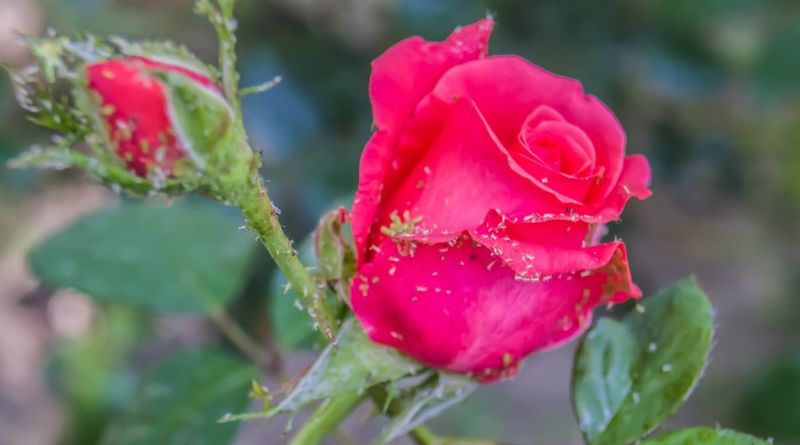
Most California gardeners have squished a tiny spider on a rose stem without a second thought, not realizing it may have been quietly working in their favor. Small spiders are common in home gardens and may play a modest role in keeping pest populations from exploding, yet they are almost never given a chance.
Understanding what these little predators actually do, and what they cannot do, gives you a smarter, more wildlife-friendly approach to rose care without ditching your pest management plan.
The Spider on Your Rose May Be an Ally
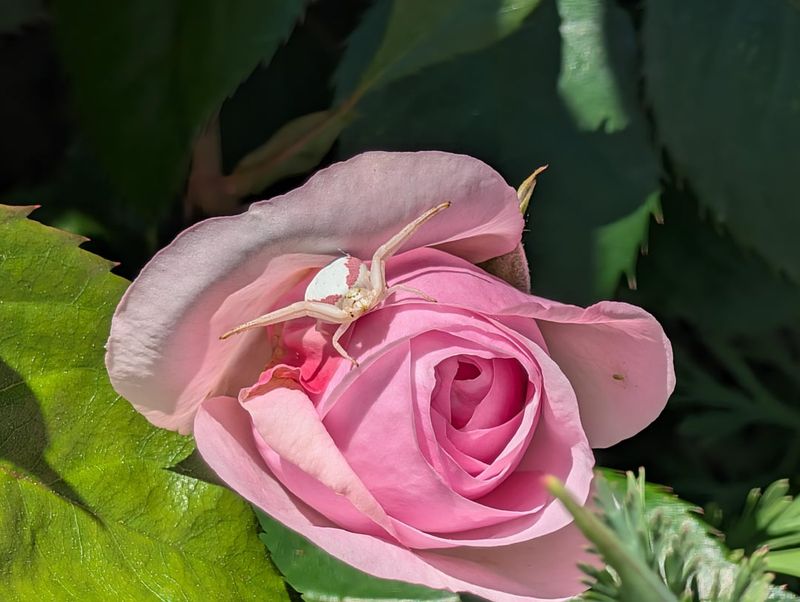
Spotting a thumbnail-sized spider on a rose cane is not a reason to panic or reach for a shoe. UC IPM’s guide to common garden spiders identifies several groups California homeowners regularly encounter: jumping spiders, crab or flower spiders, funnel weavers, orb weavers, and dwarf spiders.
Each group hunts differently, and that variety matters when you are trying to figure out what the creature on your rose is actually doing.
Spiders are arachnids, not insects. They have eight legs, two main body sections, and no wings or antennae, which immediately separates them from the aphids, beetles, and flies sharing the same plant.
Jumping spiders stalk their prey in open daylight, moving in short bursts. Crab or flower spiders sit still on blossoms or foliage and ambush visiting insects.
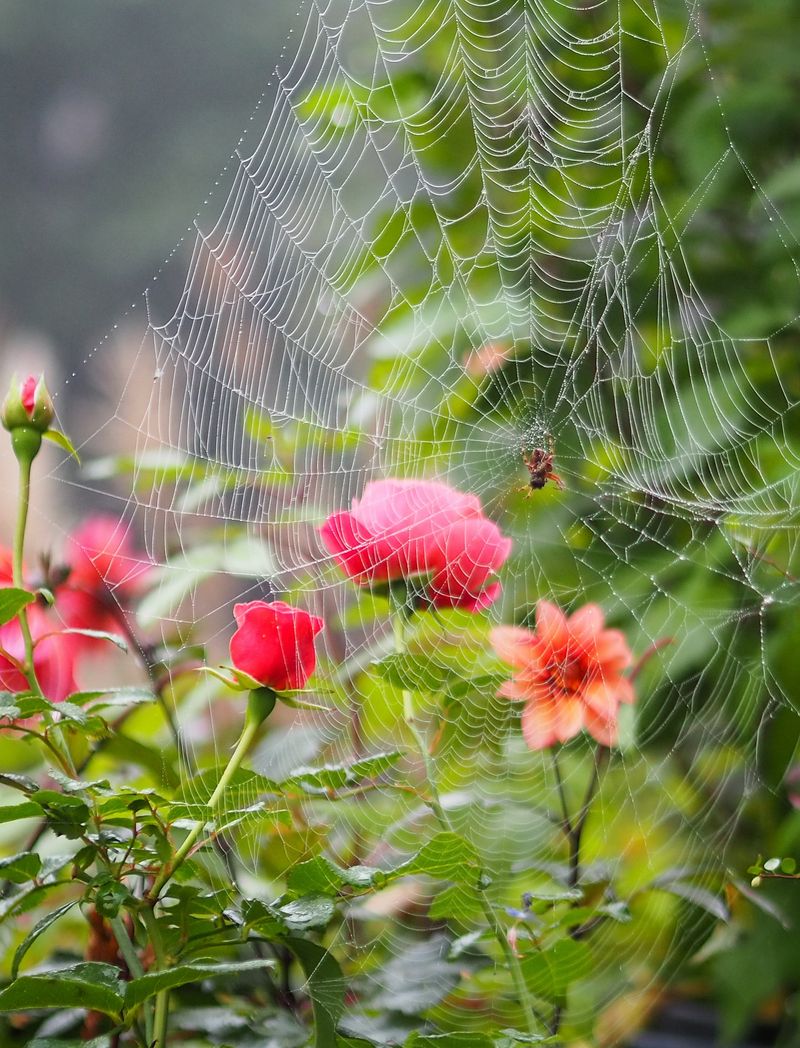
Funnel weavers and orb weavers build silk structures and wait for prey to contact the web. Dwarf spiders construct small, often low-profile sheets or irregular webs close to plant surfaces.
Because California gardens contain so many spider families with different hunting behaviors, this article deliberately avoids pinning an identity on whatever spider you happen to find. The practical takeaway is simpler: if a spider appears harmless and is sitting on a low-contact part of a rose, leave it alone.
UC IPM recommends protecting garden spiders rather than treating them as pests, and that is a reasonable starting point for any California rose grower.
One firm rule applies regardless of which spider you see: do not handle an unidentified spider. Most species encountered outdoors in daylight are not medically significant, but there is no reliable way to confirm that without an expert identification.
Tolerate the spider where it sits, give it space, and let it do whatever it does.
What Tiny Spiders May Do for Aphids
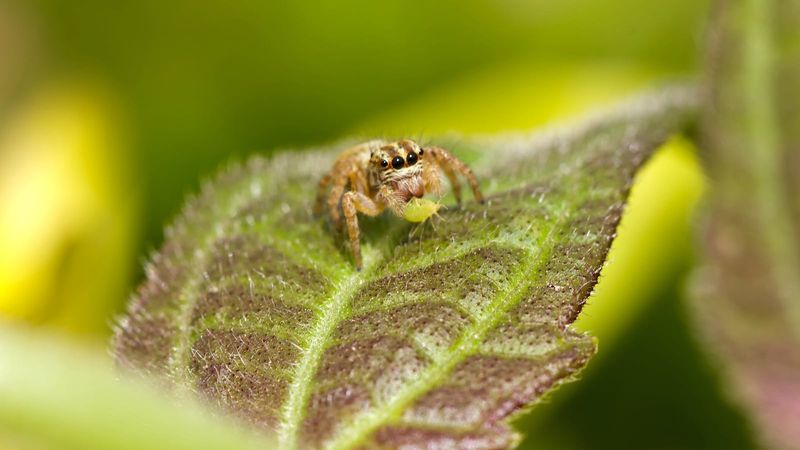
A spider sitting near an aphid colony is not automatically hunting it. Spiders are generalist predators, meaning their prey depends on species, body size, location, and whatever arthropods happen to be nearby.
A web on a rose stem does not tell you that aphids are the target; it tells you that the spider has staked out a spot and will capture whatever contacts the silk.
That said, research does document aphids showing up in spider diets. A study of jumping spider prey by the American Arachnological Society found that these active hunters take a wide range of small arthropods, and aphids can be among them when the spiders are working in vegetation where aphid colonies are present.
Jumping spiders stalk their quarry directly, so they are more likely to encounter whatever is most abundant on a plant surface at a given moment.
Web-building spiders have a different relationship with aphids. Field research on linyphiid spiders tracked through molecular analysis found that these small web-builders do consume aphids in agricultural settings, though their rates of predation shifted depending on what alternative prey was available.
Winged aphids moving between plants are also vulnerable to orb weaver webs, since research on web deformation shows that electrostatically charged insects can be drawn toward silk, increasing the chance of contact.
Still, none of this adds up to a guaranteed aphid-control service. Spiders can eat flies, moths, beetles, wasps, other spiders, and many other arthropods just as readily.
Their presence may add something to biological control on your roses without delivering a predictable capture rate or an aphid-free plant. Conserving them is worthwhile; counting on them as your only line of defense is not a plan that holds up in a real California garden spring.
Judge Aphid Pressure Before You Reach for a Spray
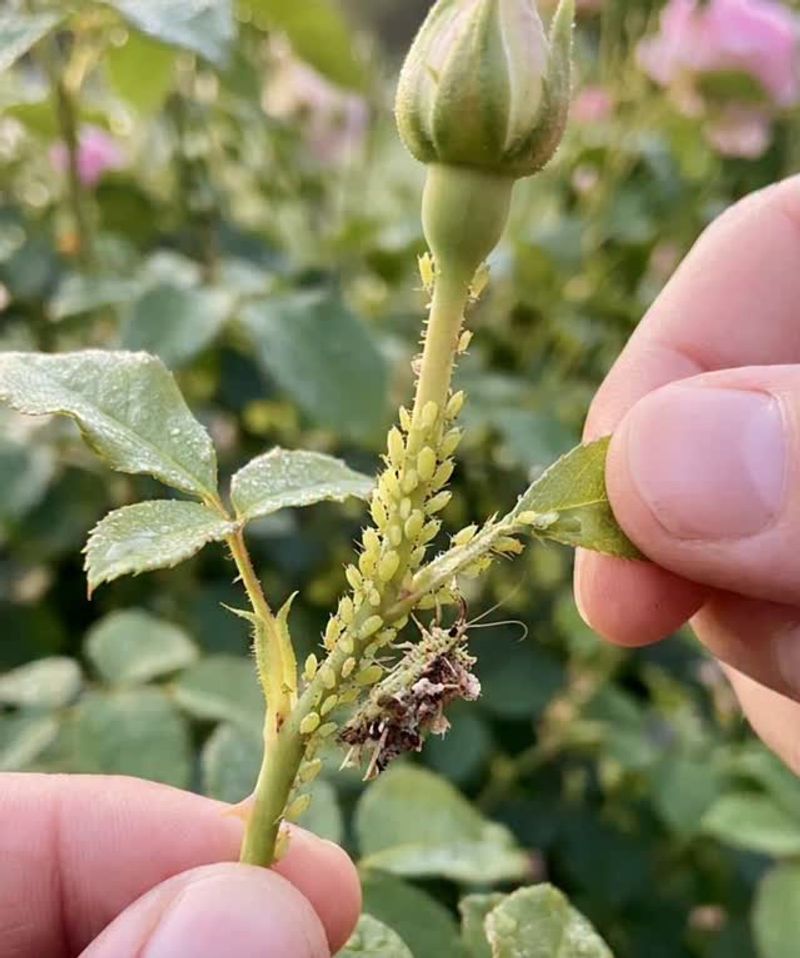
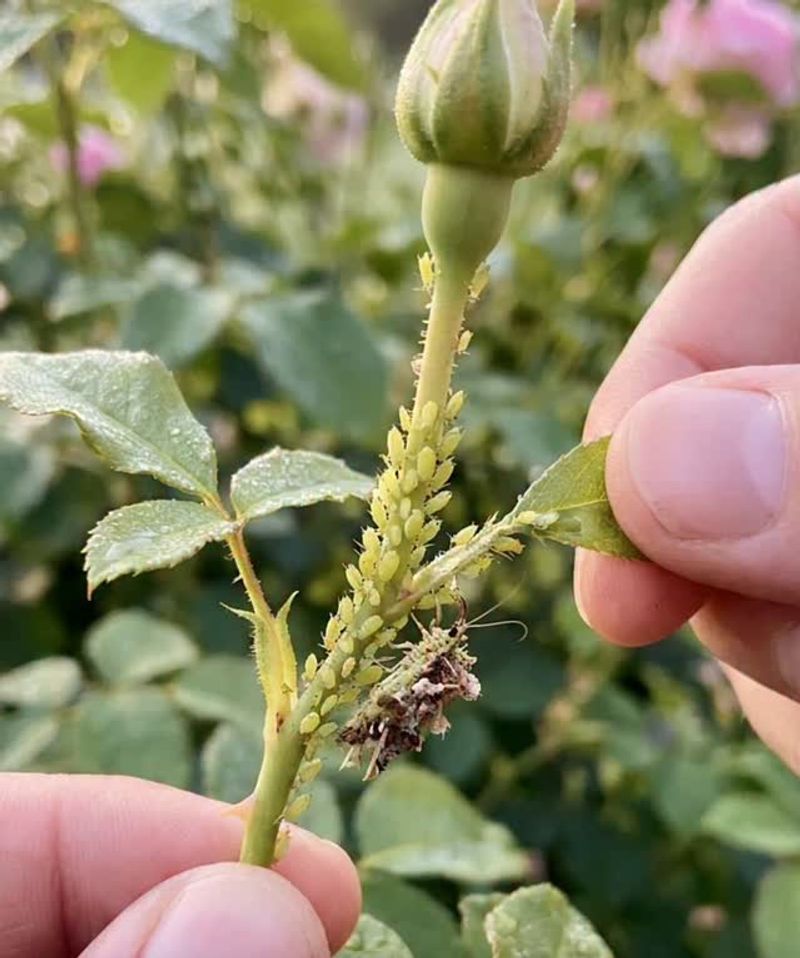
Aphids on roses are not automatically an emergency. UC IPM’s rose pest guide makes a useful distinction: low to moderate aphid populations often cause little lasting harm to established plants, while heavy infestations are the ones that distort buds, reduce flower size, produce sticky honeydew, and encourage sooty mold on leaves and stems.
Knowing which situation you are actually facing changes your response.
Aphids tend to cluster on soft new growth, the tips of new shoots, flower buds, and the undersides of young leaves. In California, the pressure is typically highest during spring and early summer when roses are pushing out the most tender growth.
UC IPM notes that high summer temperatures commonly reduce aphid numbers on their own, so an infestation that looks alarming in April may shrink considerably by July without any intervention.
Check roses at least twice a week during active growth. Work through the plant systematically: look at the tips of new canes, squeeze a bud gently to see if it is distorted, and flip over a few young leaves to inspect the undersides.
You are not just counting aphids; you are also looking for the predators that may already be working the problem.
Lady beetles and their larvae, lacewing larvae, and syrphid fly larvae are all important aphid enemies on California roses. Dark, crusty, bronze or brown bumps on aphid-infested stems are aphid mummies, a sign that parasitoid wasps have already laid eggs inside the colony.
Mummies are evidence of parasitoid activity, not spider predation, and a stem covered in them is a stem where biological control is already underway. Seeing these signs is a good reason to hold off on any spray and give the natural-enemy community more time to work.
Support the Whole Natural-Enemy Community

Keeping spiders around is less about building an aphid-killing squad and more about avoiding the habits that accidentally clear out your garden’s entire natural-enemy population. UC IPM’s beneficial predators resource treats spiders as one part of a broader community that includes lady beetles, lacewings, parasitoid wasps, and syrphid flies.
Protecting all of them at once is far more effective than focusing on any single group.
The most direct way to support harmless spiders is simply to leave them where they are when they pose no safety or access concern. Preserve some plant structure around rose beds: a few low-growing companion plants, some leaf litter at the base of canes, and sheltered spots between stems give spiders places to rest, molt, and overwinter.
Unnecessary pesticide applications are the biggest threat to the whole community, so skipping a precautionary spray when aphid numbers are still low is one of the highest-value choices a California rose grower can make.
UC IPM’s insectary plant guidance notes that plants offering pollen, nectar, and shelter may support natural enemies nearby, but the benefit depends on plant selection, maintenance, site conditions, and how close the plantings are to the roses you want to protect. Sweet alyssum, yarrow, and native buckwheats are examples that suit California’s dry-summer conditions and attract a range of beneficial insects.
Do not expect a border of flowers to solve an active infestation; think of it as infrastructure that keeps the natural-enemy population healthier between outbreaks.
Water-wise gardening and natural-enemy conservation fit together well in California. Avoiding overhead irrigation that soaks foliage late in the day, choosing drought-tolerant companion plants, and reducing bare soil around roses are all steps that improve habitat without adding to your water bill or fire risk.
Use Water and Ant Management First
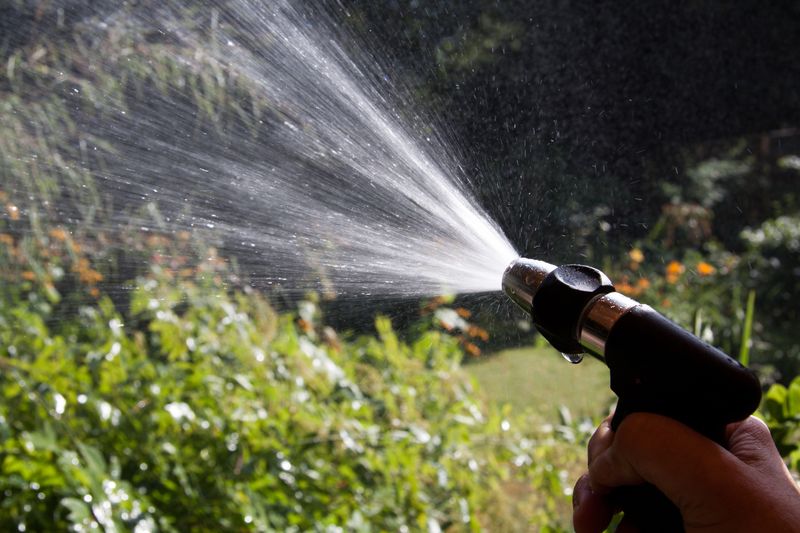
When monitoring turns up a genuine aphid colony on an otherwise sturdy rose, the first tool to reach for is not a bottle of anything. A strong stream of water from a garden hose will knock most aphids from the plant, and UC IPM recommends this mechanical step as a first-line supplement to natural control on roses.
Apply the spray in the morning so foliage has the rest of the day to dry, reducing the risk of fungal problems that wet leaves invite.
Water sprays do not kill aphids permanently or prevent reinfestation, but they reduce numbers quickly and give natural enemies a chance to catch up without the disruption that a pesticide application would cause. Repeat the treatment every few days if the colony rebuilds.
This approach works best on established roses with sturdy canes that can handle the pressure; be gentler on newly planted or drought-stressed plants.
Ants are a frequently overlooked complication. Many ant species actively protect aphid colonies because they harvest the honeydew aphids produce, and they will chase off lady beetles, parasitoid wasps, and other predators to keep that food source intact.
UC IPM notes that reducing ant access to infested plants can meaningfully improve the activity of aphid predators and parasitoids.
Outdoor-appropriate ant barriers, baits, or traps can help interrupt this protection racket. Use any product strictly according to its label.
One important caution: do not apply sticky ant barriers directly to rose canes or plant tissue, because they can damage bark and create entry points for disease. Use a collar around the base of the plant or apply sticky material to a separate physical barrier wrapped around the stem, not to the stem itself.
Escalate Carefully and Protect the Spiders You Want to Keep
Broad-spectrum insecticides are a last resort, not a first response. UC IPM’s guidance on protecting natural enemies and pollinators warns that these products can kill beneficial insects and spiders along with target pests, and that wiping out the natural-enemy community often leads to worse pest or mite problems later in the season.
If water sprays and ant management have not brought a heavy infestation under control, there are lower-impact options worth considering before stepping up to something stronger.
Insecticidal soaps and horticultural oils can be effective against aphids in some situations, but they work only by direct contact with the pest. UC IPM specifies that thorough coverage of all infested surfaces is required, including the undersides of leaves where aphids cluster.
Read and follow the product label completely before applying anything. Both soaps and oils should be avoided on drought-stressed plants or when temperatures are outside the range the label specifies, because heat and water stress increase the risk of plant damage.
No pesticide in this category is universally harmless to spiders, pollinators, or other beneficial organisms; contact exposure can affect them too, even if the residual risk is lower than with broad-spectrum products.
Systemic insecticides, including some neonicotinoids marketed for landscape use, may harm pollinators and natural enemies and are generally unnecessary for the kind of aphid pressure a home rose garden experiences. UC IPM’s rose pest guidance does not recommend them as a routine aphid treatment.
On the spider side, you do not need to preserve every web in every location. Removing webs from doorways, walkways, outdoor furniture, children’s play areas, and other high-contact spots is perfectly reasonable.
California Department of Pesticide Regulation guidance on schoolyard spiders supports relocating or removing webs from high-contact areas as a sensible precaution. Use extra care around dry, sheltered, undisturbed spots such as woodpiles, low ledges, and garage corners, where western black widows, California’s principal medically significant spider, are known to establish.
Do not handle any unidentified spider in those areas.
Think of Tiny Spiders as Supporting Players
Homeowners do not have to pick between tolerating every spider and eliminating every aphid. UC IPM’s spider guidance supports leaving harmless spiders in low-contact garden areas, and that is a realistic, low-effort commitment for most California rose growers.
Leave the spider on the cane, skip the precautionary spray, check your roses twice a week, and take action only when monitoring shows that aphid pressure is genuinely building past what the natural-enemy community and a water spray can handle.
When you do act, reduce ant access before reaching for any product. Look for aphid mummies and other natural enemies before deciding that biological control has failed.
If treatment becomes necessary, choose the most targeted, lowest-impact option and follow the label precisely.
Tiny spiders may catch a winged aphid crossing a web, stalk a soft-bodied pest on a stem, or simply occupy space that reduces how freely insects move through a plant. They are useful supporting predators that can contribute something real to a healthy rose garden, not aphid specialists, not guaranteed patrols, and not the sole explanation when a colony finally shrinks.
A garden that makes room for them alongside parasitoid wasps, lady beetles, and the occasional strong spray of water is simply a garden working the way California gardens work best.