
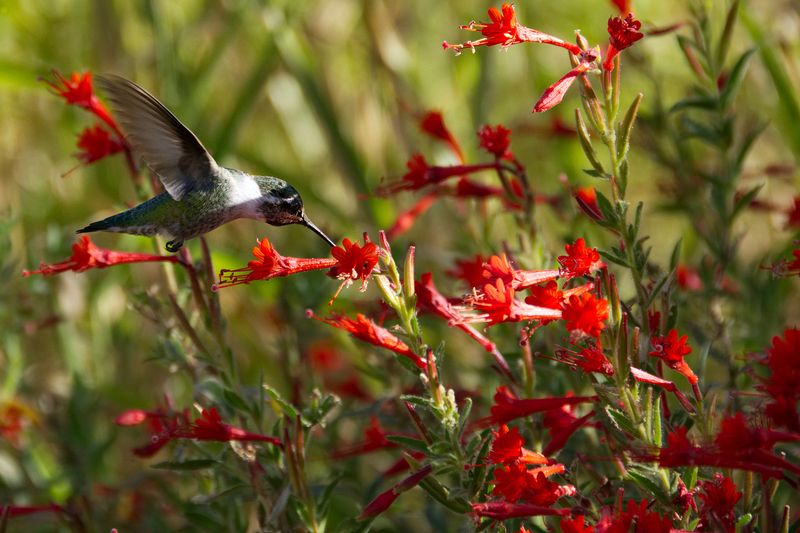
Every late summer, certain California gardens light up with a flash of wings around one unassuming native plant. California fuchsia, a low-water perennial with brilliant red-orange tubular flowers, can offer hummingbirds a reliable nectar source right when many other plants have stopped blooming.
You do not need a feeder to make your yard worth visiting, but understanding what the plant can and cannot promise makes all the difference.
California fuchsia extends the late-season bloom calendar
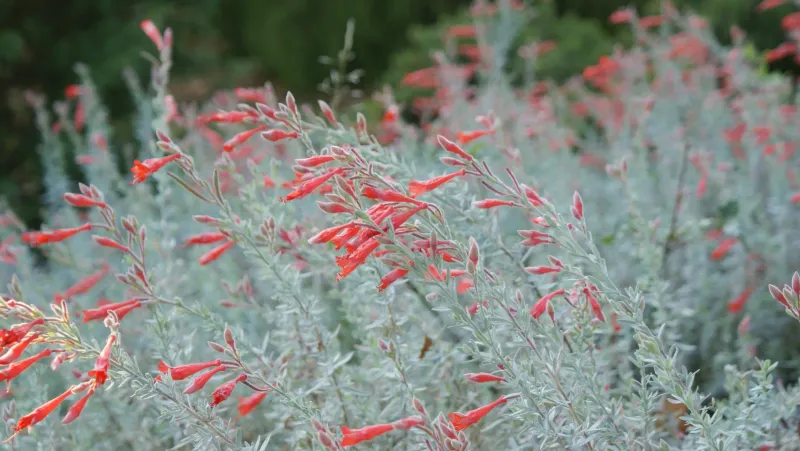
Few native plants time their performance as usefully as California fuchsia, known botanically as Epilobium canumZauschneria and still sold in many nurseries under its older name, . While spring bloomers fade and summer heat pushes many perennials into dormancy, California fuchsia is just getting started.
Its scarlet, orange-red, or orange tubular flowers typically open in late summer and carry through fall, extending the garden’s bloom calendar at a moment when hummingbirds moving through or lingering in the region need nectar most.
According to UC Marin Master Gardeners, the plant is a strong hummingbird nectar source specifically because of its late-season timing and flower shape. That timing matters: a yard that offers food in August and September may see more hummingbird activity than a yard full of spring color alone.
The California Native Plant Society also lists it among top choices for hummingbird gardening in the state.
Still, the plant does not fill a universal nectar shortage or guarantee that birds will show up on schedule. Whether hummingbirds appear in your yard depends on which species live in or migrate through your part of California, local weather patterns, and the overall habitat your garden provides.
Anna’s Hummingbirds are year-round residents across much of the state, while other species pass through on seasonal routes. UC Marin’s hummingbird gardening guidance makes clear that a welcoming yard increases the odds of visits but cannot control bird movement or ensure the same individuals return each year.
California fuchsia is a strong seasonal tool, not a guarantee.
Tubular flowers provide a useful nectar source
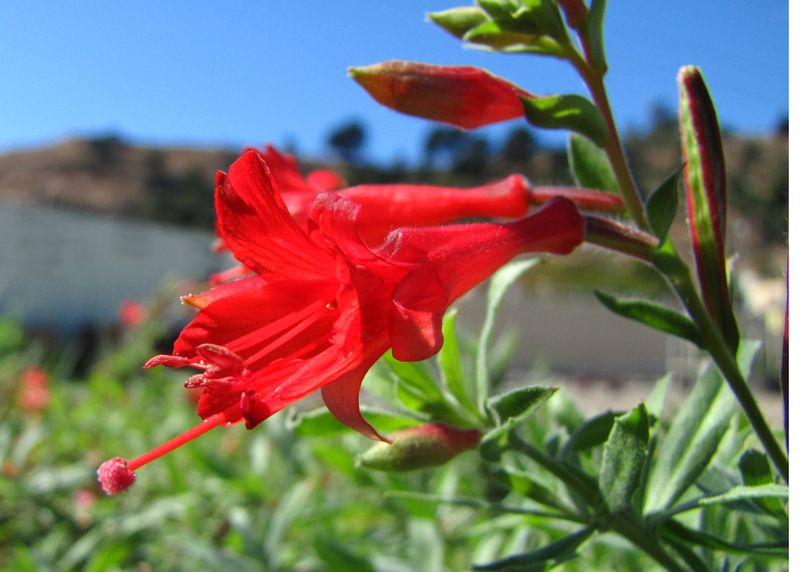
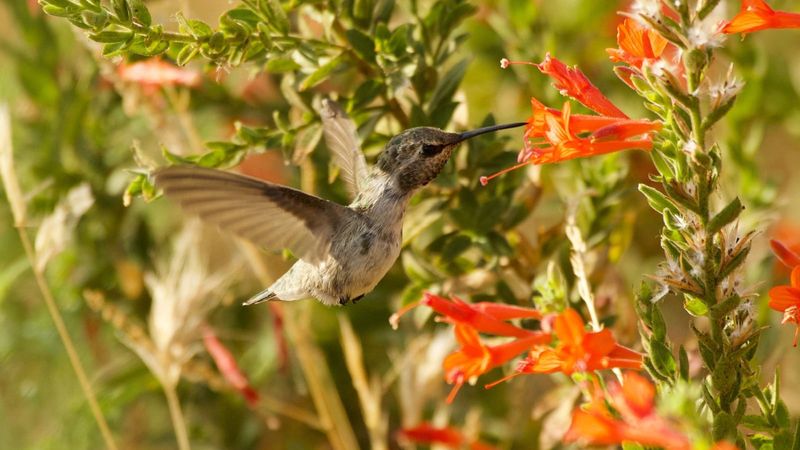
The shape of a flower tells a hummingbird almost everything it needs to know. California fuchsia produces long, narrow tubes that fit a hummingbird’s bill almost perfectly, allowing the bird to reach nectar that most insects cannot access efficiently.
That match between flower architecture and feeding anatomy is one reason hummingbirds return to tubular blooms repeatedly during a foraging session.
Color plays a role too. Warm reds and oranges are reliably associated with hummingbird-pollinated plants across California, and UC Cooperative Extension notes that California fuchsia’s scarlet-to-orange palette puts it squarely in that category.
The California Native Plant Society’s hummingbird gardening resource highlights both color and tube length as traits that make native plants like this one particularly effective at drawing hummingbirds to a garden.
The late-season bloom window adds practical value. By the time California fuchsia opens in late summer, many other nectar plants have already peaked.
Offering food during that gap can make a yard noticeably more active. That said, hummingbird availability across California varies by region, elevation, and year.
USGS monitoring data from California shows that species composition and bird numbers shift with migration timing and local conditions. A plant with ideal flower traits still attracts only the birds that happen to be in the area, so a single nectar plant works best as part of a broader garden strategy rather than a stand-alone solution.
Choose a form that fits your garden
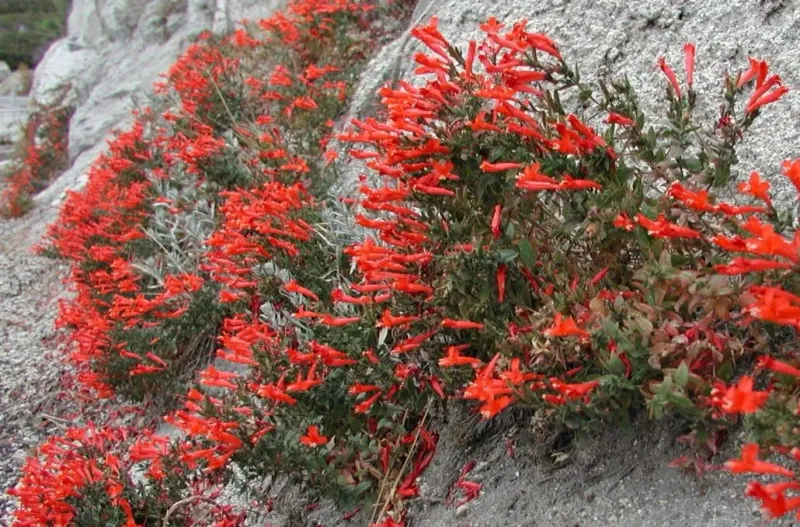
Walk into any California native plant nursery and you may find California fuchsia listed under Epilobium canum, Zauschneria californica, or a cultivar name like ‘Catalina’ or ‘Everett’s Choice.’ The name variation is common and worth knowing before you shop. This plant is entirely unrelated to the tropical ornamental fuchsia sold in hanging baskets, despite sharing a common name.
Checking the botanical name on the tag ensures you are buying the actual California native.
The range of forms is wider than most gardeners expect. UC Master Gardeners of San Luis Obispo County describe cultivars spanning from low, spreading groundcovers only a few inches tall to upright selections that reach roughly 1 to 4 feet in height and spread several feet wide.
Some forms creep and fill slopes efficiently; others stay compact enough for a raised bed or container. Mature spread can surprise gardeners who choose a form without checking the label, so treat that information as a non-negotiable part of the selection process.
A UC Cooperative Extension planting guide recommends buying from a reputable native-plant nursery to ensure you receive a plant grown from California-appropriate stock. Big-box garden centers sometimes carry plants labeled as fuchsia that are not the same species.
Matching the plant’s mature size to your available space, whether a sunny border, a dry slope, a container on a deck, or a small bed near a path, makes the difference between a plant that thrives and one that outgrows its spot within two seasons.
Provide sun, drainage, and site-appropriate water
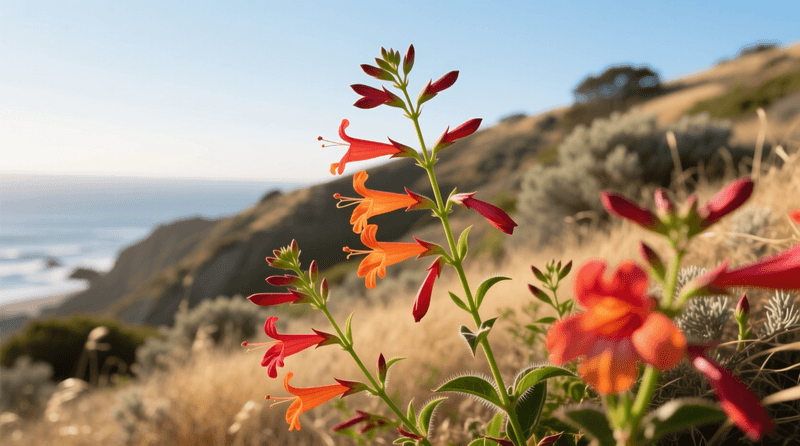
Siting California fuchsia correctly from the start saves a lot of corrective work later. Full sun is the standard recommendation for most California locations: the plant flowers most heavily when it receives at least six hours of direct light per day.
In very hot inland areas, afternoon shade can reduce heat stress without sacrificing too much bloom. Well-drained soil is non-negotiable regardless of location, since the plant is prone to root problems in soggy or clay-heavy ground.
UC Cooperative Extension’s planting guide for California fuchsia describes the plant as drought tolerant once established, which typically takes one to two growing seasons with regular irrigation. During establishment, water deeply and consistently to help roots reach deeper soil moisture.
After that, many coastal and inland valley gardeners find the plant performs well on minimal summer water. However, a UC ANR water-efficient plant list notes that occasional summer irrigation can improve flowering performance in hotter settings, particularly in the Central Valley or inland Southern California.
Soil amendment is rarely necessary and sometimes counterproductive. California fuchsia is adapted to lean, fast-draining soils and may produce excess foliage at the expense of flowers in overly rich beds.
If your native soil drains poorly, raising the planting area slightly or mixing in coarse grit can improve conditions without the need for significant amendment. UC Master Gardeners of Contra Costa County reinforce that matching the plant to the right spot from day one is the most effective way to reduce long-term maintenance and keep blooms coming through the fall hummingbird season.
Plan for winter dormancy and seasonal pruning
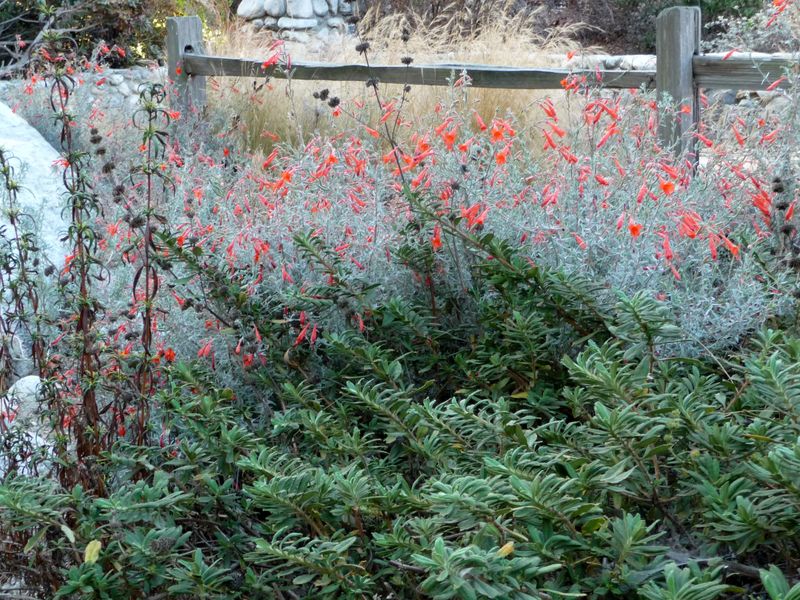
A California fuchsia that looks dead in January is almost certainly not dead. Most established plants go dormant or die back significantly in winter, leaving behind dry stems and a quiet crown at soil level.
Gardeners who are not expecting this sometimes pull the plant out, which is a shame, because the same roots that look finished in winter can produce vigorous new growth by late spring.
Cutting plants back after the fall bloom ends, or during winter dormancy, is a commonly recommended practice. UC Master Gardeners of Contra Costa County note that pruning at this time helps maintain compact growth and encourages a stronger flush of new stems the following season.
Without cutting back, some forms become woody and open in the center, producing fewer flowers where hummingbirds can reach them easily. A UC ANR plant resource supports similar timing for pruning to renew the plant’s structure.
How aggressively you prune depends partly on the cultivar. Spreading groundcover types may need less intervention than upright forms that develop woody stems quickly.
UC Master Gardeners of San Luis Obispo County point out that some cultivars spread broadly by underground runners, so part of seasonal management involves checking the plant’s edges and pulling back any growth that has traveled beyond its intended space. Thinking of pruning as an annual reset rather than a rescue operation makes the task feel straightforward and keeps the plant productive for multiple seasons.
Build habitat beyond a single nectar plant
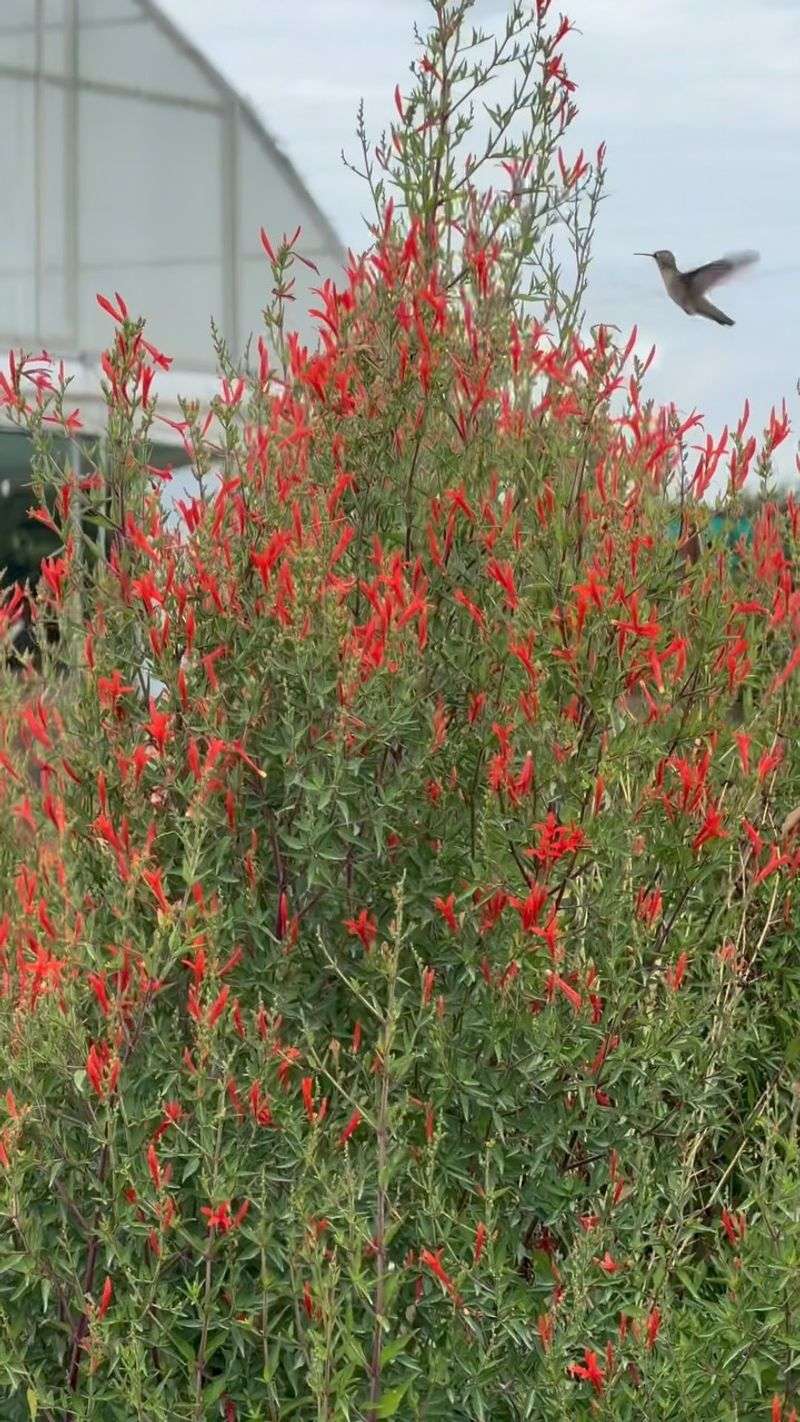
California fuchsia earns its place in a hummingbird garden, but nectar is only part of what the birds need to thrive. Hummingbirds are also active hunters of tiny insects and spiders, which supply the protein and fat that pure sugar water cannot provide.
Cornell Lab Bird Academy experts on hummingbird survival emphasize that insects are a critical dietary component, not an optional extra. A yard that is free of insects because of regular broad-spectrum pesticide applications is a yard that offers hummingbirds incomplete nutrition, regardless of how many flowers are in bloom.
Staggering bloom periods across the season gives visiting birds a reason to stay or return through multiple months. The USDA Forest Service’s California hummingbird nectar plant guide lists California fuchsia alongside other regionally appropriate natives such as salvias, penstemons, and monardella, all of which can extend the nectar calendar into different seasons.
Combining several of these plants creates a garden that supports hummingbirds beyond a single late-summer window.
Clean, shallow water matters too. A simple dripper or mister near plant cover gives hummingbirds a place to bathe and drink without forcing them into the open.
UC ANR’s hummingbird habitat guidance also recommends providing perches such as thin, exposed branches near feeding areas, since hummingbirds spend significant time resting and watching for rivals between feeding bouts.
Two safety considerations deserve direct attention. Domestic cats pose a real threat to low-flying birds, so keeping cats indoors or supervised around garden areas reduces risk significantly.
Windows are another hazard: place bird resources away from large glass surfaces or apply effective deterrent treatments to reduce collision risk, as UC Marin’s hummingbird gardening guidance recommends. A diverse, flower-rich garden built around these principles may reduce your reliance on a feeder considerably, though a properly maintained feeder remains a reasonable supplement when flowers are scarce.
Avoiding unnecessary broad-spectrum pesticide applications around hummingbird habitat keeps the insect prey base intact and protects the birds themselves from secondary exposure.
Offer a seasonal welcome without promising a return
Putting this all together looks like a simple sequence: pick a California fuchsia cultivar sized for your available space, plant it in a sunny spot with good drainage, water it consistently through its first season or two, then step back and let it settle in. Cut it back after the fall bloom or during winter dormancy, add a few other native plants with different bloom times, and give the yard clean water and safe perching spots.
UC Marin Master Gardeners describe California fuchsia as a genuinely useful late-season nectar source for California hummingbirds, and the USDA Forest Service’s California hummingbird guide includes it among recommended plants for the state’s ecoregions. That backing is solid, but it describes potential, not certainty.
A century of USGS hummingbird monitoring data confirms that bird populations shift with conditions no single garden can control.
A yard built around California fuchsia and its companion plants offers hummingbirds genuine value during the late-season window when it counts most. Whether the same birds show up year after year is a question the garden cannot answer, but it can always make the answer more likely.