
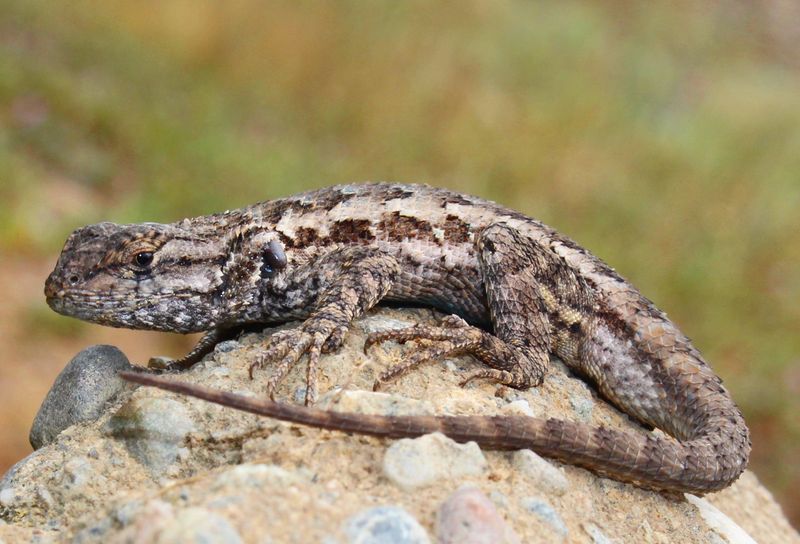
Spotting one or two western fence lizards on a sunny afternoon is a familiar California moment, but when they seem to appear everywhere at once, it is easy to wonder what changed. The honest answer involves warm weather, seasonal breeding, and yard features that may give lizards places to bask and hide, not a single dramatic shift you caused overnight.
There is also a real but complicated connection to tick ecology that is worth understanding clearly before drawing conclusions. Knowing what is actually driving the surge, and what it does not guarantee, helps you respond in a way that is good for your yard, your family, and the lizards themselves.
A summer “takeover” often reflects visibility, not a proven population explosion
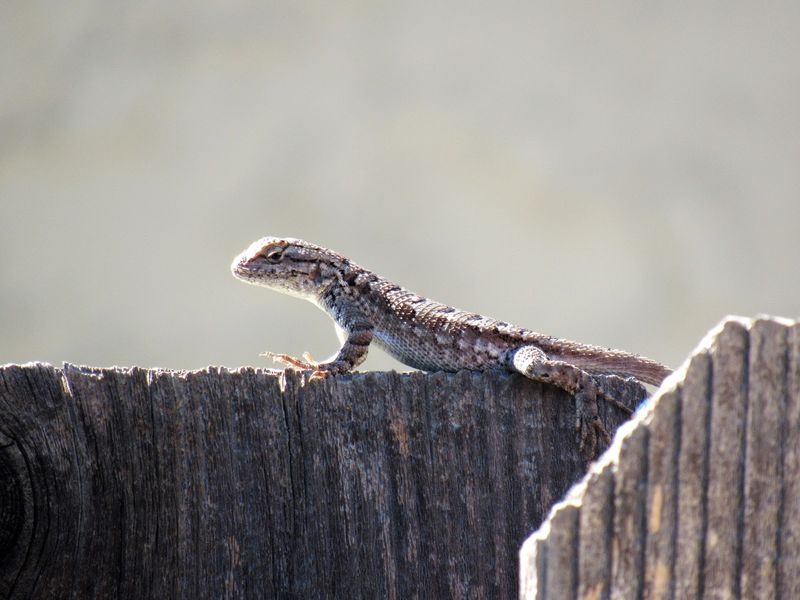
Waking up one July morning to find western fence lizards covering every warm surface in the yard can feel like an overnight invasion. What most California homeowners are actually watching, though, is a combination of seasonal activity, territorial behavior, and emerging young animals, all of which make a lizard population that was always present far easier to notice.
Western fence lizards (Sceloporus occidentalis) are among the most commonly encountered reptiles in California. They are diurnal, meaning they are active during the day, and they spend much of that time in plain sight, pushing up on rocks, fences, walls, and sunny patches of bare ground.
That visibility is a feature of their biology, not a sign that something unusual has happened. When temperatures climb and days lengthen, the animals simply become more active and therefore more detectable.
Increased detectability is not the same as a confirmed population increase. A lizard that spent cooler months tucked under a log or moving slowly through dense vegetation is suddenly out, basking for hours, defending a territory with vigorous push-up displays, and competing for prime sun spots.
UC IPM’s lizard pest note describes them as primarily active during warm months, which in California spans roughly April through October. Within that window, the animals are simply more conspicuous.
The yard is also one piece of a larger landscape. Lizards move across fences, walls, and neighboring properties.
A sudden visual surge may reflect animals passing through from adjacent open space, a disturbed field, or a neighbor’s garden as much as it reflects a stable resident population. Research on urban fence lizard populations confirms that movement between habitat patches is a normal part of their ecology.
The central takeaway: more lizards in view this summer most likely means the season has made them visible, while yard features may provide suitable places to use. A confirmed population explosion driven by one specific homeowner action is a harder claim to support.
Warm weather brings basking, breeding, and young lizards into view
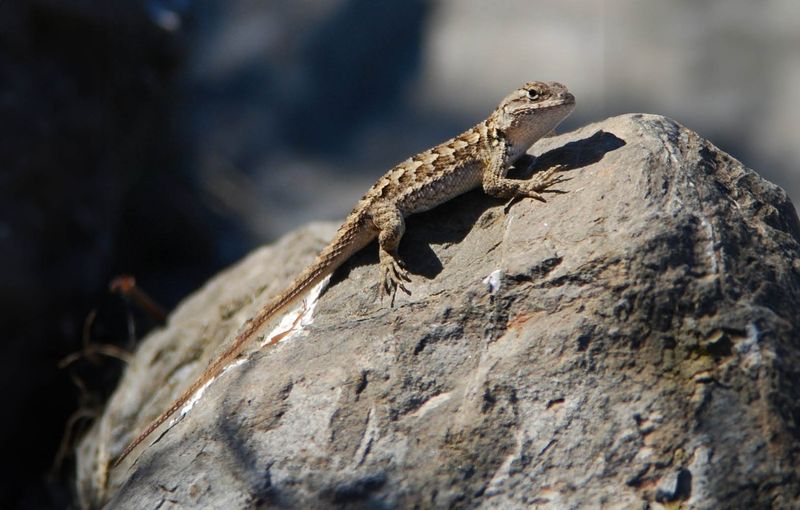
California’s warm season drives almost everything visible about western fence lizard behavior. Once temperatures rise consistently in spring, the animals emerge from their cooler retreats and begin spending long stretches in direct sun.
Basking is not lazy behavior; it is how a cold-blooded reptile reaches the body temperature it needs to digest food, move quickly, and reproduce successfully.
Males become especially conspicuous during the breeding season. They stake out elevated perches on fence rails, rock surfaces, and tree stumps and perform rhythmic push-up displays to signal dominance and attract females.
A yard with several adult males defending overlapping territories can look surprisingly crowded with lizards even if the total number of animals has not changed much from the previous year. UC IPM notes that this territorial and display behavior peaks during the active warm season and contributes directly to the animals’ high visibility.
Egg-laying generally runs from roughly May through August across California, though exact timing shifts with elevation, coastal influence, and local microclimate. Females deposit clutches in loose, warm soil and then largely disappear from the activity scene while incubation proceeds underground.
Young lizards, noticeably smaller than adults and often more skittish, typically begin appearing from around July through September.
That hatchling window matters for interpreting what homeowners see. A sudden wave of small, quick lizards in late summer is almost certainly a cohort of new juveniles, not a mysterious influx from elsewhere.
The California Department of Fish and Wildlife’s western fence lizard life-history account and the National Park Service’s Presidio profile both describe this seasonal reproductive pattern. Treat these timelines as broad California guidance.
Coastal yards, inland valleys, and foothill properties all experience slightly different conditions, so the exact weeks when hatchlings appear will vary from one microclimate to the next.
Yard features may provide usable microhabitat, but they do not prove causation
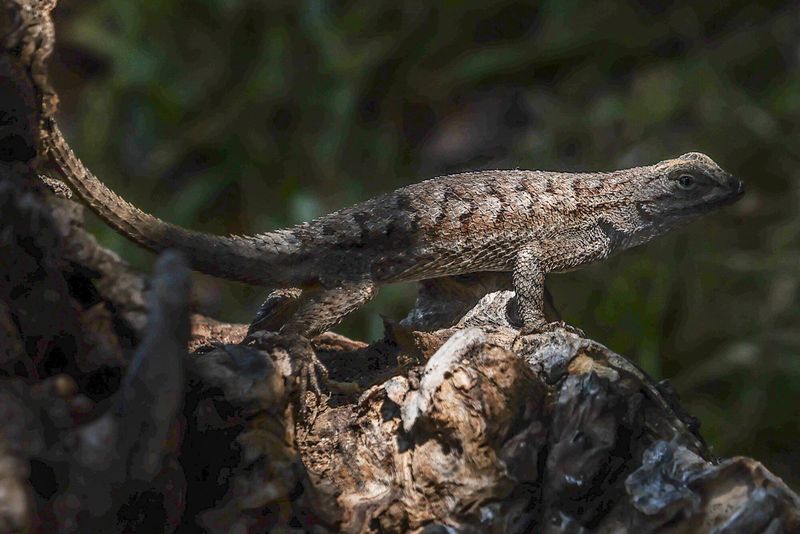
Several features commonly found in California yards can make a property more usable for western fence lizards. Sunny rocks, concrete walls, and masonry surfaces absorb heat and provide reliable basking spots.
Fences, woody shrubs, and tree trunks give lizards elevated perches from which they can watch for insects and watch for predators. Logs, crevices between stones, brush edges, and rock refuges offer shelter and escape routes when a hawk or a cat passes through.
Urban habitat studies back up these associations. A study published in Diversity found that western fence lizard occupancy in urban sites was strongly linked to the presence of potential rock refuges.
Sites with more usable rock features had measurably higher lizard occupancy. That is a meaningful association, but an association is not the same as proof that adding rocks to a yard will produce more lizards or that a specific feature caused a sudden increase.
A habitat assessment of the Los Angeles River corridor found that fence lizards in urban areas were consistently associated with climbable vertical structures including fences, walls, woody vegetation, and brush. The pattern suggests these features provide usable habitat, not that they guarantee lizard presence or produce higher numbers on demand.
Weather, prey availability, surrounding open space, and the existing lizard population in the broader neighborhood all influence which yards lizards use and how often they appear. Research on urban fence lizard morphology also shows that these animals adapt to and move through heterogeneous urban landscapes rather than being strictly tied to one property’s features.
The practical upshot: if your yard has sunny walls, a wooden fence, some rocky areas, and a shrubby edge, those features may give lizards convenient places to bask, perch, and hide. That is worth knowing, but it does not mean you engineered the current surge.
Habitat structure can make a yard suitable; it cannot, by itself, explain a sudden change in how many lizards you see on a given morning in July.
Confirm the species before applying the tick explanation
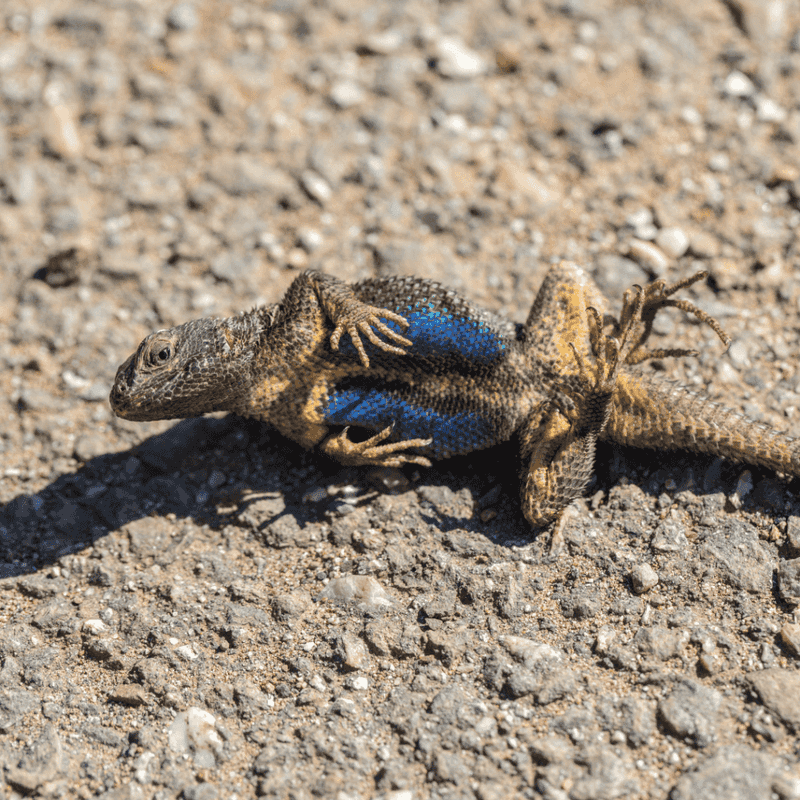
Before connecting any lizard in your yard to the tick discussion, take a moment to confirm what you are actually looking at. California is home to several small lizard species that can appear similar at a glance, and the tick-ecology relationship described in research applies specifically to western fence lizards, not to every quick-moving reptile darting across a patio.
Common look-alikes include the southern alligator lizard, which has a longer body, more prominent scales arranged in distinct rows, and a notably long tail. Side-blotched lizards are smaller and carry a dark spot behind each front leg.
Sagebrush lizards share the spiny-scale appearance of fence lizards but tend to occupy drier, more open scrub habitat. At a distance, or when an animal moves fast, these species can all blur together.
California Herps’ small spiny lizard identification guide walks through the key field marks for each species and is a reliable starting point for cautious identification.
Western fence lizards have a set of features that help narrow the identification when you can get a clear look. Adults typically show blue patches on the belly and throat, most vivid in males.
The back is grayish, brownish, or blackish with wavy crossbands or blotches, and the scales along the back are keeled and somewhat spiny to the touch. They perch upright on vertical surfaces, perform visible push-up displays, and are active in sunny open areas.
UC IPM’s lizard resource includes photographs and descriptions that support a more confident field identification.
If the markings, behavior, and habitat do not clearly match, treat the identification as uncertain. The tick discussion in the next section applies to a specific species with a documented relationship to specific tick biology, and overgeneralizing it to other lizards would be inaccurate.
The tick connection reflects complex ecology, not backyard tick control
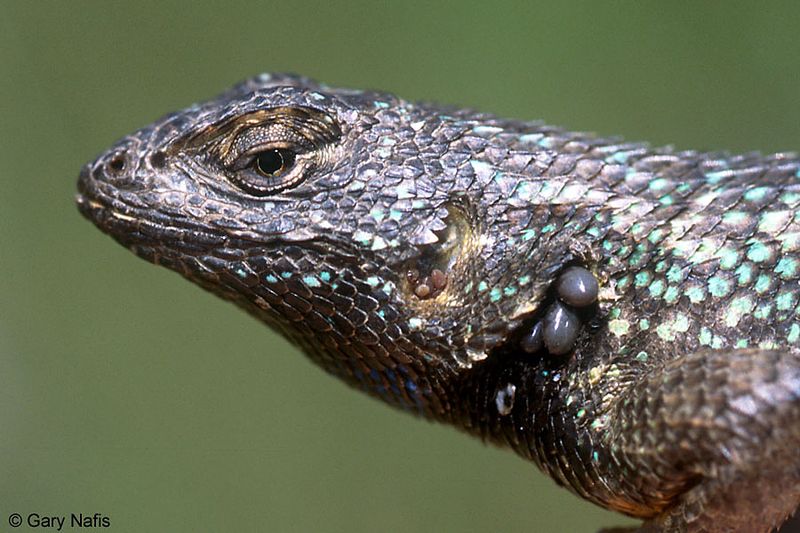
Western fence lizards have a genuinely interesting relationship with ticks, but that relationship is more complicated than the shorthand version that circulates online. Understanding it accurately matters, because the simplified version, that lizards eat ticks or that more lizards means fewer tick bites, is not what the research shows.
Immature western blacklegged ticks (Ixodes pacificusBorrelia burgdorferi) commonly feed on western fence lizards. When those ticks feed on lizard blood, a protein in the lizard’s blood can eliminate or suppress , the bacterium responsible for Lyme disease, in the feeding tick.
This means that a tick that fed on a lizard may be less likely to carry the pathogen when it later seeks a mammalian host. That is the biological basis for the claim that lizards reduce Lyme risk.
The complication is that lizards are simultaneously major hosts for large numbers of immature ticks. They support tick feeding and tick reproduction, not just tick clearance.
An experimental removal study published in Ecology found that taking lizards out of a habitat did not produce a straightforward increase in the density or infection prevalence of host-seeking nymphs. The system compensated in ways that complicated a simple cause-and-effect reading.
That finding underscores why calling lizards a tick-control tool overstates what the evidence shows.
Earlier work also established the scale of lizard tick-hosting. Eisen et al. documented lizards as primary hosts for immature I. pacificus in northern California woodland, and related research quantified the prevalence and abundance of immature ticks on individual lizards, showing that a single animal can carry dozens of larvae or nymphs at once.
More lizards can mean more ticks completing their immature feeding cycle, even as the proportion of infected nymphs may decline.
The geographic scope also matters. CDC surveillance data show that I. pacificus is concentrated along the Pacific Coast, with the highest Lyme-relevant activity in parts of northern California.
A yard in the Central Valley, a coastal Southern California suburb, or a high-elevation foothill community may have a very different tick picture than a wooded northern California property. The fence lizard-tick relationship is real within its ecological context; it is not a universal yard-level guarantee anywhere in California.
Support compatible habitat without sacrificing ordinary precautions

Translating the lizard research into practical yard decisions means balancing two things at once: creating conditions that may support lizards when those conditions fit your property, and keeping the precautions in place that protect your family and pets regardless of how many lizards are around.
On the habitat side, preserving existing rocks, low stone walls, wooden fences, logs, and shrubby edges can give lizards places to bask, perch, and retreat. The urban occupancy research points to rock refuges and vertical structures as the most consistently associated features, so maintaining what you already have is a reasonable starting point.
You do not need to redesign the yard or plant a specific species list; structure matters more than plant names.
Before retaining or adding combustible materials like brush piles, dense woody edges, or stacked wood, check your applicable local fire-safety and defensible-space rules. California’s wildfire risk means those rules vary by community and fire hazard severity zone, and what is acceptable in one neighborhood may not be permitted in another.
Contact your local fire department or check your county’s defensible-space requirements before making changes, rather than relying on general guidance.
Pest management in a lizard-friendly yard should follow the same standard that applies everywhere. UC IPM’s guidance on pesticides recommends identifying the pest first, using nonchemical methods where they are effective, and selecting the least-toxic targeted option when treatment is needed.
Broad-spectrum insecticide applications aimed at boosting lizard prey can harm the lizards themselves and disrupt the invertebrate community the yard depends on. Lizards are not a pest in California; there are no registered toxicants or repellents for them, and they should not be targeted.
UC IPM advises that if a lizard enters a building, the safest approach is to gently contain it with a box and a piece of cardboard, guide it outside, and then seal any openings a quarter-inch or larger to prevent re-entry.
Tick precautions belong on the same checklist as habitat decisions, not as a replacement for them. CDC guidance on preventing tick bites includes checking people, clothing, pets, and gear after spending time outdoors; showering within two hours of coming inside; removing attached ticks promptly; and managing leaf litter, tall grass, and brush in areas where tick exposure is a concern.
Lizard presence does not change any of that calculus. Treat the two topics as parallel responsibilities, not competing ones.
Treat the lizard surge as a seasonal clue, not a reason to stop prevention
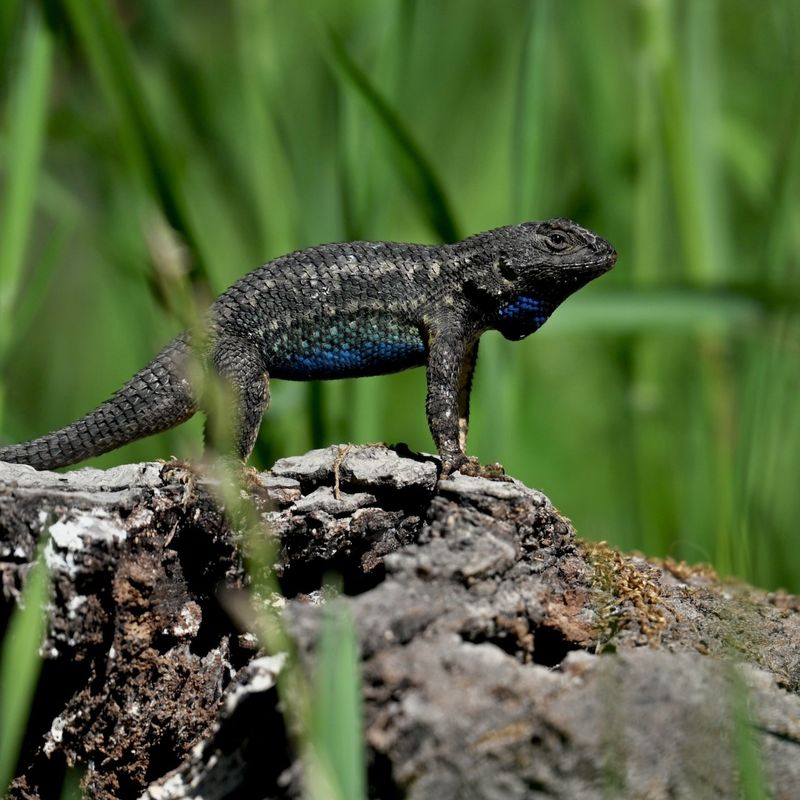
A yard full of western fence lizards in July is not a mystery that requires a dramatic explanation. Warm temperatures, longer days, territorial male displays, and a fresh cohort of summer hatchlings can all combine to make a population that was always present look suddenly larger.
Yard features like sunny walls, wooden fences, rocky edges, and shrubby cover may give lizards convenient places to use your property, though weather, surrounding habitat, and prey availability shape the picture too.
UC IPM describes these animals as generally harmless and potentially useful consumers of pest insects, which is a reasonable way to think about them. The tick connection is real but narrow: research on lizard-tick ecology shows that western fence lizards can affect how Borrelia burgdorferi moves through immature western blacklegged ticks, while also hosting large numbers of those ticks.
The net effect on your yard’s tick risk depends on location, tick species, and the broader host community, not on lizard count alone.
The practical action standard is straightforward. Welcome the lizards if they fit your property, preserve compatible habitat features when local fire-safety and defensible-space rules allow, and continue standard tick-prevention practices for people, pets, and gear every time you spend time outdoors.
A lizard on your fence is a sign of a functioning California yard, not a substitute for the precautions that keep your household safe.