
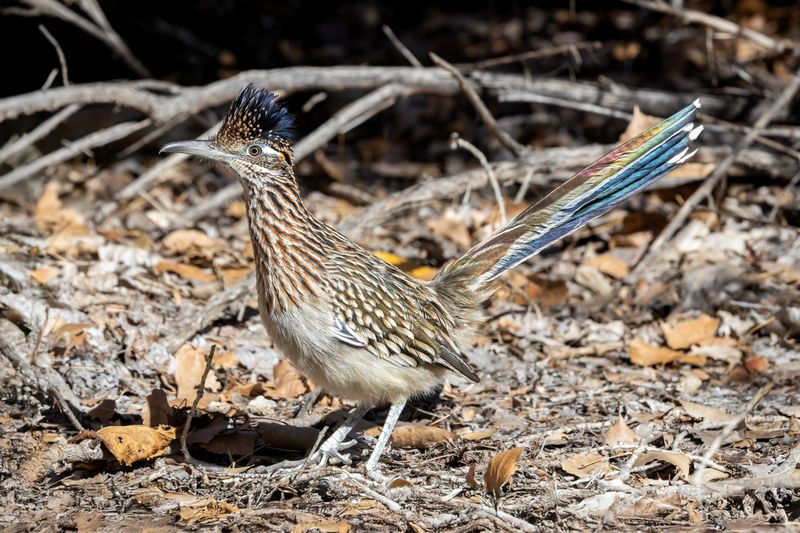
Greater Roadrunners are one of Texas’s most recognizable birds, and yes, they do eat scorpions. But the idea that attracting more of them will clear your yard of scorpions is a popular belief that the evidence simply does not support.
This article explains what roadrunners actually eat, how to make your Central Texas yard a better place for occasional visits, and what really works when you want fewer scorpions near your home.
Roadrunners eat scorpions—but they are not proven exterminators
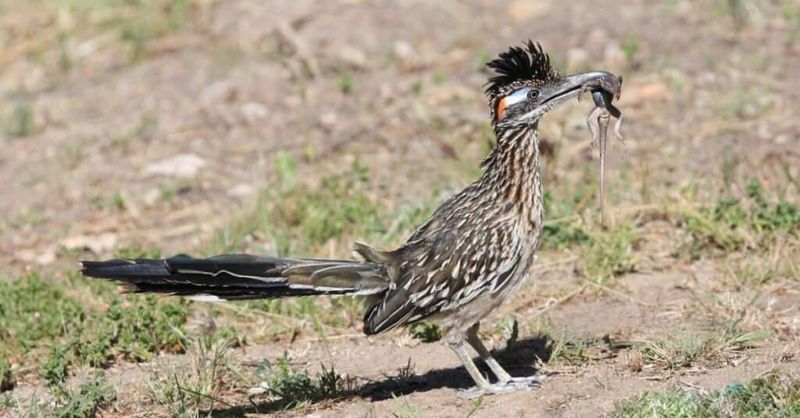
Greater Roadrunners are real, widespread birds across Texas, including Central Texas, and they do consume scorpions. That part is well-documented.
What is not supported by the available evidence is the next logical leap: that attracting more roadrunners to your yard will measurably reduce the scorpion population around your house.
According to Cornell Lab’s Greater Roadrunner life history profile, these birds are opportunistic generalist predators. Their diet spans insects, spiders, centipedes, scorpions, lizards, snakes, rodents, birds, eggs, and nestlings.
Scorpions show up on that list, but they are one food item among many, not a primary target.
A Texas Parks and Wildlife study on summer diets of Greater Roadrunners in South Texas did find scorpion remains in sampled birds, but insects and vertebrate prey were also significant parts of the diet. Critically, the research did not measure whether roadrunner presence reduced scorpion numbers in any area, and it made no claims about household pest-control effects.
The honest framing is this: a roadrunner hunting through your yard is part of a functioning food web, and it may occasionally take a scorpion. That is genuinely worth supporting.
Expecting it to eliminate or even noticeably reduce your scorpion problem, though, is a different claim, and no reliable study backs it up. The rest of this article focuses on how to support roadrunner habitat responsibly while taking direct, effective steps to keep scorpions away from your home.
Build the open-and-brushy structure roadrunners use
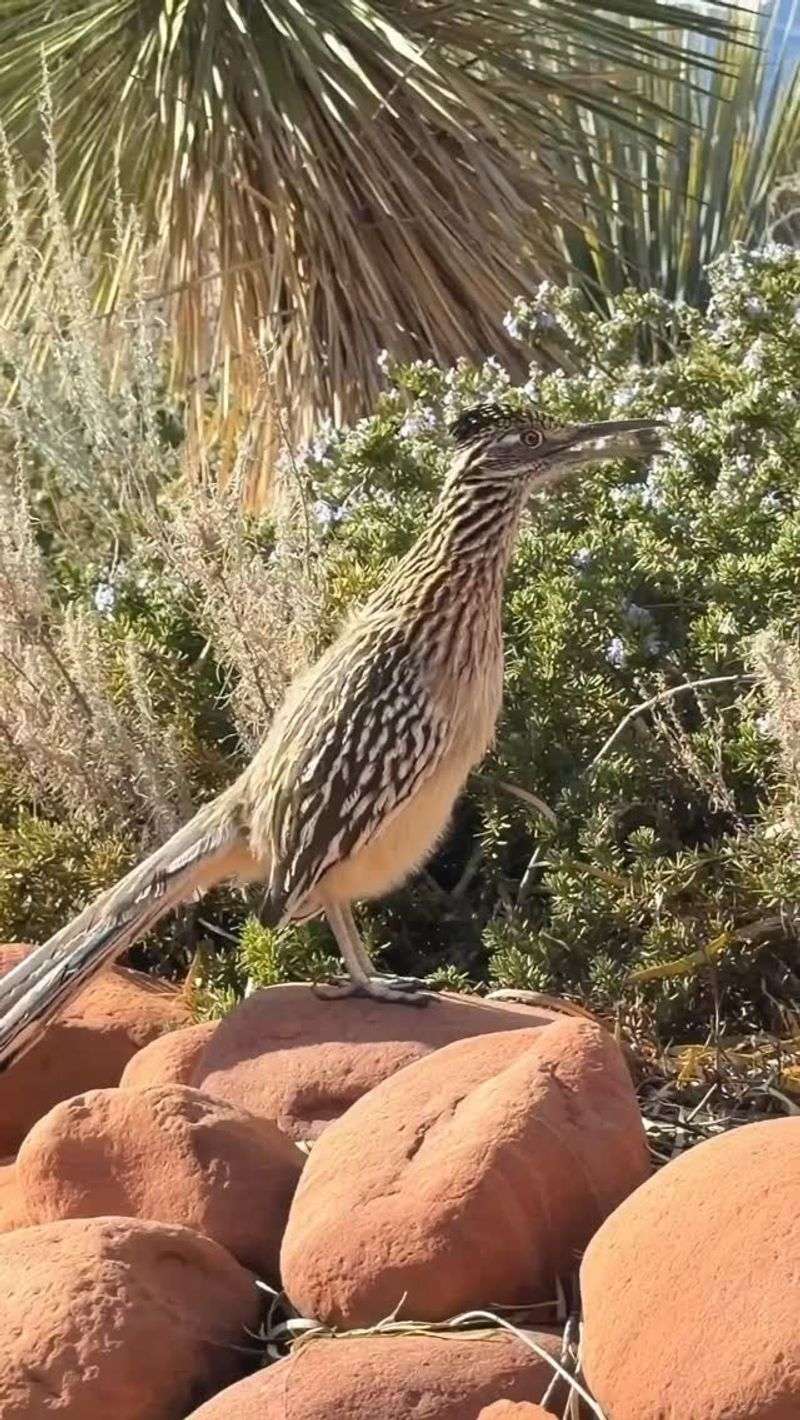
Habitat structure matters far more than any specific plant when it comes to making a yard usable to roadrunners. According to the Texas Breeding Bird Atlas account for Greater Roadrunners, these birds favor a combination of open ground for walking and hunting alongside scattered shrubs, thorny vegetation, trees, and other sturdy cover for perching, sheltering, and nesting.
That combination, open patches mixed with brushy cover, is the structural key.
A yard that is entirely lawn gives a roadrunner nowhere to shelter or perch. A yard that is entirely dense, continuous planting gives it nowhere to walk and hunt effectively.
The sweet spot is somewhere between those extremes: some open, walkable ground with clear sightlines, plus scattered native shrubs or thorny cover placed at intervals rather than in solid hedgerows.
Texas Parks and Wildlife Wildscape guidance recommends native vegetation, natural shelter, and habitat features that support the broader food web rather than a curated list of plants guaranteed to attract any one species. Regionally appropriate native grasses, shrubs with branching structure, and open soil or mulched ground between plantings all contribute to the kind of varied terrain roadrunners move through.
No single plant species has been shown by reviewed research to reliably attract roadrunners or deter scorpions. Focus on replicating the habitat structure, open hunting ground plus scattered cover, rather than searching for a magic plant.
Roadrunners are wild birds with large territories, and what pulls them through your yard is a combination of structure, prey availability, and broader landscape conditions that extend well beyond any one property line.
Separate wildlife shelter from the house
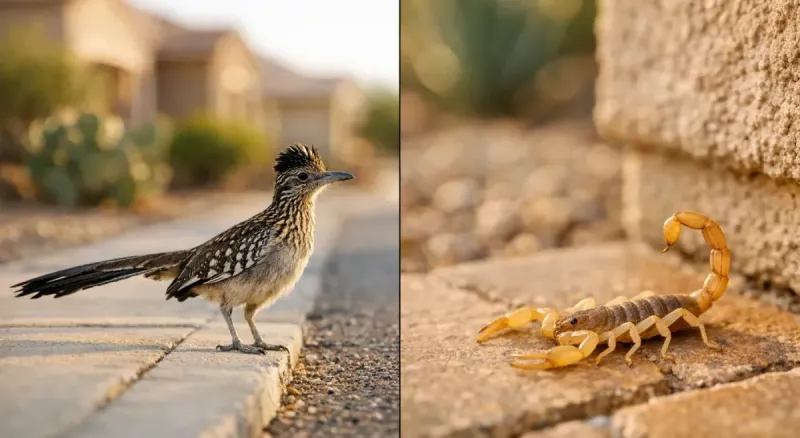
One of the most practical things a Central Texas homeowner can do is put wildlife shelter in the right place, which means away from the house. Brush piles, stacked logs, rock clusters, and dense low vegetation all provide genuine value for wildlife.
The problem arises when those same features end up pressed against a foundation, piled beside a door, or tucked under a porch where they become scorpion hotels instead of wildlife refuges.
Texas Parks and Wildlife habitat project guidance supports brush piles and natural shelter structures as valuable wildlife features. At the same time, Texas A&M AgriLife Extension’s scorpion management publication specifically recommends removing logs, boards, stones, bricks, trash, and similar debris from around structures, because those materials create exactly the cool, dark, moist hiding spots scorpions seek.
Those two recommendations are not in conflict. They just require a thoughtful yard layout.
Place your wildlife zone, including brush piles, native plantings, and natural cover features, at a meaningful distance from the home. Texas Parks and Wildlife guidance on creating shelter for Texas wildlife supports this kind of intentional placement rather than scattering cover randomly around the property.
Keep the immediate house perimeter open, visible, and easy to inspect. A clear, tidy zone around the foundation, free of clutter, stacked materials, and overgrown vegetation, makes it much harder for scorpions to establish harborage close to entry points.
You can have a wildlife-friendly yard and a scorpion-resistant perimeter at the same time, as long as you do not put the two goals in the same square footage.
Support the food web without manufacturing a lure
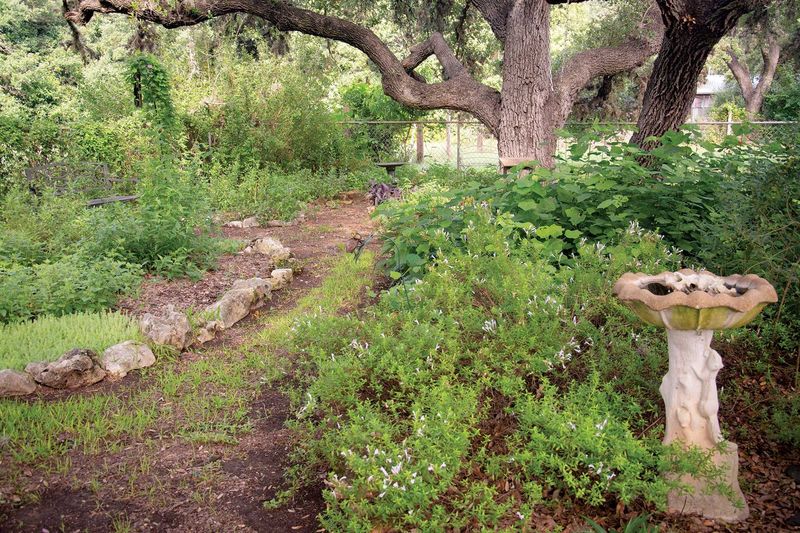
Native vegetation does something more useful than decorating a yard: it supports the insects, spiders, and small animals that form the food web roadrunners move through. When a yard sustains a healthy population of grasshoppers, beetles, and other invertebrates through native plantings and reduced pesticide use, it becomes a more functional hunting ground for a wide range of predators, including roadrunners when they pass through.
Texas Parks and Wildlife Wildscape tips recommend leaving insects in the habitat as part of the food web rather than treating the yard as a sterile surface. Broad pesticide applications that eliminate insects also eliminate food sources for birds and other predators, working against the habitat goals you are trying to achieve.
A shallow, clean water source is a reasonable general improvement for any wildlife-friendly yard. Cornell Lab’s birdbath guidance recommends keeping water shallow and refreshing it regularly to benefit birds broadly.
That said, roadrunner life history research notes that these birds obtain much of their water from the prey they eat and may use water sources only opportunistically. A birdbath can benefit many yard species, but it is not a reliable roadrunner lure, and presenting it as one would set expectations the evidence does not support.
The most effective approach is to build a yard that functions as genuine habitat: native plants supporting insects, insects supporting predators, water available for opportunistic use. That creates real ecological value without relying on shortcuts that do not work.
Never bait a roadrunner with scorpions or pet food
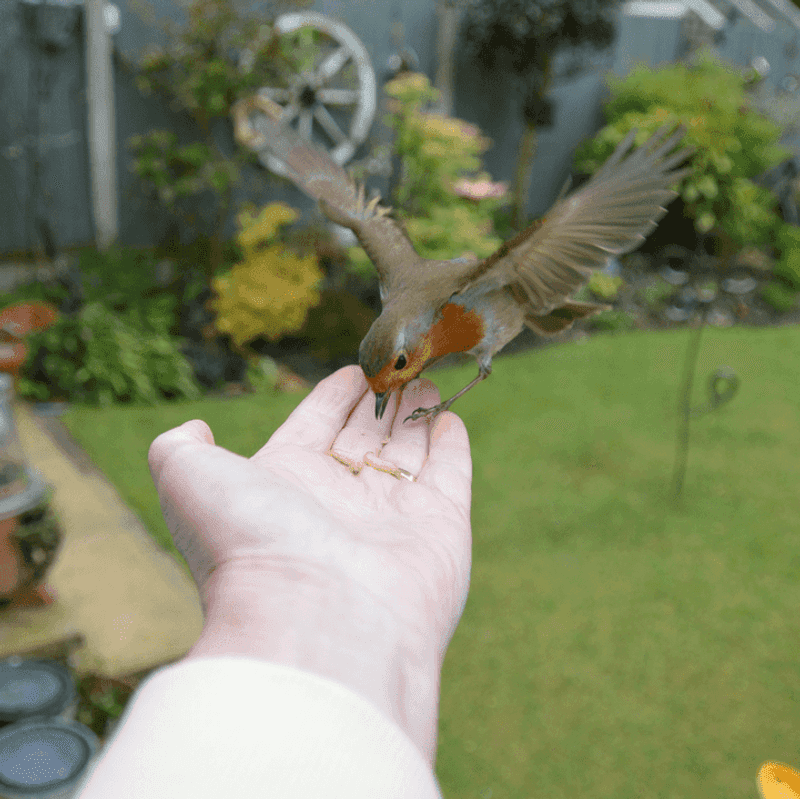
Putting out live scorpions, dead scorpions, raw meat, cat food, or dog food to attract a roadrunner is a genuinely bad idea, and not just because it rarely works. Baiting wildlife creates a chain of problems that can outlast any brief bird sighting by months or years.
U.S. Fish and Wildlife Service guidance on the hidden harms of feeding wildlife explains that food placed out for one animal rarely stays exclusive to that animal.
Meat and pet food attract raccoons, opossums, rats, and other animals you probably did not intend to host. Those animals bring their own behavioral and health risks, including disease transmission and increased predator pressure on native species you actually want to protect.
Audubon specifically advises against baiting roadrunners, noting that habituating wild birds to human-supplied food can alter their natural behaviors and create conflicts. A roadrunner that associates humans with food is not behaving like a wild predator moving through natural habitat; it is a bird with a learned dependency that may eventually become a problem.
For readers who feed other bird species, regular feeder maintenance matters. Fish and Wildlife Service guidance on feeding wild birds recommends cleaning feeders regularly, removing spoiled or wet seed promptly, and watching for signs of sick birds.
Feeders are not a roadrunner-attraction tool since roadrunners do not eat seed, but a well-maintained feeder station is less likely to create the unsanitary conditions or rodent activity that cause their own problems around a home.
Use exclusion and integrated pest management for scorpions
Wildlife habitat is for wildlife enjoyment. Scorpion control around the house requires a different set of tools, and those tools are well-established.
The starting point is always habitat modification: removing the conditions that let scorpions thrive near a structure.
Texas A&M AgriLife Extension’s scorpion management guide recommends a clear checklist of physical steps. Remove outdoor harborage near the structure, including logs, boards, stones, bricks, and debris piles.
Prune shrubs and tree branches away from exterior walls so scorpions do not have a bridge into the structure. Keep grass and ground cover short near the foundation.
Elevate firewood off the ground and store it away from the house. Seal cracks, gaps, and utility penetrations in the foundation and walls.
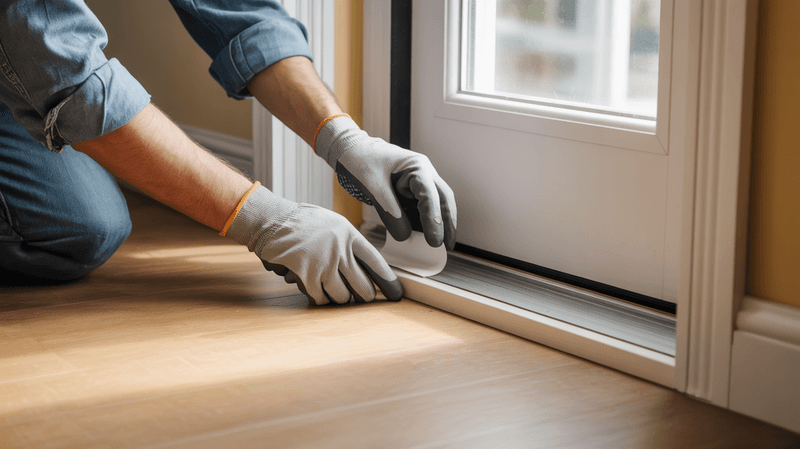
Install or repair weather-stripping on doors and screening on windows and vents.
The Texas A&M scorpion resource page also notes that reactions to stings vary, and that medical attention may be necessary for serious symptoms, especially when children or people with allergies are involved. Do not handle scorpions or disturb likely hiding places bare-handed.
Use long-handled tools, gloves, and a blacklight at night if you are inspecting for scorpions, since they fluoresce under ultraviolet light.
Pesticides belong within a broader integrated pest management framework, which means they are used only when monitoring confirms a problem that physical and exclusion methods have not resolved. When pesticides are warranted, EPA smart pest control guidance is clear: follow the product label exactly, use the minimum effective amount, and prioritize formulations appropriate for indoor or perimeter use around a home with children and pets.
Physical exclusion and habitat removal remain more reliable long-term than chemical treatment alone.
Expect occasional visits, not scheduled pest control
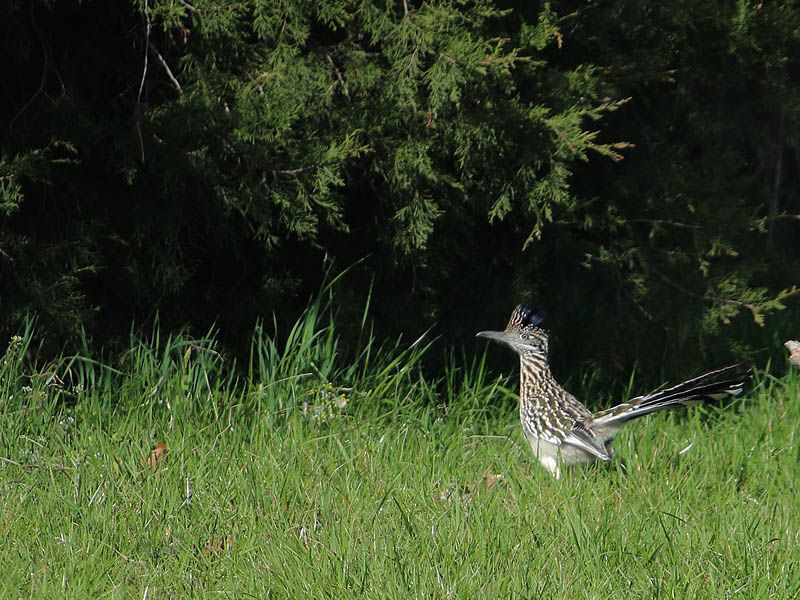
Scale is the part of this conversation that most popular articles skip. A West Texas study on Greater Roadrunner home range and habitat selection measured average home ranges of approximately 43 hectares, which is roughly 106 acres.
A typical residential lot in Central Texas covers a fraction of one acre. A roadrunner that visits your yard is not living there; it is passing through a territory that extends far beyond your property line and encompasses many different hunting grounds.
That scale means you cannot count on a roadrunner to stay, return on any schedule, or focus its hunting on the scorpions nearest your foundation. The bird decides where to hunt based on prey availability, cover, terrain, traffic, pets, and territorial pressure from other roadrunners.
A yard improvement you make today might encourage an occasional visit; it will not create a resident scorpion patrol.
The diet picture reinforces this. Cornell Lab’s roadrunner life history describes a bird that takes whatever prey is available and accessible, including lizards, snakes, small mammals, eggs, nestlings, and other birds.
A roadrunner hunting in your yard may eat a grasshopper, a gecko, a mouse, or a scorpion, depending on what it finds first. You cannot direct that behavior toward household pest control.
The South Texas diet research from Texas Parks and Wildlife also raised a point worth acknowledging: roadrunners are predators that consume other wildlife, including prey that some homeowners value. Their predation on lizards and other species is part of their natural role, not a side effect to fix.
Welcoming a roadrunner into a yard means accepting a wild predator on its own terms, not a trained pest-management tool operating within your preferred parameters.
Give roadrunners habitat and give your house a barrier
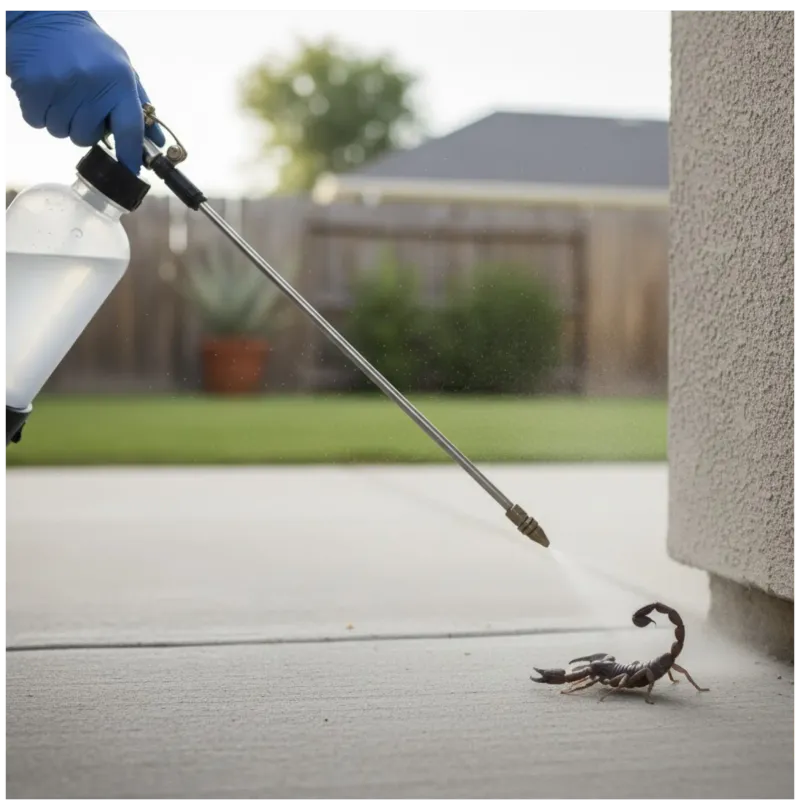
Two goals can coexist in a Central Texas yard, and keeping them spatially separated is the key to making both work. Position your wildlife zone, open hunting ground, scattered native cover, natural shelter features, and a shallow water source, at a meaningful distance from the house.
That zone can genuinely support a functioning food web, and a roadrunner moving through a larger territory may use it.
The Texas Breeding Bird Atlas roadrunner account and Texas Parks and Wildlife Wildscape guidance both point toward native habitat structure as the foundation of any wildlife-friendly yard. Build that structure away from the home rather than against it.
At the house itself, follow the Texas A&M scorpion exclusion checklist: clear perimeter, sealed gaps, managed vegetation, and no harborage materials within reach of the foundation. Measure your success there by how few entry opportunities remain, not by how many birds you spotted.
Roadrunners are worth supporting in Central Texas yards because they are part of a native food web that benefits from functioning habitat, not because they will solve a pest problem for you. A yard that is good for roadrunners is also good for a wide range of native wildlife.
That is the real payoff, and it does not require overstating what any one bird can do. Apply integrated pest management principles to the scorpion side of the equation, and let the habitat work on its own terms for everything else.