
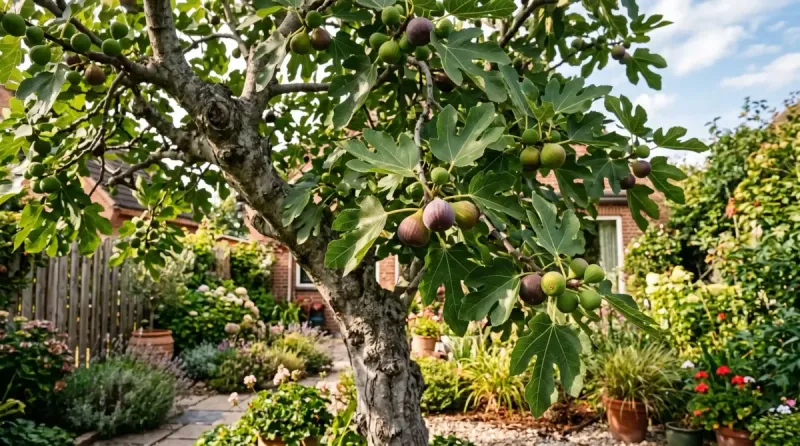
Fig trees in North Carolina can produce a generous late-season crop, but hot, dry August weather puts developing fruit at real risk. Water stress is one of the most common reasons figs drop before they ripen, and correcting it now gives the fruit already on your tree a better chance to hang on and sweeten up.
This guide explains how to water correctly, what to skip, and why the final harvest depends on more than any single action.
Steady moisture can protect developing figs during dry August weather
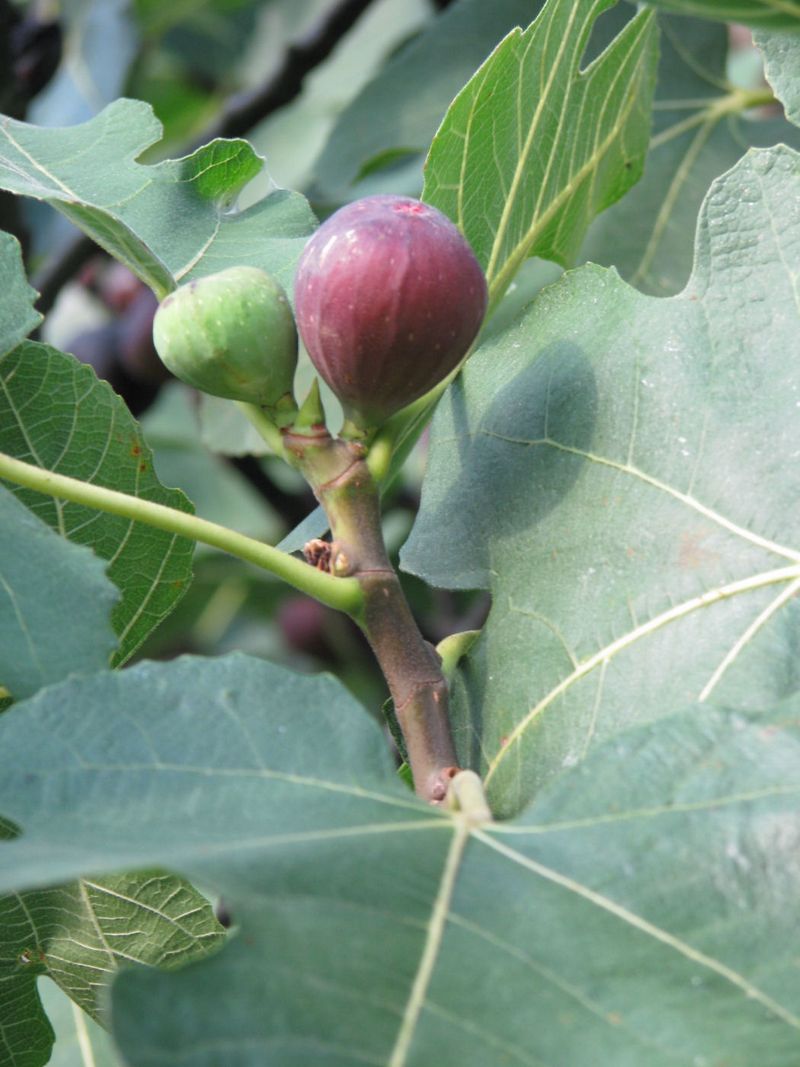
Hot August afternoons and stretches without rain put North Carolina fig trees under real pressure. When soil moisture drops sharply and stays low, the tree responds by shedding developing fruit before it ripens.
That drop is not random: UC IPM research on fig drop and fruit failure links drought stress directly to immature fruit drop, reduced production, and fruit that stalls before reaching mature size or color.
Keeping the root zone consistently moist during hot, dry weather is an important practical response for any tree already showing signs of stress. Consistent moisture helps protect the fruit that is already developing, rather than creating a crop the tree or the season cannot support.
A tree that drops its fruit in August because of drought has lost that potential harvest permanently.
Watering is not the only variable in play. Cultivar, tree age, winter injury, available sunlight, heat accumulation, drainage, and the remaining frost-free days in your part of North Carolina all shape whether fruit stays on the tree and ripens.
UGA Extension’s fig production guide notes that tree maturity and environmental conditions together determine crop potential, and no single action can override a non-bearing cultivar, severe disease, heavy shade, or a cold snap that arrives before fruit matures.
What steady moisture can do is remove one major obstacle during a critical window. If your tree has healthy current-season growth, adequate sunlight, and developing fruit, reducing drought stress gives those figs a better shot at staying attached and ripening later in the season.
That is a worthwhile and realistic goal for August.
How much water should a fig tree receive in August?
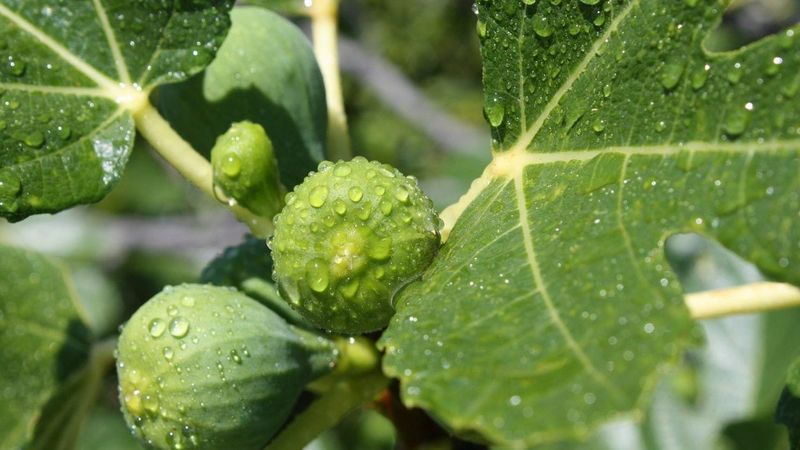
A practical target for established fig trees during the growing season is roughly 1 to 1.5 inches of water per week, combining whatever rainfall has fallen with any supplemental irrigation you add. UGA Extension’s fig production guide supports this general range for productive trees, and Mississippi State Extension’s fig review echoes the importance of consistent soil moisture through the fruiting period.
The key word is combined. If two inches of rain fell this week, you likely do not need to add irrigation at all.
If the forecast shows nothing and the soil a few inches down feels dry, make up the difference yourself. Checking the soil before watering rather than running on a fixed schedule prevents both under-watering and the kind of repeated saturation that figs handle poorly.
Newly planted trees need more attention than established ones. UF/IFAS guidance on growing figs notes that young trees are still building their root systems and can dry out faster between waterings, so more frequent checks matter during their first few seasons.
An established tree with a wide root system has more buffer, but prolonged drought will still stress it.
Soil type shifts the math, too. Sandy soils drain quickly and may need water more often in smaller amounts, while heavier clay soils hold moisture longer but can stay saturated if drainage is poor.
Adjust your schedule based on what the soil and the weather are actually doing rather than following a rigid weekly timer. The goal is steady moisture, not a fixed calendar.
Apply water across the root zone and stabilize it with mulch
Where you put the water matters almost as much as how much you apply. Fig roots spread outward well beyond the canopy edge rather than concentrating right at the trunk, so wetting only the soil immediately around the base misses most of the active root zone.
NC State Extension’s fig culture guide recommends distributing water across the root zone and allowing it to soak in deeply rather than relying on a quick surface spray that evaporates before reaching the roots.
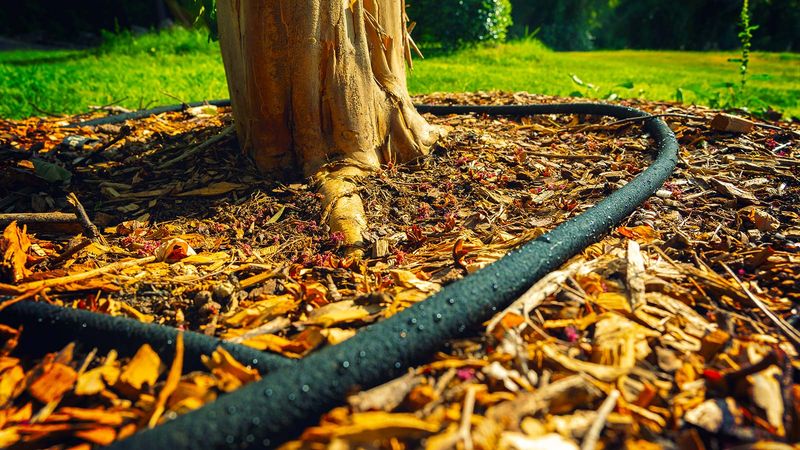
Slow, deep watering encourages roots to follow moisture downward, which makes the tree more resilient between irrigation cycles. A soaker hose or drip line laid in a ring under the canopy works well for this.
Overhead sprinklers can work too, but wetting foliage and fruit repeatedly in humid North Carolina summers can invite fungal problems, so watering at ground level is generally the better choice.
Organic mulch is one of the most practical tools for keeping root-zone moisture steady between waterings. A layer of wood chips, shredded bark, or pine straw spread two to four inches deep across the root zone slows evaporation, moderates soil temperature, and reduces competition from grass and weeds that would otherwise pull moisture away from the tree.
UC IPM’s fig drop resource identifies moisture swings as a contributing factor in fruit drop, and mulch is one of the simplest ways to dampen those swings.
Two rules apply to mulch placement. Keep it several inches away from the trunk itself, because mulch piled against bark traps moisture that can promote rot and disease.
Also confirm that the planting area drains well: mulch conserves moisture, but it cannot fix a site where water pools and sits. UF/IFAS gardening solutions notes that figs perform poorly in persistently wet soil, so good drainage remains a baseline requirement regardless of how carefully you mulch.
Skip late fertilizer and avoid heavy pruning when fruit matters most
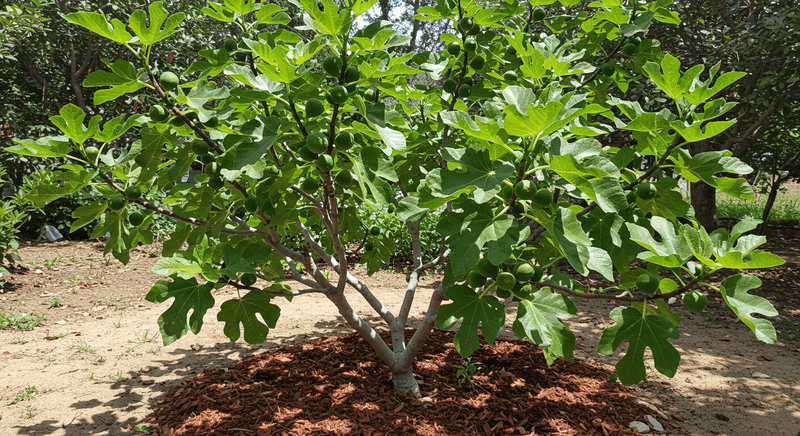
Two actions that feel productive in August can quietly undermine the crop you are trying to protect. The first is adding nitrogen fertilizer.
NC State Extension’s fig culture guide advises reducing or eliminating nitrogen when a tree is already producing more than one to two feet of new growth per season. A fig that is pushing plenty of leafy shoots does not need more fuel for vegetative growth; adding nitrogen at this point tends to redirect the tree’s energy toward leaves rather than fruit, and it can increase the likelihood of fruit splitting and souring.
There is a winter hardiness problem with late fertilizing, too. Nitrogen applied in August can push tender new growth that has not had time to harden off before the first cold arrives.
That soft tissue is more vulnerable to freeze damage, which can affect next year’s crop as well as this one. If your tree’s growth looks healthy and vigorous, hold off on fertilizer and let the tree focus on the fruit it already has.
The second temptation is pruning. Heavy cutting in August removes current-season shoots, and those shoots are exactly where the main fig crop develops.
Clemson Extension’s fig care guide explains the distinction clearly: breba figs, which appear early in the season, form on older wood from the previous year, while the main crop forms on new growth produced during the current season. Cutting that new growth in August means cutting off the fruit that is either already forming or still developing.
Rutgers Extension’s fig guide supports late-winter pruning as the general timing recommendation, before new growth begins in spring. Exceptions exist: a dead or badly diseased branch should come off whenever it is found, and trees that froze back heavily may need corrective cuts in spring as new growth reveals what survived.
Outside of those specific situations, August is not the time to reshape a tree that still has fruit on it.
A late crop depends on cultivar, tree condition, and the local frost window
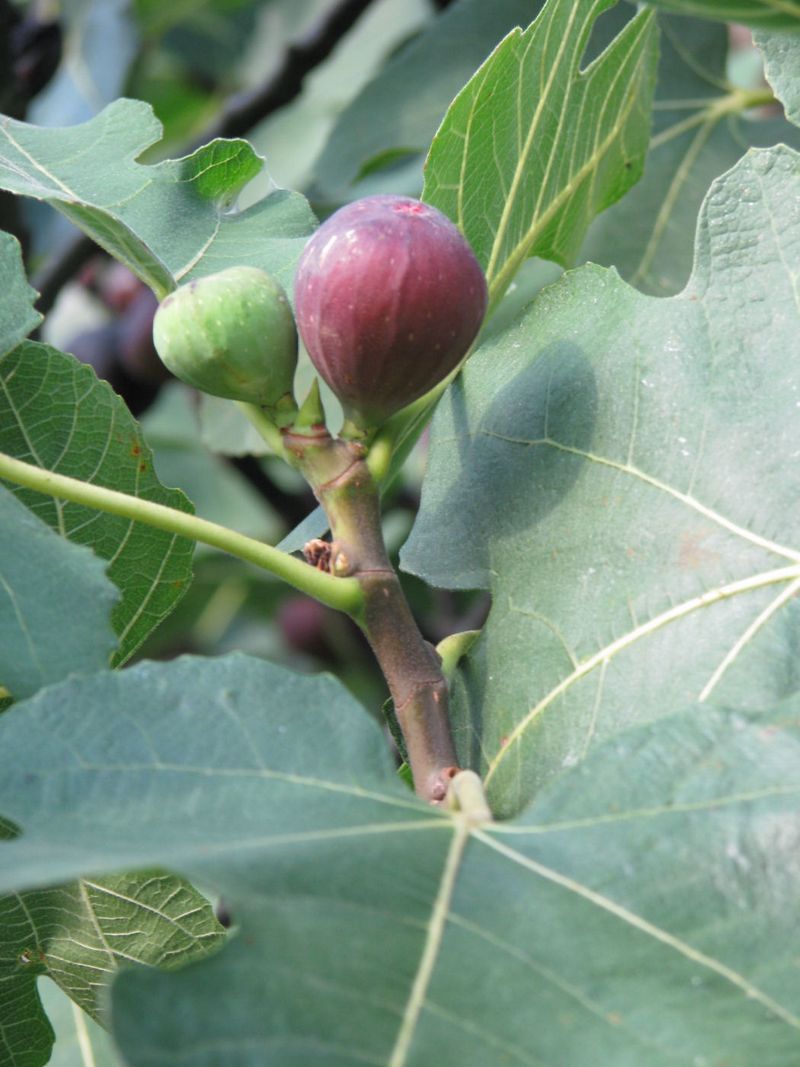
Watering correctly is worth doing, but it works within limits that no amount of irrigation can move. The cultivar your tree belongs to is the starting point.
Rutgers Extension’s fig guide notes that crop number, size, and timing vary considerably by cultivar, and some varieties do not reliably ripen a late crop before cool weather arrives. Common cultivars like Celeste and Brown Turkey are well adapted to North Carolina conditions, but their behavior still varies by site, tree age, and the specific season.
The distinction between a breba crop and a main crop matters here. Breba figs develop on older wood that overwintered from the previous year, so they appear relatively early in the season.
The main crop forms on current-season shoots and ripens from late summer into fall. UF/IFAS fig production guidance clarifies that not all cultivars produce a meaningful breba crop, and some produce mainly a main crop.
Expecting two full harvests from every tree sets up a disappointment that has nothing to do with your watering habits.
Tree age and winter injury set another ceiling. Young trees may take several seasons to produce a substantial crop regardless of how well they are managed.
University of Maryland Extension’s fig resource notes that trees that froze back to the ground may fruit on new shoots but often produce a smaller or later crop than a tree that came through winter with its above-ground structure intact.
Regional frost timing adds one more variable. NC State’s analysis of North Carolina climate characteristics confirms that the mountains generally see first frost earlier than the Piedmont or Coastal Plain.
Eastern North Carolina typically offers a longer average ripening window, which gives late-developing fruit more time to mature. That regional pattern is a tendency, not a promise: microclimate, elevation, and year-to-year weather variation can shift the outcome significantly.
Clemson Extension’s fig guide reinforces that some late fruit simply will not ripen before frost, regardless of how well the tree was managed through summer.
Maintain even moisture until figs soften and reach mature color
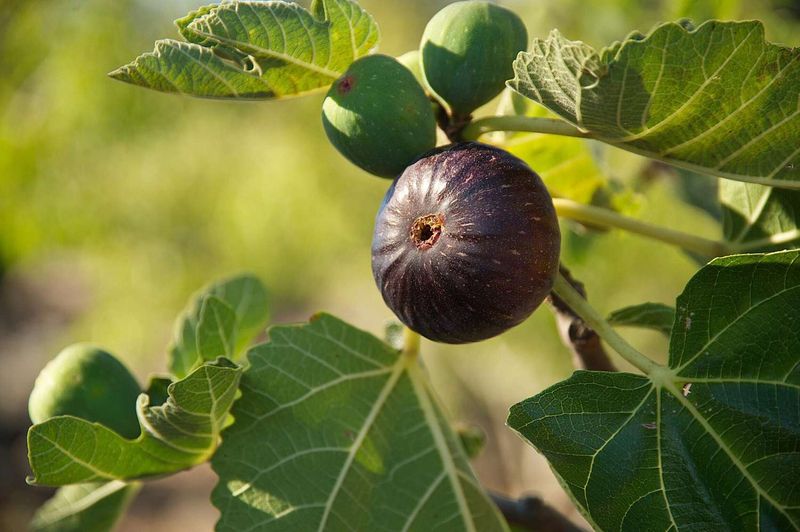
Once fruit is developing, consistent moisture stays important all the way through ripening. Pulling back on water in August or September to try to speed up ripening does not work that way: UC IPM’s fig drop resource links drought stress with fruit that stalls, drops, or fails to ripen properly.
The goal is to keep soil moisture steady, not to cycle between dry and saturated, which is exactly the kind of stress that costs you fruit.
Waterlogged soil is the other side of the problem. Mississippi State Extension’s fig review notes that figs need consistent moisture but also well-drained conditions to perform well.
If the soil stays soggy for days after rain, root health suffers and the tree cannot take up water efficiently even when it is available. Consistent moisture and good drainage go together.
Knowing when to harvest matters just as much as knowing when to water. Ripe figs soften noticeably and develop the mature color typical of their cultivar, whether that is deep purple, brownish-black, or golden green depending on the variety.
NC State Extension’s fig culture guide advises harvesting ripe fruit promptly, and the NC State Extension Gardener Handbook notes that figs are highly perishable, particularly in humid weather. A ripe fig left on the tree for too long splits, sours, or becomes attractive to insects and birds.
Pick ripe fruit every day or two during the harvest window.
Protect the crop’s potential, then let the season determine the harvest
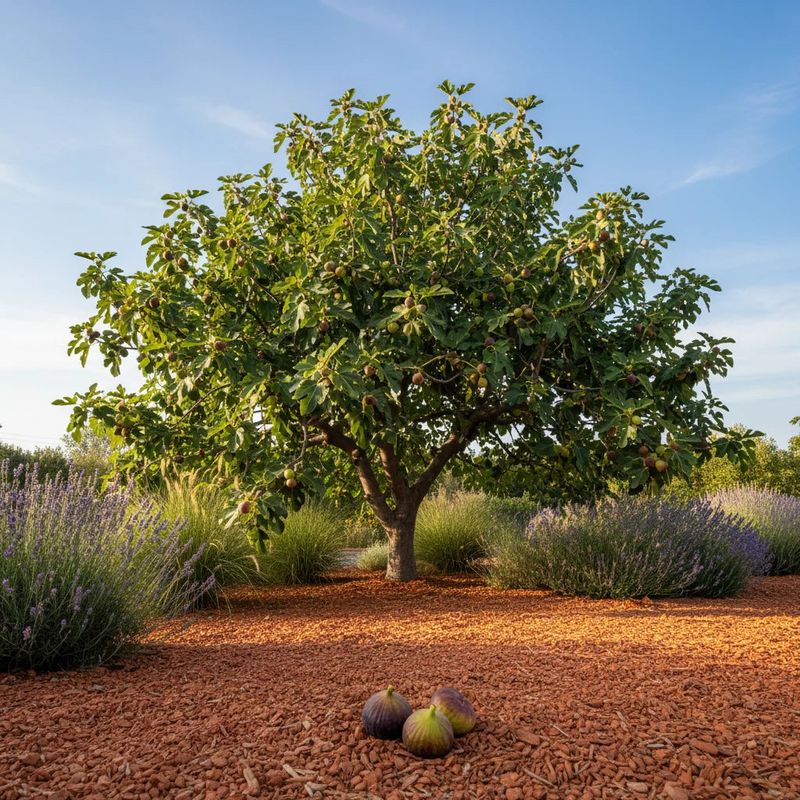
The practical checklist for August is short. Check rainfall each week and add supplemental irrigation to bring the total close to one to one and a half inches, spread across the full root zone rather than concentrated at the trunk.
Keep mulch in place and a few inches away from the bark. Hold off on fertilizer unless a soil test or clear deficiency symptoms give you a specific reason to act.
Leave the pruning shears alone until late winter, outside of removing dead or diseased wood.
NC State Extension’s fig culture guide and UGA Extension’s fig production guide together support this approach as the foundation of late-season fig management. Steady moisture helps developing figs stay attached and gives them a better chance to reach mature size and color before the season closes.
Whether a second crop fully develops and how much of it ripens before frost depends on your cultivar, your tree’s condition coming out of last winter, your location in the state, and the weather the season delivers. A well-watered tree in good health cannot overcome an early frost, a non-productive cultivar, or heavy shade, but it arrives at the finish line in the best shape possible.
That is what good August management actually earns you: not a guarantee, but a genuinely fair shot at the fruit your tree is capable of producing.