
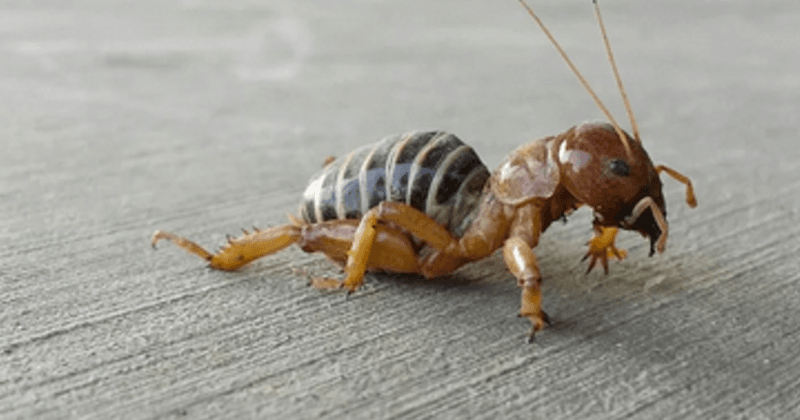
Pull back a rock or dig into a garden bed in California, and you might come face to face with one of the most startling insects in the state – a large, round-headed, striped creature that looks like it belongs in a science fiction film. Most homeowners reach for a shovel or a spray can before they realize what they are dealing with.
The California Jerusalem cricket is a native soil-dweller that is usually harmless, plays a real role in local food webs, and almost never needs to be controlled. Understanding what it actually does underground is the first step toward making a smarter call.
Meet the Underground Insect Many Gardeners Misjudge
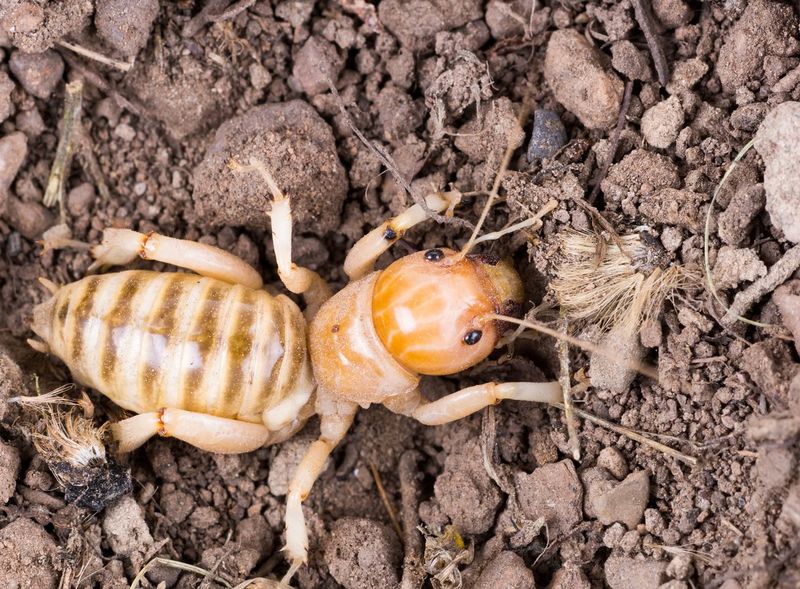
A Jerusalem cricket showing up in your garden bed is not a sign that something has gone wrong. UC Integrated Pest Management describes these insects as large, wingless, mostly nocturnal members of the family Stenopelmatidae – not true crickets at all, and not insects with any connection to Jerusalem.
The common name is simply a regional quirk that stuck, and the alarming appearance is the main reason so many of them get killed unnecessarily.
The body plan alone tends to trigger a strong reaction. Jerusalem crickets have a large, bald, humanoid-looking head, a striped abdomen, and powerful hind legs built for digging.
Adults can reach an inch and a half or more in length, which makes them hard to ignore when a shovel turns one up. That size, combined with an unfamiliar shape, is enough to convince most people they are dealing with something dangerous.
In California, the common name covers more than one species. The insects belong to a group with significant genetic diversity across the state, so “Jerusalem cricket” is best used as a family-level description unless an expert has confirmed the exact species.
USGS researchers studying Jerusalem cricket communication have documented their complex drumming behavior, which adds to the evidence that this group is biologically richer than its reputation suggests.
Gardeners most often encounter them while digging, turning compost, or moving rocks. Rainfall and irrigation can also push individuals toward the surface at night, which is when the insects are most active.
Seeing one does not mean your garden has a problem. Recognizing the insect and deciding whether to act are two separate steps, and for most California homeowners, the second step ends with leaving the cricket where it is.
Their Tunnels Disturb Soil, but Do Not Prove Aeration
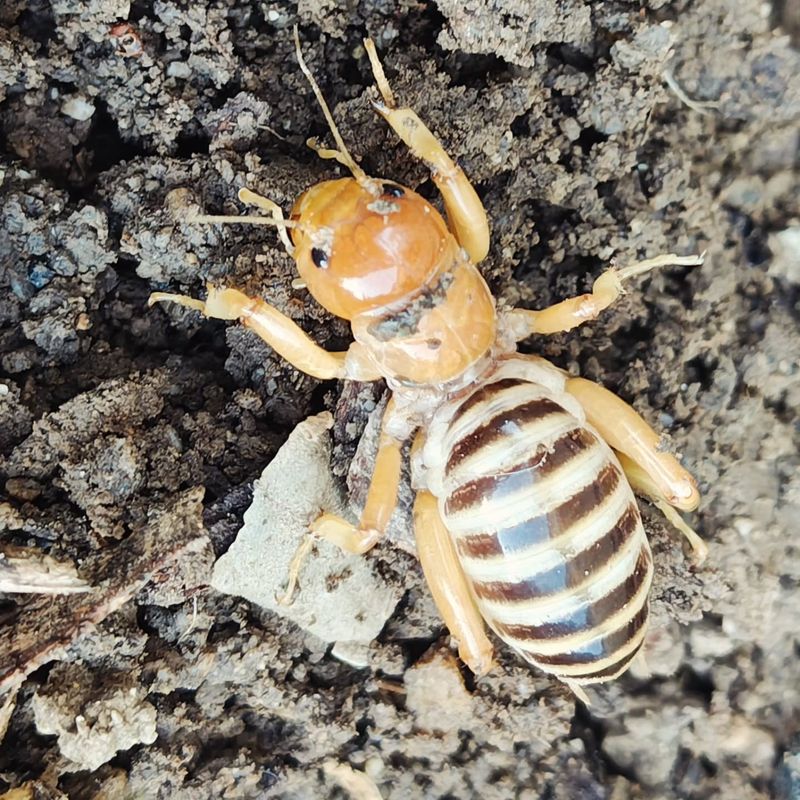
Jerusalem crickets spend the majority of their lives below the surface. UC IPM notes that eggs are laid in soil and that the insects live underground through much of their development, which can span close to two years.
Their strong forelegs and robust body are built for pushing through compacted earth, and they do move through the soil column as they search for food and shelter.
That burrowing behavior is real and documented. Where the story gets more complicated is in what that burrowing actually accomplishes for the garden.
The title of this article originally suggested that Jerusalem crickets “aerate” your soil, and that word carries a specific meaning: improved drainage, better oxygen delivery to plant roots, enhanced nutrient cycling. None of those outcomes have been established by the research reviewed here for Jerusalem cricket burrows specifically.
What can be said accurately is that the insects tunnel through and disturb small amounts of soil, and that this mixing is a modest physical effect – not a proven garden service.
This distinction matters for homeowners who might otherwise feel obligated to protect Jerusalem crickets on the grounds that they are doing meaningful soil work. The honest version is narrower: they move through the soil, they disturb it in the process, and that is a natural part of what an underground insect does.
Claiming more than that would replace one exaggeration with another.
The practical takeaway is unchanged either way. A Jerusalem cricket found in the garden does not need to be removed because of its burrowing, and it does not need to be protected because of a proven aeration benefit.
Its presence is simply part of what a living California soil community looks like, and the burrowing it does is a byproduct of its underground life rather than a deliberate garden improvement.
Their Mixed Diet Makes the Benefits More Complicated
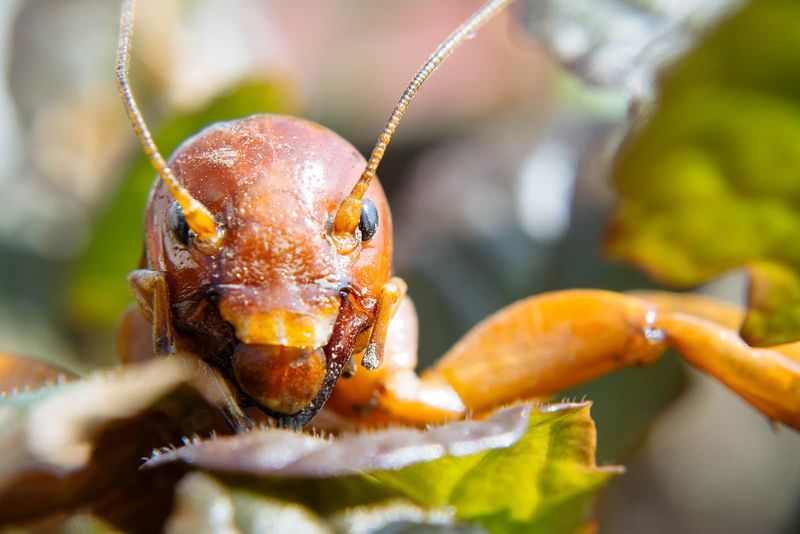
One of the most common mistakes in garden writing about Jerusalem crickets is treating them as purely beneficial predators. The actual picture is more nuanced.
UC IPM lists their diet as insects, nonwoody roots, and tubers, which means they function as opportunistic omnivores rather than strict predators or decomposers. On any given night, a Jerusalem cricket might be eating a grub that was damaging your lawn or chewing on a potato tuber in your vegetable bed.
UC IPM characterizes damage to turf and vegetables as occasional rather than typical. That framing is important: it means the insects are generally not serious pests, but it also means plant feeding does happen.
A gardener who finds a struggling tomato plant and a Jerusalem cricket nearby has not necessarily found the culprit. Presence near a plant is not proof of damage, and blaming the cricket without inspecting the actual roots, tubers, or crown first is a diagnostic shortcut that can lead to the wrong response.
The practical rule is straightforward. If a plant is declining, look at the physical evidence – chewed roots, damaged tubers, a pattern of repeated injury – before connecting it to any insect you happened to spot nearby.
Jerusalem crickets leave the soil and return to it, so their proximity to a plant tells you very little on its own. A single sighting near a struggling pepper, for example, is not a reason to treat the bed.
Calling Jerusalem crickets “beneficial insects” without qualification sets up unrealistic expectations. A more accurate description is that they are usually harmless omnivores that occupy a natural niche in California’s soil community.
They eat some things that help gardens and occasionally eat things that do not, which is a fair description of many native soil-dwelling species. Keeping that complexity in view helps homeowners make better decisions than a simple “beneficial or pest” label ever could.
Some California Lizards and Wildlife Eat Them
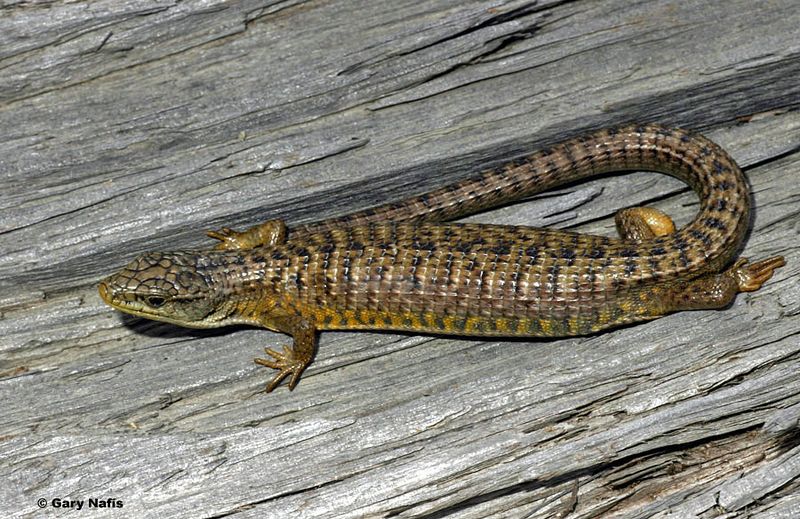
Jerusalem crickets do not live in isolation underground. They are part of a food web that connects soil, insects, and the vertebrate predators that California gardeners are often trying to attract.
CaliforniaHerps feeding and predation records document both alligator lizards and coastal whiptails eating Jerusalem crickets, which gives the “feeds the lizards you love” idea in this article’s title a real, documented foundation – even if that foundation needs some honest limits placed around it.
The wildlife connections extend beyond lizards. A U.S.
Forest Service conservation assessment for the pallid bat identifies Jerusalem crickets as prey, and a U.S. Forest Service species review for burrowing owls includes them in documented dietary records as well.
That puts Jerusalem crickets in the category of prey items that support multiple layers of California’s native predator community, from ground-level lizards to aerial hunters working at night.
The limits of this relationship deserve equal attention. Not all California lizards eat Jerusalem crickets, and the documented species are specific – alligator lizards and coastal whiptails, not every backyard reptile.
More importantly, choosing not to kill a single Jerusalem cricket will not produce a measurable increase in your local lizard population. Food webs do not work that way.
What the evidence supports is a more modest point: an individual cricket that is left alone can serve as a food item for a local predator, and removing it unnecessarily takes that opportunity away.
For homeowners who want a wildlife-friendly yard, this is a useful reframe. The goal is not to cultivate Jerusalem crickets deliberately or to count them as a population-management tool.
The goal is to avoid removing a native prey species from the food web for no good reason, and that is an achievable standard that costs nothing beyond a change in reflex.
Tolerance Usually Beats Control

The simplest and most evidence-supported response to a Jerusalem cricket sighting in a California yard is to leave it alone. UC IPM states explicitly that no control is necessary for ordinary garden encounters, which is a strong and direct statement from the state’s leading pest management authority.
That guidance reflects the insect’s generally nonpest status and the absence of a documented threshold at which Jerusalem cricket populations cause intolerable damage in home landscapes.
Choosing tolerance over control also avoids a common side effect of reactive pesticide use. UC IPM’s pesticide guidance recommends using chemical controls only when nonchemical measures have proven ineffective and a pest has reached a genuinely intolerable level, with preference given to the least-toxic effective option.
Spraying a broad-spectrum insecticide because a large insect startled you while you were weeding is not a pest management decision – it is a reflex, and it typically harms far more than the one insect that prompted it.
Tolerance in this context does not mean encouraging Jerusalem crickets to move in or protecting them from every natural hazard. It means not reaching for a product or a tool when the evidence does not support doing so.
A cricket spotted near a healthy plant, seen crossing a path at dusk, or uncovered briefly while turning soil is not presenting a problem that needs solving. The natural outcome – the insect disappearing back underground – is exactly what should happen.
Supporting native wildlife through restraint is a different posture than actively cultivating a species. Jerusalem crickets have not been shown to deliver measurable backyard benefits that justify a deliberate management program.
What they have shown is that they are usually harmless, occasionally useful as prey, and rarely worth the cost and collateral damage of a control response. That is a reasonable basis for leaving them alone.
Relocate an Unwanted Cricket Without Touching It
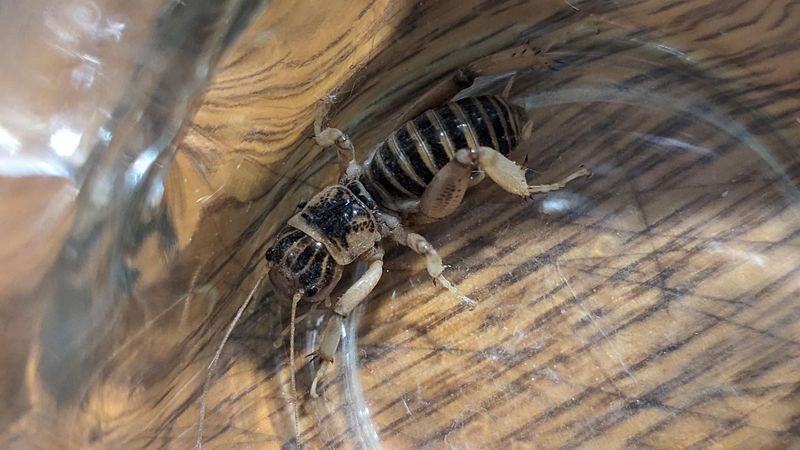
Finding a Jerusalem cricket indoors, on a doorstep, or in a spot where it genuinely cannot stay is a different situation from spotting one in the garden. UC IPM recommends scooping the insect into a box and moving it rather than applying any pesticide, which keeps the response proportionate and avoids unnecessary chemical exposure in and around the home.
The method matters. Texas Parks and Wildlife reporting on Jerusalem crickets and University of Arizona Cooperative Extension guidance on backyard insects both note that Jerusalem crickets are not venomous but can deliver a painful bite when grabbed, squeezed, or otherwise threatened.
Their mandibles are strong enough to make bare-handed handling a genuinely unpleasant experience, and children should not be encouraged to pick them up casually. A rigid container – a plastic cup, a deli container, or a small box – combined with a flat piece of cardboard is all the equipment needed.
Slide the cardboard under the cricket, tip it into the container, cover the opening, and carry it to a mulched garden bed or a weedy area away from foot traffic.
Release the cricket somewhere with loose soil and some ground cover, which gives it a reasonable chance of burrowing back out of sight quickly. There is no need to transport it far from your property; a few yards from where it was found is usually enough to keep it out of the original problem location.
Before treating any cricket encounter as a plant-damage situation, apply one more diagnostic step. Look at the affected plant directly: check the roots, inspect the tubers or crown, and ask whether the damage is happening repeatedly rather than once.
UC IPM’s pesticide guidance reserves any pest control response for verified, intolerable problems – not for a single frightening sighting near a plant that may have an unrelated issue entirely.
California Has Multiple Jerusalem Cricket Lineages
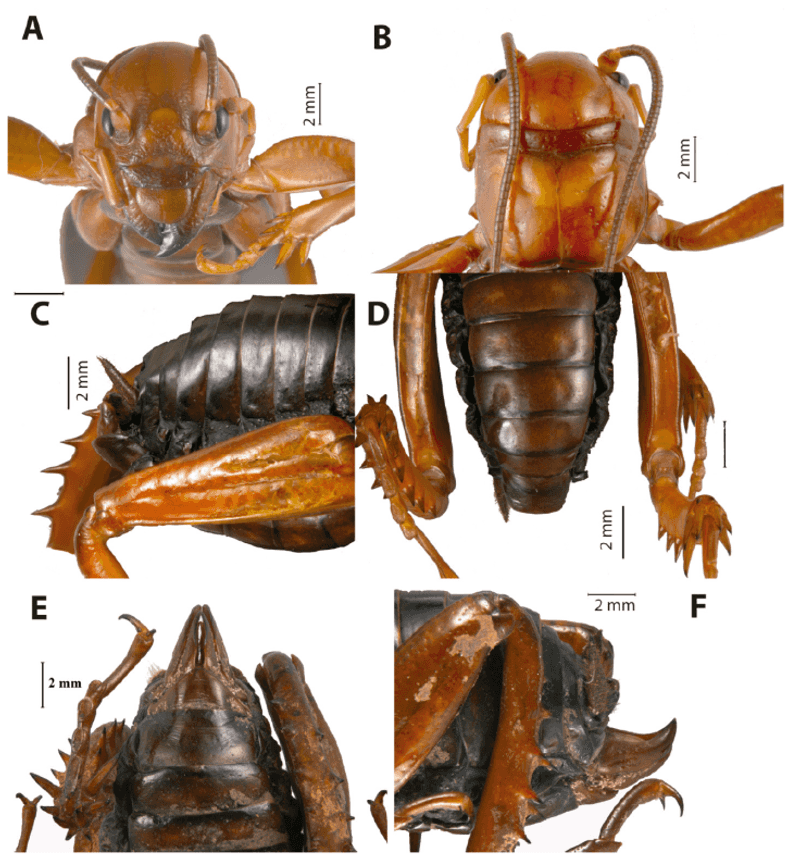
Most California homeowners assume that the large, striped, round-headed insect they found in the garden is the same species their neighbor found and the same one described in every general reference. That assumption is worth revisiting.
A published study on southern California Jerusalem cricket populations found substantial genetic diversity and evidence of habitat fragmentation, suggesting that urban development has isolated lineages that were once connected across the landscape.
USGS urban microreserve research has added further context to how fragmented habitats affect insect populations in southern California, and taxonomic work published in Zootaxa on New World Jerusalem cricket relationships recognizes multiple distinct and cryptic lineages within what was once treated as a single widespread species. The practical result is that “Jerusalem cricket” in California is a common-name umbrella covering a group of insects with real biological differences that a photograph taken on a patio cannot resolve.
For homeowners, the most honest approach is to use the common name or the family name – Stenopelmatidae – unless a specialist with access to physical specimens or genetic tools has confirmed something more specific. A casual photograph may be enough to identify the family and rule out other insects, but it is generally not enough to establish which species or lineage you are looking at.
Habitat, geography, and physical characteristics can all point in different directions.
Some localized Jerusalem cricket populations in southern California face genuine conservation pressure from urban development and habitat loss. That does not translate into a blanket statewide legal protection or a prohibition on killing any Jerusalem cricket found in an ordinary yard.
The conservation concern is real but geographically specific, and homeowners should not overstate it in either direction – neither dismissing it nor assuming that every backyard cricket is a protected specimen.
The Evidence-Based Response Is Simple
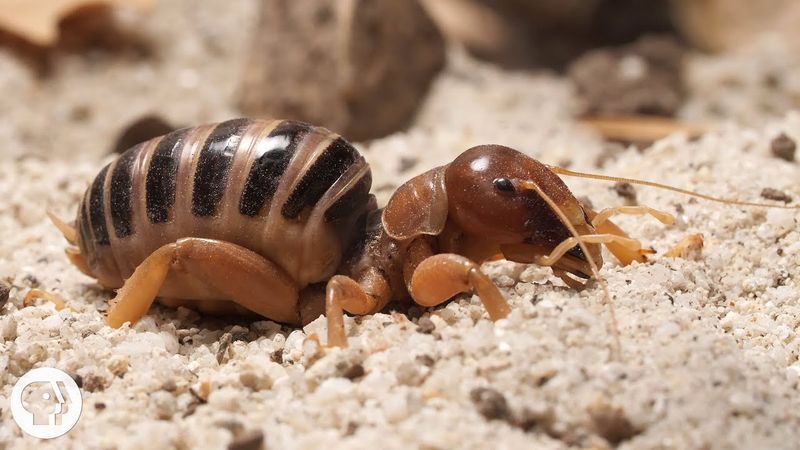
Recognizing a Jerusalem cricket is the hardest part for most California homeowners. Everything after that is straightforward.
UC IPM’s guidance points to a clear default: leave it alone. If it is in an unwanted location, use a container and cardboard to move it.
If a nearby plant is struggling, inspect the plant directly and look for a repeated pattern of damage before connecting the insect to the problem.
The two strongest reasons for restraint are both well-supported. Jerusalem crickets are generally nonpest soil-dwellers whose presence rarely signals a garden problem, and they can serve as prey for some California lizards and other wildlife, including alligator lizards, coastal whiptails, pallid bats, and burrowing owls.
Documented predation records from California herpetological sources confirm that connection, even if it does not extend to every lizard species in the state.
The burrowing these insects do is real, but it disturbs small amounts of soil rather than delivering a proven aeration benefit. A yard that includes Jerusalem crickets is not a better-aerated yard by definition – it is simply a yard with a native underground insect doing what native underground insects do.
That is enough of a reason to leave it alone, and a better reason than any exaggerated claim about soil improvement. The most wildlife-friendly yards are often the ones where the homeowner’s strongest tool is knowing when not to act.