
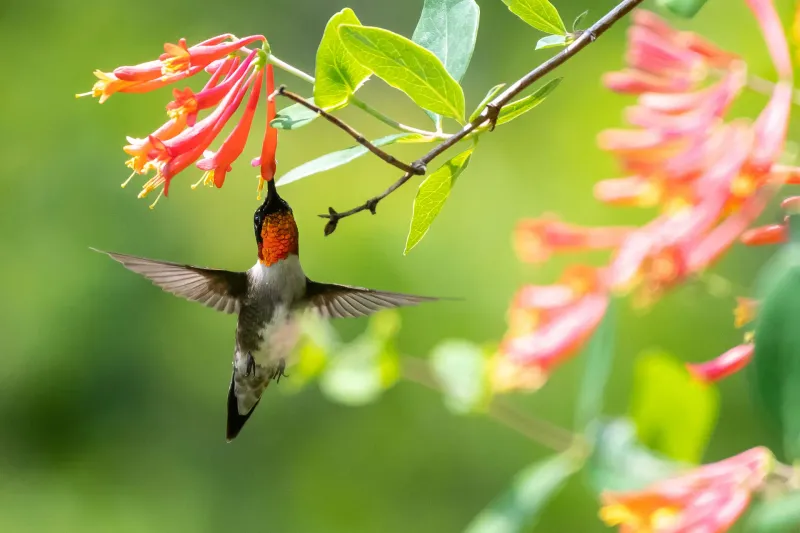
Ruby-throated Hummingbirds pass through North Carolina yards every spring and summer, and most homeowners never know what draws them in or sends them elsewhere. One native vine, coral honeysuckle, gives your yard a real advantage by offering exactly the kind of tubular, nectar-rich flowers these birds are built to visit.
Planting it correctly won’t guarantee a yard full of hummingbirds every season, but it can make your space meaningfully more welcoming than one without it. Here’s what you need to know before you buy, plant, and wait.
Choose coral honeysuckle as a strong native starting point
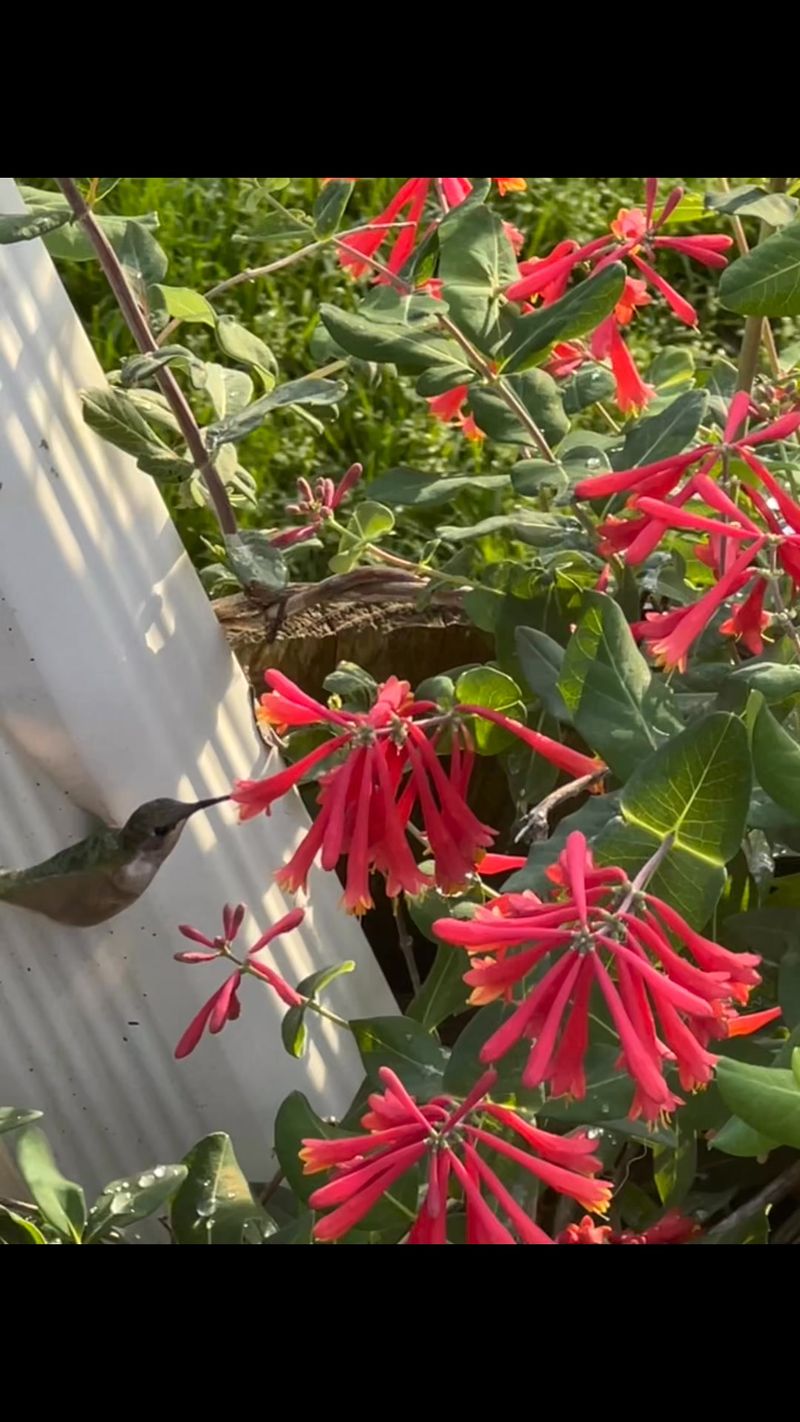
Coral honeysuckle, known scientifically as Lonicera sempervirens, is one of the most consistently recommended native vines for North Carolina homeowners who want to support Ruby-throated Hummingbirds. NC State Extension’s plant profile confirms it is native across the Coastal Plain, Piedmont, and Mountains, and lists it as a documented nectar source for Ruby-throated Hummingbirds.
That combination of statewide range and direct hummingbird use makes it a particularly practical starting point for many North Carolina yards.
The vine produces scarlet to orange-red tubular flowers that align well with how hummingbirds forage. Their long bills and hovering flight make them efficient visitors to narrow, tube-shaped blooms that most insects can’t reach as easily.
NC State’s Lee County guide to top hummingbird plants places coral honeysuckle on a short list of standouts for central North Carolina, reinforcing its regional credibility.
Even so, no single plant can guarantee that hummingbirds will choose your yard over a neighbor’s or return on a fixed schedule every year. A peer-reviewed study analyzing 4,081 hummingbird observations across 744 locations found that yards with more nectar-producing plant taxa, more native plants overall, feeders, and less surrounding impervious surface recorded more sightings.
Coral honeysuckle is a strong anchor for that kind of habitat, not a standalone guarantee. Think of it as the foundation of a habitat plan rather than a finished solution.
Expect a spring-to-summer supply of tubular flowers
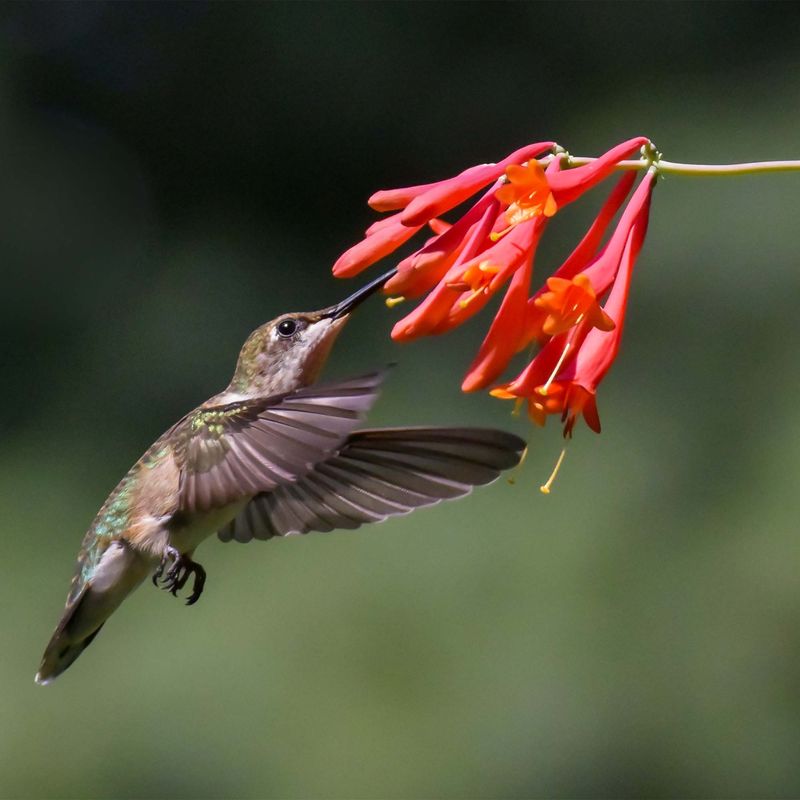
Coral honeysuckle earns its place in a hummingbird yard partly because of when it blooms. NC State’s plant profile places the flowering window at approximately March through July, while NC State’s urban habitat guide for birds lists it as an April-through-July hummingbird plant.
That overlap with the Ruby-throated Hummingbird’s spring arrival and active summer foraging period is part of what makes the vine useful.
The flowers themselves are scarlet, orange-red, or occasionally yellowish, with a long tubular shape that fits a hummingbird’s bill and foraging style well. Nectar inside those tubes is the primary draw, and the color makes the blooms easy for hummingbirds to spot from a distance.
However, color and shape are useful cues, not a guarantee of visitation on their own.
Actual bloom timing and intensity shift based on several real-world factors. Cultivar choice, plant age, available sunlight, soil moisture, and seasonal weather patterns all influence when flowers appear and how long they last.
A young, newly planted vine may bloom modestly in its first season and more heavily once established. Choosing a cultivar bred for extended flowering can lengthen the window somewhat, but even the best-performing plants respond to the conditions around them.
Plan for a spring-to-summer bloom period rather than expecting continuous color from March straight through to frost.
Give the vine sun, soil, space, and safe support
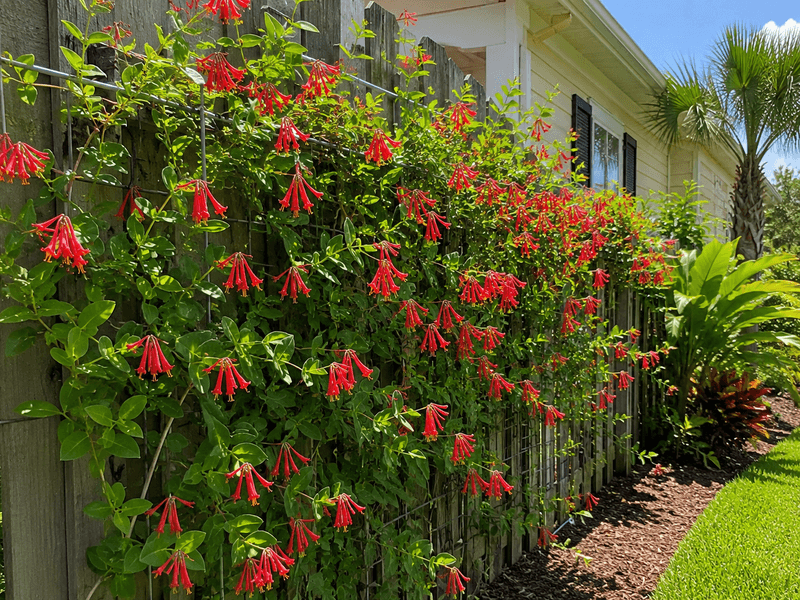
Where you plant coral honeysuckle matters as much as whether you plant it. Full sun produces the heaviest flowering, and that translates directly to more nectar available during the hummingbird season.
The vine can handle some shade, but flowering tends to drop off noticeably when it doesn’t get enough direct light. Aim for a location with at least six hours of sun per day, and choose a spot with medium moisture and well-drained soil.
Soggy ground invites root problems and reduces the plant’s long-term performance.
Support is not optional. Coral honeysuckle is a twining vine that NC State Extension notes can reach roughly 10 to 20 feet at maturity.
A sturdy trellis, arbor, fence, or pergola post gives it somewhere to climb and keeps it from sprawling over nearby shrubs or ground covers. NC State’s Lee County hummingbird plant guide recommends pairing the vine with a solid structure from the start rather than trying to redirect it after it has spread.
Before you finalize a planting spot, check the distance from your home. NC State gives coral honeysuckle a high flammability rating, which means it should not be planted within a home’s defensible space.
Placing it against a fence line, a detached garden structure, or a trellis well away from exterior walls keeps the plant’s fire risk manageable. Coastal gardeners may appreciate the vine’s tolerance for salt air, but drainage and available support should still guide the final placement decision regardless of where in the state you garden.
Use simple but deliberate care after planting
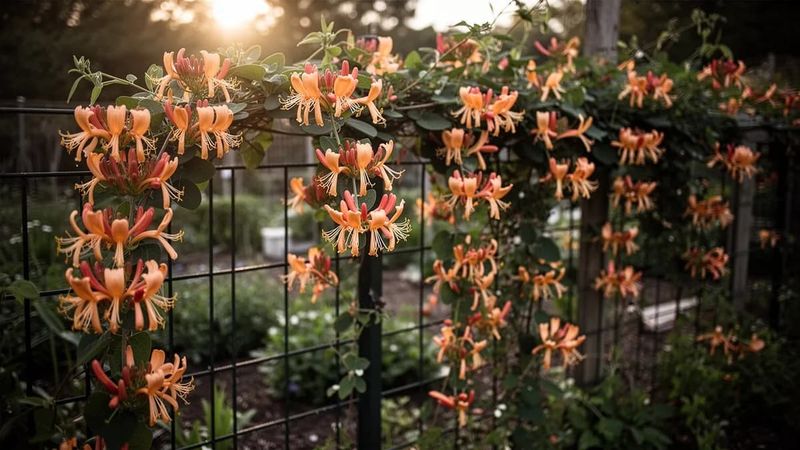
Coral honeysuckle is often described as low-maintenance, and that reputation is largely earned, but only after the plant is properly established and correctly sited. The first season or two require more attention.
Water newly planted vines regularly to help roots settle in, adjusting frequency based on rainfall and soil drainage rather than following a fixed schedule. Once established in a suitable spot, the vine becomes considerably more self-sufficient, though it still benefits from occasional observation.
NC State’s plant profile notes that coral honeysuckle blooms on new growth, which shapes the pruning approach. Prune after flowering rather than before it, so you don’t cut away the stems that would have produced next season’s blooms.
Light shaping to manage the vine’s spread or to remove dead wood is fine throughout the growing season, but heavier pruning should wait until after the main bloom period ends.
Fertilizer is worth handling carefully. Excess nitrogen pushes the plant toward leafy growth at the expense of flowers, which is the opposite of what a hummingbird planting needs.
If the soil is reasonably healthy, the vine often performs well without supplemental feeding. When fertilizer seems necessary based on poor growth or a soil test, use a balanced product sparingly rather than a high-nitrogen formula.
Annual bloom performance will still vary with cultivar, plant age, seasonal weather, light levels, and moisture, so some year-to-year variability is normal and expected.
Verify the scientific name before you buy
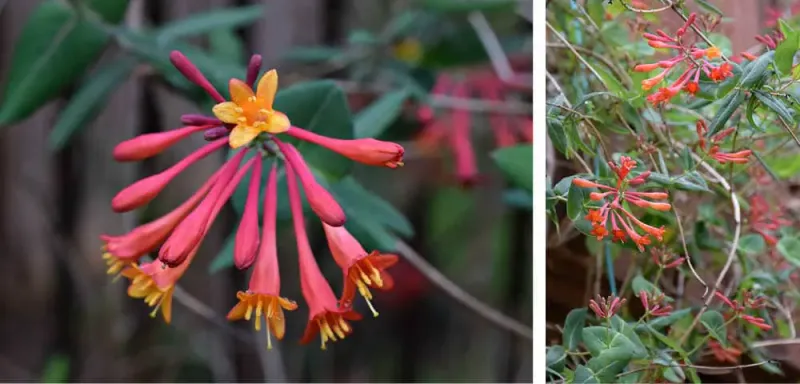
Not every plant sold under the name honeysuckle belongs in a North Carolina hummingbird garden. Japanese honeysuckle, Lonicera japonica, looks similar enough to cause real confusion at the nursery, but it comes from eastern Asia and behaves very differently once it’s in the ground.
Federal invasive species records document Japanese honeysuckle’s ability to crowd out native plants, smother shrubs, and spread aggressively through disturbed areas across the Southeast. Planting it by mistake undermines the native habitat you’re trying to build.
The reliable way to avoid the mix-up is to check the scientific name on the nursery tag before the plant goes in your cart. Common names shift from region to region and even store to store, so the label reading Lonicera sempervirens is the only confirmation that you have the correct native species.
NC State’s coral honeysuckle profile and the NC State genus overview for Lonicera both provide clear identification details that can help you compare what you find on the shelf.
Reputable native plant nurseries, local plant sales hosted by native plant societies, and NC State Extension-connected resources are generally safer sources than big-box garden centers where labeling can be inconsistent. Asking staff specifically for the scientific name, not just the common one, is a reasonable and worthwhile habit when buying any vine in the honeysuckle family.
Build a habitat instead of relying on one vine
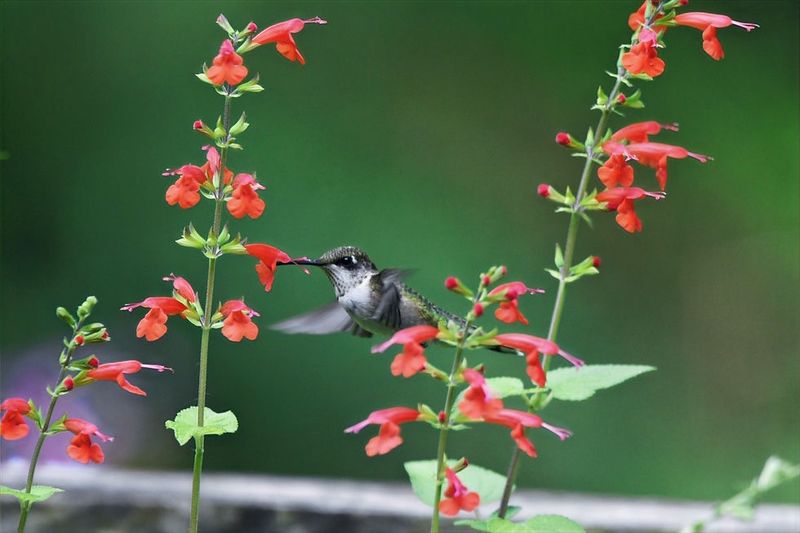
Coral honeysuckle works best when it anchors a broader habitat rather than standing alone. The peer-reviewed study of 4,081 hummingbird observations across 744 locations found that yards with more nectar-producing plant taxa and more native plants overall recorded higher visitation.
That points toward a practical strategy: add native flowers that bloom at different times so nectar is available before and after coral honeysuckle’s spring-to-summer window. Cardinal flower, native salvias, and trumpet creeper are among the options NC State’s urban habitat guide and Audubon’s hummingbird garden guide recommend for extending the season.
Nectar is only part of what hummingbirds need. Cornell Lab’s life history notes for Ruby-throated Hummingbirds confirm that the birds also consume small insects and spiders, which supply protein.
Shelter and perching spots matter too. Leaving some small shrubs or branchy trees nearby gives hummingbirds places to rest between feeding bouts, and maintaining insect habitat by avoiding broad-spectrum pesticide use keeps a food source intact that flowers alone can’t replace.
If you add a feeder, keep it simple and clean. NC State recommends a solution of four parts water to one part plain white sugar.
Skip honey, red food coloring, brown sugar, and fruit juice, all of which can harm the birds or accelerate spoilage. Replace the solution before it turns cloudy or discolored, especially during hot North Carolina summers when fermentation speeds up.
On the pesticide side, EPA pollinator protection guidance advises treating only affected areas, applying insecticides when pollinators are not actively foraging, and using pesticides only when necessary. Avoiding sprays near blooms that hummingbirds are visiting protects both the birds and the insects they rely on.
Make the promise seasonal and conditional
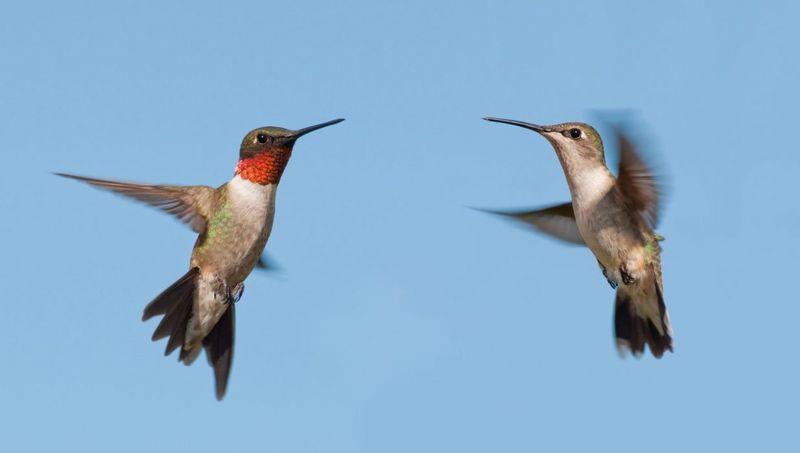
Coral honeysuckle, correctly labeled and properly placed, can make a North Carolina yard meaningfully more useful to hummingbirds when site conditions, bloom timing, and the surrounding habitat come together. What it cannot do is guarantee visits or lock in a return every summer regardless of conditions.
Cornell Lab’s Ruby-throated Hummingbird life history notes that most individuals leave North Carolina by mid-October and return in late March, making their presence inherently seasonal. Year-to-year variation in migration timing, weather, and individual bird behavior means no yard feature eliminates uncertainty.
NC State’s urban habitat guide and the coral honeysuckle plant profile both support treating the vine as a strong native component of a larger habitat strategy, not a plug-and-play solution. The same research associating more native plants and more nectar-producing taxa with higher hummingbird sightings reinforces the value of building around the vine rather than stopping with it.
The practical decision rule is straightforward: plant coral honeysuckle in a sunny, well-supported, fire-safe location, give it time to establish, and expand the habitat around it with native plants that bloom before and after it does. A yard built that way gives Ruby-throated Hummingbirds a genuine reason to stop, and that’s a more honest and lasting goal than claiming the birds as yours.